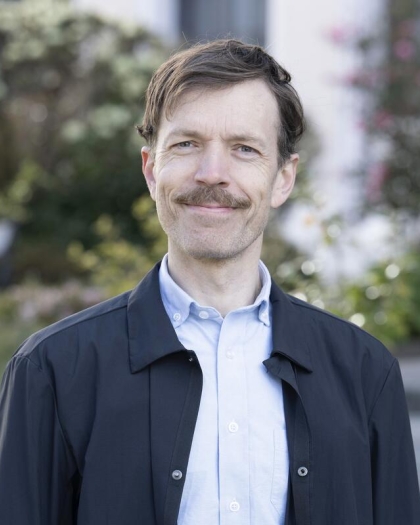
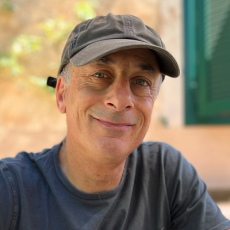
Michiel de Lange is Assistant Professor in New Media Studies at Utrecht University, specializing in digital media's role in urban environments. Cofounder of The Mobile City research initiative examining how technology shapes urban culture and citizen engagement. Research themes include: Smart cities and citizen participation Media architectures and urban interfaces Playful civic engagement Ethical dimensions of datafied cities Leads NWO-funded projects on responsible smart cities and the Hackable City concept. Recent work analyzes controversy design in datafied urban environments and creative research methods.
Hallvard Moe is a Professor in Media Studies at the Department of Information and Media Studies , University of Bergen (UiB) , Norway. He is a leading researcher in media and democracy, public service media, and digital media use, leading the Media Use Group and the ERC-funded PREPARE project. He actively teaches and supervises students in media-related fields. His research focuses on the democratic role of media, particularly how public service media adapt to digital platforms, the impact of algorithms and datafication, and citizens’ news use during crises like the pandemic and climate change. He has extensively studied Nordic media systems, social media in political campaigns, and media policy across Europe. The 15 most recent publications highlight a consistent research trajectory centered on public connection, media trust, and digital transformation. Key themes include crisis news consumption, algorithmic perception, media welfare state critique, and evolving citizen roles in datafied societies. Methodologically, he employs qualitative and mixed methods, including diaries and cross-national comparisons. ERC Consolidator Grant (2022) for the PREPARE project Member of the Norwegian Broadcasting Council Member of the Media Diversity Committee (2015–2017) He supervises master’s and PhD students and leads multiple research projects funded by the Research Council of Norway and the European Research Council. He is a frequent contributor to public discourse through lectures, reports, and media appearances, including the Reuters Institute Digital News Report. He is affiliated with research groups such as the Bergen Media Use Research Group and MediaFutures: Research Center for Responsible Media Technology & Innovation , where he contributes to interdisciplinary work on responsible media innovation.
Mara Ferreri is a Fixed-term Assistant Professor at the Interuniversity Department of Territorial Sciences, Planning and Policies (DIST) at Politecnico di Torino, where she teaches Global Urban Geographies. She is also affiliated with multiple prestigious institutions including the Royal Geographical Society with the Institute of British Geographers (2022-present) and the London School of Economics, Department of Geography and the Environment (2022-present). Her academic career spans multiple European institutions, with previous appointments at Northumbria University (2019-2022), Universitat Autònoma de Barcelona (2016-2019), Durham University, and the London School of Economics. Ferreri's research focuses on housing precarity, temporary and platform urbanism, and struggles for housing alternatives. She employs qualitative methods to investigate the precarization of urban space and living, collective resistance, and self-organization. Her interdisciplinary work bridges urban and cultural geography, spatial planning, visual culture, and housing studies. She is particularly known for her monograph The Permanence of Temporary Urbanism: Normalising Precarity in Austerity London (Amsterdam University Press, 2021), which examines the normalization of precarious living conditions in London. Her recent publications reveal a consistent focus on urban commons, housing movements, platform economies, and the politics of care in urban contexts. Ferreri's work increasingly examines the intersections between digital platforms and housing precarity, feminist approaches to housing commons, and transnational solidarity in housing struggles. Her research demonstrates a methodological commitment to collaborative and militant research approaches that prioritize community knowledge and activism. Queen Mary PhD Studentship (2009) Urban Geography Research Group Event Fund (2012) Antipode Foundation Scholar-Activist Project Award (2012) Arts and Humanities Research Council - Creativeworks London (2014) Marie Curie Fellowship (2016) Antipode International Workshop Award (2019) British Academy Virtual Sandpit Follow-on Funding (2021) Accademia Nazionale dei Lincei and British Academy Knowledge Frontiers Symposium (2022) Ferreri supervises PhD students Matteo Beltramo and Tommaso Cosentino in the Urban and Regional Development program. She leads the ERC-funded EnactDECOM project (2025-2030) on decommodified housing in Southern Europe. As an active member of the European Network for Housing Research (2020-present), she serves on editorial boards for PLATFORMS & SOCIETY (2024-present), HOUSING AND SOCIETY SERIES (2023-present), and RADICAL HOUSING JOURNAL (2019-present), demonstrating her significant contribution to shaping housing research discourse.
Paul Théberge is a Professor at Carleton University, cross-appointed to the Institute for Comparative Studies in Literature, Art and Culture and the School for Studies in Art and Culture (Music). He teaches graduate courses in Cultural Mediations (technologies of culture), Film Studies (sound in visual media), and Music (sound studies), reflecting his interdisciplinary academic home within Ottawa's major research institution. His research interrogates the material and cultural dimensions of sound technologies, with core expertise in music-technology-culture intersections, internet-mediated musical practices, and sonic applications in film/television. Théberge's scholarship bridges musicology, media studies, and science and technology studies, examining how recording technologies reshape creative practice and auditory experience across historical periods from analog tape to digital streaming platforms. Analysis of his 15 most recent publications reveals persistent engagement with sound's materiality—from multichannel audio histories to the embodied nature of listening—and consistent exploration of technological transitions, particularly the internet's disruption of traditional music production/distribution models. His work demonstrates deep methodological versatility spanning archival research, ethnographic observation, and creative composition. Scientific recognition includes: International Association for the Study of Popular Music (US branch, 1998) Society for Ethnomusicology (2000) While the source text doesn't specify current advising activities, his extensive editorial work (e.g., co-editing Living Stereo ) and composition output suggest significant mentorship through collaborative projects. His research has been supported through Canada Research Chair funding and industry partnerships like Sony Classical International.
Cristina Alaimo is an Associate Professor at ESSEC Business School in France, specializing in Information Systems, Data Analytics, and Operations. She holds a PhD in Management, Information Systems, and Innovation from the London School of Economics (LSE). Her research focuses on data-driven innovation, platform ecosystems, and the societal impact of digital technologies. She has held academic positions at LUISS University (Italy) and the University of Surrey (UK). Alaimo’s work explores the transformation of organizational practices through data objects and algorithmic systems, with publications in leading journals like Organization Science and Journal of Management Information Systems . She co-authored the book *Data Rules: Reinventing the Market Economy* (MIT Press, 2024). Her editorial roles include Senior Editor at Organization Studies and European Journal of Information Systems . She also serves as a visiting fellow at Surrey Business School’s Centre for the Digital Economy. Her research interests span data governance, digital platforms, and the reconfiguration of fields through data-driven practices. Recent work addresses AI’s impact on organizational knowledge and regulatory challenges in digital ecosystems. She advises on PhD theses exploring AI’s societal implications and environmental sustainability strategies.
Tone Walford (they/them) is an Associate Professor in Anthropology at University College London's Department of Anthropology. Their work bridges anthropology with digital studies, environmental science, and justice frameworks, focusing on how digital data transforms social and cultural practices globally. Walford's research explores the effects of exponential digital data growth on social and cultural imaginaries. Their doctoral fieldwork examined climate scientists and technicians in the Brazilian Amazon, tracing relationships between scientific digitization practices and their social-political effects. Current research investigates data politics in international observational science and how concepts like 'person,' 'environment,' and 'ownership' are reconfigured in informational landscapes traversing the gaps between expert and civic, neoliberal and grassroots, natural and artificial domains. Walford's publication record demonstrates consistent scholarly engagement from 2012 through 2024. Their work reveals evolving themes from Amazonian climate science practices to broader theoretical frameworks for understanding data's societal role. Recent publications like 'The Sage Handbook of Data and Society' (2024) and 'Map, Territory, and Everything in Between' (2024) show continued focus on how data shapes territorial politics and environmental governance, particularly examining data justice across different communities worldwide. As an academic collaborator, Walford has worked extensively across disciplines including environmental science, physics, and data science. Their edited volume 'Lineages and Advancements in Material Culture Studies' (2020) showcases commitment to innovative methodological frameworks that address human experiences requiring new analytical approaches, including digital objects, infrastructure, data, and medical materiality.
Suisui Wang is a Lecturer in the Department of Women/Gender/Sexuality Studies at the University of Massachusetts Boston. His interdisciplinary scholarship bridges feminist and queer Science and Technology Studies (STS) with sensory and auditory research, focusing on technology's role in activism, governance, and community care practices. Education: BA in Sociology from East China Normal University MA in Gender Studies from Indiana University Bloomington PhD candidate in Gender Studies at Indiana University Bloomington Wang's research centers on "hotline" technologies as sites of crisis intervention and statecraft, examining how activist mobilization and state coordination deploy hotlines for issues including youth alienation, gay isolation, gendered violence, and suicide prevention. His theoretical framework conceptualizes crisis listening as communicative proxies, affective commons, epistemic positionalities, and performative acts within contemporary psychosocial landscapes. His work critically engages with the sensory dimensions of care technologies, particularly sound and auditory practices in datafication contexts. His 2024 publication analyzes queer STS approaches to global datafication, reflecting broader trends in his scholarship that interrogate how data practices become embedded in social power structures and community resistance movements. This work demonstrates his commitment to decolonizing data epistemologies through feminist and queer lenses. Awards: 2024 Nicholas C. Mullins Prize from the Society for Social Studies of Science As a PhD candidate developing his book manuscript "Just Listening: Hotline Activisms and Technopolitics of Crisis," Wang actively contributes to critical conversations about technology's role in mental health infrastructure and social justice movements, with emerging collaborations in community-based participatory research.
Tem Frank Andersen is a Teaching Associate Professor at Aalborg University’s Department of Communication and Psychology, within the Faculty of Social Sciences and Humanities. His research focuses on digital leisure, encompassing comic books, e-sports, and superhero cultures, analyzed through media theory, fandom studies, and ideology critique. He leads projects like ‘Digital consumer culture & mental health’ and ‘ComixCraft’, emphasizing interactive media and experience design. His work intersects with UN Sustainable Development Goals related to climate awareness and cultural sustainability. Education: PhD in ICT and Learning (Youth and Computer Culture, 2006). Key research areas include digital media’s role in youth culture, sports technology, and climate discourse. He has published over 279 works, including articles on comics as climate communication tools and the psychological impacts of lightsaber fencing. Research interests span media ethnography, play theory, and the domestication of technology. His projects often bridge academia and public engagement, such as the ‘DiFUA’ initiative for digital research dissemination. He is affiliated with the InDiMedia Centre and the SSH Children and Youth Research Network. Recent activities include guest lectures on lightsaber fencing’s mental health benefits and peer reviews on animation challenges. Media contributions address societal issues like social media’s impact on youth and cultural preservation.
Luke Heemsbergen is a Senior Lecturer in Communication at Deakin University's School of Communication and Creative Arts and the Alfred Deakin Institute for Citizenship and Globalisation. His research explores the intersection of digital technologies and societal power structures, focusing on how emerging media reshape political communication, human-computer interaction, and cultural practices. He co-leads the Immersive Realities Theme at Deakin Motion Lab and coordinates the Critical Digital Interfaces and Infrastructures research group. Research interests include: Digital media's role in political engagement and activism Augmented/extended reality as tools for environmental and health communication Algorithmic governance in institutional contexts Critical approaches to synthetic media and AI creativity His recent publications demonstrate sustained focus on platform politics, with 9/15 articles analyzing social media's role in elections, activism, and misinformation. Methodologically, he employs innovative digital approaches like 'backend-in' platform analysis and multimodal data visualization. Thematically, articles cluster around: 1) Pandemic technologies and surveillance, 2) Algorithmic management in institutions, and 3) Immersive media design. Supervision includes 8 doctoral students working on projects like embodied human-machine interfaces, EdTech supply chains, and surveillance law reform. Funded projects include: Defining Communication in a Digital Era (ACCAN grant) Techno-Totalitarianism vs. Disruptive Technologies (Gerda Henkel Stiftung) VR Wayfinding Visitor Experience Model (ID Laboratory)
Claudia Ritzi is Professor of Political Theory and History of Ideas at the University of Trier. She serves as deputy chair of the German Political Science Association (DVPW) and as Senate Commissioner for Protection against Sexual Harassment at Trier University since 2021. Since April 2023, she has been managing director of the Department of Political Science. Research Focus : Contemporary democratic theory, post-democracy, digital public spheres, participation research, and 21st-century democratic governance. Her work examines the structural transformation of public spheres under digitalization, legitimacy in post-democratic systems, and the interplay between online/offline political participation. Key Functions : Member of DVPW Executive Board (2018-2024) Co-editor of "Politics in the Digital Society" series Reviewer for political science journals and funding agencies (DFG, Humboldt Foundation)
Lai Ma is Associate Professor at the School of Information and Communication Studies, University College Dublin (UCD), where she also serves as Director of Research (2022–2025) and previously directed the MLIS and GradDipLIS programmes. She holds a PhD in Information Science from Indiana University Bloomington and a BSc(Econ) from The Chinese University of Hong Kong. Her work bridges philosophy, information science, and science policy. PhD, Information Science, Indiana University Bloomington MLIS, Indiana University Bloomington BSc(Econ), The Chinese University of Hong Kong Her research centers on the epistemology of information and knowledge production, with a focus on open research, scholarly communication, research evaluation, and research infrastructure. Influenced by critical social theory, philosophy of language, and STS, she investigates issues of epistemic injustice, bibliodiversity, and the political economy of academic publishing. A major theme is the critique of metrics and platformisation in research. Her recent publications reveal a strong trend toward analyzing the structural inequalities in global knowledge production, especially through the lens of open access models, citation practices, and research assessment. She critically examines how commercial interests and dominant platforms shape what counts as knowledge, often marginalizing voices from the global periphery. Best Paper Meta Reviewer Award Teaching Excellence Award Best Paper Reviewer Award Lai Ma leads the ERC Consolidator Grant project Sustainable and Collaborative Research Information for Bibliodiverse Ecosystems (SCRiBe) (2025–2030) and has secured other grants on open research culture. She actively mentors PhD students and has coordinated key modules such as Digital Libraries , Scholarly Communication , and Research and Practice in LIS . She serves on editorial boards and review panels for major journals and funding bodies, and has held leadership roles in ASIS&T and the Library Association of Ireland. She is affiliated with the UCD Geary Institute for Public Policy and contributes to policy discussions on research evaluation, ethics, and open science. Her work emphasizes the need for community-governed, equitable, and sustainable research infrastructures.
Filippo Celata is a Full Professor at the Department of Methods and Models for Economy, Territory and Finance , Faculty of Economics , Sapienza University of Rome. He coordinates the PhD program in Geografia Economica e Statistica Territoriale and the Dottorato Modelli per l'Economia, il Territorio e la Finanza . Researcher since 2006, Full Professor since 2021 Editor-in-Chief of Rivista Geografica Italiana Coordinator of multiple research projects including PNRR PE CHANGES and Horizon Marie Curie Staff Exchange Media presence in Corriere della Sera , Wall Street Journal , Rai TV networks, and international outlets His research focuses on urban and regional economies , sociospatial inequalities , and spatial data analysis , with particular emphasis on: Platform economy's impact on urban housing Critical geographies of the Mediterranean Climate change adaptation in coastal areas Post-pandemic urban governance Digital geographies and algorithmic mediation Community-led sustainability initiatives Recent publications examine: Short-term rental dynamics in European cities Italian radical geography's historical roots Climate crisis effects on coastal territories Digital platforms' role in spatial commodification Community gardening regulation in Rome He coordinates PhD workshops and seminars on economic geography, with a methodology focused on: Multi-level governance analysis Critical policy evaluation Decolonizing geographical traditions Qualitative-quantitative data integration
Anna Chiara SCAPOLAN is an Associate Professor at the Department of Communication and Economics, Università degli Studi di Modena e Reggio Emilia (UNIMORE). Her office is located at Viale Allegri 9, 42121 Reggio Emilia, 2nd floor, office 3.10. She specializes in Business Organization (Scientific-Disciplinary Sector ECON-08/A) and teaches courses related to human resources management, organizational behavior, and sustainable growth. Her research interests focus on: Human Resources Management and Strategic HR Organizational Behavior and Work Organization Digital Workplace and Work Datafication Collaborative Spaces and Coworking Environments Generation Z Work Expectations and Career Development Performance Management in Hybrid Work Contexts Professor Scapolan's research examines the intersection of traditional organizational structures with emerging digital work environments. Her work particularly investigates how digital transformation impacts employee performance, work-life balance, and organizational purpose in both traditional and alternative work settings like coworking spaces. She has conducted extensive empirical research on Italian freelancers, digital nomads, and Generation Z's expectations from the workplace. Her scientific contributions reveal several key trends: The dual impact of digitalization on work-related stress - increasing stress when exceeding certain thresholds of digital actions but reducing stress through positive employee attitudes How collaborative spaces foster organizational purpose and community among freelancers The evolving expectations of Generation Z regarding meaningful work and organizational culture The role of physical workspace design in supporting creativity and innovation Professor Scapolan actively teaches multiple courses at UNIMORE including: Human Resources and Sustainable Growth Organization of Labor Relations People Management Organization and Human Resources Her teaching approach combines traditional lectures with testimonials from managers, case studies, and group project work. She emphasizes the connection between theoretical concepts and practical applications in contemporary organizational settings.
Klaus Høyer is a Professor of Medical Science and Technology Studies at the University of Copenhagen , affiliated with the Faculty of Health and Medical Sciences and the Section of Health Services Research . His work bridges Science and Technology Studies (STS) , social anthropology , and empirical ethics , focusing on healthcare system organization and data-intensive medical technologies. Education : Ph.D. in Medical Ethics (2004), University of Umeå MA in Anthropology (2001), University of Copenhagen MA in African Studies (1998), University of Copenhagen Høyer's research explores the politics of health data infrastructures , biobanking ethics , and EU health regulation . Current projects include DataSpace (ERC Advanced Grant) analyzing cross-border health data systems, and PREPARE (reNEW) examining stem cell technology governance. His scientific contributions focus on digital transformation across healthcare sectors, with recent work addressing datafication , algorithmic accountability , and personalized medicine . Key themes include ethical regulation , public-private partnerships , and professional judgment erosion in data-driven environments. Scientific Honors : ERC Advanced Grant (2023) Visiting Professor at St Gallen University (2024) Distinguished Research Fellow, Monash University (2018) EliteForsk Prize (2017) ERC Consolidator Grant (2016) Sapere Aude Research Leader (2012) Høyer teaches Organizational Analysis and Public Health Ethics in BA and MA programs, supervising students on health policy , medical regulation , and digital governance . He leads projects like Together Apart (2020) and GLOBAL GENES (2013-2017) while participating in international collaborations across Melbourne , Leiden , and Copenhagen .
Tom DE LEYN is a Tenure Track Assistant Professor at Hasselt University's School of Social Sciences, where he contributes to the Capacity group Social Sciences and the Research group Research for Digitalisation, Diversity and Democracy. His work bridges media studies, sociology, and digital anthropology with a focus on youth experiences in technology-mediated environments. Based at Campus Hasselt in the Faculty of Law building, he actively engages in interdisciplinary research examining the societal implications of digital transformation. His research centers on Digital Media, Media and Communication, and the Sociology of Youth, with particular emphasis on Privacy and Surveillance dynamics across diverse cultural contexts. He investigates how children, adolescents, and ethno-religious minorities navigate digital spaces, parental mediation, and mobile technologies through qualitative and ethnographic approaches. Key themes include digital disconnection practices, intimate surveillance, and the socio-cultural construction of technology use, often comparing Global North and South contexts like Belgium and Liberia. Recent publications (2024-2025) reveal a cohesive trajectory examining digital harms assessment scales, children's perspectives on surveillance, and the paradoxes of digital disconnection policies. His work consistently employs innovative methodologies like the 360° interview technique while addressing critical gaps in understanding racial, gendered, and age-based digital inequalities. This scholarship demonstrates strong thematic continuity across media sociology, youth studies, and critical technology assessment. No scientific awards were mentioned in available sources. Tom DE LEYN actively contributes to academic training as a coordinating lecturer for courses including Media and Communication Studies I, Digital Media and Civil Society, and Qualitative Research Methods. He currently leads the 'Environmental analysis digital skills' research project (2025) focused on community service learning contexts, demonstrating practical engagement with digital inclusion initiatives. Within Hasselt University's research ecosystem, he operates through the Research group Research for Digitalisation, Diversity and Democracy, which examines technology's societal impacts through lenses of diversity, democratic processes, and digital transformation. This affiliation positions his work at the intersection of theoretical innovation and real-world policy relevance, particularly regarding youth digital rights and inclusive technology design.