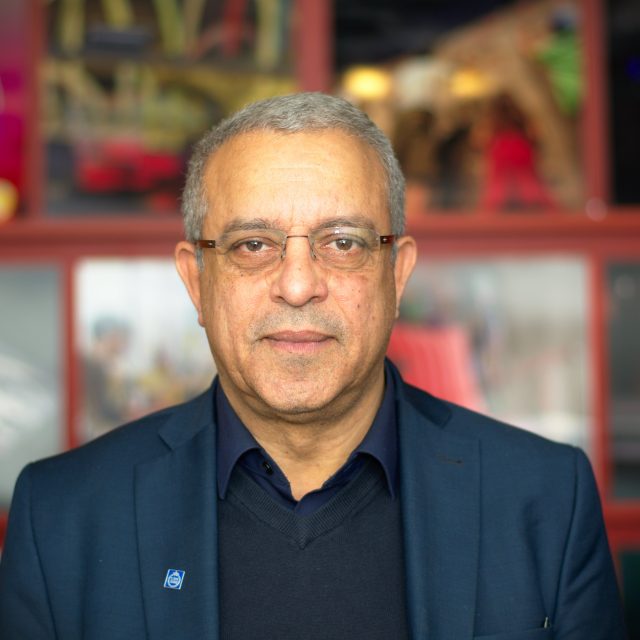
Krishna AgarwalView profile
Professor
Krishna Agarwal is a Professor in Ultrasound, Microwaves and Optics at the Department of Physics and Technology, UiT The Arctic University of Norway. His research spans multiple interdisciplinary fields including optical nanoscopy, quantitative phase imaging, and computational imaging techniques. He is an active member of the Ultrasound, Microwaves and Optics research group, with specialized focus on Optical Nanoscopy, and participates in research projects including VirtualStain and NanoAI. Professor Agarwal's research interests center on advanced imaging techniques, particularly in optical nanoscopy and quantitative phase imaging. His work bridges physics, computer science, and biology, developing novel computational methods for microscopy enhancement. His research focuses on applying deep learning to improve imaging resolution, developing frameworks for quantitative phase reconstruction, and creating new methodologies for 3D imaging of biological specimens. His work has significant applications in biomedical imaging, cellular analysis, and diagnostic technologies. Recent publications demonstrate a strong trend toward integrating artificial intelligence with traditional optical techniques, with increasing emphasis on computational approaches to solve longstanding challenges in microscopy. His research shows consistent progression from theoretical optical methods toward practical applications in biological imaging and medical diagnostics, with numerous publications in high-impact optics and imaging journals. Professor Agarwal teaches Optisk nanoskopi (Course FYS-3029) at UiT, contributing to advanced optics education. His research group appears to collaborate extensively with international researchers across multiple institutions, suggesting active grant funding and collaborative research efforts. Based at Teknologibygget Tromsø 3.058, Professor Agarwal leads research in the Optical Nanoscopy group, focusing on developing next-generation imaging technologies that combine optical physics with computational methods. His team appears to work at the intersection of physics, computer science, and biology, developing tools that push the boundaries of what's possible in cellular and sub-cellular imaging.