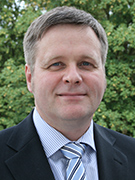
Benjamin Unger is an Assistant Professor at the Karlsruhe Institute of Technology (KIT), affiliated with the Faculty of Mathematics and the Institute for Applied and Numerical Mathematics. His research focuses on computational approaches to mathematical problems, with particular expertise in: Numerical Analysis Partial Differential Equations Data-driven computational methods Scientific Computing Dr. Unger leads the Junior Research Group on Data-driven methods for partial differential equations at KIT. His work bridges traditional numerical methods with modern data science techniques, contributing to innovative solutions in computational mathematics. He maintains an active research program within the Institute's Research Group 3: Scientific Computing. Based at the Kollegiengebäude Mathematik (building 20.30), room 3.025, he is accessible through his professional contact information and maintains a research website showcasing his scholarly activities.
Edith Tretschk is a Research Scientist at Meta Reality Labs Research in the San Francisco Bay Area. She completed her Ph.D. in Computer Science at Saarland University and Max Planck Institute for Informatics (2018-2023), advised by Christian Theobalt . Her work bridges computer graphics , computer vision , and machine learning , with a focus on 3D reconstruction and quantum computing applications. Education Ph.D. in Computer Science (2018-2023), Max Planck Institute for Informatics & Saarland University M.Sc. in Computer Science (2017-2023), Graduate School of Computer Science, Saarland University B.Sc. in Computer Science (2014-2017), Saarland University Research Focus Her research explores 3D reconstruction of dynamic scenes, neural rendering , and quantum computing for vision tasks. Recent work includes time-consistent scene flow (SceNeRFlow), quantum auto-encoders (3D-QAE), and physics-driven template matching (φ-SfT). Article Trends Her publications span 3D vision , quantum algorithms , and neural scene modeling . Key themes include non-rigid deformation, quantum-hybrid approaches, and physics-based reconstruction. Scientific Recognition Bachelor Award (2017) for top CS graduates Deutschlandstipendium scholarship (2015-2017) NeurIPS Top Reviewer (2022) Additional Contributions She has delivered invited talks at World Labs, Meta, Nvidia, and Epic Games. Active as a reviewer for CVPR, ECCV, ICCV, and NeurIPS, she has also contributed to open-source projects and datasets.
Prof. Dr. Ralf Romeike is a Professor of Computer Science Education specializing in Didactics of Computer Science at the Free University of Berlin, within the Department of Mathematics and Computer Science. His office is located at Königin-Luise-Str. 24-26, Room 019, 14195 Berlin, where he holds consultation hours every Wednesday from 12-1 p.m. by appointment. Romeike's research focuses on innovative approaches to computer science education, with particular emphasis on artificial intelligence education, data literacy development, and constructionist learning methodologies. His work bridges theoretical educational frameworks with practical classroom applications, especially in teacher training contexts. He has developed numerous educational frameworks including AI-PACK, which adapts the DPACK model for AI-related digital competencies for teachers. His publication record shows a clear trend toward AI education in K-12 settings, teacher professional development in AI and data literacy, and the integration of constructionist principles in computing education. The research spans multiple educational contexts from primary through higher education, with particular attention to how non-computer science students and teachers can develop meaningful AI competencies. His scientific contributions include significant work on: AI literacy frameworks for school education Data literacy as a component of AI education Constructionist approaches to AI/ML learning Debugging education methodologies Agile methods in computer science education Romeike leads or participates in multiple significant research projects including ENKIS (Establishment of sustainable AI-related study programs), Digi4All (Interdisciplinary Digital Education), AMI (Agile Methods for Computer Science Education), and TrainDL (Teacher training for Data Literacy & Computer Science competences), demonstrating his leadership in shaping computer science education policy and practice in Germany and internationally.
Maximilian Rabe is a Postdoctoral Researcher in the Department of Experimental and Biological Psychology at the Faculty of Human Sciences, University of Potsdam, with a secondary affiliation at the University of Copenhagen. Currently on parental leave until September 22, 2025, he maintains active research involvement in computational cognitive science, with particular focus on eye-movement dynamics during reading processes and psycholinguistic modeling. His dual institutional appointments reflect his interdisciplinary research bridging German and Danish academic communities. Dr. Rabe completed his academic training with a B.Sc. in Psychology from the University of Potsdam (2016), followed by an M.Sc. in Psychology - Cognition and Brain Science from the University of Victoria, Canada (2018), and earned his Ph.D. in Cognitive Science from the University of Potsdam in 2024 under the supervision of Ralf Engbert and Shravan Vasishth. His research program centers on computational and statistical modeling of cognitive processes, with specific expertise in eye-movement control, psycholinguistics, and memory systems. Dr. Rabe develops integrated cognitive architectures that simulate how humans process language and allocate visual attention during reading. His methodological approach combines experimental psychology with advanced Bayesian statistics and dynamical systems theory to create predictive models of cognitive behavior. Analysis of his publication trajectory reveals a consistent focus on developing sophisticated computational frameworks for understanding reading processes, with increasing emphasis on integrated models that couple syntactic processing with eye-movement control. A distinctive feature of his work is the development of specialized methodological tools, particularly R packages that advance research practices in cognitive science. His publications span high-impact journals in psychology, cognitive science, and methodology, demonstrating strong interdisciplinary reach. Dr. Rabe is actively involved in multiple research projects funded by the German Research Foundation (DFG), including Project B03 of Collaborative Research Center 1287 on eye-movement control and parsing processes, and Project B03 of CRC 1294 on parameter inference in dynamical cognitive models. His work at the University of Copenhagen investigating visual attention in virtual reality environments receives support from Villum Fonden. As a methodological innovator, Dr. Rabe has developed and maintains several important R packages including hypr for hypothesis-driven contrast coding, designr for experimental design, appRiori for Bayesian analysis, and RStanTVA for visual attention modeling. His commitment to open science practices is evident in his software development and preprint sharing. Working within Ralf Engbert's research group at the University of Potsdam, Dr. Rabe contributes to a vibrant interdisciplinary environment that combines experimental psychology, computational modeling, and advanced statistical methods. His research has implications for understanding fundamental cognitive processes and developing more accurate models of human information processing during language comprehension.
Martin Giese is affiliated with the University of Oslo (Department of Informatics) and the University Clinic Tübingen (Department of Cognitive Neurology). He is a researcher with a focus on semantic technologies, ontology-based data access, and visual query systems. Research Themes : Semantic Web, Ontology Engineering, Knowledge Graphs, Geological Informatics, Probabilistic Logic, Automated Reasoning Key Collaborations : Siemens, Statoil, Norwegian Petroleum Directorate, and various European research institutions Technical Contributions : Developed visual query systems (OptiqueVQS), ontology-driven geological modeling (GeoFault), and semantic data integration frameworks for industrial applications. His work spans both theoretical logic and practical implementations in big data environments. Publications : Recent articles focus on fault ontologies, process representation, and semantic embeddings. Earlier work includes foundational research in automated theorem proving and UML formalization.
David Broneske is a Researcher at the Otto von Guericke University of Magdeburg , Germany. His work spans Database Systems , Heterogeneous Computing , and Machine Learning Applications , with a focus on GPU/FPGA Acceleration and Non-volatile Memory (NVM) Optimization . He has contributed to projects like ADAMANT (co-processor integration) and GridTables (H2TAP data stores). Key Research Areas : Database acceleration via specialized hardware, Graph database applications in clinical/biological domains, and AutoML for domain-aware model selection. Collaborations : Frequent co-author with Gunter Saake, Bala Gurumurthy, and Sajad Karim on topics like NVM Storage and GPU-based Query Execution . Publications : Over 105 papers (2012–2025) covering Protein Identification Systems , Entity Resolution , and Software Evolution Datasets . Workshops : Co-organized the Workshop on Novel Data Management Ideas on Heterogeneous (Co-)Processors (NoDMC) and contributed to standards like Backlogs/Interval Timestamps for temporal graph queries.
Prof. Dr. Goetz Greve has been a Professor of General Business Administration with a focus on Marketing and Sales at HSBA Hamburg School of Business Administration since 2007, affiliated with the Department of Marketing Transformation. He previously served as HSBA's Vice President for Research and International Affairs (2012-2021). He holds a PhD from Christian-Albrechts-Universität zu Kiel where he studied under Prof. Dr. Dr. h.c. Sönke Albers, and has professional experience as a consultant at Accenture. His research focuses on three interconnected domains: Customer Relationship Management including Social CRM implementations and influencer relationships Sales Management covering multi-actor ecosystems and automation technologies Online Marketing spanning performance measurement, social media, and attribution modeling Recent publications demonstrate strong emphasis on digital transformation in marketing, particularly analyzing social media influencer effectiveness (2022), service ecosystem dynamics (2021), and AI applications in sales (2020). Methodologically, his work combines empirical validation with practical frameworks for marketing technology implementation. Awards: Finalist for the 2023 EMAC-IJRM Jan-Benedict Steenkamp Award for Long-Term Impact (for 2009 CRM implementation research) Doctoral Supervision: Successfully advised Dr. Felix Wasser (competitive advertising dynamics) and Dr. Patrick Weretecki (experiential value in service ecosystems). Maintains editorial board positions at International Journal of Marketing Studies (since 2011) and International Journal of Internet Advertising and Marketing (since 2013). Actively contributes to Germany's Charta digitale Vernetzung initiative on societal digitalization since 2018.
Dr. Luca Caracciolo is a researcher at the Chair of Geology (Prof. Dr. Stollhofen) within the GeoZentrum Nordbayern at Friedrich-Alexander-Universität Erlangen-Nürnberg. He specializes in Quantitative Provenance Analysis (QPA), sediment routing systems, and diagenesis, with applications to hydrocarbon and geothermal reservoir characterization. His work integrates sedimentary petrology, detrital geochemistry, and low-temperature thermochronology to link sediment composition with tectonic and climatic drivers.
Andreas Lintermann is a postdoctoral researcher and group leader of the Simulation and Data Lab (SDL) Fluids & Solids Engineering at the Jülich Supercomputing Centre (JSC), Forschungszentrum Jülich. His work focuses on integrating artificial intelligence with high-performance computing for fluid and solid mechanics applications. Coordinates European Center of Excellence in Exascale Computing (CoE RAISE) Leads EU-funded projects: EuroCC/EuroCC2, interTwin, SPECTRUM Co-leads EU-project HANAMI, BMBF project StroemunsRaum, and BMWK project nxtAIM Research Interests: His group develops encoder-decoder CNNs for aeroacoustic field prediction, convolutional autoencoders for flow field compression/reconstruction, and physics-informed neural networks for large-scale simulation initialization. Applications include turbulence modeling, shape optimization, and medical imaging. Technical Focus: Specializes in AI-driven multi-physics coupling, heterogeneous hardware acceleration, and super-resolution algorithms for computational fluid dynamics.
Patrick Fischer, M.Sc., is a Researcher and Doctoral Student at the Department of Health Sciences, Technische Hochschule Mittelhessen (THM), with a focus on biomedical engineering, machine learning, and respiratory disease research. His work spans nocturnal symptom monitoring in COPD and asthma patients, mobile health technology development, and AI-driven medical diagnostics. Key research areas include Biomedical Engineering applications for respiratory monitoring Machine Learning techniques in disease detection Mobile Health Technologies for home-based care Computational Biology in DNA methylation analysis Recent publications highlight graph database applications in nutrition apps, distributed computing for CNS tumor classification, and deep learning for cough detection and plagiocephaly monitoring. All articles demonstrate interdisciplinary approaches combining clinical needs with computational methods. His teaching responsibilities include supervising final thesis and project work. Contact: patrick.fischer@ges.thm.de .
Chloe Eghtebas is a researcher at the Technical University of Munich, affiliated with the Faculty of Informatics and the Chair of Computer Aided Medical Procedures (Prof. Navab). She also collaborates with Prof. G. Klinker's Chair for Augmented Reality (FAR) at TUM. Her work focuses on Augmented Reality, Mixed Reality, and Human-Computer Interaction, often integrating gamification and tangible interfaces for urban planning, medical applications, and user experience studies. Research: Augmented Reality, Mixed Reality, Gamification, Human Augmentation Teaching: Involved in Masterpraktikum GAMES and educational projects Projects: MEvoDiP, Virtual Gossip, SensorVis, Trackframe, PARENT, PRESENCCIA, ARCHIE, TUMMIC, DWARF, and others Her publications highlight applications of AR in urban planning, user perception studies, gamification for technical tasks, and ethical considerations in ubiquitous AR. No formal scientific awards are explicitly mentioned in the available data.
Prof. Dr. Dirk Kalmring is a Professor of Business Informatics at the Faculty of Business Studies, Hochschule Düsseldorf (University of Applied Sciences Düsseldorf). His academic work focuses on business process management, decision analytics, and IT applications in business contexts. He teaches courses including Business Process Management, Business Informatics, and IT Applications, and leads project modules on topics like supply chain analysis and IT-supported business methods. Prof. Kalmring's research spans several key areas in business informatics: business process management (BPM), decision analytics, process mining, robotic process automation (RPA), information security, and knowledge management. His work integrates theoretical frameworks with practical applications, particularly in modeling business processes using standards like BPMN and DMN. He has developed strong industry partnerships with companies such as UiPath, Signavio, and Fluxicon to enhance practical learning experiences for students. His recent publications reflect trends toward digital transformation in business processes, with increasing focus on decision automation, process optimization through RPA, and security in digital business environments. The research shows a progression from foundational work in knowledge management to current applications in process mining and decision analytics. Scientific awards include nominations for 'Professor des Jahres' (Professor of the Year) in 2023, 2018, and 2015, recognizing his excellence in practical-oriented teaching that prepares students for professional careers. Prof. Kalmring actively engages students through project modules where they work with real industry partners like Tsurumi Europe GmbH and GBTEC Software AG. These projects focus on practical applications of business process modeling, supply chain optimization, and digital transformation. His teaching approach emphasizes bridging academic theory with industry practice. He leads a working group that collaborates with various industry partners including UiPath, Signavio, Fluxicon, and MID GmbH on research and teaching initiatives related to business process management, decision modeling, and enterprise architecture.
Helmut Rainer is a Professor of Economics (specializing in Social Policy and Labor Markets) at the Faculty of Economics, Ludwig-Maximilians-University Munich, and Director of the ifo Center for Labor and Demographic Economics . His research focuses on Labor Market Economics , Population Economics , and Family Economics . PhD in Economics (University of Essex, 2005) Research spans domestic violence measurement, migration policy impacts, gender economics, and political socialization Recent research trends: Analysis of climate activism's political spillovers, crisis-driven domestic violence quantification, immigrant integration through citizenship policies, and football hooliganism costs. His work employs behavioral economics , empirical policy evaluation , and big data analysis . Scientific Contributions: Developed novel domestic violence measurement methods via internet searches Pioneered research on citizenry's attitudes in reunified Germany Evaluated universal childcare effects on fertility Studied economic abuse mechanisms Analyzed parental leave policy impacts Key Projects: Bill & Melinda Gates Foundation's climate change impacts in Sub-Saharan Africa, DFG-funded research on custody arrangements, and Leibniz-funded violence against women economics studies.
Federico Pichi is an Assistant Professor (RtdA) at the International School for Advanced Studies (SISSA) in Trieste, Italy, where he is a key member of the mathLab research group. His work focuses on developing computational frameworks for studying parametrized partial differential equations, with particular emphasis on systems exhibiting bifurcating behavior and multiple solution branches. Dr. Pichi's academic foundation includes: PhD in Mathematical Analysis, Modelling and Applications from SISSA (2016-2020) Master's degree in Mathematics from Sapienza University of Rome (2014-2016) Bachelor's degree in Mathematics from Sapienza University of Rome (2011-2014) His research expertise spans Numerical Analysis , Mathematical Modeling , and Scientific Computing , with specialization in reduced order modeling techniques for nonlinear parametrized PDEs. Dr. Pichi has made significant contributions to understanding bifurcating phenomena in computational fluid dynamics, particularly the Coanda effect in channels. His methodological approach uniquely bridges traditional projection-based reduced order models with cutting-edge machine learning techniques, including artificial neural networks and graph convolutional autoencoders, to address the computational challenges of nonlinear systems with multiple solution branches. Analysis of Dr. Pichi's recent publication trajectory reveals an increasingly sophisticated integration of optimal transport theory with deep learning approaches to tackle slow-decaying Kolmogorov n-width problems in reduced order modeling. His work demonstrates remarkable versatility across application domains, from cardiovascular flow modeling to hyperelastic material analysis, while maintaining a consistent methodological focus on efficient computational frameworks for bifurcating systems. The incorporation of graph-based neural networks for resolution-invariant operator learning represents his most recent methodological innovation. As an active member of the mathLab research group under Professor Gianluigi Rozza, Dr. Pichi contributes to a collaborative environment that bridges theoretical mathematics with practical engineering applications. His research has established important connections between classical numerical analysis and modern machine learning paradigms, making significant contributions to the field of scientific computing for complex nonlinear systems.
Prof. Knut Haase holds the position of Professor at the University of Hamburg Business School's Institute of Logistics, Transport and Production. He is affiliated with the University of Hamburg in Hamburg, Germany, and his office is located in Room 2033. His contact information includes the email knut.haase@uni-hamburg.de and telephone number +49 40 42838 9026. Office hours require prior arrangement via email with his team assistant. His research focuses on transportation systems optimization, production planning in manufacturing industries, and facility location strategies in public services. Specific areas of interest include: Logistics and supply chain management Transport economics and urban mobility solutions Healthcare facility location modeling Operations research applications in public safety Mathematical programming for production scheduling Event management and crowd safety optimization His recent work exhibits strong trends in applying optimization algorithms to: Public transportation networks Large-scale event logistics (e.g., FIFA World Cup, Hajj pilgrimage) Healthcare and police service district planning Brewery production systems Academic program evaluation in business schools Analyses often combine simulation methods with spatial and stochastic modeling techniques. Prof. Haase has advised multiple institutions including DB Schenker, Lufthansa Technical Training, and Bosch GmbH. His research collaborations involve: Development of decision support systems for production planning Optimization of crew scheduling in transportation sectors Revenue-maximizing tariff zone designs He leads research teams focusing on: Transport economics within the Institute of Logistics Mathematical modeling for public sector challenges Logistics optimization in manufacturing and service industries