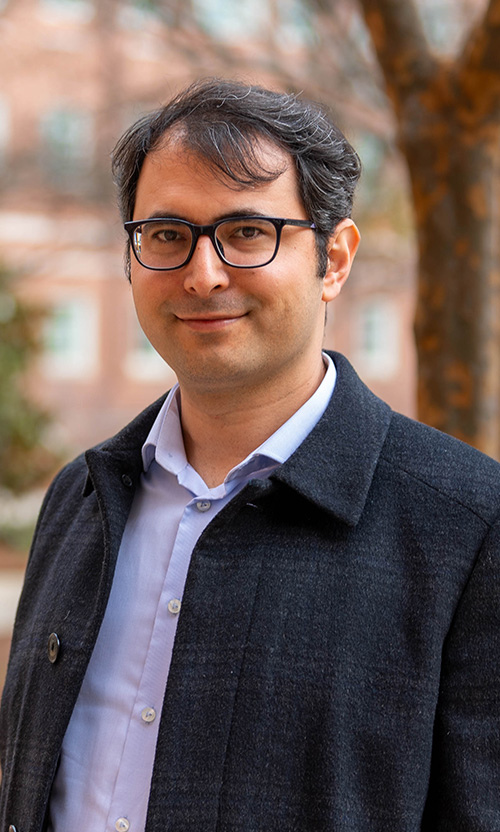
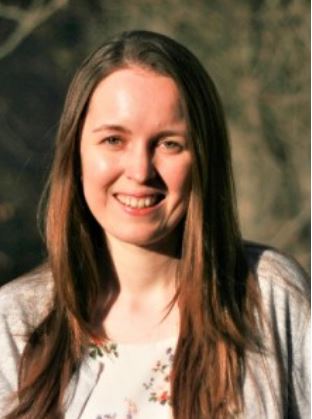
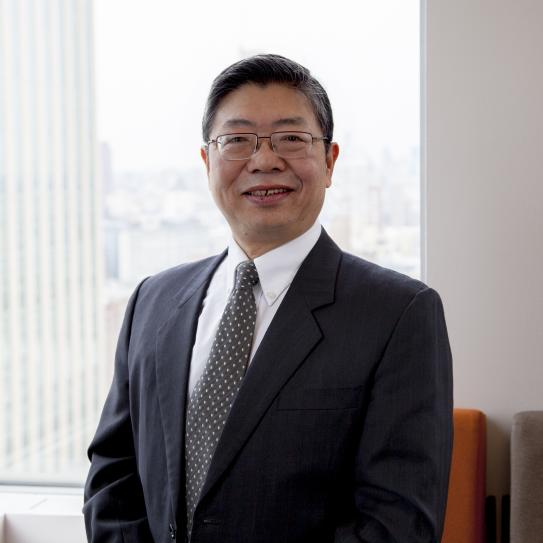
Seth Kaplan is a Professor in the Department of Psychology at George Mason University. His research focuses on employee well-being, team effectiveness, virtual work, and occupational health through projects like NSF-funded emotion regulation interventions and Army Research Institute collaborations on affective forecasting. He directs the KA-Lab, studying team resilience, metaperceptions, and statistical methodologies. Recent publications analyze job boredom, cognitive reappraisal interventions, and personality measurement innovations. His book Crisis-Ready Teams (2024) synthesizes data from high-risk environments. Courses taught include Occupational Health, Organizational Change, Psychometrics, and Multivariate Statistics. Grants: National Science Foundation (Co-PI): Just-in-Time Adaptive Interventions for Emotion Regulation Army Research Institute (PI): Affective Forecasting Errors Recent Presentations: Personality and generative AI use at work (SIOP 2025) Work situation identification via NLP (SIOP 2025) Helicopter helping in teams (SIOP 2025)
Dr. Dave Hicks is a Lecturer in Data Analysis and Assessment in Education at the University of Tasmania's Faculty of Education. His research focuses on education equity, quantitative methodologies, and systemic barriers affecting marginalized student groups. He holds a PhD (2021), Grad Cert (Research) (2021), and Bachelor of Education (Honours) (2014) from the University of Tasmania. Education Background: PhD in Education, University of Tasmania (2021) Graduate Certificate in Research, University of Tasmania (2021) Bachelor of Education (Honours), University of Tasmania (2014) Research Interests: Dr. Hicks applies data-driven approaches to analyze educational policies and practices, particularly addressing inequities in low SES, regional, and Indigenous student populations. His work emphasizes collaboration with schools, governments, and NGOs to drive systemic change. Key areas include: Online engagement strategies for disadvantaged students Teacher retention and wellbeing in secondary education Culturally responsive pedagogies for Indigenous learners VR technology in place-based education Recent Research Trends: His 2023-2025 publications highlight: Quantitative analysis of literacy gender gaps VR-based educational innovations Policy frameworks for Indigenous student success Online pedagogies for diverse student groups Grants & Partnerships: Active grants include: $177,574 DECYP literacy training package (2023-2024) $58,077 Table Cape VR Education Project (2024) $49,997 National Centre for Student Equity grant (2024-2025) Labs/Teams: Collaborates with CALE (College of Arts Law and Education) and interdisciplinary teams on projects like the Table Cape VR initiative and TBRI professional learning programs.
Ali Ghanbari is an Assistant Professor in the Department of Computer Science and Software Engineering at Auburn University's College of Engineering. His research focuses on software engineering, programming languages, and data science, with an emphasis on automated program repair, deep learning, and mutation analysis. He received his Ph.D. in Software Engineering from the University of Texas at Dallas and his M.Sc. and B.Sc. from Amirkabir University of Technology in Tehran, Iran. Education: Ph.D. Software Engineering, University of Texas at Dallas M.Sc. Software Engineering, Amirkabir University of Technology B.Sc. Software Engineering, Amirkabir University of Technology Research Interests: Dr. Ghanbari's work spans automated program repair, deep neural network analysis, and mutation-based fault localization. He explores techniques to enhance software quality through methods like patch correctness assessment, object similarity-based prioritization, and optimization of mutation testing frameworks. His contributions include frameworks such as PRF and tools like Shibboleth for hybrid patch evaluation. Publications Trends: His recent work highlights advancements in accelerating mutation analysis, improving deep learning models via modular decomposition, and refining automated repair techniques. Notable contributions include Rocq for goal clone detection and MeMu for faster mutation analysis. Awards & Grants: No specific awards or grants mentioned in the provided materials. Advising & Labs: While no advisees are listed, his research group likely focuses on program repair and deep learning applications. His work is supported by datasets like Defexts, which provides reproducible real-world bugs for JVM languages.
Suryadipta Majumdar is an Associate Professor at the Concordia Institute for Information Systems Engineering (CIISE), part of Concordia University. His primary research interests focus on Cloud Computing Security and Privacy, Internet of Things (IoT) Security and Privacy, and Software-Defined Network (SDN) Security. He has contributed extensively to proactive security measures in containerized systems and Kubernetes environments, alongside developing tools like ACE-WARP and PerfSPEC to address real-time threats. In terms of education, he holds a PhD in a relevant field, though specific details about his academic background (e.g., institutions, thesis topics) are not explicitly mentioned in the provided text. His work bridges theoretical cybersecurity frameworks with practical implementations, emphasizing automated translation, differential privacy, and compliance auditing across cloud and IoT ecosystems. Majumdar’s research trends highlight a focus on layered security analysis, anomaly detection in IoT networks, and mitigating vulnerabilities in network functions virtualization (NFV). He has explored topics such as resilient in-band OpenFlow networks, runtime security policy enforcement in OpenStack, and privacy-preserving network data anonymization via tools like SegGuard. His recent publications reflect collaboration with international conferences and workshops, including contributions to Digital Forensics and Applied Cryptography. No scientific awards are explicitly mentioned in the text. His advising activities and grant history remain unlisted, though he has developed notable security frameworks and tools. He is affiliated with CIISE and likely contributes to its research initiatives in emerging technologies like 5G and edge-core environments.
Kannan Srinivasan is the H.J. Heinz II Professor of Management, Marketing and Business Technology at Carnegie Mellon University's Tepper School of Business, a position he has held since 1999. Prior to joining CMU, he taught at the business schools of the University of Chicago and Stanford University. His academic career spans over three decades with significant contributions to marketing science and data analytics. His educational background includes: Ph.D. in Management from University of California Los Angeles (1986) MBA in Marketing/Finance from Xavier School of Management, Jamshedpur, India (1980) BA in Engineering from University of Madras, Chennai, India (1978) Srinivasan's research focuses on advanced data analytics models applied to marketing problems, with particular expertise in internet-generated large-scale data analysis. His work bridges the gap between theoretical marketing models and practical business applications, especially in the areas of algorithmic pricing, consumer behavior analysis, and AI-driven marketing strategies. He has pioneered research in dynamic pricing systems, location-aware marketing technologies, and the economic implications of AI in consumer markets. Analysis of his recent publications reveals a strong trend toward examining the intersection of artificial intelligence, consumer welfare, and market dynamics. His work increasingly focuses on ethical implications of AI in marketing, algorithmic bias, and the socioeconomic impacts of digital platforms across various sectors including real estate, social media, and e-commerce. His scientific achievements include: Elected Fellow of the Informs Society of Marketing Science (2013) for lifetime contribution to the field Served as President of the Informs Society of Marketing Science Holds multiple patents related to time and location aware dynamic push content, dynamic pricing, and online advertising Srinivasan has advised numerous doctoral students whose careers have led them to faculty positions at top institutions including Duke, Harvard, Columbia, Yale, University of Chicago, Wharton, University of Michigan, and Indian Institute of Management Bangalore. He has extensive consulting experience with large firms and startups, translating academic research into practical business applications. His professional service includes editorial roles at prestigious journals including Management Science, Marketing Science, and Quantitative Marketing and Economics, as well as significant committee service within CMU including the Elliott D. Smith Award Committee and various Dean's Advisory committees. His research is organized around several key initiatives focused on applying advanced analytics to solve complex marketing problems, with particular emphasis on developing interpretable AI models that balance business objectives with consumer welfare considerations.
Akshay Narayan is a Senior Lecturer (Educator Track) at the School of Computing, National University of Singapore (NUS), where he teaches senior undergraduate and graduate-level courses in AI Planning and Decision Making, as well as introductory and intermediate-level Software Engineering courses. Education: Ph.D. in Computer Science from National University of Singapore (completed in 2020) M.Tech. in Information Technology from International Institute of Information Technology Bangalore, India B.E. in Computer Science & Engineering from Visveswaraya Technological University, India Research Interests: Dr. Narayan's research spans multiple domains within computer science with a primary focus on artificial intelligence and its applications. His current research centers on transfer learning in reinforcement learning, multi-agent decision making, and AI planning. He has also made significant contributions to cloud computing research, particularly in areas such as smart metering, chargeback systems, power-aware cloud metering, and workload analysis for virtual machine sizing. His work bridges theoretical foundations with practical applications, addressing real-world challenges in computing systems. He has recently expanded his research to include technology in education, exploring how AI can be integrated into teaching and learning processes. Publication Trends: Dr. Narayan's publication record demonstrates a clear evolution from foundational work in cloud computing to more recent explorations in reinforcement learning and AI education. His early work focused on practical applications in cloud systems, including smart metering and QoS monitoring. More recently, his research has shifted toward AI planning, decision making, and the educational applications of AI. This progression shows his ability to adapt to emerging fields while maintaining a strong foundation in systems research. Awards and Recognition: Teaching and Mentoring: Dr. Narayan teaches a variety of courses at NUS including CS2113 Software Engineering & Object-Oriented Programming, CS3219 Software Engineering Principles and Patterns, CS3268 Responsible AI: From Algorithms to Impact, and IT5100F Industry Readiness: Data Analytics and AI in Practice. He has also taught CS4246/CS5446 AI Planning and Decision Making. His teaching approach integrates his research expertise with practical applications, providing students with both theoretical foundations and hands-on experience. He has taught these courses across multiple academic years from AY-2013/14 through AY-2020/21. Research Groups and Collaborations: Dr. Narayan has collaborated with researchers across multiple institutions, including work with Prof. Tze Yun Leong at NUS (his PhD advisor), Shrisha Rao, Zhuoru Li, and others. His research has often involved interdisciplinary collaborations that bridge theoretical computer science with practical system implementations.
David Lefevre is a Professor of Practice at the Department of Management and Entrepreneurship, Imperial College Business School. His research focuses on AI applications in education, digital innovation in higher education, and tech-transfer. He co-founded the Edtech Lab in 2004, which pioneered Imperial’s online courses and Global Online MBA. The Lab has won awards including a Gold at IMS Learning Impact (2010) and Silver at QS Reimagine (2018). He also co-founded educational tech companies Epigeum (now part of Oxford University Press) and Insendi (now Study Group). He is Special Advisor on Digital Innovation at Study Group and a British Council Trustee, focusing on digital transformation. Lefevre’s work emphasizes strategic adoption of AI, online education quality, and bridging cultural barriers in learning. Education & Background: While formal education details are not provided, his career reflects deep expertise in education technology and entrepreneurship. His roles include: Professor of Practice, Imperial College Business School Co-founder & former leader of the Edtech Lab Co-founder of Epigeum and Insendi Expert in Residence, Imperial Enterprise Lab Research Interests: Lefevre’s work spans AI in education, online learning infrastructure, and cross-cultural e-learning. He advocates for data-driven strategies to improve online course design and learner engagement. His recent focus includes AI-driven feedback systems and holographic teaching methods. Key Achievements: Launched Imperial’s first online MBA program in 2015 Developed an LMS alternative using middleware Promoted adaptive learning environments for diverse learners Awards & Recognition: Gold award at IMS Learning Impact awards 2010 Silver award for Business Education at QS Reimagine Education 2018 Advisory & Grants: Advises Study Group and the British Council on digital innovation. His ventures have secured significant investments, though specific grant details are not disclosed. Labs & Collaborations: Leads the Edtech Lab and collaborates with Imperial Enterprise Lab. Active in global education networks such as QS Reimagine and the British Council.
Dr. Jiaojiao Jiang is a Senior Lecturer in the School of Computer Science and Engineering at the University of New South Wales (UNSW). She holds a Ph.D. from Deakin University (Melbourne, Australia) and has published over 45 articles with 1,100+ citations. Her research focuses on AI-driven cybersecurity solutions, particularly misinformation detection and modeling information propagation dynamics. She is affiliated with UNSW's Sydney campus and can be contacted at jiaojiao.jiang@unsw.edu.au . Education: Ph.D., Deakin University, 2010s Research Interests: Artificial Intelligence applications in cybersecurity Misinformation detection and network analysis Machine learning for network security Data privacy in IoT systems Publications span topics like fake news detection via graph neural networks, multiplex network robustness, and cyber threat intelligence frameworks. Her work bridges theoretical network science with practical cybersecurity challenges.
Julie Boland is a Professor at the University of Michigan's College of Literature, Science, and the Arts, affiliated with the Psychology and Linguistics departments. She holds a PhD from the University of Rochester and leads the Psycholinguistics Lab, focusing on interdisciplinary language processing research. Her work explores interfaces between word recognition, syntax, semantics, and sociolinguistic variables, with special attention to bilingual processing and executive function roles. Education: PhD, University of Rochester. She teaches research methods and language psychology, advising numerous PhD candidates. Key research themes include sociolinguistic priming, bilingual ambiguity resolution, and language processing in digital contexts. Her findings highlight how dialect variation, cultural background, and technology impact comprehension and production. Research Interests: Psycholinguistics, sentence processing, lexical access, sociolinguistic influences, bilingualism, and cognitive mechanisms. Labs: Director of the Psycholinguistics Lab, promoting interdisciplinary collaboration across Psychology and Linguistics. Teaching: Courses on language psychology and research methods for Psychology undergraduates/graduates. Recent work addresses conversational dynamics in Zoom interactions, cultural differences in visual attention, and L2 structural priming effects. She emphasizes practical applications of psycholinguistic insights for education and technology design.
Lynn Carol Miller is a Professor of Communication at the University of Southern California’s Annenberg School for Communication and Journalism. Her research focuses on leveraging virtual environments, AI agents, and computational models to address health-related social behaviors, particularly in HIV/AIDS prevention and mental health. Funded by NIH, CDC, and DARPA (over $20M), her work integrates neuroscience, behavioral science, and technology. She pioneered interventions like SOLVE (Socially Optimized Learning in Virtual Environments) and Systematic Representative Design. Education: PhD in Personality Psychology from University of Texas at Austin. Key areas include health communication, gaming for behavior change, and computational modeling of social processes. She has supervised 17 doctoral students and collaborators across universities globally. Research emphasizes scalable interventions using fMRI-compatible tools and virtual reality. Notable contributions include reducing shame in HIV prevention games and analyzing neural correlates of risk-taking behaviors. Awards include the Early Career Award (2003) and ICA’s Outstanding Contribution to Communication Science (2020). Labs/Teams: Active in multidisciplinary teams at USC and collaborating institutions, focusing on virtual environment design, AI-driven interventions, and neurobehavioral studies. Current projects explore AI for public health and inclusive avatar representations in social VR.
Meng Liang is a Teaching Professor in the Centre for Interdisciplinary Methodologies (CIM) at the University of Warwick. Her research focuses on digital media economies, algorithmic media systems, and the attention economy, particularly in East Asian contexts. She holds a Ph.D. in Media and Film Studies from University College London (UCL), supported by the Overseas Research Scholarship (ORS-UCL). Her doctoral work examined participatory media and attention economy models in China since 1995. Key research interests include the cultural and social impacts of algorithmic media platforms like TikTok, emotional dependency in user demographics, and the interplay between media technology and cultural norms. She has conducted research at MIT’s Global Media Technology and Cultural (GMTaC) Lab (2019-2020). Her recent work explores data attraction models reshaping social media dynamics, Chinese compressed modernity in short video platforms, and transmedia storytelling in East Asia. She has presented at international conferences including MIT Worlding 2023 and the Critical Digital and Social Media Research Conference (2019). Notable awards include the ORS-UCL scholarship. She teaches the module IM901: Cultures of the Digital Economy at Warwick.
Dr Caroline Roney is a UKRI Future Leaders Fellow and Lecturer in Computational Medicine at Queen Mary University of London's School of Engineering and Materials Science. Her research focuses on developing engineering methodologies to personalize treatment for cardiac arrhythmias, combining signal processing, machine learning, and computational modeling to predict optimal patient-specific therapies. She holds a MMath from the University of Oxford, MRes and PhD from Imperial College London, and has held fellowships at Liryc Institute and King's College London. Her work integrates clinical imaging and electrophysiological data to advance atrial fibrillation treatment strategies. Education: MMath in Mathematics, University of Oxford MRes in Biomedical Research, Imperial College London PhD in Cardiac Signal Processing, Imperial College London Research Interests: Development of patient-specific digital twins for atrial fibrillation, computational modeling of fibrosis, and integration of machine learning with clinical data. Awards: UKRI Future Leaders Fellowship, Fondation Lefoulon Delalande Fellowship (2015–2017), MRC Research Fellowship (2017–2021). Affiliations: Digital Environment Research Institute (DERI), Visiting Lecturer at King's College London. Her research group has secured £9.3M in grants, including EPSRC and MRC funding, to advance virtual atrial modeling and AI-driven healthcare tools. Key collaborations include industry partners like Acutus Medical and RHYTHM AI, focusing on clinical translation of computational models.
Prof. (ret.) Dr.-Ing. habil. Wolfgang Schröder-Preikschat is a retired Full Professor at the Friedrich-Alexander University (FAU) Erlangen-Nuremberg, affiliated with the Chair of Computer Science 4 (System Software). His expertise focuses on distributed systems, operating systems, and resilient computing architectures. Affiliations: Faculty of Engineering, Department of Computer Science Key Roles: Former Chair of Computer Science 4, Co-lead scientist in Priority Program 2377 (Disruptive Main Memory Technologies) and Priority Program 2378 (Resilient Worlds) Research Contributions: Specializes in power-aware non-volatile memory systems (PAVE project), robust embedded data communication (ResPECT project), and fault-tolerant distributed systems. His work addresses challenges in main memory technologies, system resilience against failures/attacks, and energy-efficient computing. Projects: Leads initiatives like Power Failure-Aware Virtual Non-Volatile Memory (PAVE) and Robust, Power-Efficient Embedded Data Communication Stations (ResPECT), advancing system software reliability and efficiency. Contact: Room 0.054, Martensstr. 1, Erlangen. Email: wosch@cs.fau.de , Website: sys.cs.fau.de/~wosch
H. Jonathan Chao is a Professor in the Department of Electrical and Computer Engineering at New York University (NYU Tandon School of Engineering). He is the Director of the High-Speed Networking Lab, leading a team of 6 PhD students and 10 Master’s students. His research focuses on software-defined networking, network function virtualization, datacenter networks, and high-speed packet processing. Chao has held significant roles, including Head of the ECE Department (2004–2014) and former CTO of Coree Networks. He has authored over 200 publications and holds 58 patents. His awards include IEEE Fellow and National Academy of Inventors (NAI) Fellow. Education: B.S. and M.S. from National Chiao Tung University (Taiwan), Ph.D. from Ohio State University. Research Highlights Developing solutions for data center networks, network security, and quality of service control. Pioneering work in programmable packet schedulers, reinforcement learning for traffic engineering, and SDN security frameworks like SDNShield. Contributions to hybrid SDN networks, bufferless switch architectures, and energy-efficient data center designs. Awards Fellow of National Academy of Inventors (NAI) Fellow of IEEE Telcordia Excellence Award (1987) IEEE Best Paper Award (2001) IEEE New Jersey Coast Section Speaker of the Year (2003) Advisees & Labs Supervises 6 PhD and 10 Master’s students in the High-Speed Networking Lab. Collaborates with the Center for Advanced Technology in Telecommunications (CATT) to advance telecom innovations. Labs & Teams Directs the High-Speed Networking Lab, focusing on cutting-edge networking solutions, and contributes to CATT’s mission of technology transfer and entrepreneurship.
Christian Jacob is a Professor in the Department of Computer Science within the Faculty of Science at the University of Calgary . He holds a B.S. in Computer Science and a Doctor of Engineering Science from Erlangen University . His research focuses on nature-inspired algorithms, biocomputing, and agent-based simulations applied to biological systems and education. Key initiatives include the LINDSAY Virtual Human Project , which uses immersive virtual reality to explore human anatomy and physiology. He contributes to the university's strategic priorities in Digital Worlds and Health and Life initiatives. His work integrates evolutionary algorithms, cellular automata, and swarm intelligence into creative and medical applications. Notable achievements include the ASTech Award (2015) from Alberta Science and Technology. His projects emphasize interactive education through tools like LeukemiaSIM , Eukaryo , and the Giant Walkthrough Gut . Jacob also explores visualization techniques, such as evoVision3D and LifeBrush , to enhance scientific understanding. His research bridges computational methods with real-world applications in healthcare, architecture, and game design. Collaborative efforts include developing agent-based models for immune systems, nervous responses, and crowd behavior. Jacob's work spans interdisciplinary fields, blending computer science with biology, engineering, and the arts.