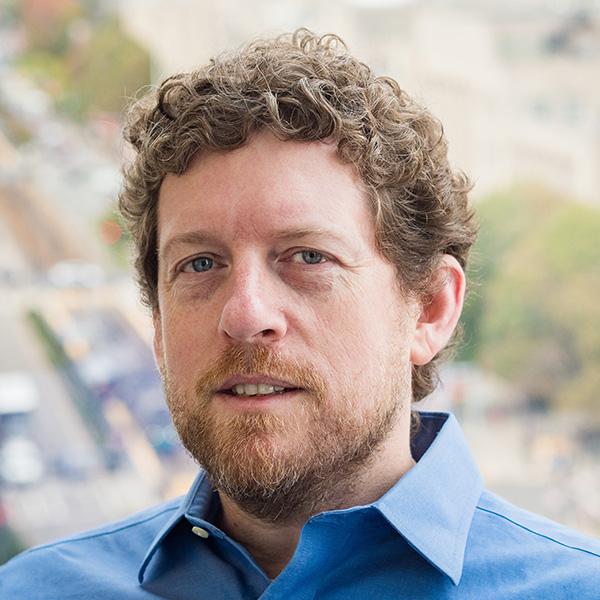
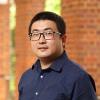
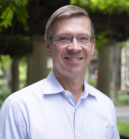
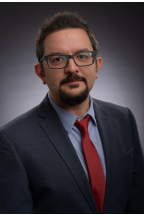
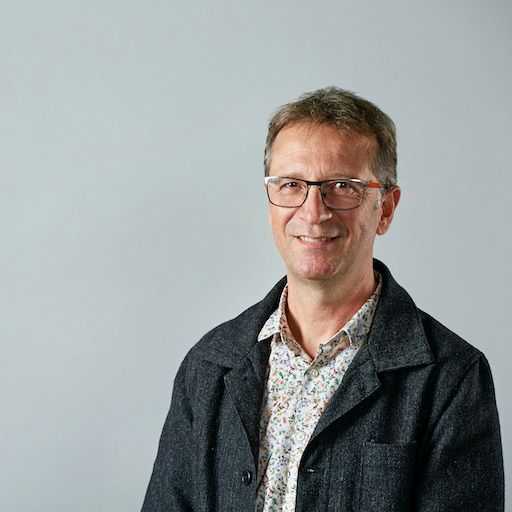
Jason Ritt is an Associate Professor of Brain Science (Research) and Scientific Director of Quantitative Neuroscience at the Robert J. and Nancy D. Carney Institute for Brain Science, Brown University. He holds affiliations with the Data Science Institute and collaborates across disciplines on quantitative research methods. Education : B.S., M.A., and Ph.D. in Neuroscience from Boston University (1997–2003). Research : Focuses on neural processing during active sensing and neuroengineering for neurostimulation. Combines electrophysiology, optogenetics, and theoretical approaches in rodent models. Develops closed-loop systems for studying sensory neural prosthetics and brain-machine interfaces. Key areas include synaptic diversity, neurocontrol algorithms, and sensory restoration. Teaching : Instructs NEUR 2100 NeuroPracticum, integrating hands-on neuroscience research training.
Joanna Millstein is a Post-doctoral Fellow in Geophysics at the Colorado School of Mines. She earned her Ph.D. in Geophysics from the Massachusetts Institute of Technology in 2023 as part of the MIT-WHOI Joint Program in Oceanography and Engineering, where her dissertation focused on The Flow and Fracture of Antarctic Ice Shelves . She also holds an A.B. in Earth Sciences from Dartmouth College (2017). Her research centers on the deformation and fracture of glacier ice, working at the intersection of fracture mechanics, remote sensing (particularly SAR and InSAR processing), statistical mechanics, and stochastic models. Millstein uses observational data from satellites and field measurements to derive mechanical and statistical models for glacier ice processes, with particular focus on reconciling observations of ice fracture and iceberg calving with theoretical models. Her work aims to resolve the nonlinear physics of glacier ice to better understand future global climate change impacts. Millstein's publication record shows a strong focus on Antarctic ice dynamics, with recent work applying extreme value theory to analyze 47 years of iceberg calving events. Her research demonstrates consistent attention to both theoretical modeling and practical applications for understanding climate change impacts on polar regions. She has developed computational tools including CryoCloud, reflecting her commitment to open science and cloud-based infrastructure for cryosphere research. Her scientific contributions span ice shelf mechanics, fracture prediction, rheology, and statistical modeling of glacial processes. Millstein maintains an active research presence with publications extending to 2025, demonstrating ongoing contributions to the field of glaciology and climate science. She is affiliated with the glaciology research center at Colorado School of Mines and maintains an active GitHub presence with climate-related code repositories. Her work bridges theoretical geophysics with practical climate change impact assessment, particularly regarding ice sheet stability and sea level rise projections.
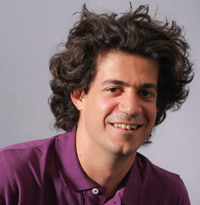
Constantinos Daskalakis is the Armen Avanessians (1982) Professor in the MIT Schwarzman College of Computing and the Department of Electrical Engineering and Computer Science (EECS). He joined MIT in 2009 and is a member of the Computer Science and Artificial Intelligence Laboratory (CSAIL), affiliated with the Laboratory for Information and Decision Systems (LIDS) and the Operations Research Center (ORC). His research focuses on theoretical computer science, with emphasis on game theory, machine learning, and high-dimensional statistics. Education: Ph.D. in Computer Science (not explicitly stated, but implied by tenure and awards). Research interests include computational complexity of Nash equilibria, multi-item auctions, machine learning algorithms, and causal inference. His work bridges game theory, economics, probability, and statistics, with applications in AI and healthcare. Key contributions include resolving long-standing problems in computational game theory and developing efficient methods for statistical hypothesis testing. He has been recognized with the 2018 Nevanlinna Prize, ACM Grace Murray Hopper Award, and the Kalai Game Theory Prize. Affiliations: CSAIL, LIDS, ORC, and the Foundations of Data Science Institute. Active in multi-agent learning, bias mitigation in data, and generative models.
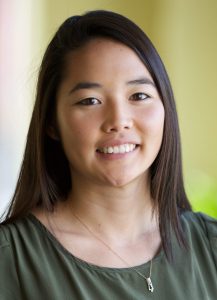
Miyuki Hino is an Assistant Professor in the Department of City and Regional Planning and an Adjunct Assistant Professor in the Environment, Ecology, and Energy Program at the University of North Carolina at Chapel Hill. She holds a Ph.D. in Environment and Resources from Stanford University and a B.S. in Chemical Engineering from Yale University. Her research focuses on climate hazards, governance, and public policy , with emphasis on equitable adaptation to climate change. Key areas include sea level rise impacts, flood risk on property markets, and managed retreat strategies. She has conducted extensive work on floodplain development policies, household relocation programs, and community resilience frameworks. Dr. Hino's interdisciplinary approach integrates environmental science, urban planning, and social equity . She collaborates with academic and municipal partners, such as the Center for Urban and Regional Studies and Annapolis, MD local governments, to develop actionable solutions for climate adaptation. Her work bridges technical analyses (e.g., sensor networks, machine learning) with policy design to ensure both effectiveness and justice in climate responses. Recent projects emphasize preventing future 'trapped households' by analyzing zoning policies and market dynamics that drive risky development. She advocates for climate-smart growth strategies to balance economic needs with environmental safety, while addressing disparities in vulnerability across communities. Her research has been featured in Science Advances , Nature Climate Change , and interdisciplinary journals. She actively engages with policymakers to translate findings into practical measures, such as equitable buyout programs and floodplain management reforms.
Anna Delin is a Full Professor at KTH Royal Institute of Technology since 2011, leading research on magnetic and quantum phenomena in materials. She heads the WISE research school (wise-materials.org) and served as Deputy Head of the School of Engineering Sciences (SCI) from 2018–2022. Her expertise spans condensed matter physics, with a focus on nanomagnetism, skyrmions, spin-lattice couplings, and topological materials. Education: PhD in Condensed Matter Physics from Uppsala University (1998). Key awards include Naturvetarpriset (1998), Royal Swedish Academy of Sciences Research Fellowship (2007), Thuréus Prize (2018), and Edlundska Prize (2024). She has held visiting roles at ICTP, Los Alamos National Lab, and the Fritz Haber Institute. Research interests include magnetic skyrmions, magnonics, spintronics, and ultrafast demagnetization. Recent publications focus on spin-lattice dynamics, topological materials, and quantum analogs of classical magnetic models. Her work bridges theory and experiment, with contributions to tools like SpinView for computational magnetism analysis. Teaching includes roles as examiner for the Degree Project in Applied Physics and teacher for Sustainable Development in Engineering Physics. She actively participates in materials design initiatives and semantic data processing for big research data. Lab affiliations include her own research group at KTH and collaborations through WISE. Current projects explore skyrmion stabilization, magnon entanglement, and quantum spin systems, with implications for next-generation spintronic devices.
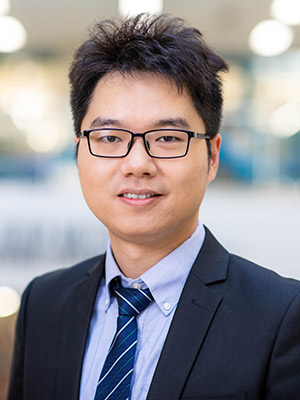
Cheng Zhang is an Assistant Professor in the Department of Computer Science & Engineering at Texas A&M University. His research focuses on computer vision, machine learning, artificial intelligence, and cyber-physical systems. He holds a Ph.D. from The Ohio State University (2022), an M.S. from Beijing University of Posts and Telecommunications (2016), and a B.Eng. from Tianjin University (2013). His work emphasizes high-fidelity 3D garment generation, text-to-image systems, and addressing challenges in long-tailed data for instance segmentation. Key achievements include the 2023 Best Paper Finalist at ICCV and the 2022 Ohio State University Graduate Research Award. Selected publications span top venues like ACM SIGGRAPH Asia, ECCV, and ICCV, showcasing contributions to generative models, view synthesis, and calibration techniques in computer vision.
Zerina Kapetanovic is an Assistant Professor in the Department of Electrical Engineering at Stanford University, with courtesy appointments in Computer Science and Geophysics. She leads the S4 Lab, focusing on low-power wireless systems, IoT, and environmental/healthcare applications. Her work includes innovations in passive communication, energy-efficient sensing, and satellite connectivity. Education: PhD in Electrical Engineering (University of Washington, 2022) Postdoctoral Research: Microsoft Research (Networking and Research for Industry Groups) Research interests span wireless communication, IoT systems, and energy-efficient hardware. Notable projects include Johnson noise thermometry, satellite backscatter (SARLink), and carrier-free RFID communication. Awards include the Terman Faculty Fellowship and Yang Research Award. Advises doctoral students in IoT and wireless systems. Teaches courses on wireless sensing, engineering investigation, and special studies in EE. Active in grants and collaborations, including the Wu Tsai Human Performance Alliance. Labs/Teams: S4 Lab (Smart Sensing Systems) and involvement in FarmBeats IoT agriculture platform.
Michael Nebeling is an Associate Professor at the University of Michigan's School of Information (UMSI), leading the Information Interaction Lab. His research focuses on Augmented, Virtual, and Mixed Reality (XR) interfaces, emphasizing usability, accessibility, and privacy. He co-directs the HCI seminar series in the Michigan Interactive and Social Computing (MISC) group and teaches AR/VR courses (SI 559/659). Nebeling has held roles such as UIST 2026 General Co-Chair and CHI 2026 Subcommittee Co-Chair. He pioneered the Extended Reality for Everybody Coursera specialization and the XR MOOC series . His work includes projects like XRDirector , MRAT , and 360proto , addressing challenges in XR design and tool development. Awards include the Disney Research Faculty Award, Mozilla Research Award, and Epic MegaGrant. He advises the student-led Alternate Reality Initiative (ARI) and collaborates with industry partners like Meta, Epic, and Disney. Education: PhD in Computer Science from ETH Zurich (2015), Postdoc at Carnegie Mellon University's Human-Computer Interaction Institute (2016). Research Themes: XR toolkits, privacy/security in AR/VR, inclusive design, educational applications, and ethical considerations in mixed reality. Over 90 publications in venues like CHI, UIST, and ACM Transactions on CHI. Awards: Disney Research Faculty Award (2018), Mozilla Research Award (2018), Epic MegaGrant (2019), Meta Reality Labs Gift (2020). Recognized with Best Paper Awards at CHI and UIST.
Jundong Li is an Assistant Professor at the University of Virginia with primary appointment in the Department of Electrical and Computer Engineering and secondary appointments in Computer Science and the School of Data Science. He is affiliated with the School of Engineering and Applied Science and conducts research at the intersection of machine learning, data mining, and artificial intelligence. Education: Ph.D. in Computer Science, Arizona State University, 2019 M.Sc. in Computer Science, University of Alberta, 2014 B.Eng. in Software Engineering, Zhejiang University, 2012 His research focuses on graph machine learning , trustworthy and fair AI , and large language models . He investigates how to make deep learning models more interpretable, robust, and equitable, especially in graph-structured data and NLP applications. His work combines causal inference, feature selection, and model explanation techniques to build reliable AI systems. His recent publications (2024–2022) reveal a strong trend toward large language models , with topics including in-context learning, knowledge editing, and collaborative reasoning. Simultaneously, he continues pioneering research on fairness and interpretability in graph neural networks , addressing structural bias, adversarial attacks, and node attribution. His work is highly interdisciplinary, spanning computer science, data science, and social impact. Scientific Awards: SIGKDD Rising Star Award (2024) PAKDD Best Paper Award (2024) NSF CAREER Award (2022) SIGKDD Best Research Paper Award (2022) JP Morgan Faculty Research Award (2021, 2022) Cisco Faculty Research Award (2021) Stanford/Elsevier Top 2% Scientist (2024) Jundong Li actively advises graduate students, as seen in his co-authored papers with researchers like Song Wang, Yushun Dong, and Binchi Zhang. His research is generously funded by the National Science Foundation (NSF) through multiple programs including CAREER, III, SaTC, SAI, and S&CC, as well as by the Department of Energy (DOE) , Office of Naval Research (ONR) , Jefferson Lab , and industry partners including JP Morgan, Cisco, Netflix, and Snap . He leads a dynamic research group focused on advancing the frontiers of graph learning and trustworthy AI, with projects on causal inference, model unlearning, and explainable systems. His lab contributes to both theoretical foundations and real-world applications in public health, transportation, and network security.
Clark Warner serves as a Lecturer in the Management and Organizations Department at the Questrom School of Business, Boston University. His teaching expertise spans organizational behavior, ethics, corporate social responsibility, and quantitative data analysis, where he has instructed courses including ethics, organizational behavior, and corporate social responsibility. His educational background is extensive and interdisciplinary: PhD in Management, Université de Toulouse-Capitole (2021) Master of Theological Studies, Boston University School of Theology (2016) MA and MBA, Stanford University (1993) AB in Applied Mathematics-Computer Science, Harvard University (1985) Warner's research centers on behavioral ethics, with specific focus on the development and use of intuition in ethical decision-making. As an active member of the International Humanistic Management Association, his work bridges theoretical frameworks with practical applications in organizational contexts, emphasizing humanistic approaches to business ethics and ethical leadership development. His recent publications reveal a strong thematic trajectory examining dual-process ethical decision-making mechanisms and the foundational concept of people mattering in workplaces. These works demonstrate interdisciplinary integration of psychology, management theory, and ethical frameworks, highlighting how intuitive processes interact with rational analysis in moral choices within organizational settings.
Witold J. Henisz serves as Vice Dean and Faculty Director of the Impact, Value, and Sustainable Business Initiative at The Wharton School, University of Pennsylvania, holding the Deloitte & Touche Professorship in Management. His research centers on political and social risk identification, ESG impact materiality, and corporate diplomacy frameworks that transform stakeholder relationships into strategic assets. His educational background includes a Ph.D. in Business and Public Policy from UC Berkeley's Haas School and an M.A. in International Relations from Johns Hopkins SAIS. Henisz has served as Departmental Editor at Journal of International Business Studies and Associate Editor at Strategic Management Journal , reflecting his scholarly influence. Research interests converge on geopolitical risk quantification, stakeholder engagement optimization, and sustainable business model innovation. His work demonstrates how political hazards materially impact firm valuation and how corporate diplomacy can mitigate conflict through strategic stakeholder alignment. Recent publications leverage massive media datasets (4+ billion articles) to model populism dynamics, indigenous land conflicts, and ESG-credit risk linkages. Award highlights include the Aspen Institute Ideas Worth Teaching Award (2020), Iron Prof recognition (2019), and Academy of International Business Fellowship. His geostrategy framework Geostrategy by Design (2024) provides executives with actionable methods for navigating geopolitical volatility. Aspen Institute Ideas Worth Teaching Award (2020) Iron Prof recognition (2019) Academy of International Business Fellow (2014-present) Multiple Wharton Excellence in Teaching Awards (2006-2021) Industry Studies Association Best Paper Award (2019) Henisz consults through PRIMA LLC for multinational firms (Rio Tinto, Shell), financial institutions (Eaton Vance, World Bank), and NGOs. His executive education programs train leaders in ESG integration and geopolitical risk management, while his KEROVKA crisis simulation develops real-time strategic response capabilities. Media frequently cites his expertise on ESG controversies, with 50+ major publications featuring his analysis since 2022 including Financial Times , Bloomberg , and Wall Street Journal .
Aylwyn Scally is a researcher at the Department of Genetics, University of Cambridge, specializing in human evolutionary genetics and ancestry. His work focuses on computational and mathematical models of genome evolution, leveraging population-scale datasets and archeogenetic evidence to explore ancient human populations and their spatial dynamics. University: University of Cambridge Department: Department of Genetics Fields of Interest: Human Evolutionary Genetics, Population Genetics, Ancestry Analysis, Paleobiology, Environmental Genomics, Genome Evolution Scally's research integrates spatial dynamics into genetic models, offering insights into demographic, social, and cultural factors in ancient populations. His methodologies have broader applications for studying other species as genomic data becomes available. Recent publications highlight his work on mutation rate analysis, historical migration patterns, and ancestral population structures. These studies often employ computational simulations and large-scale genomic datasets to address evolutionary questions. He is associated with the Cambridge NERC Doctoral Landscape Awards (CREATES) and C-CLEAR DTP, contributing to training and collaborative research in genetics and environmental genomics.
Arash Arami is an Associate Professor in the Department of Mechanical and Mechatronics Engineering at the University of Waterloo, cross-appointed in Systems Design Engineering. He directs the Neuromechanics and Assistive Robotics Laboratory and maintains affiliations with Waterloo Robohub, the Centre for Bioengineering and Biotechnology, Waterloo AI institute, and KITE institute at Toronto Rehab Institute. He earned his Doctorate in Electrical Engineering from EPFL (2014), Master of Science from University of Tehran (2009), and Bachelor of Science from University of Tabriz (2006), all in Control Engineering. His research in Assistive Robotics and Rehabilitation Engineering integrates Machine Learning with Neuromechanics to develop intelligent systems for human movement analysis. Key focus areas include exoskeleton control algorithms, wearable sensor systems, and neural control modeling for rehabilitation applications. Recent publications demonstrate interdisciplinary work spanning robotics, biomedical engineering, and materials science, with emphasis on real-time human locomotion prediction, exoskeleton-human interaction, and data-driven health monitoring solutions. Dr. Arami serves as Chair of the NSERC Scholarship Committee (2021-2023) and mentors graduate students through the Mechatronics Exchange Study program. His teaching includes core courses in control systems, robot manipulators, and biomechanical engineering. The Neuromechanics and Assistive Robotics Laboratory fosters collaborations with clinical partners at Toronto Rehab Institute, focusing on translating robotic innovations into practical rehabilitation tools through interdisciplinary teamwork.
Pierre-Philippe Combes is a CNRS Research Professor and Head of Doctoral Studies in Economics at Sciences Po since 2021. He also serves as Co-Editor of the Journal of Urban Economics and Director of Graduate Programs in Economics at Sciences Po. Previously, he held positions at Aix-Marseille University (2003-2016), Boston University (2001-2003), and CERAS-École des Ponts et Chaussées (1998-2001). He holds a PhD in Economics from CREST (Paris School of Economics). Education PhD in Economics, Paris School of Economics (CREST), 1996 Habilitation à Diriger des Recherches (HDR), Aix-Marseille University, 2004 Research Interests : Urban economics and economic geography, focusing on local labor markets, housing markets, firm and household location choices, and resulting spatial disparities. His work uses machine learning for historical data recovery and examines agglomeration economies, migration externalities, and discrimination in urban contexts. Scientific Output Trends : Recent publications analyze urbanization in Sub-Saharan Africa, agglomeration economies, real income inequality in China, and historical land use through machine learning. Collaborative work spans France, China, and international institutions, addressing housing costs, peer effects in research, and urban poverty metrics. Scientific Awards : NATO Advanced Fellowship Grant (2001-2002) PhD Thesis Award - Association Française de Science Économique (AFSE) PhD Thesis Award - Association de Science Régionale de Langue Française (ASRDLF) Mention très honorable avec félicitations du jury (PhD thesis) Teaching & Editorial Roles : Teaches urban economics at Sciences Po and ENS Lyon. Serves on editorial boards of the Journal of Economic Geography , Regional Science and Urban Economics , and Journal of Urban Economics . Participates in evaluation committees for PhDs and habilitations across Europe. Policy Contributions : Advises on urban poverty measurement for the World Bank and contributes to French regional policy reports, including the Grand Paris Express project and CNIS (National Statistical Council).
Harri Lähdesmäki is an Associate Professor (tenured) at the Department of Computer Science, Aalto University, where he leads the Computational Systems Biology research group. His work focuses on probabilistic machine learning and deep generative models with applications in biomedicine and molecular biology. Key Research Interests: Probabilistic machine learning, deep generative models, computational biology, bioinformatics, longitudinal data modeling Contact: harri.lahdesmaki@aalto.fi | Konemiehentie 2, 02150 Espoo, Finland His recent publications highlight advancements in: Gaussian process priors for scalable deep generative models Single-cell analysis of immune repertoires in leukemia and diabetes Probabilistic deconvolution methods for RNA-seq data Epigenetic analysis using hidden Markov and mixed models Transformer-based survival prediction and missing data handling Harri’s work integrates mechanistic modeling with Bayesian inference, particularly applied to immunology, cancer biology, and early disease prediction.