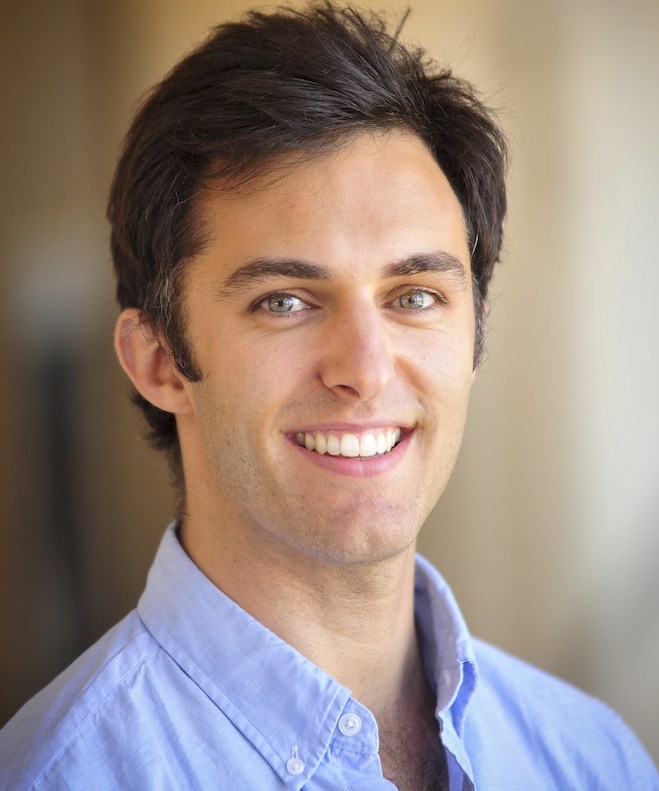
Daniel M. Roy is a Full Professor at the University of Toronto, with cross-appointments in the Department of Computer Science, Department of Statistical Sciences, and Department of Electrical and Computer Engineering. He serves as Research Director at the Vector Institute and holds the CIFAR Canada AI Chair. Research Focus: Foundational principles of prediction, inference, and decision-making under uncertainty across machine learning, statistics, mathematical logic, applied probability, and computer science. Scientific Contributions: Key work in learning theory, statistical network analysis, probabilistic programming, and information-theoretic frameworks for generalization. Awards: ICML 2024 Best Paper Award for "Information Complexity of Stochastic Convex Optimization" and promotion to Full Professor in 2024. Student Advising: Actively mentors Ph.D. candidates and postdoctoral researchers with strong quantitative backgrounds, particularly at the intersection of machine learning, statistics, and computer science. Email: daniel.roy@utoronto.ca
Johan Gustav Bellika is a Professor at the Department of Clinical Medicine, UiT The Arctic University of Norway, based in Tromsø. His work bridges clinical medicine with health informatics, focusing on practical applications that improve healthcare delivery and patient outcomes. Current Position: Professor, Department of Clinical Medicine Institution: UiT The Arctic University of Norway Location: Tromsø, Norway Contact: johan.gustav.bellika@uit.no Professor Bellika's research spans several critical areas in modern healthcare. His primary focus is on health informatics with particular emphasis on medical data privacy, electronic health records, and the application of artificial intelligence in clinical settings. He has made significant contributions to understanding chronic pain management through technology, primary care research networks, and patient-centered care models. His work often involves large population studies such as the Tromsø Study, examining how digital health tools impact healthcare utilization and patient outcomes. His research demonstrates a consistent thread connecting technological innovation with practical clinical applications. Bellika has been instrumental in developing privacy-preserving architectures for healthcare data analysis, which enable researchers to gain insights from sensitive health information without compromising patient privacy. His work on federated learning frameworks represents cutting-edge approaches to analyzing medical data while maintaining strict privacy controls. Health Informatics and Medical Data Privacy Chronic Pain Management through Technology Primary Care Research Networks (PraksisNett) Electronic Health Records and Clinical Decision Support Patient-Centered Digital Health Solutions Federated Learning Applications in Healthcare Professor Bellika's publication record shows a strong trend toward interdisciplinary research that combines clinical medicine, computer science, and public health. His recent work increasingly focuses on the intersection of artificial intelligence and healthcare, particularly how machine learning can be applied to chronic conditions while maintaining rigorous privacy standards. The geographical scope of his research extends across Norway with particular emphasis on Northern Norwegian populations, providing valuable insights into healthcare delivery in Arctic and remote regions. His collaborative approach is evident through numerous co-authored publications with researchers across multiple institutions and disciplines. While specific awards aren't detailed in the available information, his extensive publication record in reputable journals suggests recognition within his field. Professor Bellika has been actively involved in several major research initiatives including the Tromsø Study and PraksisNett, Norway's nationwide practice-based research network. His work on privacy-preserving architectures for healthcare data has significant implications for how medical research can be conducted while respecting patient confidentiality. He appears to be particularly focused on translating research findings into practical tools for clinicians, as evidenced by his work on audit and feedback systems for antibiotic prescribing.
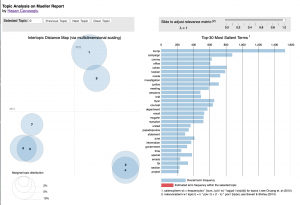
Hasan Cavusoglu is a Professor of Management Information Systems at the Sauder School of Business, University of British Columbia. He holds a Ph.D. in Management Science with a specialization in MIS from the University of Texas at Dallas. His research focuses on IT risks, cybersecurity, governance, and privacy, particularly in the context of online social networks and organizational data protection. Education: Ph.D., Management Science (UT Dallas); M.Sc., Management & Administrative Sciences (UT Dallas) Roles: Associate Editor of Management Information Systems Quarterly (MIS Quarterly) His work addresses challenges in cybersecurity preparedness, data breach management, and regulatory frameworks like GDPR. Cavusoglu has contributed to high-profile discussions on cybersecurity risks and policy, including analyses of the Mueller Report and the LifeLabs data breach. He frequently engages with media, offering expert insights on privacy, data security, and organizational IT governance strategies. Key areas of focus include risk-based security architectures, employee training against social engineering, and the strategic role of cybersecurity in business differentiation. His research has appeared in top-tier journals such as Management Science and Information Systems Research.
Michael Riegler is a Researcher at the AI Department, Simula Research Laboratory , focusing on interdisciplinary applications of Artificial Intelligence in healthcare, sports analytics, and multimedia systems. His work bridges Machine Learning , AI Alignment , and Applied AI across clinical and real-world domains. Key Affiliations: Simula Research Laboratory (AI Department Head) Research Themes: Explainable AI in medicine, multimodal data analysis, and AI-driven health monitoring Research Interests include: Developing AI/ML algorithms for medical imaging (e.g., polyp detection, embryo analysis) Addressing missing data challenges in healthcare through novel imputation techniques Creating multimodal virtual avatars for investigative interview training Designing edge AI systems for sports analytics and sustainable fishing Recent Publications highlight collaborations with institutions in Norway and globally, with a focus on: Medical Applications: Polyp segmentation, ECG analysis, and explainable models for disease detection Sports Analytics: Athlete performance prediction and soccer video processing Data Infrastructure: Lifelogging datasets (ScopeSense), semantic representation frameworks Labs & Teams include leadership in Simula’s AI Department and participation in projects like Medico Multimedia Task , ImageCLEF , and MediaEval workshops. His work emphasizes responsible AI innovation in public sectors and privacy-preserving systems for edge environments.
Vasileios Mavroeidis is an Associate Professor in Digital Security at the Department of Informatics, University of Oslo (UiO). He specializes in security automation and orchestration (SOAR) and cyber threat intelligence (CTI) representation, reasoning, and sharing. He actively contributes to European cybersecurity initiatives, including Horizon Europe, Connecting Europe Facility, and the European Defense Fund, and serves as the primary representative of UiO at the OASIS standards development organization since 2017. Role : Associate Professor Department : Digital Security (SEC), University of Oslo Standardization Involvement : Chairman of OASIS Threat Actor Context (TAC), Leading Contributor to CACAO and OpenC2 Projects : Concordia, CyberHunt, JCOP (Joint Cyber Security Operations Platform), Oslo Analytics, P4C (Partnership for Cybersecurity) His research focuses on cyber threat intelligence (CTI), exploring its taxonomies, sharing standards (STIX, CACAO), and ontologies, with contributions to the European Union Agency for Cybersecurity (ENISA) Cybersecurity Playbooks task force. He analyzes quantum computing's impact on cryptography, develops automated threat detection systems using machine learning (e.g., recurrent neural networks for malware-generated domains), and investigates privacy issues under GDPR. Recent publications highlight his work on LLMs for code stylometry , neurosymbolic AI for cyber defense , and knowledge management systems for CACAO playbooks . His articles span 2017–2025, emphasizing formal verification, biometric data protection, and incident response automation. He collaborates with organizations like OASIS (Threat Actor Context, CACAO, OpenC2) and FIRST (Traffic Light Protocol), and participates in European research projects. His work includes standardization efforts in cybersecurity playbooks , MITRE ATT&CK representation, and quantum-resistant cryptography .
Søren Holm is a Professor at the Center for Medical Ethics , University of Oslo. His work spans medical ethics, bioethics, and research ethics , with a focus on artificial intelligence in healthcare, pandemic ethics, and organ transplantation . Primary Affiliation: University of Oslo, Faculty of Medicine Research Themes: AI diagnostics, informed consent, research integrity, end-of-life ethics Key Collaborations: Thomas Ploug, Bjørn Hofmann, Daniel Warrington Recent Publications (2023-2025) analyze ethical challenges in AI-driven healthcare regulation, pandemic research ethics, and data governance . Notable topics include contestable AI diagnostics , equipoise in clinical trials , and conflict of interest disclosure . Contact: Email via soren.holm@medisin.uio.no . No scientific awards or student advisement details explicitly mentioned in the scraped text.
Molly Maleckar is a Research Professor at the Computational Physiology Department of Simula Research Laboratory , Oslo, Norway. Her work bridges computational modeling, cardiac electrophysiology, and biomedical applications, with a focus on arrhythmia mechanisms, fibrosis modeling, and machine learning integration in cardiac risk prediction. Research Interests include: Computational Cardiology Ion Channel Dynamics Machine Learning in Medicine Excitable Tissue Modeling Cardiac Fibrosis Analysis Biomedical Simulation Scientific Contributions span 15+ publications (2018-2024) addressing atrial fibrillation, calcium handling, and AI-driven ECG analysis. Key collaborative projects involve patient-specific ventricular modeling and educational initiatives like the Simula Summer School in Computational Physiology .
Norwegian University of Science and TechnologyNorway
Staal A. Vinterbo is a Professor at the Department of Information Security and Communication Technology within the Faculty of Information Technology and Electrical Engineering at the Norwegian University of Science and Technology (NTNU). His research focuses on privacy-preserving technologies, cryptography, and their intersections with machine learning, bioinformatics, and medical informatics. He has contributed to advancements in differential privacy, data anonymization, and secure computational methods.
Malgorzata Agnieszka Cyndecka is a Professor at the Faculty of Law, University of Bergen (UiB) , where she specializes in EU/EEA state aid law and data protection/GDPR. She is affiliated with SLATE (Centre for the Science of Learning & Technology) and serves as a member of the Norwegian Data Protection Board. Since 2019, she has been Associate Editor of the European State Aid Law Quarterly . She also holds an Associate Professor II position at the University of Oslo and contributes to interdisciplinary research on AI, privacy, and education. University: University of Bergen School: Faculty of Law Academic Rank: Professor Email: malgorzata.cyndecka@uib.no Affiliations: SLATE, Norwegian Data Protection Board, Council of Europe Expert Group on AI and Education Her research centers on EU/EEA state aid rules —particularly their application in tax, energy, and education sectors—and data protection law , with a focus on GDPR compliance in AI-driven educational technologies. She has led and contributed to major projects such as the Norwegian Data Protection Authority’s Sandbox for Responsible AI (AVT project), where she provided legal guidance on processing student data, and UiB’s DIGI courses, where she co-developed DIGI113 on Privacy and GDPR. Her work bridges legal theory with practical policy, influencing national and international frameworks on digital rights and public aid. The analysis of her recent publications reveals a strong focus on the evolution of state aid jurisprudence , especially the Market Economy Operator Principle (MEOP), burden of proof in aid cases, and sustainability in public support. Concurrently, her interdisciplinary work explores AI and privacy challenges in education , anonymization of unstructured data under GDPR, and ethical implications of algorithmic decision-making. Her contributions span legal doctrine, policy recommendations, and public commentary. Scientific Awards: European State Aid Law Quarterly PhD Award (2012–2016) for best doctoral dissertation in state aid law Advising and Grants: She supervises master’s students in EU/EEA law, data protection, and GDPR. She has been involved in externally funded projects including the Norwegian Data Protection Authority’s Sandbox for Responsible AI, the ENDO4P project (aimed at personalized endocrinology treatment via EU Horizon funding), and the Clean Up Project (Machine Learning for Anonymisation of Unstructured Personal Data) at the University of Oslo. She has also coordinated collaborations with Media City Bergen for law and technology education. Her teaching includes course leadership in JUS2302, JUS3502, JUS2303, JUS3503, and DIGI113. Labs and Teams: She is a key member of SLATE (Centre for the Science of Learning & Technology) at UiB and participates in multiple research groups including the Research Group for Information and Innovation Law. She contributes to interdisciplinary teams working on digital competence, AI ethics, and data governance in education and health. She is also active in the Academy for Young Researchers (AYF) and leads the EU and EEA Law Issues Committee in the Norwegian branch of the International Commission of Jurists (ICJ).
Ali Ramezani-Kebrya is an Associate Professor with tenure in the Department of Informatics at the University of Oslo (UiO), where he leads research in machine learning theory. He holds dual Principal Investigator roles at the Norwegian Center for Knowledge-driven Machine Learning (Integreat) and SFI Visual Intelligence, and is an active member of the European Laboratory for Learning and Intelligent Systems (ELLIS) Society. His service includes Area Chair positions for NeurIPS and AISTATS, and Action Editor for Transactions on Machine Learning Research. His research focuses on theoretical foundations of deep learning with emphasis on understanding input data distribution encoding in neural network layers. Key themes include minimizing statistical risk under resource constraints, addressing distribution shifts in distributed settings, and developing practical tools for robust federated learning. Current applications span emotion recognition, marine data analysis, and neuroscience, reflecting his commitment to real-world machine learning challenges as evidenced by his FRIPRO-funded Machine Learning in Real World (MLReal) project. Recent publication trends reveal three dominant threads: (1) label/covariate shift mitigation in distributed systems through entropy regularization and density ratio estimation; (2) communication-efficient optimization via layer-wise quantization and adaptive compression techniques achieving 150% speedups; and (3) robustness guarantees against tailored attacks and distribution shifts. These works consistently bridge theoretical bounds with empirical validation across domains from GAN training to federated settings. Scientific recognition includes: FRIPRO Grant for Early Career Scientists (2025) for MLReal project SFI Visual Intelligence Spotlight Publication award (2023) for federated learning work He actively mentors 11 graduate students across Oslo and Tromsø universities, with recent PhD placements at Apple and NVIDIA. Current grant portfolio features the FRIPRO Early Career award and leadership roles in two major Norwegian research centers. His lab maintains strong industry collaborations through Vector Institute and EPFL, with recent hiring for PhD and postdoc positions in physics-informed machine learning.
Deodat Edward Mwesiumo is a Professor of Supply Chain Management at Molde University College (HiMolde), part of the Faculty of Logistics. He holds a PhD in logistics from the same institution and has extensive teaching and research experience since 2012. His roles include Head of the Supply Chain Management Research Group and member of the PhD committee. Previously, he directed the Bachelor program in Supply Chain Management and Logistics. His research focuses on supply chain resilience, digital business transformation, and tourism management. Key areas include procurement strategies, sustainability, circular economy models, and interorganizational relationships in tourism. He has published in high-impact journals like Production Planning and Control , Journal of Purchasing and Supply Management , and Annals of Tourism Research . Dr. Mwesiumo has led externally funded projects and contributed to over 50 peer-reviewed publications. He is affiliated with research groups such as MIIBS (Marketing, Innovation, International Business & Strategy) and the Transport Research Group (TRG). His teaching spans BSc and MSc levels, including courses on value chain analysis, digital business, and supply chain theory. Recent work emphasizes airport digital maturity, supply chain risk mitigation, and the impact of data-driven decision-making in public procurement. He has authored books like Making Value Chains Work and Fundamentals of Digital Business Management , underscoring his commitment to both academic and applied knowledge dissemination.
Roger Flage is a Professor of Risk Management at the University of Stavanger, affiliated with the Faculty of Science and Technology and the Department of Security, Economics and Planning. His research focuses on foundational and applied aspects of risk analysis, uncertainty quantification, and decision-making under uncertainty, with applications in critical infrastructure, environmental systems, and offshore energy. Roger Flage's research interests lie at the intersection of risk science, safety engineering, and decision theory. He investigates how uncertainty—especially epistemic uncertainty and assumptions—affects risk assessments, and advocates for more transparent and robust frameworks. His work spans theoretical advances, such as the treatment of 'black swan' events and the concept of 'real risk', as well as practical applications in offshore safety, power systems, and geohazards. He emphasizes the integration of data-driven methods, AI, and digital twins while critically assessing their limitations and associated security risks. His recent publications show a strong trend toward integrating dynamic, data-rich, and interdisciplinary approaches to risk analysis. Themes include the role of time in risk, AI applications, infrastructure interdependencies, and environmental risk in the oil and gas sector. He frequently publishes in top-tier journals like Risk Analysis , Reliability Engineering & System Safety , and Safety Science , often in collaboration with leading scholars such as Terje Aven and Seth Guikema. No scientific awards are mentioned in the provided text. Roger Flage has supervised or collaborated with several researchers, though no formal list of advisees is provided. His work is supported through academic collaborations and institutional affiliations rather than explicit grant mentions. He is actively involved in advancing risk science methodology, particularly in the treatment of assumptions and uncertainty, and contributes to both theoretical foundations and real-world applications in safety-critical domains. He is associated with research groups and collaborative networks at the University of Stavanger, particularly within the Department of Security, Economics and Planning. His work often involves interdisciplinary teams focusing on risk in complex engineered systems, including energy, transportation, and environmental systems.
Jan Buts is an Associate Professor at the Sustainable Health Unit within the Faculty of Medicine at the University of Oslo, specializing in the intersection of translation theory, medical humanities, and corpus linguistics with a focus on sustainable health and development discourses. His academic background includes: Linguistics and Literature studies at KU Leuven (Belgium) PhD in Translation and Intercultural Studies from the University of Manchester (UK) Postdoctoral research at Trinity College Dublin (Ireland) Assistant Professor position at Boğaziçi University (Turkey) Buts' research centers on corpus-assisted discourse analysis applied to translation theory, medical humanities, and sustainable development. He actively develops the Sustainability and Health Corpus to analyze how language shapes public health narratives, gender discourses in development aid, and conceptual frameworks around sustainability. His work bridges linguistic analysis with critical perspectives on social justice and health equity. Analysis of his recent publications reveals a strong trajectory toward integrating corpus linguistics with medical humanities and sustainable development goals. Key trends include examining gendered vulnerabilities in policy discourse, translation's role in knowledge dissemination for sustainability, and digital media's impact on health communication – all characterized by methodological innovation in corpus construction and conceptual analysis. His scientific recognition includes: Runner-up for the Martha Cheung Award (2023) Buts serves on the executive council of IATIS (International Association for Translation and Intercultural Studies) and leads multiple research initiatives including the SHE Corpus project. His grant activities focus on interdisciplinary collaborations between translation studies and medical humanities, particularly through projects like KNOWIT (Knowledge in Translation) and MEDRA (Medicalisation of Democratic Rights in Abortion debates). He directs the Sustainable Health Unit, fostering cross-disciplinary teams that combine linguists, medical researchers, and public health experts to advance data-driven critical analysis of health and sustainability discourses through innovative corpus methodologies.
Zhiyuan Wu is a Doctoral Research Fellow at the University of Oslo , affiliated with the Digital Signal Processing and Image Analysis research group under the Faculty of Mathematics and Natural Sciences . Education: Bachelor’s degree in Communication Systems and Information Technology from Lanzhou University, China Master’s degree from the Technical University of Munich, School of CIT Research Focus: Zhiyuan Wu specializes in machine learning, with particular emphasis on probabilistic graphical models, information theory, and tackling real-world challenges such as distributional shifts and privacy concerns. His work explores entropy regularization techniques to address label shift in distributed learning systems, aiming to improve model robustness and data privacy across diverse domains like medical applications. Publications & Research Trends: His recent publication at the International Conference on Learning Representations highlights a novel approach to mitigating label shift through entropy regularization. This aligns with his broader research goals of enhancing the adaptability and interpretability of machine learning models in dynamic, privacy-sensitive environments. Labs & Teams: He is actively involved with the Digital Signal Processing and Image Analysis (DSB) research group, contributing to collaborative projects that bridge theoretical advancements with practical implementations in machine learning.
Joao Carlos Amaro Ferreira is a Professor at the Faculty of Logistics, Molde University College (HiMolde), Norway. He holds PhDs in Computer Engineering and Industrial Engineering from the Technical University of Lisbon and the University of Minho, respectively. His research focuses on Artificial Intelligence (AI) applications in healthcare, energy, transportation, IoT, blockchain, and smart cities. He has led over 40 projects, including 6 as Principal Investigator, and contributed to international conferences like OAIR and INTSYS. He served as IEEE CIS President (2016-2018) and is an IEEE Senior Member since 2015. His academic contributions span AI-driven solutions for public sector informatics, healthcare data quality, and cybersecurity. He actively participates in European projects such as e-Hospital4Future and explores blockchain applications in supply chains and medical records. Ferreira leads the ABC-AI research group, emphasizing ethical and applied AI. His work bridges academia and industry through projects like gamification systems for eco-driving and AI in fisheries traceability. Recent publications highlight AI's role in cardiovascular disease detection, emergency department optimization, and blockchain-enhanced healthcare interoperability. He collaborates internationally, co-editing journals like Applied Sciences , and has authored patents in edge computing for maritime monitoring.