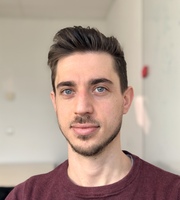
Prof. Helder Nakaya is Deputy Director at the School of Pharmaceutical Sciences, University of São Paulo, Brazil, and Adjunct Professor at Emory University School of Medicine, USA. His expertise lies in Systems Vaccinology, integrating systems-wide measurements, network analysis, and predictive modeling to study vaccine-induced immunity and infectious diseases. Education: PhD in Molecular Biology with training in Bioinformatics. His research focuses include Systems Biology , Vaccinology , and Computational Immunology , with contributions to understanding immune responses to Yellow Fever, Influenza, and SARS-CoV-2 vaccines. His lab develops data-driven approaches for infectious disease mechanisms. Recent publications highlight his work in machine learning for health data , network analysis in immunology , and mechanistic studies of sepsis and COVID-19 . He serves as an academic editor and reviewer for journals like PeerJ.
Dr. Syed Hassan Shah is a distinguished adjunct faculty member at California State University, Fullerton's Department of Computer Science, where he teaches graduate-level courses. Concurrently, he serves as a Wi-Fi connectivity subject matter expert and Product Director for Short Range Technologies at Quectel Inc., and previously held roles as Product Manager for Mobile & Compute Connectivity at Qualcomm Inc., focusing on Mi-Fi, CPE, and UWB technologies. Ph.D. in Computer Science & Engineering, Kyungpook National University, South Korea (2013-2017) BS in Computer Science, Kohat University of Science & Technology, Pakistan (2007-2012) Dr. Shah's research spans interdisciplinary domains in Wireless Communications , Cyber-Physical Systems , and Smart Cities , with significant contributions to Vehicular Networks , Internet of Things , and Future Internet Architectures . His recent publications demonstrate expertise in Neural Networks , Optimization Theory , and Security & Privacy applications. Scientific recognition includes: Qualcomm Innovation Award (2016) IEEE Senior Member (2018) ACM Distinguished Speaker (2018) Best Research Contribution Award (Brain Korea, 2016) Multiple travel grants from ACM and IEEE KNU Honors Scholarship (2013) Dr. Shah actively contributes to academic governance as: Editorial Board Member for 60+ special issues in top-ranked journals TPC Member for 100+ international conferences including IEEE Globecom and ACM MobiHoc IEEE Vehicular Technology Society Board appointee (2018-2019)
Frans Wiering is an Associate Professor at the Interaction Technology division of the Department of Information and Computing Sciences at Utrecht University . His research bridges computer science and musicology , focusing on music information retrieval (projects: WITCHCRAFT, C-Minor, COGITCH), computational musicology (Tunes and Tales, Transforming Musicology), and music technology for games (COMMIT work package). He founded the Thesaurus musicarum italicarum , a digital collection of Renaissance music treatises, and has held visiting positions at Stanford University and Goldsmiths College . Research Interests : Music information retrieval Computational musicology Music technology for interactive environments Digital humanities Algorithmic analysis of historical music data Notable Contributions : Co-organized the Dagstuhl Seminar on Knowledge Representation for Intelligent Music Processing General Chair of ISMIR 2010 and Program Chair of ISMIR 2015 Founder of Thesaurus musicarum italicarum
Alberto De Luca is an Assistant Professor at the Image Sciences Institute, Division Imaging & Oncology, University Medical Center Utrecht. He holds a BSc in Biomedical Engineering (2011), MSc in Bioengineering (2013), and PhD (2017) from the University of Padova, Italy, where his thesis focused on non-Gaussian diffusion in the brain and skeletal muscle. His research specializes in diffusion MRI methodologies for neurological diseases and cancer, with key interests including: Fiber-specific quantification in grey/white matter Multi-center MRI data harmonization Physiological parameter estimation via inverse methods Response prediction modeling He leads projects in cerebral small vessel disease and pediatric oncology, utilizing advanced 7T MRI and AI techniques. Recent publications (2025) demonstrate strong focus on: AI-driven lesion-symptom mapping in vascular cognitive disorders Diffusion MRI harmonization across research sites Advanced tractography validation frameworks Pediatric cancer imaging biomarkers He contributes to the Translational Neuroimaging Group and International Society for Tractography, with external collaborations including Erasmus MC (Frontotemporal dementia research) and Hogeschool Utrecht (guest lecturing on brain networks).
Dr. Koji Miwa is an Associate Professor at Nagoya University's Graduate School of Humanities, specializing in psycholinguistics with a focus on experimental approaches to understanding how language is processed in the mind. His academic journey includes a Ph.D. in Linguistics from the University of Alberta, followed by postdoctoral work at the University of Tübingen before joining Nagoya University in 2017. Ph.D. in Linguistics, University of Alberta (2007-2013) M.A. in Linguistics, University of Alberta (2004-2007) B.A., Mount Royal College (2002-2004) Dr. Miwa's research primarily investigates how complex words are represented and processed in the mind, with special attention to bilingual reading processes where two languages coexist in a single mind. His work employs sophisticated methodologies including eye-tracking technology to measure real-time cognitive processing during language tasks. He examines morphological decomposition, cross-linguistic influences, and the cognitive mechanisms underlying efficient language processing, with particular emphasis on Japanese-English bilingualism and morphographic scripts. His research consistently explores how humans process complex linguistic information effortlessly and efficiently, often at subconscious levels. Dr. Miwa's recent publications reveal an expanding research program that now includes metaphor comprehension, analogical reasoning, and event role conceptualization across languages. His work bridges theoretical linguistics with empirical cognitive science, often employing advanced statistical modeling techniques like generalized additive mixed models to analyze complex language behavior data. The ENglish Reading Online (ENRO) Project represents a significant contribution to large-scale data collection in second language reading research. Izaak Walton Killam Memorial Scholarship (2010) Roger S. Smith Undergraduate Researcher's Award (2006) As an educator, Dr. Miwa emphasizes balanced development across multiple dimensions of life and learning. His supervision style focuses on cultivating mindfulness, service, and knowledge in students. He serves on editorial boards for PeerJ, Frontiers in Psychology, and Studies in Language Sciences, contributing significantly to scholarly review processes. His research lab at Nagoya University maintains active international collaborations, particularly with researchers in Canada, Europe, and other parts of Asia. Dr. Miwa also maintains a thoughtful personal mission statement that emphasizes living a balanced life while considering fundamental questions about existence.