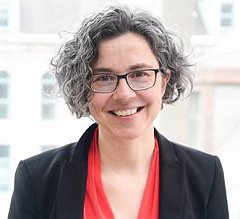
Brigitte Pientka is a Professor at McGill University's School of Computer Science , where she leads the Computation and Logic group . She earned her PhD from Carnegie Mellon University in 2003 and previously studied at the University of Edinburgh and Technical University of Darmstadt. Education PhD in Computer Science, Carnegie Mellon University (2003) University of Edinburgh Technical University of Darmstadt Research Interests Her work focuses on the theoretical and practical foundations for building reliable software systems, combining logic, type theory, and verification with system-building. Key areas include: Type Theory and Dependent Types Logical Frameworks and Mechanized Metatheory Session-Typed Concurrency and Linear Logic Metaprogramming and Contextual Type Systems Theorem Proving and Formal Verification Functional Programming and Language-Based Security Professional Roles She has served as: PC Chair for ICFP'24 and CPP'24 General Chair for POPL'20 Executive Editor of Logical Methods in Computer Science Steering Committee Member for LICS, POPL, and ESOP Scientific Awards Dr. Pientka has received: Test of Time Award at PPDP'18 Humboldt Fellowship for research at MPI-SWS, Germany Labs & Teams She actively develops the Beluga programming language , a tool for mechanizing meta-theory proofs and type-driven program manipulation.
Professor Kenneth Harris is a Distinguished Research Professor in the School of Chemistry at Cardiff University, specializing in the fundamental properties of solids and the development of advanced experimental techniques for materials characterization. His work bridges the gap between traditional crystallography and modern analytical methodologies, with a particular focus on overcoming limitations in structural analysis of complex materials. His research spans three primary interconnected themes: the development of techniques for determining crystal structures of organic solids directly from powder X-ray diffraction data; the advancement of in-situ solid-state NMR strategies for monitoring crystallization processes in real time; and the investigation of structural properties of anisotropic materials using polarized X-ray beam techniques, including the pioneering development of X-ray Birefringence Imaging (XBI). This work has significant implications for pharmaceutical development, materials science, and understanding biological crystallization processes. Analysis of his recent publications reveals a consistent trajectory toward increasingly sophisticated multi-technique approaches to materials characterization. His work increasingly integrates 3D electron diffraction, powder XRD, solid-state NMR, and computational methods like DFT calculations to solve previously intractable structural problems. A notable trend is the application of these methods to biologically relevant molecules (xanthine, riboflavin, L-tyrosine) and the development of techniques to monitor dynamic processes like crystallization and phase transitions in real time. His research demonstrates a shift from purely structural determination toward understanding the dynamic processes that govern material formation and transformation. Distinguished Research Professor title at Cardiff University Key contributor to the development of X-ray Birefringence Imaging Significant contributions to NMR crystallography methodologies Extensive publication record in top chemistry and materials science journals Professor Harris leads a research group focused on developing and applying cutting-edge techniques for materials characterization. His work has significant implications for pharmaceutical development, where understanding crystal structure and polymorphism is critical for drug efficacy and safety. His group has developed innovative approaches to monitor crystallization processes in real time, which has applications in both industrial manufacturing and understanding natural biomineralization processes. The group maintains strong collaborations with researchers across multiple disciplines, including physics, biology, and engineering, reflecting the interdisciplinary nature of modern materials science research.
Javier Rodriguez Sanchez is a Postdoctoral Associate at the Institute of Plant Breeding, Genetics and Genomics (IPBGG) within the Department of Crop & Soil Sciences at the University of Georgia's College of Agricultural and Environmental Sciences (CAES), based at the Tifton Campus under Dr. Nino Brown's mentorship. His research integrates advanced technologies with plant science to revolutionize agricultural practices, specializing in: Autonomous field phenotyping systems using robotics and terrestrial laser scanning Deep learning applications for 3D/4D crop trait extraction and yield estimation Genetic improvement of cotton and peanut through seedling vigor and morphological trait analysis Spatiotemporal data fusion for real-time crop monitoring and precision agriculture Publications from 2017-2025 reveal a clear trajectory from horticultural robotization toward sophisticated AI-driven phenotyping platforms, with cotton and peanut as primary models. His work consistently bridges computer vision, LiDAR, and machine learning to solve breeding challenges, demonstrating increasing methodological complexity in data acquisition and analysis. No scientific awards were documented in the source materials. As a postdoctoral researcher, Dr. Sanchez operates within Dr. Nino Brown's mentorship structure with no reported advisees or independent grant leadership. His collaborative framework focuses on technology deployment rather than traditional academic advising. He contributes to the IPBGG's mission through the Tifton Campus research facility, which features specialized laboratories and field sites for crop genomics and phenomics. This environment supports his development of mobile robotic platforms for in-field data collection, positioning him at the intersection of agricultural engineering and plant breeding innovation.
Prof. Dr. rer. nat. Anna Mechler is a faculty member at RWTH Aachen University , specifically affiliated with the Aachen Process Engineering school under the Teaching and Research Area Electrochemical Reaction Engineering . Her research focuses on electrochemical reaction engineering, particularly in the development of advanced catalysts for energy conversion systems. Research Interests: Oxygen evolution reaction (OER) optimization, electrochemical catalyst synthesis, plasma-assisted electrode fabrication, and sustainable energy technologies like fuel cells and water electrolysis. Publications: Recent work highlights the development of Ni-Co-O anodes, mechanochemical activation of catalysts, and innovative methods for improving electrolyzer efficiency and reproducibility. Labs/Teams: Active in the NGP² group at Aachen Process Engineering, contributing to industrial-scale electrochemical process development.
Siobhán Clarke is a Professor at the School of Computer Science and Statistics, Trinity College Dublin, specializing in software systems for smart urban environments . Her work addresses dynamic software adaptation in large-scale, mobile IoT ecosystems , with a focus on QoS optimization and collaborative agent models . Director, Enable : National SFI IoT Research Programme Director, Future Cities Centre for Smart & Sustainable Cities Co-Lead, ADVANCE : SFI Centre for Advanced Networks Co-PI, CONNECT (Future Networks) and Lero (Software Research) Her research spans smart city infrastructure , edge computing , and multi-agent coordination , informed by 15+ years of publications on service-oriented architectures , QoS prediction , and self-adaptive systems . Key project contributions include DIVERSIFY (2016) and TRANSFoRm (2015). Scientific awards include election to the Royal Irish Academy (2023) and a Best Student Paper at IEEE ICWS 2011. She has supervised 20+ PhD/MSc students, including Fan Li (2020: SLA Negotiation Systems), Gary White (2020: IoT QoS Forecasting), and Andrei Palade (2019: Stigmergic Optimization).
Francesca Fallucchi is an Associate Professor at Guglielmo Marconi University in Rome since 2008 and an information scientist at Georg-Eckert-Institut (GEI) since July 2017, working in the Human-Centered Technologies for Educational Media department. Her research focuses on the intersection of computer science and humanities, with particular emphasis on knowledge organization , information retrieval , semantic technologies , and big data management applied to educational media and cultural heritage. Her work bridges theoretical computer science with practical applications in digital humanities. Analysis of her recent publications (2021-2024) reveals a research trajectory spanning multiple domains: from foundational work in semantic web and NLP to emerging applications in metaverse technologies, blockchain for energy monitoring, and explainable AI for healthcare. Her work consistently demonstrates interdisciplinary approaches combining computer science with domain-specific challenges. Dr. Fallucchi has been actively involved in academic service, including organizing the 17th International Conference on Metadata and Semantics Research (MTSR 2023) and serving as editor for Computers trade magazine since 2021. Her professional activities include significant project leadership as Deputy Project Manager for Edumeres Toolbox and contributions to numerous research projects including GLOTREC, GEI-Digital, PalTex, DemoS, PVE-E, and WorldViews.
Dr Eral Bele serves as Associate Professor (Teaching) in the Department of Mechanical Engineering at University College London, with adjunct appointments at Vellore Institute of Technology (India) and external examiner duties at Coventry University. His research and teaching focus on mechanics of lightweight materials—composites, natural fibers, and cellular structures—aiming to develop lighter, stronger, energy-efficient solutions through experimental mechanics and finite element analysis. His research spans four core projects: (1) manufacturing mechanics of natural fiber composites and technical foams; (2) fracture toughness of metamaterials; (3) additive manufacturing of hierarchical microlattices; and (4) fatigue mechanics in natural structural materials. This work leverages UCL's Materials, Structures and Manufacturing Research group facilities, including mechanical testing labs, full-field strain mapping, and additive manufacturing equipment for metallic and fiber-reinforced components. Recent publications (2022–2025) reveal concentrated expertise in additive manufacturing applications, fracture behavior of novel materials, and sustainable material development—particularly in nacre-like composites, lunar regolith processing, and natural fiber foams. His work bridges experimental validation with computational modeling to advance sustainable materials engineering. Dr Bele holds the following recognition: Senior Fellow Advance HE (York, United Kingdom) His educational leadership includes serving as UCL's Departmental Tutor and Head of Undergraduate Education, designing the MSc in Future Manufacturing and Nanoscale Engineering (2023), and supervising MEng Capstone Design Projects. Internationally, he co-leads PhD training at CICY (Yucatan) on micro-CT characterization of composites and established VIT's Sustainable Manufacturing undergraduate program. His research group operates within UCL's Materials, Structures and Manufacturing Research ecosystem and maintains active collaborations with University of Toronto, CICY, VIT, and EU industrial partners—focusing on natural fiber composites, metamaterials, and sustainable manufacturing processes.
Dan Cox serves as Dean of Natural Sciences in The College of Liberal Arts and Sciences and Professor in the School of Life Sciences at Arizona State University. He holds a B.S. in Biology from Wake Forest University and a Ph.D. in Cell Biology from Duke University, where he was an NIH pre-doctoral fellow. His postdoctoral training included a Jane Coffin Childs Fellowship and HHMI Research Associate position at UCSF. His educational trajectory includes: B.S. magna cum laude with honors in Biology, Wake Forest University (1992) Ph.D. in Cell Biology, Duke University Medical Center (1999) Postdoctoral training: Jane Coffin Childs Fellow & HHMI Research Associate, UCSF (2000-2004) Cox leads an internationally recognized neuroscience research program focused on neuronal diversity, circuit construction, and neural mechanisms of behavior—particularly pain perception and sensory neuropathies. His expertise spans neurobiology, cell biology, genetics, and computational modeling, with emphasis on multimodal sensory processing and brain plasticity. His lab has maintained continuous NIH funding for 20 years. His recent publications reveal dual research thrusts: fluid dynamics studies on drag reduction in pipe flows (examining vortex dynamics, Reynolds number effects, and wall oscillation techniques) and genetic engineering work including CRISPR-Cas9 delivery systems for immune system gene screening. This combination reflects interdisciplinary collaboration across engineering and biological domains. Key recognitions include: NIH pre-doctoral fellowship Jane Coffin Childs Fellowship for Medical Research HHMI Research Associate appointment Cox demonstrates exceptional commitment to mentoring across career stages and advancing student success through innovative pedagogies. His leadership extends to directing research centers, imaging facilities, and graduate programs—including roles as Director of the Center for Neuromics and Neuroscience Institute at Georgia State University. His NIH-funded research supports extensive interdisciplinary collaboration and training initiatives. Throughout his career, Cox has cultivated collaborative research environments through leadership in core facilities and interdisciplinary clusters, notably directing the 2CI Neurogenomics Fellowship and Brains & Behavior initiatives. His current deanship emphasizes cross-college research integration within ASU's liberal arts framework.
Dr. Walter McDonald is an Associate Professor in the Department of Civil, Construction and Environmental Engineering at Marquette University . He specializes in water resources engineering, with a strong focus on stormwater management, hydrology, and environmental monitoring. His work integrates remote sensing, machine learning, and green infrastructure to address urban water challenges. Education: Ph.D. in Civil Engineering, Virginia Tech (2016) M.S. in Civil Engineering, Texas A&M University (2012) B.S. in Civil Engineering, Texas Tech University (2010) Research Interests: Dr. McDonald’s research is centered on urban water systems , particularly the impact of stormwater on environmental and public health. His work spans the use of green infrastructure to mitigate pollution, the detection and modeling of emerging contaminants such as antibiotic resistance genes, microplastics, and PFAS, and the application of drone-based remote sensing and machine learning for real-time monitoring of water systems. Scientific Awards: Way Klingler Early Career Award from Marquette University (April 2022) Grants and Funding: NSF Water Equipment & Policy I/UCRC – Principal Investigator on "Remote sensing and machine learning to assess urban watershed best management practices (Phase II)" ($89,962, 2024) U.S. Department of Defense Engineering Research and Development Center – Co-PI on "Novel Technologies to Mitigate Water Contamination for Resilient Infrastructure – Phase II" ($3.8M, 2022–2024) NSF STTR – PI on "Machine learning and video-based sensor for measuring sewer flows" ($256,000 total; $138,926 to MU, 2022–2024) NSF Water Equipment & Policy I/UCRC – PI on "Determining flow rates and flow sources in pipes using temperature data" ($50,000, 2023) Research Labs and Facilities: Dr. McDonald works closely with the Transportation Research Center (MUTRC) and utilizes departmental labs such as the Engineering Materials & Structural Testing Lab (EMSTL) , Hydraulics Lab , and the Water Quality Center to support his research activities.
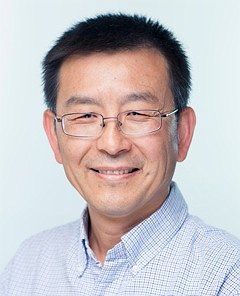
Jingling Xue is a Scientia Professor at the School of Computer Science and Engineering at the University of New South Wales (UNSW) in Sydney, Australia. As an IEEE Fellow of the Computer Society, he leads the Programming Languages and Compilers research group, focusing on practical applications of compiler optimization and program analysis techniques. His work bridges theoretical foundations with real-world software systems, particularly in developing open-source tools for large-scale program analysis. Professor Xue received his B.Eng and M.Eng degrees from Tsinghua University in 1984 and 1987, respectively, followed by a PhD from the University of Edinburgh in 1992. His academic journey has established him as a leading figure in programming languages and compiler technology. Xue's research spans programming languages, compiler technology, and program analysis with emphasis on practical relevance. His current projects include compiler techniques for improving parallelism and locality, pointer/alias analysis for million-line-scale programs, and static/dynamic analysis for detecting bugs and security vulnerabilities in real-world applications like web browsers and Android apps. His group actively develops open-source tools to support scientific replicability and reproducibility in these areas. His recent publications demonstrate a strong focus on applying program analysis techniques to modern challenges including AI compilers, homomorphic encryption, security vulnerability detection, and graph processing systems. The work shows evolution from traditional compiler optimization to addressing emerging domains like privacy-preserving computation and deep learning systems while maintaining rigorous theoretical foundations. Scientific Awards: Best Paper Award at CGO'13 Best Paper Award at CGO'16 Distinguished Paper Award at ECOOP'16 Distinguished Paper Award at ICSE'18 Distinguished Paper Award at ISSTA'19 Distinguished Paper Award at ASE'19 Distinguished Artifact Award at ISSTA'23 Best Artifact Award at FSE'23 Distinguished Paper Award at ASE'23 Test-of-Time Award at CGO'21 Professor Xue has successfully supervised 30 PhD students to completion, many of whom now work as professors or researchers in academia and industry. He has served as Program Chair for major conferences including LCTES'13, CC'18, CGO'20, and General Chair for LCTES'20. His group currently focuses on memory safety in Rust, smart contract analysis, AI compilers, compilation for privacy-preserving computation, and adversarial attacks in deep learning. The Programming Languages and Compilers group maintains strong connections with industry partners, translating theoretical advances into practical tools for real-world software development challenges. Their work on pointer analysis, memory safety, and compiler optimizations continues to influence both academic research and industrial practice.
Christian Winkler is Professor for AI-based UX optimization and general business administration at Nuremberg Institute of Technology since 2022. With over 25 years of experience spanning entrepreneurship, enterprise architecture, and academia, he brings substantial industry expertise to his academic role. His career includes founding multiple technology companies including an internet service provider (WWL Internet AG) that went public in 1999, Querplex GmbH through management buyout in 2003, and datanizing GmbH as an NLP SaaS provider in 2017. Professor Winkler's research focuses on practical applications of artificial intelligence in business contexts, with particular expertise in natural language processing, user experience optimization, and data-driven marketing strategies. His work bridges theoretical AI research with real-world business applications, emphasizing accessibility of complex technologies. He has published extensively on language models (including BERT and LLaMA implementations), text analysis techniques, and social media data analysis for business insights. Recent publications reveal a strong trend toward optimizing large language models for practical deployment, with significant focus on analyzing user-generated content from social platforms like Instagram and WallStreetBets. His work demonstrates how NLP can extract valuable business intelligence from unstructured data sources while making advanced AI techniques accessible to non-technical business professionals. Winkler teaches E-Commerce, International Marketing Tools - Quantitative Methods, Applied User Experience, and Communication Management, reflecting his interdisciplinary approach that combines technical AI knowledge with business administration expertise. He is an active contributor to the data science community through conference presentations at events like m3 Konferenz, MLsummit, and data2day, as well as educational content for Heise Academy on Python and NLP topics.
Divya Mahajan is an Assistant Professor holding dual appointments in the College of Computing and College of Engineering at Georgia Institute of Technology. She directs the Systems Infrastructure and Architecture Research Lab, focusing on sustainable computing platforms for large-scale AI, machine learning, and data storage systems. Her research integrates computer architecture, distributed systems, and database technologies to optimize end-to-end data pipelines. Mahajan earned her PhD from Georgia Tech and Bachelor's from IIT Ropar (President's Gold Medal). Prior to academia, she was a Senior Researcher at Microsoft Azure, leading communication collective designs for distributed DNN training. Awards include NCWIT Collegiate Award (2017) and HPCA Distinguished Paper Award (2016). Research spans hardware-software co-design for ML systems, efficient recommendation architectures, federated learning optimization, and PIM/NPU acceleration. Recent projects address challenges in large-scale model serving, edge-cloud integration, and sustainable computing. Student advisees include PhD and MS researchers in systems and architecture. Publications demonstrate consistent innovation in accelerating ML workloads through novel hardware/software techniques, with work appearing in ISCA, MICRO, ASPLOS, NeurIPS, and VLDB. Current projects explore energy-efficient AI infrastructure and domain-specialized systems for emerging economies.
Professor Andreas Baas is a leading academic in aeolian geomorphology, holding a Professorship at King's College London's Department of Geography within the School of Global Affairs. His research focuses on dune dynamics on Earth and Mars, aeolian sand transport, and climate change impacts. He earned BSc/MSc from the University of Amsterdam and a PhD from the University of Southern California, supported by an NSF Research Award. Previously, he was an Adjunct Professor at California State University San Bernardino. Research interests include desert dune hazards, microplastics transport, and Martian dune bedforms. He has published 40+ peer-reviewed articles, 10+ book chapters, and his work has been cited over 3,500 times. His grants include funding from the Leverhulme Trust, Nuffield Foundation, and UK NERC. He supervises PhD students on topics like barchan swarms and Mars dune dynamics. His lab work includes developing tools like PyShoreVolume for shoreline change analysis. He is an associate editor for Earth Surface Dynamics and a member of the NERC Peer-Review College.
Dr. Yinglong He is a Lecturer in Automated Electrified Transport (AcT) Systems at the School of Mechanical Engineering Sciences, University of Surrey, UK, and an Honorary Assistant Professor at the School of Engineering, University of Birmingham. His research focuses on intelligent transportation systems, energy management, vehicle dynamics, and AI-driven optimisation. He has held positions including Postdoctoral Research Associate at the University of Cambridge and Technology Expert at the European Commission's Joint Research Centre (JRC). Research interests include autonomous vehicle control, traffic simulation, hybrid/electric vehicle dynamics, and sustainable transport solutions. Notable contributions include advancing microscopic traffic models for automated vehicles and optimising energy systems for hybrid powertrains. His work integrates machine learning, multi-agent systems, and data-driven approaches to address challenges in transport decarbonisation and safety. Recent publications highlight advancements in hybrid vehicle dynamics simulation, lithium-air battery modelling, and energy mapping of urban buildings. He has received the Chinese Government Award for Outstanding Self-Financed Students (2022) and is a Fellow of the Institute for Sustainability (IfS). His expertise spans interdisciplinary collaborations in automotive engineering, energy systems, and smart infrastructure.
Professor Mark Baker is a Professor of Surface Science and Engineering at the University of Surrey, affiliated with the School of Engineering and the Engineering Materials Research Centre. He holds a BSc in Chemical Physics from the University of Kent and a PhD in Materials Science from the University of Surrey. His research focuses on advanced materials characterization techniques for thin films and coatings, particularly femtosecond laser ablation (fs-LA) XPS depth profiling, corrosion resistance, and energy materials. He has supervised multiple PhD/EngD students and collaborates with industry partners like Thermo Fisher Scientific and Plasma Quest Ltd. Research interests include thin film devices, wear/corrosion coatings, and spectroscopic techniques like XPS, AES, and SEM. Over 200 publications and 6,000+ citations highlight his contributions to surface engineering and materials science. His recent work explores fs-LA XPS for perovskite solar cells and corrosion mitigation in cast iron pipelines. He also leads employability initiatives as Faculty Director of Employability. Notable projects include collaborations on smart windows using VO₂ coatings and fs-LA XPS instrumentation development. His work bridges academia and industry, addressing challenges in energy conservation, corrosion control, and advanced material synthesis.