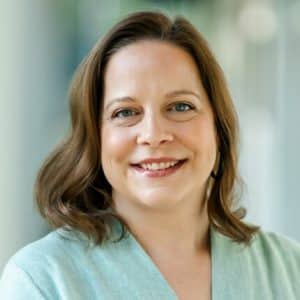
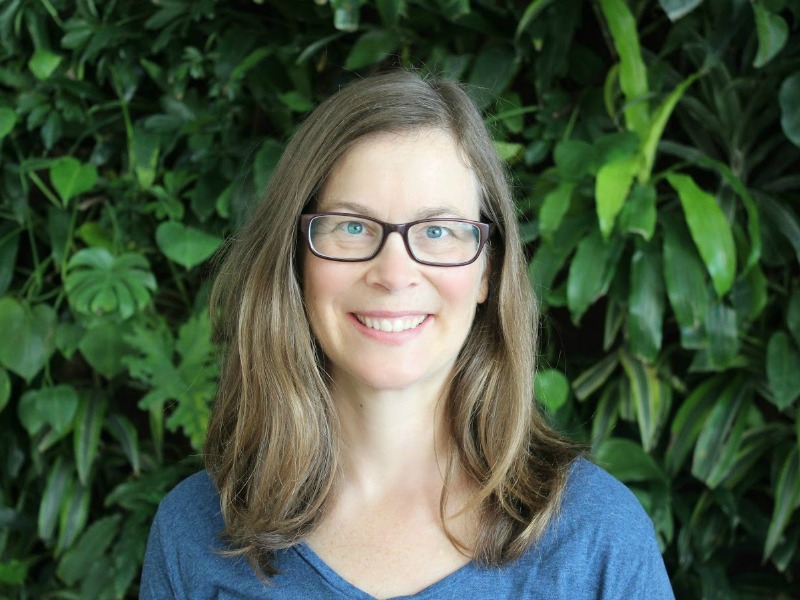
Torhild Holthe is an Associate Professor at the Faculty of Health Sciences , Oslo Metropolitan University, with a part-time appointment. Her work focuses on Occupational Therapy , Dementia assessment , and Assistive technology , particularly in community-based settings. Affiliation: Oslo Metropolitan University Academic Rank: Associate Professor Part-Time: Yes Research Interests include dementia-friendly design, user inclusion in technology development, and qualitative research methods. She emphasizes enhancing older adults’ independence through assistive technologies and participatory approaches. Publication Trends highlight studies on technology adoption for dementia care, process evaluations of sensor technology, and frameworks for user engagement. Her work spans journals like the Journal of Occupational Science and Disability and Rehabilitation: Assistive Technology .
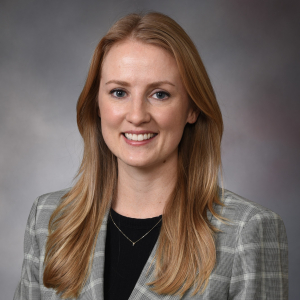
Meredith Gronski is an Associate Professor of Occupational Therapy and Dean of the College of Health Sciences & Human Services at Methodist University. She joined the faculty in 2016 as the founding program director of the Doctor of Occupational Therapy Program. Education : B.A. and OTD from Washington University in St. Louis Certifications : NBCOT Certified (OTR/L), Academic Leadership Credential (CLA), AOTA Fellow (FAOTA) Her research focuses on early childhood interventions , sensory integration, pediatric food allergy management, and interprofessional education. Her recent publications emphasize occupational therapy for self-care skills , sleep and feeding challenges in young children, and innovative applications like 3D-printed prosthetics. She has also contributed to understanding rare diseases like Wolfram Syndrome and integrative health approaches. Scientific Awards : AOTA Fellow (FAOTA) – 2022 American Occupational Therapy Association Academic Leadership Credential (CLA) Gronski has held leadership roles in professional organizations, including President of the North Carolina Occupational Therapy Association (2019–2021), and serves on AOTA’s Commission on Practice and Emerging Leaders Development Committee. She also contributes to community initiatives through the Partnership for Children of Cumberland County and her local church.
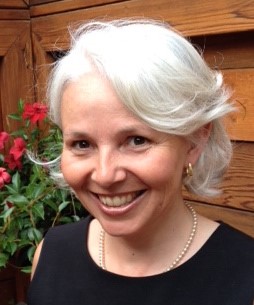
Dr. Caitlyn Hood is an Assistant Professor in the Department of Psychiatry at the University of Kentucky, where she serves as a licensed clinical psychologist specializing in evidence-based treatments for mental health and substance use disorders. Her work bridges research and clinical practice through innovative implementation strategies. Her educational foundation includes: Bachelor of Science in Psychology from the College of Charleston (2014) Master of Science in Clinical Psychology from the University of Kentucky (2019) PhD in Clinical Psychology from the University of Kentucky (2022) Dr. Hood's research program centers on increasing access to evidence-based mental health treatments, with particular focus on traumatic stress, opioid use disorder, and borderline personality disorder. She employs novel delivery models to translate research findings into real-world clinical and community settings, addressing critical gaps in mental health service provision. Analysis of her recent publications (2023-2025) reveals consistent emphasis on trauma-related mechanisms (particularly shame), substance use patterns in comorbid conditions, and implementation science approaches. Her work frequently utilizes daily process methodologies, mixed-methods designs, and digital health interventions to capture dynamic symptom fluctuations and treatment responses. She currently directs the Kentucky Opioid Response Effort (KORE), a $36 million SAMHSA-funded initiative through the Kentucky Department of Behavioral Health aimed at expanding evidence-based opioid use disorder services across the state. This major grant underscores her leadership in addressing the opioid crisis through systemic intervention.
Mag.Dr. Klaus-Dieter Rest is a researcher at the Institute of Production and Logistics within the Department of Economics and Social Sciences at the University of Natural Resources and Life Sciences, Vienna (BOKU). His academic career at BOKU spans multiple periods as a research assistant (2009-2016, 2019-2020, 2023-present) and includes a doctorate in Social and Economic Sciences (2010-2021). Education Doctorate in Social and Economic Sciences, University of Natural Resources and Life Sciences, Vienna (2010-2021) Degree program in Business and Economics, Vienna University of Economics and Business (2005-2009) His research focuses on operations research applications in health care logistics , particularly urban home health care scheduling and disaster response planning. Key areas include time-dependent routing , multimodal transport optimization , and resilience building in critical health care systems . He has developed planning algorithms and tabu search strategies for optimizing home health care services using public transport networks. His work has been recognized with the Peter-Faller-Nachwuchsförderpreis (2022) from the Österreichische Verkehrswissenschaftliche Gesellschaft (ÖVG). He has contributed to publications and presentations on topics including blockchain-based information systems (NutriSafe project), GIS applications in disaster planning , and dynamic scheduling challenges in health care logistics. Scientific Awards Peter-Faller-Nachwuchsförderpreis 2022, Österreichische Verkehrswissenschaftliche Gesellschaft (ÖVG) His professional experience includes working at ingentus decision support KG (2016-2022) and temporary roles at ACNielsen Ges.m.b.H. (2004-2005). He has presented at numerous international conferences including EURO 2016, INFORMS Healthcare 2011, and VRP2013, focusing on home health care scheduling and disaster response optimization.
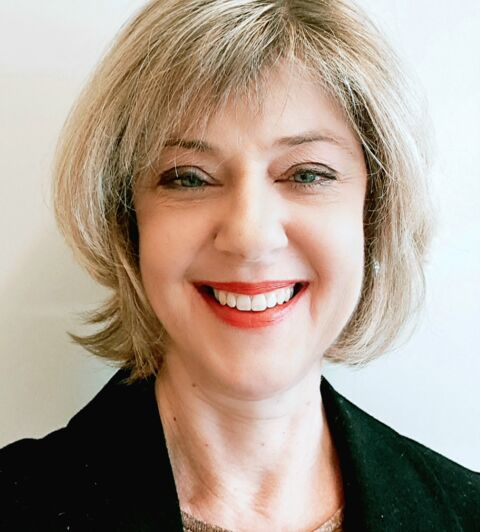
Dr. Carolina Bottari is a Full Professor in the Occupational Therapy Program at the School of Rehabilitation, University of Montreal. She conducts her research at the Interdisciplinary Research Centre in Rehabilitation of Metropolitan Montreal (CRIR) and the University Institute for Rehabilitation in Physical Disabilities of Montreal (IURDPM). Her work focuses on cognitive rehabilitation with particular emphasis on vulnerable populations affected by brain injuries. Her educational background includes: B.Sc. Occupational Therapy, School of Physical and Occupational Therapy, McGill University (1986) M.Sc. Biomedical Sciences, School of Rehabilitation, University of Montreal (2001) Ph.D. Biomedical Sciences, School of Rehabilitation, University of Montreal (2007) Postdoctoral fellowship, Baycrest Hospital, Toronto University (2007) Postdoctoral fellowship, Montreal Neurological Institute and Hospital, McGill University (2010) Dr. Bottari's research spans multiple critical areas in rehabilitation science. She has pioneered work in designing care ecosystems for women who are victims of domestic violence and at risk of having suffered traumatic brain injuries, examining how brain injuries impact empowerment processes and developing integrated support systems. Her research on homelessness among people with brain injuries has documented systemic barriers and developed practical solutions. She is a leader in cognitive assistive technology development, particularly the COOK system for meal preparation support, with multiple studies on usability and implementation in real-world settings. Additionally, she has conducted important work on pandemic response in brain injury services and neurorehabilitation for conditions like myotonic dystrophy. Analysis of Dr. Bottari's publication record (2020-2025) reveals a strong interdisciplinary approach combining rehabilitation science, neuroscience, technology development, and social services. Her work consistently focuses on practical applications in real-world settings, often employing mixed-methods approaches that bridge quantitative measurement with qualitative insights. The publications demonstrate a clear trajectory toward increasingly complex implementation research, moving from technology development to ecosystem design for vulnerable populations. Dr. Bottari leads multiple significant research projects: Preventing and Reducing Homelessness Among People with Acquired Brain Injury (2023-2025) Telemonitoring of activities of daily living for older people (2024-2028) Sustainable Ecosystem of Care for Women with Brain Injury from Intimate Partner Violence (2024-2026) Co-design of support ecosystems for domestic violence victims with TBI (2024-2027) Understanding CNS impairments in myotonic dystrophy (2024-2025) Strengthening Parenting Practices in Rwanda post-genocide (2022-2027) Brain Injury Pandemic Preparedness (2021-2024) Development of smart housing for seniors (2020-2024) These projects are funded by major organizations including Canadian Institutes of Health Research, Brain Canada, Quebec Ministry of Health, and International Development Research Center. Her research is conducted through CRIR and IURDPM, where she collaborates with multidisciplinary teams to develop innovative rehabilitation approaches that address medical, functional, and social dimensions of recovery.
Andrea Blanco Ivorra serves as Assistant Professor in the Department of Materials Science, Optics and Electronic Technology at Miguel Hernández University of Elche, where she teaches Strength of Materials across Electrical, Electronic, and Mechanical Engineering programs. She holds the position of Chair Secretary for the Chair of Advanced Technologies for Rehabilitation, focusing on developing innovative rehabilitation technologies. Her research centers on rehabilitation robotics and neuroengineering, with emphasis on exoskeleton design for upper limb motor rehabilitation, stroke recovery, and assistive technologies for aging populations. She integrates EEG monitoring, biomechanical analysis, and machine learning to create intelligent systems that enable longitudinal assessment and adaptive therapy protocols. Her work bridges clinical rehabilitation with engineering innovation to improve motor function outcomes. Recent publications reveal a cohesive research trajectory in developing and validating robotic rehabilitation systems, with particular focus on home-based solutions, brain-computer interfaces, and personalized therapy adaptation. Her 2024-2025 output demonstrates strong interdisciplinary collaboration across neuroscience, mechanical engineering, and gerontechnology, with consistent emphasis on practical clinical implementation and user-centered design. Dr. Blanco Ivorra's affiliation with the Chair of Advanced Technologies for Rehabilitation drives her work in translating engineering innovations into real-world rehabilitation applications, particularly through the ROAD tele-rehabilitation platform and bimanual exoskeleton systems for daily living assistance.
Ute Kessler is a Senior Lecturer at the Pädagogische Hochschule Weingarten , specializing in Everyday Culture and Health Promotion . She has held this position since 2009, with a focus on nutrition education, food culture, and sustainable consumption. Her work bridges practical teaching methodologies with health promotion in educational contexts. Research Interests: Health-promoting nutrition and dietary education Didactic approaches in Everyday Culture and Health (AES) instruction Sustainable consumption practices and consumer education Integration of food processing and health into daily life Projects: Co-Leader of the Didaktische Servicestelle Ernährungsbildung (DSEB) project (2018-2022) under Germany's BMBF Innovative Hochschule initiative Contributor to the Food Goblins project (2017-2021) focused on practical nutrition education
Peter Fiener serves as Professor for Water and Soil Resource Research at the Department of Geography, Faculty of Applied Computer Sciences, University of Augsburg since 2013. He concurrently holds the position of Dean of Students in the Department of Geography (since 2016) and coordinates the Marie Skłodowska-Curie Innovative Training Network SOPLAS (since 2021). His academic journey includes prior appointments as Professor at the Indo-German Centre for Sustainability, Indian Institute of Technology Madras (2011-2012) and Senior Scientist at the University of Cologne (2004-2013). PhD from Technische Universität München (2003) Habilitation from University of Cologne (2010) Master's in Geography from Universität Augsburg and LMU München (1998) Professor Fiener's research program focuses on measuring and modeling surface runoff, soil erosion, and lateral matter fluxes in agricultural landscapes. He investigates the effects of spatio-temporal patterns and connectivity on water and matter movement, coupling these processes with biogeochemical cycles in terrestrial and aquatic ecosystems. A significant recent emphasis has been on macro and microplastics in arable soil systems, particularly their redistribution mechanisms. His geographical research areas of specialization include South India and Central Africa, where he has conducted extensive field studies on sustainable agricultural practices. Analysis of his 2024-2025 publications reveals a strong research trajectory toward microplastic detection methodologies, advanced soil erosion modeling using machine learning, and carbon dynamics in eroding landscapes. His work increasingly integrates remote sensing technologies with computational approaches to address large-scale soil conservation challenges, demonstrating particular innovation in plasticulture detection using satellite data and erosion nowcasting systems. Coordinator of Marie Skłodowska-Curie Innovative Training Network SOPLAS Professor Fiener leads the Water and Soil Resource Research Team comprising multiple doctoral researchers including Dr. Florian Wilken, Dr. Pedro Batista, and Dr. Lena Katharina Öttl, alongside numerous M.Sc. researchers. His M²ESH laboratory supports advanced measurement and modeling of soil hydrological processes. Current research directions include understanding tillage erosion's role in carbon dynamics, developing cost-effective microplastic detection protocols, and assessing long-term impacts of agricultural practices on landscape evolution across multiple temporal scales.
Professor Elyn Humphreys is a faculty member at the Geography and Environmental Studies Department of Carleton University . She earned her B.Sc. in Plant Biology from the University of Guelph , followed by her M.Sc. and Ph.D. in Biometeorology from the University of British Columbia . Her research focuses on soil-plant-atmosphere interactions , microclimatology , and the impacts of climate change on peatland and Arctic tundra ecosystems . Humphreys investigates how climate change affects the balance between carbon uptake through photosynthesis and loss via respiration in carbon-rich ecosystems. Her work spans diverse environments, including the Daring Lake Tundra Ecosystem Research Station in the Canadian Arctic and Mer Bleue bog near Ottawa. She leads field studies using eddy covariance towers and modeling approaches to quantify carbon, water, and energy fluxes. Her recent publications highlight Arctic snowmelt effects , shrub expansion impacts , and peatland methane dynamics . She collaborates with institutions like Queen’s University and the Ontario Ministry of Environment , contributing to long-term projects such as the Canadian Tundra Carbon Exchange Study and Fluxnet Canada Research Network . She has received the NSERC Postdoctoral Fellowship and actively seeks students/postdocs for ongoing research, with funding opportunities through NSERC and OGS . NSERC Postdoctoral Fellowship Humphreys’ research group operates multiple flux towers in the Canadian Arctic and Hudson Bay Lowlands, analyzing carbon dioxide and methane emissions under climate change. She co-develops models like CLASS3W-MWM and ORCHIDEE-PEAT to improve predictive understanding of northern peatlands.
Vinicius Coscioni is a Brazilian academic currently serving as an Assistant Professor in the Department of Developmental Psychology within the Faculty of Social and Behavioural Sciences at Utrecht University. His research is primarily affiliated with the Dynamics of Youth (DoY) research theme, specifically contributing to three key initiatives: Becoming Adults in a Changing World, Thriving & Healthy Youth, and Youth Education & Life Skills. Dr. Coscioni's primary research interests focus on motivation, identity, personality development, life course and career issues, psychometrics, adolescent development, human rights, and vulnerable groups. He has developed the Comprehensive Theory of Life Projects, which defines a life project as 'an ongoing, evolving process to form, enact, and maintain intentional structures and actions that, altogether, comprise a long-term, meaningful, and prospective narrative capable of guiding decisions and behavior in daily life.' This integrative framework draws from diverse theoretical backgrounds and has been adapted for application in more than 15 countries. His recent publication record shows significant productivity, with numerous articles published in 2023-2025 focusing on life projects, future time orientation, career development, and adolescent development, particularly with vulnerable populations. He has developed psychometric instruments including the Life Project Scale and Future Time Orientation Scale, demonstrating his commitment to both theoretical advancement and practical application. Authenticity Scale validation for Brazilian and Portuguese contexts Employability and career beliefs inventory for unemployed persons Cross-cultural adaptations of life project measures Dr. Coscioni maintains strong international connections, collaborating with researchers primarily from Brazil and Portugal. His work emphasizes practical applications of psychological theory, particularly in career counseling and education for socially vulnerable populations, reflecting his commitment to translating academic research into real-world interventions that support adolescent development and life trajectory planning.
Yuankai Wu is a Researcher at the Chair of Media Technology , Technical University of Munich , focusing on Human Activity Understanding and Computer Vision . He received a B.Sc. in Electrical Engineering (2017) from Ruhr West University of Applied Sciences and an M.Sc. in Electrical Engineering and Information Technology (2020) from TUM. His work explores Human-Object Interaction Understanding and 3D Geometric Features for Assistive Robotics . Education : B.Sc. (Ruhr West), M.Sc. (TUM) Affiliation : Chair of Media Technology, TUM Research Themes : Human activity modeling, vision-driven robot assistance, action anticipation His publications (2022–2025) address topics like TSCL for action segmentation, MistSense for mistake detection, and Neural Painted Radiosity Fields for 3D reconstruction. Collaborative projects span embodied interaction , contextual alignment , and scan-to-CAD estimation .
Marieke A. Helmich is a Research Fellow at the University of Oslo 's Department of Psychology, specializing in Clinical Psychology. Her work focuses on individual change processes in psychopathology, affect dynamics, and intensive longitudinal data analysis using ecological momentary assessments (EMA). PhD in Psychiatry, University of Groningen MScRes in Cognitive and Clinical Neuroscience, Maastricht University BA in Liberal Arts & Sciences, University College Utrecht Research interests include dynamical systems theory, early warning signals for depression transitions, and methods for defining clinically relevant symptom changes. She contributes to projects like CIPA (Mental health resilience) and SIMM (Scalable mental health interventions) as part of the COPE research team. Her methodology integrates EMA, experience sampling, and complex data analysis to study psychotherapy outcomes. Current work emphasizes destabilization patterns preceding symptom improvement in depression treatment and temporal sequencing of emotional, cognitive, and behavioral gains during therapy. Publications address methodological rigor in early warning signal detection and personalized mental health prediction models.
Marinke Hokken serves as a Lecturer in the Psychology department within the Faculty of Social and Behavioural Sciences at Utrecht University. She holds dual professional roles as both an academic educator and a practicing neuropsychologist at Royal Dutch Visio (Koninklijke Visio), a rehabilitation center specializing in services for the blind and visually impaired. Her professional profile bridges clinical practice with academic research, particularly focusing on children with visual impairments. Dr. Hokken possesses a bachelor's degree in Educational Sciences (2015) and a master's degree in Clinical Neuropsychology (2018), and is currently completing her PhD research at Erasmus MC in the Department of Neuroscience. Her research focuses on diagnostic issues related to Cerebral Visual Impairment (CVI) in children, linking neuropsychological tasks to visual behavior through eye tracking technology. Her work has established her as an emerging expert in child neuropsychology with specific expertise in visual processing disorders. Her publications reveal a consistent research trajectory examining CVI through multiple methodological approaches including eye tracking, questionnaire development, and comparative analysis with other neurodevelopmental conditions like ADHD and dyslexia. Her recent publications (2023-2025) demonstrate increasing impact in the field, with several receiving notable citations and media attention. Her research has particular relevance for early identification and differential diagnosis of visual processing disorders in pediatric populations. Early Career Researcher Award (1st place) - European Academy for Childhood onset Disabilities (EACD) conference - Bruges 2024 Best oral presentation (1st place) - Childhood Vision Research Society (CVRS) conference - London 2023 Early career poster award (1st place) - Childhood Vision Research Society (CVRS) conference - London 2023 As an educator, Hokken supervises theses and internships for both Bachelor's in Psychology and Master's in Neuropsychology programs. She teaches specialized courses including Neuropsychological Diagnostics, Developmental Neuropsychology, Advanced Neuropsychology, Neuropsychological Rehabilitation, and Clinical Neuropsychology. Her teaching directly reflects her research expertise, creating a strong connection between her clinical practice at Royal Visio and academic instruction at Utrecht University.
Professor Nick Bond is a Professor and Director of the Centre for Freshwater Ecosystems at La Trobe University, focusing on the ecology and hydrology of rivers and wetlands. With over 100 peer-reviewed publications, his work addresses climate change impacts on freshwater systems, environmental flow management, and ecosystem restoration. Education: PhD, University of Melbourne. Adjunct Professor: Australian Rivers Institute, Griffith University. His research interests span freshwater ecosystems , hydrology , and climate change , emphasizing the interplay between hydroclimate, catchment processes, and biodiversity. Recent publications highlight: Dam impacts on flow and thermal regimes Climate-ready ecological targets for environmental flows Context-dependent effects of resource enrichment Global lessons from non-perennial rivers Priority refuges for freshwater biodiversity He supervises postgraduate students and collaborates with institutions like the Murray Darling Basin Authority and NSW Environmental Water Advisory Group . His current projects focus on eDNA surveillance, flow restoration, and climate adaptation strategies.
Dr. Paul C. Vermunt is an active researcher in the field of water resources, with a focus on remote sensing and environmental data analysis. His work bridges geoscience, agricultural monitoring, and microwave sensing technologies. Core Expertise: Vegetation canopy interactions, L-band backscatter analysis, soil moisture networks Recent Collaborations: Partnerships with Steele-Dunne, Judge, van der Velde, and Salama across international institutions Dataset Contributions: Instrumental in curating over a decade of Twente soil moisture and temperature data Research trends reveal expertise in radiative transfer modeling, vegetation water content, and agricultural remote sensing, with a particular emphasis on corn canopy dynamics and sub-daily backscatter variations. Recent publications in Science of Remote Sensing and Remote Sensing of Environment demonstrate continued contributions to microwave sensing applications. His dataset on Twente's soil moisture (DANS, 2022) provides foundational data for hydrological studies. As an organiser of the 2023 NEEDS conference, he actively engages in academic knowledge exchange while maintaining technical leadership in operational data networks established since 2009.