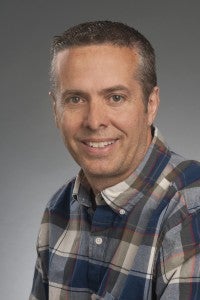
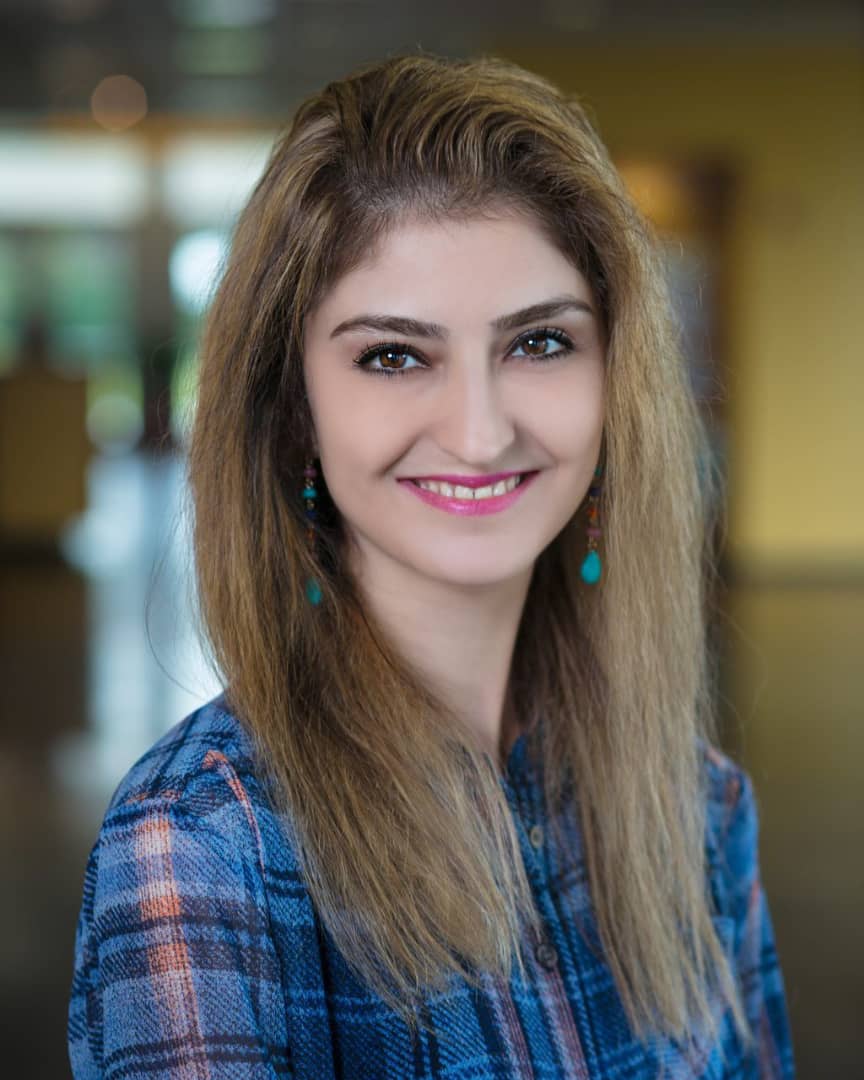
Irina Savchenko is a Professor at the Department of Macromolecular Chemistry, Taras Shevchenko National University of Kyiv. With over two decades of experience, she leads a research group focused on photoactive polymers and nanosystems for optoelectronics and electromagnetic-responsive materials. Doctor of Chemistry (Ph.D. analog) - Taras Shevchenko National University of Kyiv, 1996 Doctor of Sciences - Taras Shevchenko National University of Kyiv, 2012 Her research spans azopolymers , polymer nanoparticles , and electroluminescent devices , emphasizing applications in organic light-emitting diodes (OLEDs) and singlet oxygen sensitization . Her team employs advanced techniques like self-exclusion chromatography , atom-force microscopy , and transmission electron microscopy . Key publication trends focus on polymer synthesis , nonlinear optical properties , and nanocomposite design , particularly with azobenzene and coumarin-based systems. Current projects include developing photo-switchable materials and lanthanide-doped polymers for electromagnetic-controlled devices. Contact: iras@univ.kiev.ua
Associate Professor Benjamin Tayo, Ph.D., is a faculty member in the Department of Engineering & Physics at the University of Central Oklahoma (UCO), where he has taught since 2019. He concurrently serves as an Adjunct Professor of Physics at Grand Canyon University. Previously he held the rank of Assistant and then Associate Professor of Physics at Pittsburg State University (2013-2019). Education Ph.D. in Computational Materials Physics, Lehigh University (2012) M.Sc. in Condensed Matter Physics, ICTP & University of Trieste (2007) B.Sc. in Physics and Computer Science, University of Buea (2004) Graduate certificates in Medical Physics (University of Florida) and Data Science (Harvard via edX) Research Focus Dr. Tayo’s research integrates ab-initio density-functional theory with high-performance computing to investigate two-dimensional and advanced functional materials. His group targets solar-energy harvesting, energy-storage electrodes, high-speed electronics, optoelectronics, and label-free DNA biosensors. Current projects include: 2-D materials beyond graphene for nano-bioelectronic sensing High-throughput computational screening for renewable-energy and biomedical applications Machine-learning-enhanced materials discovery Collaborations span UCO’s Buddy supercomputer, NERSC, and experimental partners at Pittsburg State, Kansas, Lehigh and Tulsa universities. Publication Trends Over the past decade Dr. Tayo has published extensively on the electronic, optical and sensing properties of graphene, phosphorene, silicene and related nanostructures. Recent work (2020-2023) emphasizes computational DNA-sequencing platforms, ferrocene-based copolymers for sensing, and methodological studies in physics education. His earlier studies (2012-2015) centered on carbon nanotube excitons, graphene nanoribbon band-gap engineering and III-nitride alloys for visible-light applications. Honors & Awards NIH R15 Award ($425,928, 2022-2025) Kansas EPSCoR Partners in Science & Technology recognition PSU Exceptional Faculty Performance Award 2014/15 Sherman-Fairchild Fellowship (Lehigh) ICTP-TRIL Fellowship (UNESCO/IAEA) Grants & Student Mentoring Dr. Tayo has served as PI or Co-PI on grants from NIH, NSF EPSCoR, and the National Energy Research Scientific Computing Center. He has directed nine master’s theses and numerous undergraduate research projects. His former students have progressed to doctoral programs at Kansas State, Case Western Reserve, UMass Boston and medical physics residencies. Professional Engagement Active memberships include the American Physical Society, Oklahoma Academy of Sciences, American Association of Physics Teachers, and American Association of Physicists in Medicine. He has delivered eight invited talks and over twenty conference presentations worldwide.
Kaya Bilguvar serves as an Adjunct Associate Professor in the Department of Neurosurgery at Yale School of Medicine. She is actively affiliated with the Brain Tumor Research program and Neurogenetics Program, contributing to Yale's interdisciplinary neuroscience research initiatives. Her work bridges clinical neurosurgery with cutting-edge genomic approaches to understand neurological disorders. Dr. Bilguvar completed her MD at Marmara University in 2000, followed by a Postdoctoral Associate position at Yale University in 2007, and earned her PhD in Medical Biology and Genetics from Marmara University in 2022. This unique combination of clinical and advanced scientific training informs her research approach. Her research focuses on identifying genetic bases of human diseases affecting nervous system structure and function, with special emphasis on cerebral cortical malformations, schizophrenia, early-onset neurodegenerative syndromes, and migraine. She employs multi-omic approaches and develops patient-derived 2D and 3D induced neuronal systems to elucidate disrupted biological processes. Additionally, she pioneers high-throughput omics approaches for early detection and profiling of brain tumors, particularly through circulating tumor DNA analysis. Dr. Bilguvar's publication record demonstrates a clear trajectory in neurogenetics, with increasing focus on multi-omics integration and translational applications. Her work spans from fundamental genetic discoveries in neurodevelopmental disorders to clinical applications in brain tumor diagnostics and precision oncology. She maintains an extensive collaborative network at Yale, with particularly strong connections to Dr. Murat Günel (65 co-publications), Dr. Katsuhito Yasuno (34 co-publications), and Dr. Zeynep Erson Omay (20 co-publications), reflecting her central role in Yale's neurogenetics research ecosystem. Dr. Bilguvar currently serves as a Sub Investigator in the clinical trial 'Genetic and molecular studies of developmental neuropsychiatric disorders' (HIC ID 0301024156), which is recruiting participants through December 31, 2025, focusing on child development, autism, and brain-related conditions.
Tom de Greef is a Full Professor at Eindhoven University of Technology (TU/e), affiliated with the Institute for Complex Molecular Systems (ICMS) and the Centre of Living Technologies . His work spans synthetic biology, molecular computing, and engineered living systems, with a focus on programmable molecular systems and DNA-based technologies. Biomedical Engineering department Core member of ICMS Founding member of Centre of Living Technologies Member of Netherlands Academy of Engineering His research explores the intersection of synthetic biology, computer science, and chemistry, developing DNA-based data storage systems, synthetic cells, and programmable biochemical networks. Recent work highlights advancements in cell-free modeling and DNA reaction systems capable of learning-like behavior. Notable trends in his publications include: Integration of mechanism-based and data-driven approaches in synthetic biology Innovations in DNA nanotechnology for imaging applications Development of biochemical systems with memory and learning capabilities Scientific recognition includes: ERC Starting, Consolidator, and PoC grants NWO VICI/VICI grants Cram-Lehn-Pedersen Prize Groundbreaking TU/e researcher award He supervises a large research group and contributes to educational programs in system estimation, biochemical simulation, and synthetic biology through courses and iGEM projects.
George M. Church is the Robert Winthrop Professor of Genetics at Harvard University and a member of the Affiliated Faculty of the Harvard-MIT Division of Health Sciences and Technology. He leads the Church Lab within the Department of Biological and Biomedical Sciences, focusing on transformative technologies for reading and writing 3D/4D biological structures, with applications in genome engineering, synthetic biology, and aging reversal research. His work spans computational biology, DNA data storage, and bioethics, emphasizing interdisciplinary innovation and equitable technology development. Current Affiliation: Department of Biological and Biomedical Sciences, Harvard Medical School Collaborations: Wyss Institute Synthetic Biology Platform, Consortium for Space Genetics Key research areas include Genome Project Write , Synthetic Morphogenesis , AI/ML for Protein Design , and Gene Drives . The lab also explores DNA-based surveillance systems, universal diagnostics, and de-extinction projects. Regular lab meetings occur at NRB 350/335 and Wyss Woodpecker locations.
Katarina Ejeskär is a Professor of Biomedicine at the University of Skövde's School of Health Sciences, where she has been employed since 2015. She leads the Translational Medicine TRIM research group and is responsible for the university's fruit fly facility used in both research and teaching. Prior to her position at Skövde, she led her own research group at Sahlgrenska Academy and has been an Associate Professor in experimental clinical genetics since 2011. She earned her undergraduate degree in molecular biology from the University of Gothenburg and completed her PhD in clinical genetics from Sahlgrenska Academy in 2000 with a thesis focused on neuroblastoma genetics. Her primary research interest centers on childhood cancer, particularly neural tumors with a focus on 11q-deleted neuroblastoma. She investigates genetic changes in tumors and their effects on tumor survival and growth using cultured cells, fruit fly models, and primary tumor material. Her work often analyzes genetic data from publicly available databases to formulate testable hypotheses. She has established several collaborative projects with researchers including Ferenc Szekeres (digitoxin treatment of pancreatic cancer), Homa Tajsharghi (rare genetic disorders), Åsa Torinsson Naluai (gluten intolerance, diabetes and probiotics), Victoria Rotter Sopasakis (alternative splicing and PI3K signaling), and Frida Abel (fusion genes in brain tumors). Her recent publications from 2020-2025 demonstrate a strong focus on neuroblastoma genetics, pancreatic cancer treatments, and genetic disorders. The research shows consistent exploration of molecular mechanisms underlying cancer progression, with particular attention to genetic deletions, fusion genes, and potential therapeutic targets. Her work frequently employs bioinformatics approaches alongside experimental validation using multiple model systems. She has received research funding for projects including childhood cancer research, pancreatic cancer treatment with digitoxin, gluten intolerance and diabetes, and obesity and androgen excess in women. Her most recent projects include examining eye movements and biomarkers during moderate alcohol consumption (2024-2026) and investigating mobile phone-based interventions for reducing alcohol consumption (2025-2026). As an educator, she teaches primarily in the Biomedicine Program, focusing on genetics, tumor biology, and thesis work. She serves as the main supervisor for doctoral students and coordinates various courses at both bachelor's and master's levels. Her commitment to integrating research with education is evident through her management of the fruit fly facility used for both research and teaching purposes.
Tian Xia, Ph.D., is a Research Investigator in the Department of Environmental Health Sciences at the University of Michigan School of Public Health. His work bridges environmental engineering and public health, focusing on air quality monitoring, exposure assessment, and health impact analysis in underserved communities. Ph.D. in Environmental Engineering (2018), University of Michigan BSc in Environment & Sustainable Development (2013), The Hong Kong Polytechnic University Research interests include air pollution mitigation , environmental justice , and community-based interventions . Key projects involve the Gordie Howe International Bridge Air Quality Monitoring , Michigan–Ontario Ozone Source Experiment , and Reducing Exposure to Air Pollutants: Detroit initiative. Recent publications span two research domains: (1) air quality in urban and industrial settings (e.g., 2024 work on school indoor air purifiers) and (2) nanotechnology for energy and robotics (e.g., 2025 studies on microgel cargo release). This interdisciplinary output reflects expertise in environmental monitoring systems and advanced material applications .
Prof. Wolfgang Wenzel is a Professor and Research Unit Chair at the Institute of Nanotechnology (INT) at Karlsruhe Institute of Technology (KIT). His research focuses on Multiscale Materials Modelling and Virtual Design , emphasizing computational approaches for nanoscale materials and devices. Key areas include organic electronics, battery technologies, and metal-organic frameworks (MOFs). He leads the Research Unit Wenzel and contributes to initiatives like the BATTERY 2030+ project. His work bridges theory and application, developing tools like SimStack (workflow automation) and TeachIt (digital teaching). Research interests span multiscale simulations, material design, and nanotechnology applications. He collaborates on 3D Matter Made to Order (3DMM2O) and supervises students like Anna Mauri, who won the Best Poster Award at Future 3DAM 2022. His team addresses challenges in energy storage, sensor design, and advanced manufacturing. The group also explores MOF-functionalized sensors and light-switchable conductors . Professional contributions include leadership in the GRK 2450 graduate school and DAAD scholarship coordination for international PhD students. His lab develops fluorescent nanozeolite receptors for neurotransmitter detection and layer-by-layer SURMOF assembly strategies.
Alvaro Gonzalo Hernandez is a Research Professor and Director of the DNA Services Facility at the Biotechnology Center of the University of Illinois Urbana-Champaign. His work focuses on genomics, transcriptomics, and epigenetics, with particular emphasis on genome assembly techniques and microbial genetics. Recent research highlights include telomere-to-telomere genome assembly for Malassezia pachydermatis epigenetic effects of maternal infection on offspring hypothalamus transcriptomic analysis of mouse retinal pigment epithelium aging genomic characterization of Clostridium scindens strains high-quality genome assemblies for diverse North American insect species His publications demonstrate expertise in genome assembly, DNA sequencing, and computational biology, with applications spanning microbial genomics, biomedical research, and evolutionary biology. Collaborative projects include contributions to datasets on DNA-based data storage systems and insect genomics.
Luis Ceze is a Full Professor at the University of Washington's Paul G. Allen School of Computer Science and Engineering, holding the Edward D. Lazowska Endowed Professorship. He leads research groups focusing on hardware/software systems (Sampa), machine learning systems (SAMPL), and DNA-based computing (MISL). Additionally, he co-founded and serves as CEO of OctoML, a company advancing AI infrastructure. His work bridges computer architecture, programming languages, machine learning, and biological systems to innovate computing paradigms. Education : PhD in Computer Science from UIUC (2007), MEng and BEng in Electrical Engineering from University of São Paulo (Brazil). Research Interests : Approximate computing, DNA data storage, molecular programming, and systems for machine learning. Key projects include TVM (deep learning compiler), APPROXBENCH, and molecular computing frameworks. Publications : Over 150 peer-reviewed papers spanning systems, architecture, and biology. Recent work emphasizes DNA storage scalability, neural network optimization, and hybrid molecular-electronic computing. Awards : ACM SIGARCH Maurice Wilkes Award (2020), multiple IEEE Micro Top Picks, and recognition for contributions to approximate computing and DNA storage. Grants & Industry : Supported by Microsoft, Intel, Google, and NSF. Active in startups and venture partnerships (Madrona Venture Group). Labs/Teams : Molecular Information Systems Lab (MISL), SAMPL/Sampa groups. Collaborates across UW, industry, and international institutions.
Katherine Dunn is a Senior Lecturer and Director of Discipline for Mechanical Engineering at the University of Edinburgh's School of Engineering. Her research integrates nanotechnology, synthetic biology, and bioengineering to develop novel biomolecular systems for applications in photonics, electronics, and healthcare. Current projects include AI-powered gel electrophoresis analysis, DNA-based biomarker detection platforms, and energy storage in biological systems. Dr. Dunn's honors include being named among the Top 50 Women in Engineering: Engineering Heroes (2021). She leads multiple interdisciplinary research initiatives including the UNANO consortium to advance European bionanotechnology research.
Gouenou COATRIEUX is a full Professor at IMT Atlantique Bretagne-Pays de la Loire, affiliated with the Department of Image and Information Processing (ITI) and the LaTIM Inserm U1101 laboratory . His research focuses on medical imaging security , cybersecurity in healthcare systems , and federated learning . Key interests include DNA-based data storage, privacy-preserving AI, and intrusion detection in cyber-physical systems. Research activities span medical image steganography , secure federated learning frameworks , and biomedical data anonymization . Notable projects address GDPR compliance in clinical data warehouses and watermarking techniques for AI model integrity. He has collaborated on digital twin technologies for anomaly detection in critical infrastructure. Recent work emphasizes non-IID federated learning defense mechanisms , CT imaging enhancement , and homomorphic encryption applications. Over 150 peer-reviewed publications demonstrate expertise in interdisciplinary topics like medical IoT security and deep learning for radiology. No scientific awards are listed, though his contributions to healthcare cybersecurity are widely recognized in academic circles. Advising and grant details are not explicitly stated in available materials. Primary affiliation is with IMT Atlantique's Brest campus.
Eric Hayden, Ph.D., is a Professor and Chair of the Department of Biological Sciences at Boise State University’s College of Arts and Sciences. He joined the university in 2013 and leads the Hayden Lab, located in MCMR 222A. His research focuses on RNA design and laboratory evolution to develop biomedical and biotechnical applications, alongside exploring the origins of life through evolutionary processes. He collaborates with Dr. Matt Ferguson (Physics) to visualize RNA processing in living eukaryotic cells using single-molecule fluorescence microscopy. Education: Postdoctoral Scholar, Stanford University (2012–2013) Postdoctoral Scholar, University of Zurich, Switzerland (2009–2011) Ph.D. in Chemistry, Portland State University (2008) B.S. in Chemistry, Linfield College (2002) Research Interests: Dr. Hayden investigates RNA evolution, synthetic biology, and next-generation sequencing applications. His lab develops tools to study evolutionary mechanisms in nature and the lab, with a recent focus on real-time visualization of gene expression in eukaryotes. Projects include designing nucleic acid memory systems and optimizing DNA origami scaffolds for data storage. Teaching: Teaches graduate courses including Biomolecules I (BMOL 601), Molecular Genetics (BMOL/BIOL 613), and Biotechnology and Genetic Engineering (BMOL 570). Lab Activities: The Hayden Lab seeks interdisciplinary PhD students through the Biomolecular Science Program. Current studies include RNA mutation prediction via machine learning, ribozyme-based biosensors, and high-resolution imaging of RNA dynamics.
Tim Andersen is a Professor in the Computer Science Department at Boise State University. He holds a Ph.D. in Computer Science from Brigham Young University (1999) and previously worked as Chief Scientist at IArchives, developing OCR and image processing algorithms. His research focuses on interdisciplinary areas including nucleic acid-based data storage, blockchain applications in AI, machine learning optimization, and bio-inspired computational models. Education : Ph.D. in Computer Science, Brigham Young University, 1999 Research Interests : Dr. Andersen’s work spans molecular data storage (e.g., DNA-based memory systems), computational security protocols leveraging blockchain, optimization of neural network training, and bioinformatics applications such as probe design and protein docking. He pioneered methods for encoding digital information in nucleic acids and developed algorithms for enhancing AI model trustworthiness through decentralized verification. Publications Trends : Recent work emphasizes nucleic acid memory optimization (2023–2025), blockchain integration in AI security (2023–2024), and legacy contributions to OCR algorithms and evolutionary computation (1995–2000s). His research often bridges computer science with molecular biology, addressing both theoretical and applied challenges in emerging technologies. Awards & Grants : Not explicitly listed in available texts, but his sustained contributions across multiple disciplines suggest substantial external funding and recognition in interdisciplinary computing. Advising & Curriculum Development : Co-developed the “Computer Science Professionals’ Hatchery” program, integrating inclusion/diversity initiatives into Boise State’s curriculum. Focus on preparing high-school teachers in computer science through sustainable models like IDoCode. Labs & Collaborations : Associated with Boise State’s computational biology and AI security research groups. Collaborates across disciplines to advance nucleic acid storage and blockchain-audited systems.
Zahra Derakhshandeh is an Associate Professor in the Department of Computer Science at California State University East Bay. She holds a Ph.D. in Computer Science from Arizona State University (2017), where she worked under Professors Andrea W. Richa and Christian Scheideler. Her research focuses on distributed computing, algorithm design, bio-inspired algorithms, programmable matter, and self-organizing particle systems. Notably, her work on 'Smart Paint' for universal coating problems has received media attention from MIT Tech Review and ACM TechNews. Dr. Derakhshandeh has extensive teaching experience, including instructing courses like Foundations of Algorithms (CSE 551) at Arizona State University and serving as a faculty member at multiple institutions in Iran. Her industrial experience includes roles as a software developer at eBay/PayPal and research positions in network security and data center projects. Her research trends span theoretical computing (programmable matter, self-organization) and educational technology (online learning dynamics, active learning strategies). Recent publications explore federated learning, student engagement in online environments, and interaction design in digital education systems. Dr. Derakhshandeh’s work emphasizes cross-disciplinary applications, bridging computer science theory with real-world systems like financial eligibility services and telecommunication infrastructure.