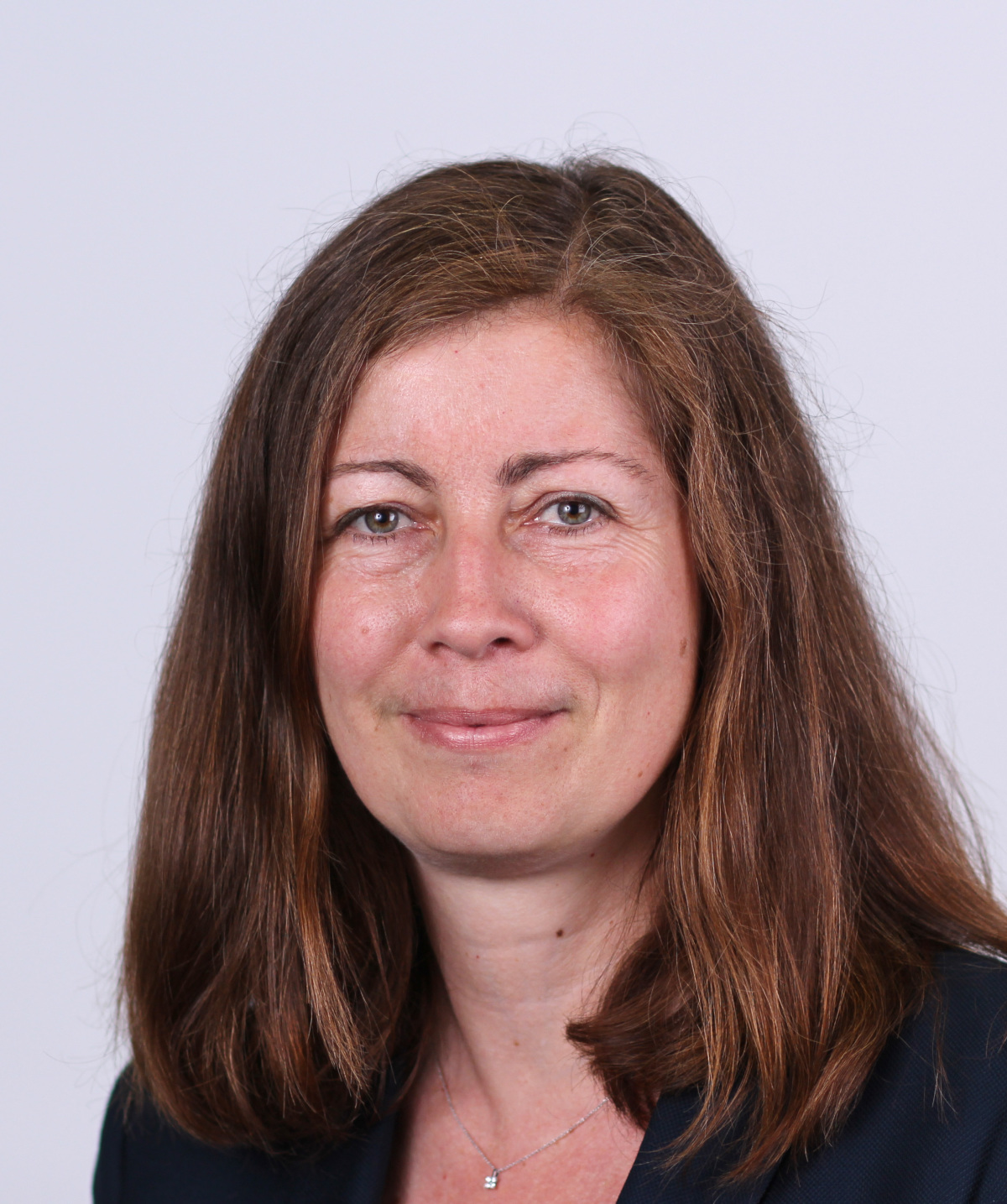
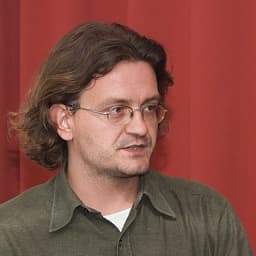
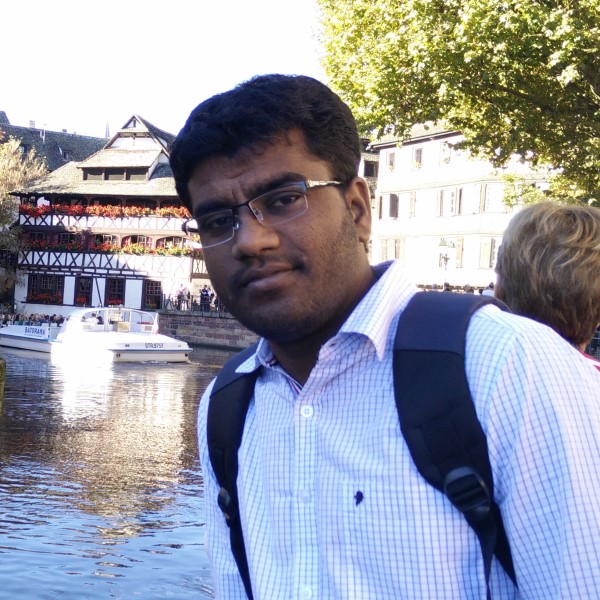
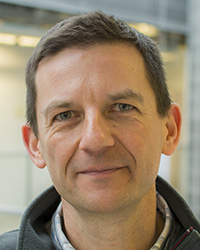
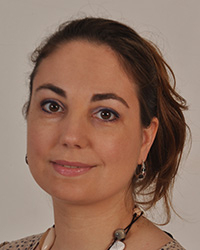
Rossitza Pentcheva is a Professor at the University of Duisburg-Essen leading research in quantum materials and energy conversion through ab initio modeling. Her work focuses on transition metal oxides thermoelectric heterostructures photoelectrochemical water splitting spin-resolved electronic states strain and disorder effects in Heusler alloys at the nanoscale. Recent research trends include topological phases in oxide superlattices lattice-electronic coupling in magnetocaloric systems orbital engineering via geometric constraints machine-learned force fields for nonequilibrium dynamics defect-mediated tuning of oxygen evolution catalysts across collaborative projects like CRC1242 and TRR270. Her group has produced 12 doctoral graduates since 2019, with ongoing contributions to Nature Materials and Science publications. Selected scientific collaborations span institutions in Germany, US, Canada, and Italy, driving European patents and machine-learning frameworks for material discovery.
Prof. Dr. Igor Schapiro is a faculty member in the Department of Physics at the Technical University of Dortmund and serves as director at the UA Ruhr Research Center Chemical Science and Sustainability . His research focuses on computational chemistry and photochemical reactions in organic and biomolecules. His work emphasizes light-induced reactions in chromophore-protein complexes and solvated molecules, supported by the development of computational tools for photochemical/photobiological systems . Recent publications highlight applications in X-ray spectroscopy , spin dynamics , and magnetic anisotropy in nanostructured materials. His research group collaborates across institutions including the European XFEL and Hebrew University, maintaining strong ties with interdisciplinary projects like the Collaborative Research Centre 1242.
Rasa Platakytė is an Assistant Professor at the Institute of Chemical Physics, specializing in vibrational spectroscopy and low-temperature matrix isolation techniques. Her research examines molecular interactions, hydrogen bonding dynamics, and photochemical reactions under cryogenic conditions using advanced spectroscopic methods. Research Focus: Her work spans vibrational spectroscopy of isolated molecules, matrix isolation FTIR studies of molecular conformations, hydrogen tunneling phenomena, and photoisomerization mechanisms. Primary methodologies include low-temperature FTIR/Raman spectroscopy combined with computational chemistry approaches. Teaching & Supervision: Since 2018, she has taught optics courses across multiple faculties including Medicine, Physics, and Chemistry. Actively supervises 1-3 bachelor students annually and contributes to physics education through the young physicist school 'Fotonas'. Science Outreach: Organized the 'Cafe Scientifique' lecture series (2018-2022) bringing science to public spaces, and co-organized the international student conference 'Open Readings'.
Barbara Chiavarino is an Associate Professor at the Department of Chemistry and Pharmaceutical Technologies, Sapienza University of Rome. Her research focuses on the structure and reactivity of ionic species, particularly metal-drug complexes and bioactive molecules in the gas phase, using advanced techniques like FT-ICR mass spectrometry, IRMPD spectroscopy, and computational modeling. Education : PhD in Pharmaceutical Sciences (1996), Habilitation for Associate Professor (2013). Teaching : Courses in General and Inorganic Chemistry for Applied Pharmaceutical Sciences and Pharmacy programs since 1999. Her research spans ionic reactivity , metal-ligand interactions , and reaction mechanisms , with a focus on anticancer drugs like cisplatin and natural antioxidants such as genistein. She collaborates internationally and has published over 82 peer-reviewed papers with an h-index of 22. Key methodologies include mass spectrometry, IR spectroscopy, and theoretical calculations to study coordination motifs, hydrogen bonds, and cation-π interactions. Recent work explores interactions of platinum drugs with biomolecules, chiral recognition in carbohydrates, and hydration effects in vitamin-metal complexes. Peer Review : Referee for journals including Chem. Eur. J. , J. Phys. Chem. A , and Int. J. of Mass Spectrometry . Professional Affiliation : Member of the Italian Chemical Society since 2009.
Pascale Armand is a Senior Research Fellow at the University of Montpellier, affiliated with the Institute of Chemistry of Montpellier (ICGM - UMR5253) and the Balard Research Chemistry Center. Her research focuses on materials chemistry, nanostructures, and materials for energy, with emphasis on disordered systems and structure-property relationships. Her work involves synthesizing functional inorganic materials and characterizing their structural, optical, and dielectric properties using advanced techniques like synchrotron radiation, neutron diffraction, and vibrational spectroscopy. She has led studies on piezoelectric quartz analogues, phase-change chalcogenides, and nonlinear optical materials, often combining experimental and theoretical approaches. Selected publications highlight her contributions to amorphous/crystalline thin films, solid solutions in oxides, and vibrational origin of thermal stability. Collaborations span academic and industrial partners, including participation in the French GdR CHALCO consortium. Her research has applications in nonlinear optics, piezoelectricity, and energy storage technologies.
Corey Damon, PhD, is an Assistant Professor in the Department of Biochemistry at Canisius College within the College of Arts and Sciences. His research focuses on marine fouling organisms, biofilm formation, and antifouling coatings through structural biology and enzymatic processes. He also explores biochemical changes from strenuous exercise. Education: PhD and MA in Chemistry from University at Buffalo; BS in Biochemistry from Canisius College Dr. Damon's research bridges organic chemistry and marine biology to develop silane-based antifouling materials using natural metabolic pathways. His recent work emphasizes computational methods in organic mechanisms and hybrid xerogel surfaces. Scientific Awards: Applauding Participation in the Learning Environment Award, SUNY Jamestown Mattern-Tyler Teaching Award, SUNY Buffalo
Sotirios Karabetsos serves as a Lecturer at the Department of Electrical and Electronic Engineering, University of West Attica, specializing in Voice Signal Processing Systems and Broadband Data Communications. His academic journey includes a PhD from the National Technical University of Athens (NTUA) and advanced studies at Brunel University, London. PhD, School of Electrical & Computer Engineering, NTUA (2004-2010) MSc in Data Communication Systems, Brunel University (2001-2003) Diploma in Electrical and Computer Engineering, NTUA (2000-2004) Electronic Engineering Degree, TEI of Athens (1995-1999) His research spans Broadband telecommunications , Software Defined Radio , Digital Signal Processing , and Machine Learning applications. His work focuses on innovative communication systems including wired, wireless, and optical networks, with particular emphasis on signal processing for voice and data transmission. Recent publications demonstrate expertise in Radio over Fiber technologies, multicore fiber applications, machine learning for transportation, and advanced speech synthesis techniques. His work bridges theoretical research with practical implementations in next-generation communication systems. As an educator, Dr. Karabetsos teaches undergraduate courses including Telecommunications, Wideband Transmission Technologies, and Digital Audio and Speech Technologies, along with postgraduate courses on 4G/5G Communication Systems and Software Defined Radio. His laboratory work spans Buildings A and Z at the Ancient Olive Grove Campus, where he conducts research in signal processing and communication systems. Office hours are held Mondays and Wednesdays from 14:00-15:00, with additional availability upon request.
Michael Psarakis is a Professor at the Department of Informatics of the University of Piraeus , where he directs the Embedded Computing Systems Laboratory . He holds academic degrees from the University of Patras (Computer Engineering) and the National and Kapodistrian University of Athens (PhD in Informatics & Telecommunications). Research Focus : Embedded Systems Architecture with emphasis on Hardware, Fault-Tolerant Design, FPGA-based Accelerators, and Radiation Effects on Microelectronics Leadership : Scientific Director of 10+ EU/National Research Programs Professional Affiliations : IEEE Member, ACM Member, Chair of IEEE DFT Conferences (2019-2020), and Organizer/Program Committee Member of International Conferences (DATE, IOLTS, ETS, ARC).
Chunhao Wang is an Assistant Professor in the Department of Computer Science and Engineering at an unspecified university. His research focuses on quantum algorithms, optimal control of quantum systems, and their applications in computational chemistry and machine learning. He has active NSF-funded projects on quantum control and continuous-time open quantum systems. Active NSF Grants: FET Small (2023-2026), CAREER (2023-2028) His work spans quantum computing, algorithm design, and solving high-dimensional problems in optimization and statistical mechanics. Recent publications highlight quantum speedups for classical algorithms and efficient simulation of non-Markovian systems. Collaborations include researchers like Li, X. and Wu, X.
Krishna Gavvala is an Assistant Professor in the Department of Chemistry at Indian Institute of Technology Hyderabad, India. He leads the Laboratory of Biophysical Chemistry and Spectroscopy (LBCS), focusing on advanced spectroscopic and computational techniques to study biomolecular systems. PhD from IISER Pune (2010-2015) Post-Doctoral Fellow at University of Strasbourg, France (2015-2019) Assistant Professor at IIT Hyderabad (2019-present) MSc and BSc in Chemistry from IIT Roorkee and Osmania University Research Interests: Physical Chemistry, Biophysics, Spectroscopy, and Drug Discovery. His group investigates: Photophysical properties of molecules Fluorescence spectroscopy of proteins Protein-DNA/RNA interactions Luminescence of nanomaterials (graphene oxides, carbon dots) Development of chemical tools for imaging and biosensing Article Trends: Recent works span 2025 and 2024 , emphasizing: Fluorescence probes for biomolecular dynamics Drug interactions with proteins/DNA Deep eutectic solvents in enzymatic applications Computational and spectroscopic integration Nanostructured systems in pharmaceuticals Photophysical properties in complex environments Contact: Email kgavvala@chy.iith.ac.in or call +91(0)40 2301 6265 for PhD positions (open to CSIR/UGC-JRF candidates). Labs & Teams: Krishna leads the Laboratory of Biophysical Chemistry and Spectroscopy (LBCS) , employing multidisciplinary methods to explore biomolecular systems.
Dr. Egwu Eric Kalu is a Professor in the Chemical & Biomedical Engineering department at the FAMU-FSU College of Engineering. His research focuses on electrochemical and nanomaterials engineering for sustainable energy and environmental systems, with expertise in energy storage modeling, electrocatalysis, and bioelectrochemistry. Dr. Kalu's educational background includes: Ph.D. in Chemical Engineering from Texas A&M University (1991) MASc in Chemical Engineering from University of British Columbia (1988) B.Sc. in Chemical Engineering from University of Lagos, Nigeria (1984) Dr. Kalu's research spans several critical areas in sustainable energy. His work focuses on electrochemical & nanomaterials engineering for sustainable energy systems, including electrical energy storage modeling for batteries, ultracapacitors, and fuel cells. He investigates oxygen electrocatalysis for fuel cells and hydrogen generation from liquid fuels and biofuels. His laboratory integrates theory, simulation, materials design, and rigorous validation to solve challenges in clean energy generation and bioelectrochemical systems, with current focus on seawater electrolysis, MEA durability, and catalyst benchmarking for affordable alternatives to precious metal catalysts. Dr. Kalu's recent publications demonstrate a strong focus on advanced energy storage technologies, particularly lithium-ion and sodium-ion batteries, with emphasis on novel anode and cathode materials. His work spans computational modeling of battery materials, synthesis of nanomaterials for energy applications, and development of sustainable approaches to energy storage. A significant portion of his research addresses the challenges of seawater electrolysis and catalyst development for hydrogen production, reflecting his commitment to sustainable energy solutions. Dr. Kalu has received numerous honors and awards throughout his career: 2010-2011 Fulbright Scholar, Nigeria 2010 Faculty Research Fellowship Award, Oak Ridge National Lab 2007 High Merit Award for Pioneering Nanotech. Research, Masscal Sci. Instr 2004 NASA Faculty Fellowship 1998 Lockheed Martin E&M Minority Institution of the Year 1996 FSU First-Year Assistant Professor Research Award Dr. Kalu has been actively involved in mentoring students and securing research funding. His laboratory pursues a three-pronged approach to research: theory & modeling (mechanistic charge-transfer and mass transport modeling, simulations from DFT to continuum porous-electrode scales), materials synthesis & characterization (fabrication of Ni-Co-Mo, Ir-based nano-alloys, in situ characterization), and device-level testing (custom cells for alkaline/seawater electrolysis, performance via EIS, CV, and long-term cycling). Dr. Kalu leads a research laboratory focused on electrochemical power systems and biomedical applications. His lab integrates theory, simulation, materials design, and rigorous validation to solve challenges in clean energy generation and bioelectrochemical systems. Current projects range from seawater electrolysis to bioelectric modeling, with specific focus areas including seawater electrolysis (investigating Mn/Fe effects on Ni-Co-Mo catalyst durability), MEA durability (linking catalyst degradation to fuel cell failure mechanisms), and catalyst benchmarking (comparing Iridium and NiCoMo electrocatalysts).
Alper Uzun is a Professor in the Department of Chemical and Biological Engineering at Koç University, Istanbul, Türkiye. His research focuses on atomic-level understanding of structure-activity relationships in catalytic systems for hydrocarbon conversion and porous materials for gas storage/separation. Education: BS/MS in Chemical Engineering (Middle East Technical University, 2001/2003), PhD (UC Davis, 2009), Postdoctoral Research (UC Berkeley, 2010). Research Areas: Energy catalysis, materials science, and gas separation technologies. His group employs molecular modeling, machine learning, and experimental approaches to design advanced catalysts and separation materials. Recent Trends: Integration of machine learning with computational screening to optimize ionic liquid/metal-organic framework composites for CO2 selectivity, direct air separation, and hydrogenation catalysts with atomic precision. Scientific Awards: TUBITAK Incentive Award (2019), TÜBA GEBİP Award (2016), Science Academy Turkey Young Scientist Award, Koç University Outstanding Teaching Award, and multiple institutional honors. Leadership Roles: Co-Director of Koç University-TÜPRAŞ Energy Center, Associate Director of Koç University Surface Science and Technology Center, and Board Member of Turkish Catalysis Association.
Emmanuel Baudrin is a Professor of Chemistry-Physics at the Université de Picardie Jules Verne (UPJV) , affiliated with the UFR of Pharmacy . He coordinates research on redox-flow batteries and has held permanent positions at the LRCS UMR 7314 since 2017. His academic career spans roles at CNRS, UPJV, and UCLA, focusing on materials synthesis, electrochemistry, and energy storage systems. Current Role: Professor (2017–present), LRCS UMR 7314, UPJV Past Roles: Professor (2010–2016), Carbohydrate Laboratory UMR 6219; Research Fellow at CNRS (2000–2010); Post-doc at UCLA (1999–2000) Baudrin's research integrates soft chemistry synthesis , nanomaterials , and computational modeling to advance battery technologies. His recent publications highlight innovations in redox-flow batteries using Kinetic Monte Carlo , multiscale modeling , and DFT protocols . Skills include coordination chemistry, potentiometry, and electrochemical device optimization. His work spans electrochemistry , materials science , and AI-driven characterization , with a focus on lithium-ion batteries and aqueous organic redox systems. Collaborations with institutions like UCLA and journals such as ChemSusChem and Energy Technology underscore his interdisciplinary impact.
Christine Frayret is an Associate Professor at the University of Picardy Jules Verne, affiliated with the Laboratory of Reactivity and Chemistry of Solids (UMR 7314). Her research spans Materials Science, Electrochemistry, and Computational Modeling. University: University of Picardy Jules Verne Department: Laboratory of Reactivity and Chemistry of Solids (UMR 7314) Academic Rank: Associate Professor Education: PhD in Chemical Sciences (Physical Chemistry of Condensed Matter), Institute of Condensed Matter Chemistry of Bordeaux, 2001-2004 Master of Science, University of Bordeaux 1, 2001 Christine's research focuses on discovering and understanding inorganic/organic materials for energy applications, particularly Li-ion batteries and future-generation energy storage systems. She develops structure-property/activity relationships using quantum mechanical modeling and electronic structure analysis to optimize redox reactivity, ionic transport, and electronic conduction. Her recent publications include studies on pyrazine dioxide-based organic electrodes, all-organic dual-ion batteries, and computational analysis of redox-active compounds. Current Projects: Picardie Region MODELBAT Project (2013-2016) ANR VOLTA (2014-2017) ANR PRIDE (2017-2022) Skills: Inorganic/Physical Chemistry, Materials/Molecules Modeling, Density Functional Theory (DFT) calculations.
Mikaël Kepenekian is a CNRS Researcher at the Institut des Sciences Chimiques de Rennes (ISCR) since 2013 and has served as Associate Vice-President for University Libraries and Open Science at Université de Rennes since 2020. His work focuses on computational materials science , particularly halide perovskites for optoelectronic applications, electron transport in solids and molecular devices, and spin-orbit coupling phenomena. Research Interests Electronic/optical properties of 3D and layered perovskites Rashba/Dresselhaus effects for spintronics Metal-organic interfaces (e.g., Au(001) coupling) Ab initio methods (CASSCF, DFT, NEGF) Bandgap engineering via DFT-1/2 and Tran-Blaha potential Notable Achievements 2019: Gaston Berthier PhD Award (French Theoretical Chemistry Network) Key contributor to understanding quantum/dielectric confinement in 2D perovskites Developed low-cost DFT-1/2 for bandgap calculations in large systems Recent Publications 2025: Pb-free perovskite design (J. Am. Chem. Soc.) 2024: FASnI 3-x Br x structural stability (J. Am. Chem. Soc.) 2023: Chiral lead-bromide perovskites (Adv. Mater.)