Martin Procházka is Professor of English, American, and Comparative Literature at the Faculty of Arts, Charles University, Prague. He holds visiting roles at the University of Porto and the University of Kent, including Honorary Visiting Professor since 2021. His research spans Intercultural communication Romanticism Comparative literature Scottish literature American colonial literature , with a focus on authorship, adaptation studies, and the intersections of European Romanticism with Czech cultural contexts. Procházka's recent publications include the 2024 edited book From Shakespeare to Autofiction , which critically engages with Roland Barthes and Michel Foucault's theories of authorship, and the 2022 theoretical work on autopoietic systems and intercultural communication. His scholarship often bridges historical and contemporary debates, such as in the 2021 Romanticism and Periodisation roundtable. He has received the Comenius Medal (1992) for educational research and led the H2020 MSCA ITN European Joint Doctorate Migration and Modernity (MOVES) from 2018 to 2023. Procházka also served as President of the Czech Association for the Study of English (2004-2014) and on the Advisory Board of the International Association of Byron Societies (1999-2024). As founding editor of the Scopus-indexed journal Litteraria Pragensia , he has shaped academic discourse on literary theory and comparative studies. His work on Scottish Enlightenment and Czech modernist reception of William Blake highlights his interdisciplinary approach.
Vinzenz Hediger is a Full Professor of Film Studies at Goethe University Frankfurt, Germany. He has held previous positions as Full Professor of Film Studies and History/Theory of Documentary Forms at Ruhr-University Bochum (2004–2011) and as a substitute Full Professor at the same institution (2002/3). Hediger has served as Senior Fellow at IKKM, Bauhaus Universität Weimar (2016), and as Speaker/Director for research programs including the DFG-funded Graduate College GRK 2279 Configurations of Film (2017–2021) and the Hans Böckler Foundation's The Productivity of Culture (2009–2014). Current Role: Full Professor, Film Studies, Goethe University Frankfurt Previous Roles: Professorships in Film Studies, Guest Professorships in Belgium, France, Italy, Czech Republic Leadership: Co-founder of NECS (2006–2011), President of German Association for Media Studies (2007–2011) Research Interests span Film Studies, Film Philosophy, Media Culture, Post-cinema, and Digital Media Culture. His work explores the philosophical foundations of film, industrial cinema, and the digital transformation of media practices. Hediger's recent publications focus on the ecology of post-cinematic media, the productivity of industrial films, and the historiography of film studies. Scientific Awards & Roles include membership in the Mainzer Akademie der Wissenschaften und der Literatur (2017), Senior Fellowship at IKKM (2016), and Franqui Chair at the University of Antwerp (2014). He has directed large-scale research programs and contributed to international academic networks like NECS.
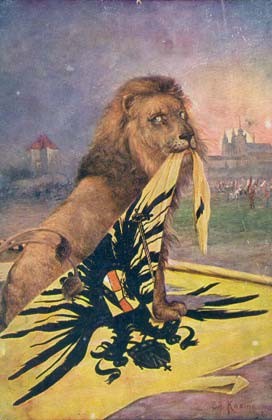
Stefan-Michael Newerkla is a University Professor of West Slavic Linguistics at the Department of Slavonic Studies, Faculty of Philology and Cultural Studies, University of Vienna. He has served as Head of the Institute of Slavic Studies since 2022, following previous leadership roles as Deputy Head (2018-2022) and Head (2005-2008). His academic leadership extends to significant positions including Member of the Academy Council of the Austrian Academy of Sciences (2022-2026), Member of the International Board of Palacký University Olomouc (2022-2026), and Member of the Scientific Council of the Czech Academy of Sciences (since 2013). Professor Newerkla earned his doctorate in 1998 with a dissertation on "Intended and actual linguistic reality in Bohemia. Diglossia in the school system of the Czech-speaking countries of the Habsburg Monarchy 1740–1918 using the example of the West Bohemian district town of Plzeň (Pilsen)" and completed his habilitation in 2003 on "Language Contacts Czech – German – Slovak. German Loanwords in Czech and Slovak: Historical Development, Evidence, Previous and New Interpretations." His academic journey began with studies in Slavic Studies, English Studies, and American Studies at the University of Vienna from 1992-1998. His research focuses on West Slavic linguistics with particular emphasis on contact linguistics, areal linguistics, linguistic geography, and historical sociolinguistics. He investigates the development of linguistic contacts between German, Hungarian and Slavic languages, examining Central Europe as a linguistic area with special attention to Austriazisms and Internationalisms research. His work also explores the school system and language teaching in the Habsburg Monarchy, analyzing language legislation versus language reality and diglossia or polyglossia in the educational system. Additional research interests include the National Renewal in the Bohemian Lands, Vienna's role in the Czech National Renewal, the Slovak national awareness process, and the grammatology and grammarography of West Slavic languages. Analysis of his recent publications (2023-2025) reveals a continued focus on historical language contact in Central Europe, particularly examining multilingualism in the Habsburg Monarchy and linguistic heritage. His work increasingly incorporates interdisciplinary approaches, connecting linguistic analysis with historical, educational, and cultural studies perspectives. Recent publications show particular attention to Czech language in Austria, language teaching methodologies, and the reconstruction of historical language contact phenomena, with several multilingual publications reflecting his expertise in cross-cultural communication. Professor Newerkla's scientific achievements have been recognized with numerous prestigious awards: Medal of the Minister for Foreign Affairs of the Czech Republic (August 7, 2024) for Services to Diplomacy Premia Bohemica for 2023 for outstanding contribution to promoting Czech literature abroad Josef-Dobrovský-Ehrenmedaille of the Czech Academy of Sciences (April 25, 2017) Full member of the Austrian Academy of Sciences (since 2018) Corresponding Member of the Austrian Academy of Sciences (since 2014) Member of the Academic Assembly of the Czech Academy of Sciences (since 2010) Award from University of Vienna for Innovative Teaching (June 22, 2001) As an academic leader, Professor Newerkla has supervised numerous theses across various levels of study. His research is supported by significant grants, most notably his role since 2016 as consortium member and board member of the Special Research Programme "German in Austria. Variation – Contact – Perception" (SFB F 60-G23), where he heads Task Cluster C and subprojects 05 and 06. He also led the research project "Slavists in Exchange: Austria and Russia 1849-1939" (2021-2025). His administrative roles have included Chairman of the Curricular Commission of the Senate of the University of Vienna (2010-2016) and Member of the Senate of the University of Vienna (2009-2016). Professor Newerkla is actively involved in multiple international research teams and collaborations, including the Permanent Conference of Austrian and Czech Historians on Common Cultural Heritage (SKÖTH), which he has co-chaired since 2009. His research group at the University of Vienna's Institute of Slavic Studies focuses on West Slavic linguistics, with particular expertise in historical language contact phenomena and the linguistic heritage of Slavic languages in Central Europe. He has also served as editor for numerous publications including the Vienna Slavic Yearbook (New Series) since 2013.
Maciej Janowski is a Full Professor at the Institute of History, Polish Academy of Sciences, Warsaw, with a career spanning three decades. He has held recurrent visiting positions at Central European University, Budapest (1999-2004) and a deputy professor role at University of Goettingen (2004). Doctor of Historical Sciences (1993), Habilitation (1999), and Full Professor (2010) at Polish Academy of Sciences Notable affiliations: Central European University, Collegium Budapest, Humboldt Scholarship, and Soros Scholarship His research focuses on comparative historiography of Poland, Czech Republic, and Hungary, alongside the intellectual and social history of East-Central Europe from the 18th to 20th centuries. He explores nationalism, liberalism, modernity, and identity, with a strong interest in historical methodologies and conceptual frameworks. His publications include Polish Liberal Thought before 1918 (2004) and Narodziny Inteligencji 1750-1831 (2008), co-authored with Jerzy Jedlicki. His recent article Civis ambulans (2011) analyzes Austro-Hungarian travel guides, while Ex Ossibus Ultor (2012) examines classical influences on Polish national identity. Scientific recognition includes: 2009 Historical Prize, Polityka Weekly 2009 Jerzy Giedroyc Prize, Lublin University 1999 Klio Prize for early work Janowski has collaborated on major projects like Negotiating Modernity (2008-) and Representations of the Past (2005-2008), co-ordinated by Stefan Berger and Chris Lorenz. He also served as deputy-editor of Kwartalnik Historyczny and editor of East Central Europe – L’Europe du Centre-Est .
Marina Grishakova serves as Chair Professor of Literary Theory and Intermedial Studies at the Institute of Cultural Research, Faculty of Arts and Humanities, University of Tartu. Elected to Academia Europaea in 2016, she holds prominent leadership roles including membership on the International Comparative Literature Association (ICLA) Executive Council and supervision of the International Research Training Group Baltic Peripeties (Universities of Greifswald, Tartu, and Trondheim). Her academic trajectory shows steady progression from Lecturer (1993-2004) to Associate Professor (2008-2015) and finally to full Professor (2015-present), with significant international engagement through Fulbright, DAAD, and British Academy fellowships. Professor Grishakova's research spans narratology, literary theory, intermedial studies, and semiotics of culture, with particular focus on narrative complexity, literature-film relationships, and cognitive approaches to narrative. Her scholarly evolution demonstrates movement from early work on Nabokov's spatial models toward increasingly sophisticated interdisciplinary frameworks that bridge humanities with cognitive science. She has made substantial contributions to understanding how narrative structures shape human cognition and cultural evolution, especially during periods of crisis and transformation. Her recent publications reveal thematic concentration on narrative complexity, intermediality in digital contexts, and pandemic narratives. The 15 most recent articles show consistent exploration of how narrative forms adapt to represent complex systems and experiences, with growing emphasis on cross-media applications and the epistemological dimensions of fiction. Her work increasingly integrates insights from cognitive science, systems theory, and media studies to develop new theoretical frameworks for understanding narrative representation. Member of Academia Europaea (2016) British Academy Visiting Scholar grant (2011) Honorary badge of the University of Tartu (2011) Fulbright scholarship for senior researchers (2008) DAAD research scholarship (2007) NordForsk grant as project leader (2008) Special issue of CompLit nominated for ESCL Excellence Award (2023) Professor Grishakova has supervised 9 doctoral students and 5 postdoctoral researchers across international institutions, with projects spanning cognitive approaches to fiction, narrative ethics, and digital storytelling. She has led major international collaborations including the European Network of Comparative Literary Studies (2011-2013) and Nordic Network of Narrative Studies (2007-2011), and currently participates in COST Action INDCOR on Interactive Narrative Design and the CELSA project 'Re-Familiarizing the Body and its Umwelt.' Her extensive service includes editorial board membership for five international journals and advisory roles for prestigious book series. Directing the Narrative, Culture, Cognition research group at the University of Tartu, Professor Grishakova maintains an active international presence with over 30 recent guest lectures and plenary presentations across Europe. Her scholarly impact extends through translation of her works into French, Spanish, Czech, Bulgarian, and Chinese, demonstrating significant global influence in literary theory and narratology.
Jan Hanousek is a Professor of Economics at CERGE-EI (joint institution of Charles University and Czech Academy of Sciences) and Senior Researcher at the Economics Institute of the Czech Academy of Sciences. His academic career spans over three decades, including visiting positions at Princeton University and University of Michigan . He holds a PhD in Statistics and undergraduate degree in Probability Theory from Charles University. Research Focus : Applied econometrics, corporate finance, public finance, and transition economies Teaching : Statistics, econometrics, and applied economics Key Awards : 2014/2015 Katherine Terrell teaching award; 2009 Czech Science Foundation's Presidential Award His publications in top journals like Journal of Economic Literature and Journal of Corporate Finance focus on corruption, FDI spillovers, privatization effects, and financial markets in emerging economies. His work has been featured on CEPR's Policy Portal VOX . Scientific Awards : 2014/2015 Education price (Jan Svejnar & Katherine Terrell teaching price at CERGE-EI) 2009 Czech Science Foundation's Presidential Award for research on Czech corporate efficiency
Gertraude Zand is an Assistant Professor at the Department of Slavonic Studies, University of Vienna, where she has been employed since 2003. Previously, she served as an assistant at the same institute (1994–2002) and held academic roles at the Technical University of Prague and University of Economics in Prague. Her educational background includes a PhD in Czech (1997), a Diploma in Czech (1993), and an M.Phil in History, Philosophy, Psychology, and Education (1987), all from the University of Vienna. Her research specializes in Czech and Slovak literature, with emphases on underground literature during Stalinism (1948–1953), baroque literary traditions, and Czech-German cultural intersections. She explores themes of exile, identity, and linguistic hybridity, often through the works of authors like Egon Bondy, Jáchym Topol, and Božena Němcová. Her scholarship bridges literary analysis with historical and cultural contexts, revealing how literature reflects socio-political transformations. Zand's publications demonstrate a consistent focus on dissident movements, symbolic representations of space, and transnational literary dialogues. Her recent work increasingly examines the role of German language in Czech poetry and the mythological reconstruction of cultural figures. She received the Premia Bohemica award from the Czech Ministry of Culture in 2024 for her contributions to Bohemian studies.
Anja Tippner is a Professor of Slavic Literature at the University of Hamburg since 2011. She previously held academic positions at Paris Lodron-University Salzburg (2006-2011), Christian-Albrechts-University Kiel (1995-2006), and Charles University Prague (1990-1992). Her research spans Holocaust literatures, Jewish Eastern European literatures, catastrophe narratives, surrealism, and translation studies. Ph.D. and M.A. in Russian and German Literature from the University of Hamburg Studies at Goethe-University Frankfurt, University of Hamburg, and St. Petersburg State University (1983-1990) Her work focuses on intermediality, socialist children's culture, and life-writing in Slavic contexts. She has served on committees for the International Comparative Literature Association and contributed to EU accreditation programs. Scientific Committee for Comparative Literary Histories in European Languages (2009-present) EU Commission for Czech Tertiary Accreditation Evaluation (2009) Board Member, Forschungsstelle Osteuropa, Bremen University (2013-present)
Arne Holger Moritz is a Professor for Ethics in School and Society at the University of Vienna , affiliated with the Institute of Philosophy and Center for Teacher Education . He joined Vienna in March 2024 after a long tenure at Martin Luther University Halle-Wittenberg , where he worked as a Lehrkraft für besondere Aufgaben until 2012. Education : Magister Artium (1999) in Philosophy, Modern and Contemporary History, and German Literature from Albert-Ludwigs-Universität Freiburg Promotion (2006) in Philosophy from Martin Luther University Halle-Wittenberg Research Interests span multiple areas: Philosophical Didactics : Innovations in ethics and philosophy education Medieval Philosophy : Historical foundations of pedagogy Political and Economic Ethics : Societal value systems Hermeneutics : Interpretation in educational contexts Philosophy of Religion : Interfaith dialogue in curricula Cultural and Garden Philosophy : Ethics in everyday spaces Recent Publications focus on interdisciplinary ethics teaching, phenomenological approaches, and child-centered philosophical methods, primarily in 2023-2025 . Themes include Husserl’s legacy, virtue epistemology in Czech education, and religion’s role in secular ethics classrooms. Scientific Awards : Cusanuswerk Stipendiat (1997-2003) DAAD Postdoc Fellowship (2007/08) Advising includes mentoring Hana Jermakova (Czech Republic), whose dissertation explores virtue epistemology in philosophy didactics. He also organizes workshops on competency-based oral assessment and hosts academic events like WIP-Talks at Vienna.
Amélie Niermeyer serves as University Professor of Acting & Directing and Department Head at the Thomas Bernhard Institute, Mozarteum University Salzburg since 2011. Her distinguished career spans theatre and opera direction across major European venues including Residenztheater Munich, Thalia Theater Hamburg, Deutsches Theater Berlin, and Vienna State Opera. Her research interests center on theatrical interpretation of classical and contemporary texts , with specialization in German-language drama, opera direction, and cross-disciplinary performance practices. She has pioneered innovative approaches to Shakespeare, Chekhov, and modern playwrights like Branden Jacobs-Jenkins, consistently collaborating with leading actors including Juliane Köhler. Recent artistic output reveals sustained engagement with Russian literary adaptations (Anna Karenina, Uncle Vanya) Verdi's operatic canon (La Traviata, Otello) European modernist traditions (Chekhov, Ibsen) while maintaining active direction in both German-speaking and international contexts through 2025. Notable honors include: Munich Promotion Prize for Spring Awakening Nestroy Award Nomination (2020) for Cherry Orchard Niermeyer maintains dual practice as academic leader and active director, currently preparing 2025 premieres of Buddenbrooks (Schauspiel Stuttgart) and La Traviata (Opéra de Dijon) while overseeing curriculum development at Mozarteum's Thomas Bernhard Institute. Her work consistently bridges academic training with professional production demands across theatre and opera disciplines.
Francine-Dominique Liechtenhan is a First-Class Research Director at the Centre National de la Recherche Scientifique (CNRS) in Paris. She holds a doctorate in literature from the University of Basel (1988) and a habilitation à diriger des recherches (HDR) in history from Sorbonne University (1996). Her academic expertise spans modern and contemporary history, Slavic and French philology, and cross-cultural relations between Europe and Russia/USSR. Research director (First Class) at CNRS, Paris Member of CNRS's 33rd section (modern and contemporary worlds) since 2018 Member of the Coordination Council "Dialogue de Trianon" at the French Presidency since 2017 Research Associate at ISMEO since 2016 Member of the Russian Historical Society's International Commission since 2016 Her research focuses on entangled/transnational history, Russian migrations (1914-1945), Christian inter-religious dynamics, and global scientific/technological exchanges with Russia/USSR. She organized 15 international conferences and directed CNRS's "Blanc" project (2009-2013) on French influences in Russian intellectual life. Scientific Awards: Recipient of the Auguste Gérard Prize (2010) for "Élisabeth de Russie, l'autre impératrice" Dimitri Likhatchev Prize (2009) for collaborative work Eugène Colas Prize (1997) for "La Russie entre en Europe" Corresponding Member of Caen's Academy of Sciences since 2011 She has worked in France, Switzerland, Russia, Czech Republic, Austria, and Italy, and leads the EURUS research group on Franco-Russian historical interactions at Sorbonne University's Centre Roland Mousnier.
Christian Zib serves as Associate Professor and Deputy Head of the Institute for Corporate and Commercial Law at the University of Vienna's Faculty of Law. He also holds the position of IT Officer for the institute and directs the Austrian Research Institute for IT Law since 2002. His academic career spans over two decades with significant contributions to Austrian and European business law frameworks. His research focuses on Corporate Law , Commercial Register Law , Capital Markets Law , and IT Law , with particular expertise in digital transformation of business registration systems and e-commerce regulation. His work bridges traditional legal frameworks with contemporary digital challenges, influencing both academic discourse and legislative developments. Professor Zib's publications demonstrate strong trends toward modernizing commercial law through digital solutions, with recent work emphasizing electronic incorporation processes, cross-border business registration harmonization, and transparency in company data. His research increasingly addresses EU-wide regulatory frameworks while maintaining focus on Austrian implementation specifics. Austrian Chamber of Notaries' Medal for Academic Merit (2019) Editor of major commentaries on Austrian Commercial Code (UGB), National Income Tax Act (NO), and Capital Markets Act Contributor to legislative conception of Austrian Commercial Register As an academic advisor, Zib has served the EU Commission in Slovakia (1995) and Lithuania (2003-2005), and remains an alternate member of the EU Commission's Expert Group on Company Law. He coordinates the Vienna faculty's elective 'Computers and Law' and teaches specialized courses including Corporate Law, E-Commerce, and Commercial Register case law for doctoral candidates. His research team includes Mag. Nina Pumper, Mag. Florian Buchta, and Bruno Graf.
Gerhard Katschnig is a Lecturer at the Institut für Kulturanalyse (Department of Empirical Cultural Studies/Cultural Anthropology) at Alpen-Adria-Universität Klagenfurt. His research spans cultural history, theory, and anthropology, focusing on Enlightenment intellectual history, historical mentalities, and the Alps-Adriatic region's transnational dynamics. Research Interests : Cultural History (18th-21st centuries) Cultural Theory (interdisciplinary approaches) History of Mentalities (Enlightenment, World Wars) Translation Studies (medieval knowledge transfer) German as Academic Language (Habsburg universities) Selected Research Trends : Analysis of ethnographic works and nationalization in Habsburg Empire Enlightenment responses to cultural melancholy and ruins Historical debates on vampirism and medical rationality Intersections of bourgeois cosmopolitanism and nationalism in Trieste Translation networks and Islamic-Latin knowledge exchange Grants : Austrian Science Fund (FWF) and Slovenian ARIS for 'Discourses of the In-Between' project (2024) Teaching : Offers courses on cultural history and theory at AAU Klagenfurt Examination organization and community-focused instruction Labs/Teams : Collaborates with international scholars (e.g., Ute Holfelder, Walter Iber) Engaged in Austrian-Slovenian transnational research
Dr. Dobrota Pucherova holds the rank of Associate Professor at the University of Vienna, affiliated with three departments: African Studies, European and Comparative Literature and Language Studies, and Social and Cultural Anthropology. She also serves as Vice-President of the Czech Association for African Studies. Her research bridges postcolonial studies, feminist theory, and comparative literature, with a focus on African women’s writing, post-communist literatures, and transnational identities. Education: B.A. in English and Comparative Literature, Mount Holyoke College, USA (2002) M.St. in English Literature, University of Oxford (2004) D.Phil. in English Literature, University of Oxford (2009) Research Interests: Pucherova’s work examines how literature challenges colonial and postcolonial paradigms, particularly through themes of gender, trauma, and cultural hybridity. She explores African feminist epistemologies, Central European postcommunist narratives, and the intersections of desire, ethics, and nationhood. Recent Articles: Her scholarship critiques patriarchal traditions in African literature, redefines postcommunist European identities through postcolonial lenses, and analyzes transnational feminist discourses. Key topics include the role of sexuality in African women’s writing, trauma in South African poetry, and Slovakian postcommunist fiction. Advising & Grants: While specific grants are not detailed, her extensive publication record reflects sustained academic engagement. No student advisees are listed in the provided materials. Labs/Teams: Engaged with interdisciplinary networks in African studies and comparative literature, including the Slovak Academy of Sciences and the Czech Association for African Studies.
Iraide Ibarretxe-Antuñano is a Full Professor in General Linguistics at the University of Zaragoza's Department of Linguistics and Hispanic Literatures, and a Researcher at the Institute of Heritage and Humanities (Excellency Research Group PSYLEX). She serves as Principal Investigator for the ICON research group and leads projects MultiMetAR (Government of Aragón) and MOTIV (Spanish Research Agency). Her educational background includes a degree in English Philology from Deusto University (1995) and a Ph.D. in Linguistics from the University of Edinburgh (2000). She completed post-doctoral research at UC Berkeley (1999-2001) and University of Deusto (2001-2003), with additional fellowships at Max Planck Institute, University of Concepción, and Lund University. Research Focus: Ibarretxe-Antuñano investigates the interplay between language, cognition, and communication through typological and psycholinguistic frameworks. Her work centers on semantic typology (lexicalization patterns and polysemy), iconicity phenomena (ideophones, phonic symbolism, gestures), and the cultural dimensions of metaphor and embodiment. She has pioneered research on Basque sound symbolism and cross-linguistic motion representation. With over 100 publications including 64 journal articles, 84 book chapters, and 11 authored/co-authored books, her work demonstrates significant scholarly impact reflected in an h-index of 33. Her publications span from foundational works like 'Sound Symbolism and Motion in Basque' (2006) to recent contributions including 'Lenguaje y cognición' (2021). Awards and Recognition: Rafael Monroy Research Award 2020 (Spanish Applied Linguistics Association) Scientific member of Spanish State Research Agency (2018-2021) Ranked among Spain's top 10% most cited researchers As an academic leader, she has served four terms as Secretary of the Spanish Cognitive Linguistics Association (2004-2008, 2012-2016), directed the Lexicography and Lexicology panel at AESLA (2013-2019), and consults for international research agencies including FONDECYT (Chile) and FWO (Flanders). She maintains editorial roles with Review of Cognitive Linguistics , Cognitive Linguistics , and other prominent journals. Her international collaborations span institutions across Europe and Latin America, including regular visiting professorships at universities in Chile, Estonia, Peru, Czech Republic, and Switzerland. Current research initiatives focus on multimodal metaphor in Aragonese languages and the cognitive processing of linguistic motivation.