Miglė Petkevičienė is a Visiting Lecturer at ISM and Partner at Ellex Valiunas, where she serves as the Head of the Data Protection & Compliance Team. With over 15 years of experience, she specializes in legal issues related to data protection, cybersecurity, information technologies, compliance, and advising clients in regulated industries. She is a frequent speaker at national and international conferences, having delivered more than 200 legal trainings and seminars for audiences ranging from 5 to 1,000+ participants, including a TEDx Talk titled: "Digital and physical footprint – a lawyer’s perspective". Her research and teaching focus on Business Law, Corporate Governance, and Compliance, as demonstrated by her course Corporate Governance and Business Law (MNG240) . She emphasizes understanding clients' business operations to provide tailored legal and regulatory guidance. Miglė’s advisory work includes addressing complex data protection cases and regulatory challenges for clients. While no grants are explicitly mentioned, her role at Ellex Valiunas involves leading a specialized team dedicated to advancing legal and compliance practices in the digital age.
Marcin Lis is a Professor and Prorektor ds. Studenckich i Współpracy z Otoczeniem at WSB University, focusing on digital transformation, university-enterprise collaboration, and sustainability. His academic work bridges management studies, quality systems, and international relations. Research interests emphasize digital innovation in industry (Industry 4.0/5.0), AI applications in manufacturing and decarbonization, and strategic partnerships between educational institutions and businesses. His work also explores energy efficiency, organizational change, and regional development challenges in Poland and beyond. Recent publications address AI-driven industrial transformation, university-industry partnership models, and sustainable energy solutions. Collaborations include projects with colleagues like Katarzyna Szczepańska-Woszczyna and Zdzisława Dacko-Pikiewicz on topics ranging from statistical mechanics to knowledge transfer systems. Lis has contributed to studies on smart cities, cross-border cooperation, and the role of innovation in economic resilience. His administrative role supports student affairs and institutional partnerships, aligning with his research emphasis on collaborative ecosystems.
Keijo Tapio Heljanko is a Professor in the Department of Computer Science at the University of Helsinki, affiliated with the Helsinki Institute for Information Technology and the EUROFusion Advanced Computing Hub. He previously held an Associate Professor position at Aalto University (2008–2018) and currently serves as Principal Investigator at HIIT. His research focuses on formal methods, parallel computing systems, machine learning applications, and GPU architecture optimization. He leads the LUMI AI Factory project (2025–2028), an EU-funded initiative for AI infrastructure development. Education details are not explicitly listed in the provided text. His work spans theoretical computer science and applied machine learning, with notable contributions to bike-sharing optimization, GPU consistency analysis, and boreal ecosystem modeling. Media highlights include collaborations with NVIDIA on AI technology centers and innovations in search engine and disinformation detection systems. Professional roles include supervising the Doctoral Programme in Computer Science and managing multi-institutional research projects. He has collaborated internationally on topics ranging from exascale computing to environmental data analysis. His research outputs total 131 publications and 9 press engagements, emphasizing both foundational and applied computational challenges.
Dr. Jong Hoon Kwon is a Lecturer in the Department of Computer Science at ETH Zürich. His primary research focuses on edge computing, network security, and distributed systems. He has contributed to advancements in mobile edge computing resource allocation, user allocation strategies, and end-to-end system modeling for big data applications. His work often intersects with optimization algorithms, quality of service (QoS), and stochastic systems. Dr. Kwon has collaborated extensively with researchers like John C. Grundy and Qiang He on topics ranging from NOMA-based systems to data analytics tool support. His publications highlight a strong emphasis on practical applications of theoretical models in real-world computing environments. Core Affiliations: Professur für Informatik, ETH Zürich Key Research Themes: Mobile Edge Computing, Network Security, Resource Optimization His recent work emphasizes dynamic systems and collaborative approaches to requirement modeling in big data contexts. While no formal awards are listed, his prolific publication record (over 150 entries) underscores sustained academic contributions. He has advised on numerous collaborative projects involving industry-relevant applications like 5G networks and cyber-physical systems.
Yannick Le Moullec is a researcher affiliated with Tallinn University of Technology, specializing in wireless communication technologies, Internet of Things (IoT), and 6G network optimization. His work focuses on energy-efficient systems, device-to-device communication, UAV swarms, and hybrid machine learning models for microfluidic imaging. He has contributed to NB-IoT, RIS-based communication, and federated learning frameworks. Education : Not explicitly mentioned Research Trends : His recent publications emphasize 6G networks, device-to-device discovery, UAV coordination, and edge computing. He explores synergies between reinforcement learning and stochastic resource allocation. Grant Activity : No specific grants listed Labs & Collaborations : Collaborates with teams across Estonia, France, and international institutions on IoT and embedded systems, particularly in healthcare and emergency communication contexts.
Gowri Ramachandran is a Professor specializing in blockchain technologies, distributed systems, and cybersecurity. She is affiliated with the University of New South Wales (UNSW), where her research focuses on the intersection of blockchain applications, IoT, and secure decentralized systems. Her work emphasizes privacy-preserving architectures, energy-efficient mining strategies, and blockchain governance frameworks for multi-stakeholder environments. Ramachandran holds a PhD from KU Leuven (2017) and a Master's from Mälardalen University (2011). She has authored over 90 publications in top-tier conferences like IEEE and ACM, covering topics ranging from smart contracts to quantum-resistant IoT protocols. Education: PhD in Computer Science, KU Leuven, 2017 MSc in Computer Science, Mälardalen University, 2011 Research Interests: Blockchain scalability and privacy IoT security and edge computing Decentralized data markets Cyber-physical systems Energy-efficient distributed systems Grants & Projects: Active in collaborative projects on blockchain for supply chain traceability, quantum-resistant IoT protocols, and decentralized identity systems. Her work often bridges theoretical foundations with real-world implementations in healthcare, energy, and logistics sectors. Labs & Teams: Leads the UNSW Blockchain Research Group, collaborating with industry partners like Helix Cognitive Computing and academic institutions globally. Her lab focuses on deploying secure, scalable blockchain solutions for social good applications.
Miloš Stanković is a Professor at the Faculty of Informatics and Computing, Singidunum University. His research focuses on distributed systems, reinforcement learning, machine learning applications, and sensor networks. He has contributed significantly to areas like multi-agent systems, optimization algorithms, and cybersecurity. Recent work includes distributed sensor network calibration, adaptive consensus algorithms, and AI-driven solutions for healthcare and infrastructure monitoring. Education: Not explicitly listed in provided texts. Likely holds advanced degrees in computer science or electrical engineering based on his publications. Research Interests: His primary areas include distributed multi-agent reinforcement learning, metaheuristic optimization for machine learning models, and real-world applications of AI in healthcare, surveillance, and smart infrastructure. He explores topics like sensor fusion, fault detection in networks, and consensus-based algorithms for decentralized systems. Article Trends: Recent publications emphasize AI-driven solutions (e.g., Parkinson’s disease detection via LSTM tuning, student dropout analysis with explainable AI) and distributed algorithms for multi-agent systems. His work bridges theoretical advancements in reinforcement learning with practical applications in sensor networks and cybersecurity. Grants/Projects: Not explicitly detailed, but involvement in EU-funded projects like Sinteza and SITCON conferences suggests external funding. Labs/Teams: Likely part of Singidunum’s research groups in AI, distributed systems, and cybersecurity. Collaborates with institutions like KTH Royal Institute of Technology (via co-author K.H. Johansson) on sensor networks and control systems.
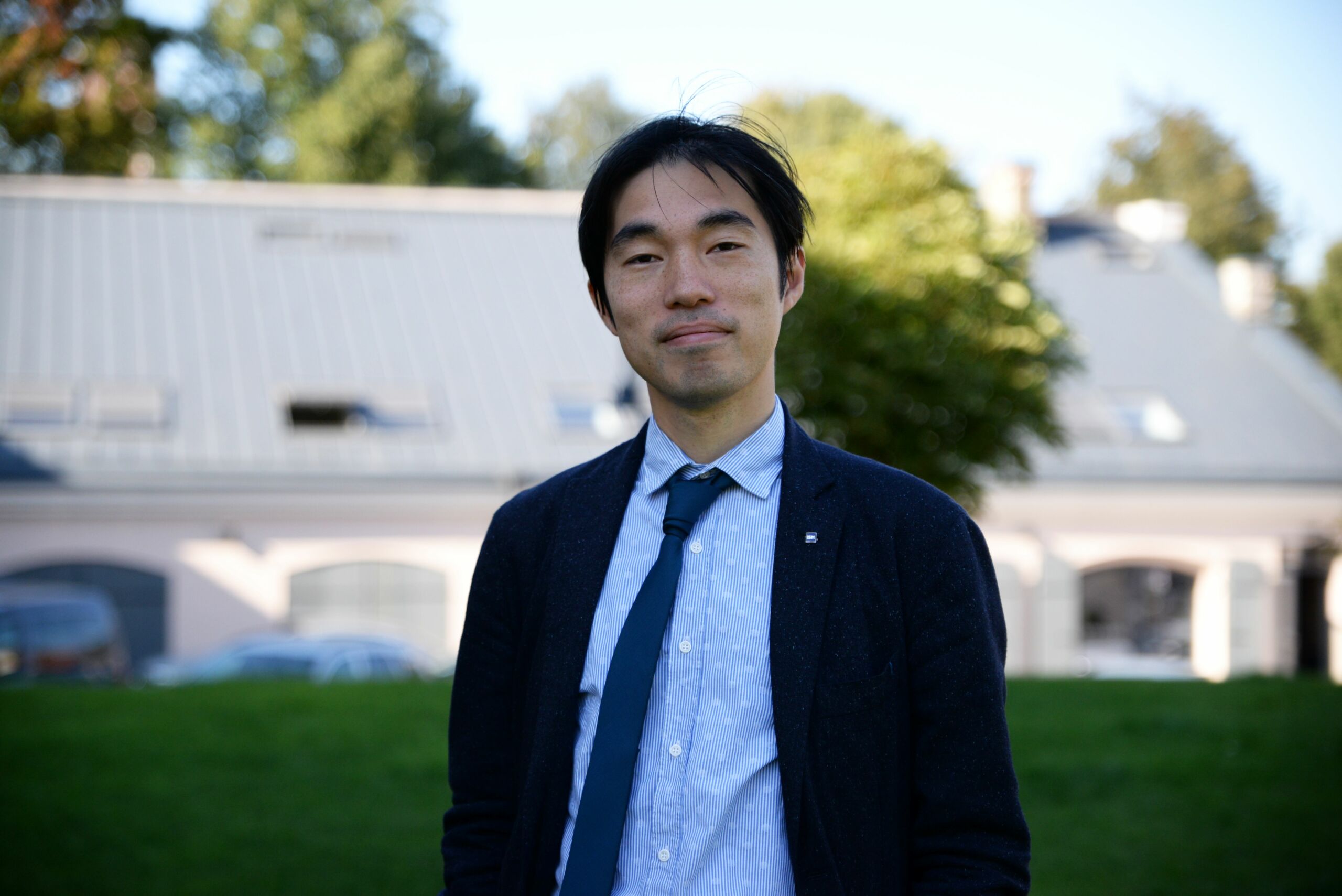
Tom Hashimoto is an Associate Professor of International and Regional Economics at Vilnius University and an Assistant Professor at Vistula University. His expertise spans financial centre development, FinTech ecosystems, and EU Responsible Research and Innovation (RRI), integrating legal, financial, and geoeconomic perspectives. He holds a DPhil (PhD) from the University of Oxford and an LL.M. from the University of Hamburg, with additional certifications in green bonds from the World Bank’s IFC and ICMA. Education: DPhil (Oxon), LL.M. (Hamburg) World Bank certification in green/social/sustainability bonds Research interests focus on financial infrastructure, cross-border economic strategies, and legal frameworks for innovation. He advises executives on international expansion and inclusive growth strategies, while managing two companies in the UK and Lithuania. Active in academic leadership, he oversees doctoral seminars in Management and Economics at Vistula University, and contributes to programs like the Polish-British double diploma with London South Bank University. Engaged in institutional development, he teaches in disciplines ranging from Cyber Security to Hospitality Management across Vistula’s branches in Poland and the UK. A member of British Mensa and Lions Club Warszawa, he also participates in EU-funded projects.
Dr. Amanda Fehlbaum serves as Associate Professor in the Department of Humanities & Social Sciences at Youngstown State University (YSU), where she has taught since Fall 2014 and currently directs the Women's and Gender Studies program. Her academic journey includes a Ph.D. in Sociology from the University of Oklahoma (2014), an M.A. in Interdisciplinary Studies from the University of Texas at Dallas (2009), and a B.A. in Gender Studies from the same institution (2007). Her research portfolio centers on Gender and Sexuality through intersectional lenses examining Body and Embodiment , Race and Ethnicity , and Media and Culture . Fehlbaum employs Qualitative Methods to investigate how sociocultural forces shape experiences of Adolescence , Family dynamics, and Health outcomes, with particular attention to Deviance and Stratification . Her work consistently bridges academic scholarship with public discourse through accessible writing on contemporary issues. Analysis of her publication record reveals persistent engagement with body politics, gendered power structures, and media representations. She examines phenomena ranging from hair bias against women of color to digital culture's impact on identity formation, consistently connecting micro-level experiences to macro-level social systems. Her scholarship demonstrates how popular culture—from reality TV to dating apps—reinforces or challenges societal norms. Professional recognition includes: YSU Distinguished Professor in Service Award (2022) Mahoning Valley Young Professionals 25 Under 35 Honoree (2020) As an educator, Fehlbaum teaches courses spanning Introduction to Sociology to specialized topics like Sociology of the Body and Health. Her community engagement extends beyond campus through leadership roles including President of the League of Women Voters of Greater Youngstown and membership in the Steel Valley Reproductive Freedom Coalition. She actively supports BIPOC, LGBTQIA+, and non-binary communities through both academic work and public activism, aligning with Black Lives Matter and reproductive justice movements.
Dr. Stefan Robila is a Professor of Computer Science and Director of the Computational Sensing Laboratory (CSL) at Montclair State University, where he leads research in computational sensing, cybersecurity, and hyperspectral data analysis. He holds a PhD from Syracuse University and has held visiting scholar positions at prestigious institutions including Cambridge and Oxford Universities. Roles: NSF Program Director (2018-2021), Director of CSL, Undergraduate Research Mentor Affiliations: Member of ACM and IEEE (Senior Member since 2003) His research spans computational sensing applications such as hyperspectral imaging, energy-efficient data centers, and cybersecurity. Notable projects include NSF-funded work on cyberinfrastructure development and a $2.5M HP grant for tablet integration in computer science education. Research interests include: Unsupervised feature extraction algorithms for large datasets High-performance computing for environmental modeling Green computing and data center sustainability Recent work focuses on STEM education initiatives, including K-12 data science curricula and interdisciplinary robotics projects. Dr. Robila has secured over $5.25M in external funding from NSF, HP, PSEG, and SPIE, supporting projects ranging from MRI instrument development to undergraduate research experiences.
Julien Alexandre dit Sandretto is an Associate Professor in the Computer Science and System Engineering Department at ENSTA ParisTech, France. He is also an associate member of the Cosynus team at LIX laboratory, Ecole Polytechnique. His research focuses on verification methods under uncertainties, including parameter identification, simulation, modeling, and control of cyber-physical systems. He leads projects funded by the Chaire 'Ingénierie des Systèmes Complexes' and DGA-MRIS, collaborating with institutions like ENSTA Bretagne and ENS Cachan. Education: BSc in Applied Mathematics (University Joseph Fourier, 2002), Engineering degree (Polytech'Grenoble, 2006), PhD in Computer Science (University of Nice-Sophia Antipolis, 2013). His work emphasizes guaranteed integration for Differential Algebraic Equations and viability kernel computation. He has developed software tools like Dynibex, ViabKer, and ProtoReach for validated numerical methods. Teaching includes courses on numerical methods, algorithmics, and constraint programming. Advising includes multiple master’s theses on topics ranging from hovercraft calibration to SAT modulo ODEs. He is affiliated with the American Mathematical Society and has an Erdős number of 3.
Pankaj Pandey is a Senior Research Scientist at the Norwegian University of Science and Technology (NTNU), affiliated with the Department of Information Security and Communication Technology under the Faculty of Information Technology and Electrical Engineering. He holds an LLM in International Law from the University of Sunderland, UK, and dual PhDs in Information Security (NTNU) and Applied Economics (University of Antwerp). He is certified in ISO standards including ISO 42001 (Lead Implementer), ISO 31000 (Lead Risk Manager), and ISO 27001 (Lead Auditor). He leads the European Commission-funded ENFIELD project (€11M), focusing on Trustworthy and Green AI. His research spans cybersecurity, blockchain applications, AI governance, cyber-physical systems, and financial instruments for risk management. Key projects include CYBERUNITY (cyber range federation), DELTA (smart grid security), and GHOST (IoT risk control). He has published extensively in journals like Frontiers in Energy Research and Lecture Notes in Computer Science , with a focus on AI, blockchain, and energy systems. His work integrates technical and legal frameworks, emphasizing digital sovereignty and ethical AI. Pandey collaborates internationally on standards development and advises EU projects like TRIANGLE (5G benchmarking) through HSbooster.eu. His expertise bridges technical innovation with regulatory compliance, driving societal impact in digital governance and resilient infrastructure.
Øyvind Anders Arntzen Toftegaard is a Researcher at the Department of Information Security and Communication Technology, Norwegian University of Science and Technology (NTNU). His work focuses on cybersecurity resilience in energy infrastructure, regulatory compliance strategies, and smart grid security. Key affiliations include the CISaR Research Group (Critical Infrastructure Security and Resilience) and the FACT project (Federated Advanced Cyber-Physical Test Range). Research interests span policy analysis for energy sector cybersecurity, cross-border defense strategies, and the impact of international frameworks like ISO/IEC 27001. He has presented globally on topics such as EU cybersecurity policy evolution and regulatory challenges in energy systems. Teaching involvement includes the course TTM4191 Fundamentals of Communication Technology and Security for SmartGrid at NTNU. Publications highlight themes such as smart grid business case vulnerabilities, comparative cybersecurity policies across nations, and consequence simulation of cyberattacks. His doctoral thesis (2024) emphasizes regulatory differentiation for smart grid resilience based on entity size and authority expertise. Notable projects include ORIGINS (breeder document security), NEWSROOM (cyber situational awareness platforms), and FACT (EU cyber-physical testing initiatives). He collaborates internationally, including with the University of Manchester on AI governance and cybersecurity resilience.
Prof. Zahir Tari is a leading international expert in Computer Science, currently serving as a Professor at the School of Computing Technologies at RMIT University. He holds a prominent role as Research Director of the Centre of Cyber Security Research and Innovation (CCSRI) and has been appointed to the ARC College of Experts (2022-2024). Research Interests : Prof. Tari specializes in designing innovative solutions for large-scale systems including Cloud, Edge, and IoT environments, with particular emphasis on cybersecurity, performance optimization, and reliability of critical systems like SCADA and Smart Grids. His work integrates mathematical models with computational approaches to address complex security and scalability challenges. Research Trends : Recent publications highlight his leadership in blockchain-based energy trading privacy, cross-domain access control systems, IoT security frameworks, and federated learning approaches for vulnerability detection. His work combines theoretical rigor with practical implementations in domains ranging from healthcare to military applications. Scientific Recognition : Member, ARC College of Experts (2022-2024) Supervision & Funding : Prof. Tari has successfully supervised 31 PhD students to completion and secured over AUD 21 million in research funding through prestigious grants including an ARC Research Hub, CRC-P, multiple ARC Discovery Projects, and industry partnerships with organizations like Siemens. His research has produced 279 publications with an h-index of 49 and over 10,800 citations.
Cesare Alippi is a Full Professor at the Faculty of Informatics, Università della Svizzera italiana (USI), and also holds a professorship at Politecnico di Milano, Italy. He serves as a visiting Professor at Guangdong University of Technology (China) and Consultant Professor at Northwestern Polytechnic of Xi'an (China). His academic leadership extends to multiple international institutions where he has served as a visiting researcher including UCL (UK), MIT (USA), ESPCI (France), CASIA (China), A*STAR (Singapore), and University of Kobe (Japan). Professor Alippi's research interests center around graph-based learning, adaptation and learning in non-stationary environments, and intelligence for embedded, cyber-physical systems and IoT. His work bridges theoretical foundations with practical applications in sensor networks, environmental monitoring, and industrial processes. He has established significant research infrastructure including the Wireless Embedded Systems (WEmSy) Lab and the Internet of Things Lab, with notable deployments for marine environment monitoring in Queensland, Australia and the Fiji Islands, as well as rockfall and landslide monitoring systems across Italy and Switzerland. His research output shows a clear evolution toward graph-based deep learning approaches for time series analysis, anomaly detection, and spatiotemporal forecasting, reflecting the growing importance of graph neural networks in handling complex relational data in non-stationary environments. Major Awards: IEEE CIS Enrique Ruspini Meritorious Service Award (2024) IEEE CIS Outstanding Computational Intelligence Magazine Paper Award (2018) Gabor Award from International Neural Network Society (2016) IBM Faculty Award (2013) IEEE Instrumentation and Measurement Society Young Engineer Award (2004) Professor Alippi has held significant leadership roles including Past Board of Governors member of the International Neural Network Society, Past member of the Administrative Committee of the IEEE Computational Intelligence Society, and Past Vice-President for Education of the IEEE Computational Intelligence Society. He has served as Associate Editor for Proceedings of IEEE and several other prestigious journals. His research has been supported through numerous grants including an IBM Faculty Award in 2013 specifically for research on Intelligent Embedded Systems working in non-stationary environments. His research infrastructure includes the Wireless Embedded Systems (WEmSy) Lab and the Internet of Things Lab, with notable deployments including a sophisticated automatic, adaptive, sustainable and reliable wireless monitoring system for marine environments deployed in Queensland, Australia (2007) and under deployment at the Fiji Islands (2014-2015). He has also led several top-world deployments for rockfall and landslide monitoring across Italy and Switzerland since 2010, demonstrating the practical impact of his research in real-world harsh environments.