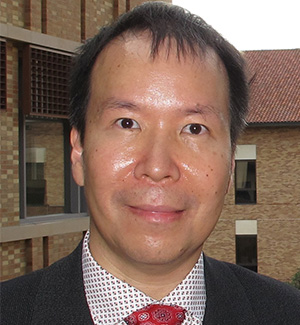
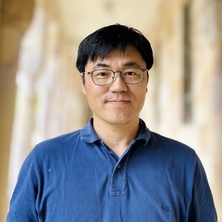
Kathleen M. Carley is a full professor at Carnegie Mellon University's School of Computer Science with courtesy appointments in Engineering and Public Policy, Heinz School, and Electrical and Computer Engineering. As director of the Center for Computational Analysis of Social and Organizational Systems (CASOS) and the Center for Informed Democracy and Social-Cybersecurity (IDeaS) , she leads interdisciplinary research at the intersection of network science, cognitive modeling, and cybersecurity. Ph.D. in Sociology from Harvard University SB degrees in Economics and Political Science from MIT Her research focuses on Dynamic Network Analysis (DNA) and Social-Cybersecurity (SC) , developing tools like ORA (network analysis), AutoMap (semantic mining), Construct (influence simulation), and BotHunter (bot detection). She has over 400 publications and 15+ active research projects addressing disinformation, cognitive security, and organizational resilience. Recent work examines LLM-powered bots , multi-platform misinformation dynamics , and public health analytics . As an IEEE Fellow, she contributes to standards in computational social science while teaching courses on network analysis and complex socio-technical systems.
Dr. Abdallah Chehade is an Associate Professor in the Department of Industrial and Manufacturing Systems Engineering at the University of Michigan-Dearborn , where he leads the Informatics, Reliability, and Data Analytics (IRDA) lab . He holds a Ph.D. in Industrial Engineering from the University of Wisconsin-Madison (2017), with minors in Computer Sciences and Statistics, alongside an M.S. in Mechanical Engineering and a B.E. in Mechanical Engineering from the American University of Beirut. Research Interests span safe and robust deep learning solutions , explainable AI , data fusion for degradation modeling , and Bayesian statistical modeling . His work integrates AI/ML with prognostics and Internet of Things (IoT) to address challenges in reliability analytics and industrial data science . Publications highlight advancements in deep autoencoders , LSTM networks , and hybrid models for warranty forecasting , with applications in battery cells , sheet metal stamping , and rail transportation . His grants from Ford, Honda, and the U.S. Army focus on smart manufacturing , AI for sensor modeling , and digital twins . Lab Members include Ph.D. students working on topics like physics-based AI , computer vision , and deep learning for prognosis . He serves on the INFORMS Quality, Statistics, and Reliability (QSR) Council and maintains affiliations with IEEE , INFORMS , and IISE .
Serge Fehr is a Senior Researcher in the Cryptology Group at CWI (Centrum Wiskunde & Informatica) in Amsterdam and a part-time Professor at the Mathematical Institute of Leiden University. His research focuses on foundational aspects of cryptology, including post-quantum cryptography, information-theoretic security, zero-knowledge proofs, and secure multiparty computation. He participates in AMSec (Amsterdam Cyber Security Center) and leads work packages in the NWO-funded HAPKIDO consortium. Education: M.Sc. in Mathematics from ETH Zürich (1998) Ph.D. in Cryptography from ETH Zürich and University of Aarhus (2003) Postdoc at Macquarie University (2003-2004) Research Interests: Post-quantum cryptographic primitives (e.g., digital signatures, lattice-based schemes) Quantum-resistant protocols (e.g., non-resignable signatures, Fiat-Shamir transforms) Foundational security proofs in the quantum random oracle model (QROM) Secure multiparty computation and privacy-preserving healthcare systems Key Activities: Editorial Board Member: Journal of Cryptology , IEEE Transactions on Information Theory Program Committee Co-Chair: EUROCRYPT 2025 Steering Committee Member: Beyond IID Information Theory, QCrypt Co-organizer: Symposium Series on Post-Quantum Cryptography Grants/Awards: NWO Cybersecurity consortium grant (HAPKIDO - 2021) NWO Veni Grant (2005) NWO Open & Free Competition Grants (2008, 2013) Students/Advising: Supervised or served on committees for over 15 Ph.D. students, including work on post-quantum signatures, MPC applications, and lattice-based cryptography. Labs/Teams: Active in CWI’s Cryptology Group and Leiden’s Mathematical Institute, collaborating with industry partners (e.g., KPN, Microsoft) in cybersecurity initiatives.
Helena Webb is a Visiting Lecturer in the Department of Computer Science at the University of Oxford, where she contributes to research and teaching within the Human Centred Computing theme. Her work bridges social science and computer science, focusing on responsible innovation, AI ethics, and user interactions with digital technologies. PhD in Social Sciences, University of Nottingham Bachelor’s in Social and Political Sciences, University of Cambridge Former Senior Researcher, University of Oxford Department of Computer Science Researcher at Work, Interaction and Technology (WIT) Research Centre, King’s College London (2009–2014) Her research interests include human-computer interaction, algorithmic fairness, privacy in smart homes, and ethical design of social robots. She specializes in qualitative research methods and interdisciplinary collaboration to understand how technology shapes and is shaped by social practices. She has led and contributed to major projects such as Digital Wildfire , UnBias , ReEnTrust , and RoboTIPS , all focused on responsible governance and design of digital systems. Her recent publications span topics from algorithmic accountability to ethical black boxes in robotics, reflecting a strong trend toward integrating ethical considerations into the technical design of AI and interactive systems. These works emphasize participatory design, transparency, and societal impact. Scientific Awards and Recognition: Named one of the Brilliant Women working in AI Ethics She actively supervises and co-supervises students, contributes to ethics education, and is involved in outreach and diversity initiatives at Oxford. She has also served on the Departmental Equality and Diversity Committee and the Research Ethics Committee. Helena is a member of the advisory board for the ReEnTrust project and continues to develop the ethical hackathon model with colleagues. Her work exemplifies a deep commitment to interdisciplinary, socially responsible research in computing.
Andrea Tapia is an Associate Professor of Information Sciences and Technology at Pennsylvania State University. She holds a Ph.D. in Sociology from the University of New Mexico (2000). Her research focuses on the intersection of social theory, ICT, and crisis response, with a particular emphasis on leveraging social media for disaster resilience and humanitarian action. She has secured over $3.7 million in external funding, supervised 16 graduate committees (including 10 PhDs and 6 master’s theses), and authored over 40 journal articles, 60 conference papers, and 12 book chapters. Tapia is an elected leader in the American Sociological Association and the International Association for Information Systems for Crisis Response and Management. Her work directly influences UN policy, international relief organizations, and U.S. governmental initiatives. She has pioneered platforms like Aurorasaurus and contributed to frameworks for social media integration in emergency dispatch systems. Her research spans crisis informatics, crowdsourced early warning systems, and inter-organizational collaboration in humanitarian contexts. Notable achievements include developing methodologies for trust detection in social media data and analyzing disaster response coordination networks. Tapia has presented at 73 conferences, including 31 invited talks, and her scholarship emphasizes actionable insights for policymakers and practitioners. Tapia teaches 12 courses across undergraduate, Honors, and graduate levels, reflecting her commitment to education. Her current focus includes refining frameworks for social media data adoption in public safety answering points and advancing resilience analytics for cyber-physical-social systems. She leads interdisciplinary teams addressing challenges in disaster response, digital volunteering, and technology-mediated collaboration.
Professor Albert Cheng is a faculty member in the Department of Computer Science at the University of Houston. His research focuses on real-time systems, cyber-physical systems, smart cities, and embedded systems with societal impacts. He has authored over 270 publications and a textbook on real-time systems. Cheng holds roles as an Associate Editor for the IEEE Transactions on Knowledge and Data Engineering and ACM Computing Surveys. His research interests span real-time scheduling, machine learning applications, and systems optimization. Recent work includes vehicular traffic modeling for epidemiological risk reduction, quantum computing response time analysis, and satellite mission planning. Awards include Fulbright Specialist, Distinguished ACM membership, and IEEE Senior Member status. Cheng’s articles demonstrate expertise in real-time scheduling algorithms, cyber-physical systems development, and smart city infrastructure. His contributions bridge theoretical computer science with practical implementations in transportation, healthcare, and aerospace domains. Ongoing efforts include fault-tolerant systems, energy-efficient scheduling, and CPS education initiatives. Awards: Fulbright Specialist, ACM Distinguished Member, IEEE Senior Member, Institute of Physics Fellow Labs/Teams: Hewlett Packard Enterprise Data Science Institute (HPE DSI), Research Computing Data Core (RCDC)
Dr. Anitha Chinnaswamy is a Senior Lecturer in Cyber Security Management at Aston Business School, Aston University, where she serves as Deputy Director of the Cyber Security Innovation (CSI) Research Centre. She leads the MSc Cyber Security Management program and directs multiple research initiatives focusing on cyber security risk management, cryptocurrency regulation, AI applications in cybersecurity, and gender diversity in the field. Her educational background includes a PhD in Computing, an MSc in Informatics, and a PG Cert in Higher Education, all from Coventry University. As a CRISC certified professional and APMG Certified Cyber Security Instructor, she brings both academic rigor and industry relevance to her work. Dr. Chinnaswamy's research spans critical cybersecurity areas including cyber security risk management, cryptocurrency and illicit money flows, cloud-based artificial intelligence applications, and addressing the gender gap in cybersecurity. Her work bridges technical cybersecurity solutions with organizational behavior, risk management, and awareness strategies, creating holistic approaches to security challenges. She has developed award-winning curricula that empower future leaders in the rapidly evolving cybersecurity landscape. Her publications reveal a strong focus on applying AI to cybersecurity challenges, particularly in banking and financial crime detection, while also addressing regulatory frameworks for cryptocurrencies and the social dimensions of cybersecurity through work on gender diversity and inclusion. Tech for Good Award, Midlands Women in Tech Awards, 2023 Academic Award, Midlands Women in Tech Awards, 2024 Finalist - Cyber University of the Year, National Cyber Awards, 2024 As Programme Director for the MSc Cyber Security Management, Dr. Chinnaswamy has secured substantial research funding from Horizon Europe, Innovate UK, DSIT, and WMCA. Her current projects include CyVAWG: Cyber Violence Against Women and Girls (£75,000), CyberKali 2024 (£42,000), and a KTP with BlueScreen IT (£202,024). She actively collaborates with LEAs, regional cybercrime units, corporate partners, government agencies, and academic institutions across multiple projects. Dr. Chinnaswamy leads the Cyber Security Innovation Centre research team and serves as Chapter Leader for ISACA Central UK. As a founding member of the Ethnic Minorities in Cyber (EMiC) Network supported by DSIT, she champions diversity and inclusion in cybersecurity, while also serving as a STEM Ambassador in the West Midlands to inspire the next generation of cybersecurity professionals.
Associate Professor Dan Dongseong Kim is Deputy Director of UQ Cybersecurity and an Associate Professor at The University of Queensland (UQ), Australia. Previously, he held permanent academic positions at The University of Canterbury (UC), New Zealand (2011-2018) as a Senior Lecturer and Lecturer. His research focuses on Cybersecurity and Dependability for AI, IoT, Autonomous Vehicles, Cloud Computing, and Moving Target Defenses (MTD). Doctor of Philosophy in Computer Engineering from Korea Aerospace University Postdoctoral Research at Duke University (2008-2011) Visiting Scholar at University of Maryland (2007) Dan's work explores Graphical Security Models , Moving Target Defense for proactive resilience, and AI-Driven Cybersecurity with emphasis on adversarial robustness and interpretable models. His recent publications (2024-2025) span journals like IEEE Transactions on Dependable and Secure Computing and conferences such as DSN , addressing automated defense, evolving attacks, and hardware-aware security frameworks. He has advised 15 Ph.D. graduates, including researchers now at institutions like RMIT University, La Trobe University, and CSIRO's Data61. Current supervision includes projects on Automated Penetration Testing , AI-Based Intrusion Response , and Moving Target Defense . Dan's research is funded by agencies including the Republic of Korea's Agency for Defence Development and US Army Research Lab . His professional roles include Associate Editor for IEEE Communications Surveys and Tutorials and Steering Committee Chair for IEEE PRDC .
Deepa Kundur is the Professor & Chair of The Edward S. Rogers Sr. Department of Electrical & Computer Engineering at the University of Toronto. She earned her BASc, MASc, and PhD in Electrical and Computer Engineering from the same institution in 1993, 1995, and 1999, respectively. Current roles: IEEE Spectrum Advisory Board Conference leadership: General Chair of 2018 GlobalSIP Symposium, TPC Co-Chair for IEEE SmartGridComm 2018, among others Her research focuses on cybersecurity , signal processing , and complex dynamical networks , particularly in smart grid applications. She has authored over 200 publications and pioneered techniques for detecting false data injection attacks, enhancing grid resilience, and integrating machine learning into power systems. Her recent work spans quantum learning for grid security , LLM-based mental health prediction , and resilient control systems . She has received 14 best paper recognitions, including IEEE SmartGridComm (2015) and IEEE INFOCOM Workshop (2008). Fellowships: IEEE Fellow (2015), Canadian Academy of Engineering Fellow (2016), Massey College Senior Fellow (2019) Teaching awards: Tenneco Meritorious Teaching Award (2005), Gordon Slemon Teaching of Design Award (2002) Early career honors: NSERC Scholarships (PGS A/B), Canada Scholarship She leads the Kundur Research Group , developing models for cyber-physical systems in smart grids and autonomous vehicle networks. Her team explores reinforcement learning for grid defense , transmissibility-based fault detection , and privacy-preserving smart grid analytics .
Nebojša Bačanin Džakula is an academic affiliated with Singidunum University's Faculty of Mathematics, specializing in Computer Science. He earned his PhD in 2015 with a thesis on improving swarm intelligence metaheuristics for global optimization. His research focuses on AI-driven solutions for cybersecurity, energy forecasting, and optimization algorithms. He has authored/co-authored books on cloud computing and web programming. His work bridges metaheuristics with machine learning, addressing challenges in IoT security, renewable energy prediction, and healthcare diagnostics. He actively contributes to conferences like Sinteza and IEEE events, emphasizing practical applications of AI and optimization in real-world scenarios. Education: Completed doctoral studies at the Faculty of Mathematics (2009–2015). Extensive industry certifications include Microsoft, CompTIA, and Oracle credentials, enhancing his technical expertise. Research Interests: Develops hybrid models combining metaheuristics (e.g., PSO, GA) with deep learning for tasks like intrusion detection, price forecasting, and medical diagnostics. Specializes in optimizing neural networks and feature selection using advanced algorithms. His work often addresses societal challenges in sustainability, cybersecurity, and healthcare. Recent Publications: Focus on AI-driven solutions for IoT security, renewable energy prediction, and medical diagnostics (e.g., Parkinson’s detection via LSTM networks). His articles appear in prestigious journals like Engineering Applications of Artificial Intelligence and Applied Soft Computing.
Rajesh Krishna BALAN is a Full-Time Professor at the School of Computing and Information Systems (SCIS) at Singapore Management University (SMU) . His research focuses on Human-Machine Collaborative Systems , Pervasive Sensing , and Health & Wellbeing technologies. Based in Singapore, he leverages mobile computing to address urban sustainability and quality-of-life challenges. PhD from Carnegie Mellon University (2006) Specializes in WiFi sensing , VR/AR , and health monitoring Advises PhD students in areas like urban mobility , empathetic design , and cyber-physical systems Beyond academia, BALAN's work bridges ubiquitous computing and public health , with applications in ageing populations , mental health analytics , and smart city optimization . His recent publications highlight cross-disciplinary approaches to sleep analysis , group behavior modeling , and contactless physiological sensing . BALAN actively contributes to educational technology through projects like Technology-Enhanced Learning frameworks. He is also a mentor in collaborative research areas including biomedical informatics and lifestyle monitoring , with a focus on mobile GPU optimization and low-power systems .
Associate Professor Fengling Han is affiliated with RMIT University's School of Computing Technologies in Melbourne, Australia. He holds the rank of Associate Professor since January 2022. His research focuses on complex networks, industrial electronics, AI/machine learning, and network security. Notable contributions include steganography frameworks for healthcare data, sliding mode control for energy systems, and blockchain applications in surveillance and voting systems. His work spans interdisciplinary areas such as renewable energy integration, battery management systems, and privacy-preserving recommendation systems. He has supervised numerous projects, including AI-driven chatbots, medical imaging watermarking, and peer-to-peer energy trading systems. Han's service roles include conference reviewing and committee memberships in international conferences like IEEE and ISMST. Research Interests: His expertise spans electrical engineering, control systems, and AI applications. Key areas include battery management, cybersecurity, and smart manufacturing. Recent projects emphasize Industry 5.0 technologies, blockchain for data integrity, and deep learning for steganalysis. Teaching and Supervision: Teaches network security, data communication, and IT infrastructure. Current supervision includes AI-powered business modeling, medical imaging tampering detection, and renewable energy sharing systems. Over 14 research projects are documented, reflecting his interdisciplinary impact. Awards and Recognition: While specific awards are not listed, his extensive publications (over 150 outputs) and high citation counts (e.g., 119 citations for the Industry 5.0 survey) highlight his scholarly contributions.
Adam J. Aviv is an Associate Professor of Computer Science at The George Washington University, leading the George Washington University Usable Security and Privacy Lab (gwusec) . His work focuses on computer security, privacy, and usable security , with a particular emphasis on user behavior, authentication systems, and mobile/web security. University: The George Washington University Academic Rank: Associate Professor Email: aaviv@gwu.edu Research Interests: His research investigates how users interact with security and privacy systems, including studies on: Biometric and mobile authentication Password manager usability Generative AI risk perception Online proctoring and institutional decisions Data breach responses Privacy labels and user trust Recent Publications (2024–2025) span venues like USENIX Security, IEEE S&P, ACM CHI, and PoPETs, covering topics such as: Wearable-based contact tracing in low-resource settings WhatsApp mod security perceptions Password manager issues Privacy label accuracy Grants & Awards: Recipient of the OVPR Research Mentorship Award for his work with students. Currently holds NSF grants for collaborative cybersecurity research and travel funding for Privacy Enhancing Technology Symposium. Teaching: Offers Intro to Usable Security and Privacy (CSCI 4533/6533) in Fall 2025, with students engaging in: Secure messaging studies Interview and survey methodology Full research projects with ethics reports Laboratory: The gwusec lab focuses on user-centered security and privacy research , collaborating with institutions like Tel Aviv University and University of Haifa.
Dr. Andreas Baur is a research associate at the Institute of Ethics and Technology (IZEW) , University of Tübingen, and a PhD candidate at the Amsterdam Institute for Social Science Research (AISSR) , University of Amsterdam. He serves as fellow at the Critical Infrastructure Lab Amsterdam and contributes to the DoingIPS communication team. Education: M.A. in Peace Research and International Politics, University of Tübingen B.A. in Political Science and Economics, University of Tübingen/Universidad de Guadalajara Research Focus: Interdisciplinary analysis of IT infrastructures' political implications, particularly cloud computing's role in power dynamics, digital sovereignty (including EU's Gaia-X initiative), technology ethics, and governance of socio-technical systems. His work bridges International Relations , Science and Technology Studies , and ICT Policy . Recent Research Trends: Examines cloud infrastructure politics through lenses of sovereignty claims, hybrid cloud architectures, and material manifestations of power in digital ecosystems. Publications explore European digital governance attempts, cloud imaginaries, and multi-cloud regulatory challenges. Academic Contributions: Co-editor of Feminist Data Protection special issue ( Internet Policy Review , 2021) Participant in EU Horizon 2020 HEIMDALL project Contributor to EU FP7 SECTOR initiative Member of BMBF-funded Privacy-Arena and digilog@bw projects Teaching & Outreach: Conducts seminars on security in modern information technologies and participates in public workshops regarding AI ethics, digital sovereignty, and cyber security challenges. Regularly contributes to public debates through media appearances and policy discussions.
Giuseppe Santucci is an Associate Professor at the Department of Computer, Control and Management Engineering Antonio Ruberti at Sapienza University of Rome. He teaches courses on Fundamentals of Computer Science, Software Engineering, and Visual Analytics. His office is located in Room B218 at Via Ariosto 25, Rome, and his contact email is santucci@diag.uniroma1.it. Dr. Santucci's research focuses on Visual Analytics, Information Visualization, Human-Computer Interaction, and Information Retrieval. His work spans theoretical aspects of visual query languages for semantic models to practical applications in visual analytics for cybersecurity, cryptocurrencies, and deep learning explainability. He has published over 130 articles in international journals and conferences, demonstrating his significant contributions to these fields. His recent publications show a strong trend toward applying visual analytics to increasingly complex domains including cybersecurity, cryptocurrencies, and explainable AI. The work demonstrates an evolution from theoretical foundations of visual query systems to practical applications that help users understand complex data and systems. His research bridges the gap between theoretical computer science and practical user-centered solutions. Dr. Santucci has received notable recognition including: IEEE VizSec 2018 Best Paper Award Human-Computer Interaction Cybersecurity Awards 2018 He actively mentors students through thesis projects focused on information visualization and visual analytics. His PROMISE project provides a framework for students to engage in cutting-edge research in information retrieval and visual analytics. He has supervised work on topics including visual evaluation techniques, visual mappings optimization, and user studies for Infovis systems. Dr. Santucci leads the A.WA.RE (Advanced Visualization & Visual Analytics REsearch) group at Sapienza University. This group conducts research on visual analytics tools for information retrieval evaluation, cybersecurity analysis, and deep learning explainability. Their work includes developing frameworks like CryptoComparator for cryptocurrency analysis and BUCEPHALUS for cybersecurity platform analysis.