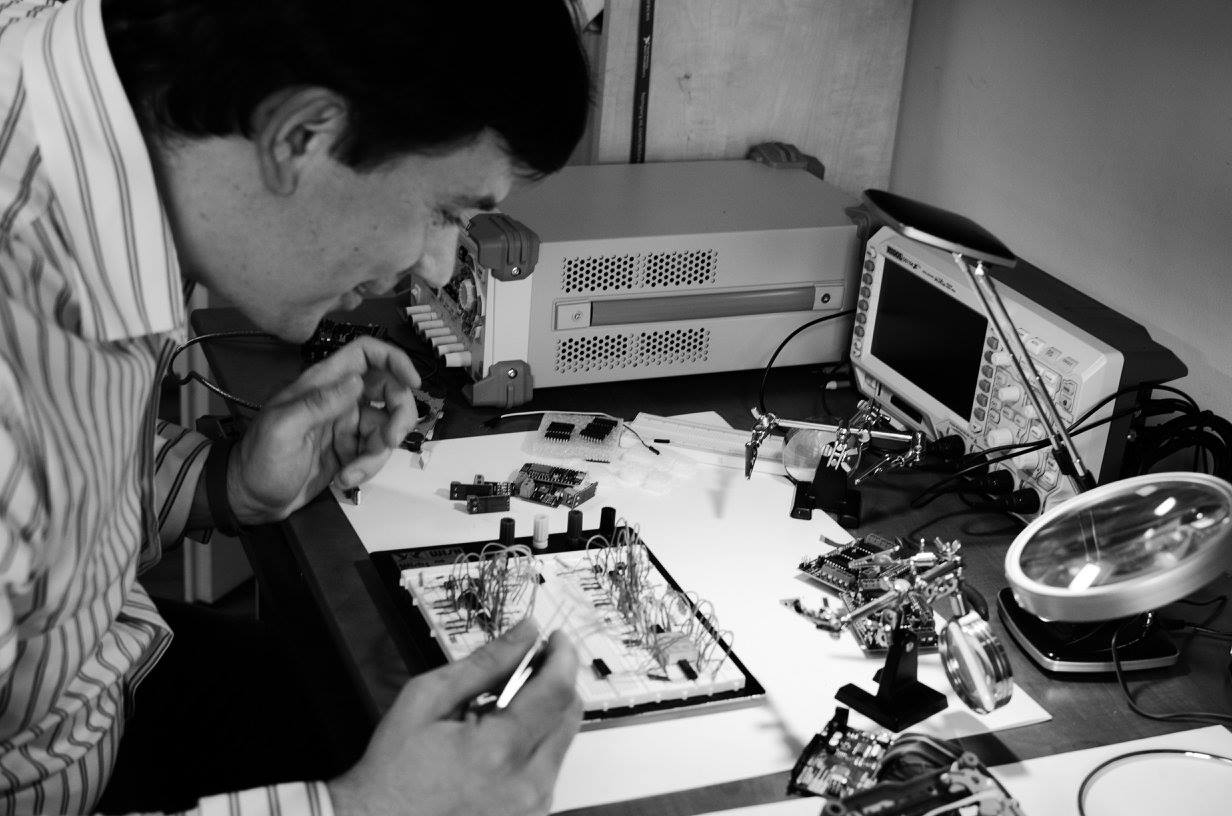
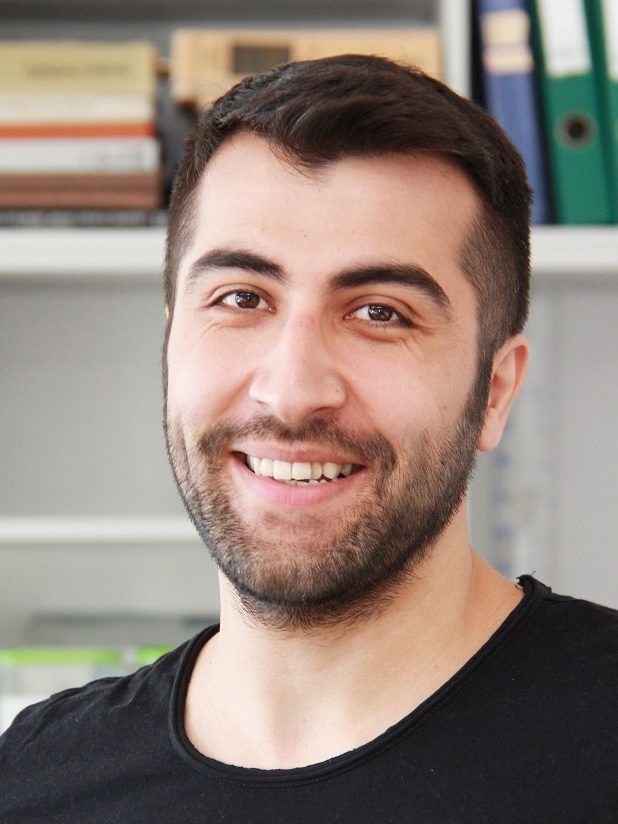
Dr. Libal András is an Associate Professor at the Faculty of Mathematics and Computer Science of Babes-Bolyai University , Romania. His research spans soft condensed matter physics , active matter systems , and artificial spin ice , with a focus on computational modeling and GPU/CPU optimization. He collaborates with institutions like Los Alamos National Laboratory and has contributed seminal work on colloidal spin ice. Alma Mater: Bathory Istvan High School (Cluj), Babes-Bolyai University (BSc), University of Notre Dame (PhD) Past affiliations: Argonne National Lab, Los Alamos National Lab, Johns Hopkins University, Universiteit Antwerpen Research interests include: Computer simulation of soft condensed matter and active matter systems Topological defects in spin ice and granular materials Development of Arduino-based microcontroller applications and IoT systems GPU-accelerated simulation methods Publications focus on vortex dynamics , jamming transitions , colloidal crystals , and active matter across physics, materials science, and computational epidemiology. No scientific awards are explicitly mentioned in available sources.
Tetyana Ignatova is an Associate Professor of Nanoscience at the University of North Carolina at Greensboro (UNCG). Her research focuses on experimental nanoscience of low-dimensional materials, with emphasis on biosensing, spectroscopic imaging, and nanofabrication for energy storage applications. Key research areas include 2D layered materials, hybrid DNA-nanotube structures, and nano-characterization techniques. Her teaching portfolio includes courses such as Principles of Nanoscience I , Quantum and Solid State Physics , and Spectroscopy Methods in Nanoscience . She has secured significant grants including NSF RAPID funding for rapid-response research on COVID-19 diagnostics and support from the 2D Crystal Consortium for low-power electronics research. Recent publications highlight advancements in graphene transfer methods, optical sensing in 2D heterostructures, and the biomedical applications of DNA-wrapped carbon nanotubes. Her work frequently intersects with optoelectronics, energy storage, and bioengineering. Notable grants include the 2020 NSF RAPID award (2020-2022) and the 2021 2DCC-MIP grant for low-power electronics. Talks include invitations at the Graphene and Beyond Workshop (2022) and the OSA Advanced Photonics Congress (2021). Labs and collaborations involve interdisciplinary projects on nanomaterial synthesis, optical characterization, and bio-nano interfaces. Current research trends emphasize translating nanoscale innovations into practical applications in health and energy sectors.
Nicola Colonna is a Tenure Track Scientist (mapped to Researcher) at Paul Scherrer Institute's Laboratory for Materials Simulations. Focuses on Koopmans spectral functionals and electronic structure theory. Research develops computational methods for predicting electronic properties of quantum materials, perovskites, and nanoporous systems using orbital-density-dependent functionals. Recent publications (2021-2024) demonstrate: 60% focus on Koopmans functional methodology development, 25% on perovskite electronic structures, and 15% on quantum material characterization. Common themes include spectral accuracy, high-throughput screening, and validation against experimental benchmarks. Software Development: Contributed to open-source koopmans package for spectral property prediction.
Eric Grelet is a CNRS Research Director at the Paul Pascal Research Center (CRPP), University of Bordeaux, France, since 2003. His work focuses on self-organization in soft matter, particularly liquid crystals, colloids, and active systems. Education: PhD in Physics (2001, Laboratoire de Physique des Solides, Orsay); Habilitation (HDR, University of Bordeaux, 2012). Research: Investigates chirality transfer, phase behavior of colloidal rods, and functionalization of complex fluids using filamentous viruses. Key applications include organic solar cells and biocatalysis. Awards: CNRS Bronze Medal (2009), Glenn Brown Prize (2002). Publications: Over 40 peer-reviewed articles in journals like Nature Materials , Phys. Rev. Lett. , and ACS Nano , emphasizing liquid crystal dynamics and viral-based materials. Article Trends reveal expertise in colloidal physics, viral self-assembly, and discotic liquid crystals. His work bridges fundamental research on phase transitions and applied studies in energy and biosensing.
Dr. Florin Tudorache is affiliated with the Department of Exact and Natural Sciences at Alexandru Ioan Cuza University of Iași , focusing on ceramic materials and sensor technologies. His research spans: Ceramic material synthesis Electrical and magnetic property characterization Humidity and gas sensor development Nanostructured thin films and composites Doping techniques for material optimization Multiferroic and perovskite oxides Recent articles highlight his work in: Humidity sensor materials with doped tin sulfides and zinc oxides Multifunctional polymer-carbon composites Thermal and microstructural effects on sensor performance Magnetic textile engineering Spinel ferrite applications His team explores mixed ionic-electronic conductors and cost-effective fabrication methods, with expertise in spray coating, electrospinning, and X-ray diffraction.
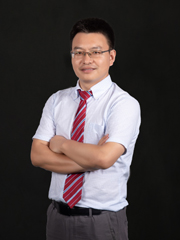
Tang Zeguo is an Associate Professor and Director of the Department of New Energy Science and Engineering at Shenzhen University of Technology's School of New Materials and New Energy. As a Runyuan Young PI and Shenzhen 'Peacock Plan' Category C Talent Award recipient, he leads cutting-edge research in next-generation photovoltaic technologies with over 70 publications and multiple patents. His academic foundation includes: Doctor of Engineering (2013) from Saitama University, Japan PhD in Condensed Matter Physics (2010) from Lanzhou University Bachelor of Science in Physics (2005) from Lanzhou University Dr. Tang's research centers on advanced solar cell systems, with primary expertise in perovskite/silicon tandem configurations, perovskite thin-film development, silicon heterojunction optimization, and compound semiconductor photovoltaics. His work addresses critical industry challenges in efficiency limits, degradation mechanisms, and scalable manufacturing processes through innovative materials engineering and device architecture design. Analysis of his 15 most recent publications (2021-2024) reveals a dominant focus on perovskite interface engineering (73% of works), with growing emphasis on silicon-perovskite tandems (40% increase from 2022-2024). Key research vectors include ion migration suppression, defect passivation strategies, and textured substrate integration, consistently targeting commercialization-ready solutions with enhanced stability metrics. His recognition includes: 2019 Hanergy Group Technology Innovation Bronze Award 2018 AP-HOPV Weily Prize 2015 EUPVSEC Best Poster Award 2009 Japanese Ministry of Education National Scholarship Shenzhen 'Peacock Plan' Category C Talent Award Dr. Tang has secured substantial research funding through principal investigator roles in Japan Society for Promotion of Science (JSPS) grants, New Energy and Industrial Technology Development Organization (NEDO) projects, China's National Key R&D Program (including a $750,000 intergovernmental cooperation project), and Shenzhen municipal initiatives totaling over 3.5 million RMB. His current portfolio addresses perovskite/silicon tandem efficiency decay mechanisms, intelligent pulse-spray manufacturing, and space-environment radiation effects on solar cells. As Department Director, he oversees Shenzhen University of Technology's New Energy Science and Engineering research infrastructure, directing teams focused on perovskite module development, silicon heterojunction optimization, and tandem cell commercialization pathways within the university's strategic renewable energy initiative.
Pedro Lowenstein is a Professor at the University of Michigan , holding appointments in the Department of Neurosurgery and Cell and Developmental Biology . He serves as Program Director of MM Neurosurgery and Assistant Chair of Neurosurgery. Lowenstein is a member of the AI and Digital Health Innovation , Rogel Cancer Center , and Center for Cell Plasticity and Organ Design . Education MD, University of Buenos Aires School of Medicine (1981) PhD, University of Buenos Aires (1984) Research Interests : Lowenstein's work focuses on three main areas: Tumor Self-organization : Molecular and physical mechanisms of glioma growth, invasion, and microenvironmental interactions, particularly H3.3-G34R and IDH1 mutations. Adaptive Immunity : T-cell and NK-cell interactions with gliomas, including immunological synapse formation and mechanisms of immune evasion. Clinical Translation : Development of combined cytotoxic/immune-stimulatory gene therapy (Ad-hCMV-TK/Flt3L) for glioblastoma, leading to FDA-approved Phase I trials (NCT01811992). Scientific Trends : Recent publications emphasize epigenetic reprogramming, liquid crystal tumor modeling, and AI-driven diagnostics. Collaborative work with Maria G. Castro spans in vivo models and clinical trial implementation. Key Grants include NIH funding for neuro-immune mechanisms, American Brain Tumor Association projects on tumor microenvironment, and Alex's Lemonade Stand support for pediatric glioma gene therapy.
Dr. Lottie M Harding is a Senior Research Associate at the Interface Analysis Centre, University of Bristol, specializing in nuclear materials science. She holds a PhD and focuses on uranium-based compounds, actinide oxides, and thin film behavior under extreme conditions. Her research explores: Material degradation mechanisms in nuclear fuels Epitaxial growth of uranium dioxide and actinide thin films Oxidation kinetics and corrosion behavior of advanced nuclear materials Synchrotron-based characterization of actinide compounds Her recent publications (2021-2025) demonstrate consistent focus on uranium material science, covering thin film synthesis, oxidation reactions, resonant scattering techniques, and fusion reactor material performance. The work integrates physics, chemistry, and nuclear engineering approaches. No scientific awards or student advising roles are mentioned in available sources. She contributes to the Materials & Devices research group and maintains active collaborations through the European Synchrotron Radiation Facility for dataset development.
Michael te Vrugt is an Assistant Professor in the Institute of Physics at Johannes Gutenberg University Mainz . He holds dual PhDs in Physics (2022) and Philosophy (2023) from the University of Münster, Germany, and has held postdoctoral positions at DAMTP, University of Cambridge, and the Institute of Theoretical Physics, University of Münster. Current Role: Assistant Professor in Physics (since Sep. 2024) Postdoctoral Experience: University of Cambridge (2023-), University of Münster (2022-2023) Research Focus: Active matter, nonequilibrium statistical mechanics, dynamical density functional theory, Mori-Zwanzig formalism, and quantum-classical analogies His research bridges theoretical physics, statistical mechanics, and interdisciplinary applications, including epidemic modeling and DNA-based computing. Recent work explores active matter systems, biaxial liquid crystals , and reservoir computing frameworks. He has contributed to the SFB1551 Collaborative Research Center. Scientific Awards: No awards explicitly mentioned. Advising and Grants: No student names or grant listings provided, but active involvement in SFB1551 and interdisciplinary projects is evident. Labs & Teams: Principal Investigator at Johannes Gutenberg University Mainz, collaborating on projects like SFB1551.
Greg Sun is a Professor in the Department of Engineering at the University of Massachusetts Boston, where he joined the faculty in 1993. He played a pivotal role in establishing Boston's first publicly supported Engineering Program and served as the founding Chair of the Department of Engineering from 2014–2023. Dr. Sun holds a Ph.D. in Electrical Engineering from Johns Hopkins University (1993), an M.S. from Marquette University (1988), and a B.S. in Microelectronics from Beijing University (1984). His research encompasses semiconductor optoelectronics, silicon photonics, and nanoplasmonics, with specific focus areas including: GeSn-based infrared photodetectors and lasers Quantum processes in semiconductor nanostructures Surface plasmon-enhanced optical devices Group-IV material systems (SiGeSn) Mid-infrared optoelectronic device design His recent publications demonstrate strong emphasis on silicon-compatible mid-IR photonics, with innovations in GeSn photodetectors, plasmonic enhancement techniques, and electrically pumped lasers for integrated photonic systems. Honors include: Fellow of Optica (formerly OSA) Fellow of the American Physical Society (APS) He maintains active collaborations internationally, with visiting professorships at National Taiwan University and Academia Sinica, and serves as Deputy Editor of the Journal of Lightwave Technology .
Prof. Klaus Lips is a faculty member at Freie Universität Berlin, Department of Physics (Experimental Physics), and holds a joint appointment at the Helmholtz Centre Berlin for Materials and Energy where he leads the Institute of Nanospectroscopy. He heads the Working Group 'Advanced Analytics' and serves as the leading manager of the Energy Materials In-Situ Laboratory Berlin (EMIL), a cutting-edge facility for solar cell preparation and synchrotron-based characterization. His research focuses on fundamental loss mechanisms in solar cells, electronic properties of semiconductors and organic materials, and photon upconversion for third-generation photovoltaics. Through the Joint Berlin EPR Laboratory (BeJEL), Lips investigates performance-limiting defects using advanced spectroscopy techniques including continuous-wave/time-domain electron paramagnetic resonance (EPR), electrically/optically detected magnetic resonance (EDMR/ODMR), photoluminescence, Hall effect measurements, and synchrotron-based methods. Lips' recent publications predominantly explore spin-dependent phenomena in semiconductors, thin-film solar cell technologies (particularly silicon-based heterojunctions), and quantum computing applications of fullerenes. His work demonstrates strong emphasis on defect spectroscopy, materials characterization, and novel measurement techniques for photovoltaic optimization. He maintains active public engagement through science outreach including the 'Long Night of Sciences' events and educational programs for kindergartens and schools.
Orhan Sisman is a Researcher in the Department of Functional Materials at Alexander Dubček University of Trenčín, Slovakia. He contributes to the Centre for Functional and Surface-Functionalized Glass (FunGlass), a Horizon 2020 project focused on advanced glass materials. His work bridges materials science and sensor technology, with particular emphasis on developing next-generation gas detection systems using nanomaterials. Education: 2020: Ph.D. in Information Engineering-Physics Curriculum, University of Brescia, Italy (Thesis: Strategies to Enhance the Performances of Metal Oxide Gas Sensors) 2016: M.S. in Physics, Gebze Technical University, Turkey (Thesis: Fabrication of Organic/p-type Semiconducting Metal Oxide Hybrid Structures for Gas Sensing Applications) 2013: B.S. in Physics Education, Middle East Technical University, Turkey Dr. Sisman specializes in semiconductor nanomaterials for sensing applications. His research spans metal oxide nanomaterials, organic-inorganic hybrids, and glass/ceramic systems with focus on hydrogen, NO 2 , and humidity detection. He investigates structural, electrical, and surface properties of nanostructured materials to develop sensors with improved selectivity and sensitivity. His work integrates materials synthesis, surface engineering, and device fabrication for environmental monitoring and safety applications. His publication record shows consistent advancement in sensor technology, evolving from fundamental material characterization to sophisticated device engineering. Recent work emphasizes hybrid and core-shell nanostructures, UV-enhanced sensing, and ion beam surface modification techniques to optimize sensor performance. The publications demonstrate strong international collaboration across European research institutions. Research Projects: HORIZON 2020 FunGlass Project (2021-2023) - Researcher CERIC-ERIC Project (2018) - Research Fellow COST ACTION TD1105 EuNetAir (2016-2018) - Research Fellow COST ACTION MP1202 HINT (2016-2018) - Research Fellow VEGA Project No: 1/0844/21 - Researcher TUBITAK Project No: 113F403 (2016-2018) - Research Assistant Dr. Sisman maintains active collaborations with institutions across Europe including Friedrich Schiller University Jena, University of Brescia, Vinca Nuclear Institute, and multiple COST Action networks. He has participated in numerous research training programs and short-term scientific missions, contributing to his expertise in advanced materials characterization and sensor development. His work within the FunGlass center positions him at the forefront of functional glass research in Europe.
Dr. Felicia Gheorghiu is a researcher at the Department of Exact and Natural Sciences , Alexandru Ioan Cuza University (UAIC), Romania , affiliated with the RAMTECH Center . Her work focuses on multiferroic systems , magnetoelectric properties , and oxide materials , particularly in multifunctional ceramics for microelectronics applications. PhD in Physics (2012) Expertise in dielectric spectroscopy, structural/magnetic characterization, and gel-combustion synthesis Her research explores multiferroic ceramics with magnetoelectric coupling, including single-phase and composite systems , and investigates the impact of doping , porosity , and microstructure on material properties. Recent studies highlight flexible electronics and miniaturized antenna design . While no scientific awards are explicitly listed, her publications demonstrate sustained contributions to materials science and solid-state physics . Contact: felicia.gheorghiu@uaic.ro .
Dr. Gabriel Schinteie is a Scientific Researcher II at the National Institute of Materials Physics in Romania, working within the Laboratory of Magnetism and Superconductivity. His research focuses on magnetic materials, nanotechnology, and their biomedical applications, particularly in magnetic hyperthermia. He maintains an active research program with numerous publications spanning materials characterization, magnetic properties, and nanomaterials engineering. His research interests include magnetism and magnetic properties of nanomaterials, iron oxide nanoparticles, thin films and multilayer structures, Mössbauer spectroscopy characterization techniques, nanocomposites, and biomedical applications of magnetic materials. Recent work has focused on drug delivery systems using magnetic nanoparticles, magnetic hyperthermia applications, and the structural and magnetic properties of various nanoscale systems. His publication record shows a strong focus on understanding the relationship between structure and magnetic properties across various material systems. Recent articles demonstrate expertise in characterizing drug loading of iron oxide nanoparticles using combined magnetometry and Mössbauer spectroscopy, investigating exchange coupling mechanisms in nanocomposites, and developing methodologies for biomedical applications of magnetic nanoparticles. Dr. Schinteie is currently leading the project "Complex experimental and theoretical approaches in the evaluation of magnetic hyperthermia application" (2022-2024), which aligns with his publication focus on magnetic nanoparticles for biomedical applications.
Dr. Adelina UDRESCU is a Scientific Researcher III at the National Institute of Materials Physics (NIMP) in Magurele, Romania, where she works in the Laboratory of Optical Processes in Nanostructured Materials. Her research focuses on advanced characterization of nanomaterials and their applications in various fields including energy storage, biomedical applications, and environmental remediation. Her educational background includes: PhD in Physics (2014-2019), Faculty of Physics, University of Bucharest, Department of Optics, Spectroscopy, Plasma, Lasers Master in Theoretical Physics (2011-2013), Faculty of Physics, University of Bucharest Graduate in Physics (2011-2013), Faculty of Physics, University of Bucharest Dr. UDRESCU specializes in various characterization and synthesis techniques including Raman and SERS, Photoluminescence, UV-VIS-NIR and FTIR absorption, X-ray diffraction, and Chemical Vapor Deposition. Her research spans multiple interdisciplinary areas where she investigates the optical properties of nanomaterials, particularly focusing on carbon-based nanomaterials, conducting polymers, and their composites. She has made significant contributions to understanding photoluminescence phenomena, photodegradation processes, and the development of novel nanocomposites for energy storage and biomedical applications. Her recent publication trends show a strong focus on two-dimensional materials like WS 2 , iron oxide-carbon nanocomposites for biomedical use, and photodegradation studies of pharmaceutical compounds. She frequently employs advanced spectroscopic techniques to characterize material properties and has developed expertise in correlating structural features with optical and electronic behaviors. Her work bridges fundamental materials science with practical applications in energy, environment, and healthcare. Dr. UDRESCU has contributed to several patents related to graphene-based sensors and iron oxide-carbon nanotube composites, demonstrating her commitment to translating basic research into practical technologies. Her collaborative approach is evident in her extensive publication record with numerous co-authors from the National Institute of Materials Physics and other research institutions. She currently leads research activities in the Laboratory of Optical Processes in Nanostructured Materials, where her team investigates the fundamental optical properties of novel nanomaterials and their potential applications across multiple domains. Her laboratory maintains strong capabilities in optical spectroscopy, materials synthesis, and nanoscale characterization.