About
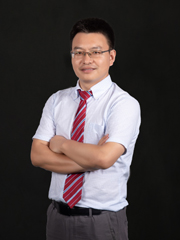
Tang Zeguo is an Associate Professor and Director of the Department of New Energy Science and Engineering at Shenzhen University of Technology's School of New Materials and New Energy. As a Runyuan Young PI and Shenzhen 'Peacock Plan' Category C Talent Award recipient, he leads cutting-edge research in next-generation photovoltaic technologies with over 70 publications and multiple patents.
His academic foundation includes:
- Doctor of Engineering (2013) from Saitama University, Japan
- PhD in Condensed Matter Physics (2010) from Lanzhou University
- Bachelor of Science in Physics (2005) from Lanzhou University
Dr. Tang's research centers on advanced solar cell systems, with primary expertise in perovskite/silicon tandem configurations, perovskite thin-film development, silicon heterojunction optimization, and compound semiconductor photovoltaics. His work addresses critical industry challenges in efficiency limits, degradation mechanisms, and scalable manufacturing processes through innovative materials engineering and device architecture design.
Analysis of his 15 most recent publications (2021-2024) reveals a dominant focus on perovskite interface engineering (73% of works), with growing emphasis on silicon-perovskite tandems (40% increase from 2022-2024). Key research vectors include ion migration suppression, defect passivation strategies, and textured substrate integration, consistently targeting commercialization-ready solutions with enhanced stability metrics.
His recognition includes:
- 2019 Hanergy Group Technology Innovation Bronze Award
- 2018 AP-HOPV Weily Prize
- 2015 EUPVSEC Best Poster Award
- 2009 Japanese Ministry of Education National Scholarship
- Shenzhen 'Peacock Plan' Category C Talent Award
Dr. Tang has secured substantial research funding through principal investigator roles in Japan Society for Promotion of Science (JSPS) grants, New Energy and Industrial Technology Development Organization (NEDO) projects, China's National Key R&D Program (including a $750,000 intergovernmental cooperation project), and Shenzhen municipal initiatives totaling over 3.5 million RMB. His current portfolio addresses perovskite/silicon tandem efficiency decay mechanisms, intelligent pulse-spray manufacturing, and space-environment radiation effects on solar cells.
As Department Director, he oversees Shenzhen University of Technology's New Energy Science and Engineering research infrastructure, directing teams focused on perovskite module development, silicon heterojunction optimization, and tandem cell commercialization pathways within the university's strategic renewable energy initiative.