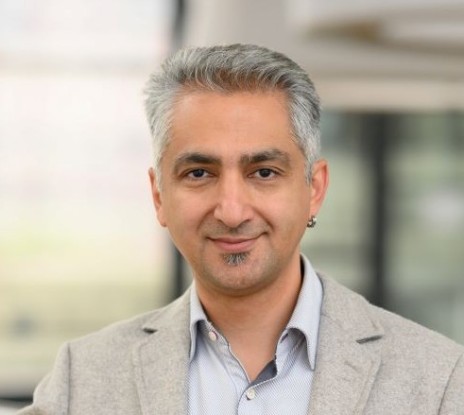
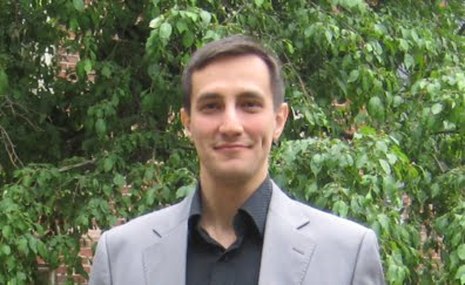
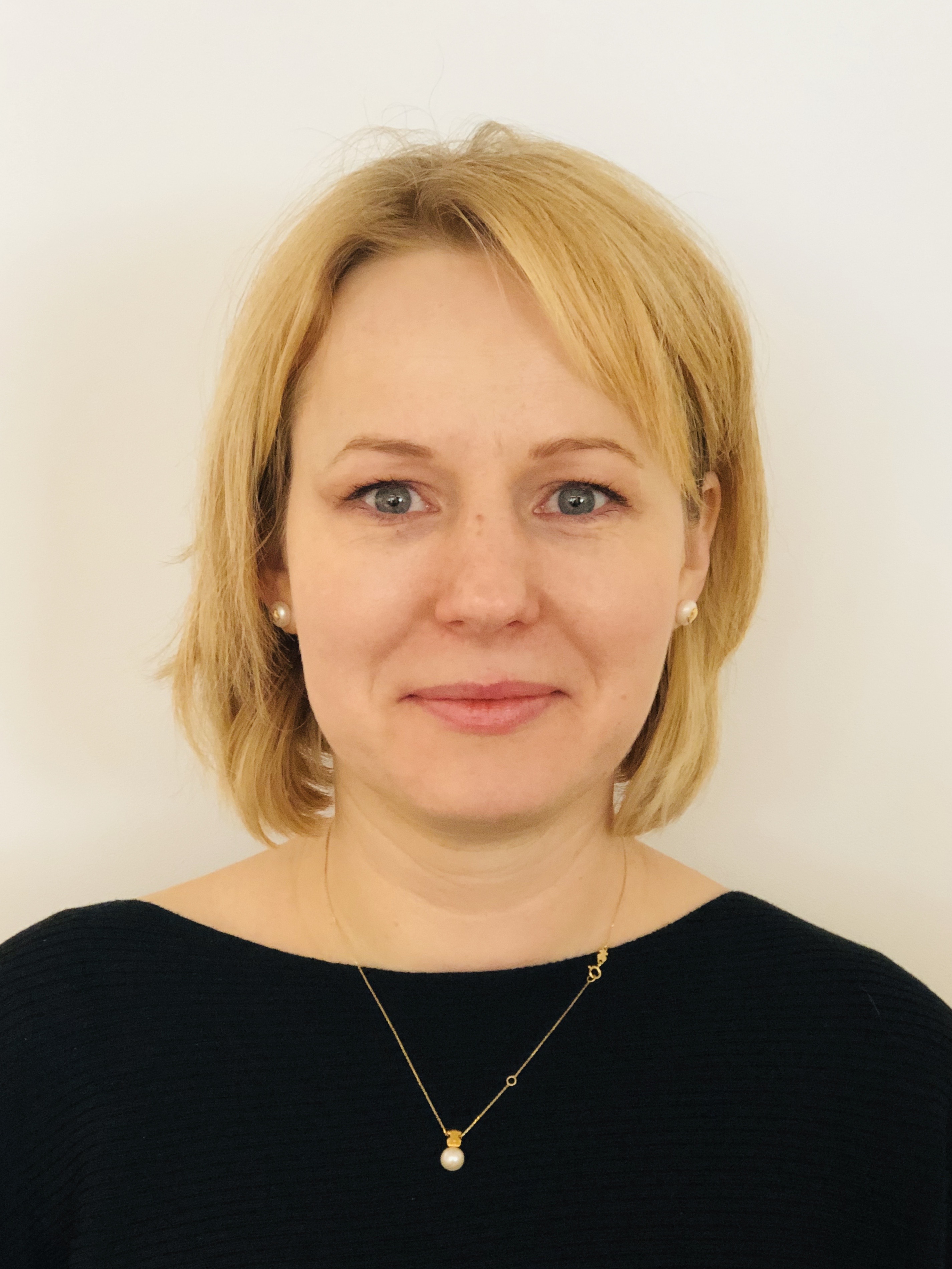
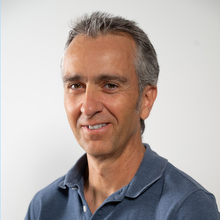
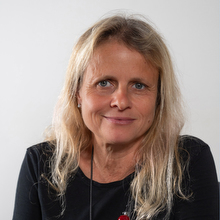
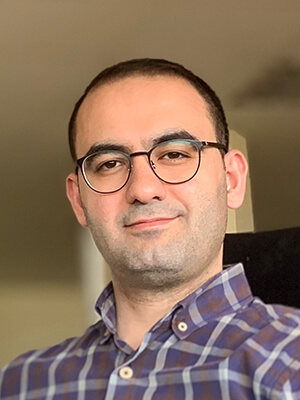
Amir Moradi is Professor for Implementation Security at TU Darmstadt. His research focuses on hardware security with emphasis on side-channel analysis, fault injection attacks, and secure implementation of cryptographic primitives. Key research areas include: Development of countermeasures against physical attacks Efficient cryptographic implementations for constrained devices Hardware Trojan detection and prevention Automated verification of secure hardware designs He leads multiple DFG-funded projects including nano-scale side-channel analysis and long-term security for trusted platforms. Recent work demonstrates innovations in hardware masking techniques and automated security verification. Professor Moradi has received numerous awards including the IEEE S&P Distinguished Paper Award (2023), German IT Security Award (2022), and CHES Best Paper Award (2019). He serves on program committees of major security conferences including CHES, EUROCRYPT, and ASIACRYPT.
Rui Oliveira is an Associate Professor at Universidade do Minho in Portugal, affiliated with the Distributed Systems Group. His research focuses on dependable distributed systems, fault-tolerant database systems, and large-scale distributed systems. He teaches Distributed Systems across undergraduate, master's, and doctoral programs. Research Interests His work spans epidemic communication protocols, data management in cloud environments, and high-performance transactional middleware. Recent contributions include frameworks for privacy-preserving machine learning (SOTERIA), distributed tracing (CAT), and fault-diagnosis tools for I/O behavior analysis. Key Contributions Developed the Loom disaggregated database system, the TADA distributed agreement toolkit, and the DATAFLASKS epidemic storage substrate. His work emphasizes practical implementations of scalable and resilient distributed systems. Labs/Teams Affiliated with HASLab (Hardware and Software Systems Laboratory), focusing on distributed systems research. Collaborates with industry on cloud computing and cybersecurity challenges.
Selçuk Köse is a Full Professor in the Department of Electrical and Computer Engineering at the University of Rochester. Previously, he held positions at the University of South Florida as an Assistant Professor (2012-2018) and Associate Professor (2018-2019). He earned his B.Sc. from Bilkent University (2006), M.S. and Ph.D. from the University of Rochester (2008 and 2012, respectively). His research focuses on hardware security (side-channel attacks, fault injection, PUFs), on-chip power delivery, cryogenic electronics, graphene nanoribbon transistors, and nature-inspired computing (e.g., Ising machines). He has received prestigious awards including the NSF CAREER Award (2014) and Cisco Research Awards (2015–2017). His recent work emphasizes security in quantum computing interfaces, power delivery networks, and covert channel mitigation. Research funding comes from NSF, DARPA, DoE, and industry partners. He serves as an associate editor for IEEE and Springer journals.
Ileana Buhan is an Assistant Professor at Radboud University Nijmegen's Digital Security Group and a member of the CESCA Lab. Her research focuses on hardware security, particularly advancing tools for secure hardware design and mitigating side-channel vulnerabilities. She previously held roles at Riscure (2011–2020) as a security evaluation manager and product manager, and at Philips Research (2008–2010) as a senior scientist. She earned her Ph.D. in Cryptography with Noisy Data from the University of Twente in 2008, recognized with the 2008 EBF European Biometrics Research Industry Award. Her work emphasizes practical security evaluation methods, automated leakage modeling (e.g., ABBY tool), and hardware-software co-design for resistance against side-channel attacks. She actively contributes to conferences like CHES, FDTC, and CARDIS, often in program committee roles. Recent invited talks include topics such as AI-driven vulnerability prediction, architecture-level simulators for root cause analysis, and automated tools for cryptographic implementation security. Her research spans RISC-V processors, microarchitecture analysis, and the intersection of machine learning with hardware security. Notable contributions include frameworks for leakage detection, fault simulation, and explainable side-channel analysis. She balances academic rigor with industry relevance, aiming to bridge gaps between theoretical security and real-world implementation challenges.
Thai Son Mai is a Senior Lecturer at Queen's University Belfast's School of Electronics, Electrical Engineering and Computer Science. He actively contributes to research in Machine Learning, Data Mining, and High Performance Computing, with applications in Medicine, Neuroscience, Environment, and Transportation. He leads and collaborates on projects such as 'Drought AI' and 'RELAX: Relaxed Semantics Across the Data Analytics Stack'. His work focuses on scalable algorithms, cybersecurity, and environmental systems. Research Interests: Dr. Mai's research spans algorithm development for data-driven decision-making, including clustering algorithms, scalable machine learning, and applications in hydrology and urban flood management. He emphasizes interdisciplinary approaches, combining computer science with environmental science and healthcare. Recent Trends in Articles: Recent publications address challenges in low-power device optimization, physical unclonable function security, and ensemble models for hydrological forecasting. His work bridges theoretical advancements with real-world implementations in flood management systems and embedded computing. Awards: Best Poster Award - Marco D'Antonio (2025) Grants & Projects: Principal Investigator (PI) for 'Drought AI' (2020-2021) and 'Calculating The Human Proteoform Maximum Theoretical Peptide Index' (2023-2023) Co-Investigator (CoI) for 'RELAX' (active since 2022) and multiple reaction prediction projects Labs/Teams: Engages in interdisciplinary teams focusing on AI for health, disaster resilience, and high-performance computing.
Tamara Rezk is a researcher in computer security at INRIA, with a focus on programming languages and formal verification. She actively contributes to academic communities through roles in program committees, organizing committees, and panels across conferences like PriSC, PLDI, VMCAI, ECOOP, and PLMW. Her work bridges theoretical and applied aspects of security, particularly addressing challenges in secure compilation and cryptography. Researcher at INRIA, France Active in secure compilation, cryptography, and programming languages Contributed to PriSC, PLDI, VMCAI, ECOOP, and PLMW conferences Her research interests include: Security: Timing channels, Spectre attacks, constant-time programming Programming Languages: Type systems, language-based security Verification: Symbolic execution, abstract interpretation, formal methods Her publications from 2017–2023 highlight advancements in secure compilation techniques, cryptographic implementations, and symbolic execution frameworks.
Glück Florent is an Associate Professor at the Geneva School of Landscape, Engineering and Architecture (HES-SO), affiliated with the Technical and IT school's Computer Science and Communication Systems department. He specializes in embedded systems, system virtualization, and interdisciplinary projects at the intersection of engineering and healthcare. Affiliations: HES-SO Geneve, hepia inIT, and collaborations with medical and industrial partners. Education: Not explicitly listed, but implied through roles and projects involving systems engineering and computer science. Research Interests: His work spans embedded systems design, real-time data processing, and applied machine learning. Key focuses include secure hardware-software co-design (e.g., FPGA-based security), medical device development (e.g., neonatal monitoring systems), and IoT infrastructure for smart buildings and recycling. Project Trends: Florent leads projects combining engineering with societal impact, such as automated recycling systems (LusTra), secure medical diagnostics (BrainCheckX), and educational virtualization platforms (Nexus VDI). Recent work emphasizes AI-driven solutions for healthcare (e.g., cochlear implant support) and decentralized energy management. Grants and Funding: Multiple projects funded by HES-SO Rectorat, CTI, and industry partners, totaling over CHF 400,000 since 2014. Labs/Teams: Active in distributed embedded systems research, leading teams on projects like DPESI (distributed storage) and HERVA (random number validation platforms).
Nikolaos Foutris is a Researcher at The University of Manchester, specializing in dependable and energy-efficient computer architectures. His work emphasizes hardware/software co-design, focusing on systems and processors that balance performance with reliability. Key research areas include memory optimization, GPU acceleration for cryptographic computations, and radiation effects on MPSoC systems. His research intersects with UN Sustainable Development Goals, particularly through energy-efficient technologies and resilient computing infrastructure. Collaborations span academia and industry, addressing challenges in NUMA systems, blockchain, and cloud applications. Recent publications highlight trends in memory analysis for managed applications, SPIR-V code generation frameworks, and mitigating radiation-induced errors in advanced embedded systems. No scientific awards or grants are explicitly mentioned in the provided text.
Leonel Augusto Pires Seabra de Sousa is a Full Professor at the University of Lisbon's Instituto Superior Técnico and a principal researcher at INESC-ID. His primary research focuses on heterogeneous architectures for high-performance computing, computer systems technologies, and cryptographic hardware acceleration. He holds a Fellow status with the IET and has been recognized as a Senior Member of both ACM and IEEE. Roles: Full Professor, Researcher (INESC-ID) Education: Details not explicitly provided in text His work spans parallel computing, embedded systems, and bioinformatics applications. Key contributions include energy-efficient architectures, RNS-based cryptographic accelerators, and GPU-driven phylogenetic analysis. Over 150 publications highlight his impact in these areas. Recent projects include COPMA (post-quantum cryptography hardware) and low-power 5G positioning systems. Awards include the HiPEAC Paper Award and multiple academic recognitions. Advising focuses on PhD/MSc students in HPC and embedded systems. Collaborates with industry partners on FPGA and GPU-based solutions.
John Mitchell is the Mary and Gordon Crary Family Professor in Stanford’s School of Engineering and holds courtesy professorships in Electrical Engineering and Education. He chairs the Computer Science Department and directs the d.school. His roles include former Vice Provost for Teaching and Learning, leading over 1,000 online education projects and co-founding Stanford CourseWare, foundational to MOOCs. He co-directs the Lytics Lab, Carta Lab, and Pathways Lab, focusing on data-driven educational improvements. Education: BS in Mathematics from Stanford (1978), PhD in Computer Science from MIT (1984). Research focuses on programming languages, cybersecurity, blockchain, machine learning, and edtech. Key projects include Reinforcement Learning for educational scheduling, cryptographic analysis in generic groups, and privacy in telephony metadata. He authored textbooks like Foundations for Programming Languages and has over 250 publications with 30,000+ citations. Publications emphasize edtech innovations and security (e.g., Bitcoin consensus protocols, generative AI ethics). Awards include ACM Fellow and American Academy of Arts and Sciences election. Advises doctoral students (e.g., Jeongyeon Kim) and oversees grants on learning technologies. Leads teams exploring Generative AI in education, trustworthy ML systems, and hybrid pedagogy post-pandemic. Active in labs advancing educational outcomes through iterative design and data science.
Tan Tuy Nguyen serves as an Assistant Professor in the School of Informatics, Computing, and Cyber Systems at Northern Arizona University, where his research bridges theoretical cryptography with practical hardware and software implementations. His work focuses on developing secure, high-performance computing systems for real-world applications across multiple domains. Dr. Nguyen's research program centers on five interconnected pillars: Post-Quantum Cryptography : Advancing lattice-based schemes like CRYSTALS-Dilithium and Kyber to counter quantum computing threats Hardware Acceleration : Optimizing cryptographic operations through GPU architectures and specialized hardware designs Homomorphic Encryption Systems : Enabling computation on encrypted data through CKKS scheme optimizations Medical Security Applications : Integrating cryptography with deep learning for privacy-preserving diagnostic systems Audio Processing Security : Combining neural networks with encryption for secure audio transmission and storage Analysis of his 2024-2025 publications reveals a strategic shift toward deployable cryptographic solutions, with 80% of recent work addressing performance bottlenecks in post-quantum algorithms. His research demonstrates particular innovation in GPU-accelerated cryptography (40% of recent output) and cross-domain applications to healthcare and audio processing (30% combined), establishing him as a key contributor to practical secure computing systems.
Muhammad Adnan Tariq is a Professor at the University of Stuttgart in the Faculty of Computer Science, Department of Distributed Systems and Networking. His research spans distributed systems, networking, and security with a particular focus on publish-subscribe systems, software-defined networking, and complex event processing. PhD in Non-functional requirements in publish, subscribe systems (2013) Over 40 publications between 2009-2022 Extensive collaboration with Kurt Rothermel (36 joint publications) Dr. Tariq's research interests focus on the intersection of distributed computing and network systems. His work addresses critical challenges in publish-subscribe systems, software-defined networking, complex event processing, and workflow management. His research has evolved to incorporate emerging technologies like blockchain for IoT security and edge-based machine learning. His publications demonstrate a consistent focus on performance optimization, security, and scalability in distributed systems, with recent work emphasizing applications in IoT environments and edge computing. His publication record shows a clear progression from foundational work on publish-subscribe systems to more complex applications involving workflow engines, graph processing, and security mechanisms. The research demonstrates strong theoretical grounding combined with practical implementation considerations, particularly evident in his work on software-defined networking applications and IoT security frameworks. Dr. Tariq has maintained a productive research career with consistent publication output across top venues including IEEE Transactions, DEBS, ICDCS, and Middleware conferences. His work shows strong collaboration patterns, particularly with researchers at what appears to be his home institution.
Riccardo Focardi is a Full Professor at Ca' Foscari University of Venice in the Department of Environmental Sciences, Computer Science and Statistics. He has held this position since September 2017, following roles as Associate Professor (2013–2017) and Researcher (1996–2002). He is also co-founder and Chief Scientist of Cryptosense and 10Sec, startups focused on cybersecurity and IoT security solutions. Education: PhD in Computer Science from the University of Bologna (1999), Laurea cum laude in Computer Science (1993). Research focuses on cybersecurity, cryptography, formal methods for security protocol analysis, and secure hardware/software systems. Notable projects include the Cryptosense Analyzer tool for cryptographic device analysis and contributions to IoT security via 10Sec's fingerprinting technologies. His work on PKCS#11 vulnerabilities and padding oracle attacks has significantly impacted practical cryptographic security. Publications emphasize applied cryptography, API security, and IoT systems. Recent work explores GAN-based authentication (EUAS-GAN) and zero-shot malware detection (Z-MDZS). Over 110 publications span top venues like CRYPTO, CCS, and IEEE S&P. Leadership roles include coordinating national cybersecurity projects (e.g., POR FESR 2017–2020), chairing conferences (ITASEC 2017, CSF 2007), and directing Ca' Foscari's Computer Science PhD program (2012–2019). Active in public engagement, including media appearances on cybersecurity trends. Labs/Teams: Cryptosense (founded 2013), 10Sec (2020), and the DAIS department's security research group. Supervised over 10 PhD students, contributing to academic-industry collaborations in secure systems.
Flaminia Luccio is an Associate Professor at Ca' Foscari University of Venice, affiliated with the Department of Environmental Sciences, Computer Science and Statistics. Her research focuses on computer security, cryptography, distributed systems, and usability engineering. She has contributed to projects like the SAFE PLACE IoT security initiative and the FWS firewall analysis tool. Luccio teaches courses such as Cryptography and Advanced Algorithms at both undergraduate and graduate levels. Research: Her work spans formal verification of cryptographic protocols, secure IoT implementations, and usable security solutions for QR codes and biometric authentication. She has led projects involving secure hardware configuration for cloud environments and resilient firewall management systems. Recent contributions address side-channel vulnerabilities and malware detection through machine learning. Teaching: Courses include Cryptography (Master's), Algorithms and Data Structures (Bachelor's), and Web Technologies for Tourism (Master's). Teaching materials are accessible via her departmental website and personal profile. Collaborations: Collaborates with researchers like Riccardo Focardi on cybersecurity frameworks. Engages in interdisciplinary projects combining accessibility with technology, such as improving tourism websites for users with disabilities.
Dr. Muhammed Ali Bingol is a Senior Lecturer in Cyber Security and Programme Leader for the BSc in Computer Networks and Security at De Montfort University, UK, within the School of Computer Science and Informatics, Faculty of Computing, Engineering and Media. He is affiliated with the Cyber Technology Innovations and Digital Future Institute research groups. Education: Ph.D. in Computer Science and Engineering, Sabanci University, 2019 M.Sc. in Electronics and Communication Engineering, Istanbul Technical University, 2012 B.Sc. in Telecommunications Engineering, Istanbul Technical University, 2008 His research focuses on cryptography , information security , blockchain , secure multi-party computation , private function evaluation , authentication systems , and e-voting . He has contributed significantly to RFID security, distance-bounding protocols, and cryptographic protocol design. His work bridges theoretical cryptography and practical security implementations in wireless, cloud, and mobile environments. His recent publications (2022–2025) span topics from flexible threshold signatures and homomorphic encryption to blockchain-based voting and pedestrian safety analysis , indicating an interdisciplinary reach while maintaining a core in cryptographic protocol development. Trends show increasing focus on blockchain integration, privacy-preserving technologies, and real-world security applications. Scientific Awards and Memberships: Fellowship of the Higher Education Academy (FHEA) Member, Institute of Electrical and Electronics Engineers (IEEE) Cisco Networking Academy (CNA) Dr. Bingol has advised on multiple EU, public, and government cybersecurity projects and has served as a visiting scientist at Université Catholique de Louvain and a visiting lecturer at Istanbul City University. He has held industrial research roles at TÜBİTAK BİLGEM (Chief Researcher, 2008–2020), TSSG, and AOL. He leads curriculum development for undergraduate cybersecurity programs and teaches courses in cryptography, networks, malware analysis, and security management. He is actively involved in the Cyber Technology Innovations research group, where he contributes to advancing secure communication protocols, blockchain applications, and privacy-preserving technologies.