David Fletcher WrightView profile
Assistant Professor
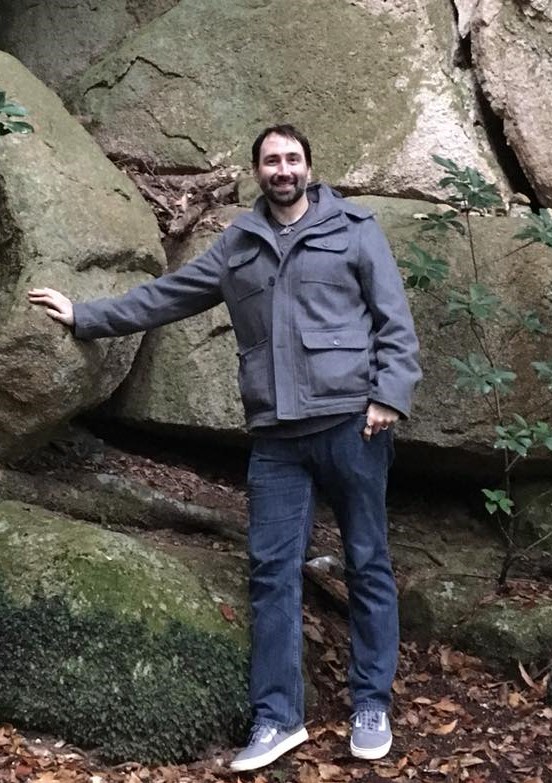
David Fletcher Wright is an Assistant Professor of Paleobiology in the School of Geosciences at the University of Oklahoma and Assistant Curator of Invertebrate Paleontology at the Sam Noble Museum of Natural History. He also holds research associate appointments at the National Museum of Natural History and the American Museum of Natural History. Wright combines specimen-based fossil data with statistical phylogenetics to study biological diversity through Earth's history, focusing on echinoderms and their evolutionary radiations. Ph.D., The Ohio State University (2016) M.S., Ohio University (2012) B.S., University of Kansas (2010) His research intersects macroevolution , phylogenetic comparative methods , and the evolutionary history of marine invertebrates , particularly crinoids (sea lilies, feather stars). He applies Bayesian techniques to fossil phylogeny reconstruction and investigates how ecological vs. geological changes drive diversification and mass extinctions. His work often leverages the ~500-million-year echinoderm fossil record as a natural experiment for testing evolutionary theories. Wright's 15 most recent publications span topics like crinoid systematics, Jurassic sea star origins, and the impact of seawater chemistry on echinoderm evolution. Common themes include phylogenetic uncertainty, character evolution modeling, and integrating fossil data with molecular phylogenies. Notable journals include Nature Communications Biology , Papers in Palaeontology , and Biological Reviews . 2025 Junior Faculty Fellowship, University of Oklahoma 2024 NSF grant ($1.17M) for Late Ordovician extinction research 2018–2020 Gerstner Scholar & Lerner-Gray Fellow, American Museum of Natural History 2017–2018 Peter Buck Postdoctoral Fellow, National Museum of Natural History 2016 Presidential Fellow, The Ohio State University Wright advises students in phylogenetic paleobiology, including Phifer, E.J. His lab collaborates globally on projects like the Anticosti Island biodiversity initiative and systematic revisions of Paleozoic echinoderms. He has authored or co-authored 35 peer-reviewed publications, describing 26 new species and 20 higher taxa, with over 878 citations and an h-index of 17.