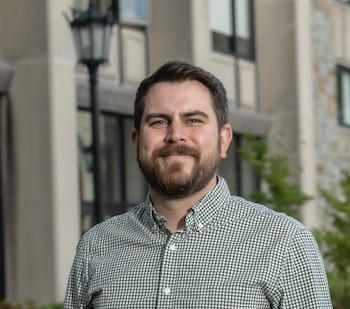
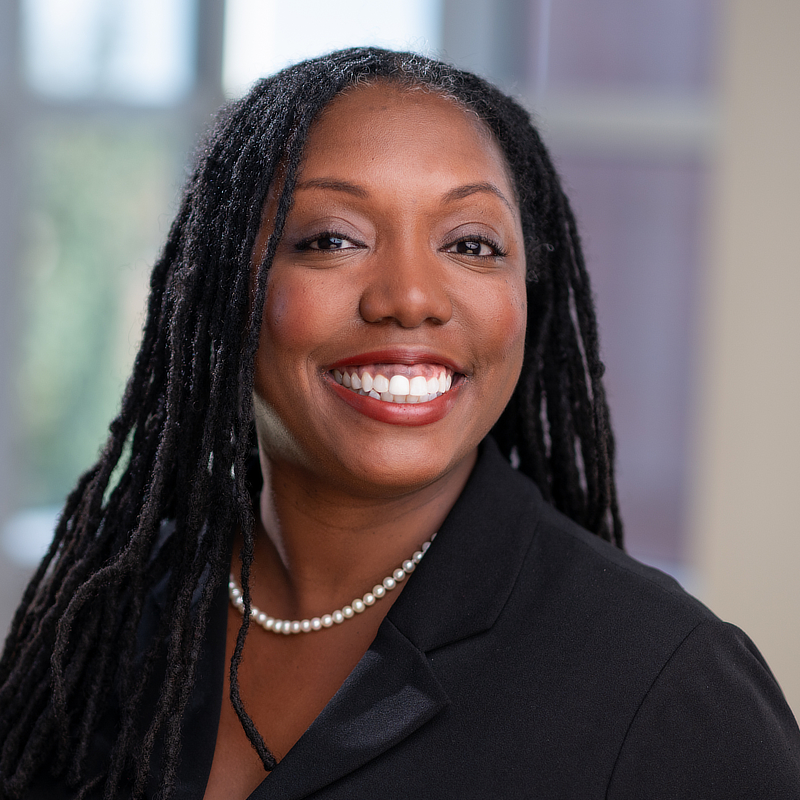
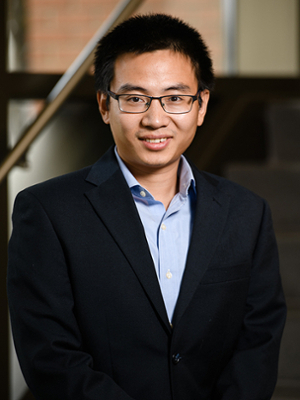
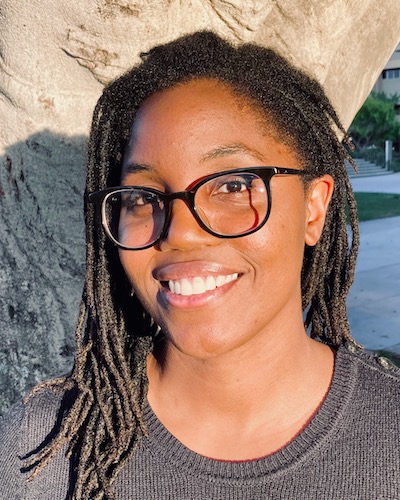
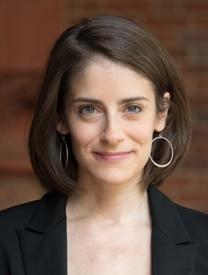
Josh Seim is an Assistant Professor of Sociology at Boston College, affiliated with the Morrissey College of Arts and Sciences. His work focuses on the sociologies of work, medicine, welfare, punishment, pedagogy, and ethnographic methods. He holds a Ph.D. from the University of California, Berkeley, and has published widely in top journals including *American Sociological Review* and *Social Problems*. Education: B.A., Gonzaga University M.S., Portland State University Ph.D., University of California, Berkeley Research Interests: His research explores how institutions like healthcare systems, welfare offices, and penal institutions interact with urban poverty. Recent projects include studies on ambulance crews’ labor processes, welfare bureaucracy, and post-prison labor. His writing also emphasizes pedagogical innovation in sociology teaching and ethnographic methodological rigor. Key themes include the governance of suffering, medical labor, and carceral systems. Publications & Books: Bandage, Sort, and Hustle: Ambulance Crews on the Front Lines of Urban Suffering (UC Press, 2020) The Welfare Assembly Line: Public Servants in the Suffering City (forthcoming UC Press, 2026) Teaching: Sociology 7715: Classical Sociological Theory (graduate) Sociology 7716: Contemporary Sociological Theory (graduate)
Fahui Wang is the Cyril & Tutta Vetter Alumni Professor in the Department of Geography & Anthropology at Louisiana State University (LSU). He holds a B.S. in Geography from Peking University (1988), an M.A. in Economics (1993), and a Ph.D. in City & Regional Planning (1995), both from The Ohio State University. His research focuses on spatially-integrated social sciences, public policy, and GIS applications in healthcare, urban planning, and public safety. He has authored/co-authored multiple influential books and peer-reviewed articles, including works on computational methods in GIS and healthcare accessibility analysis. Professor Wang’s work has been supported by grants from the National Institutes of Health, National Science Foundation, and U.S. Departments of Housing and Urban Development and Justice. His accolades include LSU’s Distinguished Research Master Award (2023) and CPGIS Distinguished Scholar (2023). He teaches advanced courses in GIS, urban geography, and quantitative methods, and leads research initiatives in the LSU Geoscience department. His lab focuses on geospatial technologies for addressing societal challenges in healthcare access, urban planning, and crime analysis.
Adam Soliman is an Assistant Professor in the John E. Walker Department of Economics at Clemson University's College of Business. His research focuses on the intersection of economics, crime, and public policy, with particular expertise in drug policy, policing behavior, and enforcement strategies. Dr. Soliman's research interests center on understanding the economic incentives behind criminal behavior and law enforcement responses. His work examines how changes in punishment severity affect police behavior, with a particular focus on drug policy reforms. He investigates whether police treat enforcement effort and punishment severity as complements or substitutes, challenging conventional 'War on Drugs' approaches. His research combines economic theory with empirical analysis of geocoded crime data to provide evidence-based insights into criminal justice policy. His publication record demonstrates significant contributions to understanding drug markets, opioid epidemics, and policing strategies. His work shows that weakening drug sale penalties leads to decreased drug arrests without displacement to non-drug offenses, suggesting police treat enforcement and punishment as complements. His research indicates that certain enforcement reductions may not incur large public safety costs, challenging traditional deterrence models. As an active researcher in criminology and public policy, Dr. Soliman collaborates with scholars from various institutions including University of Colorado, University of Pittsburgh, and Duke University. His work appears in working paper series such as the Economic Research Initiatives at Duke (ERID) and has been cited in related fields including public economics, criminology, and urban studies.
Stephen Billings is an Associate Professor of Finance at the Leeds School of Business, University of Colorado Boulder, where he holds the Global Real Estate Capital Markets Chair position. He serves as the faculty director of the MS in Real Estate program and research director for the CU Real Estate Center. His work spans multiple research centers including the Center for Research on Consumer Financial Decision Making and the Michael A. Klump Center for Real Estate. Billings received his PhD in Economics from the University of Colorado, a MS in urban planning from the University of North Carolina, and a BS in economics from Georgetown University. Prior to joining CU Boulder in 2016, he was faculty at the University of North Carolina Charlotte with appointments in both economics and public policy, where he also served as faculty director for the real estate center. His research focuses on the intersection of housing, schools, neighborhoods and crime, addressing critical policy issues including the impact of public investment in light-rail transit on neighborhoods, school segregation's influence on academic achievement and crime, neighborhood gentrification causes, lead-based paint in low-income housing, and the effects of sea level rise and natural disasters on neighborhood sorting and household finances. Billings employs sophisticated analysis of large micro-datasets with studies based on data and policies in Charlotte, NC and Denver, CO. His work connects urban economics with public policy, demonstrating how neighborhood environments shape individual outcomes across multiple dimensions. Billings' recent publication record demonstrates a consistent focus on neighborhood effects, school choice impacts, crime economics, and housing market dynamics. His work frequently examines the intersection of race, housing, and economic outcomes, with particular attention to policy implications. He has developed innovative methodological approaches to studying residential amenities and neighborhood spillovers, with increasing attention to climate change impacts on housing markets. His research appears in top journals including The Quarterly Journal of Economics, American Economic Review: Insights, and Journal of Urban Economics. As an educator, Billings teaches undergraduate and masters classes in real estate finance and economics, as well as doctoral and masters level courses on cost-benefit analysis and statistical methods. He has extensive consulting experience conducting economic impact studies, including assessments of North Carolina's public higher education system, affordable housing needs in Colorado communities, and the economic effects of marijuana legalization on property markets. His practical policy work complements his academic research, creating a bridge between theoretical insights and real-world applications. Billings leads significant research initiatives through the CU Real Estate Center, where he directs studies examining the impact of business improvement districts and other urban development policies. His work bridges academic research with practical policy applications, making substantial contributions to our understanding of how housing, education, and neighborhood environments shape individual outcomes and community development. His December 2023 memo on the HUD Officer Next Door Program exemplifies his engagement with current housing policy issues.
Danielle T. Cooper is an Associate Professor at the University of New Haven , affiliated with the Henry C. Lee College of Criminal Justice and Forensic Sciences and the Criminal Justice Department . She also serves as the Director of Research for the Tow Youth Justice Institute and Chair of the Criminal Justice Undergraduate Committee . Education Ph.D. in Criminology, Law, & Society, University of Florida, 2015 M.A. in Criminology, Law, & Society, University of Florida, 2011 B.S. in Justice Systems, Truman State University, 2009 Dr. Cooper’s research focuses on youths and young adults , juvenile justice policy reform , sex offender registration policies , and police-community dynamics . Her work emphasizes restorative justice , systemic equity , and prevention strategies for marginalized communities. Recent publications explore diversion programs , economic impacts of sex offender registries , and media narratives in criminal justice . Her awards highlight contributions to diversity, equity, and inclusion , as well as leadership development . Scientific Awards 2019 Faculty of the Year Award 2021 MO-KAN-NE TRIO Achiever Alumni Award 2021 Faculty Excellence in DEI 2022 Martin Luther King, Jr. Vision Faculty Award 2024 RAND Pardee Fellowship She has secured grants for diversionary services and youth-police relations , and her media commentary addresses youth violence , census participation , and social justice .
Megan Sweeney is Arthur F. Thurnau Professor of English, Afroamerican and African Studies, and Women's and Gender Studies at the University of Michigan. Her research examines African American literature, reading practices in carceral settings, and autotheory through works like Reading Is My Window and the lyric essay collection Mendings . Her scholarship has been supported by the Radcliffe Institute for Advanced Study, Ford Foundation, and Woodrow Wilson Foundation. Sweeney received the university's highest teaching awards including the 2021 John D'Arms Award for graduate mentoring and 2014 Thurnau Professorship. She serves as Director of Graduate Studies in English and Interim Editorial Director for Feminist Studies .
Elizabeth Bernstein is a Professor of Women's, Gender & Sexuality Studies and Professor of Sociology at Barnard College, Columbia University, where she has been a faculty member since September 2002. Her work bridges sociological theory with feminist analysis, focusing on the intersections of gender, sexuality, and political economy. Bernstein directs significant research initiatives including the Gender Justice and Neoliberal Transformations Working Group, a transnational collaboration among thirteen scholars examining gender justice in contemporary global contexts. She is currently developing a new book project titled "Imagining Immunity: Precarious Bodies and the Governance of Gendered Dis-ease," which explores immunological metaphors in understanding bodily risk and suffering. B.A., University of California, Berkeley M.A., University of California, Berkeley Ph.D., University of California, Berkeley Professor Bernstein's research focuses on the political economy of the body, gender, and sexuality, with particular attention to sexual commerce, sex trafficking, and neoliberal governance. Her work employs ethnographic methods to examine how intimate relations become sites of economic exchange and political regulation. She investigates how concepts of authenticity, freedom, and rights are mobilized in debates about sexual commerce and trafficking. Bernstein's scholarship critically engages with feminist theory, carceral politics, and transnational governance frameworks, challenging conventional approaches to sex work and trafficking that often reinforce punitive systems rather than advancing gender justice. Analysis of Bernstein's scholarly output reveals a consistent trajectory examining the intersections of gender, sexuality, and political economy within neoliberal frameworks. Her work demonstrates increasing attention to transnational governance mechanisms and their impact on intimate relations and bodily autonomy. A notable trend is her critical examination of how anti-trafficking campaigns often employ carceral logic that undermines feminist goals of gender justice. Her scholarship consistently challenges binary frameworks that position sex work solely as exploitation or liberation, instead analyzing the complex economic, political, and social dynamics that shape sexual commerce globally. Bernstein's research has received significant recognition through prestigious awards including: Distinguished Book Award, American Sociological Association, Sociology of Sexualities Section (2020) for "Brokered Subjects" Honorable Mention, Society for the Study of Social Problems Global Division Book Award (2019) Norbert Elias Prize, Norbert Elias Foundation (2009) Distinguished Book Award, American Sociological Association, Sex and Gender Section (2009) Her work has also been supported by major funding organizations including the Institute for Advanced Study, National Science Foundation, Social Science Research Council, AAUW, and Mellon Foundation. As a principal investigator along with Janet Jakobsen for the Gender Justice and Neoliberal Transformations Working Group, Bernstein leads a significant collaborative research initiative sponsored by the Barnard Center for Research on Women. Her grant portfolio demonstrates sustained support from major research institutions, reflecting the significance of her work in gender studies and sociology. While specific student advisees aren't listed in the available materials, her role as a full professor at Barnard College indicates extensive mentorship of undergraduate and likely graduate students in Women's, Gender & Sexuality Studies and Sociology. Bernstein co-leads the Gender Justice and Neoliberal Transformations Working Group, a collaboration among thirteen scholars working transnationally on questions of gender justice. This initiative represents a significant research collective examining how neoliberal policies reshape gender relations globally. Her work with the Barnard Center for Research on Women provides institutional support for this transnational feminist research network, facilitating scholarly exchange and collaborative publication projects that advance critical perspectives on gender, sexuality, and political economy.
Anupama Rao is Professor of History and MESAAS (Institute for Comparative Literature and Society) at Columbia University, with affiliations in Women's, Gender and Sexuality Studies and Human Rights. She is based at Barnard College, where she holds office hours and engages in interdisciplinary teaching and research. Her educational background includes a B.A. with honors from the University of Chicago and a Ph.D. from the Interdepartmental Program in Anthropology and History at the University of Michigan. Rao’s research spans South Asian history and anthropology , gender and sexuality studies , caste and race , social theory , comparative urbanism , and colonial genealogies of human rights . She is known for her groundbreaking work on anti-caste thought, particularly the political philosophy of B. R. Ambedkar, and for theorizing caste subalternity in modern India. Her scholarship critically examines the intersections of caste, gender, urban space, and political subjectivity. Her recent and ongoing publications reflect a deep engagement with global racisms, Cold War humanism, and justice futures. Key themes across her articles include Dalit aesthetics, subaltern urbanism, affirmative action, and the transnational dimensions of caste. Her work shows a consistent trend toward interdisciplinary, postcolonial, and decolonial frameworks that challenge Western-centric epistemologies. Fellow-in-Residence, National Humanities Center (2008–2009) Fellow, Center for Advanced Study in the Behavioral Sciences, Stanford (2010–2011) Fellow, REWORK, Humboldt University, Berlin (2014–2015) Global Humanities Institute Awardee, CHCI (2023) Rao has served as Senior Editor of Comparative Studies in South Asia, Africa, and the Middle East (2012–2021), President of the Society for the Advancement of the History of South Asia (SAHSA), and member of the South Asia Council of the Association for Asian Studies. She is Principal Investigator for the Mellon-funded Global Humanities Institute project Global Racisms, Cold War Humanism, and Just Futures (2022–2024) and co-directs Geographies of Injustice at Columbia’s Center for the Study of Social Difference. She has secured major research grants from the ACLS, NEH, SSRC, and Mellon Foundation. She advises and mentors graduate students, though specific names are not listed in the text. Rao directs the Institute for Comparative Literature and Society and convenes the Ambedkar Initiative, fostering interdisciplinary research and public engagement on caste, race, and justice. She leads and participates in multiple research collectives, including the Geographies of Injustice project and the Asian Spatialities initiative. She is deeply involved in institutional leadership through her roles at the Institute for Comparative Literature and Society and the Ambedkar Initiative, both of which serve as hubs for critical humanities research.
Emma Pierson is an Assistant Professor of Computer Science at the University of California, Berkeley, affiliated with the Berkeley Artificial Intelligence Research Lab (BAIR) , Computational Precision Health , and the Center for Human-Compatible AI . She focuses on developing data science and machine learning methods to address issues in healthcare equity and social inequality . Her work includes studies on race adjustments in clinical algorithms, migration patterns, and leveraging LLMs for health equity. Education: Ph.D. in Computer Science from Stanford University (2020), Master’s in Statistics from the University of Oxford. Prior roles include Assistant Professor at Cornell Tech, Senior Researcher at Microsoft Research, and data scientist at 23andMe and Coursera. Research Interests: Her research spans fair clinical prediction , sparse autoencoders , health disparities , and algorithmic fairness . Notable projects include the MIGRATE dataset for granular migration analysis and studies on policing disparities. Awards: NSF CAREER Award, Rhodes Scholarship, Hertz Fellowship, MIT Technology Review 35 Innovators Under 35, and Samsung AI Researcher of the Year. She writes a statistics blog ( Obsession with Regression ) and contributes to media outlets like The New York Times and FiveThirtyEight . Labs/Teams: Leads the MIGRATE project, a collaboration to analyze fine-grained migration data. Engages in interdisciplinary work across AI, healthcare, and social science.
Mary Pattillo serves as the Harold Washington Professor of Sociology and Chair of the Department of Black Studies at Northwestern University's Weinberg College of Arts and Sciences, with additional affiliation at the Institute for Policy Research. Her work centers on Chicago's urban landscape as a critical site for examining systemic racism and inequality. Her academic foundation includes a PhD in Sociology from the University of Chicago (1997) and a BA in Urban Studies from Columbia University (1991), establishing her expertise in urban analysis and racial dynamics. Pattillo's research agenda prioritizes race and ethnicity, urban sociology, and inequality through the lens of Black communities, with particular focus on housing, criminal legal systems, and the Black middle class. Her ethnographic approach reveals how spatial dynamics shape life outcomes, as demonstrated in her influential books Black Picket Fences (1999) and Black on the Block (2007), which introduced the pivotal "middlemen/middlewomen" framework for understanding professional Black roles in mediating inequality. Current work advances the "Black Advantage Vision" paradigm to reframe racial inequality research. Her publication trajectory shows deepening engagement with structural racism across multiple domains: from early neighborhood ethnographies to contemporary analyses of monetary sanctions and placemaking. This evolution reflects an interdisciplinary expansion into criminology, policy studies, and cultural sociology while maintaining core commitments to urban inequality and Black community resilience. Major recognitions include: Election to the American Academy of Arts and Sciences (2020) Robert E. Park Award for Best Book (2008) Oliver Cromwell Cox Best Book Award (2000) Fulbright Scholar designation (2019-2020) Weinberg College Community Building Award (2018) Outstanding Academic Book Award (2000) Pattillo actively mentors students through courses like Urban Ethnography and Sociology of Housing while leading significant research initiatives on school choice and criminal legal sanctions. Her community impact extends through board service at the W.T. Grant Foundation and Chicago Appleseed Center, plus founding Urban Prep Academies. Current projects examining Black safety in Chicago demonstrate her sustained commitment to community-engaged scholarship addressing urgent urban challenges.
Dr. Yongjia Song is an Associate Professor in the Department of Industrial Engineering at Clemson University's College of Engineering, Computing and Applied Sciences. His research focuses on optimization under uncertainty, stochastic programming, and network interdiction with applications in disaster logistics, energy systems, and humanitarian operations. BS in Computational Mathematics (2009), Peking University MS in Industrial Engineering (2012), University of Wisconsin-Madison MS in Computer Sciences (2012), University of Wisconsin-Madison PhD in Industrial Engineering (2013), University of Wisconsin-Madison His work addresses complex systems under uncertainty through: Stochastic and robust optimization frameworks Integer programming for discrete decision problems Applications in disaster response and transportation networks Evacuation planning and shelter management Human trafficking disruption modeling Recent publications demonstrate trends in: Multistage stochastic programming for dynamic disaster response Bayesian preference elicitation for complex design problems Network interdiction models for security and trafficking disruption Integration of logistics and evacuation planning under uncertainty Adaptive algorithms for large-scale optimization Professional affiliations include: Institute for Operations Research and the Management Sciences (INFORMS) Mathematical Optimization Society (MOS) Society for Industrial and Applied Mathematics (SIAM) He teaches graduate courses in risk modeling (IE 8090) and actively works on practical implementations of optimization techniques in real-world systems.
Jamella Gow is the Rasuli Lewis Assistant Professor of Sociology at Bowdoin College, where she teaches courses on race and ethnicity, Black culture and activism, migration, policing, borders, and globalization. She is affiliated with the Department of Sociology and actively contributes to interdisciplinary scholarship at the intersection of Black Studies and migration studies. Her research centers on how race, Blackness, and immigration intersect for Black Caribbean migrants in the United States, particularly Haitians, Jamaicans, and Afro-Cubans in South Florida. She investigates the dynamics of racial and ethnic identity, inclusion/exclusion, diasporic politics, and the criminalization of Black migrants under U.S. immigration policy. Her work critically engages anti-Blackness, differential Blackness, and transnational solidarity. Her recent publications include a co-edited volume titled Modern Migrations, Black Interrogations: Revisioning Migrants and Mobilities through the Critique of Anti-Blackness (Temple University Press, 2024), and journal articles in Sociology of Race and Ethnicity , Ethnic and Racial Studies , and Diaspora: A Journal of Transnational Studies . Her publications reflect a consistent focus on racialization, diaspora, and the socio-political marginalization of Black migrants. She frequently presents her research at major academic conferences such as the American Sociological Association and the Society for the Study of Social Problems. Jamella Gow has not been mentioned as receiving specific scientific awards in the provided text. However, her scholarly impact is evident through her publications and invited presentations. She advises and mentors students in sociology and related fields, though no named advisees are listed. Her research is collaborative, involving partnerships with scholars across institutions and community-based projects, such as her work with the Carrefour-Feuilles community in Haiti. She has also contributed to public scholarship through newsletters and book reviews. Her work is grounded in critical sociological theory and qualitative methods, and she is currently developing a book manuscript titled Black Migrants from Black Nations: Race, Blackness, and Immigrant Exclusion , which promises to make a significant contribution to the understanding of how racial, ethnic, and national statuses shape the lived experiences of Black immigrants.
Dr. Auzeen Shariati is an Associate Professor and Director of Undergraduate Programs in the Department of Criminology, Law and Society at George Mason University. She holds a Ph.D. in Public Affairs and Criminal Justice from Florida International University (2017), an M.A. in Criminal Law and Criminology from Allameh Tabataba’I University (2010), and a B.A. in Judicial Law from the University of Tehran (2006). Prior to academia, she practiced as a defense attorney at the Iranian Bar Association. Her research focuses on environmental criminology, crime prevention, victimization, policing strategies, and comparative criminal justice systems. Key areas include pandemic impacts on domestic violence, school safety through Crime Prevention Through Environmental Design (CPTED), and policy evaluation in criminal justice. She has published extensively in journals like American Journal of Criminal Justice , Journal of Family Violence , and Security Journal . Recent work examines how the Covid-19 pandemic and social upheavals like the murder of George Floyd influenced domestic violence reporting and victim experiences. Her studies combine quantitative and qualitative methods, emphasizing real-world policy implications. Dr. Shariati teaches courses such as Introduction to Criminology , Law and Justice Around the World , and Evaluation of Crime and Justice Policies . She actively presents at conferences like the American Society of Criminology and has contributed to public discourse on campus safety and criminal justice reform through media engagements.
Julia Ticona is an Assistant Professor at the Annenberg School for Communication and holds a secondary appointment in Sociology at the University of Pennsylvania. Her research examines how digital communication technologies shape precarious work, focusing on mobile phones, algorithmic platforms, and data-driven management systems affecting low-wage workers. She explores identity construction, inequality, and labor dynamics in the gig economy, including a book under contract with Oxford University Press titled *The Digital Hustle: Precarity Beyond Platforms*. Dr. Ticona earned her Ph.D. in Sociology from the University of Virginia (2016), an M.A. from the same institution (2011), and a B.A. from Wellesley College (2009). She has held postdoctoral roles at Data & Society Research Institute and is currently a Faculty Affiliate there and an Associate Fellow at the Institute for Advanced Studies in Culture. Her work appears in journals like *New Media & Society* and outlets such as *Wired* and *Slate*. Her research interests include digital labor platforms, algorithmic management, carework regulation, and the intersection of technology with inequality. She has contributed to legal advocacy, including an amicus brief for the U.S. Supreme Court case *Carpenter v. U.S.*. Her courses address digital inequalities, labor in the digital economy, and qualitative research methods. Her publications analyze topics like visibility regimes in domestic work platforms, contested governance on carework platforms, and strategies for coping with insecure digital labor. Her recent work critiques data colonialism and explores how technological systems exacerbate socioeconomic divides. Leveraging qualitative methods, Ticona’s scholarship bridges sociological theory with empirical studies of digital labor. She collaborates across disciplines to address systemic inequities perpetuated by technology, emphasizing worker agency and institutional accountability in platform economies.
Rutgers, The State University of New JerseyUnited States
Zaire Dinzey-Flores is an Associate Professor in the Department of Sociology at Rutgers University. Her work examines how urban spaces shape community life and inequality through interdisciplinary frameworks in sociology, urban planning, and public policy, often comparing Caribbean and U.S. contexts. Education: PhD, University of Michigan (2005) Her research focuses on housing design, racial and class segregation, and the role of the built environment in perpetuating inequality. She explores topics such as real estate practices in Brooklyn, transatlantic housing policy, and mobile data analysis of racial segregation. Her publications span urban sociology, criminology, and postcolonial studies, highlighting intersections of race, housing, and policy. Recent work includes a 2023 study on Latina/o/x criminologies and a 2021 photographic exploration of American inequality. Scientific Awards: 2014 Robert E. Park Award (American Sociological Association) 2014 Honorable Mention, Frank Bonilla Book Award (Puerto Rican Studies Association) She serves as Vice Dean of Diversity, Equity, and Inclusion, actively mentoring students and collaborating on interdisciplinary projects related to urban inequality.