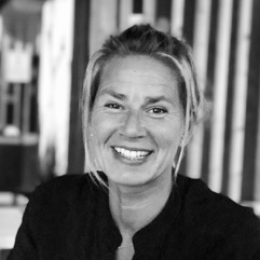
Cecilia Caiman is a Lecturer at Stockholm University's Department of Subject Didactics, specializing in science education with particular focus on sustainable development and aesthetic approaches to teaching. Her research interests include: Learning and teaching for sustainable development within science education Using and generating didactic tools and models for teachers' teaching The role of aesthetics in science education Children's and students' opportunities for influence, agency, creativity and exploration She actively participates in multiple research projects including a VR project on teaching for sustainable development in preschool (2018-2022), a Swedish Institute for School Research project on supporting students from non-academic backgrounds with Swedish as a second language (2020-2022), and leads the 'Sustainable Development in Education in Ronneby' (HUUR) project (2023-2025). Her publications reveal a consistent research focus on the intersection of science education, sustainability, and creative pedagogical approaches, particularly in early childhood and elementary settings. Her work frequently explores how aesthetic dimensions and children's agency can enhance science learning and understanding of sustainability concepts. Caiman serves as supervisor to doctoral students Maria Weiland, Kristin Persson, and Ebba Berggren, contributing to the development of the next generation of education researchers.
Tamon Miyake is an Assistant Professor at Waseda University's School of Creative Science and Engineering, specializing in Human Robot Interaction and Healthcare Robotics. His research focuses on wearable sensors, muscle deformation analysis, gait training, and mixed reality systems for rehabilitation applications. Dr. Miyake received his Doctor of Engineering from Waseda University in March 2020. His primary research areas include muscle deformation sensing, gait analysis and training, mixed reality rehabilitation systems, and human-robot interaction for healthcare applications. His work bridges engineering and clinical applications, particularly in physiotherapy training and rehabilitation robotics. His research output demonstrates a strong focus on developing objective measurement systems for clinical applications, particularly in analyzing muscle deformation during physiotherapy and developing training systems that provide quantifiable metrics for skill acquisition. His recent work shows increasing integration of AI and machine learning techniques with traditional biomechanical analysis. His publications reveal a consistent research trajectory focused on improving rehabilitation outcomes through technology, with particular emphasis on gait training, muscle load analysis, and developing objective metrics for physiotherapy practice. His work spans both engineering development and clinical validation studies. Dr. Miyake has been actively involved in the IEEE Robotics and Automation Society as Co-Chair of the Student Activities Committee from 2017-2019, demonstrating his commitment to academic community building.
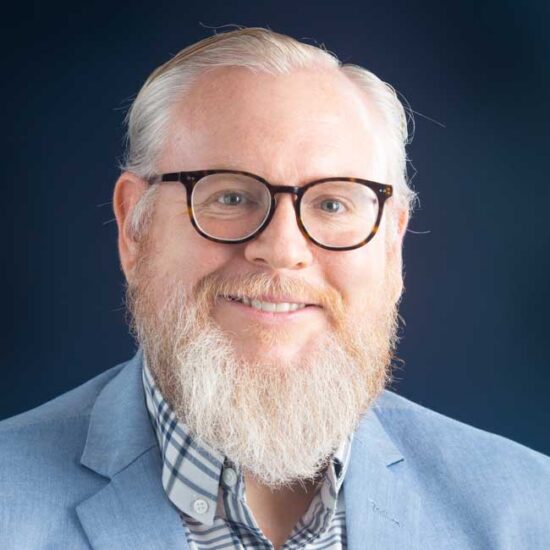
James Bedford is a Casual Academic and Academic Learning Facilitator at the University of New South Wales, affiliated with the School of Education within the Faculty of Arts, Design & Architecture. He specializes in course design and assessment, employing a constructivist approach to learning and teaching, and is currently researching the integration of generative AI in higher education. His educational background includes a PhD in Creative Writing from the University of New South Wales (2019), during which he was a visiting doctoral student at the Oxford Centre for Life-Writing. He was awarded a University Medal and an Australian Post-graduate Award for his academic excellence. Dr Bedford's research spans higher education pedagogy, educational technology, and creative writing. He is particularly focused on how generative AI can be leveraged to support diverse student populations, including those for whom English is an additional language. His work in creative writing has been published in journals such as Colloquy and Southerly. His recent publications highlight a growing trend at the intersection of artificial intelligence and educational equity. The 2024 book chapter explores GenAI as a tool for enhancing confidence and learning outcomes for multilingual students, reflecting a broader shift towards ethical and sustainable AI integration in teaching and assessment. Dr Bedford has been recognized with several awards, including: Australian Post-graduate Award Research Excellence Award University Medal He teaches the course ARTS 1010 - Life of Words and has not been mentioned to supervise students or lead research grants. His work primarily involves course design and academic support within the university's educational framework.
Deborah Beck is the Christie and Stanley E. Adams, Jr. Centennial Professor in the College of Liberal Arts at the University of Texas at Austin, where she has been a faculty member since 2009 after previous appointments at Rice University, Colgate University, and Swarthmore College. She received her PhD from Harvard University in 1997 with a dissertation on Homeric speech formulas under the direction of Gregory Nagy. Her research focuses on poetic technique and audience emotional response in Greek and Roman epic, with particular expertise in Homeric speech representation. She has pioneered digital approaches to classical scholarship through her creation of searchable databases including the Similes in Greek and Roman Epic Poetry database and the Speech Presentation in Homeric Epic database, both of which are open-access resources available online. Beck's scholarly work demonstrates consistent engagement with how epic poetry creates emotional resonance with audiences through formal techniques like similes and speech patterns. Her publications span traditional monographs and articles alongside digital humanities projects, reflecting her commitment to both rigorous philological analysis and innovative scholarly communication. Her recent work has increasingly addressed pedagogical concerns, particularly around mentoring during challenging times like the pandemic. Her numerous awards highlight exceptional teaching and mentorship, including the Society for Classical Studies' Award for Excellence in the Teaching of Classics (2021) and the Dean's Faculty Mentoring Award from UT's College of Liberal Arts (2024-2025). These recognitions reflect her commitment to creating 'inviting learning environments characterized by compassionate rigor.' Leslie Waggener Centennial Teaching Fellowship (2025) Dean's Faculty Mentoring Award (2024-2025) Award for Excellence in Teaching of Classics (2021) Provost's Teaching Fellow (2020-2022) Plumer Visiting Research Fellowship at Oxford (2017 & 2019) Beck actively mentors graduate students and has supervised numerous MA and PhD candidates in Classics. Her commitment to public scholarship is evident in her 'Musings in Greek Literature' podcast co-produced with undergraduate students and her engagement with general interest writing. She has also secured significant research funding including multiple Humanities Research Awards from UT's Graduate School and a Humanities Texas Grant. Her current work includes the book project 'Detail and Desire' examining Sappho, Hildegard of Bingen, Emily Dickinson, and Frida Kahlo, alongside several articles in preparation addressing Homeric echoes in Aeschylus and specialized topics in Greek epic poetry. She maintains an active teaching schedule covering Greek and Latin language courses at all levels as well as literature seminars on Homer and other classical authors.
Olaf Müller is a Professor of Philosophy at the Institute for Philosophy , Humboldt University of Berlin, since 2003, with a visiting professorship at Keio University in 2016/17. His work bridges natural philosophy and philosophy of science , focusing on the interplay of human creativity, aesthetics, and theoretical construction in physics. He challenges Newtonian orthodoxy through Goethe's color theory, collaborating with physicists and artists, and explores metaphysical and epistemological themes in works by Kant, Frege, Schlick, Wittgenstein, Quine, and Putnam. Books : Nuclear War. A Warning (2025), Pacifism. A Defense (2022), Ultraviolet. Johann Wilhelm Ritter's Work and Goethe's Contribution (2021), Too Beautiful to Be False. On Aesthetics in Natural Science (2019), and Mehr Licht. Goethe mit Newton im Streit um die Farben (2015). Research : Müller investigates the philosophical foundations of physics , emphasizing aesthetics, pacifism, and historical collaborations (e.g., Goethe and Ritter). His publications address skepticism, analyticity, and the ethics of war. Academic Journey : Studied mathematics and philosophy at Göttingen, with a year at UCLA. Completed his doctorate in 1996 on Quine's semantic skepticism and habilitation in 2001 on computer simulation and reality. His Google Scholar profile includes 15 recent articles on topics in relativity, differential geometry, quantum field theory, and spacetime topology , reflecting a rigorous engagement with mathematical physics. Müller advocates for non-orthodox scientific philosophy , arguing against algorithmic reductionism in favor of human agency. His work spans epistemology, metaphysics, and ethics , with a focus on pacifism and environmental justice.
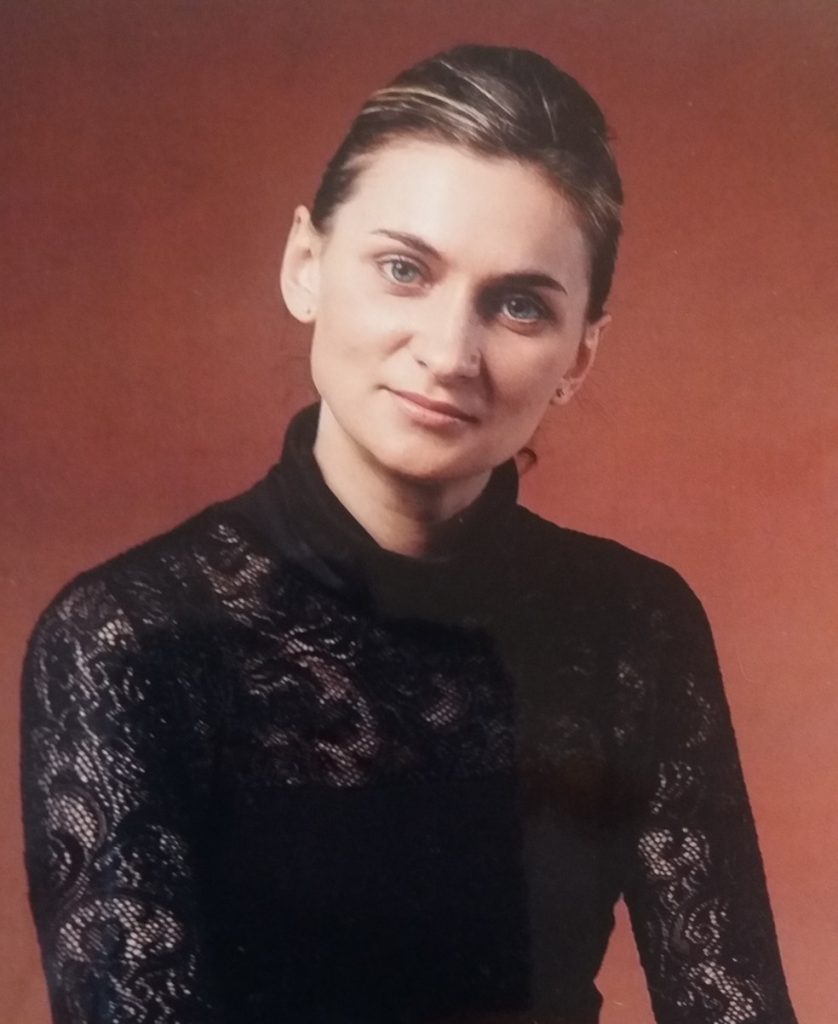
Georgette Dal is a Full Professor at the University of Lille, affiliated with the Faculty of Humanities and the Language Sciences Department (UMR 8163 - STL: Savoirs, Textes, Langages). Her research focuses on constructional morphology , morphological productivity , and usage-based linguistics , with a strong emphasis on corpus analysis and digital resources like the Démonette-2 database. She led the ANR DEMONEXT project (2017-2022) to develop morphological databases for speech therapy applications. Research Themes : Constructional morphology, productivity, corpus linguistics, lexematic morphology Projects : FRANLEX (1997-2003), MorTAL (2000-2003), DEMONEXT (2017-2022) Her work bridges theoretical morphology with applied linguistics , particularly in speech therapy and language education . She has collaborated extensively with computational linguists and psycholinguists, contributing to debates on the autonomy of morphology , category boundaries , and the role of analogy in lexical construction. Recent studies include the morphological analysis of French adjectives in -eux and the development of participatory research frameworks for clinical partnerships. Her advocacy for internet-based data has transformed French morphological research methodologies.
James LOPARICS serves as Professor for All-Day Education at the University of Teacher Education Vienna's Institute for Continuing Education, teaching primary/leisure education courses while providing school development consulting across Viennese all-day schools. His institutional role bridges academic research and practical school improvement through direct engagement with educators and policymakers. Academic Background Doctorate in Educational Science, University of Rostock (2018-2022) Master's in Education and Sustainability, University of Rostock (2015-2017) Bachelor's in Educational Science, FernUniversität Hagen (2011-2014) University Course in School Development Consulting, PH Vienna (2018-2020) Advanced Psychotherapy Training, Austrian Society for Behavioral Therapy (2020-present) Loparics' research centers on transformative education frameworks addressing epochal crises like climate change, with critical examinations of economization in school quality systems and innovative approaches to leisure pedagogy. His work consistently connects theoretical constructs with practical school contexts, particularly through Viennese case studies on interdisciplinary cooperation in all-day settings. His 15 most recent publications (2019-2024) reveal three dominant trends: (1) Development of indicators for sustainable development education (SDG 4.7) amid measurement challenges; (2) Critical analysis of quality management systems (QMS/SQR) as manifestations of educational economization; and (3) Theoretical advancement of leisure pedagogy as neglected policy domain. These threads converge in his signature focus on 'epochal key problems' as quality criteria for all-day schooling. He actively supervises master's theses in primary education programs and contributes to the ÖKOLOG-Team's environmental certification (Umweltzeichen) initiatives, developing sustainability curricula for Viennese schools while presenting research at international conferences including ECER and WERA Extended Education forums.
Helen Winzell is a Senior Lecturer and Head of Department at Linköping University's Department of Communication, Literature and Swedish (KLS) within the Department of Culture and Society (IKOS). With a PhD in Pedagogical Work with subject didactic focus (2019), she specializes in writing didactics and teacher education. Her research examines how teachers develop knowledge for teaching writing, particularly during and after teacher education. Winzell holds a Licentiate degree (2016), Master's in English (2013), and Upper Secondary School Teacher qualification in Swedish and English (2004). Before joining Linköping University in 2011, she taught Swedish at upper secondary schools for approximately ten years. Her research interests focus on writing didactic knowledge formation, subject transformation in teacher education, and the development of pedagogical content knowledge (PCK) for writing instruction. Winzell investigates how prospective and practicing teachers develop the knowledge needed to effectively teach writing, with particular attention to the transition from teacher education to professional practice. Her work emphasizes the importance of understanding students' writing development needs rather than merely collecting teaching models or activities. Analysis of her publications reveals a consistent focus on writing didactics within Swedish language education, with increasing attention to practical implementation in teacher education programs. Her research shows a progression from examining teachers' knowledge development in professional practice to investigating how field-based education in teacher training can better prepare future teachers for writing instruction. Ingemars Lärarpris (Ingemar Teacher Award) 2024 - Sweden's largest teaching award (1 million SEK) Eve Malmquist Prize for Reading Research 2022 Winzell actively supervises students writing degree theses and has received research funding for projects examining student teachers' knowledge development in writing instruction. Her current work includes developing training modules for Swedish teachers on integrating AI tools like ChatGPT into writing instruction. She is also involved in SKRiDi, a Nordic network for writing didactics researchers, and frequently presents her research at conferences and professional development events.
Dr. Charles Woods is an Assistant Professor of English in the Department of Literature and Languages at East Texas A&M University (formerly A&M-Commerce), part of the College of Humanities, Social Sciences and Arts. He earned his Ph.D. in English Studies from Illinois State University (2021), following an M.A. and B.A. in English from the University of Montevallo. His academic journey includes prior roles as a Teaching Assistant Professor at East Carolina University. Woods specializes in digital rhetoric , surveillance studies , and technical communication , with research focusing on data privacy, AI ethics, and digital surveillance. As founder of the Digital Rhetorical Privacy Collective (DRPC) , he develops resources for privacy education and organizes interinstitutional events like DRPC Privacy Week. His work critically examines how technology impacts identity and society through humanistic lenses. His publications demonstrate consistent focus on digital culture evolution, particularly exploring themes of privacy literacy in AI contexts, surveillance rhetoric, and pedagogical innovations in multimodal composition. Recent works engage critically with generative AI's societal implications while maintaining strong foundations in rhetorical theory. Awards and Honors John Lovas Award (2022, 2024) Michelle Kendrick Outstanding Digital Production Scholarship Award (2022, 2024) Faculty Senate Award for Professional Excellence in Teaching with Technology (2023-2024) Technology Innovator Award (Conference on College Composition and Communication) Woods leads multiple grant-funded initiatives including DRPC Privacy Week, supported by ETAMU Presidential GAR Initiative, CPTSC, and NCTE/CCCC grants. He directs the Applied Linguistics Lab and AI Lab at A&M-Commerce, fostering interdisciplinary collaboration. Courses taught include Professional Writing , Writing with Digital Media , and Privacy and Surveillance Rhetorics .
Benoit Baudry is a Professor in Software Technology at Université de Montréal, Canada, with previous affiliation at KTH Royal Institute of Technology in Sweden. His research focuses on automated software engineering with emphasis on practical execution-based approaches. Baudry's core research interests include: Software testing : Automated test generation, mocking, and improvement techniques Software diversity : Runtime protection through variant execution and WebAssembly transformations Randomization : Fuzzing and chaos engineering for robustness validation DevOps : Supply chain analysis and dependency management in Maven ecosystems Analysis of his 15 most recent publications (2022-2025) reveals strong emphasis on: Software supply chain security and dependency management (6 publications) Test automation and mock generation techniques (4 publications) WebAssembly compilation and security (3 publications) Software-art interdisciplinary research (2 publications) His work consistently combines empirical analysis with tool development across Java and WebAssembly ecosystems. Baudry actively contributes to the academic community through program committees (ASE, ESEC/FSE, ICSE, ICST) and keynote presentations. He leads research in software diversity through his Software Diversity Lab .
Dr. Małgorzata Jedynak is a distinguished academic at the University of Wrocław's Institute of English Philology, Department of Glottodidactics, specializing in language education for visually impaired learners. With a PhD in applied linguistics obtained in 2004, she has established herself as a leading expert in typhlopedagogy and typhlopsychology. As chair of the TYFLO Research Group since 2016, she coordinates interdisciplinary research on language learning for blind and partially sighted students. Her administrative roles include serving as coordinator of cooperation between the Institute of English Philology and the Center for Foreign Language Teaching in Wrocław since 2020, and chairwoman of the Lower Silesian Chapter of the Polish Society of Modern Languages. Dr. Jedynak's research focuses on the intersection of visual impairment and language acquisition, exploring how blind and partially sighted learners develop linguistic competence. Her work examines affective factors in language learning, pronunciation acquisition challenges, vocabulary strategies, and the impact of EU language education policies on special needs education. She has edited multiple publications addressing specific needs of higher education students with visual impairments, including the comprehensive 'Language education of students with special educational needs' and 'Current Research in Bilingualism and Bilingual Education' with Springer. Her scholarly contributions reveal consistent trends in adapting language teaching methodologies for visually impaired learners, with particular attention to sensory compensation strategies, emotional factors in language acquisition, and the implementation of European language frameworks in special education contexts. Dr. Jedynak's research bridges theoretical linguistics with practical classroom applications, emphasizing the importance of inclusive language education policies across the European Union. As an active member of the academic community, Dr. Jedynak serves on the Scientific Board of the Neophilolog journal since 2018 and has organized numerous scientific conferences, including the annual INJO (Innovations in Foreign Language Teaching) conference series. Her leadership in the TYFLO Research Group has fostered collaborations across disciplines to address the complex challenges faced by visually impaired language learners. Dr. Jedynak's work extends to developing specialized teaching materials and strategies for blind and partially sighted learners, including tactile and auditory approaches to vocabulary acquisition and pronunciation training. Her research on the 'Listen and touch' project critically examines various methods of teaching foreign language vocabulary to students with vision deficits, pioneering innovative techniques that have influenced special language education practices in Poland and beyond.
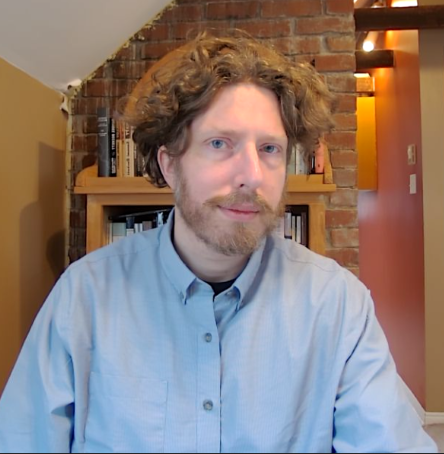
Luke Franklin is a Faculty Fellow in Contemporary Studies at the University of King's College in Halifax, Nova Scotia, specializing in 20th century English-language poetry and poetics with particular expertise in modernism and contemporary writing traditions. His academic background includes: BA from Dalhousie University/University of King's College MPhil from the University of Cambridge (thesis on points of intersection between James Joyce's writing and the visual arts) PhD candidate at the University of Cambridge (researching Charles Olson's Melville scholarship) Dr. Franklin's research focuses on textual materiality, particularly marginalia studies and the relationship between reading practices and creative writing. His work reveals how writers like Charles Olson used annotations as both a scholarly tool and a means of processing personal experience, creating connections across literary generations. His publications demonstrate a strong focus on Black Mountain poets and their intellectual lineages, particularly examining how Olson engaged with Melville's work through annotations in John Wieners's poetry collection. Dr. Franklin has received significant recognition for his scholarship: 2020-2021 Charles Olson Award from Simon Fraser University Two research grants from the University of Connecticut to work on Olson's papers Beyond research, Dr. Franklin has served as a don of residence at King's and as interim assistant dean of students in 2020, demonstrating commitment to both academic and student life. His teaching integrates literary analysis with philosophical approaches to language and text. Dr. Franklin maintains active scholarly collaborations with researchers working on Charles Olson's archive at the University of Connecticut, contributing to ongoing efforts to understand Olson's methodology and intellectual legacy.
Professor Lee Seong-ju serves in the Department of Electrical and Electronic Engineering at Korea Advanced Institute of Science and Technology (KAIST), where he leads innovative research at the intersection of artificial intelligence and creative processes. His work focuses on developing human-centered AI systems that augment rather than replace human creativity, particularly in musical composition. His research interests span human-AI collaboration frameworks , multimodal input processing for creative applications , and designing AI systems that respect creative workflows . Professor Lee specifically investigates how large language models can be integrated with music data-trained AI to create tools that respond to textual, visual, and audio inspirations while maintaining the creator's initiative in the artistic process. His recent publication on Amuse demonstrates a clear trend toward creator-centered AI design that addresses copyright concerns in generative systems. Rather than producing final content, his approach generates harmonic structures that serve as starting points for human refinement, representing a significant shift from conventional generative AI paradigms. Best Paper Award at ACM CHI Conference (top 1% recognition) Funded by National Research Foundation of Korea (NRF) grant RS-2024-00337007 Professor Lee actively advises doctoral candidates including Yewon Kim and maintains international collaborations with institutions like Carnegie Mellon University. His laboratory focuses on developing practical AI tools for creative professionals, with emphasis on systems that enhance rather than automate the creative process. The Amuse project exemplifies his commitment to building AI that serves as a collaborative partner in artistic creation.
Dr. Chong Ho "Alex" Yu is a Professor and Program Director of Data Science and Artificial Intelligence at Hawaii Pacific University, where he is affiliated with the College of Natural and Computational Sciences and the Department of Mathematics. With dual Ph.D.s in Measurement, Statistics and Methodological Studies and Philosophy from Arizona State University, Dr. Yu brings a unique interdisciplinary perspective to his work at the intersection of data science, statistics, and philosophical inquiry. Dr. Yu's educational background includes: Ph.D. in Measurement, Statistics and Methodological Studies, Arizona State University Ph.D. in Philosophy, Arizona State University M.A. in Theology, Azusa Pacific University M.Ed. in Educational Psychology, University of Oklahoma MHR in Human Relations, University of Oklahoma B.S. in Mass Communication, Bemidji State University B.A. in Visual Arts, Bemidji State University Graduate Certificate in Public Health, University of Arizona Graduate Certificate in Liberal Studies, Hamline University Certificate in History and Philosophy of Science, Arizona State University Dr. Yu's research interests span multiple domains with a focus on data science and machine learning methodologies. He is particularly interested in alternate and emerging research methods including exploratory data analysis, data visualization, and item response theory. His work also examines philosophical aspects of research methodologies such as causal inferences, the nature of latent constructs, and abductive reasoning. Additionally, he conducts cross-cultural comparisons in STEM education using international assessments like PISA, PIAAC, and TIMSS. As Vice President for Statistics Education and President-elect of the Southern California Chapter of the American Statistical Association (SCASA), he actively disseminates knowledge through a weekly newsletter and manages the statistics and data science newsroom on SCASA's website. Dr. Yu's extensive publication record demonstrates his expertise across multiple disciplines. His recent work shows a clear trend toward applying data science and machine learning techniques to diverse fields including healthcare, education, and psychology. He has made significant contributions to understanding the relationship between well-being and academic performance using large-scale assessment data, as well as developing applications of machine learning in educational science. His work often bridges theoretical statistical concepts with practical applications, reflecting his commitment to making data science accessible and relevant across disciplines. Dr. Yu has received numerous professional accolades including: Three-time winner of the SAS faculty scholarship (2016, 2017 SAS Global Forum and 2017 Western Users of SAS Software Conference) Distinguished SAS Educator Award in 2021 Vice President for Statistics Education of the Southern California Chapter of the American Statistical Association President-elect of the Southern California Chapter of the American Statistical Association As an educator, Dr. Yu is committed to staying current with industry developments to provide students with cutting-edge skills. He regularly attends conferences and workshops run by leading data analytics companies including SAS Institute, Salesforce (Tableau), and Amazon Web Services. His dedication to connecting academic knowledge with industry needs has resulted in a curriculum that prepares students for real-world data science challenges. Dr. Yu teaches courses including Statistics, Pre-Calculus, Probability, Applied Statistics, Data Science and Machine Learning, Data Visualization, Data Ethics, and Text Mining and Unstructured Data. Dr. Yu maintains active research collaborations across multiple institutions and disciplines. His work often involves interdisciplinary teams examining topics at the intersection of data science, healthcare, and education. Through his leadership as Program Director of Data Science, he has developed initiatives that connect students with industry professionals and real-world data challenges.
Kris M. Kitani is an Associate Research Professor at the Robotics Institute of Carnegie Mellon University and a Research Scientist at Meta's Artificial Intelligence division. He co-directs the Extended Reality Technology Center (XRTC) at CMU and holds courtesy appointments in the Electrical and Computer Engineering Department at CMU and as a Guest Professor at the University of Tokyo's Institute of Industrial Science. Education : BS in Electrical Engineering (University of Southern California), MS and PhD in Computer Science (University of Tokyo) Labs : Cognitive Assistance Laboratory His research focuses on computer vision , human activity forecasting , and inverse reinforcement learning with applications in human-centered robotics and assistive technologies . Recent work explores 3D scene understanding , multi-modal sensing , and generative models for physical simulation . Publications analyze pedestrian interaction modeling , human pose estimation , and zero-shot learning for robotic applications. Scientific Awards : Marr Prize Honorable Mention, ICCV 2017 Best Paper Honorable Mentions at CHI 2017/2020 Best Papers at W4A 2017/2019 Best Application Paper, ACCV 2014 Kitani has advised 8 current PhD students and 18 past PhD/MSc students. He has taught graduate-level courses in Computer Vision and Statistical Techniques in Robotics since 2013. The lab develops autonomous systems for real-world perception and interactive decision-making.