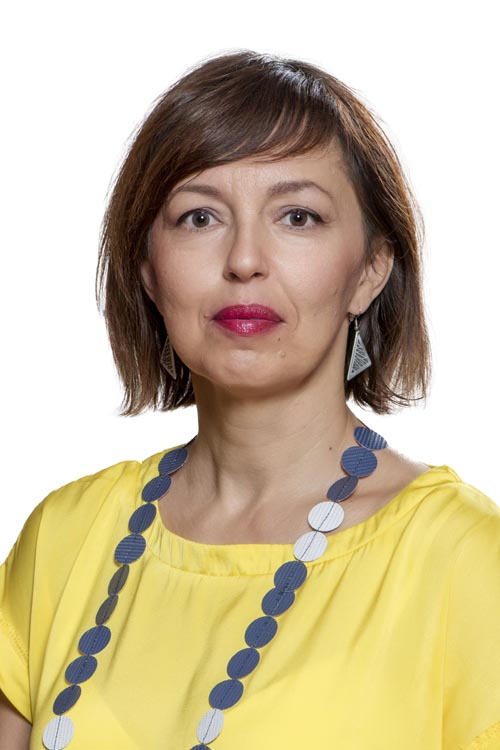
Sarah D CastleView profile
Assistant Professor
Sarah D Castle serves as Assistant Professor of Mathematics Education at the University of Idaho with dual appointments in the Department of Mathematical and Statistical Sciences (College of Science) and Curriculum and Instruction Department (College of Education, Health and Human Sciences). Her research bridges computational methods and mathematics education to advance equity and foster creativity in undergraduate STEM contexts. Her educational background includes: B.A. in Mathematics, Whitworth University (2012-2016) B.S. in Engineering Physics, Whitworth University (2012-2016) M.S. in Mathematics, Michigan State University (2019-2022) Ph.D. in Mathematics Education, Michigan State University (2018-2023) Castle's research centers on computational approaches to uncover systemic inequities in STEM education while creating environments that nurture mathematical creativity, particularly for marginalized students. She investigates how computational modeling—such as Jupyter Notebook implementations in linear algebra—can transform mathematical engagement and understanding. Her work critically examines power structures in educational spaces and develops pedagogical frameworks that leverage coding to deepen conceptual learning and promote equitable participation. Analysis of her 13 publications (2020-2024) reveals three dominant trends: (1) computational tools as catalysts for mathematical creativity and conjecture, (2) quantitative critical analyses of systemic advantages in STEM courses, and (3) investigations of student agency development in proof-based mathematics. These works span ACM computer science education conferences, mathematics education research forums, and interdisciplinary learning sciences venues. Castle actively contributes to major research initiatives: SEISMIC Project: Multi-institutional analysis of equity in introductory STEM courses Transition to Proof Project: Studying sense-making in advanced mathematics Computational Education Research Lab: Developing computational modules for mathematics learning Her teaching portfolio includes Secondary Mathematics Methods (EDCI 434), Proof and Viable Argumentation (MTHE 410), and Calculus I (MTH 132), reflecting her dual expertise. She has extensive experience as instructor of record, teaching assistant, and developer of STEM curricula including high-altitude balloon launch modules for K-12 students.