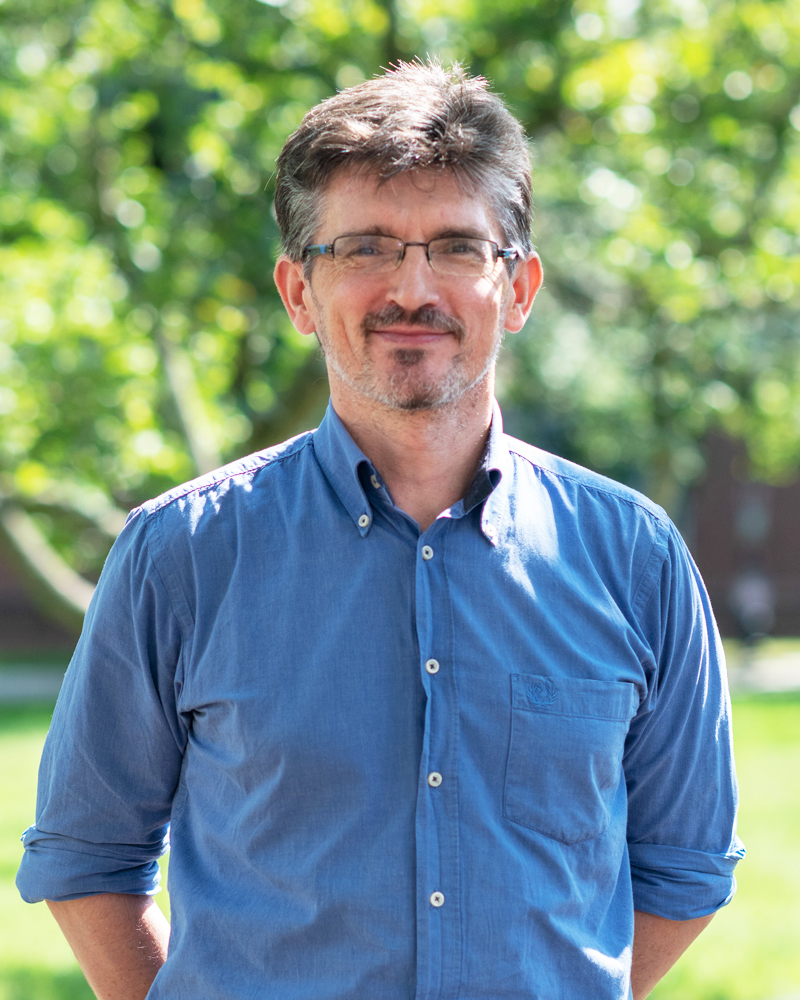
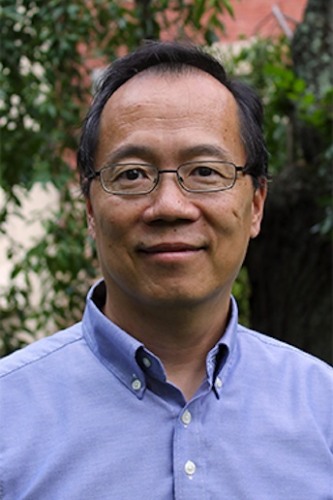
Amilcare Porporato is the Thomas J. Wu '94 Professor of Civil and Environmental Engineering at Princeton University, with joint appointment at High Meadows Environmental Institute. His research integrates hydrology, ecology, and thermodynamics to study soil-water interactions and sustainable resource management. Education includes: Ph.D. Polytechnic of Milan (1996) M.S. Civil Engineering, Polytechnic of Milan (1992) Research explores nonlinear hydrologic systems, soil moisture dynamics, ecohydrology, and environmental complexity using theoretical and experimental approaches. His work advances understanding of water-biota interactions across scales from pore-level processes to landscape evolution. Honors and Awards: Hydrologic Sciences Award, AGU Borland Lecturer American Geophysical Union Fellow Inaugural Landolt Chair, EPFL Teaches courses on Environmental Thermodynamics (ENV 385/CEE 385) and Ecohydrology (CEE 587/ENV 587).
Prof. Dr. Florian Scholz is a Professor of Geology and Biogeochemistry at the University of Hamburg , affiliated with the Institute of Geology within the Department of Earth System Sciences . He joined the university in 2024, following leadership of an Emmy-Noether research group at GEOMAR Helmholtz Centre for Ocean Research Kiel. His academic training includes a doctorate (summa cum laude) and habilitation from Kiel University, and a Marie Curie postdoctoral fellowship at Oregon State University. Ph.D., Geomar Helmholtz-Zentrum & University of Kiel (2010) Habilitation, University of Kiel (2019) Diploma in Geoecology, Karlsruhe Institute of Technology & University of Bordeaux (2007) His research lies at the intersection of marine geochemistry , biogeochemistry , and paleoceanography , with a focus on sediment-water interactions , early diagenesis , and the impact of environmental change on biogeochemical cycles . He investigates trace metal cycling (e.g., Fe, Mo, W, Ni), redox processes, and authigenic mineral formation in marine sediments, using field data, laboratory analyses, and geochemical modeling. His recent publications (2024–2025) reveal a strong trend in paleo-redox proxy development (Mo, W, Ni isotopes), trace metal flux quantification in oxygen minimum zones, carbon cycle impacts of sediment disturbance, and ocean-based carbon dioxide removal via seafloor alkalinity enhancement. His work frequently appears in high-impact journals such as Earth and Planetary Science Letters , Geochimica et Cosmochimica Acta , and Communications Earth & Environment . Emmy-Noether-Gruppenleiter, GEOMAR (2016–2023) Marie Curie Fellow, Oregon State University & GEOMAR (2012–2015) Postdoctoral Researcher, SFB 574 & 754 (2010–2012) Prof. Scholz teaches courses including Marine Biogeochemistry , Environmental Geochemistry , and Field Geology at both undergraduate and graduate levels. He leads an active research group focused on marine sediment geochemistry and collaborates widely across international oceanographic projects. His work contributes significantly to understanding past and present ocean chemistry and developing strategies for climate change mitigation.
Zhenchao Qian is a Professor of Sociology and Research Associate at the Population Studies and Training Center (PSTC) at Brown University. His research focuses on social demography, stratification, and family dynamics, particularly examining marriage patterns, immigrant integration in the U.S., and social change in China. He holds a Ph.D. from the University of Pennsylvania and previously served as faculty at Ohio State University and Arizona State University, including a term as department chair at Ohio State. His work analyzes 'who marries whom' and the societal implications of marital and cohabitation choices, exploring how factors like education, race, and nativity influence union formation. He also investigates racial identity among interracial couples' children and family transformations in urban China. Qian has received grants from NIH, Russell Sage Foundation, and other institutions, totaling over $4.5 million in funding. Awards include AAAS Fellowship and membership in the Sociological Research Association. Qian’s research emphasizes the intersection of demographic trends and social inequality, with recent studies addressing immigrant wealth disparities, marital assimilation patterns, and the consequences of economic restructuring on family structures. His current projects include analyzing union history impacts on midlife health and training demography scholars through NIH-funded programs.
Jonathan B. Martin is a Professor at the University of Florida's College of Liberal Arts and Sciences. His research focuses on hydrogeochemical processes in diverse environments including carbonate karst aquifers, coastal systems affected by sea-level change, and deglaciated watersheds in Greenland. He leads the Research Coordination Network on Carbonate Critical Zones and holds an NSF grant for Greenland watershed studies. Education: BA in Environmental Science, Wesleyan University (1980) MS in Geology, Duke University (1987) PhD in Earth Sciences, University of California, San Diego (Scripps Institution of Oceanography) (1993) Research Interests: Martin's work examines geochemical fluxes driven by biogeochemical reactions coupled with hydrological flow. This includes: (1) Water-solute-isotope dynamics in carbonate karst aquifers like Florida's Floridan Aquifer and Bahamian/Yucatan systems; (2) Coastal aquifer-estuary exchanges impacting metal mobilization and greenhouse gas fluxes; and (3) Weathering processes in deglaciated landscapes affecting global carbon cycles. His lab develops field methods to quantify submarine groundwater discharge and contaminant transport. Publications: Recent articles demonstrate strong emphasis on climate-aquifer interactions, with recurring themes including Greenland glacial meltwater biogeochemistry, coastal karst aquifer responses to sea-level rise, and carbonate mineral reactions in global carbon cycling. Work frequently integrates field measurements with geochemical modeling. Laboratory: Directs the Hydrogeochemistry Laboratory with capabilities including ion chromatography, cavity ring-down spectroscopy, nutrient autoanalysis, and fluorescence spectrometry for studies of water-rock interactions.
Jan Martin Nordbotten is a full-time Professor at the Department of Mathematics, University of Bergen (UiB), with adjunct positions at Princeton University and NORCE. His research focuses on applied mathematics, particularly in porous media, CO2 storage, fluid dynamics, and interdisciplinary applications in hydrology, biomedicine, and ecology. He completed his PhD at UiB in 2004 and became Norway's third youngest professor in 2007. His work emphasizes numerical methods, multiscale modeling, and experimental validation. Affiliations: UiB (full-time), Princeton (adjunct), NORCE (adjunct) Research Group: Center for Sustainable Subsurface Resources Research interests span mathematical modeling of subsurface processes, including flow in fractured media, geomechanics, and phase-field fracture. Notable contributions include analytical and numerical solutions for CO2 leakage, multiphase flow, and development of tools like DarSIA for image processing in porous media. Publications highlight advancements in mixed-dimensional models, finite element methods, and experimental validation of CO2 storage forecasts. His work bridges theoretical mathematics with practical applications in energy and environmental systems.
Leif Ristroph is an Assistant Professor of Mathematics at the Courant Institute of Mathematical Sciences , New York University . His research bridges experimental physics and applied mathematics , focusing on fluid-structure interactions in both biological and geophysical contexts. Key research areas include: Biophysical Flows : Aerodynamics of insect flight ( Applied Mathematics Laboratory ), hydrodynamics of fish schooling, and flow-sensing mechanisms via the fish lateral line system Geophysical Flows : Shape evolution during erosion, dissolution patterns in fluid flows, and bubble formation dynamics Recent publications (2019-2015) explore: Flow interactions in flapping swimmers and hovering systems Evolutionary optimization of wing shapes and self-sculpting processes Stability mechanisms in tandem flapping and insect flight His work has been featured in major media outlets like Nature , New York Times , and ScienceDaily . Ristroph's lab at NYU's Applied Mathematics Laboratory combines physical experiments, computational models, and theoretical analysis to study complex fluid-structure interactions.
Dr. FARKAS Dávid is an Assistant Professor in the Department of Hydraulic and Water Resources Engineering, Faculty of Civil Engineering, Budapest University of Technology and Economics (BME). His office is located in Building K, basement level, room 12/7, and he holds weekly consultation hours on Mondays from 1–3 pm. Educational contributions include teaching core courses in hydrogeology and groundwater engineering: Groundwater (BMEEOVVMV63) Hydrogeology (BMEEOGMMG62) Infrastructural Design Project (BMEEODHAI41) Research activities concentrate on quantitative hydrogeology, with a special emphasis on karstic groundwater systems, seepage hydraulics, and the safety of flood-protection levees. He couples field investigations in iconic Hungarian cave systems (Buda Castle Cave, Molnár János Cave) with laboratory sandbox experiments and numerical modelling to advance understanding of flow and transport processes in fractured carbonates. Over the past decade his work has evolved from fundamental hydrogeological mapping toward the design and deployment of automated monitoring networks that integrate classical hydrological instruments with modern sensor technologies. This progression is evident in his most recent publications (2024-2025) that document the establishment of high-resolution cave monitoring systems capable of capturing rapid responses to precipitation events. Scientific awards currently listed: none. Advising and grants: no specific student names, grant numbers, or funded project titles are provided in the supplied text. Laboratories and teams: while no dedicated laboratory name is stated, his affiliation with the Department of Hydraulic and Water Resources Engineering implies access to the faculty’s hydraulics and hydro-environmental laboratories, including sandbox and seepage modelling facilities.
Sebastian Willen is a Researcher at the Chair of Empirical Social Research at the University of Duisburg-Essen. He is affiliated with the working group of Prof. Dr. Stein and contributes to interdisciplinary projects like ATMo² and InnaMoRuhr , focusing on sustainable mobility and social dynamics. Research Interests include family sociology, transport sociology, dyadic modeling, and empirical methods. His work examines partnership negotiation in family expansion, mobility behavior transformation, and plagiarism dynamics through advanced statistical analysis. Recent Publications highlight family formation processes, sustainable urban mobility, and ethical decision-making. Articles span journals like Kölner Zeitschrift für Soziologie und Sozialpsychologie , Demographic Research , and edited volumes on mobility. His work integrates quantitative methods with theoretical frameworks in social research. Scientific Activities involve empirical social research, teaching advanced statistical analysis, and presenting at conferences such as the Wissenschaftsforum Mobilität . He has contributed to projects addressing mobility transitions and social inequality.
Dr. Dirk de Beer is the leader of the Microsensor Group at the Max Planck Institute for Marine Microbiology in Bremen, Germany. His research focuses on the structure and function of marine sediments, investigating how microbial conversions (e.g., photosynthesis, chemoautotrophy, anaerobic nitrogen/carbon/sulfur cycling) are controlled by transport processes and how microbial species distributions are regulated in hot spots like seeps, microbial mats, and biofilms. His group employs advanced techniques such as microsensors and planar optodes to study high-resolution geochemical dynamics in marine systems. Key research areas include: Biogeochemical cycling of oxygen, sulfur, and carbon Microbial community interactions in sediments and mats Environmental regulation of microbial processes Reactive oxygen species in marine environments Coral bleaching and ocean acidification Recent publications highlight collaborations on arsenic cycling, hydrogen peroxide dynamics, and microbial respiration in extreme environments. Dr. de Beer's work is central to understanding how microbial processes influence global elemental cycles and climate regulation.
Emmanuel Detournay is a Professor at the University of Minnesota and a Member of the National Academy of Engineering. His research focuses on geomechanical processes including hydraulic fracturing, rock cutting, and the mechanics of fluid-infiltrated geomaterials. Research Interests: Modeling singular behavior near hydraulic fracture tips, poroelastic effects from fluid leak-off, hydraulic fracture initiation at boreholes, energy dissipation in rock cutting, and rock failure modes. Publications highlight advancements in coupled fracture mechanics-geochemical models, CO2 mineralization in ultramafic rocks, and dynamic modeling of drilling systems. Scientific Awards Member of the National Academy of Engineering
David Schramm serves as Associate Professor and Family Life Extension Specialist in the Department of Human Development and Family Studies at Utah State University, integrating academic research with community-focused programming to strengthen family relationships across diverse populations. His educational foundation includes: PhD in Human Development and Family Studies, Auburn University (2007) MS in Family, Consumer, and Human Development, Utah State University (2003) BS in Marriage, Family, and Human Development, Brigham Young University (2001) Research centers on evidence-based relationship and parenting education, with recent expansion into personal flourishing and well-being frameworks. His work emphasizes practical application through resources promoting gratitude practices, positive interactions, and resilience-building in marital and family contexts, while addressing unique challenges in stepfamilies, divorce transitions, and incarcerated populations. Publication analysis reveals consistent focus on divorce education effectiveness, co-parenting interventions, and family enrichment activities. The "Hidden Gems" series demonstrates innovative translation of research into accessible home-based resources, while peer-reviewed articles examine systemic factors including socioeconomic context, racial disparities, and pandemic impacts on family dynamics. Notable recognition includes: Western Region Extension Excellence Award (2019) Provost Award for Creative Extension Programming (2012) Early Career Achievement Award (2010) Multiple team awards for diversity initiatives and marketing excellence He actively mentors graduate students in Human Development and Family Studies while leading high-impact extension programs including Divorce Education, Strong Parents Stable Children, and the Road to Happiness initiative. Current projects address relationship education for incarcerated women and culturally responsive outreach to African American communities, demonstrating commitment to bridging research-practice gaps.
Boris Kaus is a Full Professor and Chair of Geophysics and Geodynamics at the Institute of Geosciences, Johannes Gutenberg University Mainz, Germany. His research focuses on understanding geological processes from grain scale to planetary scale using mathematical and numerical models. Funded by the German Research Foundation, European Research Council, and BMBF, his work spans lithospheric deformation, melt migration, fold-and-thrust belts, and high-performance computing applications in geosciences. His research interests center on geodynamic modeling of lithospheric processes, including subduction zones, mantle convection, and crustal deformation. Kaus develops novel numerical approaches to simulate complex geological phenomena, with emphasis on coupling between erosion, lithosphere dynamics, and mantle flow. His group creates specialized software for high-performance computing systems to tackle multi-scale geophysical problems. His scientific awards include the Paul Niggli Medal, EGU Arne Richter Award, multiple ERC grants (Starting, Proof-of-Concept, Consolidator), and the Carl Friedrich Gauss Lecturer honor. He has received recognition for editorial contributions including G-Cubed's Excellence in Refereeing award. ERC Consolidator Grant MAGMA (2018-2023) ERC Proof of Concept Grant SALTED (2016-2017) ERC Starting Grant MODEL (2010-2015) John von Neumann Excellence Project for HPC ETH Medal for Ph.D. thesis Kaus actively supervises graduate students and leads research projects funded by major European and German agencies. His group develops open-source software like GeophysicalModelGenerator.jl and maintains strong collaborations with international institutions including ETH Zürich and USC. Current projects focus on magma dynamics, lithospheric shear localization, and the development of advanced numerical methods for geodynamic simulations. The research group operates within the Geodynamics & Geophysics team at JGU Mainz, utilizing high-performance computing resources and collaborating with multiple European research initiatives including IMPRS and FORTHEM networks. Their laboratory specializes in numerical modeling of Earth systems with applications to tectonics, volcanology, and crustal evolution.
Christoph Schrank is an Associate Professor at QUT's School of Earth and Atmospheric Sciences, specializing in structural geology and rock physics. His research combines field studies with synchrotron-based experimental techniques to investigate deformation processes in tectonic settings. Research focuses on: Synchrotron analysis of rock deformation Tectonic modeling of fault systems Geothermal energy applications Pattern formation in porous media Publication analysis shows emphasis on experimental rock physics (40%), microstructural analysis (30%), and Precambrian tectonics (20%). His work frequently integrates advanced imaging techniques with mechanical modeling. Funded projects include ARC DP170104550 (pressure waves in earthquake mechanics) and DP140103015 (finite strain modeling). Coordinates Honours program for Earth Science and teaches structural geology field methods.
Scott Johnston serves as Professor (Research Scholar) and Deputy Associate Dean of Education (Students) at Southern Cross University's Faculty of Science and Engineering, where he co-leads the Catchments, Coasts and Communities Research Cluster. His environmental hydrogeochemistry expertise focuses on water quality processes in wetlands, coastal floodplains, and river systems, particularly regarding acid sulfate soils and toxic element cycling. His academic background includes a Bachelor of Applied Science from the University of New England (1990-1993) and a PhD from Southern Cross University. These qualifications underpin his research on redox-sensitive element transformations and contaminant behavior in natural environments. Johnston's research examines iron, sulfur, and carbon cycling alongside toxic trace elements (arsenic, antimony, aluminum) through field studies and mineral-water interface experiments. Recent work addresses climate extremes, bushfire impacts on water quality, and revolutionary findings on tree-mediated methane emissions in wetlands, revealing previously underestimated ecosystem fluxes. Analysis of his 2023-2025 publications shows dominant themes in antimony/arsenic geochemistry within mining-impacted systems and acid sulfate environments, coupled with innovative investigations into wetland methane dynamics from tree stems. These studies integrate advanced spectroscopic techniques and field monitoring to develop practical remediation strategies. His scientific recognition includes: Australian Research Council APDI Fellowship (2008) Australian Research Council Future Fellowship (2011-2015) Outstanding Teaching Award from Southern Cross University (2024) Johnston has secured >$5.1 million in external funding as lead CI, directing large-scale ARC/CRC projects with government and industry partners. He currently supervises 8 PhD and 1 Master's student (with 8 PhD and 1 Master's completions), while teaching undergraduate courses in Earth Systems, Environmental Chemistry, and Hydrodynamics. As founding Co-Lead of the Catchments, Coasts and Communities Research Cluster, he coordinates interdisciplinary teams conducting sub-catchment scale field research and laboratory experiments. His community collaborations include citizen science projects quantifying bushfire impacts on water quality across eastern Australia.
Kale Monk is an Associate Professor and State Specialist in Couple and Family Relationships at the University of Missouri's College of Education & Human Development , within the Department of Human Development & Family Science . His work focuses on relationship quality across life transitions, particularly for military couples and marginalized groups. He holds a PhD from the University of Illinois (2017) and an MS from Kansas State University (2013). Research interests include: Relational instability during transitions (e.g., marriage, deployment) Military/veteran couples' mental health Engaged scholarship and translational research Racial/ethnic disparities in relationship dynamics His recent work explores pandemic effects on relationships, deployment-reintegration cycles, and public-facing interventions. He collaborates with organizations like Relevate and Focus on Kids to bridge academic research with community needs. Affiliations include the National Council of Family Relations and International Association for Relationship Research. He leads initiatives in relationship education and policy advocacy, emphasizing evidence-based practices for vulnerable populations. Current projects involve co-parent education programs, veteran family support, and culturally responsive relationship maintenance strategies. His research combines qualitative and quantitative methods to address real-world challenges in family dynamics.