Massachusetts Institute of TechnologyUnited States
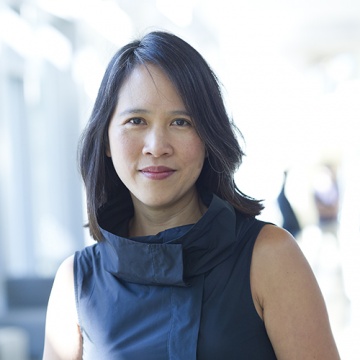
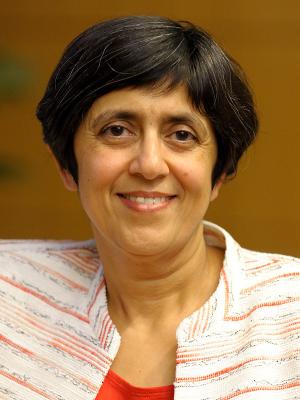
Lily L. Tsai is the Ford Professor of Political Science at the Massachusetts Institute of Technology (MIT) and founder/director of the MIT Governance Lab (MIT GOV/LAB). She previously chaired the MIT Faculty and focuses her research on governance, accountability, and political participation in developing contexts, particularly Asia and Africa. Her research explores how decentralization, democratic reforms, informal institutions, and economic development influence public goods provision. She also investigates the dual impacts of social capital and civil society on political outcomes, and analyzes political behavior in authoritarian and transitional systems through surveys, interviews, and field experiments. Recent publications span topics including collective governance, vaccine compliance in Uganda, anticorruption strategies in China, and the role of informal institutions in rural China. Tsai’s work appears in journals like American Political Science Review and World Development . Dogan Award for best book in comparative research (2007-08) She leads interdisciplinary projects such as the Compass Initiative (SHASS Education Innovation Fund) and The Science of Respect with MIT’s Brain and Cognitive Sciences department. MIT GOV/LAB, which she founded in 2014, emphasizes real-time empirical collaboration between researchers and practitioners to address governance challenges.
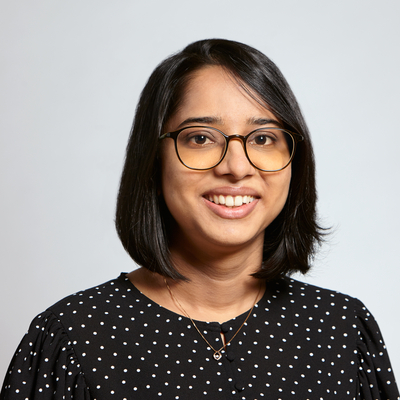
Liza Rebrova is an Assistant Professor in the Department of Operations Research and Financial Engineering (ORFE) at Princeton University's School of Engineering and Applied Science. She is also an associated faculty member of the Program in Applied and Computational Mathematics (PACM) and the Center for Statistics and Machine Learning (CSML). Her research focuses on randomized numerical linear algebra and the mathematics of data science, with connections to high-dimensional probability and stochastic optimization. She develops mathematically justified randomized algorithms for large-scale data, particularly interested in settings where data exhibits mathematical structure such as spectral decay, multi-modality, or non-negativity. Her work addresses challenges in data compression, recovery, and optimization under structured noise conditions. Dr. Rebrova's recent publications show a strong trend toward developing robust algorithms for linear systems, tensor data compression, and nonnegative matrix factorization. Her work bridges theoretical foundations with practical applications in machine learning and data science, with emphasis on memory efficiency and handling corrupted or incomplete data. NSF DMS-2309685 (Single PI, 2024-2026): "Outliers are not what they seem: data-aware, flexible, and robust randomized iterative methods" NSF DMS-2108479 (Collaborative, 2022-2024): "Fast, Low-Memory Embeddings for Tensor Data with Applications" (co-PIs Mark Iwen and Deanna Needell) She currently advises three PhD students (Jackie Lok, Shambhavi Suryanarayanan, and Sofiia Shvaiko) and has previously advised Abraar Chaudhry (PhD 2024) and Nicolo Grometto (Masters thesis 2023). At Princeton, she teaches graduate courses including ORF526 (Graduate Probability), ORF387 (Networks), and ORF523 (Convex and Conic Optimization).
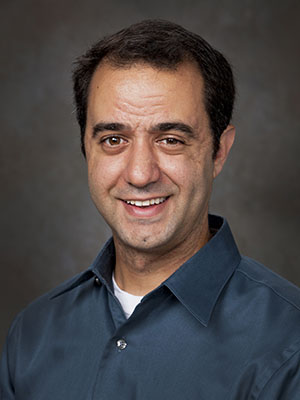
Bobak Mortazavi is an Associate Professor in the Department of Computer Science & Engineering at Texas A&M University. His research focuses on medical analytics, machine learning, wearable sensors, and cyber-physical systems. He leads interdisciplinary projects in healthcare technology, including AI-driven diagnostics and predictive modeling for cardiovascular diseases. He has received notable awards such as the Best Demonstration Award at IEEE EMBS 2012 and the Best Paper Award at the Fourth International Conference on Data Analytics 2015. His work bridges machine learning with clinical applications, emphasizing practical solutions for healthcare challenges. Recent research includes developing AI tools for aortic stenosis detection, electrolyte estimation via ECG, and real-time patient monitoring systems. He collaborates with industry and academic partners to advance telemedicine and wearable health technologies. Key contributions include the SMART-LV project for smartphone-based cardiac diagnostics and the ArterialNet framework for blood pressure reconstruction using wearable sensors. His work is published in top journals like IEEE Journal of Biomedical and Health Informatics and Elsevier's Pervasive and Mobile Computing.
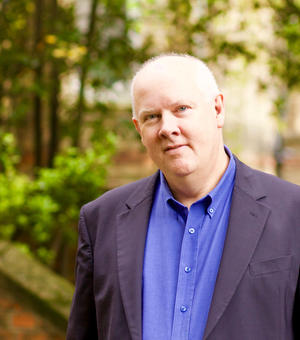
Professor Timothy J. Power is Head of the Social Sciences Division and Professor of Latin American Politics at the University of Oxford, affiliated with the Oxford School of Global and Area Studies (OSGA) and the Department of Politics. He previously directed the Latin American Centre from 2008 to 2012 and has been a leading scholar in comparative politics since 2005. Research Interests: Democratization, political institutions (parties, legislatures, elections), coalitional presidentialism, Brazil, Latin America, new democracies. Awards: None listed in provided text. Advising: No specific students mentioned. Grants: No explicit grants listed, but research involves long-term projects like the Brazilian Legislative Surveys. Labs/Teams: Co-directs the Brazilian Legislative Surveys with Fundação Getúlio Vargas and contributes to cross-regional comparative studies at OSGA. His work analyzes democratization in Latin America, particularly Brazil, focusing on legislative dynamics, coalition governments, and political institutions. Recent articles explore cabinet proportionality, portfolio allocation, and ideological shifts in post-authoritarian settings.
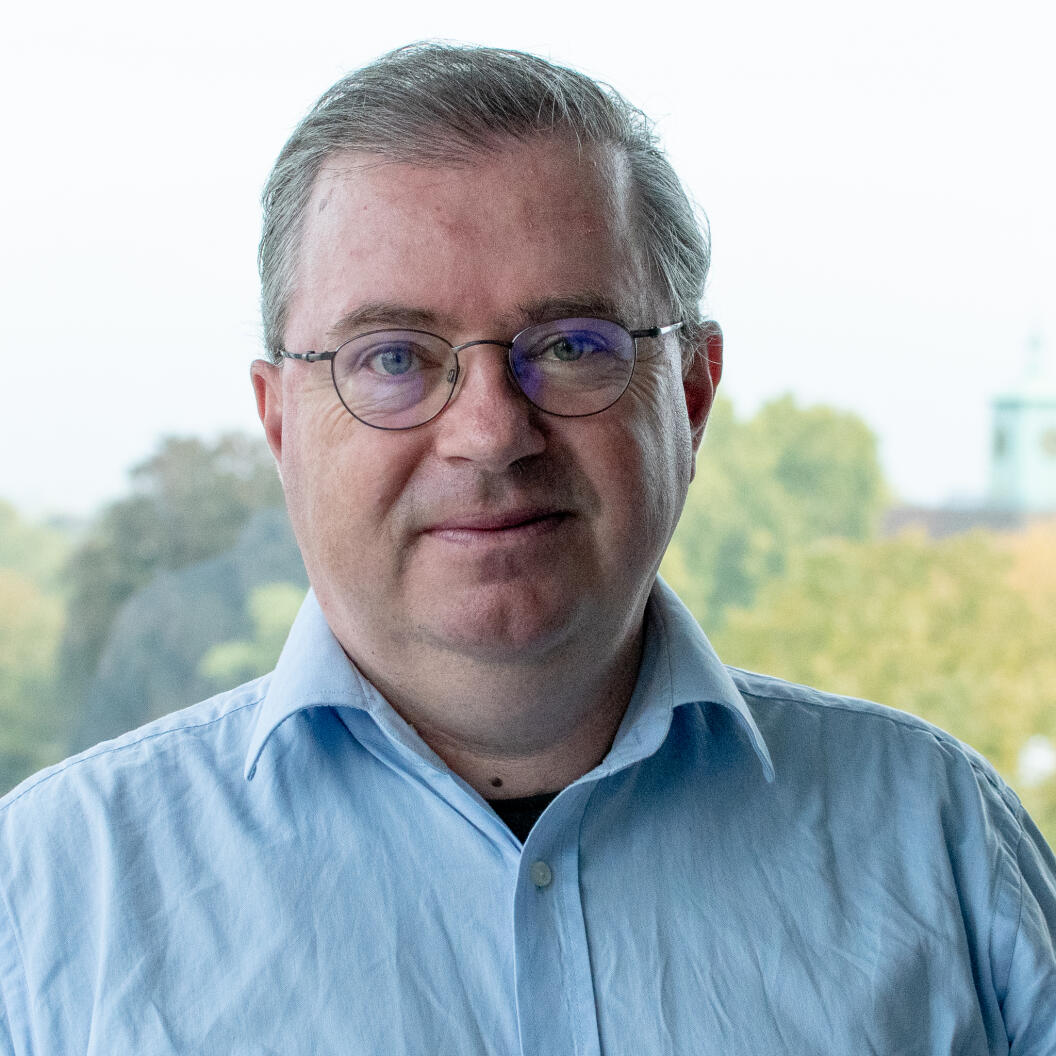
Jonathan R. Lyon is Professor of History of the High and Late Middle Ages at the Institute for Austrian Historical Research within the Faculty of Historical and Cultural Studies at the University of Vienna. He maintains office hours on Thursdays from 14:00-16:00 (available via Zoom by appointment) and can be contacted at jonathan.lyon@univie.ac.at or +43-1-4277-27297. His educational background includes: B.A. in History and Latin, Colgate University (1997, Summa cum laude) Exchange year at Albert-Ludwigs-Universität Freiburg (1996) M.A. in History, University of Notre Dame (1999) Ph.D. in History, University of Notre Dame (2005) Lyon's research centers on the Holy Roman Empire during the High and Late Middle Ages, European political and social structures (1000-1500), the evolution of statehood, corruption mechanisms, medieval kinship systems, and gender dynamics with particular emphasis on masculinity. His work examines how political power, social networks, and religious institutions intersected in shaping medieval governance and community life, often challenging traditional narratives about medieval state formation through comparative analysis of German and Hungarian contexts. Analysis of his 15 most recent publications reveals consistent chronological focus on the 12th-15th centuries with increasing attention to corruption, gender, and monastic institutions since 2015. His scholarship demonstrates methodological diversity through charter analysis, prosopography, and comparative institutional studies, while maintaining thematic continuity in examining power dynamics between nobility, monarchy, and religious entities across Central Europe. His major scientific awards include: 2024 Otto Gründler Book Prize for Corruption, Protection and Justice in Medieval Europe: A Thousand-Year History 2017 John Nicholas Brown Prize for Princely Brothers and Sisters: The Sibling Bond in German Politics, 1100–1250 Lyon has secured prestigious research funding including the Fulbright Fellowship (2000-2001), DAAD Research Fellowship (2007), FWF Lise Meitner Fellowship (2013-2014), and Alexander von Humboldt Research Fellowship (2017-2018). He served as Academic Director of the Berlin Consortium for German Studies (2012-2013) and currently advises the Manchester Medieval Sources Series. His ongoing projects include editing charters of Quedlinburg abbesses and authoring an introductory text on the medieval Holy Roman Empire.
Patrick Overeem is an Associate Professor at the Faculty of Social Sciences and Humanities (Vrije Universiteit Amsterdam), specializing in Political Science and Public Administration. He holds a PhD from Leiden University (2010) and advanced degrees in Public Administration and Political Science from the same institution. His research focuses on democratic theory, value pluralism, statesmanship, and EU governance. He is affiliated with the Multi-layered Governance (MLG) research group and serves on editorial boards, including the American Review of Public Administration . Overeem's work emphasizes ethical leadership, compromise in politics, and the interplay between democracy and pluralism. Key contributions include his 2012 book on the politics-administration dichotomy and his neo-Aristotelian analyses of political virtue. He has led projects like the EU-funded RECONNECT initiative (2018–2022), exploring democratic reconciliation in Europe. He advises Dutch parliamentary integrity committees and contributes to public debates on ethics and governance through media engagements. His research bridges classical political theory with contemporary challenges, addressing topics like postliberalism, moral dilemmas in governance, and constitutional frameworks. Overeem teaches courses on political theory, democratic systems, and the history of political thought, fostering critical engagement with ethical and institutional dimensions of power.
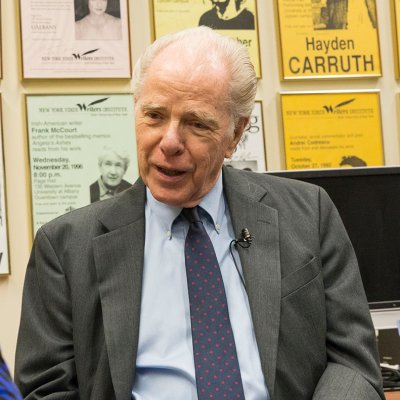
William Kennedy is a Professor in the English Department at the University at Albany, State University of New York. For over 40 years, he has crafted a body of literature centered on Albany, New York, creating what is known as the "Albany Cycle" of novels. His work has established Albany as a significant place in American literature, comparable to Joyce's Dublin and Bellow's Chicago. His educational background includes a BA from Siena College, following attendance at Public School 20 and Christian Brother's Academy. Professor Kennedy's creative work focuses on American fiction, particularly historical and urban narratives rooted in Albany's cultural and political landscape. His writing explores machine politics, family sagas, and the interplay between individual lives and historical events, rendering Albany's "outcasts and machine politicians, lowlifes and swells" with profound humanity. His narratives transform the city into a mythic capital of national memory. His publications consistently draw from Albany's history, with recurring themes of political corruption, redemption, and the resilience of marginalized communities. The "Albany Cycle" demonstrates his mastery in blending local history with universal human struggles across multiple literary forms. William Kennedy's distinguished honors include: John D. and Catherine T. MacArthur Foundation Fellowship Election to the American Academy of Arts and Letters National Endowment for the Arts Fellowship Regents Medal of Excellence from SUNY Governor's Arts Award Commander of the Order of Arts and Letters in France Election to the American Academy of Arts and Sciences As an educator, Kennedy taught creative writing and journalism at the University at Albany from 1974-1982 and Cornell University in 1982-83. His MacArthur Fellowship directly funded the creation of the New York State Writers Institute at Albany, with matching funds from the university and legislative support from Governor Cuomo. He has served on the New York State Council for the Humanities board and the Academy of Motion Picture Arts and Sciences. William Kennedy co-founded the New York State Writers Institute in 1984, which has grown into a major literary hub conducting statewide cultural and educational activities. The Institute remains central to his legacy, fostering literary arts through readings, workshops, and educational programs across New York.
California Institute of Technology (Caltech)United States
Jonathan N. Katz is the Kay Sugahara Professor of Social Sciences and Statistics at the California Institute of Technology (Caltech). He holds a S.B. from MIT (1990), M.A. from UC San Diego (1992), and Ph.D. from UC San Diego (1995). His career includes roles as Assistant Professor (1995-98), Associate Professor (1998-2003), and Professor (2003-11) at Caltech, with subsequent appointments as Sugahara Professor (2012–present), Executive Officer for Social Sciences (2007), and Division Chair (2007–14). His research focuses on statistical methods in social sciences, electoral systems, and public policy. Key affiliations include the Caltech/MIT Voting Technology Project and the Linde Institute of Economic and Management Sciences. Katz is Deputy Editor for Social Sciences at Science Advances and a Fellow of the American Academy of Arts and Sciences (2011) and the Society for Political Methodology (2008). Research interests span political methodology, formal theory, and American politics. Recent work addresses partisan fairness in electoral systems, statistical rigor in political modeling, and institutional dynamics in legislative and judicial contexts. Notable contributions include critiques of electoral college bias and audits of political behavior research methodologies. Awards: Career Achievement Award in Political Methodology (2024), Inaugural Fellow, Society for Political Methodology (2008). Grants/Labs: Caltech/MIT Voting Technology Project, Linde Institute Directorship (2013–14).
University of Illinois Urbana-ChampaignUnited States
Sarita V Adve is the Richard T. Cheng Professor of Computer Science at the University of Illinois at Urbana-Champaign, where she conducts research spanning hardware, programming languages, operating systems, and applications with a focus on domain-specific systems. Her work bridges theoretical foundations and practical implementations, particularly in extended reality and heterogeneous computing. Her educational background includes a Ph.D. and M.S. in Computer Science from the University of Wisconsin-Madison (1993, 1989) and a B.Tech in Electrical Engineering from the Indian Institute of Technology Bombay (1987). Prior to joining Illinois, she served on the faculty at Rice University from 1993 to 1999. Adve's research centers on generalizable and scalable specialization for domain-specific systems, with current emphasis on extended reality (XR) systems including virtual, augmented, and mixed reality. She chairs the ILLIXR consortium to democratize XR research and developed the first fully open-source XR system (ILLIXR). Her foundational contributions include memory consistency models for C++ and Java programming languages, the Spandex coherence framework for heterogeneous systems, and software-driven approaches for hardware reliability. Her work spans hardware reliability (SWAT and RAMP projects), power management (GRACE system), and instruction-level parallelism. Recent publications reveal a strong focus on energy-efficient XR systems, hardware-software co-design for AI workloads, and resilience analysis. Her team explores rendering offload, visual-inertial odometry optimization, and compositional error injection frameworks, often targeting tradeoffs between energy, latency, and accuracy in mobile and edge environments. Fellow of the American Academy of Arts and Sciences Fellow of the ACM and IEEE ACM/IEEE-CS Ken Kennedy Award Anita Borg Institute Woman of Vision in Innovation Award ACM SIGARCH Maurice Wilkes Award Alfred P. Sloan Research Fellowship UIUC University Scholar University of Illinois Campus Award for Excellence in Graduate Student Mentoring Adve actively mentors students and has received multiple teaching awards. She co-founded the CARES movement to address discrimination in CS research events and chairs CS@Illinois CARES. Her service includes leadership roles in ACM SIGARCH (2015-2019), DARPA/ISAT study group, ACM Council, and Computing Research Association. She has secured significant funding including DARPA initiatives and Google Faculty Research Awards. She leads the ILLIXR consortium and has established collaborative research programs such as the $8.3M DARPA Joint University Microelectronics Program. Her lab focuses on open-source XR development, heterogeneous system architectures, and reliability-aware designs, with strong industry and government partnerships.
Hillard von Thiessen is a full Professor of Early Modern History at the Historisches Institut of Universität Rostock, where he has held the chair since Summer Semester 2013. He served as Dean of the Philosophischen Fakultät from Winter Semester 2018/19 to Summer Semester 2022 and was previously acting chair at Universität zu Köln (2007-2012) and Universität Rostock (2012-2013). Currently, he is also a Fellow at the Käte-Hamburger-Kolleg "Einheit und Vielfalt im Recht" at the University of Münster. Professor von Thiessen completed his Magister Artium in 1995 at Freiburg with a thesis on witch hunts in Freiburg (1632-1677), for which he received the Waldseemüllerpreis in 1997. He earned his doctorate in 2001 with research on Capuchin friars as a reform order between confessionalization and everyday culture. In 2007, he completed his habilitation at the University of Bern with a study on cross-border patronage and diplomacy between Spain and the Papal States during Pope Paul V's pontificate (1605-1621). His research focuses on European Early Modern History, particularly international relations, norm competition, corruption and patronage cultures in the pre-modern era, religiosity, and the political culture of Habsburg Spain. His work often employs actor-centered perspectives to examine how individuals navigated complex normative frameworks during the Early Modern period. Recent publications demonstrate his interest in ambiguity as a historical phenomenon and how societies managed competing values and norms. His scholarly output reveals a consistent trajectory examining power structures, diplomatic networks, and cultural frameworks in Early Modern Europe, with particular attention to the intersection of religious, political, and social norms. The publications show increasing sophistication in analyzing how ambiguity functioned as a productive force rather than merely a problem to be solved in Early Modern governance and social relations. Waldseemüllerpreis der Universität Freiburg (1997) Professor von Thiessen has supervised numerous doctoral candidates through his habilitation and professorial positions, though specific student names aren't listed in the available documentation. His research has been supported by prestigious grants including the Gerda-Henkel-Stiftung post-doc fellowship, THEORIA Kurt von Fritz Science Program funding from the Mecklenburg-Vorpommern Ministry, and Swiss National Science Foundation support for collaborative research projects. His current research activities are centered at the Historisches Institut of Universität Rostock, with additional collaborative work through the Käte-Hamburger-Kolleg at the University of Münster, where he explores legal frameworks and norm competition in historical perspective. His ongoing monograph project "Das Zeitalter der Ambiguität" represents a significant contribution to understanding how Early Modern societies managed conflicting norms and values.
Prof. Dr. Claudia Peus is a full Professor of Research and Science Management at the Technical University of Munich (TUM) School of Management , serving since May 2011. She holds executive roles as Founding Director of the TUM Institute for LifeLong Learning (TUM IL3) since December 2019 and Executive Vice President for Talent Management and Diversity since October 2017. Her career spans visiting positions at MIT's Sloan School of Management and Harvard University, alongside her habilitation (2011) and PhD (2005) from LMU Munich. Current affiliations: TUM School of Management, TUM IL3, RWI – Leibniz Institute for Economic Research Research focuses: Leadership development in the digital age, diversity in organizations, ethical leadership, and research organization management Recent research trends analyze digital leadership dynamics, gender-decoded recruitment practices, robotic leadership interfaces, and neurophysiological mechanisms in leadership behavior. Her 2025 work on moral careers and 2024 resource-based absorption theory highlight evolving themes in organizational psychology. Scientific honors include: Highly Cited Research Award, Leadership Quarterly (2016) Emerald Citations of Excellence (2016) Best Teaching Award, TUM School of Management (2014) Academy of Management Symposium Award (2010) Bayerische Landesbank Wissenschaftspreis (2006) Prof. Peus advises organizations on diversity and talent management. She was recognized as one of Germany's Most Inspiring Women (2020) and leads projects like FührMINT, ForGenderCare, and the TUM Neurophysiological Leadership Lab (NeLeLab).
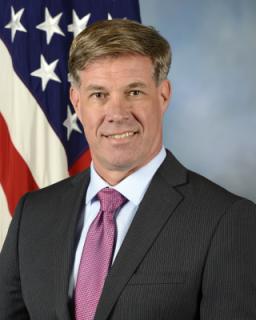
Joseph Felter is a Research Fellow at the Hoover Institution (Stanford University) and the William J. Perry Fellow at the Center for International Security and Cooperation. His career bridges academia, military service, and policy advising, with expertise in counterinsurgency, national security, and US-China relations. He coauthored the influential book Small Wars, Big Data: The Information Revolution and Modern Conflict (2018) and developed the Hacking for Defense curriculum to connect military needs with Silicon Valley innovation. Military Background: Former US Army Special Forces officer with combat deployments in Panama, Iraq, and Afghanistan. Served as commander of the COMISAF Counterinsurgency Advisory and Assistance Team. Academic Roles: Assistant Professor at West Point’s Department of Social Sciences, Adjunct Associate Professor at Columbia University’s School for International and Public Affairs, and current codirector of Stanford’s Empirical Studies of Conflict Project. Research Focus: Politically motivated violence, economic development in conflict zones, and defense innovation. His work appears in top journals like American Economic Review and Journal of Conflict Resolution . Policy Engagement: Key advisor on US defense strategy (2017–2019) and founder of BMNT, a Silicon Valley defense technology incubator. Currently serves on Spirit of America’s board. Scientific Awards: Recognized as a William J. Perry Fellow and US Army War College Fellow. His empirical conflict research informs both academic and policy debates.
Shweta Shinde is an Assistant Professor at ETH Zürich's Department of Computer Science. She leads the Secure & Trustworthy Systems (SECTRS) group and is affiliated with the Institute of Information Security and the ZISC Center. Her research focuses on foundational and practical aspects of trusted computing, system security, and program analysis to protect devices ranging from smartphones to cloud servers. Key areas include AMD SEV-SNP, Arm CCA, Intel SGX, and hardware-software co-design for security. Dr. Shinde has made significant contributions to confidential computing, including frameworks like OpenCCA and tools for analyzing hardware vulnerabilities. Her work has been recognized with Best Paper Awards and Distinguished Paper Awards at top venues. She advises a group of PhD students, including Mark Kuhne, Supraja Sridhara, and Benedict Schlüter. Her service includes program committee roles at IEEE Security & Privacy, USENIX Security, and as Track Co-Chair for AsiaCCS 2026.
Anna Lukina is a Research Fellow in Law at the London School of Economics and Political Science and a PhD candidate at the University of Cambridge's Faculty of Law. Her research focuses on jurisprudence, legal history, and public law, with a specialization in Soviet legal systems, Nazi legal frameworks, and the philosophical underpinnings of 'evil law.' She holds a B.A. (Jurisprudence) and B.C.L. from the University of Oxford, and an LL.M. from Harvard Law School. Her doctoral work, Towards a Jurisprudence of Evil Law , examines the relationship between law and immorality in authoritarian regimes, funded by the Institute for Humane Studies, Modern Law Review, and Cambridge Law Journal. Key research areas include: Legal justifications for totalitarian regimes Resistance to morally corrupt legal systems Historical analysis of Soviet, Nazi, and antebellum U.S. legal structures Publications span legal-historical analyses of Soviet legal education, Schmittian dictatorship theory, and Kelsen's critiques of communist jurisprudence. She actively engages with legal theory through blogs like Legal Form and academic networks such as the Cambridge Legal Theory Discussion Group. Her work bridges theoretical jurisprudence and historical case studies, offering critical perspectives on law's role in enabling or resisting evil. Grants and fellowships support her exploration of legal systems' moral boundaries and their societal impacts.
Eduardo Araral is an Associate Professor at the Lee Kuan Yew School of Public Policy, National University of Singapore. With over 30 years of experience in academia and government, he holds a PhD in Public Policy from Indiana University-Bloomington under Nobel Laureate Elinor Ostrom. His research focuses on collective action, institutions, and water governance, with publications in Nature Human Behaviour , Public Administration Review , and World Development . He has held fellowships at Stanford University and centers associated with Coase, Ostrom, and Stigler. Research Interests : Collective action, institutional analysis, water governance, digital technologies in public policy, political economy, and socio-ecological systems. Scientific Awards : Ostrom Prize for the Governance of the Commons, Fulbright PhD Scholarship, and Presidential Award for Outstanding Overseas Filipinos. Leadership Roles : Vice Dean for Research, Assistant Dean for Academic Affairs, and Co-Director of the Institute of Water Policy (2016-2022) at LKYSPP. Global Engagement : Advised 20+ international organizations including ADB, World Bank, UNDP, and Fortune 500 companies, while lecturing to 7,000+ government officials across 50+ countries.