Adam Hollowell is an Adjunct Assistant Professor in the Program in Education at Duke University, where he also serves as Senior Research Associate at the Samuel DuBois Cook Center on Social Equity and Director of the Inequality Studies Minor. His teaching spans ethics, inequality studies, and history across Duke’s Kenan Institute for Ethics, Sanford School of Public Policy, and Department of History. Hollowell holds a Ph.D. from the University of Edinburgh (2009). His research focuses on inequality, higher education, public policy, and ethics, with notable work on pandemic impacts, telemedicine in education, and reproductive health access during crises. In Inequality Studies , Hollowell emphasizes understanding policies to drive social change, as highlighted in recent media coverage. His publications explore topics like student behavior shifts during the pandemic, telemedicine adoption in universities, and James Baldwin’s ethical challenges. He is a finalist for the Judith Deckers Prize (2024). Professionally, Hollowell leads projects such as Bass Connections on college contraception access and Story+ initiatives. His work bridges academia and public engagement, addressing systemic inequities through interdisciplinary approaches.
Brooke Hudspeth, PharmD, is an Associate Professor and Chief Practice Officer at the University of Kentucky (UK) College of Pharmacy. She oversees community pharmacy initiatives and serves as acting President of the Kentucky Pharmacists Association (KPhA). Her roles include mentoring pharmacy students and residents as a preceptor, and leading collaborative projects with organizations like the American Pharmacists Association Foundation, Kroger Co., and the CDC. Educationally, she holds a Doctor of Pharmacy from the UK College of Pharmacy, alongside PGY1/PGY2 Community-based Pharmacy Practice Residencies from the same institution. Her research focuses on diabetes prevention, obesity, and pharmacist-driven clinical services, particularly through expanding the National Diabetes Prevention Program (NDPP) to five U.S. states via a $7.5M CDC grant. Research interests emphasize health disparities, vaccine accessibility, and optimizing pharmacist roles in self-care conditions. Notable projects include influenza point-of-care testing and pharmacy partnerships during the pandemic. Her work bridges academic innovation with real-world healthcare challenges, advocating for policy changes to enhance pharmacist payment for clinical services. Despite no explicitly listed awards, her impactful grant-funded projects reflect significant contributions to public health. She advises students and residents while leading residency expansion initiatives. Collaborations with major institutions underscore her role in advancing pharmacy practice and education nationally. Hudspeth’s lab/team is embedded within UK’s College of Pharmacy, focusing on translational research to improve patient care through pharmacist-led interventions. Future work includes expanding telehealth pharmacy services and addressing healthcare workforce shortages.
Kelly Arnold is an Associate Professor in the Department of Biomedical Engineering at the University of Michigan. Her research integrates systems engineering principles with immunology to investigate variability in immune responses across infection, vaccination, and injury, with a focus on computational modeling and clinical translation. Research Focus Systems-level immune response modeling Vaccination and antibody functionality Vaginal microbiome-host interactions Chronic lung disease progression Computational serology and proteomics Recent Work Her 2025 studies examine SARS-CoV-2 vaccination responses in cancer patients and computational frameworks for vaginal probiotics. Earlier works (2024-2007) span COPD progression, lupus fibrosis, HIV susceptibility, and tissue engineering for fertility preservation. Methodologies include proteomic profiling, network modeling, and microfluidic systems.
Monica Bell is a tenured Professor of Law and Associate Professor of Sociology at Yale University, holding joint appointments across Yale Law School and the Department of Sociology. Her office is located at 127 Wall Street, New Haven, CT. As the first Black woman to serve as a junior faculty member and the second Black woman to receive tenure at Yale Law School, she is deeply committed to advancing diversity in academia. Education: B.A. in Political Science and Sociology, Furman University (Truman Scholar) M.Sc. in Equality Studies, University College Dublin (Mitchell Scholar) J.D., Yale Law School Ph.D. in Sociology and Social Policy, Harvard University Bell's research examines structural inequality through interdisciplinary lenses, focusing on policing, legal estrangement, housing segregation, welfare policy, and racial-spatial dynamics. She employs qualitative methodologies to analyze how marginalized communities experience legal institutions, with emphasis on urban poverty and systemic exclusion. Her conceptual framework of 'legal estrangement' redefines understandings of community-law enforcement relationships. Her publications consistently engage with themes of racial justice, institutional reform, and community agency. Recent work demonstrates a strong focus on reimagining policing systems, analyzing residential segregation patterns, and developing democratic approaches to poverty governance. Articles frequently intersect law, sociology, and urban studies while incorporating critical race theory. Awards and Honors: Jane Addams Article Award (American Sociological Association) Derrick A. Bell, Jr. Award (AALS) Yale Law Women Faculty Excellence Award Russell Sage Foundation Visiting Scholar Fellowship Truman Scholarship & Mitchell Scholarship Bell teaches Constitutional Law and Law & Sociology, exploring governmental power structures and sociological applications to legal analysis. She previously clerked for Judge Cameron McGowan Currie (U.S. District Court) and served as an Arthur Liman Fellow at Legal Aid Society of D.C., focusing on TANF policy. No current grants, labs, or student advisees are detailed in available materials.
Jeffrey T. Jensen, M.D., M.P.H., is the Leon Speroff Professor and Vice Chair for Research in the Department of Obstetrics and Gynecology at Oregon Health & Science University (OHSU). He holds joint appointments as Professor of Public Health and Preventive Medicine and serves as a Core Scientist at the Oregon National Primate Research Center (ONPRC). Dr. Jensen completed his medical degree at Emory University, a Master of Public Health at the University of Washington, and residency training at OHSU. Research Focus: Dr. Jensen leads translational and clinical research programs focused on contraceptive innovation. His work emphasizes nonhuman primate models to develop: Novel contraceptive agents targeting oocyte-specific pathways Non-surgical permanent contraception methods Optimized emergency contraception for diverse populations He directs OHSU's Women’s Health Research Unit and the Gates Foundation-funded Oregon Permanent Contraception Research Center (OPERM). Recent Publications: His 15 most recent articles (2023-2025) demonstrate concentrated expertise in: Advanced hormonal contraceptive formulations (IUDs, vaginal rings, oral agents) Weight-adjusted dosing strategies for emergency contraception Biomarker validation for contraceptive efficacy monitoring Real-world assessment of bleeding pattern management Leadership & Collaboration: Dr. Jensen is Principal Investigator of the NICHD Contraception Clinical Trials Network and collaborates with global health organizations (CONRAD, FHI360, Population Council). He serves as Deputy Editor for the journal Contraception and consults for multiple pharmaceutical companies on product development.
Dr. Lauren Cirrincione is an Associate Professor in the Department of Pharmacy at the University of Washington School of Pharmacy in Seattle, Washington. Her academic appointment is within the Department of Pharmacy, which is part of the School of Pharmacy at the University of Washington. Dr. Cirrincione earned her Doctor of Pharmacy (PharmD) degree from the University of Pittsburgh School of Pharmacy and a Master of Public Health (MPH) in epidemiology from the University of Nebraska Medical Center. She completed a clinical pharmacology fellowship in HIV at the University of Nebraska Medical Center. Dr. Cirrincione's research program addresses mechanisms of hormone-mediated drug interactions, with a primary focus on clinical, translational pharmacology in transgender medicine. Her expertise spans Infectious Diseases, Mechanisms of Drug Interactions, Pharmacokinetics-Pharmacodynamics, Transgender and Gender Diverse Research, and Translational Research. Her work examines how gender-affirming hormone therapy interacts with other medications, particularly antiretrovirals, and investigates the clinical implications of these interactions for transgender patients. She has made significant contributions to understanding estradiol concentrations in gender-affirming therapy, kidney function assessment in gender-diverse populations, and the inclusion of transgender individuals in clinical trials. Her publications demonstrate a consistent focus on improving pharmacological care for transgender and gender-diverse individuals, with recent work examining adolescent transgender medicine, psychotropic medication interactions, and self-injection experiences among transgender people on hormone therapy. Her research bridges clinical pharmacology with gender-affirming care, addressing critical gaps in evidence-based practice for this population. Dr. Cirrincione teaches PHRMCY 535: Pharmacotherapeutics V at the University of Washington School of Pharmacy. Her scientific contributions have advanced the field of transgender pharmacology, with particular emphasis on clinical applications and evidence-based approaches to medication management for transgender patients.
Shanna Swan is a renowned epidemiologist and Professor of Environmental Medicine and Public Health at the Icahn School of Medicine at Mount Sinai. She holds a PhD in Statistics from UC Berkeley (1963), an MA in Biostatistics from Columbia University, and a BA in Mathematics from City College of New York. Her career spans academia, public health institutions, and research on environmental health impacts. Notable roles include work at Kaiser Permanente, California Department of Health Services, University of Missouri, and University of Rochester. Her research focuses on endocrine-disrupting chemicals (EDCs), sperm count decline, and reproductive health. Her groundbreaking 2017 study revealed a 50% sperm count drop in Western men over 40 years, later updated to show acceleration since 2000. She authored the influential book Count Down (2021), addressing environmental threats to human fertility. Key contributions include forming California’s reproductive health group and leading National Academy of Sciences committees on EDCs. Swan advocates for science-driven public health policy, emphasizing the need to address chemical exposures. Her work bridges statistical rigor with real-world impact, influencing global discussions on fertility and environmental safety. Awards include the Ward Medal in Logic (CCNY). She remains active in advancing research, education, and community action to safeguard human health and reproduction.
Lonny R. Levin is a Professor of Pharmacology at Weill Cornell Medical College , where he has worked since 2009. Collaborating extensively with Dr. Jochen Buck, he pioneered research on bicarbonate-regulated soluble adenylyl cyclase (sAC) , a critical enzyme in cAMP signaling. Education : B.S. from Cornell University (1983), Ph.D. from State University of New York at Stony Brook (1989) His research focuses on: cAMP signaling microdomains in mammalian cells Mitochondrial metabolism and pH sensing Sperm capacitation and energy regulation Nonhormonal contraceptive development via sAC inhibition Recent publications (2025-2023) highlight: Structural insights into sAC activation Metabolic adaptations during sperm capacitation Emerging role in corneal endothelium signaling Drug discovery for on-demand male contraception Grants from NIH (NIAID, NICHD) support his work on: Intravaginal rings for dual HIV/herpes prevention and contraception Metabolic communication in reproductive systems Signalosome regulation in mitochondria He maintains collaborations with institutions like EMD Millipore Corporation and co-founded Sacyl Pharmaceuticals, Inc. , holding proprietary interests in sAC-related intellectual property.
Dr. Angela Rank Choi is an Associate Professor in the Department of Obstetrics and Gynecology at the Medical University of South Carolina (MUSC). She joined MUSC Women's Care in 2013 after completing her undergraduate studies at Wake Forest University, medical school, and residency at MUSC. Her clinical and academic work focuses on contraception, family planning, preconception counseling, adolescent gynecology, obstetrics, and menopause, with a particular emphasis on preventative health strategies. Education: Bachelor's Degree: Wake Forest University Medical School: MUSC College of Medicine (2009) Residency: Medical University of South Carolina Medical Center (2013) Research & Clinical Interests: Dr. Choi specializes in menopause management (certified via the Menopause Society), contraception options, and adolescent gynecological care. She advocates for holistic preventative health approaches integrating nutrition and exercise into patient care. Awards: Menopause Society Certified Practitioner (MSCP) Advising & Grants: No formal advisee list or grants specified in available records. Her current professional activities focus on clinical care and academic contributions in obstetrics/gynecology. Labs/Teams: No specific research labs or collaborative teams explicitly mentioned in provided materials.
Saifuddin Ahmed, PhD, MBBS, is a Professor at the Bloomberg School of Public Health, Johns Hopkins University. His primary department affiliation is Population, Family and Reproductive Health, with a joint role in Biostatistics. He is affiliated with the William H. Gates Sr. Institute for Population and Reproductive Health and the Hopkins Population Center. His research focuses on reproductive epidemiology, maternal mortality estimation, family planning, and complex population surveys. Key interests include reducing maternal mortality disparities, improving access to family planning services, and enhancing healthcare systems in low-resource settings. Dr. Ahmed’s work spans global health challenges, particularly in South Asia and sub-Saharan Africa. His projects address maternal and child health, neonatal care, and the integration of technology (e.g., mobile health surveys) into public health monitoring. He has authored over 200 publications, with recent contributions on maternal mortality frameworks, neonatal hypothermia management, and contraceptive equity. His research often bridges clinical practice and policy, aiming to translate evidence into actionable health strategies. Dr. Ahmed’s grants and collaborations involve international organizations and institutions, focusing on population health surveillance and intervention efficacy. He actively participates in global initiatives to address gaps in maternal healthcare and improve birth outcomes.
Sharon Sassler is a Professor in the Department of Policy Analysis and Management at Cornell University's Brooks School of Public Policy. She joined the Cornell faculty in 2005 and holds a Ph.D. in Sociology/Demography from Brown University (1995). Her research examines life course transitions of young adults across education, work, relationships, and parenthood, with critical attention to gender, race/ethnicity, and social class disparities. Education: Post-Doctoral Fellowship, Johns Hopkins University, Department of Population Dynamics (1995-96) Ph.D. in Sociology/Demography, Brown University (1995) M.A. in Sociology/Demography, Brown University (1991) B.A. in English & American Literature and Politics, Brandeis University (1984) Professor Sassler's research spans two interconnected domains: family demography and STEM gender dynamics. In family studies, she investigates cohabitation, marriage, and non-marital childbearing through publications like Cohabitation Nation: Gender, Class, and the Remaking of Relationships (2017), which demonstrates how cohabitation patterns exacerbate family inequality. Her work reveals how union transitions affect maternal health, child educational outcomes, and relationship stability across racial and socioeconomic lines. Concurrently, she examines women's retention in STEM fields, analyzing gender wage gaps, occupational attrition, and the impact of family formation on career trajectories in science and engineering professions. Her 2022-2025 publications reveal intensifying focus on cross-national comparisons of union formation and STEM career dynamics, with growing attention to policy impacts. Notable trends include state abortion policy effects on pregnancy outcomes, the retreat from marriage among college-educated STEM professionals, and intersectional analyses of job search strategies. Her work consistently centers gendered power dynamics within cohabiting relationships while documenting how racial and class inequalities shape family formation and STEM participation. Scientific Awards: No specific awards mentioned in source materials Professor Sassler actively mentors through collaborative research projects like Collaborative Research: Early Career Transitions into STEM Employment (2014), indicating grant-funded work examining structural barriers for women in technical fields. Her extensive co-authorship network suggests significant graduate student supervision, though formal advisee lists aren't documented. She teaches core sociology courses including Population and Public Policy (SOC 2030) and Population Controversies in Europe (SOC 3620), connecting demographic theory with contemporary policy debates. Based in Martha Van Rensselaer Hall, she contributes to Cornell's interdisciplinary research ecosystem through affiliations with both the Sociology program and Policy Analysis and Management department, bridging demographic methods with public policy applications to address pressing social inequalities.
Dr. Deborah R. McFarlane is a Professor and Regents Lecturer at the University of New Mexico, specializing in public policy and health policy. She holds a DrPH from the University of Texas Health Science Center, an MPA from Harvard University, and an MPH from the University of Michigan. Her research focuses on reproductive health policy, fiscal federalism, and global population dynamics. She has held faculty positions at Johns Hopkins Bloomberg School of Public Health and other institutions. Dr. McFarlane leads the Population and Reproductive Health Oral History Project, funded by the Hewlett Foundation. Her work has been recognized with the UNM Louie Award for Service (2011). She explores topics like abortion policy, healthcare access for undocumented populations, and climate change impacts on population health. Her publications span comparative policy analyses, including U.S. vs. Western Europe abortion frameworks and global population trends. She advises on federalism and state-level policy implementation, with a focus on reproductive rights and equity.
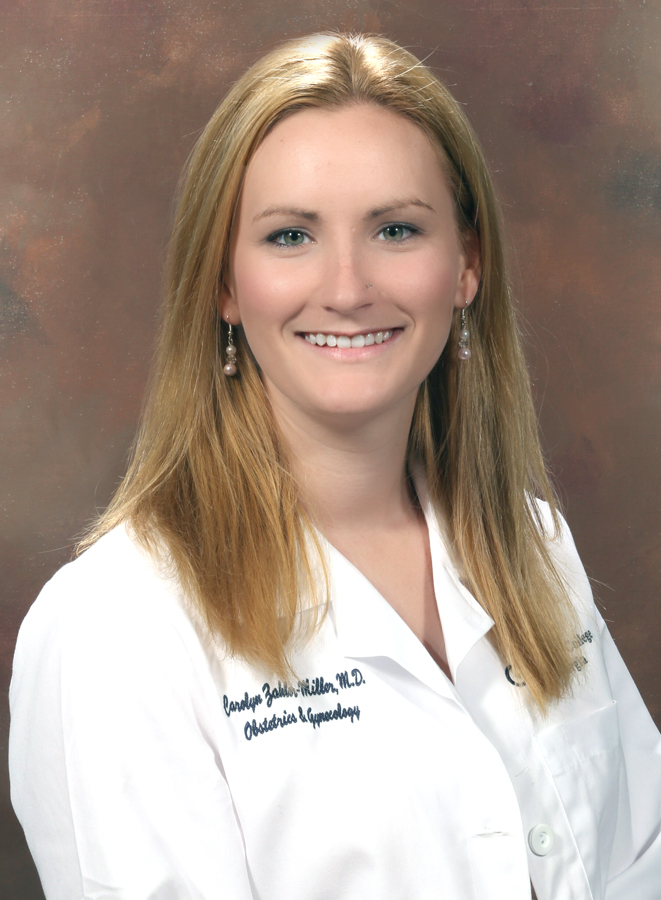
Carolyn Zahler-Miller serves as Associate Professor and Assistant Dean for Clinical Integration at Augusta University's Medical College of Georgia, Department of Obstetrics and Gynecology. She directs the Ob/Gyn medical student clerkship and provides clinical care at downtown Augusta and Grovetown sites, specializing in abnormal uterine bleeding, PCOS, menopausal medicine, and breastfeeding optimization. Her educational background includes: MD, University of Florida, 2014 BS in Chemistry, University of Florida, 2010 Dr. Zahler-Miller's research focuses on women's health across the lifespan, with expertise in abnormal uterine bleeding, PCOS, menopausal disorders, breastfeeding medicine, HPV vaccination, and gestational diabetes. Her work integrates clinical practice with educational innovation to develop evidence-based interventions for patient care and physician training. Recent publications (2023-2025) demonstrate her commitment to translational research, spanning mobile health applications for breastfeeding support, RSV prevention in newborns, surgical decision-making in benign gynecology, menopausal sexual health therapies, and cost-effective surgical training models. These works highlight her dual focus on clinical outcomes and medical education advancement. Notable honors include: AU/MCG Woman Who Inspires (2023) Fellow of the American College of Obstetricians and Gynecologists (2021) As an educator, Dr. Zahler-Miller teaches 12+ medical student courses, chairs the Ob/Gyn Student Advising Committee, and serves on departmental and college committees including the Executive Committee and Curriculum Enrichment Committee. She actively shapes medical education through curriculum development, student mentorship, and clerkship leadership while maintaining clinical practice in general obstetrics and gynecology.
Krystale Littlejohn is an Associate Professor in the Department of Sociology at the University of Oregon’s College of Arts and Sciences. Her research focuses on race, gender, and reproduction, examining how cultural categories shape intimate relationships and health outcomes. She employs mixed methods across disciplines such as reproductive justice, health and medicine, social cognition, and intersectionality. B.A. in Sociology and Spanish Language and Culture, Occidental College (2007) Ph.D. in Sociology, Stanford University (2013) Her work interrogates the social underpinnings of reproductive processes, including projects on contraceptive use, abortion access, and the embodiment of biomedical technologies. She has secured grants from the Society of Family Planning, American Association of University Women, and NIH, including a K01 award for research on risk tolerance in contraceptive use among couples. Recent publications explore themes like mental and emotional health in reproductive care (2025), gendered heterosexuality and mixed feelings about sex (2024), and disparities in contraceptive dissatisfaction by race and education (2012). These works span subfields including reproductive justice, intersectionality, and social cognition. ASA Minority Fellowship Program American Association of University Women Fellowship Society of Family Planning Funding NIH K01 Award Professor Littlejohn mentors graduate and undergraduate researchers, though specific advisees are not listed. She also provides productivity consulting and performance coaching to academics, reflecting her commitment to interdisciplinary collaboration and public health advocacy.
Dr. Michelle Frances Meglin is an Associate Professor in the Department of Obstetrics and Gynecology at the Medical University of South Carolina (MUSC) College of Medicine. She joined MUSC in 2015 and specializes in comprehensive gynecological care, with a focus on pediatric and adolescent gynecology, minimally invasive surgery, and contraception. Her academic interests include medical education, gynecologic surgery, and women's health screening. Education: Bachelor’s from Davidson College, Medical Degree from Wake Forest University School of Medicine (2011), and OB/GYN residency at Virginia Commonwealth University (2015). Certifications: ABOG Focused Practice Designation in Pediatric and Adolescent Gynecology (2022). Dr. Meglin is actively involved in resident and medical student education, emphasizing evidence-based medicine and patient-centered care. She practices at MUSC Women's Health East Cooper in Mount Pleasant, SC.