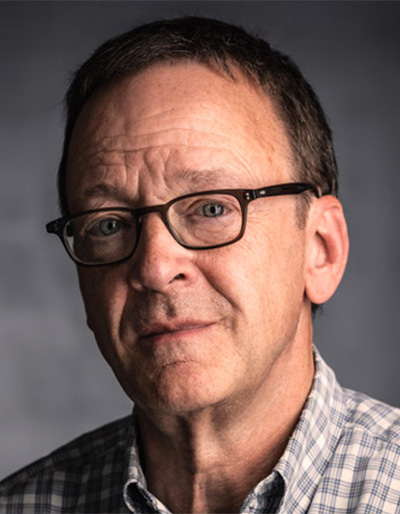
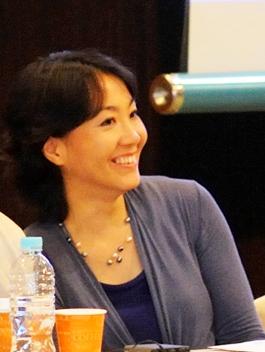
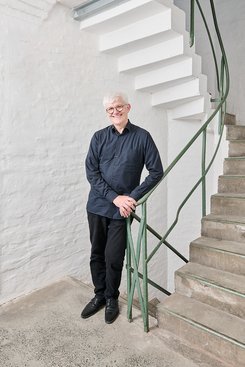
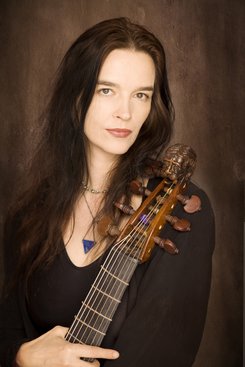
Rebecca Herissone is Professor of Musicology at the University of Manchester and a leading scholar in early modern English music. She co-edits the peer-reviewed journal Music & Letters and serves on editorial boards for the Purcell Society, Musica Britannica, and the Complete Works of John Eccles. Her research focuses on seventeenth-century creativity, material culture, and the ontological dimensions of music notation. Key research areas: Early Modern Music, Creativity, Source Study, Notation, Reception Major awards: Diana McVeagh Prize (2015), Westrup Prize (2007) Her recent work includes digital humanities projects on music preservation and critical editions of Purcell's operas. She has pioneered interdisciplinary approaches connecting musicology with drama, art, and literature, and currently leads research on Purcell's posthumous reception in the eighteenth and nineteenth centuries. Her teaching spans music historiography, performance practices, and advanced source analysis.
Rudolf Lutz (*1951) is a Swiss musician, conductor, and composer renowned for his work in sacred music and historical performance practice. He received an honorary doctorate from the Faculty of Theology at the University of Zurich in 2021, recognizing his contributions to performing and disseminating Johann Sebastian Bach's vocal works, including founding the J.S. Bach Foundation and directing its ensemble since 2006. Lutz has taught improvisation at the Schola Cantorum Basiliensis, bass continuo at the Basel University of Music, and oratorio studies at the Zurich University of Music. Research & Artistic Contributions Rudolf Lutz's work focuses on the intersection of music and theology, particularly through the complete performance and innovative interpretation of Bach's sacred compositions. His initiatives include the Bachpedia platform, livestreamed performances during the pandemic, and dialogues with theologians and literary figures. He has also composed original works like the Christmas Oratorio in English style and a cantata for Luther's commemoration. Honors Culture Prize of the Canton of St. Gallen (2006) STAB Prize (2015) Swiss Culture Prize (2019) Member of the Board of the New Bach Society (since 2016)
Dr. Naomi Matsumoto is a Reader in Music at Goldsmiths, University of London , specializing in opera studies, music historiography, and Baroque performance practices. She serves as Convenor of the Integrated Degree in Music and International Admissions Tutor, bridging academic administration with research leadership. Key affiliations: Royal Musical Association, Society for Seventeenth-Century Music, Japan Musicological Society Fellowships: Royal Society of Arts, Royal Historical Society Research Interests include: Operatic madness from Monteverdi to Donizetti Baroque performance conventions and manuscript studies Transnational reception of Western opera in Japan Interdisciplinary work with medical history and cultural studies Her publications focus on Lucia di Lammermoor , Carmen , and Madama Butterfly , examining their cultural adaptations and diagnostic representations. Recent projects explore Wagner's influence on Japanese theatre and Bess of Bedlam's identity crisis. Scientific Awards : Overseas Research Scholarship British Federation of Women Graduates Award Gladys Krieble Delmas Foundation Award Daiwa Anglo-Japanese Foundation Award Japan Society for the Promotion of Science Award Royal Musical Association Prize As an educator , she supervises areas in 17th-19th century Italian opera, intercultural reception studies, and Baroque performance. She contributes to critical editions and liner notes for major musical releases.
Ann-Katrin Zimmermann is an apl. Professor (non-tenured professor) at the Musicological Institute within the Faculty of Philosophy at the University of Tübingen. She has held this position since 2018, following her time as a private lecturer from 2012-2018. In addition to her academic work, she serves as a dramaturg at the Gewandhaus Leipzig since 2013 and has teaching assignments at LMU Munich, Felix Mendelssohn Bartholdy University of Music and Theatre, and Leipzig University since 2012. Her educational background includes: Habilitation (2012) on "Forms of slow movements in the classical cycle" Promotion/PhD (2006) on "Studies on medieval three-part harmony" Master's degree in musicology, philosophy and art history from University of Tübingen and University of Oxford (1998-2003) Professor Zimmermann's research spans multiple eras and aspects of music history and theory. Her work focuses particularly on polyphony of the 12th and 13th centuries, keyboard music from the 15th-18th centuries, early German-language music terminology, and the works of Heinrich Schütz, composers of the Viennese classics, and Richard Strauss. She has made significant contributions to the fields of organology, instrumentation, music iconography, and 19th-century symphonies, with particular interest in cross-temporal aspects of genre, form, and composition. Her extensive publication record shows a consistent focus on historical music analysis, particularly examining compositional strategies across different periods. Her recent work has increasingly focused on Richard Strauss and Mozart, while maintaining her longstanding interest in early music traditions and terminology. She has published numerous articles in prestigious journals and contributed to important edited volumes in musicology. Professor Zimmermann is actively involved in the academic community: Member of the Society for Music History in Baden-Württemberg since 2009 Member of the DHV since 2012 Throughout her career, Zimmermann has balanced academic research with practical musical experience. She has been a bassoonist and leader of various vocal and instrumental ensembles since 1998, and served as a church musician from 1997-2014. Her work as a dramaturg at the Gewandhaus Leipzig since 2013 demonstrates her commitment to connecting scholarly research with contemporary musical practice.
Ed Hughes is a Professor of Composition in Music at the University of Sussex's School of Media, Arts and Humanities. His roles include Head of Music (2013-2018), Deputy Head of School, and Associate Dean for Education. He holds a BA from Cambridge University (1987-1990), an MPhil (Cambridge), and a PhD in Composition from Southampton (2000-2004). His research focuses on composition techniques, music technology, and interdisciplinary projects like Syncphonia, a notation system aiding ensemble performance. Notable works include operas like States of Innocence (2024) and orchestral pieces inspired by landscape, such as Music for the South Downs (2022). He has received grants from AHRC, Arts Council England, and the South Downs National Park Authority. Hughes has supervised numerous PhD students in composition and music technology. His awards include the British Composer Award (2014) and commissions from Brighton Festival and the Mahogany Opera Group. Collaborations with psychologists and educators highlight his commitment to music education and accessibility.
Michael Fuerst is a Lecturer in Historical Performance Practice (Piano) and Early Music Coaching at the University of the Arts Bremen, and also teaches Continuo and Historical Keyboard Instruments at the Musikhochschule Lübeck. Born in the USA, he studied at Eastman School of Music with Arthur Haas and Paul O'Dette, later completing his studies as a Fulbright Scholar under Robert Hill at Freiburg's State Music Academy. His research includes a DFG-funded project on 17th-century German instrumental music. Professionally, he leads the European Hanse Ensemble's international courses and curates a concert series showcasing historical instruments from Hamburg's Museum of History. Since 2021, he serves as Secretary of the International Dietrich Buxtehude Society. His recordings include Echo Klassik-winning albums like Choralvariationen und Choralkonzerte (2010) and Lübecker Virtuosen (2006), featuring works by Telemann, Tunder, and others. He frequently performs internationally and organizes workshops like the International Winter Academy of Early Music. Education: Began studies in Madison, USA Eastman School of Music (USA) Staatliche Hochschule für Musik Freiburg (Germany) Awards: Two Echo Klassik Preises for discographies Key Roles: Dozent, European Hanse Ensemble Schriftführer, Dietrich Buxtehude Gesellschaft His teaching focuses on historical temperaments, baroque keyboard techniques, and collaborative performance practices. Recent performances include concerts at St. Nikolai Kirche and university venues interpreting Venetian influences in Northern European music.
Prof. Hille Perl is a passionate Professor of Viola da Gamba at the University of the Arts Bremen, specializing in early music performance and pedagogy. Her career spans decades of international concert tours with ensembles and as a soloist, notably collaborating with lutenist Lee Santana. She emphasizes teaching emotional expression and non-competitive collaboration among students. Her research focuses on bridging historical and contemporary musical practices through improvisation and interpretation. Notable achievements include three Echo Klassik Awards for her recordings of Baroque and early Classical repertoire. Her work explores 17th-century improvisational techniques, cross-cultural musical fusion, and the revival of neglected Viola da Gamba works. She has released acclaimed albums such as Doulce Memoire (2000), which won the Echo Prize, and TINTO (2003) with her trio Los Otros. Prof. Perl also organizes annual workshops like the International WinterAcademy of Early Music in Bremen, fostering global exchange among early music practitioners. Her teaching philosophy integrates historical performance practices with modern pedagogical approaches, encouraging students to embrace both technical mastery and artistic creativity.
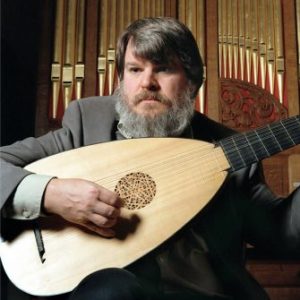
Paul O’Dette is a Professor of Lute and Professor of Conducting & Ensembles at the Eastman School of Music, University of Rochester. He also serves as Director of Early Music and Affiliate Faculty in Musicology and Voice, Opera & Vocal Coaching. His expertise spans Baroque performance practices, Italian/English solo song, and Baroque opera direction. Notable achievements include Grammy wins, Echo Klassik Awards, and leadership in festivals like the Boston Early Music Festival. His recordings, such as Charpentier’s La Descente d’Orphée aux Enfers , have garnered critical acclaim. O’Dette’s research includes publications on historical performance practices and co-authoring the Dowland entry in the New Grove Dictionary. Roles: Artistic Co-Director of Boston Early Music Festival, Director of Collegium Musicum. Awards: Multiple Grammy nominations, Diapason d'Or, Echo Klassik, and Jahrespreis awards. Grants/Advising: Extensive opera productions across Europe and North America, including Cavalli’s Ercole Amante and Monteverdi’s Orfeo .
Stewart Smith is a Senior Lecturer at the Western Australian Academy of Performing Arts (WAAPA), part of Edith Cowan University. He leads the Centre for Keyboard Heritage and Performance Research and serves as assistant organist at St George's Cathedral in Perth. Previously, he held leadership positions as head of department and Dean of Music at WAAPA, but has returned to focus on teaching and research. Master of Music, Royal Academy of Music and London University Certificate IV in Assessment & Workplace Training, TAFE WA (2006) Smith's research spans historical musicology, early music, performance practice, improvisation, and historical keyboard instruments, with particular focus on Baroque repertoire and English music from 1700-1850. His work uniquely bridges scholarly research with practical performance, exploring how historical understanding informs contemporary interpretation. He has developed significant expertise in reception history, examining how musical works have been understood and performed across different eras. Analysis of his recent publications reveals consistent exploration of performance authenticity, particularly regarding Baroque practices. His work demonstrates increasing interdisciplinary approaches, connecting musicology with cultural studies, instrument history, and cross-cultural influences. The research shows particular strength in keyboard performance traditions and their evolution. Solo harpsichord recital for ABC's Sunday Live voted one of the year's best broadcasts Five-CD set of French Baroque music on ABC Classics label received international acclaim Smith has secured substantial research funding, including a major Australian Research Council grant for French Baroque research and recent significant grants from the Feilman Foundation ($350,000) and Wright Burt Foundation ($100,000) for keyboard instrument restoration. He actively supervises 5 current PhD students and has guided numerous completed research projects across musicology, performance practice, and historical instruments. As director of the Centre for Keyboard Heritage and Performance Research, he oversees projects focused on historical keyboard instruments and their performance contexts, including the restoration of a 1786 Kirkman harpsichord. Smith maintains an international performance profile, with recent work including Celtic Baroque interpretations, experimental Vivaldi performances, and Ligeti's Volumina. His performance career spans collaborations with major ensembles including the Orchestra of the Antipodes, Pinchgut Opera, and all Australian state symphony orchestras, alongside international appearances at prestigious venues including Westminster Abbey and St Paul's Cathedral.
AHMET BURAK BASMACIOĞLU is a Professor at Anadolu University State Conservatory's Music Department since 2023. He has held academic positions at the same institution since 1992, including Associate Professor (2010-2023) and Lecturer (1992-2010). His work focuses on early music performance , keyboard pedagogy , and hermeneutics in historical performance . 1992: Hacettepe University undergraduate 1994-1996: Postgraduate at Anadolu University 1996-2003: Master's and PhD in Piano at Anadolu University 1998-2006: Specialization in Early Music at Strasbourg Conservatory His research areas include historically informed performance , baroque keyboard , and basso continuo . He has supervised 6 theses on topics like Bach adaptations and ornamentation systems. His recent publications analyze French Baroque ornaments (2022) and microtonal keyboards (2023), while his conference work explores hermeneutics in early music . As an active performer, he has led harpsichord and organ recitals since 1992, including collaborations with Istanbul Symphony Orchestra (2024) and Ankara Music Festival (2024). He also contributes to academic journals as Special Issue Editor for the International Journal of New Trends in Arts, Sports & Science Education (2022-2024).
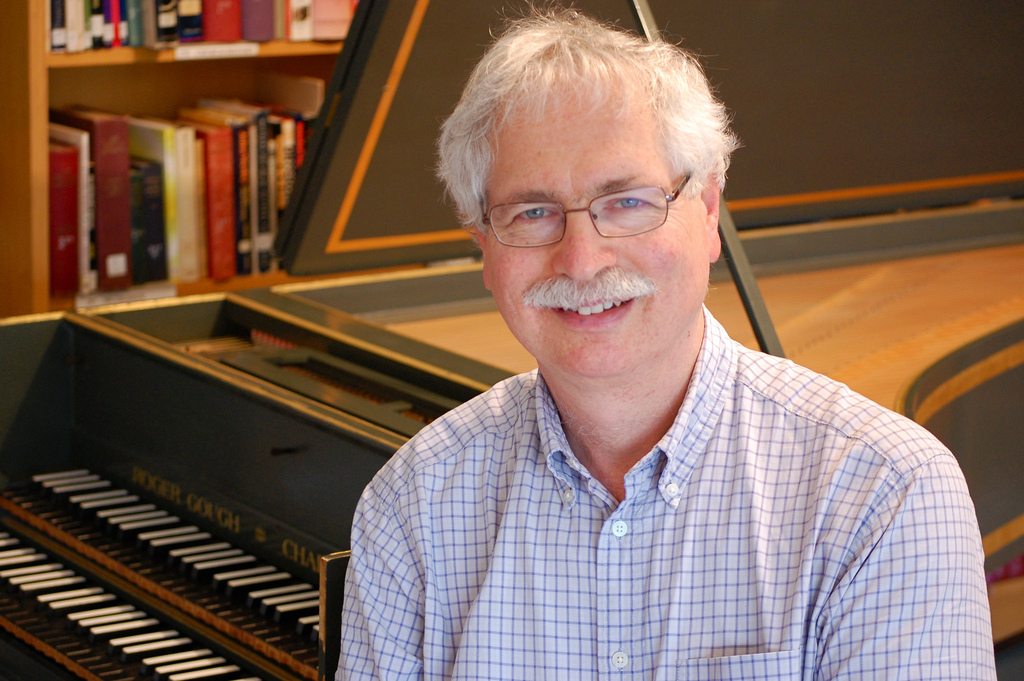
Arthur Haas is a Professor of Harpsichord, Early Music Performance and Continuo at Stony Brook University. He is also a founding faculty member of Juilliard’s historical performance program and joined Yale School of Music’s faculty in fall 2012. Haas is renowned as a leading performer and teacher of Baroque music in the United States, with an international career spanning decades. Active in European early music scene (France, 1975–1980s) Co-founder of Five Centuries Ensemble Member of Aulos Ensemble, Empire Viols, Gold and Glitter Collaborates with prominent early music specialists like William Christie, Paul O’Dette, and Marion Verbruggen His performance career includes premieres such as William Albright’s Concerto for Harpsichord and Orchestra (1994) and extensive recordings of Rameau, d’Anglebert, and Bernardo Pasquini. He has served as artistic director of Amherst Early Music’s Baroque Academy (2002–2011) and participates annually in major workshops and festivals including the International Baroque Institute at Longy and Berkeley Early Music Festival. Scientific Awards : Paris International Harpsichord Competition – Top Prize (1975) Haas has also served on the national screening committee for the Fulbright Scholar Program in organ and historical performance (2018–2021). Contact: arthur.haas@stonybrook.edu
Gregory J. Decker is a Professor of Music Theory and Assistant Dean of Graduate Studies at Bowling Green State University's College of Musical Arts. He holds an M.M. and Ph.D. in music theory from Florida State University, where his dissertation won the National Opera Association's biennial prize (2013). His research focuses on musical semiotics, operatic characterization, and the analysis of texted music from madrigals to Broadway musicals. Education: M.M. in Music Theory, Florida State University Ph.D. in Music Theory, Florida State University Decker's work examines musical topics and cultural associations in diverse genres, with notable contributions to Handel studies, Baroque opera analysis, and modern musical theater. His methodologies bridge historical musicology and contemporary semiotic frameworks. Recent publications include Here for the Hearing: Analyzing the Music in Musical Theater (2023) and Singing in Signs: New Semiotic Explorations of Opera (2020), both honored by the Society for Music Theory. His research spans topics like dance music in Handel's operas, Cole Porter's lyric techniques, and madrigal stylistic strategies. Key Awards: National Opera Association Dissertation Prize (2013) Society for Music Theory Citation of Special Merit Multi-Author Collection Award Teaching responsibilities include undergraduate music theory, aural skills, and graduate seminars on Schenkerian analysis, semiotics, and musical topics.
Tim Kuhlmann is a researcher and academic affiliated with the Hochschule für Musik und Theater Rostock (hmt Rostock). Since February 2023, he has served as a scientific researcher at the Rostock office of the Erich Wolfgang Korngold Edition . He holds a background in music theory, music education, and German studies from Hanover, and has taught at institutions including the Universities of Hanover, Rostock, and Detmold. At hmt Rostock, he teaches Musiktheorie (music theory), Gehörbildung (aural training), Partiturkunde (score studies), Instrumentenkunde (instrument studies), and Akustik (acoustics). His research focuses on instrumentation (particularly early 20th-century works), instrument science, musical analysis, basso continuo/partimento practices, and editorial philology.
Maxine Eilander serves as an Adjunct Instructor of historical harps at the USC Thornton School of Music, maintaining an active dual career as both educator and performer. Based in Santa Clarita, California, she teaches private lessons in her home studio and via online Zoom sessions while performing globally as harpist for Pacific MusicWorks and the Boston Early Music Festival across a thirty-year international career spanning Europe and the USA. Her academic foundation includes a Bachelor of Music in classical harp from the University of the Witwatersrand (Johannesburg, South Africa) and a post-graduate diploma in early harps and continuo practice from Hochschule für Kunste (Bremen, Germany). Eilander's research centers on historical performance practice of Renaissance, Baroque, and Classical harps, with specialized focus on continuo technique and the revival of neglected works. Her current collaborative project with violinist Tekla Cunningham explores harp-violin repertoire by female composers of the Classical and Romantic periods, addressing historical gender imbalances in early music scholarship. Analysis of her 15 most recent publications reveals consistent engagement with Baroque opera (Handel, Steffani, Conradi), 17th-century vocal repertoire, and innovative editions of historical works. Her output demonstrates methodological rigor in historical authenticity while expanding accessibility through modern publications via Proteamusic.com. Eilander's artistic excellence is recognized through prestigious nominations including a Grammy Award for Conradi’s Ariadne (2005) and Juno Award for Handel’s harp concerto with Tafelmusik (2002), reflecting significant contributions to early music preservation. Through ongoing collaborations with Stephen Stubbs on publishing initiatives and performances with ensembles like Tragicomedia and Tafelmusik, she actively shapes contemporary discourse in historical performance practice while mentoring emerging musicians through her USC and private studio instruction.
Peter Bennett is a Professor in the Department of Music at Case Western Reserve University (CWRU), and Coordinator of Graduate Studies in Historical Performance Practice. He holds a D.Phil. from Oxford University and has been on CWRU faculty since 2005. His dual career combines scholarship on early modern French music and performance as a harpsichordist and organist. Education: B.A./M.A., Natural Sciences, University of Cambridge M.Mus., Musicology, King’s College London D.Phil., Music, University of Oxford (2004) Research Interests: His scholarship focuses on the intersection of music, religion, and politics in Louis XIII’s Paris. Key areas include court ceremonial practices, liturgical music at Versailles, and provincial French musical institutions. Recent projects explore Louis XIII’s entrées (ceremonial entries) and their musical components, resulting in co-edited volumes and his 2021 monograph Music and Power at the Court of Louis XIII . Performance: As a harpsichordist and organist, he founded Ensemble Dumont (1995-2003), performing across Europe and the U.S. The ensemble’s recordings for Linn Records earned critical acclaim. In Cleveland, he leads the CWRU Historical Performance Practice program and directs harpsichord studies at the Cleveland Institute of Music (CIM). Awards: Le Studium Fellowship (2015-16), Tours Teaching & Grants: Teaches courses on Baroque Music, Historical Performance Practice, and Continuo Playing. His work integrates performance practice with scholarly research, emphasizing the interplay of theory and practice in early music. Professional Engagement: Serves on editorial boards for Journal of the American Musicological Society and Early Music . Active as a consultant for period instrument ensembles and cultural heritage projects in Europe.