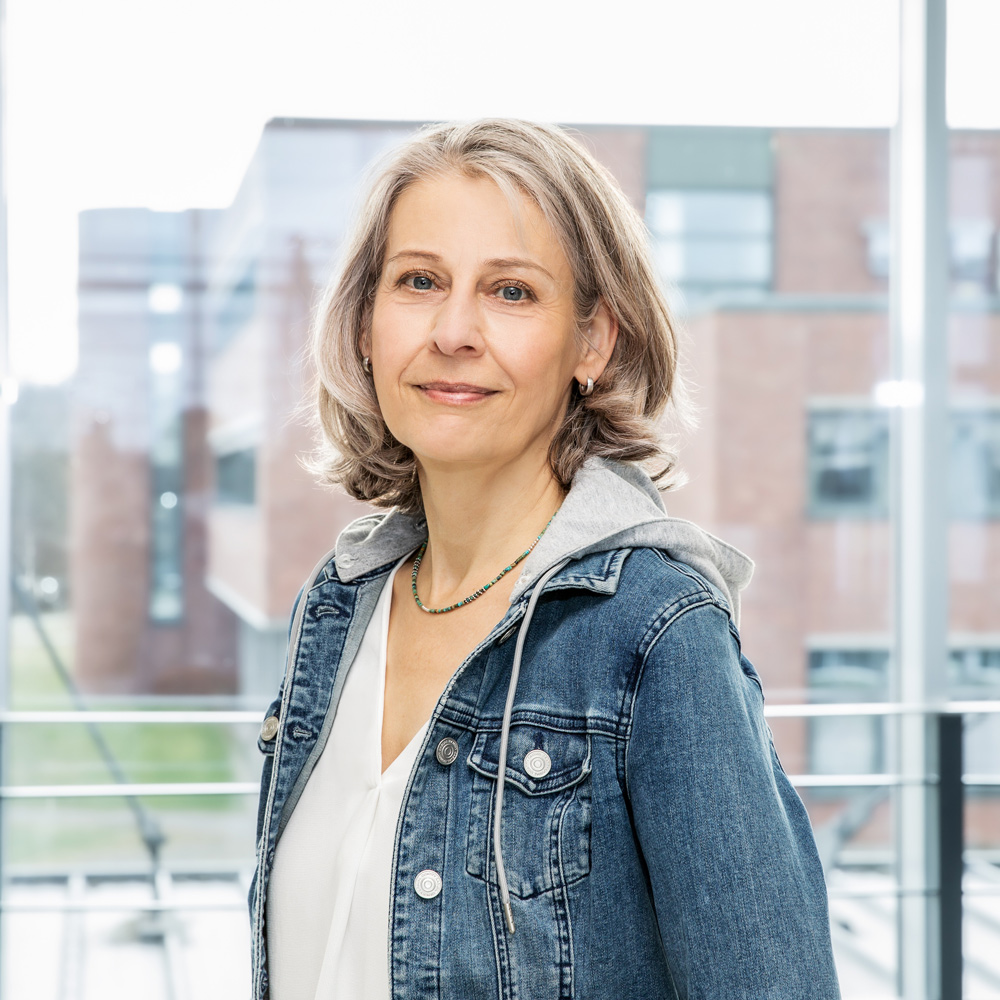
Prof. Dr. Eva Spies is a Professor for the Study of Religion with Focus on Africa at the University of Bayreuth within the Faculty of Humanities & Social Sciences . She holds a PhD in Cultural Anthropology from the University of Mainz and leads the Research Section Moralities in the Africa Multiple Cluster of Excellence (EXC 2052). Key Roles : Principal Investigator, Bayreuth International Graduate School of African Studies (BIGSAS) Vice Dean of Research Co-founder, German Association for the Study of Religion's Africa working group Research Interests span religious plurality, development cooperation, and transformative practices. She coined the concept of religious engineering to analyze how religious resources shape social/political worlds. Regional expertise in Niger/West Africa and Madagascar/Indian Ocean , with focus on: South-South mission Religion and pandemic response Intercultural hermeneutics Epistemological conflicts Material culture in development Projects : Africa Multiple Cluster of Excellence (2025): "Religious engineering. The making of moralities, development and religion in Niger" Humboldt Research Hub (2021): "Fighting pandemics with religion?" (with Moi University and University of Zimbabwe) Education : PhD in Cultural Anthropology, University of Mainz
Prof. Dr. Clarissa Vierke is a specialist in Swahili Language and Literature at the University of Bayreuth , with a focus on literary connections across the Indian Ocean and African continent. She was awarded the German National Merit Foundation scholarship during her studies in African Languages, Social Anthropology, and Literatures in African Languages at Bayreuth and Leiden. Academic Degrees : Doctorate in African Studies (2010, Bayreuth), Studies in African Studies (1999-2005, Bayreuth/Leiden) Her research spans historical Swahili manuscripts (18th-19th century), contemporary poetry (hiphop, newspaper poetry), and aesthetic practices that examine how poetic form shapes lifeworlds. She leads the project Poetry as Aesthetic Practice (Madagascar/Tanzania) and contributes to manuscript studies and decolonial aesthetics . Recent publications include co-edited volumes on African Artistic Practices (2024), Decolonial Aesthetics (2023), and Travelling Texts (2020). She serves on editorial boards for journals like Matatu and Swahili Forum . Scientific Awards : Wissenschaftspreis (University of Bayreuth, 2012), Heinz-Maier-Leibnitz-Prize (DFG, 2012) Prof. Vierke is Chairperson of the Afrophone Caucus of the African Literature Association (2015–present) and organizes the annual Swahili Colloquium . Her work bridges precolonial and contemporary Swahili traditions, emphasizing textual mobility and multilingual contexts .
Bastian Becker is a Research Fellow in Political Science at the Department of Social Sciences, Humboldt-University of Berlin. He holds a PhD from Central European University and has held postdoctoral positions at the University of Bremen and Bard College Berlin. Currently, he works under Prof. Dr. Hanna Schwander at the Chair of Political Sociology and Social Policy. His research focuses on the political economy of inequality, colonial legacies, and development, employing comparative and behavioral approaches. He has contributed to journals like Political Science Research and Methods and World Development . His work also involves collaborations with institutions such as the German Institute of Development and Sustainability (IDOS) and the German International Cooperation (GIZ). Becker’s educational background includes a PhD in Political Science from Central European University, followed by postdoctoral research at institutions in Germany and the U.S. His expertise spans colonial policy analysis, social redistribution dynamics, and the historical roots of contemporary political systems. He has served as an Interim Chair (visiting professor) of Comparative Politics at Humboldt-University, reflecting his engagement with teaching and institutional leadership. His research interests bridge historical political economy and contemporary policy, examining topics such as wealth origins’ impact on redistribution attitudes, colonial labor policies in Africa, and gender equality legacies of Christian missions. He has developed datasets like COLDAT to study African colonial history, emphasizing empirical rigor and interdisciplinary methods. Becker’s current projects include the DYNAMICS initiative and participation in the Progressive Politics Research Network. He actively engages with public discourse through media contributions and policy consultations, aiming to bridge academic research and societal challenges.
Dr. Anthony Okeregbe is a Senior Lecturer in Philosophy at the University of Lagos (UNILAG) and Principal Investigator at the Lagos African Cluster Centre of Excellence (ACC), part of the Africa Multiple Cluster of Excellence at the University of Bayreuth, Germany. He holds a Ph.D. in Philosophy from UNILAG (2004) and has extensive research interests in Philosophy of Religion, Phenomenology, Existentialism, and contemporary African lifeworlds. His current project examines the moral tensions surrounding sexuality pedagogies in Nigeria under the Child Rights Act (2003), focusing on adolescents’ perceptions of sexual education and moral agency. Education: BA (Hons.) in Philosophy, University of Ibadan (1990) MA in Philosophy, University of Lagos (1994) Ph.D. in Philosophy, University of Lagos (2004) Research Interests: Philosophy of Religion and Ethics African existential challenges Cultural and socio-political dynamics in Africa Psycho-spiritual therapies and mental health Entangled moral spaces in sexuality education His work bridges philosophical theory with applied ethics, addressing topics like media ethics, postcolonial thought, and bioethical dilemmas. He serves on UNILAG’s Postgraduate Board and chairs the Department of Philosophy’s Postgraduate Committee. Prior to academia, he worked as Features Editor at The Guardian (Lagos) and remains a Visiting Editorial Board Member there. Awards & Affiliations: Catalyst Fellow, Centre for African Studies, University of Edinburgh Member, African Studies Association of Italy (ASAI) Certifications in Andragogy, Competency-Based Adult Learning, and Psycho-Trauma Counselling
Prof. Dr. Christian Römmelt is a Professor of Art and its Didactics at Weingarten University of Education , where he has served since 2024. He also served as a Vertretung Professur (interim professor) at the same institution in 2024 and was an Akademischer Oberrat (Academic Councilor) at LMU Munich until 2024. His career spans roles as a primary school art teacher, researcher, and academic leader, emphasizing the integration of empirical research with art education practice . Current Role: Professor of Art and its Didactics, Weingarten University of Education Previous Roles: Akademischer Oberrat at LMU Munich (2021–2024), lecturer at Universities of Bamberg and Munich (2007–2021) Education: PhD in Art Education (2016, LMU Munich), Magister Artium (2008) Römmelt's research focuses on empirical studies in art education , particularly how aesthetic learning impacts personality and competence development. His work bridges global art education with local practice, emphasizing transculturality and inclusion . He has explored topics like visually representing sustainability , queering art education , and systematic skill development in primary classrooms. His publications include a monograph on empirical animation studies (2017) and co-edited volumes on Global South art education (2025). Recent articles examine: Transnational art curricula (Ghana/Deutschland collaboration) Animated comics for visual storytelling Postcolonial perspectives on African art Gender and identity through visual media Empirical methods in art didactics Römmelt is actively involved in academic societies, including: BDK e.V. (Art Education Association) Deutscher Hochschulverband (German Academic Association) Exploring Visual Cultures (EVC) expert panel He has presented at conferences in Germany, Ghana, and South Africa, addressing themes like crisis and wellbeing in art education and drag-influenced pedagogy . His work emphasizes empirical rigor and practical relevance , aiming to connect art education with broader didactic frameworks.
Max Planck Institute for Social AnthropologyGermany
Siri Lamoureaux is an anthropologist and Assistant Professor in the Sociology Department (Workplace Studies) at the University of Siegen, Germany. She is affiliated with the SFB 1187 project "Media of Cooperation" and participates in the "Technoscapes in Africa" project with Richard Rottenburg and other members of the Law, Organisation, Science and Technology (LOST) network. She is also an associate of the Max Planck Institute for Social Anthropology and the Centre d'études et de documentation économiques, juridiques et sociales (CEDEJ Khartoum) based in Sudan, and an active member of AOEN, the Africa Off-Earth Network. Her educational background includes: PhD in Social Anthropology (2017), Martin Luther University / Max Planck Institute for Social Anthropology, with dissertation titled "Virtuous language: gendered morality and ethnonational politics among Moro Christians in Khartoum" MPhil in African Studies (2009), Leiden University, with thesis "Message in a Mobile: mixed messages, tales of missing and mobile communities at the University of Khartoum" Master of Arts in Linguistics (2004), University of Oregon, with thesis "Applicative Constructions in Maasai" Bachelor of Arts in Linguistics (1999), University of California, Santa Barbara Lamoureaux is an anthropologist drawing inspiration from pragmatist approaches in linguistic and semiotic anthropology, Science and Technology Studies (STS), and moral and feminist philosophy. Since 2008, she has conducted extensive fieldwork in Sudan, particularly in the Nuba Mountains, focusing on digital technologies and activism, gender, social and religious movements, morality, language and literacy, sexual violence, and ethnic identity. Her current research extends these interests into the field of space science, studying how spatial and terrestrial scientific objects are identified, documented, categorized, and made actionable through sensory media technology. She examines satellite assemblages in desertification projects in the Africa Sahel and the Square Kilometer Array, a radio telescope observatory spanning Africa and Australia. Her publication record shows a clear trajectory from early work on mobile phone communication in Khartoum to sophisticated analyses of complex technoscientific assemblages in space science projects. While maintaining a consistent theoretical grounding in linguistic anthropology and STS, her research has expanded to address how values, norms, chronotopes, spirituality, emotions, and cognitive models figure in knowledge construction across diverse contexts—from the streets of Khartoum to astronomical observatories spanning continents. Dr. Lamoureaux is actively involved in multiple research projects: Technoscapes in Africa : Examines the coproduction of technicisation and spatial orders across Africa by focusing on datafication and remote sensing in health and environment domains Visualizing the electromagnetic spectrum : Explores how spatial and terrestrial scientific objects are identified, categorized and made actionable by scholars, technicians, and sensory media technology Nuba Mountains Studies : Provides a platform for research on the Nuba Mountain region Adaptation and Creativity in Africa (Completed): Examined how technologies and significations are entwined while traveling Virtuous Language (Completed): Explored identity and gendered moral enactment through Christianity among the Moro Nuba in Sudan Her teaching portfolio reflects her interdisciplinary approach, including courses such as "Artificial Intelligence: promises and practices," "Language, Media and Technology," "Telescopes, satellites, drones and the sociology of 'seeing'," and "Black Lives Matter," demonstrating her commitment to connecting anthropological theory with contemporary technological and social justice issues.
Prof. Chibueze C. Udeani holds the Chair of Missiology and Dialogue of Religions at the Catholic Theological Faculty of Julius-Maximilians-Universität Würzburg. His academic career spans institutions including the University of Salzburg, Linz, and international engagements across Africa and Europe. A leading scholar in interreligious dialogue and intercultural studies, he focuses on globalization's impact on religious identity, African traditional spirituality, and multicultural ethics. His work bridges theological reflection with practical societal challenges, addressing topics like migration, social work, and conflict resolution. Key research interests include missiological theory, intercultural competence frameworks, and the intersection of religion with development policy. He has delivered keynote addresses at over 50 international conferences since 2000, including major events in Munich, Pretoria, and Sarajevo. His 2013 Karl Jaspers Award recognizes contributions to intercultural philosophy. Udeani also leads teaching initiatives on intercultural pedagogy, having designed courses at 15 universities worldwide. His professional networks include partnerships with CODESRIA in Nigeria, Caritas Austria, and transnational academic consortia. Current projects explore interreligious dialogue in West Africa and the role of traditional African religions in contemporary global ethics. He advises on cultural competency programs for healthcare, education, and development sectors.
Daniel Hoffmann is an Assistant Professor in the New Testament department at Augustana University of Neuendettelsau , where he focuses on Biblical Exegesis , Hermeneutics , and the theological implications of the Gospel of Matthew . He holds part-time status (50%) since 2018 and is affiliated with the Evangelical Lutheran Church in Bavaria . His research bridges parable theory , contemporary cultural critique , and practical theological applications in education and parish contexts . Born in 1989, married with four children Part-time pastor in probationary service at Heilsbronn His doctoral project explores The Dignity of the Lowly in the Gospel of Matthew . He contributes to theological discourse through publications on narrative crises , religious education dynamics , and ethical theology , often analyzing intersections of technology , trauma , and African hermeneutics . Recent work critiques neoliberalism in church settings and reimagines Lukan Christmas narratives . Active in academic societies including the Rudolf Bultmann Society for Hermeneutic Theology and the Lutheran Liturgical Conference , he has held a doctoral scholarship (ELKB, 2020–2021) and been ordained since 2018. His teaching and writing increasingly address digital humanities , pastoral responses to scarcity , and interdisciplinary exegesis .
Claudia Gronemann has been Professor of Romance Literature and Media Studies at the University of Mannheim’s Romance Studies Department since 2009. Her research spans postcolonial theory, autobiography/autofiction, gender studies, and intermediality in 18th-, 20th-, and 21st-century Francophone, Spanish, and Latin American literature. Co-editor of Passagen: Transdisziplinäre Kulturperspektiven (Olms Verlag) Member of the editorial board for Cuadernos de Estudios del Siglo XVIII Her work interrogates: gender performativity in Spanish Enlightenment texts; transcultural memory (e.g., Saint Augustine in Maghrebian narratives); postcolonial hybridity; and intermedial strategies in Maghrebian and Latin American cinema. Recent publications explore picaresque narratives in Algerian literature, conjugal friendship as a model for marriage in Spanish comedy, and queer readings of Tunisian cinema. She employs keywords like transcultural memory , gender performativity , autofictional strategies , colonial legacies in film , entangled histories , and intermediality in postcolonial contexts . As a leading scholar in gendered literary analysis, she has co-edited volumes on Spanish gender debates, Maghrebian masculinities, and Latin American intermediality. Her habilitation Polyphonic Enlightenment (2009) established her expertise in 18th-century Spanish gender discourses.
Prof. Dr. Jenny Rahel Oesterle-El Nabbout is Chair of Medieval History at the University of Regensburg and Dean of the Faculty of Philosophy, Arts, History, and Social Sciences since 2023. She has held academic positions at the Universities of Passau, Heidelberg, Bochum, and TU Braunschweig, and specializes in transcultural medieval history with a focus on Europe, the Mediterranean, North Africa, and the Middle East. Education: Habilitation in Medieval History, University of Heidelberg (2020) PhD in Medieval History, Westfälische Wilhelms-Universität Münster (2007, summa cum laude) MA in Medieval History, Islamic Studies, and Protestant Theology, Westfälische Wilhelms-Universität Münster (2002) Studies also at the Hebrew University of Jerusalem and Justus-Liebig-Universität Gießen Her research centers on religious contacts, cultural transfer, migration, asylum, and the representation of power in the medieval Euro-Arab Mediterranean. She investigates symbolic communication, court ceremonies, Arabic cartography, and the history of early Islam. Her work bridges German and Arab perspectives in medieval studies, advocating for transcultural and interdisciplinary approaches. The recent trend in her publications reflects a growing emphasis on public history, digital humanities, and academic cooperation between Germany and the Arab world. Her articles span topics such as medieval cosmography, resistance discourses, and museum exhibitions like the Louvre Abu Dhabi, demonstrating a broad engagement with both scholarly and public audiences. Scientific Awards and Honors: Fellow, Global Young Faculty (Mercator Foundation, 2010/2011) Member and Steering Committee, Arab-German Young Academy (AGYA, 2014–2019) Studienstiftung des deutschen Volkes (1997–2002) Graduate College Scholarship, Münster (2003–2006) She has secured significant research funding, including a DAAD project on digital teaching in history with Iraqi universities (2021–2023). She advises the Studienstiftung des deutschen Volkes as a Vertrauensdozentin and serves on the scientific advisory board of the St. Katharinenspitalarchiv Regensburg and the executive board of the Forum Mittelalter at the University of Regensburg. She has also led a junior research group on protection during religious and political expansion at Heidelberg University. Prof. Oesterle-El Nabbout is deeply involved in academic networks and collaborative editorial projects, including co-editing volumes on transcultural monarchies, cultural brokers, and the humanities in the 21st century from Arab and German perspectives.
Ralph Pordzik is an Academic Director (Akademischer Direktor) and Professor of English and British Cultural Studies at the Institute of English and American Studies, Julius-Maximilians-Universität Würzburg (University of Würzburg), Germany. He has held this position since 2005 and has made significant contributions to literary and cultural studies with a focus on English literature, postcolonial theory, utopian studies, and psychoanalytic approaches to literature. His academic journey includes: Since 2005: Professor (apl.) of English and British Cultural Studies and Academic Director at Würzburg University 2002: Temporary professorship (English Literature) at Freiburg University 2000: Habilitation at University Duisburg-Essen 1999-2001: Research and teaching position at Munich University (DFG-financed project "Postcolonial Utopias") 1997-1998: Post-doctoral researcher at Bayreuth University (DFG-financed project "Intercultural Relations in Africa") and Rhodes University, South Africa 1995: Ph.D. in English Literature (Free University Berlin) 1988-1993: Free University Berlin (M.A. English and American Literature and Linguistics) Pordzik's research interests span a wide range of topics including English literature, cultural studies, queer studies, utopian studies, postcolonial literature, and psychoanalytic literary theory. His work often explores the intersections between literature, cultural politics, and theoretical frameworks. He has developed particular expertise in George Orwell studies, Victorian literature, science fiction, and the analysis of antinatalist themes in literature and film. His approach frequently combines psychoanalytic theory with cultural criticism to uncover hidden dimensions in literary texts. Pordzik has published extensively on these topics, with a notable focus on how literature engages with questions of identity, power, and cultural transformation. His work on George Orwell reveals previously overlooked queer dimensions in Orwell's writing, while his research on utopian and dystopian literature examines how these genres reflect and shape cultural anxieties about the future. His recent project on antinatalism in literature and film connects contemporary ethical debates about procreation with historical philosophical discussions dating back to ancient Greece. Among his notable publications is the 2023 book "The Other Orwell. Conversion, Liminality, and Abject Desire in the Writings of George Orwell," which offers a psychoanalytic re-reading of Orwell's work. He has also edited collections such as "Futurescapes: Space in Utopian and Science Fiction Discourses" (2009) and authored monographs including "Victorian Wastelands: Apocalyptic Discourse in Nineteenth-Century Poetry" (2012) and "The Diarical Imaginary: On the Phenomenology and Architectonics of the Modern Diary" (2019). As an educator, Pordzik teaches a diverse range of courses covering Victorian literature, modern poetry, cultural studies, film analysis, and literary theory. His teaching reflects his interdisciplinary approach, connecting literary texts with broader cultural, historical, and theoretical contexts. He is particularly known for courses such as "Antinatalism and Infanticide in Literature and Film," "Victorian Mythmakers," and "Why Poems Matter: Introduction to Poetry Analysis."
Dr. Alasdair Grant is a historian specializing in the medieval Mediterranean and Caucasus regions, holding dual appointments as a Research Fellow in the Department of Byzantine Studies at Johannes Gutenberg University Mainz (since 2025) and Research Associate in the Emmy Noether junior research group 'Social Contexts of Rebellion in the Early Islamic Period' at the University of Hamburg (since 2021). He additionally serves as a Young Academy Fellow of the Academy of Sciences in Hamburg (since 2024). His academic formation includes: PhD in History, University of Edinburgh (2016-2021), dissertation: 'Cross-Confessional Captivity in the Later Medieval Eastern Roman World, c.1280–1450' MSt with Distinction in Late Antique and Byzantine Studies, University of Oxford (2015-2016) MA (Hons.) First Class in Latin and Mediaeval History, University of St Andrews (2011-2015) Grant's research centers on socioeconomics in medieval societies, with groundbreaking work on cross-confessional slavery systems and rebellion dynamics. His scholarship bridges Byzantine, Islamic, and Caucasian histories through rigorous analysis of primary sources, revealing interconnected power structures across religious boundaries. He examines how marginalized groups navigated medieval empires, with particular attention to captivity narratives and resistance movements. His publication trajectory reveals a consistent focus on Mediterranean socioeconomics, evolving from early studies of medieval piracy and crusader correspondence toward contemporary analyses of the Greek Revolution's transnational dimensions. Recent work demonstrates sophisticated integration of Armenian, Greek, and Islamic sources to reconstruct social histories of rebellion and slavery, establishing new methodological frameworks for cross-confessional medieval studies. Key recognitions include: Young Academy Fellowship, Academy of Sciences in Hamburg (2024) Junior Fellowship, Byzantine Studies, Dumbarton Oaks (2020) Grant's current Emmy Noether research group represents a major German Research Foundation grant investigating rebellion contexts in early Islamic societies. Though no formal advisees are documented, his Hamburg research group involves collaborative mentoring. He maintains active roles in the Mainz Byzantine Studies department and Hamburg's Asia-Africa Institute, where he contributes to interdisciplinary projects connecting historical methodologies with contemporary social science approaches. His departmental affiliations anchor his work in institutional frameworks supporting Mediterranean and Caucasus historical research, with the Mainz position providing continuity in Byzantine studies while the Hamburg affiliation facilitates Islamicate world scholarship.
Hans-Christian Riechers is a Researcher in the Department of Modern German Literature at the Faculty of Philosophy, Heinrich-Heine-Universität Düsseldorf. He is currently working at SFB 1671 'Heimat(en)' since October 2024, following a DFG Research Fellowship at the University of Basel (2021-2024) and a guest stay at the Freiburg Institute for Advanced Studies (2024). As a member of the Jungen Akademie | Heidelberg Academy of Sciences since 2021, he represents emerging scholarly talent in Germany. Riechers' research spans German Intellectual History, Literary Theory, Postcolonial Studies, and Cultural History, with particular focus on figures like Peter Szondi, Friedrich Gundolf, and Adolph Knigge. His scholarly work demonstrates a consistent engagement with questions of cultural exchange, literary hermeneutics, and the intersections between literature and historical consciousness. His publications reveal a methodological approach that bridges close textual analysis with broader cultural and historical contexts. Riechers' recent publications indicate a growing interest in Mediterranean border zones (Ceuta and Melilla), postcolonial readings of German literature, and the literary representation of historical figures like Columbus and Eichmann. His work often examines how literature processes historical trauma and cultural encounters, with particular attention to German-Jewish intellectual history and the transnational dimensions of German literary production. Member of Jungen Akademie | Heidelberg Academy of Sciences (2021-present) DFG Research Fellowship at University of Basel (2021-2024) Riechers has taught courses on contemporary German literature (Sebald, Timm), Romanticism, literary theory, and colonial heroism across multiple institutions including Bielefeld, Freiburg, Basel, and Saint Petersburg. His editorial work on Friedrich Gundolf's literary history demonstrates significant contribution to German literary scholarship. As co-organizer of conferences on heterodox science and conviction strategies, he actively shapes scholarly discourse in his fields of expertise.
Dr. Amalia Dragani is a Research Fellow at the Africa Multiple Cluster of Excellence at the University of Bayreuth, specializing in Social Anthropology with a focus on Saharan cultures, particularly Tuareg communities across Niger, Mali, Algeria, and diaspora communities in Europe and Africa. She holds a PhD in Social Anthropology from the École des Hautes Études en Sciences Sociales (EHESS-Paris) and maintains an associate membership at the Laboratoire d'Anthropologie Sociale (Collège de France-CNRS-EHESS). Her research interests span multiple interdisciplinary domains including poetical creation, intangible heritage, oneiric inspiration, intellectual and political élites, student mobilities, gender and mixed marriages, religious conversions, and the history of anthropology. As both an anthropologist and ethnopoetist, her fieldwork focuses on Tuareg communities in Africa and their diaspora. She has conducted extensive research on Saharan student mobilities, particularly Tuareg and Berabish students in the USSR and Cuba (1960-1990) and contemporary Morocco. Dr. Dragani's current project investigates Saharan conversions to Christianity among Tuareg, Berabish, and Kunta populations to reveal the complex religious dynamics in the Sahara-Sahel region and the impact of postcolonial African subjectivities on religious choices. She challenges the common narrative of the Sahara as uniformly Islamic by documenting 'hidden histories' of Saharan Christians and examining how hierarchical nomadic societies manage religious pluralism, particularly among subaltern groups like former slaves and women. She has published two books in Italian ( Giavellotti tifinagh. Poesia e poeti tuareg del Sahara , 2005 and Interno tuareg. Etnografia partecipativa dei poeti nomadi del Niger , 2012), numerous peer-reviewed articles, and co-directed special journal issues on poetical inspiration (2017) and poets-anthropologists (2018). As a visual anthropologist, she completed the ethnographic documentary 'Le lendemain du mariage' (The Day after the marriage) about Tuareg from Niger. Her academic trajectory includes multiple postdoctoral fellowships from prestigious institutions including the Italian National Research Program, the Cluster of Excellence-Creation, Arts and Inheritance (Sorbonne-EHESS), and the Institut des Mondes Africains (EHESS)/French Red Cross Foundation, as well as a visiting scholar position at City University of New York in 2019.
Dr. Magnus Echtler is a Fellow at the University of Bayreuth's Africa Multiple Cluster of Excellence, specializing in African religious movements. Holding a PhD in Anthropology from Bayreuth (2008), he has served as Lecturer in African Religions (2005-2014), Research Fellow (2014-2018), and current Habilitand in Anthropology since 2018. His educational background includes: PhD in Anthropology, University of Bayreuth (2008), focused on Swahili New Year’s festival rituals Echtler’s research centers on the Nazareth Baptist Church’s fusion of Zulu traditions and Christianity, examining: Shembe’s “Black Messiah” theology as epistemic resistance Sacred space construction in Durban Gender dynamics in Swahili rituals Cultural hybridity in Scottish-Zulu dance Postcolonial interventions in religious studies Heterotopian spaces in African art projects His 2012-2020 publications reveal consistent focus on Zulu salvation movements, with increasing emphasis on postcolonial theology and material religion. Key trends include decolonizing Christian epistemology and analyzing ritual embodiment. As a Fellow in the Africa Multiple Cluster of Excellence, Echtler contributes to interdisciplinary research on African societal transformations through his anthropological expertise.