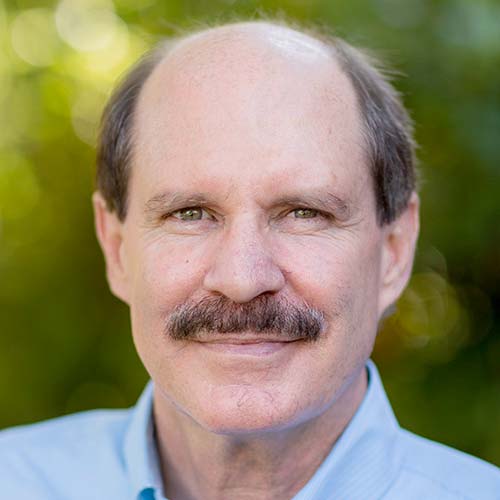
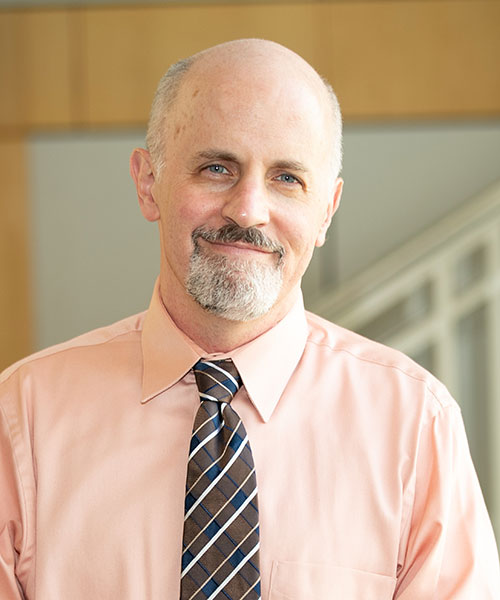
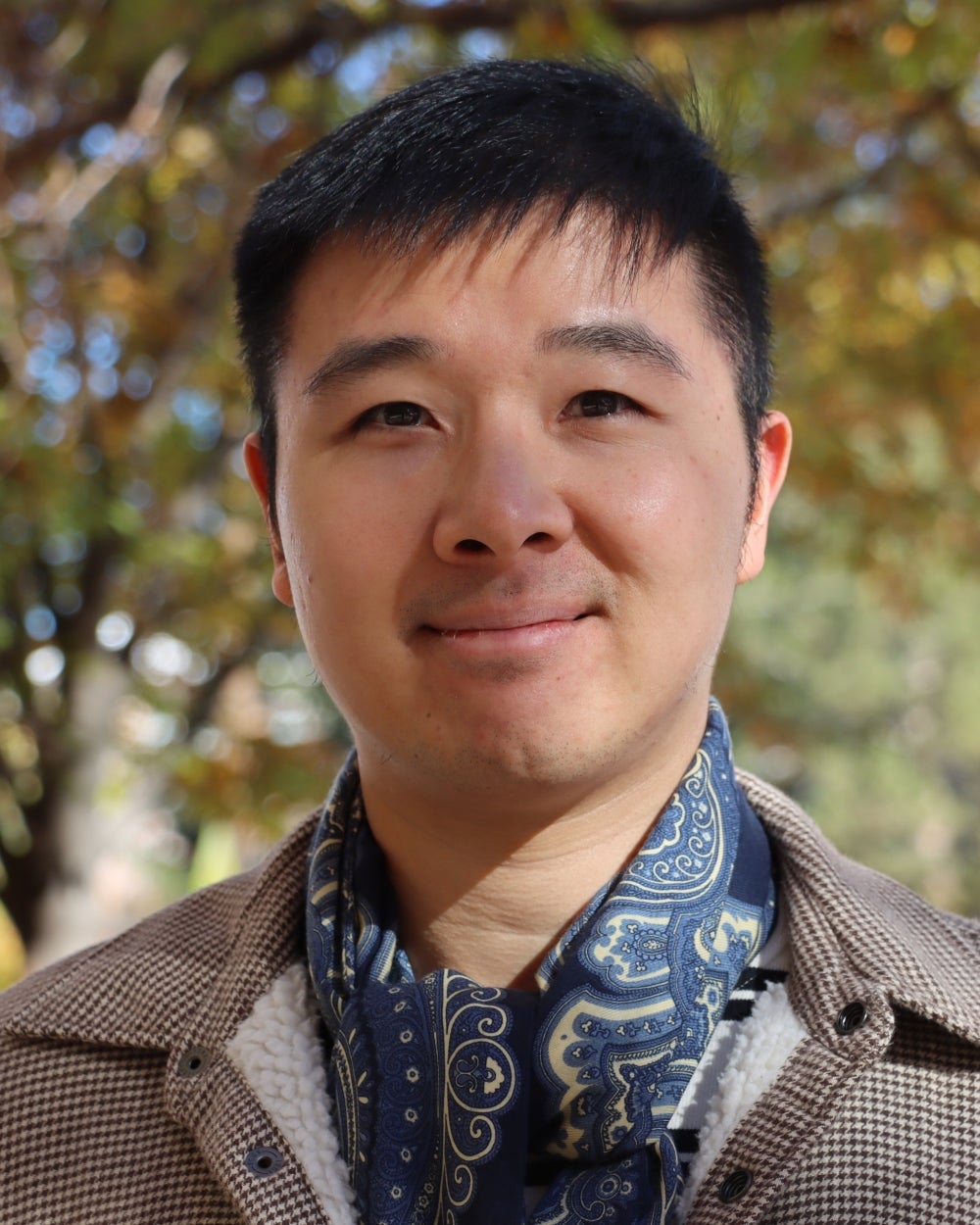
David Friedman is a Researcher affiliated with the Faculty of Classics at the University of Cambridge and serves as Director of Studies in Classics at St Edmund's College. His research focuses on Judaism in the Greco-Roman world, particularly through the lens of ancient historians like Josephus. Fields of Interest: Judaism in the Greco-Roman world, Ancient History, Josephus Studies, Roman Imperialism, Religious Studies, Historiography, Classical Literature, and Cultural Exchange. Email: daf39@cam.ac.uk His recent work includes the 2024 edited volume Looking in, looking out: Jews and non-Jews in mutual contemplation , studies on Dionysius of Halicarnassus and Augustan Rome (2020), and analyses of Josephus's accounts of Jewish origins in Egypt (2017, 2014). No scientific awards or students are mentioned in the provided texts.
Aydogan Kars is a Senior Lecturer in the Department of History at Monash University, affiliated with the Centre for Consciousness and Contemplative Studies. His research focuses on medieval and modern Islamic mysticism, Sufi theology, and interreligious dialogue. Kars has led or co-led seven major research projects, including studies on Sufi genealogies, religious literacy, and the intersection of AI with human selfhood. He holds prestigious awards such as the Monash Faculty of Arts Dean’s Research Award (2021) and a Doctoral Fellowship from the Orient-Institut (2015). Kars actively contributes to academic governance as an editorial board member for the Journal for the Academic Study of Religion and peer reviews for journals like Religions and Journal of Islamic Ethics . His research interests span Islamic philosophy, mystical texts, and comparative theology, with notable work on apophatic theology in medieval Islam. Kars supervises PhD students and collaborates internationally on projects exploring Sufi traditions across Iran, the Ottoman Empire, and modern contexts.
Paul Anderson serves as Professor of Biblical and Quaker Studies at George Fox University's School of Theology, where he has taught since January 1989. His academic journey includes a PhD from Glasgow University, MDiv from Earlham School of Religion, graduate studies at Trinity Lutheran Seminary and Portland State University, and a BA from Malone University. Anderson maintains significant international academic connections as extraordinary professor of religion at North-West University of Potchefstroom (South Africa) and adjunct professor at Barclay College and Portland Seminary. Anderson's research centers on the Gospel of John, Jesus studies, and Quaker theology. He pioneered cognitive-critical analysis of Johannine traditions to address Christological tensions, developing his "Bi-Optic Hypothesis" for understanding John's composition. His influential book The Fourth Gospel and the Quest for Jesus argues for John's significance in historical Jesus research, while From Crisis to Christ provides a contextual New Testament introduction bridging ancient and contemporary contexts. His work on Quaker spirituality, including Following Jesus , explores practical Christian discipleship within the Friends tradition. As a prolific scholar with over 400 published essays, Anderson has shaped Johannine studies through his founding role in the John, Jesus, and History Project (SBL 2002-2016) and co-editing of four major volumes in its series. His recent publications (2021-2024) demonstrate continued scholarly vitality, focusing on Johannine theology, historical Jesus research, and Quaker thought. These works reveal his consistent engagement with dialectical tensions in John, universalism/exclusivism debates, and the application of biblical insights to contemporary spirituality. Founding member of the John, Jesus, and History Project (SBL 2002-2016) Editor of Biblical Interpretation series (E.J. Brill) Editor of Johannine Monograph Series Editor of Quakers and the Disciplines series (FAHE) Former editor of Evangelical Friend (1990-1994) and Quaker Religious Thought (2000-2011) Anderson's academic leadership extends through visiting professorships at Yale Divinity School (where he taught 1998-1999) and Princeton Theological Seminary, along with international appointments as DAAD professor at the University of Mainz and Fulbright Specialist at Radboud University of Nijmegen. His work bridges scholarly rigor and practical spirituality, particularly in Quaker contexts, while maintaining active engagement with contemporary theological debates through his extensive publication record and editorial work.
David Germano is Professor of Tibetan and Buddhist Studies at the University of Virginia's College of Arts & Sciences, Department of Religious Studies. He also holds a Clinical Professor appointment in Nursing and serves as Director of multiple centers including the Tibet Center, the Contemplative Sciences Center, and SHANTI (Social Sciences, Humanities, and Arts Network of Technological Initiatives). Since 2000, he has directed the Tibetan and Himalayan Library, establishing himself as a leading figure in Tibetan studies and digital humanities. Germano earned his B.A. from Notre Dame University in 1984 and completed his Ph.D. at the University of Wisconsin in 1992. His academic career at UVA progressed from Assistant Professor (1992-1998), to Associate Professor (1998-2011), and finally to Professor (2011-present). His research focuses on the Nyingma and Bön lineages of Tibetan Buddhism, particularly tantric traditions and Buddhist philosophy from the eighth to fifteenth centuries. He also studies Tibetan history and literature, contemporary Tibet (especially regarding religion, education, and technology), and digital humanities. Germano is particularly interested in engaged scholarship that inserts higher education into a socially transformative role across various sectors. Germano's publications reveal a consistent focus on Tibetan Buddhist traditions, with particular emphasis on Dzogchen (Great Perfection) teachings, visionary movements, and the intersection of traditional practices with contemporary contexts. His work spans religious studies, anthropology, digital humanities, and Tibetan cultural studies, demonstrating interdisciplinary approaches to understanding Tibetan Buddhism and its modern manifestations. As a leader in digital humanities, Germano has pioneered numerous initiatives including the Tibetan and Himalayan Digital Library, the Tibetan Unicode Project, the Tibetan Literary Encyclopedia, and the Tibetan Language Learning Resources initiative. He has also co-directed the UVa-Machik Geotourism Initiative and the Tibetan and Himalayan Historical GIS project, demonstrating his commitment to innovative approaches for preserving and disseminating Tibetan knowledge.
Paul Harrison is the George Edwin Burnell Professor of Religious Studies at Stanford University , with a courtesy appointment in East Asian Languages and Cultures. He serves as Co-Director of the Ho Center for Buddhist Studies , focusing on Buddhist literature, history, and manuscript analysis across Mahāyāna and Mainstream traditions. Specializes in Buddhist manuscripts in Sanskrit, Chinese, and Tibetan Current projects: Editions of the Vajracchedikā (Diamond Sutra) and Vimalakīrtinirdeśa Research emphasizes textual authority, transmission, and innovation in Mahayana Buddhism Contact: paulh1@stanford.edu | Office: Building 70, Room 72E
John D. Dunne is a Professor and Distinguished Chair in Contemplative Humanities at the University of Wisconsin–Madison, holding an endowed position through the Center for Healthy Minds. He is affiliated with the Department of Asian Languages & Cultures and has served as its department chair. Dunne's research bridges Buddhist philosophy, contemplative practices, and cognitive science, focusing on mindfulness and compassionate training. He is a Fellow of the Mind and Life Institute and advises the Ranjung Yeshe Institute. His work includes translating Buddhist texts and collaborating on interdisciplinary projects. Education: PhD in Buddhist Studies from Harvard University (1999). Research emphasizes dialogues between Buddhist thought and modern science, with public engagement through organizations like the Upaya Zen Center and Gomde centers. Dunne teaches courses on flourishing, Buddhist philosophy, and contemplative practices, including ASIAN/PSYCH 120. His publications span academic journals (e.g., Mindfulness , Frontiers in Psychology ) and books like Foundations of Dharmakīrti’s Philosophy and translations of Nagarjuna’s Ratnāvalī . Scientific contributions include studies on meditation’s neurological effects, compassion cultivation, and mindfulness-based interventions. Awards include his Mind and Life Fellowship. He collaborates with institutions like the Center for Healthy Minds, exploring human flourishing and mental health. Recent work addresses psychedelic research and postmortem meditation states in Tibetan practitioners.
Sophie G. Gee is an Associate Professor of English at Princeton University, with a focus on 17th- and 18th-century British and global Anglophone literature. She is affiliated with the English Department and has held roles such as the inaugural Vice-Chancellor’s Fellow at the University of Sydney. Her research explores themes of literary history, colonial exchange, and cultural practices, with notable works like The Barbarous Feast (forthcoming) and Making Waste (2009). She is also a novelist, with The Scandal of the Season (2007) recognized internationally. Gee advocates for public humanities through writing, podcasts, and initiatives like Mindful Faculty at Princeton, emphasizing mindfulness in academia. Her education includes a PhD from Harvard (2002) and a Class I Honors from Sydney University (1995). Research interests span colonial literature, creative writing, and the intersection of literature with religion, food, and material culture. She has collaborated on projects like the Contemplative Leadership initiative at Sydney University and co-founded the podcast The Secret Life of Books . Awards include recognition from the Washington Post and Economist for her novel, and her scholarly contributions address topics such as Defoe’s Robinson Crusoe , satirical texts, and the role of humanities in contemporary society. Teaching and mentorship are central to her work, with a focus on early modern and 18th-century literature. She has published widely in peer-reviewed journals and platforms like the Times Literary Supplement , and her op-eds address education, parenting, and the value of the humanities. Current projects include a book on uncertainty in scholarship and a podcast exploring literary secrets.
Vincent Debiais is a CNRS Research Director affiliated with the École des Hautes Études en Sciences Sociales (EHESS) and Institut National d'Histoire de l'Art (INHA) in Paris. He leads the research team 'Anthropologie Historique du Long Moyen Âge' (AHLoMA) at the Centre de Recherches Historiques. Education: PhD in Medieval History, University of Poitiers (2004) Habilitation in History of Medieval Art, University of Poitiers (2015) Research Focus: Debiais investigates intersections of written and visual culture in medieval artifacts, specializing in epigraphy, visual theology, and material practices. His current projects examine representations of silence in sacred imagery and abstraction in medieval artistic traditions, combining anthropological approaches with historical analysis. Publications Analysis: His recent works demonstrate consistent focus on materiality of medieval inscriptions across diverse media (stone, textiles, ivories). Key thematic clusters include liturgical objects, funerary epigraphy, visual silence, and methodological innovations in analyzing medieval graphic practices. Awards: Herbert L. Kessler Prize for Medieval Art History (2022) Research Leadership: He directs the international team 'Arts et Intelligences du Silence' (EHESS, 2020-2024), coordinating interdisciplinary research on silence in humanities through seminars, publications, and resident scholar programs.
Neil Dalal is an Associate Professor at the University of Alberta, holding a joint appointment in the Department of Philosophy and the Religious Studies Program. He specializes in South Asian Philosophy and Religious Thought, with expertise in Advaita Vedānta, Yoga philosophies, and Buddhist thought. His research bridges Philosophy and Religious Studies, focusing on contemplative practices, meditation, and self-inquiry in classical Indian traditions. Education: PhD in Asian Cultures and Languages (University of Texas at Austin), MA in East-West Psychology (California Institute of Integral Studies). He has also engaged in extensive fieldwork with Indian monastic renouncers and traditional scholars. Research interests include sudden vs gradual enlightenment in Advaita, meditational roles of memory, philosophy of dreaming, and Yogic approaches to well-being. Current projects explore these themes through close readings of Advaita philosophers like Śaṅkarācārya and their interpretations of Upaniṣads and Bhagavadgītā. Teaching spans undergraduate and graduate courses such as 'Happiness in Indian Philosophy,' 'Meditation and Mind in Indian Philosophy,' 'Advaita Vedānta: India’s Philosophy of Nonduality,' and courses on Hinduism, Buddhism, and Eastern Religions. He also teaches Environmental Ethics and Comparative Philosophy. No scientific awards or grants are explicitly listed in the provided texts. His academic service includes course coordination in Philosophy and Religious Studies programs.
Sarah Jacoby is a Professor of Religious Studies at Northwestern University , specializing in Tibetan Buddhism with particular focus on gender and sexuality, religious autobiography, Buddhist revelation, and Tibetan literature. She holds a Ph.D. from the University of Virginia and previously held a postdoctoral fellowship at Columbia University’s Society of Fellows in the Humanities. Key academic affiliations: Northwestern University (2009–present), Columbia University (postdoc), University of Virginia (Ph.D.) Teaching areas: Introduction to Buddhism, Buddhism and Gender, Tibetan Religion and Culture, Feminist Theory, Religion and Celibacy Research Themes : Jacoby’s work centers on Tibetan Buddhist women’s voices through textual translation and analysis. Her groundbreaking study of Sera Khandro (1892–1940) explores: Autobiographical ventriloquy and spiritual legitimacy Interdependent personhood and relational ethics Translation methodology as ethical practice Gender dynamics in tantric Buddhist practices Academic Impact : 2016 E. Gene Smith Book Prize for Love and Liberation 2015 American Academy of Religion Book Award Finalist Co-organizer of 2022 Tibetan translation workshop Advocate for Tibetan script in academic publications Key Projects : Current book project on Lelung Zhepai Dorjé’s biographical texts Khyentse Foundation Buddhist Studies Lecture Series chair Collaborative translation initiatives with Tibetan writers and scholars
Dr. Stephen C. Berkwitz is a Professor and Department Head of Religious Studies at Missouri State University , affiliated with the Reynolds College of Arts, Social Sciences and Humanities. A leading scholar in South Asian religions, he has published extensively on Buddhism , Theravāda traditions , and religion-colonialism intersections since 1999. Education : PhD (1999), MA (1994) in Religious Studies from UC Santa Barbara; BA (1991) in Religion from University of Vermont. His research focuses on Sinhala and Pali literature , Buddhist kingship , and post-colonial religious identity . Recent publications analyze Buddhist relic veneration, colonial-era texts, and interfaith dynamics. He co-edited the Routledge Handbook of Theravāda Buddhism (2022) and translated the Sinhala Thupavamsa . Scientific Awards : Fulbright Senior Scholar Award (2005) Luso-American Foundation Scholarship (2009) Multiple Ruhr-Universität Bochum fellowships (2011, 2017) Wabash Center grants for religious pedagogy (2010, 2015-2017) University Teaching Award (2004) As series editor for Routledge Critical Studies in Buddhism and editorial board member of three journals, Berkwitz actively shapes global Buddhist scholarship. He has conducted fieldwork in Sri Lanka , Germany , and Portugal , with expertise in South Asian manuscript cultures and Buddhist nationalism .
David L. McMahan is the Charles A. Dana Professor of Religious Studies at Franklin & Marshall College , specializing in Buddhism and its intersections with modernity, science, psychology, literature, romanticism, and transcendentalism. He teaches courses on Asian religions, Buddhist traditions, and comparative religious studies. Ph.D., University of California, Santa Barbara His research focuses on Buddhist meditation practices across cultural and historical contexts, including their secular adaptations in modern settings. Key themes include the relationship between Buddhism and science, the emergence of "Scientific Buddhism" in colonial contexts, and the global transformation of Buddhist traditions. Recent publications include Rethinking Meditation: Buddhist Meditative Practices in Ancient and Modern Worlds (Oxford University Press, 2023) and collaborative work on meditation's role in corporate and psychotherapeutic environments. His academic contributions span historical analysis of Buddhist modernism, critiques of secular mindfulness, and explorations of Buddhist visionary literature. His work has been presented at major conferences including Harvard University, University of Toronto, and the Mind & Life Summer Research Institute Active in interdisciplinary dialogues about Buddhist studies
Ricardo Piñero Moral is a Professor at the University of Navarra, affiliated with the Faculty of Economics and Business Sciences and the Faculty of Philosophy and Letters. He holds positions in the Economics and Philosophy departments, and is part of the research group 'Estética y Arte Contemporáneo'. He earned his Doctorate from the University of Salamanca in 1994 with a thesis on Plotinus' aesthetics and contemplation, supervised by Dr. Mariano Álvarez Gómez. His research focuses on aesthetics, art theory, medieval studies, and the intersection of art with theology, mysticism, and philosophy. Key interests include medieval bestiaries, Spanish Golden Age art theory, contemporary art metaphysics, and the symbolic roles of animals in religious and cultural contexts. Recent publications explore themes like the transformational power of art, the aesthetics of evil in medieval contexts, and the philosophical underpinnings of artistic creation. His work bridges historical analysis with contemporary debates, emphasizing the role of beauty in ethical and existential frameworks. He has not been explicitly noted for scientific awards, though his prolific academic output and scholarly contributions are widely recognized. His advising and grant activities remain unspecified in available texts, though his involvement in interdisciplinary research groups suggests collaborative projects. He is associated with the 'Estética y Arte Contemporáneo' research group, focusing on contemporary aesthetic challenges and cultural dialogue.
Jeremy Engels is the Liberal Arts Endowed Professor of Communication Arts & Sciences at Pennsylvania State University and Barry Director of the Paterno Fellows Program. His work focuses on communication ethics, democracy studies, and mindfulness practices. He holds a B.A. from University of Kansas (2002), M.A. from University of Illinois (2003), and Ph.D. from University of Illinois (2006). Professor Engels has received prestigious awards including the Karl Wallace Award and New Investigator Award from the National Communication Association, as well as the 2017 College of Liberal Arts Teaching Award. He teaches courses on communication ethics, democratic theory, and yoga/mindfulness-based pedagogy. His research explores democracy’s historical foundations to reimagine its future, with notable works like The Ethics of Oneness (2021) and Enemyship (2010). Engels’ scholarship bridges American philosophical traditions with Eastern thought, emphasizing rhetorical analysis of political emotions like resentment and gratitude. He also co-founded Yoga Lab, integrating contemplative practices into civic education. Key Research Themes: Democratic deliberation, rhetorical criticism, political affect, mindfulness in education Teaching Contributions: CAS courses on communication ethics, peace rhetoric, and democratic citizenship Public Engagement: Combines academic expertise with yoga instruction to foster civic mindfulness
Wayne C. F. Yeung is an Assistant Professor of Chinese in the Department of Languages, Literatures & Cultures at the University of Denver, within the College of Arts, Humanities and Social Sciences. He is also affiliated with the Asian Studies program. His research and teaching focus on modern and contemporary Chinese and Sinophone literature, cinema, and cultural politics, with a comparative dimension drawn from French and Francophone studies. His scholarly interests include: Modern and Contemporary Chinese Literature Sinophone and Francophone literary and cultural studies Decolonial and postcolonial theory Historiography and cultural politics in Hong Kong and other non-sovereign spaces Comparative literary analysis, particularly between Lu Xun and Louis-Ferdinand Céline The role of silence and contemplation in literary and political discourse Wayne Yeung’s recent publications analyze the intersections of literature, identity, and political movements, particularly in the context of Hong Kong. His work in journals such as the Journal of Asian Studies and Modern Asian Studies demonstrates a strong engagement with theoretical frameworks from cultural studies and political theory. His research often explores how marginalized or extraterritorial cultures negotiate identity and agency within larger imperial or national formations. His notable articles include: "Deep Imperial Time in Sinophone Poetics of History" (2024), which introduces the concept of "deep imperial time" as a strategy of deimperialization in Sinophone cultural texts. "Poetics of the People" (2021), which examines the Umbrella Movement and literary responses by Dung Kai-cheung and Wong Bik-wan. "Lu Xun's Affirmative Biopolitics" (2024), a critical reflection on Lu Xun’s philosophical dimensions. He has received his PhD in Comparative Literature & Asian Studies from Pennsylvania State University in 2023, following an M.Phil and BA from the University of Hong Kong. He is a member of several academic associations, including the Association of Asian Studies and the Society of Sinophone Studies. While specific information about advising students or securing grants is not available in the provided text, his active publication record and academic position suggest ongoing scholarly leadership and mentorship. He is also involved in public intellectual discourse, occasionally writing about film for Hong Kong newspapers. Wayne Yeung is affiliated with the following academic units: Department of Languages, Literatures & Cultures Asian Studies Program College of Arts, Humanities and Social Sciences