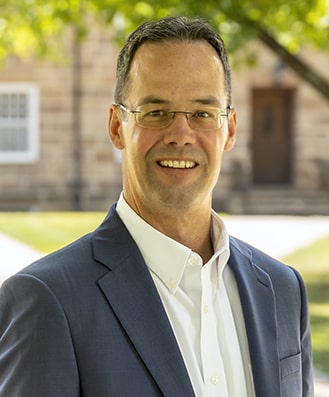
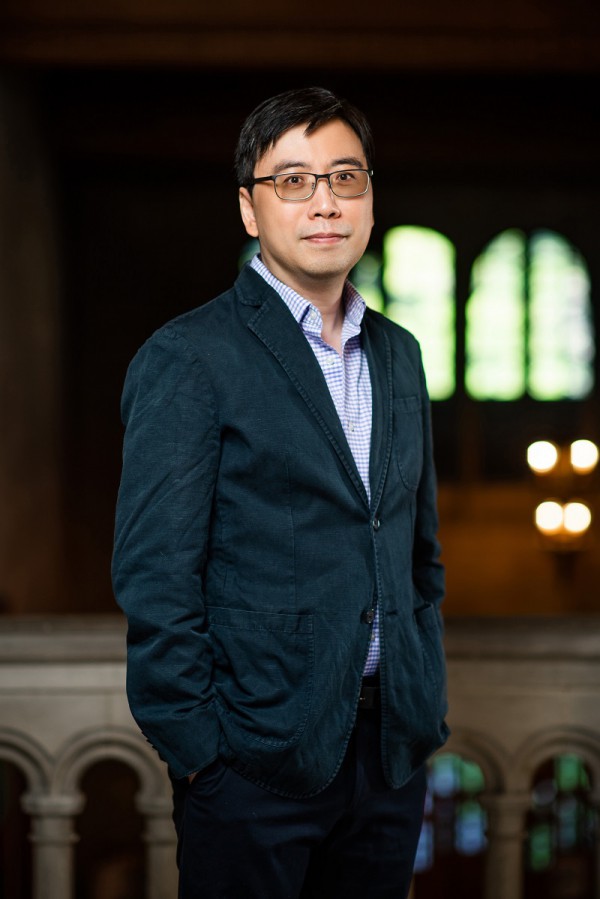
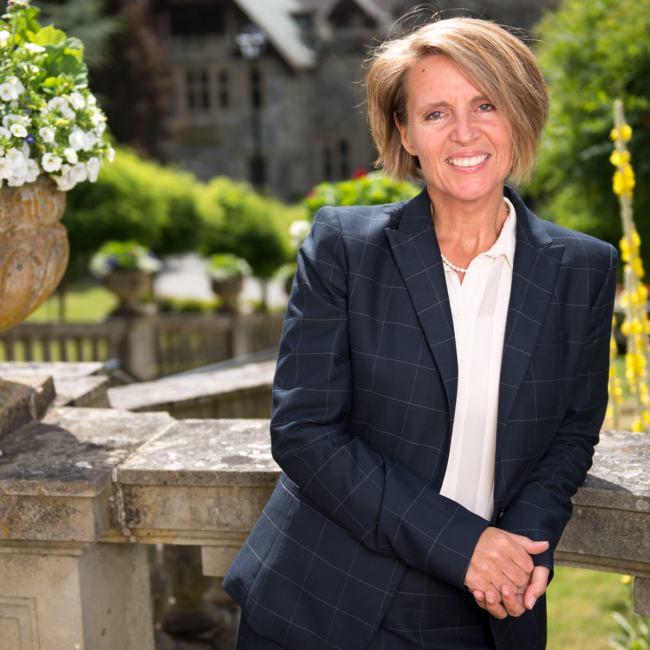
David L. McMahan is the Charles A. Dana Professor of Religious Studies at Franklin & Marshall College , specializing in Buddhism and its intersections with modernity, science, psychology, literature, romanticism, and transcendentalism. He teaches courses on Asian religions, Buddhist traditions, and comparative religious studies. Ph.D., University of California, Santa Barbara His research focuses on Buddhist meditation practices across cultural and historical contexts, including their secular adaptations in modern settings. Key themes include the relationship between Buddhism and science, the emergence of "Scientific Buddhism" in colonial contexts, and the global transformation of Buddhist traditions. Recent publications include Rethinking Meditation: Buddhist Meditative Practices in Ancient and Modern Worlds (Oxford University Press, 2023) and collaborative work on meditation's role in corporate and psychotherapeutic environments. His academic contributions span historical analysis of Buddhist modernism, critiques of secular mindfulness, and explorations of Buddhist visionary literature. His work has been presented at major conferences including Harvard University, University of Toronto, and the Mind & Life Summer Research Institute Active in interdisciplinary dialogues about Buddhist studies
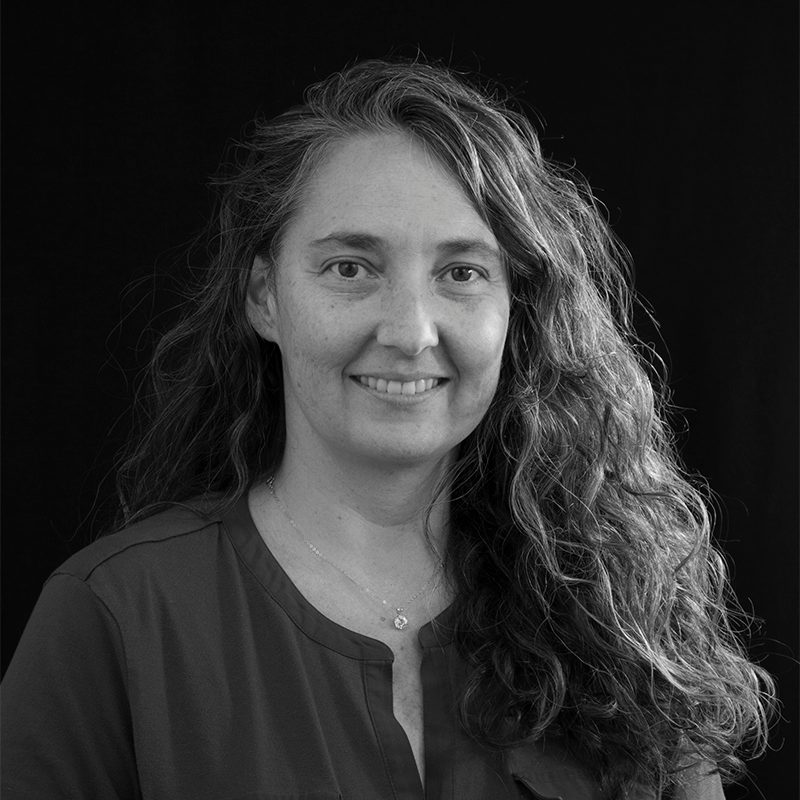
Verónica Perales Blanco is a Professor in the Department of Fine Arts at the University of Murcia's Faculty of Fine Arts, specializing in Drawing. Her artistic research explores intersections of Art/Technology/Ecology , with a focus on ecofeminism , environmental activism , and corporeal perception . PhD in Fine Arts from Universidad de Castilla-La Mancha (2005) Co-founder of Transnational Temps art collective (2001) Coordinates Drawing While Moving educational innovation project Her work addresses planetary embodiment through outdoor learning, participatory installations, and multisensory mapping. Recent publications examine AI integration in artistic practices , interspecies empathy , and ecological awareness amplification . Current affiliations include: OPEN ART research group (GID-Grupo de Innovación Docente) Active Artistic Practices and Citizenship research group Key collaborations span: Stephanie Whitelaw (walking arts) Elise Ashby (ecological mapping) Fred Adam (cosmosis workshops)
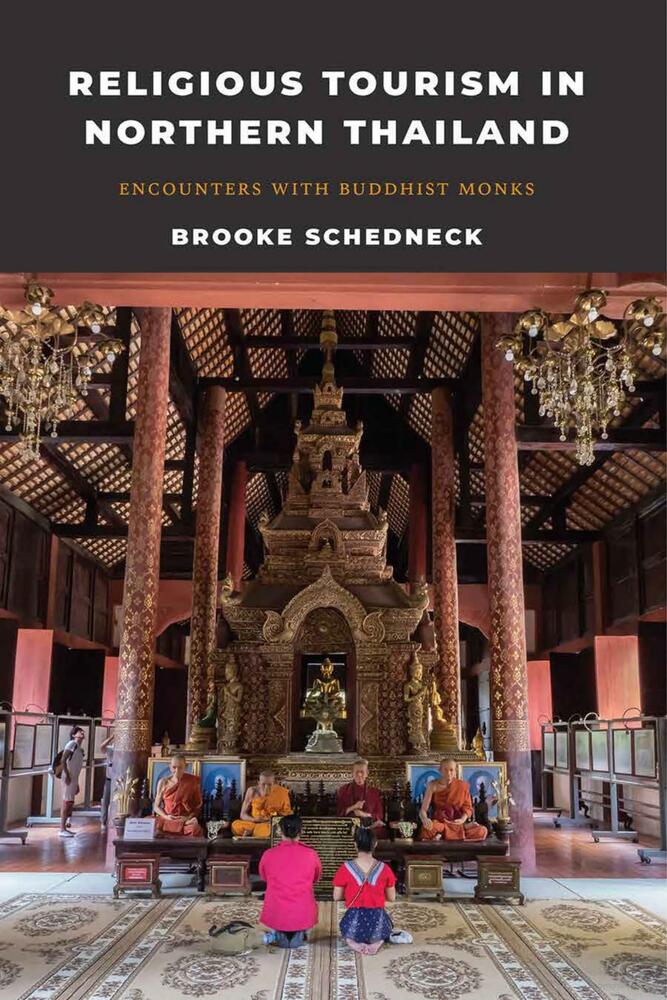
Dr. Brooke Schedneck is an Associate Professor and The W. J. Millard Professor of Religious Studies at Rhodes College, where she has taught since 2017. She specializes in Buddhism, Asian religions, and teaches courses in the Life program. Dr. Schedneck also leads the Maymester in Thailand, drawing on her extensive experience living and conducting research in Thailand for over eight years. Her research focuses on contemporary Buddhism in Thailand, with particular interests in global Buddhism, religions of Southeast Asia, gender in Asian religions, and religious tourism. Previous research has explored the modern vipassana meditation movement in Thailand's international meditation centers and tourist encounters with Buddhism in Northern Thailand. Her current research examines monastic scandals and the monastic body within Thai Buddhism. Dr. Schedneck's publications include the monograph Religious Tourism in Northern Thailand: Encounters with Buddhist Monks (University of Washington Press, 2021), which was short-listed for the EuroSEAS Humanities Book Prize 2022, and Living Theravada: Demystifying the People, Places, and Practices of a Buddhist Tradition (Shambhala Publications, 2023). She has also co-edited Buddhist Tourism in Asia (University of Hawaii Press, 2020) and authored Thailand's International Meditation Centers: Tourism and the Global Commodification of Religious Practices (Routledge, 2015). Short-listed for the EuroSEAS Humanities Book Prize 2022 Dr. Schedneck earned her Ph.D. in Religions of Asia from Arizona State University, an M.T.S. from Harvard University, and a B.A. from Boston University. Prior to joining Rhodes College, she taught study abroad students as a lecturer in Buddhist Studies at the Institute of Southeast Asian Affairs in Chiang Mai, Thailand, for four years. She has been invited to give research presentations in Thailand, Hong Kong, Singapore, and Malaysia.
Michael Evans is a Senior Lecturer in Painting and Programme Leader for Fine Art Painting and Drawing at the University of Northampton, where he has been teaching since 1996. He holds a BA (Hons) in Fine Art from Coventry University and completed a practice-based PhD in 2012 on contemporary abstract painting and spiritual experience. He is an active artist and scholar, supervising PhD students and contributing to journals and edited volumes. Bachelor of Arts (Hons) in Fine Art, Coventry University (1984–1987) PhD in Fine Art (Practice-Based), University of Northampton (awarded 2012) Michael Evans' research is deeply rooted in the intersection of abstract painting, spirituality, and contemporary philosophical inquiry. His work explores apophatic modes of thought, the numinous, and transcendental abstraction within a secular context, while also examining how digital technologies influence contemporary painting practices. He investigates how painting can evoke spiritual or transcendent experiences even in non-religious settings, drawing on traditions of negative theology and Jungian psychology. His recent scholarly and artistic output demonstrates a consistent engagement with themes of emptiness, selfhood, otherness, and the metaphysical dimensions of artistic practice. Publications and exhibitions reflect a trajectory focused on the experiential and contemplative aspects of art, particularly how abstraction can serve as a conduit for spiritual or psychological insight. His work often bridges theory and practice, emphasizing process-based approaches and reflective inquiry. Michael Evans has contributed to significant publications such as the International Journal of Religion and Spirituality in Society and the International Journal of Jungian Studies , as well as edited volumes like Contemplations of the Spiritual in Art and Digital, Painting . His exhibitions, including at the Royal College of Art and Northampton Museum & Art Gallery, highlight his commitment to public engagement and artistic innovation. Contributing author to Contemplations of the Spiritual in Art and Photography Published in International Journal of Religion and Spirituality in Society Published in International Journal of Jungian Studies Exhibitions at Royal College of Art, Northampton Museum & Art Gallery, and North East Wales Institute Michael Evans supervises PhD candidates in Fine Art, including Francis Blore, Nour Zantah, and Natasha Toms, whose projects explore drawing, violence in art, and Baroque imagery. He has not received any explicitly mentioned grants, but his sustained research activity and public exhibitions indicate ongoing institutional and academic support. His leadership in the Fine Art programme underscores his role in shaping contemporary art education. He is actively involved in curatorial and collaborative projects, such as the Material Matters exhibition at Northampton Museum and Art Gallery and the Viewfinder digital art project. These initiatives reflect his engagement with interdisciplinary practices, digital media, and community outreach, positioning him at the forefront of contemporary art discourse.
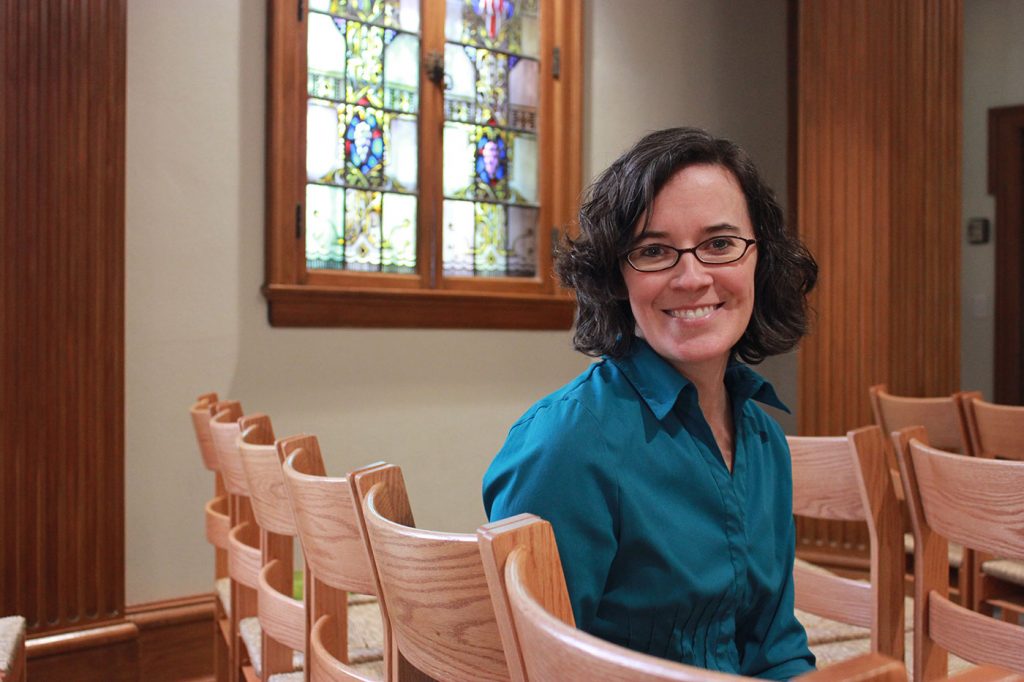
Dr. Shaji Daniel is an Assistant Professor of Counseling at the College of Adult and Graduate Studies - School of Counseling, Colorado Christian University (CCU). He is a Licensed Professional Counselor-Supervisor (LPC-S) in Texas and a National Certified Counselor (NCC), integrating clinical expertise with spiritual formation in his teaching and practice. His work emphasizes holistic care for individuals, couples, and families, grounded in both psychological and faith-based frameworks. Educational Background: Ph.D. in Counselor Education and Supervision, University of the Cumberlands M.Ed. in Professional Counseling, University of Houston–Victoria Master of Theology and Divinity degrees, Serampore University, India Dr. Daniel's research and clinical focus lies at the intersection of multicultural counseling and spiritual integration. He explores the lived experiences of immigrant communities, particularly in the context of interracial marriage, and advocates for culturally competent, spiritually sensitive therapeutic practices. His work addresses depression, anxiety, relationship challenges, grief, and cancer-related distress, employing Cognitive Behavioral Therapy (CBT), Solution-Focused Brief Therapy (SFBT), and interactive counseling models. As a certified SYMBIS facilitator, he also provides premarital and marital counseling. The recent publications reflect a strong trend in qualitative, phenomenological research on intercultural and interracial relationships, spiritual dimensions of mental health, and faith-informed conflict resolution. His scholarly work bridges Christian theology with contemporary counseling practices, contributing to the development of contextually relevant, integrative models of care. Scientific Awards: Doctoral Award for Excellence in Leadership and Advocacy, University of the Cumberlands Ramaiah Award for Excellence in Scholarship, United Theological College, Bangalore While specific grant information is not mentioned, Dr. Daniel's leadership and advocacy recognition suggest involvement in initiatives promoting equity and excellence in counselor education. He mentors future counselors through a pedagogy that combines clinical rigor with spiritual depth, emphasizing journaling, reflection, and contemplative practices to foster inner formation. His teaching philosophy aligns with CCU’s mission to develop compassionate, truth-rooted leaders in the counseling profession. Though no formal lab or research team is mentioned, Dr. Daniel's collaborative publication with his spouse, Dr. Mary Daniel, indicates interdisciplinary engagement, particularly in culturally sensitive counseling. His work with organizations like the American Association of Christian Counselors (AACC) and Journey of Hope Cancer Care Ministries reflects broader professional affiliations and outreach.
Dr. Joseph Azize is an Honorary Associate in Studies in Religion at the University of Sydney's Faculty of Arts and Social Sciences. Despite the university website indicating "There is no academic staff / higher degree research student with the URLID joseph.azize," his active publications through 2024 confirm his ongoing scholarly engagement. He holds multiple degrees from the University of Sydney including BA, LLB, MA qualifying, M.Phil, and PhD. Dr. Azize's research spans multiple domains within religious studies, with particular expertise in: Gurdjieff studies and Fourth Way teachings Ancient Near Eastern religions, especially Phoenician solar theology Early Christian studies and patristics Comparative mysticism and esoteric traditions Religious symbolism and contemplative practices His scholarly output demonstrates consistent engagement with complex religious phenomena across historical periods. His publications reveal a distinctive interdisciplinary approach that bridges textual analysis, historical investigation, and phenomenological examination of religious experience. Particularly notable is his sustained focus on G.I. Gurdjieff's teachings, which he examines not merely as historical subject matter but as living spiritual tradition with contemporary relevance. Dr. Azize has published in numerous prestigious journals including Religions , Postscripts , Aries , and Correspondences . His work shows increasing specialization in Gurdjieff studies in recent years, while maintaining connections to his earlier work on Ancient Near Eastern religions. The thematic evolution in his scholarship suggests a trajectory from historical and textual studies toward more phenomenological and experiential dimensions of religious practice. Among his notable achievements are: Gurdjieff: Mysticism, Contemplation, and Exercises (Oxford University Press, 2020) The Phoenician Solar Theology (Gorgias Press, 2005) Co-editing Ancient Near Eastern Studies, Supplement 21: Gilgames and the World of Assyria (2007) As an Honorary Associate, Dr. Azize appears to maintain active research and publication activities without a formal teaching position. His work bridges academic religious studies with practical spiritual concerns, offering scholarly perspectives on traditions often marginalized in conventional religious studies.
Jud Murray is an Associate Professor in the Department of Religion and Philosophy at Capital University, teaching courses on world religions, Asian religions, ethics, and advanced topics in Buddhism and meditation. He serves as the program coordinator for Interdisciplinary Studies and is an active member of the steering committees for the Midwest Conference on Chinese Thought and the Confucian Traditions Unit of the American Academy of Religion. Education: Ph.D., Brown University M.T.S., Harvard University B.A., The Ohio State University Research Interests: Dr. Murray specializes in East Asian religious and philosophical traditions, with a focus on Confucian moral education, Confucian and Daoist mysticism, and agrarianism in early imperial China. His current research employs contemplative studies methodologies to examine Confucian contemplation and its application in contemplative pedagogy for improving student learning and wellness. Publications Trends: His scholarly output from 2004 to 2021 centers on Chinese intellectual history, particularly the Huainanzi and Han dynasty thought. Notable recent works include entries on Confucian and Daoist mysticism for the Oxford Research Encyclopedia of Religion (2019, 2021), reflecting his expertise in mystical dimensions of East Asian traditions and their contemporary relevance. Advising and Grants: The available information does not specify any graduate students advised or research grants received.
Henry C. H. Shiu is an Assistant Professor in Chinese Buddhist Studies at the University of Toronto, affiliated with New College and Emmanuel College. He holds degrees from the University of Toronto’s Centre for the Study of Religion, including a BA, MA, and PhD. BA, Department of Religious Studies, University of Toronto MA, Centre for the Study of Religion, University of Toronto PhD, Centre for the Study of Religion, University of Toronto His research spans Mahayana Buddhism , focusing on historical and doctrinal aspects of Madhyamaka and Yogacara traditions, and the theory of Tathagatagarbha. He also explores contemporary Buddhist movements, Buddhist Chaplaincy, and Buddhism in Canada. Additional interests include Western classical music (with three publications via Oxford University Press) and Daoist texts like the Laozi and Zhuangzi. Shiu’s publications span Buddhist studies, ethics, and musicology, with a recent emphasis on Canadian Buddhist communities and cross-disciplinary intersections. He co-edited a special issue of the Canadian Journal of Buddhist Studies on Applied Buddhism and contributed to dialogues on Buddhist architecture and animal release practices. He has taught courses such as Buddhist Ethics, Buddhist Contemplative Care, and Buddhist Psychology, while serving as guest editor and receiving the Wabash Digital Salon Grant for documentary work. His affiliations include the American Academy of Religion and the International Association of Buddhist Studies.
Annemarie Gockel serves as an Associate Professor and Practicum Seminar Instructor at Smith College's School for Social Work, teaching foundational practice courses and specialized mindfulness electives to develop clinical competencies in future social workers. Her academic preparation includes: B.A. from Concordia University M.S.W. from the University of Toronto Ph.D. from the University of British Columbia Gockel's research program centers on amplifying marginalized client voices to reshape clinical interventions, particularly in addiction treatment and child welfare. She pioneers the integration of mindfulness and somatic strategies to address fragmentation in healing processes, while developing contemplative approaches for critical consciousness development regarding systemic oppression. Her work bridges spirituality, trauma recovery, and social justice through client-centered methodologies. Analysis of her recent publications reveals a cohesive trajectory toward applying mindfulness in social work education and critical dialogue for social justice. The body of work demonstrates methodological consistency in qualitative approaches while expanding from individual clinical applications to group work and systemic oppression analysis, with increasing focus on pedagogical innovation and structural transformation. Her scholarly contributions have been recognized with the 2022 Best Qualitative Article award from Smith College's School for Social Work. As an educator, Gockel mentors students through practicum seminars and has developed evidence-based mindfulness curricula for direct practice instruction. She collaborates with interdisciplinary teams on research addressing client needs across addiction services, child welfare systems, and spiritual counseling contexts, emphasizing co-creation of interventions with service recipients. Within Smith College's academic community, she contributes to faculty research initiatives advancing clinical training models that integrate contemplative practices with anti-oppressive frameworks, particularly through the School for Social Work's practice-focused programs.
Jeremy Engels is the Liberal Arts Endowed Professor of Communication Arts & Sciences at Pennsylvania State University and Barry Director of the Paterno Fellows Program. His work focuses on communication ethics, democracy studies, and mindfulness practices. He holds a B.A. from University of Kansas (2002), M.A. from University of Illinois (2003), and Ph.D. from University of Illinois (2006). Professor Engels has received prestigious awards including the Karl Wallace Award and New Investigator Award from the National Communication Association, as well as the 2017 College of Liberal Arts Teaching Award. He teaches courses on communication ethics, democratic theory, and yoga/mindfulness-based pedagogy. His research explores democracy’s historical foundations to reimagine its future, with notable works like The Ethics of Oneness (2021) and Enemyship (2010). Engels’ scholarship bridges American philosophical traditions with Eastern thought, emphasizing rhetorical analysis of political emotions like resentment and gratitude. He also co-founded Yoga Lab, integrating contemplative practices into civic education. Key Research Themes: Democratic deliberation, rhetorical criticism, political affect, mindfulness in education Teaching Contributions: CAS courses on communication ethics, peace rhetoric, and democratic citizenship Public Engagement: Combines academic expertise with yoga instruction to foster civic mindfulness
Martha Sullivan serves as the Department Chair and Associate Professor of Practice in the Industrial Design program at Virginia Polytechnic Institute and State University. Her work bridges ceramics , product design , wellness , and community development , with a focus on interdisciplinary collaboration and contemplative practices in design education. Education : M.S.Arch in Industrial Design and B.S. in Geology, both from Virginia Tech Research interests span ceramic arts , mindful design , digital fabrication , and sustainable material practices . Her scholarly outputs include ceramic installations , pedagogical research , and international collaborations in Norway and China. Recent publications highlight subliminal material experiences (2023), student learning assessment (2022), and biomimetic design methodologies (2020). Sullivan’s work emphasizes the intersection of craft and technology , with consistent recognition for teaching excellence and community engagement . Scientific Awards School of Architecture + Design Outreach Award (2022) Excellence in Teaching Award (2022) New River Valley Leading Light Award for service (2019) Tau Sigma Delta National Honor Society (2006) Teaching responsibilities include courses in Handbuilding Clay , Molded Ceramics , and Needs Identification in Healthcare , alongside directing Study Abroad programs.
Dr Joanne Yoo is a Senior Lecturer in the School of Education within the Faculty of Arts and Social Sciences at the University of Technology Sydney (UTS). She specializes in teacher education with expertise in writing pedagogy, academic literacy, and qualitative research methodologies. Her academic profile demonstrates extensive engagement with pre-service teacher education across primary and secondary programs at UTS, where she has worked intensively in quality teacher education development. Joanne began her career teaching English and ESL to secondary students in South Korea, where she first explored autoethnography and narrative inquiry methodologies. Her educational background in teaching English and ESL formed the foundation for her current research trajectory focused on writing as inquiry and embodied practices in academic contexts. Her research centers on writing as inquiry and embodied practices in academic work, investigating how creative, poetic, and sensory-rich writing approaches can transform research and teaching. She challenges conventional academic writing norms by advocating for methodologies that bridge personal and professional knowledge through lived experience. Her book Evocative Qualitative Inquiry Writing and Research Through Embodiment and the Poetic (2022) provides a comprehensive framework for understanding writing as an aesthetic and embodied practice in academic research. Analysis of her publication record reveals consistent exploration of feminist research methodologies , time and temporality in academia , and the relationship between embodiment and knowledge production . Her work often examines the tensions between institutional demands and authentic academic practice, particularly how writing can serve as a transformative tool for both teachers and researchers navigating contemporary academic pressures. Joanne actively supervises Masters Research and PhD students and has secured significant research funding including 'A day in a life' of a child in Australia and Korea (2019-2026), the Claremont PBL project (2016-2017), and research on the Implementation of the New English K-10 Syllabus (2015-2017). Her collaborative work extends through the UTS Hub School partnership with Sydney primary schools, demonstrating her commitment to bridging theory and practice in teacher education with attention to how creative writing approaches enhance both teacher development and student learning outcomes.
Elizabeth O'Donnell Gandolfo is the Associate Dean for Academic Affairs and Earley Associate Professor of Catholic and Latin American Studies at Wake Forest School of Divinity. Her work bridges Catholic theology with contemporary social issues, focusing on vulnerability, ecological degradation, and decolonial studies. She earned a BA from Saint Joseph’s University, MTS from the University of Notre Dame, and PhD from Emory University. Her research emphasizes decolonial theology through Latin American contexts, eco-theological responses to environmental crises, and maternal spirituality. Key works include Ecomartyrdom in the Americas (2023) and Re-membering the Reign of God (2022). She has received the College Theology Society’s Best Article Award (2013) for her work on breastfeeding and theology. Teaches courses on liberation theologies, eco-theology, and Latin American Christianity. Active in academic societies: American Academy of Religion, College Theology Society, Catholic Theological Society of America. Publications span over 15 years, addressing intersectional topics like racism, capitalism, and gender in ecological ethics. Her interdisciplinary approach integrates theology with social justice activism, particularly advocating for environmental defenders in Latin America. Gandolfo’s scholarship challenges colonial structures while offering constructive theological frameworks for systemic change.
Hedy Kober is an Adjunct Associate Professor in Psychiatry at Yale School of Medicine and an Adjunct Associate Professor of Law. She serves as Director of the Clinical and Affective Neuroscience Laboratory at Yale. Her work bridges psychology, neuroscience, and clinical interventions, with a focus on emotion regulation, mindfulness, and addiction. Education PhD in Clinical Psychology (Respecialization), Fielding Graduate University (2021) PhD, Columbia University (2009) MPhil, Columbia University (2008) MA, Columbia University (2007) Research Interests Dr. Kober's research focuses on the cognitive and neural mechanisms underlying emotion regulation, with particular emphasis on mindfulness-based interventions for various conditions including addiction, eating disorders, and depression. Her work explores how individuals regulate cravings, manage negative emotions, and develop healthier behavioral patterns through cognitive strategies and mindfulness practices. She employs a range of methodologies including fMRI, ecological momentary assessment, and clinical trials to investigate these processes in both healthy individuals and those with clinical conditions. Her recent work has increasingly focused on digital interventions that make evidence-based therapies more accessible, particularly for substance use disorders and eating disorders. She examines how brief, scalable interventions can effectively target core mechanisms of behavior change. Research Trends Dr. Kober's recent publications demonstrate a strong focus on the intersection of emotion regulation, mindfulness, and clinical applications. Her work connects basic cognitive neuroscience with clinical interventions, particularly examining how individuals regulate cravings and negative emotions. Recent studies have expanded to include digital delivery of interventions, network approaches to understanding emotional processes, and the development of neuromarkers for addiction. Her research increasingly incorporates longitudinal and ecological momentary assessment methods to capture real-world emotional dynamics. Scientific Awards Outstanding Mentor Award (2019) from American Academy of Child and Adolescent Psychiatry Early Career Investigator Award (2018) from NIDA and NIAAA Teaching Excellence at Yale (2017) from Yale Center for Teaching and Learning Helmsley Fellowship in Cross Disciplinary Science (2016) from Helmsley Charitable Trust Scholar Award (2011) from Yale Center for Clinical Investigation Advising and Grants Dr. Kober has received significant grant funding for her research on emotion regulation and addiction. She serves as Principal Investigator on clinical trials examining brief training for alcohol craving regulation and the role of reward learning and decision making in addiction. Her work has been supported by organizations including NIDA and NIAAA. As a mentor, she has guided numerous students and early-career researchers, recognized by her Outstanding Mentor Award from the American Academy of Child and Adolescent Psychiatry. Laboratory Dr. Kober directs the Clinical and Affective Neuroscience Laboratory at Yale, which investigates the neural and cognitive mechanisms of emotion regulation and their application to clinical problems. The lab employs a multi-method approach including neuroimaging, behavioral experiments, and clinical interventions to understand how people regulate emotions and cravings, with the goal of developing more effective treatments for conditions like addiction and eating disorders.
Dr. Kathy Bishop serves as Associate Professor and Program Head for the Master of Arts in Leadership (Executive Leadership specialization) and Graduate Certificate in Values-Based Leadership at Royal Roads University's School of Leadership Studies. Joining in 2013, she brings over 30 years of multidisciplinary leadership experience spanning counselling, social services, not-for-profit agencies, small business development, and adult education. Her academic credentials include a PhD in Interdisciplinary Studies (Leadership and Applied Theatre) from the University of Victoria (2015) and a Bachelor of Social Work from the University of British Columbia (1986). As a scholar-practitioner, she has maintained her own consulting business since 2000 and previously served as Executive Director of the Parksville and District Chamber of Commerce and a youth-focused non-profit organization. Dr. Bishop's research centers on values-based leadership, organizational culture change, and creativity, utilizing creative, experiential, participatory, nature-based, and transformative learning methods. Her work explores leadership development, online education, action-oriented research, and arts-based methodologies, with particular emphasis on ethical frameworks in applied theatre contexts. Analysis of her publications reveals a consistent trajectory toward integrating arts-based approaches with leadership education, especially in online and collaborative environments. Key themes include mindfulness practices in business education, narrative métissage for community engagement, and ethical considerations in research-based theatre, demonstrating her commitment to innovative, experiential pedagogical models. Her scientific recognition includes: Interdisciplinary Graduate Fellowship Award (2013-14, University of Victoria) Interdisciplinary Graduate Fellowship Award (2012-13, University of Victoria) Through her dual role as academic leader and active consultant, Dr. Bishop bridges theoretical scholarship with practical leadership development, having previously worked as a registered social worker and executive director for community organizations. Her professional journey reflects a continuous commitment to applying leadership principles across diverse social and organizational contexts.