Qi Liu is an Assistant Professor at the Department of Computer Science, University of Hong Kong, and serves as Programme Director for the BASc(FinTech) Programme. He holds an MS from the National University of Singapore and a PhD from the University of Oxford. His research focuses on Natural Language Processing (NLP), Machine Learning (ML), and FinTech. He has contributed to leading conferences/journals such as NeurIPS, ICML, ICLR, ACL, and EMNLP, and actively serves on their program committees. His work includes advancements in relational memory models, causal inference, graph neural networks, and domain-specific representation learning. Key research areas include NLP applications in dialogue systems, counterfactual data augmentation for translation, and hyperbolic representations for knowledge graphs. Recent articles explore cutting-edge topics in photonics, spintronics, and memory device security, reflecting interdisciplinary interests. Education: MS (NUS), PhD (Oxford) Programme Role: BASc(FinTech) Director Email: liuqi@cs.hku.hk Homepage: leuchine.github.io No scientific awards are explicitly listed in the provided text. His research spans theoretical ML advancements and applied FinTech systems, with a focus on scalable NLP solutions and secure memory technologies.
Gino Cattani is a Professor of Management and Organizations at the Leonard N. Stern School of Business, New York University. He joined NYU Stern in 2004 as an Assistant Professor and has since established himself as a leading scholar in innovation, organizational theory, and strategic management. His research explores how firms and individuals navigate technological change, creativity, and social evaluation in competitive environments. His academic background includes a Ph.D. and M.A. in Management from the University of Pennsylvania’s Wharton School, a Doctoral Degree in Business Administration from the University of Pisa, and a B.A. in Accountancy and Business from the same institution. He also spent time as a Visiting Fellow at MIT-Sloan School of Management. Professor Cattani’s research interests center on technological innovation and competition, creativity, social networks, and social evaluation. He investigates how novelty is framed and legitimized, how traditions coexist with innovation, and how cognitive and social structures influence competitive dynamics. His work often bridges theory and practice, offering insights for entrepreneurs, managers, and policymakers. His recent publications, appearing in top journals like Strategic Management Journal , Organization Science , and Strategy Science , reveal a strong focus on systemic innovation, framing of novel ideas, and the role of tradition and social networks in evaluation processes. Themes of legitimacy, cognitive framing, and institutional dynamics recur across his work, demonstrating a cohesive and impactful research trajectory. Strategy Science Best Paper Award 2025 Best Paper Award on Innovation, Corporate Entrepreneurship and Transformation, 2nd Prize EBS University 2022 Best Paper Award on Innovation, Corporate Entrepreneurship and Transformation, 2nd Prize EBS University 2021 NSF Grant 2017 TIM Outstanding Reviewer Award 2015 TIM Outstanding Reviewer Award 2014 OMT Outstanding Reviewer Award 2013 Richard R. Nelson Award Prize 2012 R. J. Litschert Best Doctoral Student Paper Award 2004 Professor Cattani has been involved in significant research grants, including a $294,291 NSF grant supporting his work on competition and entrepreneurial performance in the NYC restaurant industry. He has advised and collaborated with numerous scholars and PhD students, though specific advisees are not listed. His research often involves interdisciplinary teams and real-world data, enhancing its practical relevance. He has contributed to understanding how firms pass on tacit knowledge, how heritage brands innovate, and how investors evaluate novel ideas. While no specific lab or research center is mentioned, his collaborative projects and publications suggest active participation in research teams focused on innovation, strategy, and organizational behavior. His work continues to influence both academic discourse and practical approaches to managing innovation and competition.
Emma Levine is a Professor of Behavioral Science at the University of Chicago Booth School of Business. Her academic work focuses on understanding human behavior in ethical contexts, particularly examining how individuals navigate complex moral dilemmas in both personal and professional settings. As a faculty member at one of the world's leading business schools, she contributes significantly to the field of behavioral science through research, teaching, and thought leadership. Levine earned her BA in Philosophy, Politics, and Economics and BS in Economics from the University of Pennsylvania. She later completed her PhD at The Wharton School, University of Pennsylvania. Prior to her doctoral studies, she gained practical business experience working at Procter and Gamble, which likely informs her applied research approach. Professor Levine's primary research investigates the psychological dynamics of ethical decision-making, with a particular focus on the tension between honesty and benevolence. Her work explores how individuals navigate common ethical dilemmas where telling the truth might cause harm, while deception could provide comfort or protection. Using diverse research methods in both laboratory and field settings, she examines specific circumstances where people welcome deception versus situations where they underestimate the benefits of honesty. Her secondary research stream investigates prosocial behaviors and how individuals give credit to others for good deeds, as well as other ethical conflicts such as rule-following versus discretion, and autonomy versus paternalism. Analysis of Professor Levine's recent publications reveals a consistent focus on deception, honesty, and ethical decision-making across multiple contexts. Her work spans psychology, organizational behavior, and business ethics, demonstrating interdisciplinary relevance. A notable trend is her examination of 'prosocial lies' - situations where deception serves benevolent purposes - and how these are perceived differently across relationships and contexts. Her research also explores leadership ethics, particularly how honesty and benevolence preferences change when dealing with friends versus leaders. The methodological diversity in her work, ranging from controlled laboratory experiments to field studies, strengthens the external validity of her findings. Professor Levine's research has been published in top-tier journals including Proceedings of the National Academy of Sciences, Journal of Personality and Social Psychology, Psychological Science, Journal of Experimental Psychology: General, Academy of Management Journal, Organizational Behavior and Human Decision Processes, and Journal of Marketing Research. Her work has also been featured in media outlets and Chicago Booth Review, where she has written on topics such as new frameworks for talking about lying, the perception of 'little white lies,' and the social implications of sharing professional achievements. As an educator, Professor Levine teaches 'Strategies and Processes of Negotiation,' scheduled for Spring 2026. Her teaching likely integrates her research on ethical decision-making and interpersonal dynamics, providing students with practical insights into navigating complex negotiation scenarios where honesty and relationship management must be balanced.
Professor Kate Senior is a distinguished medical anthropologist at the University of Newcastle's School of Humanities, Creative Industries and Social Sciences. With over 20 years of experience working with remote Aboriginal communities in the Northern Territory, she has established herself as a leading researcher in Indigenous health, youth wellbeing, and community-led research methodologies. Her work is characterized by deep community engagement and a commitment to amplifying Aboriginal voices in health research and policy development. Kate Senior's research primarily focuses on two interconnected areas: the health and wellbeing of people in remote Aboriginal communities, and the sexual health of Indigenous and non-Indigenous young people. She has pioneered community-led approaches that reframe discourses about Aboriginal communities from deficit-based to strength-based perspectives. Her work examines how people understand health and wellbeing, the barriers they face in accessing health services, and the social determinants affecting Indigenous youth. Senior has developed innovative arts-based research methods, including body mapping and photovoice, to engage young people in sensitive conversations about sexual health and relationships. Her research has directly informed national policy on sexual health education and STI prevention, most notably through the development of the 'Life Happens' sexual health game, which is now widely used in schools across Australia. She has also established the Ngukurr News, a community newspaper that has become entirely community-run and serves as a platform for young people's voices. 2017 UOW woman of impact 2017 Vice Chancellors award for Interdisciplinary research excellence 2017 Vice Chancellor's Award for Community Engagement Senior has received significant research funding, including an Australian Research Council Future Fellowship and ARC Linkage Projects. She has supervised numerous students and mentored young Indigenous researchers through community projects. Her work with the Ngukurr community in South East Arnhem Land spans more than two decades, reflecting her commitment to long-term community partnerships. Through initiatives like the Ngukurr News and arts-based research projects, she has created sustainable platforms for community voice and youth engagement that continue beyond her direct involvement.
Wang Wei is a researcher at the University of Skövde's School of Engineering Science. His work spans multiple domains including manufacturing processes, laser welding, digital twin applications, and sustainable supply chain strategies. Key affiliations: University of Skövde, The Virtual Systems Research Centre, SYMBIO-TIC project, VF-KDO project Collaborations with institutions: Nanjing University of Aeronautics and Astronautics, Innovation Fund Denmark, Vinnova Research interests focus on: Advanced manufacturing techniques (machining deformation prediction, thin-walled part optimization) Laser welding process improvement (porosity reduction, dissimilar material joints) Digital twin security frameworks for cyber-physical systems Green technology adoption and sustainable supply chain coordination Recent publications demonstrate expertise in: Neural operator applications for manufacturing Multi-objective optimization in machining Cybersecurity modeling for industrial systems Environmental economics and consumer behavior analysis Co-funded by: Knowledge Foundation (SIMPLE, VF-KDO projects) Vinnova (QWELD, LaserBATMAN projects) EU H2020 SYMBIO-TIC M-ERA.NET 3 call
Professor Woo-Tsong Lin is a distinguished faculty member in the Department of Management Information Systems at National Chengchi University's College of Commerce in Taiwan. With over three decades of academic experience, he has established himself as a leading researcher in supply chain management and information systems. His career at NCCU spans from Assistant Professor (1990-1995) to full Professor (1995-present), with additional administrative roles including Department Chair (1996-1999) and Deputy Dean of the College of Commerce (2010-2011, 2013-2015). Ph.D. in Industrial Engineering & Operations Research, University of California, Berkeley (1988-1990) M.S. in Industrial Engineering, University of California, Berkeley (1985-1988) B.S. in Industrial Engineering, Tunghai University, Taiwan (1977-1981) Professor Lin's research focuses on supply chain management, supply chain innovation, e-business, decision support systems, and software industry development and management. His work bridges theoretical frameworks with practical business applications, particularly in developing optimization models for complex supply chain problems under uncertainty. He has made significant contributions to green supply chain management, reverse logistics, and the application of emerging technologies like blockchain in supply chain contexts. His research often integrates operations research methodologies with information systems perspectives to address contemporary business challenges. Analysis of Professor Lin's recent publications reveals a strong focus on supply chain resilience, sustainability, and the application of advanced computational methods to supply chain problems. His work frequently addresses uncertainty in supply chain networks, green logistics, and the integration of new technologies like blockchain into traditional supply chain operations. There's a clear evolution in his research from foundational supply chain management topics to more complex problems involving sustainability, risk management, and emerging technologies. Distinguished Professor award from National Chengchi University (2008) Professor Lin has led numerous research projects funded by Taiwan's Ministry of Science and Technology (previously National Science Council), focusing on supply chain risk management, green closed-loop supply chains, and innovative applications of information technology in business processes. His research has practical implications for industry, particularly in manufacturing, retail, and technology sectors. While specific student advising information isn't detailed in the provided materials, his extensive publication record with various co-authors suggests active mentorship of graduate students. Professor Lin's work intersects with several research labs at NCCU, particularly those focused on E-Business, Supply Chain Management, and emerging technologies. His research on blockchain applications in supply chain management aligns with interests of the Lab for Electronic Commerce and Service Science, while his work on sustainable operations connects with the Digital Sustainable Enablement Lab.
Dr. Alain Neher serves as an Associate Professor in the School of Business at Charles Sturt University, where he contributes to management education and research. With over 25 years of industry experience in senior management and leadership roles across private, public, and not-for-profit sectors, including armed forces logistics, he brings practical insights to his academic work. His educational background includes a Doctoral degree from Charles Sturt University, two Master's degrees from Lucerne University of Applied Sciences and Arts (Switzerland), and a Bachelor's degree from the University of Applied Sciences in Business Administration Zurich (Switzerland). Professor Neher's research spans multiple interconnected domains including business ethics, organizational culture and values, performance management, workforce well-being, ESG frameworks, and small and medium-sized enterprises. His work increasingly focuses on digital transformation, particularly examining digital internal communication strategies, AI applications in business contexts, and remote work arrangements. He has developed a distinctive research thread connecting organizational values with community engagement through projects like pollinator gardens, demonstrating how workplace values translate into tangible community benefits. His 80+ publications since 2016 reveal a clear trajectory toward addressing contemporary workplace challenges, with significant focus on the impact of digital technologies, the evolution of work practices during and after the pandemic, and the integration of sustainability principles into business operations. His recent work particularly emphasizes the intersection of digital communication tools, remote work arrangements, and organizational culture across various industry contexts. Professor Neher holds a Graduate Certificate in Learning and Teaching in Higher Education and is a Senior Fellow of the Higher Education Academy (SFHEA). He has served as Subject Convener for multiple management courses including Organizations and Management, Organisational Behaviour, Ethics, Sustainability and Culture, and Industrial Relations. As a Course Director, he has designed and revised undergraduate and postgraduate programs. He is actively involved in several research groups including the Aspro Home Affairs, Policing and Security Science (HAPSS) Research Group, Workforce Wellness Research Unit, Regional Entrepreneurship Research Group, and Regional Work and Organisational Resilience Sturt Group Business. His collaborative work often addresses practical workplace challenges, particularly in Australian contexts, with strong connections to community wellbeing initiatives.
Debra Jeffree is a Principal Lecturer and Joint Course Director for the BA Business Management program at Coventry University's Coventry Business School within the Faculty of Business and Law. She serves as Year 3 Tutor for Business Management students and teaches business law and employability skills to undergraduate business students. Dr. Jeffree holds a Law LLB (Hons) degree (1982) and a Further and Higher Education Teaching Certificate (Part 1, 1984). She was awarded Senior Fellow status with the Higher Education Authority in 2016. Prior to her academic career, she gained extensive professional experience in consumer advice, criminal justice mediation, and residential conveyancing in private practice. She has also served as a consultant and external examiner for the National Association of Estate Agents. Her research focuses on solicitor management and training needs, particularly addressing gaps identified in the Solicitors Regulation Authority's 2013 Legal Education and Training Report. She has led negotiations with the Warwickshire Law Society to develop workshops helping local solicitors maintain their practicing certificates by meeting SRA Competency Statement requirements. Dr. Jeffree teaches several key modules including Employability Skills, Legal Aspects of Management Responsibility, Legal Aspects of Responsible Leadership, and Professional Etiquette across various business programs. Her expertise spans Business Law, Employability Skills development, and Undergraduate recruitment and admissions processes, including Clearing. Senior Fellow HEA (2016) Dr. Jeffree has held numerous academic, professional, and managerial responsibilities throughout her career. She has taught a wide range of subjects beyond business law, including Land and Property Law, Business Organisations, and Principles of English Law. Her practical legal experience informs her teaching approach, bridging theoretical knowledge with real-world application in the business context.
Mike Featherstone is Professor of Sociology in the Institute for Creative and Cultural Entrepreneurship (ICCE) at Goldsmiths, University of London. He joined Goldsmiths Sociology Department in January 2013 and moved to ICCE in January 2016. Previously, he was Research Professor of Sociology and Communications and Director of the Theory, Culture & Society Centre at Nottingham Trent University. His academic qualifications include a PhD, MA from Durham University, and BA from State University of Utrecht (1900). Professor Featherstone's research focuses on consumer culture , social and cultural theory , the body , global culture and knowledge formation , ageing and the life course , automobilities , aestheticization processes , and digital culture . His work explores the intersections between material consumption, cultural practices, and social formations, with particular attention to how global processes shape local experiences. He has made significant contributions to understanding luxury consumption, the dynamics of global culture, and the relationship between digital technologies and social life. His recent publications reveal a growing interest in the public sphere in the digital age, the future of universities, and the relationship between consumer culture and sustainability. Featherstone's work consistently bridges theoretical sophistication with empirical richness, examining how cultural practices reflect and shape broader social transformations. His scholarship demonstrates increasing engagement with questions about ecological sustainability, the transformation of knowledge institutions, and the cultural politics of global events. Founding editor of Theory, Culture & Society (1982-) Founding editor of Body & Society (1995-) Editor of Theory, Culture & Society Book Series (1990-) Member of Consortium of Humanities Centres and Institutes (2000-05) HEFCE Research Assessment Exercise Sociology panels (1995-6 and 2001) Professor Featherstone has been a visiting professor in Barcelona, Geneva, Kyoto, Recife, São Paulo, Singapore, Tokyo and Vancouver. He currently spends part of the year working with colleagues at the University of Tokyo and Tokyo University of the Arts on a project related to the Olympics, examining cultural dimensions of global sporting events and their impact on national identity formation in East Asia.
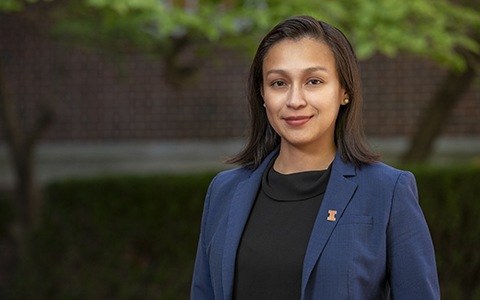
Andrea Rozario is an Assistant Professor of Accountancy at the Gies College of Business, University of Illinois Urbana-Champaign. Her research focuses on the intersection of artificial intelligence, auditing technologies, and financial reporting quality. She explores topics such as AI-driven audit methodologies, regulatory impacts on innovation, and the use of social media data in financial risk assessments. Rozario's work emphasizes practical applications of emerging technologies in accounting practices, including robotic process automation (RPA) and blockchain. Her recent articles analyze how AI laws influence corporate innovation, the role of consumer sentiment in revenue risk evaluation, and the implementation of RPA in accounting workflows. Despite the breadth of her research, no specific honors or awards are listed in her profile. Rozario teaches courses in accountancy and is affiliated with the Gies College of Business, though detailed information about grants or advising is not provided in the text. Rozario’s work bridges academic inquiry and real-world auditing challenges, particularly in leveraging computational tools for enhanced transparency and efficiency in financial reporting. She has published in journals such as Auditing: A Journal of Practice & Theory and Journal of Emerging Technologies in Accounting , reflecting her commitment to advancing technology-driven accounting practices.
Dr. Rebecca Dong is a Lecturer in Management at the UTS Business School, University of Technology Sydney. Her research focuses on fostering sustainable workplaces, psychological safety, and organizational behavior, with emphasis on themes like motivation, knowledge sharing, and international management. She holds roles such as Early Career Researcher Representative on the UTS Business Faculty Research Committee and has contributed to editorial boards of journals like Humanities and Social Sciences Communications . Her work spans 25+ publications in top-tier journals and conferences, addressing issues like supply chain innovation, carbon reduction strategies, and age-friendly transportation policies. Dr. Dong is recognized for teaching excellence, having received awards such as the UTS Business School Award for Teaching and Learning and Top Teacher Award. She teaches courses in Human Resource Management, International Business, and Sustainable Management. Beyond academia, she has received community accolades including the 2018 Governor's Multicultural Awards (Youth Award) and the 2018 Premier's Certificate for Outstanding Volunteer Service. Her funded research includes projects on disruptive technologies in allied health (AR/VR in footwear) and explores topics like digital leadership and AI in education. She actively reviews for high-impact journals and serves on academic committees, reflecting her dedication to advancing both scholarly and practical contributions to management and organizational studies.
Professor Marcus Berliant is a Professor of Economics and Chair of the Ph.D. Admissions Committee at Washington University in St. Louis. He holds a Ph.D. from the University of California, Berkeley. His research focuses on economic theory, public finance, urban economics, and positive political theory. Current work includes studies on income taxation politics, knowledge creation microstructure, and urban growth dynamics. Key publications span topics such as tax equity, public goods provision, and urban spatial models. He has advised 39 Ph.D. students, many placed at top institutions like Stanford University. Awards include Fellow of the Regional Science Association International (2005), two Outstanding Faculty Mentor Awards, and the 2003 Emerson Excellence in Teaching Award. Prior to Washington University, he taught at the University of Rochester and served as a Congressional staff member. Research interests emphasize interdisciplinary approaches, blending mathematical rigor with policy relevance. His work frequently addresses spatial economics, taxation systems, and the interplay between knowledge and economic growth. Appendices to recent works explore advanced topics like knowledge diversity and labor differentiation in general equilibrium frameworks.
Frank Mueller is a Professor in Accountability, Organisations & Strategy at Durham University Business School. He holds an MSc and DPhil from Oxford University and a first-class degree from Konstanz University. With 29 years of research experience, he has published 77 works including 25 in ABS 4-rated journals and 17 in ABS 3-rated journals (h-index: 38, i10-index: 60). His research focuses on three interconnected areas: Strategy, Organisation, Leadership & Change Governance, Accountability, and Public/Private Interfaces Financial Crisis and austerity policies Recent publications explore themes like ESG mediation, philanthropic influence in higher education, discursive accountability in social media regulation, and dramaturgical approaches to strategic change. His methodology combines discourse analysis with practice theory and field studies. He has held positions at Newcastle, St Andrews, Leicester, Royal Holloway, Aston, and London Business School.
Jennifer Chang Coupland is a Clinical Professor of Marketing at Pennsylvania State University's Smeal College of Business. She joined Penn State in 1998 after earning her Ph.D. and M.S. in Marketing from Northwestern University and B.S. from UC Berkeley. Teaching: Instructs MBA Brand Management, Honors Marketing, Advertising, and oversees the Penn State Prime Brand Management & Campaign Strategy Practicum. Recognized with multiple teaching awards including the 2021 Fred Brand, Jr. Excellence in Teaching Award. Research Focus: Studies consumer behavior and brand meaning using qualitative methods like ethnography, interviews, and projective techniques. Her work examines household consumption patterns, particularly food-related behaviors and symbolic brand functions. Professional Background: Former account executive at O'Brien Communications and visiting professor at Jordan McGrath Case & Partners Advertising. Currently serves as faculty advisor for Penn State Prime and marketing honors advisor to Schreyer Honors College.
Dr. Maher Al-Greer is an Associate Professor (Research) at Teesside University's School of Science, Engineering and Design Technology (SCEDT), specializing in electrical engineering with a focus on power electronics, battery management systems, and smart grids. He holds a PhD from Newcastle University (2012) and has extensive academic and industry experience, including roles as a post-doctoral researcher and senior lecturer. Education: PhD in Control of Power Electronic Converters (Newcastle University, 2012) Key Roles: Associate Editor of IET Power Electronics, Co-Chair of UPEC 2021 Conference, External Examiner for multiple universities Awards: Best Paper Award (IEEE UPEC 2022), Fellow of the Higher Education Academy (FHEA) Research Interests: Battery Management Systems, Renewable Energy Integration, Smart Grids, Signal Processing, and AI-driven solutions for energy systems. His work emphasizes translating research into practical applications, such as battery health monitoring and grid stability. Grants & Projects: Over £100K secured from UKRI, Lloyd’s Register Foundation, and others. Notable projects include solar-PV hybrid systems, battery recycling frameworks, and adaptive fast-charging for EVs. Research Highlights: 70+ publications, 8 supervised PhD students, and collaborations with global institutions like the Technical University of Munich and Middle East Technical University. Consulting: Advised companies on maritime HVDC systems and portable battery solutions.