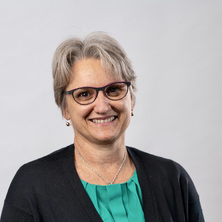
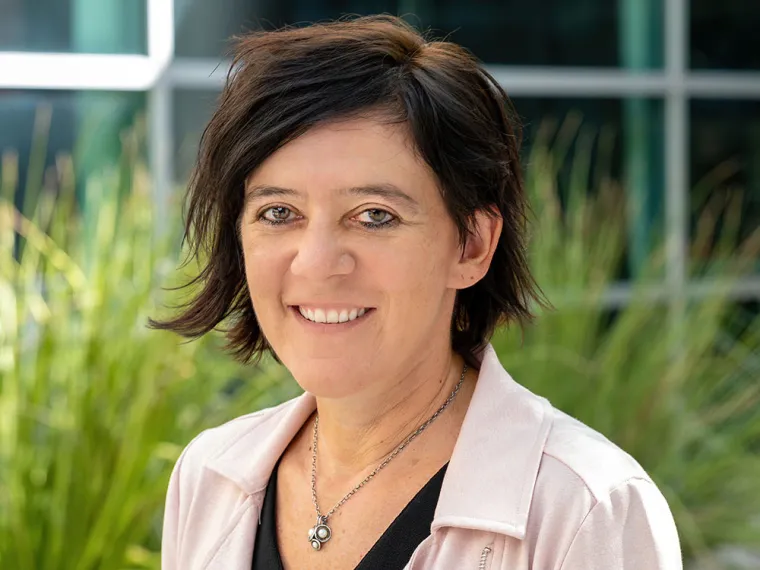
Michael A. Carron, M.D., is an Associate Professor and Vice Chairman in the Department of Otolaryngology-Head and Neck Surgery at Wayne State University School of Medicine. He serves as Division Chief of Facial Plastic and Reconstructive Surgery, focusing on clinical education and surgical advancements. Education: Lyman Briggs School at Michigan State University, University of Michigan Medical School Training: General Surgery Internship, Otolaryngology Residency, and Facial Plastic Surgery Fellowship at New York University School of Medicine Dr. Carron specializes in Facial Plastic Surgery and Reconstructive Surgery, with expertise in aging facial correction, rhinoplasty, eyelid surgery, nasal obstruction, skin cancer reconstruction, maxillofacial trauma, and scar revision. His research explores facial trauma patterns, aesthetic procedures, and medical malpractice trends. Recent publications analyze motorized scooter injuries, facial implant complications, and digital health resources for rhinoplasty and neck-lift procedures. He contributes to understanding cost-effectiveness in surgical techniques and readability of online medical information.
Dr. Barry Silverman serves as the Schlobach Distinguished Chair in Business at Marist College's School of Management, bringing 30 years of expertise as an educator and marketing consultant for Fortune 500 companies. A featured speaker at the American Marketing Association, he uniquely integrates commercial enterprise, business consulting, and academic experience to analyze contemporary business and cultural trends. His academic credentials include: PhD in International Business from International School of Management (2023) MBA in Marketing from Fairleigh Dickinson University (1995) BA in Economics and English from Rutgers College (1987) Dr. Silverman's research examines the intersection of socio-economic dynamics, generative AI, and marketing strategy. He investigates how cultural shifts impact consumer behavior and brand decision-making, while pioneering applications of AI in marketing processes. His work bridges theoretical frameworks with real-world business challenges across global contexts. His publication portfolio reveals a trajectory toward technology-driven marketing analysis, particularly in healthcare and international trade domains. Recent works emphasize data-centric approaches to brand strategy while maintaining focus on core relationships between corporate identity and business outcomes in evolving economic landscapes. His academic recognition includes: Teaching Excellence Award as Highest Rated Marketing Instructor in NYU Program (2015) Dr. Silverman actively shapes practical marketing education through course development and student mentorship. His initiatives include revitalizing Branding and Integrated Communications curricula, designing the internationally deployed Advanced Brand Strategy course, and establishing collaborative networks connecting students with local enterprises for real-world projects. He founded The NYU BrandLab student blog to foster professional dialogue and content creation within the marketing discipline. He leads The NYU BrandLab initiative, creating platforms for students to engage with marketing professionals while producing industry-relevant content that advances disciplinary knowledge and practical application.
Soumitra Chowdhury is a Visiting Professor in Data-Driven Business Innovation at the Department of Informatics, Linnaeus University. He contributes to the Data-driven Business Innovation (DBI) research group and focuses on evolving business models through digital transformation. His research spans digital services, smart product-service systems, and remote diagnostics. Key themes include Business model adaptation in omnichannel retail Human-machine collaboration in AI Sustainability via industrial IoT His publications emphasize hybrid systems, digital platform generativity, and data analytics. He has co-authored works on SME resilience during crises and smart transportation diagnostics. He has collaborated with institutions like the University of Gothenburg and participated in international conferences such as CIRP, PACIS, and MCIS. His 2015 doctoral thesis on digital service innovation in the vehicle industry remains a foundational reference in embedded technology research.
Katja de Vries is a Senior Lecturer in Public Law at Uppsala University's Department of Law and affiliated with the Institute of Legal Informatics (SU). Her work bridges legal scholarship with technological innovation, focusing on the societal implications of artificial intelligence within European regulatory frameworks. Dr. de Vries holds a doctorate in law (Jur. dr.) and has developed an interdisciplinary research profile centered on the legal dimensions of emerging technologies. Her academic trajectory demonstrates consistent engagement with the evolving relationship between law and computational systems since her early work on profiling algorithms (2009-2010). Her research program critically examines AI's impact on fundamental rights, with current emphasis on AI-created data and voices. She leads the Swedish Research Council-funded VOICE project (2025-2030) investigating legal and societal perspectives of synthetic speech. Key thematic clusters include algorithmic transparency (counterfactual explanations in ADM systems), data governance (synthetic data and European data commons), and regulatory responses to AI (EU AI Act implementation, digital right to repair). Her scholarship uniquely combines doctrinal legal analysis with insights from computer science, ethics, and social theory. Analysis of her 15 most recent publications reveals intensifying focus on practical regulatory challenges in EU digital policy, particularly regarding AI-generated content and sustainable technology. Her work demonstrates methodological evolution from theoretical explorations of profiling (2010) toward solution-oriented research addressing contemporary legislative gaps, while maintaining critical theoretical engagement with legal personhood and algorithmic power structures. Scientific Awards: No awards were documented in the source materials. Dr. de Vries directs the VOICE research environment (Swedish Research Council 2025-2030), which examines legal frameworks for AI-generated voices through interdisciplinary collaboration. She previously contributed to EU projects including USEMP (User Empowerment for Enhanced Online Presence Management). Her policy impact is evidenced through formal opinions like the 2023 Uppsala Law Faculty statement on the EU repair directive, demonstrating translation of academic research into legislative discourse. She maintains active collaboration with researchers across computer science, social sciences, and humanities. The VOICE initiative represents her primary research infrastructure, assembling legal scholars, technologists, and social scientists to study AI voice synthesis implications. This environment facilitates her distinctive approach to technology regulation that prioritizes societal values alongside technical feasibility, particularly regarding embodiment in synthetic media and legal personhood questions emerging from creative AI applications.
Lennart Nacke is a Professor at the Stratford School, University of Waterloo, specializing in game design and user experience research. His work bridges virtual reality, gamification, and AI integration in interactive systems. Research focuses on player experience, ethical design, and biofeedback mechanics Active in HCI literature methodology and CHI conference frameworks Explores privacy implications of immersive technologies Recent publications examine VR embodiment, NFT communities, and AI-assisted academic writing. His projects include adaptive board games and physical-cognitive rehabilitation systems. Nacke contributes to the Games Institute's research at EC1 1309 and DMS 3012 labs.
Dr. Kirrilly Pursey is a Lecturer in Nutrition and Dietetics at the School of Health Sciences , University of Newcastle. As an Accredited Practising Dietitian and early career researcher , her work bridges clinical practice with multidisciplinary research in food addiction , neuroimaging , and pediatric nutrition . Education: PhD and Bachelor in Nutrition and Dietetics from University of Newcastle. Research Focus: Investigates addictive-like eating behaviors , dietary impacts on immune function , and prevention of eating disorders in schools . Key collaborations include international institutions like University of Michigan and Western Sydney University. Publications: Over 40 peer-reviewed articles in high-impact journals, including systematic reviews on food addiction , neural responses to food , and nutrition in immunodeficient children . Scientific Awards: Recognized with HMRI ECR Excellence Award (2024), UoN CHMW ECR Award (2022), and multiple grants. Clinical Practice: Serves as Clinical Allied Health Conjoint with Hunter New England Health, integrating real-world insights into research. Supervision of honors students and clinical teaching in Clinical Nutrition and Pediatric Dietetics further strengthens her translational approach.
Dr. Yong Wang serves as Senior Lecturer in the School of Chemical Engineering at the University of New South Wales Sydney, where he leads cutting-edge research in food engineering and technology. His academic journey includes a PhD from a joint program between China Agricultural University and University of California Davis (2011), followed by research positions at Monash University (2019-2020) and COFCO Nutrition and Health Research Institute in Beijing (2011-2019), including an Australian Endeavour Fellowship at The University of Queensland in 2016. Most recently, he was awarded an OECD Fellowship for the Co-operative Research Programme: Sustainable Agricultural and Food Systems, collaborating with MIT in April-June 2024. Dr. Wang's research focuses on food structure design (including mechanical properties for solid foods and rheological design for liquid/semi-solid foods), food processing technology (drying, emulsion, encapsulation), plant-based food developments, and human mimicking digestion systems. His work bridges fundamental science with practical applications in sustainable food systems, with particular emphasis on improving plant-based alternatives and novel food manufacturing processes. His current research projects span plant milk technologies, Australian hazelnut processing, alternative texturizers for plant-based meats, and fat distribution in food emulsion gels. His publication record includes 170 journal articles and 12 book chapters, with research trends showing increasing focus on sustainable food technologies, plant-based alternatives, and advanced food structure characterization. Recent work demonstrates expertise in interfacial rheology, 3D food printing, molecular dynamics of plant proteins, and AI applications in food science. OECD Fellow for the Co-operative Research Programme: Sustainable Agricultural and Food Systems (2024) Australian Endeavour Fellowship (2016) Editor of Food Chemistry X (Elsevier) Associate Editor of Measurement: Food (Elsevier) Editorial Board Member of Food Chemistry (Elsevier) Dr. Wang has secured over 1 million AUD in research funding since 2011, currently leading multiple projects including 'Advancing Plant Milk Technologies through Interfacial Rheology' (Sanitarium & Future Food Systems CRC, $232,000), 'Australian hazelnuts processing and quality enhancement' (AgriFutures Australia, $160,000), and 'Engineering network-forming behaviours of plant proteins' (Australian Research Council, $699,300). His research supervision focuses on food structure design, rheology, plant-based foods, and encapsulation technologies, with available honours projects spanning food 3D printing, vegetable chip development, and AI applications in flavor identification. He coordinates and teaches Advanced Food Engineering (FOOD4450/8450) and several other food science courses at UNSW.
Professor Rob Harle is a Fellow in Computer Science and Technology at Downing College, University of Cambridge. His research focuses on wearable sensors, indoor localization, and human activity recognition. Academic Rank: Professor Affiliation: University of Cambridge Email: robert.harle@dow.cam.ac.uk Research Interests: Spanning over three decades, Harle's work bridges computer science and biomechanics. Key themes include: Development of real-time wearable systems for gait analysis and sprint profiling Advances in indoor positioning using Bluetooth beacons and magnetic sensing Integration of inertial measurement units (IMUs) with machine learning algorithms Privacy-preserving location tracking and sensor calibration techniques Recent Trends: His 2025 publications indicate continued innovation in fitness optimization using adaptive algorithms and population-based physiological modeling for consumer wearables.
Yixin Lu is an Associate Professor of Information Systems & Technology Management at the George Washington University School of Business. Her research spans the intersection of Information Systems, Economics, and Public Policy, examining how technological advances impact individuals, organizations, and society as a whole. Dr. Lu received her Ph.D. from Rotterdam School of Management, Erasmus University. Dr. Lu's research focuses on understanding the broad impact of technological advances across multiple domains. Her primary areas of expertise include Business Applications of Artificial Intelligence, Digital Health, Mechanism Design, and Sustainability. Her work combines theoretical rigor with practical relevance, often employing experimental and econometric methods to study complex dynamics in both traditional markets and emerging digital platforms, leading to practical insights in market design and operations. Dr. Lu's publication portfolio demonstrates a consistent trajectory of high-impact research in top-tier journals. Her work spans several interconnected themes: auction theory and market design (particularly in B2B contexts), digital health applications, AI in business settings, and e-commerce innovations. Many of her papers appear in FT50 and UTD24 journals, reflecting the high quality and impact of her research. Outstanding Associate Editor Award, Information Systems Research, 2024 INFORMS Information Systems Society (ISS) Design Science Award, 2021 Association for Information Systems (AIS) Early Career Award, 2021 Best Reviewer Award, Information Systems Research, 2021 Outstanding ISTM Faculty Award, The George Washington University School of Business, 2021 Association for Information Systems (AIS) Impact Award, 2020 Best Associate Editor Award, International Conference on Information Systems (ICIS), 2020 Best Paper Award (runner-up), Conference on Health IT and Analytics, 2020 Dr. Lu serves as an Associate Editor for Information Systems Research since 2022, where she received the Outstanding Associate Editor Award in 2024. She regularly reviews for leading business and management journals and has taken on significant leadership roles including program co-chair and associate editor positions at major field conferences. She has been honored as a Senior Member by INFORMS and Distinguished Member by AIS.
Prof. Stephan Jonas serves as Professor of Digital Health at the Technical University of Munich (TUM) within the TUM School of Computation, Information and Technology, appointed in 2019. His work integrates environmental sensors, wearable technology, and data management systems for health applications with strict adherence to privacy regulations. His academic background includes Computer Science studies at RWTH Aachen University (2009) and a PhD from RWTH Aachen University Hospital in collaboration with Yale University School of Medicine (2014). Research focuses on validation of commercial sensors, privacy-compliant data processing, and mobile health solutions. Key specialties include wearable sensor integration for clinical applications, machine learning in healthcare forecasting, and diagnostic tool development for resource-constrained environments. His work bridges computer science, medical informatics, and clinical practice through interdisciplinary collaboration. Publication trends (2016-2019) reveal consistent innovation in health data security, predictive modeling for hospital operations, and mobile diagnostic platforms. His research demonstrates strong convergence of sensor technology, privacy engineering, and clinical implementation across sleep medicine, maternal health, and infection prevention domains. Prior to TUM, Prof. Jonas led the mobile health research department at RWTH Aachen University Hospital's Institute of Medical Informatics, establishing foundational work in sensor-based health monitoring systems.
Professor Tracy Comans is a UQ Amplify Fellow at the Centre for Health Services Research , University of Queensland, and Adjunct Research Fellow at Royal Brisbane and Women’s Hospital . She specializes in health economics applied to aged care, dementia, and rehabilitation services. Education: PhD (UQ), Bachelor of Physiotherapy (UQ), Bachelor (Honours) of Economics (UQ) Her research develops innovative economic models for healthcare interventions, focusing on: Dementia care quality measurement Telehealth implementation Informal caregiving impacts Frailty in chronic disease Value-based healthcare Recent work includes: Developing the AD-5D dementia utility instrument Frailty KIT national network Consumer-directed care economics Smart home aged care solutions Scientific Awards: NHMRC Boosting Dementia Fellowship (2017-2021) Multiple NHMRC/ MRFF grants Collaborative research leadership She supervises PhD candidates in: Health economics Digital health Geriatric medicine Implementation science
Gondy Leroy is a Professor of MIS and Associate Dean for Research at the University of Arizona's Eller College of Management . She leads the Center for Management Innovations in Healthcare and the Deep Target NLP Research Group , focusing on natural language processing and machine learning applications. Education: PhD in Management Information Systems (2003), University of Arizona MS in Management Information Systems (1999), University of Arizona BS/MS in Experimental Psychology (1996), University of Leuven, Belgium Research Interests: Includes text simplification algorithms , automated behavioral annotation in EHRs for ASD diagnosis , and informatics design. Her work spans human-computer interaction , healthcare information systems , and consumer data understanding . Grants & Contributions: Has secured $5.7M as principal investigator from NIH, AHRQ, NSF, Microsoft Research, and foundations. Authored "Designing User Studies in Informatics" (Springer, 2011) and founded the Tomorrow’s Leaders Equipped for Diversity program. Affiliations: Cognitive Science - Graduate Interdisciplinary Program Health Aging Innovations Valley Fever Center for Excellence Bio5
Luis Vargas is a Professor of Operations, Decision Science, and Artificial Intelligence at the Joseph M. Katz Graduate School of Business, University of Pittsburgh, with a career spanning over four decades focused on advancing decision science methodologies and their real-world applications. His academic credentials include: PhD in Mathematics from the University of Sevilla, Spain PhD in Social Systems Sciences from the Wharton School of the University of Pennsylvania Professor Vargas' research centers on decision theory, the Analytic Hierarchy Process (AHP), conflict resolution, and group decision making, with significant contributions to measuring resource utilization and forecasting. His work bridges theoretical rigor with practical implementations across healthcare operations, international conflict mediation, and public policy analysis, demonstrating how structured decision frameworks can resolve complex societal challenges. Analysis of his 2019-2023 publications reveals a dual research trajectory: one strand applies AHP/ANP to geopolitical conflicts (Russia-NATO relations, Israeli-Palestinian issues) and public safety (police-community relations, gun policy), while another advances healthcare operations through patient-physician collaboration models and clinic efficiency optimization, all unified by multicriteria decision-making principles. His scientific recognition includes: Juan March Foundation Scholarship (1976-78) Outstanding Professor of the Year Award at Katz Graduate School of Business (1984) Professor Vargas has shaped his field through sustained academic leadership as Senior Editor of The International Journal of the Analytic Hierarchy Process, organizer of multiple ISAHP symposia (including chairing the 1991 and 2018 editions), and founder of the International Center for Conflict Resolution (2018). His teaching portfolio spans PhD-level courses in Decision Theory and Multivariate Analysis alongside MBA instruction in Forecasting, Revenue Management, and Data Mining, reflecting his commitment to translating research into educational impact.
Brenda Leung is an Associate Professor at the University of Lethbridge in the School of Health Sciences, Public Health Program, and holds the Emmy Droog Chair in Complementary and Alternative Healthcare. She also serves as an Adjunct Assistant Professor at the Cumming School of Medicine, University of Calgary, and a Visiting Research Fellow at the Australian Research Centre in Complementary and Integrative Medicine (ARCCIM), University of Technology Sydney, Australia. Her research integrates epidemiology and naturopathic medicine, focusing on complementary and alternative healthcare (CAHC) therapies for chronic diseases, integrative healthcare approaches, and maternal/child health. Current projects include acupuncture for childhood anxiety and the role of multi-micronutrients in maternal mental health and child neurocognitive development. She has investigated prenatal micronutrient supplementation's impact on maternal mood and child development. Public Health Nutrition Maternal & Child Health Acupuncture Mental Health Clinical Trials Her publications emphasize complementary medicine, mental health, cohort studies, and nutritional interventions. She has contributed to journals such as Canadian Journal of Public Health , Journal of Child and Adolescent Psychopharmacology , and BMC Pediatrics . Awards include the Emmy Droog Chair in Complementary and Alternative Healthcare.
Rashelle Hayes is an Adjunct Associate Professor at the T.H. Chan School of Medicine, UMass Chan Medical School, within the Department of Population and Quantitative Health Sciences. Her career focuses on tobacco control, behavioral interventions, and health communication. Education: PhD in Clinical Psychology, MS in Clinical Psychology, BS in Psychology Key Research Areas: Smoking cessation for underserved populations, tobacco regulatory science, health communication, training healthcare providers, and behavioral counseling Her recent publications emphasize tobacco use patterns, regulatory policies, and environmental determinants of smoking behavior. She has contributed to understanding: Impact of marketing exposure on rural adolescents Neighborhood deprivation effects on tobacco retail Point-of-sale dynamics in vape shops Implementation of tobacco treatment programs Hayes has participated in multiple NIH-funded studies as PI or Co-Investigator, including the development of the Quantitative Subtle Gender Bias Index and interventions for nondaily smokers. She specializes in mixed-methods research and clinical training program evaluation.