Chirag Surti is an Associate Professor in the Department of Information Systems, Analytics and Supply Chain Management at Rider University. His academic focus includes Management Science and Supply Chain Management . Ph.D. , McMaster University, Management Science (2009) M.Sc. , SUNY Buffalo, Industrial Engineering (2003) B.E. , Mumbai University, Production Engineering (2001) His research interests span operational optimization , inventory dynamics , and technology integration in supply chains , with a particular emphasis on product substitution , coordination mechanisms , and data-driven decision-making . His work often addresses sustainability and contracting strategies in complex supply chain environments. The articles listed demonstrate a consistent focus on Supply Chain Management and Operational Research , with recurring sub-fields like inventory cannibalisation , channel coordination , and sustainable supply chains . His methodologies include Data Envelopment Analysis and stochastic demand modeling , while his applied work covers health informatics and mobile convergence . Decision Science Institute (2009-2017) Production Operations Management (2009-2017) INFORMS (2009-2016)
Ms Myfanwy Graham is an Associate Lecturer at the School of Medicine and Public Health, University of Newcastle, and a Research Associate with the Australian Centre for Cannabinoid Clinical and Research Excellence (ACRE). Her work bridges clinical pharmacy practice, medicinal cannabis policy research, and health professional education, with a focus on pharmacovigilance and personalized medicine. She previously served as Principal Specialist Medicines Information Pharmacist for the NSW Cannabis Medicines Advisory Service (2018-2022), pioneering the world's first state-funded advisory service for cannabis medicine. Master of Pharmacy, University of Newcastle NHMRC Centre of Research Excellence Associate Investigator Pharmaceutical Society of Australia Member (2006-) Her research examines medicinal cannabis implementation, including international policy comparisons , dosing trajectory analyses , and clinical practice guidance development . Her 2022 Fulbright Scholarship at the University of Southern California's Schaeffer Center enabled cross-national studies of cannabis policy impacts. Publications focus on: Clinical pharmacy applications Pharmacogenomics in personalized medicine Knowledge translation frameworks Drug interaction safety profiles Opioid-sparing effects of cannabinoids Over-the-counter CBD regulation Scientific recognition includes: 2021 Fulbright NSW Postgraduate Scholarship 2021 SMPH ECR/MCR Best New Project Award 2020 NSW Regional Health Partners Fellowship 2006 Faculty of Health Medal She has designed multidisciplinary educational programs for medical and allied health students since 2009, including pharmacology lectures and clinical skills training.
Dr. Buddhi Pathak is a Senior Lecturer in Digital Innovation Management at Bristol Business School, University of the West of England (UWE). He holds a PhD and MSc from Henley Business School (University of Reading) and a BABM from the University of Wales. Prior to UWE, he taught at the University of Reading and University of Northampton, covering modules in Strategy, Innovation, International Business, and Informatics across undergraduate, postgraduate, and doctoral levels. His research explores digital technology's role in organizational and societal value creation through service-dominant logic, transaction cost economics, and innovation ecosystems. Key focus areas include: Digital business transformation and emerging technologies (AI, blockchain) Value co-creation/codestruction in B2B contexts Cross-cultural technology acceptance Policy implications of digital innovation He is currently part of the GLOBE 2020 research project. Publication analysis (2020-2025) reveals consistent themes: ethical AI governance, autonomous vehicle adoption barriers, blockchain applications in education, and value dynamics in digital ecosystems. Methodologies range from conceptual frameworks to systematic literature reviews, emphasizing practical implications for businesses and policymakers. Dr. Pathak supervises doctoral candidates and holds office hours Thursdays (09:00-16:00) and Fridays (09:00-13:00). Contact: +4411732 81466 or Buddhi.Pathak@uwe.ac.uk.
Rebecca Schnall is the Mary Dickey Lindsay Professor of Disease Prevention and Health Promotion (in Nursing) and Professor of Population and Family Health at Columbia University School of Nursing . She serves as Associate Dean for Faculty Development and leads a program in consumer health informatics, focusing on HIV prevention and health promotion for underserved communities through mobile health (mHealth) technologies. Education: BA in History, Northwestern University (2002) MPH in Health Policy and Administration, University of Illinois at Chicago (2004) BSN, Pace University (2006) PhD in Nursing Informatics, Columbia University (2009) Her research emphasizes user-centered design of health technologies, addressing health disparities and patient engagement through mixed-methods studies. She has developed scales like Health-ITUES and mDiHERS to evaluate mHealth usability and health literacy equity. Recent publications highlight her work in digital health (2024), serious gaming for HIV prevention (2023), and older adults with HIV (2022). Her studies span health informatics , clinical decision support , and NLP for clinical research . Scientific Awards: 2025 Virginia K. Saba Nursing Informatics Leadership Award 2022 Fellow, International Academy of Health Sciences Informatics 2021 FACMI 2020 Welch/Woerner Path-Paver Award 2018 Fellow, American Academy of Nursing Multiple Dean’s and Columbia University awards She mentors emerging nursing researchers and collaborates with institutions like CTSA Clinical Research Core and NIH. Her work has been cited over 180 times, with media coverage in Politico and Nurse.com .
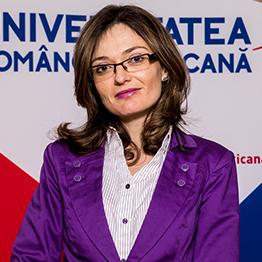
Asist.univ.dr. GRIGORESCU IOANA GABRIELA is a university assistant at the Faculty of Managerial Informatics, Romanian-American University in Bucharest. She graduated from the Faculty of European Economic Studies at the Romanian-American University in 2007 and earned her doctorate in economic sciences in 2015. She serves as a member of the department council for 'Commerce, Economic Integration and Business Administration' and focuses on teaching micro and macroeconomics while developing students' communication skills and teamwork abilities. Her educational background includes: 2007: Graduated from the Faculty of European Economic Studies, Romanian-American University, Bucharest 2015: Doctor in Economic Sciences Dr. Grigorescu's research spans digital economics, business administration, and educational technology. Her scholarly work demonstrates a progression from traditional economic topics like credit rating agencies and banking industry structure (2014-2015) toward more contemporary issues including digital analysis of emotional intelligence, government-funded businesses, and pandemic impacts on transport. She has developed ASANA, a program for digitizing university teaching activities, reflecting her commitment to educational innovation. Her publications reveal consistent scholarly output with increasing focus on digital methodologies and contemporary economic challenges facing Romania. Her scientific contributions include: Quantitative analysis of emotional and motor intelligence by gender differences Empirical studies of Romanian start-ups and government-funded businesses Development of digital tools for university teaching activities Analysis of pandemic impacts on regional transport systems Research on ERP software implementation in the digital economy Dr. Grigorescu maintains professional interests beyond her academic work, particularly in gardening as a direct connection with nature and dancing as an innovative communication method between partners and means of expression through elegance and energy, reflecting her holistic approach to education and personal development.
Dr. Anikó Vágner is an Assistant Professor at the University of Debrecen , affiliated with the Faculty of Informatics and the Department of Information Technology . Her research focuses on Educational issues of database systems , Medical signal processing , and Clustering of datasets , with a strong emphasis on NoSQL databases, smart city applications, and health informatics. Academic Rank: Assistant Professor Email: vagner.aniko@inf.unideb.hu Research Trends: Analysis of her 15 most recent publications reveals sustained work in NoSQL database performance optimization (MongoDB, Redis), GTFS-based transportation algorithms, medical signal processing using microcontrollers, and clustering techniques like OPTICS. Applications span smart cities, health monitoring, and educational technologies. Labs/Teams: She is part of the Department of Information Technology, which focuses on databases, data mining, and smart city solutions. The department collaborates on projects like participatory sensing frameworks and time series analysis.
Alan Dennis is the Distinguished Professor of Information Systems holding the John T. Chambers Chair of Internet Systems at Indiana University's Kelley School of Business, affiliated with the Department of Operations & Decision Technologies. A Fellow of the Association for Information Systems (AIS) and past AIS President, he maintains an active research agenda while contributing to academic leadership through roles like the AIS LEO Award. His academic credentials include a PhD in Business Administration from the University of Arizona (1991), an MBA from Queen's University (1984), and a BS in Computer Science from Acadia University (1982). These foundations support his interdisciplinary approach bridging technical and behavioral domains. Dennis's research centers on Digital Humans, Artificial Intelligence, and Collaboration Technologies, with deep exploration of virtual team dynamics, trust formation, and media effects. His work uniquely integrates psychological principles with information systems design, examining how digital interfaces transform human collaboration through neurophysiological measures and cognitive priming techniques. Recent focus areas include collective intelligence measurement and the application of neuroIS methodologies. Analysis of his publication trajectory (2008-2017) reveals consistent innovation in virtual collaboration frameworks, particularly through Media Synchronicity Theory and electronic brainstorming enhancements. His research demonstrates increasing methodological sophistication, evolving from traditional surveys to neurophysiological tools while maintaining practical relevance for organizational implementation. His extensive honors include the AIS Award for Outstanding Contribution to IS Education (2013), Distinguished IS Educator award (2012), and multiple best paper awards across premier conferences. Teaching excellence is recognized through the Senior Scholars Harry A. Sauvain Award (2015) and Trustee Teaching Award (2014). As a dedicated mentor, Dennis received the Faculty Mentor of the Year award (2014) and Exceptional Inspiration and Guidance Award (2011), reflecting his commitment to doctoral student development. His entrepreneurial ventures—including NameInsights.com (2015-present) and Courseload, Inc. (2005-2015)—demonstrate practical application of his research in real-world technology solutions. He leads interdisciplinary research teams exploring digital human interactions, with current projects examining AI-driven collaboration tools and the physiological impacts of virtual communication environments through partnerships with cognitive scientists and technology developers.
Associate Professor Natalie Taylor is the Director of Implementation to Impact (i2i) and the School of Population Health Research Director at UNSW Sydney . With a career spanning over $64 million in research funding, her work bridges implementation science and data science to optimize healthcare delivery, particularly in genetics , genomics , and cancer care . She pioneered behavior change workshops and toolkits for healthcare professionals and established Australia’s first Masters elective in Implementation Science . Education: PhD in Health Psychology (University of Leeds, 2011) MSc in Psychology (University of Leeds, 2005) BSc in Psychology (University of Leeds, 2004) Research Focus: Her research spans implementation science frameworks , behavior change mechanisms , and health system innovation . Current projects include integrating precision oncology into routine care, improving newborn screening technology , and scaling point-of-care hepatitis C testing . She emphasizes consumer involvement and co-design in healthcare interventions. Scientific Awards: 2022 CINSW Premier’s Award for Cancer Researcher of the Year – Career Development Fellow 2021 Peter Baume Research Impact Award 2016 CINSW Premier’s Excellence in Translational Cancer Research Award Multiple NSW Premier’s Awards and scholarships Grants & Leadership: She leads grants from the Medical Research Future Fund (MRFF) , National Health and Medical Research Council (NHMRC) , and Cancer Institute NSW , focusing on genomic medicine , HIV prevention , and mental health integration . Her leadership extends to co-chairing the 2022 NSW Cancer Conference and developing gender-equity policies . Labs & Teams: As Director of i2i, she leads a multidisciplinary team at UNSW, collaborating with academic , health , and non-profit organizations across Australia and globally. Her work involves partnerships with the Australian Genomics Health Alliance , Translational Cancer Research Network , and Healthdirect Australia .
Professor Bin Gu is a leading academic at Boston University's Questrom School of Business , serving as Professor and Department Chair of Information Systems . With over 16,000 citations, his research focuses on leveraging information technologies and artificial intelligence to mitigate information asymmetry and social inequity across fintech, digital platforms, the future of work, social media, and online retailing. His work has appeared in top-tier journals including Management Science , MIS Quarterly , and Information Systems Research . PhD , University of Pennsylvania (2002) MA , University of Pennsylvania (2001) BEng , Shanghai Jiaotong University (1995) His research on AI-driven credit scoring and social media dynamics has shaped fintech policy and crisis communication strategies. Recent publications (2025-2019) highlight trends in digital labor markets , blockchain economics , and remote work equity . Gu has also explored the implications of IoT in supply chains and platform governance . Awards INFORMS Information Systems Society Distinguished Fellow Award (2022) Before his current role at Boston University, Gu held prestigious positions including Gladys Davis Distinguished Professor and Associate Dean of China Programs at Arizona State University's W P Carey School of Business, and faculty positions at the University of Texas at Austin and Shanghai Advanced Institute of Finance (sabbatical). He previously worked as a consultant at Arthur Andersen.
Dr. Shannan M. Dixon, a certified genetic counselor by the American Board of Genetic Counseling, serves as Associate Professor in the Department of Pediatrics at the University of Maryland School of Medicine. She holds multiple roles including Director of the Master's in Genetic Counseling Training Program and Pediatric Genetic Counselor at the University of Maryland Medical System. BA in Biology (Genetics concentration) - Pennsylvania State University MS in Genetic Counseling - Arcadia University PhD in Health Professions Education - University of Maryland, Baltimore Her research focuses on genetic counseling education with emphasis on risk communication , patient transition care , and medical usability studies . Publications highlight her work in pediatric-to-adult transition apps , newborn screening , and psychiatric genetic counseling . Key awards include the Warren Alpert Foundation Fellowship and Volunteer Leader of the Year from the National Society of Genetic Counselors. She has contributed to over 10+ genetic counseling research projects annually and led national committee initiatives.
Maria Gagliardi is an Associate Professor of Private Law at Scuola Superiore Sant'Anna. She holds a PhD in Comparative Law from the University of Florence and teaches Insurance Law at the University of Pisa, Department of Economics. Research Focus: Insurance Law, Tort Law, Data Protection, and Family Law Administrative Roles: Scientific and Administrative Responsible for research projects on medical malpractice liability, damages assessment, and ICT legal frameworks Her research spans insurance law (medical malpractice, new risks), privacy and data protection (non-pecuniary damages, anonymized data), and family law (child protection, gender identity). She applies economic tools to legal analysis and contributes to international conferences. Her recent publications highlight intersections between private law and ICT , medical law , and comparative legal frameworks . She has edited volumes on financial markets and authored case commentaries on data protection and auto liability.
Carlos González Morcillo is a Professor at the Higher School of Computer Science, University of Castilla-La Mancha (UCLM), where he has served since 2002 with over 3,000 teaching hours. He currently holds multiple leadership positions including Academic Director of the Vice-Rectorate of Digital University, Director of the G9 Shared Digital Campus (since 2025), and Director of the Center for Digital Technologies and Content (C:TED). As Creative Director of Furious Koalas, a UCLM spin-off, and member of the AIR Research Group, he bridges academic research with industry applications. European PhD in Computer Science (UCLM, 2007) Degree in Computer Science with Extraordinary End-of-Degree Award (2002) Technical Engineer in Computer Systems (2000) His research focuses on two primary areas: Artificial Intelligence and Computer Graphics, with significant contributions to educational technology, virtual reality applications, and AI integration in academic settings. With over 30 technology transfer projects and 9 as principal investigator (total funding exceeding €550,000), his work spans from generative AI applications in education to VR-based rehabilitation systems. His research demonstrates consistent evolution from technical game development toward transformative AI applications across multiple domains. His publication record shows a clear trajectory toward AI integration across disciplines, with recent work examining generative AI's role in academic communication, VR shopping environments, and medical rehabilitation. The interdisciplinary nature of his research connects computer science with education, healthcare, and consumer behavior, demonstrating practical applications of emerging technologies. Blender Foundation Certified Trainer (2009 - First Spaniard) ICEIS 2025 Best Student Paper Award (team recognition) Multiple plenary invitations at national and international conferences As an academic leader, he has directed 42 undergraduate theses, 10 master's theses, and 3 doctoral dissertations while establishing the Expert Course in Video Game Development (30 ECTS) with 8 successful editions. His research management includes 3 six-year research periods (2004-2021) and 1 six-year transfer period (2006-2017). Through Furious Koalas, he leads projects combining AI, mixed reality, and IoT for industrial applications, recently winning the MEISA technology challenge at ANCES Open Innovation 2025. His laboratory and team structure centers around the AIR Research Group and C:TED center, with Furious Koalas serving as the commercialization arm. Current projects focus on creating Spain's most important digital training metacampus through the G9 Shared Digital Campus initiative, which integrates capabilities from nine Spanish universities to expand educational offerings, particularly in artificial intelligence.
Dr. Elton Henry Savio Lobo is a Research Fellow and Technology Lead at the Dementia & Neuro Mental Health Research Unit , part of the UQ Centre for Clinical Research under the University of Queensland . He bridges Public Health , Information Technology , and Clinical Practice to develop user-centered technology solutions for complex consumer needs. Education: Bachelor of Electronics and Communications, Visvesvaraya Technological University Masters (Coursework) in School of Electronics and Computer Science, Griffith University Joint PhD in Digital Health, University of Copenhagen and Deakin University Research Interests: Dr. Lobo specializes in Digital Health , Human-Computer Interaction , and Neurological Disorders . His work focuses on participatory design, caregiver support, and technology for chronic disease management. He leads MRFF-funded projects like PROMPT-RC and ENACT , emphasizing co-design and cognitive-friendly technology. Publications: His 15 most recent works (2025–2021) span digital health , stroke recovery , maternal healthcare , and data governance . Key trends include user-centered design , caregiver technology , and health data infrastructure . Supervision: He mentors PhD students in projects like Digital Diabetes , DIFFERENCE , and AI in outbreak investigation . Grants: Active funding includes Automated Clinical Data Extraction (2025–2027) and PROMPT-RC (2023–2027) from the NHMRC MRFF and Emergency Medicine Foundation Ltd .
Dr. Manuel Schmidt-Kraepelin is a postdoctoral researcher at the Information Infrastructures group (Technical University of Munich), focusing on gamification for health behavior change and distributed ledger technology applications in healthcare. With dual master's (2016) and bachelor's (2013) degrees in Information Systems from the University of Cologne, he brings extensive experience from KIT, University of Kassel, and University of Cologne research roles. His work combines behavioral science with technical systems design. As a reviewer for major IS journals and conferences (CAIS, ECRA, HICSS, ICIS), he contributes to academic quality assurance. Recipient of multiple best reviewer awards and the prestigious Dean's Award at Cologne, he was honored with the 2014-2016 Deutschlandstipendium and a 2020 DAAD travel grant. Key research areas: gamification mechanics, health behavior change, blockchain in healthcare, narrative transportation theory Recent publications examine gamified procrastination mitigation, expert intuition in medical annotation, and privacy calculus in genetic data sharing Developed taxonomy for gamification concepts in health apps and identified gamification user archetypes Active in design science research and literature synthesis methodologies Awarded best paper recognitions at ICIS and HICSS, with 15+ recent publications across top venues including JMIR, CHI, and IEEE Transactions. Currently teaches Master's seminars on gamified information systems at TUM's Heilbronn campus.
Jacqueline Cunninghame is a Casual Clinical Research Assistant at the School of Nursing, Midwifery and Social Work , University of Queensland. Her research focuses on: Equity in pediatric clinical trials Indigenous health disparities Vaccination safety in rheumatic diseases Vascular access management Pediatric patient safety Recent publications emphasize Indigenous status reporting, extravasation injury protocols, and mHealth innovations. Key collaborative networks include Australian Aboriginal communities and international pediatric research teams. Her work spans qualitative and quantitative methodologies, including scoping reviews, systematic reviews, and cross-sectional surveys. Current collaborations involve Amanda Ullman, Mari Takashima, and Lorelle Holland.