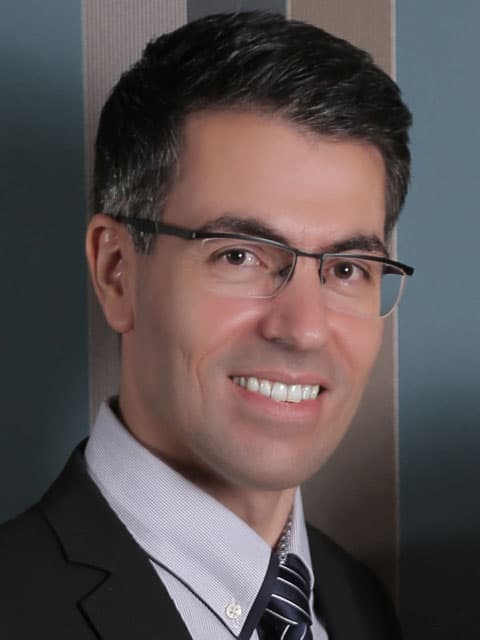
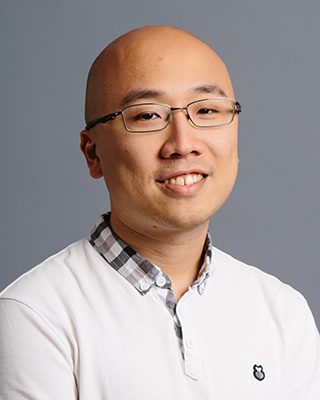
Sam Amiri is a Lecturer in Microelectronics / Embedded Electronics at Loughborough University. He holds a BSc in Software Engineering (2007, Iran), M.Sc. in Embedded Systems (2010, Masaryk University), and Ph.D. in Electrical/Electronic Engineering (2014, Masaryk University). Prior to his current role, he worked as a Researcher at Queen’s University Belfast (2015-2017) and the University of Bristol (2017-2018). His research focuses on hardware design, embedded systems, signal/image processing, and FPGA-based solutions for real-time systems. Key research areas include intrusion detection systems for vehicular networks using binarized neural networks, RISC-V processor optimization for neural networks, and FPGA-based acceleration of CNN models. His work also explores reliability engineering in wind turbine drivetrains and heterogeneous computing architectures combining FPGAs with CPUs. Publications span topics like embedded cybersecurity, low-power edge computing, and hardware-software co-design for real-time applications. His recent work emphasizes lightweight neural networks on constrained hardware and fault tolerance in aerospace systems. No specific awards or grants are listed in the provided information.
Anna Korba is an Assistant Professor at CREST-ENSAE Paris within the Statistics Department. She holds an ENSAE Engineering degree in Data Science and a Master's in Mathematics, Vision & Learning (MVA) from ENSAE Paris. Her career includes a Ph.D. in Machine Learning at Télécom ParisTech, followed by a postdoctoral position at UCL's Gatsby Unit. Her research focuses on sampling techniques, Bayesian inference, optimal transport, and generative modeling, with recent work on constrained sampling and fairness integration. She contributes to collaborative efforts at the intersection of machine learning, dynamical systems, and PDEs. Notably, she co-presented tutorials on Wasserstein gradient flows at ICML 2022. Her work addresses unsolved challenges in sampling efficiency and fairness constraints. She is actively involved in CREST research initiatives and academic mentorship.
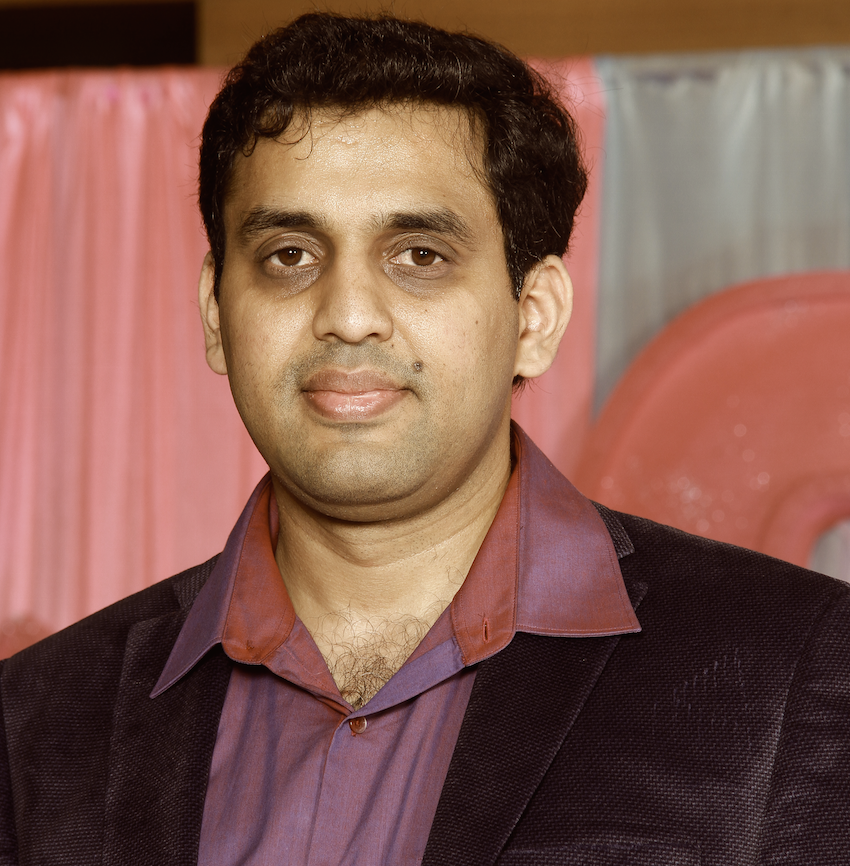
Soumodip Sarkar is a Full Professor at the University of Évora, Portugal, and the Coordinator of the Strategy, Entrepreneurship and Operations research group at CEFAGE. He holds a Ph.D. in Economics (Northeastern University, 1995), an M.Sc. in Economics (Northeastern University, 1991), and a B.A. in Economics (University of Calcutta, 1988). His research focuses on entrepreneurship, innovation, and international management, with a particular emphasis on frugal innovation, healthcare systems, and digital ecosystems. Key research interests include entrepreneurial ecosystems, policy formulation for innovation, and resource-constrained innovation. He has authored over 100 articles and book chapters, including works on bricolage, effectuation, and the impact of digital technologies on crisis response. Notable projects include the Alentejo Global INVEST initiative and collaborations on sustainable development through frugal innovation. He has supervised numerous doctoral and master’s theses, covering topics like microcredit for immigrant entrepreneurs, corporate entrepreneurship in service sectors, and innovation in agriculture. His work has been supported by grants from national and international agencies, including the European Union’s Horizon 2020 program. Sarkar is actively involved in policy-oriented research, such as frameworks for entrepreneurial ecosystems and strategies to enhance regional competitiveness. He also contributes to educational initiatives, including digital leadership and AI integration in management education.
Andrea Calimera is a Full Professor in the Department of Control and Computer Science (DAUIN) at the Polytechnic University of Turin, where he is also a member of the Interdepartmental Center SmartData@PoliTO - Big Data and Data Science Laboratory. He is actively involved in teaching and research, contributing to doctoral programs and undergraduate and graduate courses in computer engineering and data science. Full Professor (L.240), Polytechnic University of Turin Department of Control and Computer Science (DAUIN) Member, SmartData@PoliTO - Big Data and Data Science Laboratory Member, College of Computer, Film and Mechatronics Engineering His research interests center on electronic design automation, energy-efficient electronic systems, and low-power design, with strong connections to artificial intelligence, embedded systems, and IoT. His work bridges hardware and software optimization for intelligent edge devices. The recent publications (2023–2025) reflect a focused trend on federated learning, secure and efficient AI deployment on edge devices, and low-power embedded systems. Topics include robust evaluation in federated learning, resource management under label skew, homomorphic encryption for private tensor operations, pipeline optimization for keyword spotting, and side-channel attacks via DVFS for neural network fingerprinting—highlighting expertise in both performance and security of AI systems on constrained hardware. Andrea Calimera supervises PhD and master's students and leads research projects funded by competitive and commercial grants. He has contributed to national and international patents on low-power depth estimation and single-image signal processing. Scientific Director, SENSEI Project (2017–2019): Energy-efficient machine learning on chip for IoT Scientific Director, Commercial Project (2020–2022): Design tools for AI on energy-efficient embedded mobile devices Supervision of PhD student Erich Malan (ongoing, since 2022) on distributed and federated learning over IoT networks Supervision of Bachelor's student Chen Xie (2020–2024) on synthesis of smart sensors He teaches courses such as High-Level Synthesis (PhD), Synthesis and Optimization of Digital Systems, Machine Learning for IoT, and Efficient Computing for Artificial Intelligence across Computer Engineering and Data Science programs. His research group is EDA - Electronic Design Automation (DAUIN), which focuses on hardware-software co-design for intelligent systems.
George Pallis is a Professor in the Department of Informatics at the University of Cyprus, affiliated with the School of Science. He holds a BSc and PhD from Aristotle University of Thessaloniki. His research focuses on Distributed and Network Computing, Big Data Analytics, and Cloud/Edge/Fog Computing. He leads the Master's Program in Data Science and has secured over €5.5M in research funding from the EU, Cyprus, and industry partners like Google. Education: BSc (2001), PhD (2006) from Aristotle University of Thessaloniki. Research Interests include Internet technologies, large-scale network environments, and cloud computing. He has published over 100 articles in top-tier journals and conferences (e.g., IEEE TKDE, ACM TOIT, WWW, ICDCS) and contributed to international standards (DIN, CEN). His work spans topics like fake news detection, edge computing frameworks, and energy-efficient micro-data centers. Key Achievements: Editor-in-Chief Emeritus of IEEE Internet Computing, recipient of multiple best paper awards, and contributor to projects like RAINBOW (H2020), UNICORN, and ICARUS. His research explores cutting-edge areas such as LLM manipulation, polarization detection, and carbon-aware computing. He has supervised five PhD students and served as General Chair for IEEE/ACM SEC 2024 and IEEE IC2E 2024. His work bridges academia and industry through collaborations on AI, IoT, and sustainable computing.
Dr. Francisco Javier Renedo Anglada is a Guest Researcher at the Instituto de Investigación Tecnológica (IIT), affiliated with the Higher Technical School of Engineering (ICAI) at Comillas Pontifical University, Spain. He has been actively involved in research at IIT since 2012, with a formal position since 2021. His work is centered on electrical systems, particularly in the domain of power system stability and HVDC technologies. Industrial Engineer (Electrical), ICAI - Comillas Pontifical University (2010) Master in Mathematical Engineering, Carlos III University of Madrid (2013) PhD in Engineering Systems Modeling, ICAI - Comillas Pontifical University (2018) His research interests focus on the stability and control of modern power systems. Key areas include multi-terminal VSC-HVDC systems , power system stability (especially transient and small-signal), power electronics applications in grids, and challenges in systems with high renewable energy content and low inertia. He has developed simulation tools and control strategies to enhance grid resilience. The analysis of his recent publications reveals a strong trend toward solving stability issues in hybrid AC/DC grids, particularly using DC segmentation, fast voltage boosters, and coordinated control of VSC-HVDC systems. His work addresses critical challenges like intra-area oscillations, transient stability in 100% inverter-based systems, and frequency support in low-inertia grids, reflecting a consistent focus on enabling high renewable integration. His scientific achievements include: Honorary Distinction for the best Doctoral Thesis in Engineering, Comillas Pontifical University (2019) Dr. Renedo has supervised PhD students and contributed to numerous national and international research projects funded by the European Commission (Horizon 2020), Spanish Ministry of Science, IRENA, IADB, and industry partners like Iberdrola and Endesa. He serves as a reviewer for IEEE Transactions on Power Systems and is an active member of IEEE and CIGRE Working Group C4B4.52, contributing to guidelines on sub-synchronous oscillations in power electronics-dominated systems. He has been involved in several research laboratories and teams, primarily within the IIT’s Electrical Systems area, focusing on modeling, control, and simulation of hybrid power systems. His work often involves collaboration with international universities and industry stakeholders.
Tao Lin is a Tenure-Track Assistant Professor and Principal Investigator of LINs Lab at Westlake University, School of Engineering. He leads cutting-edge research in deep learning optimization, generalization, and robustness, particularly in distributed and federated settings. Prior to this, he was a Ph.D. student at École Polytechnique Fédérale de Lausanne (EPFL), Switzerland, under the supervision of Prof. Martin Jaggi and Prof. Babak Falsafi. Doctor of Science, School of Computer and Communication Sciences, EPFL, Switzerland (2017–2022) Master of Science, School of Computer and Communication Sciences, EPFL, Switzerland (2014–2017) Bachelor of Engineering (with honors), College of Electrical Engineering, Zhejiang University, China (2010–2014) His research focuses on the intersection of optimization and generalization in deep learning, leveraging theoretical and empirical insights into loss landscapes and training dynamics to design efficient and robust learning and inference methods. This includes work on decentralized and federated learning under noisy, heterogeneous, and hardware-constrained environments. His work spans algorithmic innovation, theoretical analysis, and practical system integration. The recent publications from his lab demonstrate a strong trend in advancing federated learning, efficient inference for large language models, multimodal foundation models in pathology, and robust training under distribution shifts. Key themes include communication efficiency, model personalization, gradient tracking, and hardware-aware learning. His group has published at top venues including NeurIPS, ICML, ICLR, CVPR, and ECCV, with several papers receiving oral or spotlight presentations. ECCV Best Paper Candidate, 2024 Top 2% Scientists Worldwide 2024 (Stanford University) Doctoral Program Thesis Distinction Award, EPFL, 2022 Outstanding Performance Bonus, EPFL, 2021–2022 Top Reviewer: NeurIPS, ICML, AISTATS He advises multiple Ph.D. and master’s students, including Yongxin Guo, Futing Wang, Peng Sun, and Yuxuan Sun, whose work has been accepted at premier conferences. He has secured competitive grants as PI and participant, including the National Natural Science Foundation of China for Excellent Young Scientists Fund (Overseas) and the Science and Technology Innovation 2030 – Major Project. He also contributes to the community through service as an area chair (NeurIPS, ICML), reviewer for top journals and conferences, and organizer of workshops and academic events. His open-source contributions, such as Post-local SGD, have been integrated into PyTorch. Tao Lin teaches graduate courses such as Research Methodology of Computer Science and Technology and Deep Learning at Westlake University. He is actively involved in academic governance, serving on committees for student seminars, academic exchange, doctoral studies, and teaching leadership. The LINs Lab runs a regular research seminar on Deep Learning and Optimization, fostering a collaborative and dynamic research environment.
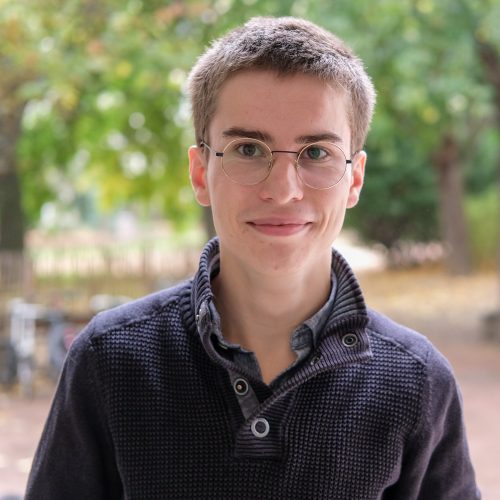
Louis-Pierre Chaintron is a Research Fellow at the École Normale Supérieure de Paris (ENS-PSL), affiliated with the Department of Mathematics and Applications (ENS DMA). His work bridges probability theory, stochastic processes, and applied mathematics, with a focus on constrained measure-valued dynamics, stability analysis, and approximation methods. PhD supervised by Julien Reygner (CERMICS) and Philippe Moireau (Inria M3DISIM) from 2022–2024 Member of the Probability and Statistics research team at ENS DMA Teaching roles include assistant for PDE courses and organizer of applied mathematics workshops Research Interests : His research explores connections between mean-field theory , large deviations , and viscosity solutions for Hamilton-Jacobi equations. He investigates filtering theory in dynamic systems, optimal transport frameworks, and Schrödinger bridge problems for high-dimensional systems. Applications span diffusion models in machine learning, muscle contraction modeling , and non-linear estimation under constraints. Recent Publications analyze convergence rates in stochastic control, stability of Gibbs principles, and jump-diffusion formalisms for biological systems. His work often combines calculus of variations , stochastic control , and viscosity solutions to address stability and approximation challenges. Contact : Email: lchaintron@dma.ens.fr Office: Bureau C11, Espace Cartan, 45 Rue d'Ulm, Paris
Dr. Ahalya Ravendran is a Research Fellow at Data61 , Commonwealth Scientific and Industrial Research Organisation (CSIRO), Australia. Her work focuses on advancing computer vision , artificial intelligence , and distributed sensing for robotics, particularly in light-constrained environments. She previously held a postdoctoral position at the University of Sydney in collaboration with SCION, a New Zealand Crown Research Institute. PhD in Engineering and Information Technology (2023), University of Sydney Master's (Thailand), Bachelor's in Mechatronics Engineering (Sri Lanka) Her research spans robotic vision , 3D reconstruction , and burst imaging techniques. Recent publications highlight applications in low-light navigation , deep learning domain adaptation , and AI for forestry innovations . Scientific accolades include: IEEE Young Professional Fellowship (2023) Career Advancement Award (University of Sydney, 2023) Engineering and Information Technologies Research Scholarship (2019-2023) Dr. Ravendran actively advocates for women in technology as a WomenTechMaker Ambassador . Her interdisciplinary approach connects robotics , climate innovations , and sustainable technology .
Professor Robin Purshouse is a leading academic at the University of Sheffield , currently serving as Professor of Decision Sciences in the Department of Automatic Control and Systems Engineering within the School of Electrical and Electronic Engineering . With a career spanning academia and industry, his work bridges computational modelling , optimization , and systems science to address complex challenges in public health and engineering. His research has been pivotal in developing mechanisms for agent-based modelling and evolutionary multi-objective optimization . Education: PhD in Control Systems (2004), MEng in Control Systems Engineering (1999) from the University of Sheffield Professor Purshouse's research focuses on computational modelling of complex social systems , decision analytics for population health policy , and Bayesian optimization . He has pioneered the integration of machine learning and uncertainty quantification in social science simulations, with notable projects like the Sheffield Alcohol Policy Model and CASCADE initiative. His work spans interdisciplinary domains, including health economics , policy evaluation , and engineering design . Recent publications highlight his expertise in agent-based modelling for smoking/vaping dynamics , intersectional disparities in alcohol consumption , and inclusive economy frameworks . He has secured substantial funding (exceeding £16 million) through grants from NIH , CRUK , UKPRP , and MRC , including his role as co-PI in the HealthMod cluster. His contributions to multi-objective optimization and evolutionary algorithms have advanced methodologies in both engineering and public health domains. Scientific Awards: ESRC Future Research Leaders Award (2012-2015) As a co-developer of the Liger optimization environment , Purshouse has fostered open-source tools for complex decision-making. He leads the SIPHER consortium for systems science in public health and serves on editorial boards for journals like Environmental Modelling & Software . His teaching includes Agent-Based Modelling (ACS6132), and he maintains professional memberships in the Association for Computing Machinery and Research Society on Alcohol .
Pradeep Reddy VARAKANTHAM is a Professor of Computer Science and Director of CARE.AI Lab at the School of Computing and Information Systems, Singapore Management University (SMU) . He serves on the AISingapore Scientific Committee, acts as a visiting faculty at Harvard Teamcore Research Group, and collaborates with Google's AI for Social Good team. His research focuses on collaborative and trustworthy intelligent agent systems , particularly trustworthy Reinforcement Learning methods. Applications span urban environments including Transportation, Emergency Response, Entertainment, Energy, and Security , with contributions at the intersection of Artificial Intelligence, Operations Research, Machine Learning, and Behavioral Economics . Recent publications highlight advancements in Constrained Reinforcement Learning (ICLR 2025), Safe LLM Applications (ICLR 2025), and Multi-Agent Robust Decision Making (AAAI 2025). Collaborations include Akshat Kumar, Arunesh Sinha, and Mai Anh Tien in CARE.AI Lab projects. Scientific awards include: Best Application Paper (ICAPS 2019) Best Demo Award (AAMAS 2018) Lee Kong Chian Fellowship (2016) Best Dissertation Award (ICAPS 2022) Best Paper Runner-Up (PRICAI 2024) Grants: ~6.1 million SGD for trustworthy AI training (Principal Investigator) and ~1.2 million SGD for collaborative AI projects. Current advisees include Pallavi Manohar (Research Fellow) , Pritee Agrawal (PhD student) , and Meghna Lowalekar (PhD student) .
Hamdullah Yuecel is a Professor at the Max Planck Institute for Dynamics of Complex Technical Systems in Magdeburg, Germany, where he leads the research group 'Computational Methods in Systems and Control Theory'. His work focuses on developing advanced computational techniques for complex technical systems. Research Focus: His primary research interests include numerical methods for partial differential equations with specific expertise in: PDE-constrained optimization techniques Discontinuous Galerkin formulations Adaptive mesh refinement methodologies
Levy F. Costa is an Assistant Professor in the Electromechanics and Power Electronics group at the Department of Electrical Engineering, Eindhoven University of Technology (TU/e). He holds a PhD in Electrical Engineering from Kiel University (2019), an M.Sc. from the Federal University of Santa Catarina (2013), and a B.Sc. from the Federal University of Ceara (2010). His expertise spans high-power electronics, modular converter designs, and solid-state transformers for industrial and renewable energy systems. Academic Background: B.Sc., Federal University of Ceara (2010) M.Sc., Federal University of Santa Catarina (2013) PhD, Christian-Albrechts University of Kiel (2019) His research focuses on advancing high-efficiency power converter topologies, with specific emphasis on solid-state transformers and DC-DC converters. Recent work explores modular multilevel converter architectures, resonant converter designs for electrolyzer power supplies, and semiconductor material trade-offs in three-level resonant converters. He also investigates constrained power flow control strategies for grid-tied converters. Key projects include RelSST (Reliable Solid-State Transformer for Smart Grids) and HiVECAF (Highly Versatile Efficient & Compact Active Filters), addressing challenges in power electronics reliability, compactness, and control algorithms. Collaborations span institutions in Brazil, Germany, Switzerland, and the Netherlands. His publications highlight innovations in modular converter designs, semiconductor optimization, and power flow control for renewable energy integration. Current research aligns with UN Sustainable Development Goals related to clean energy and climate action, focusing on technologies to enhance grid stability and energy efficiency.
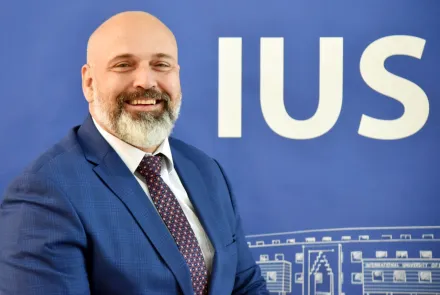
Dr. Senad Bušatlić serves as a Full Professor of Management, Organization, and Strategy at the International University of Sarajevo (IUS), where he holds key administrative roles including Head of the Department of Economics and Management, Coordinator of the Leadership and Entrepreneurship Center, and active IUS Senate member. His extensive leadership extends to former positions as Vice Rector, Vice Dean, and Acting Dean, significantly shaping university strategy and policy implementation since 2010. His research spans Management, Strategy, Leadership, and Innovation with regional focus on Bosnia and Herzegovina. Core interests include organizational performance, tourism innovation, quality assurance, and human resource management, addressing practical business challenges in post-conflict economies and multinational contexts. His work bridges theoretical frameworks with real-world applications in public and private sectors. Recent publications reveal evolving research trajectories toward technology integration (IoT, blockchain in smart cities), value-based leadership models, and cross-cultural management studies. His 50+ scientific papers demonstrate consistent focus on leadership dynamics, employee engagement, and strategic management applications across hospitality, banking, and healthcare sectors in the Balkans. Dr. Bušatlić has mentored 30 graduate students while leading four major multi-stakeholder research projects involving hundreds of participants. His industry background includes executive roles at Coca-Cola, Procter & Gamble, and Henkel, providing practical insights that inform his academic work and grant-funded initiatives on organizational development. Through the Leadership and Entrepreneurship Center, he cultivates academic-industry partnerships that drive leadership development programs, entrepreneurial training, and innovation ecosystems connecting IUS students with regional business communities.
Yin Tat Lee is an Associate Professor at the Paul G. Allen School of Computer Science & Engineering, University of Washington, and a Senior Principal Researcher at Microsoft AI. His research spans Convex Optimization , Convex Geometry , Graph Algorithms , Online Algorithms , and Differential Privacy , with a focus on designing theoretically optimal algorithms for combinatorial and convex problems. Lee earned a Ph.D. in Mathematics (2016) and B.S. in Mathematics (2012) from MIT and The Chinese University of Hong Kong, respectively. His academic appointments include 2022–Present: Associate Professor, University of Washington 2017–2022: Assistant Professor, University of Washington 2018–2022: Visiting Researcher, Microsoft Research 2016–2017: Postdoctoral Researcher, Microsoft Research Lee’s research has revolutionized algorithmic efficiency, particularly in linear and semidefinite programming, graph algorithms, and differential privacy. Key contributions include the first nearly-linear-time algorithm for linear programs with small treewidth (STOC 2021), solving linear programs as fast as linear systems (STOC 2019), and optimal distributed non-smooth optimization (NeurIPS 2018). His work integrates techniques from convex geometry, spectral graph theory, and stochastic processes. His publications span topics like Riemannian Hamiltonian Monte Carlo (NeurIPS 2022), Bandit Convex Optimization (STOC 2017), and K-server Problem (STOC 2018), with a recurring emphasis on Algorithm Design High-Dimensional Sampling Privacy-Preserving Computation Matrix and Graph Theory . Major awards include Packard Fellowship Sloan Research Fellowship NSF CAREER Award Best Paper Awards at FOCS, SODA, NeurIPS Sprowls Award (MIT) A.W. Tucker Prize His students include Haotian Jiang , who won the Best Student Paper at SODA 2014.