Parichehr SalimifardView profile
Assistant Professor
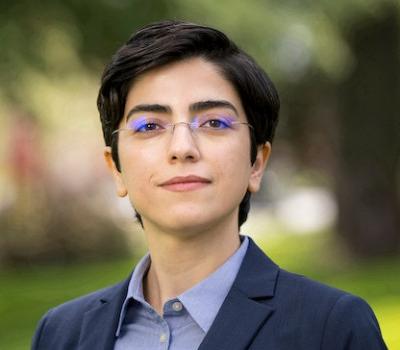
Dr. Parichehr Salimifard is an Assistant Professor at Oregon State University's School of Civil and Construction Engineering, holding the Culbertson Faculty Scholar position. She serves as Faculty Advisor for the OSU ASHRAE Student Branch and leads the Sustainable, Healthy, and Resilient Building Lab, focusing on the intersection of building science, environmental health, and climate resilience. Her educational background includes a Postdoctoral Fellowship at Harvard University's School of Public Health, a Ph.D. and M.Sc. in Architectural Engineering (Mechanical Option) from Penn State with a Computational Science minor, and a B.Sc. in Mechanical Engineering from Persian Gulf University. Dr. Salimifard's research centers on indoor environmental quality and its connections to public health, with emphasis on: Aerosol dynamics (transport, deposition, resuspension) for wildfire smoke and pandemic exposure mitigation Health and climate co-benefits of building energy efficiency through the CoBE project Wildfire smoke preparedness in schools/daycares for vulnerable populations Building electrification impacts on air quality and emissions Her recent publications reveal a trend toward spatially and temporally explicit modeling of emissions reductions, using tools like CoBE to quantify health co-benefits of building energy conservation across US states and EU countries, with growing focus on water-energy nexus and grid integration. Her scientific recognition includes: Culbertson Faculty Scholar award Dr. Salimifard secures research funding from the EPA, NIEHS's OSU ASPIRE Center, ASHRAE, industry partners, and foundations. She mentors the OSU ASHRAE Student Branch and collaborates with Harvard/Boston University on the CoBE project, which develops modules for climate policy analysis and water savings optimization. Her Sustainable, Healthy, and Resilient Building Lab drives projects including Wildfire Smoke Preparedness in Buildings, Indoor Aerosol Resuspension Dynamics, and Building-to-Grid Integration, directly addressing climate resilience challenges through building science innovation.