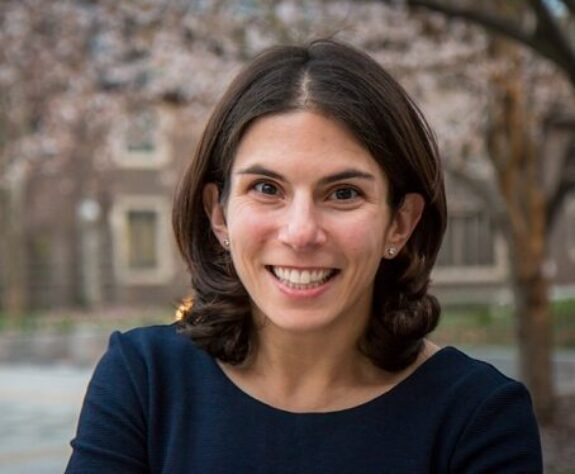
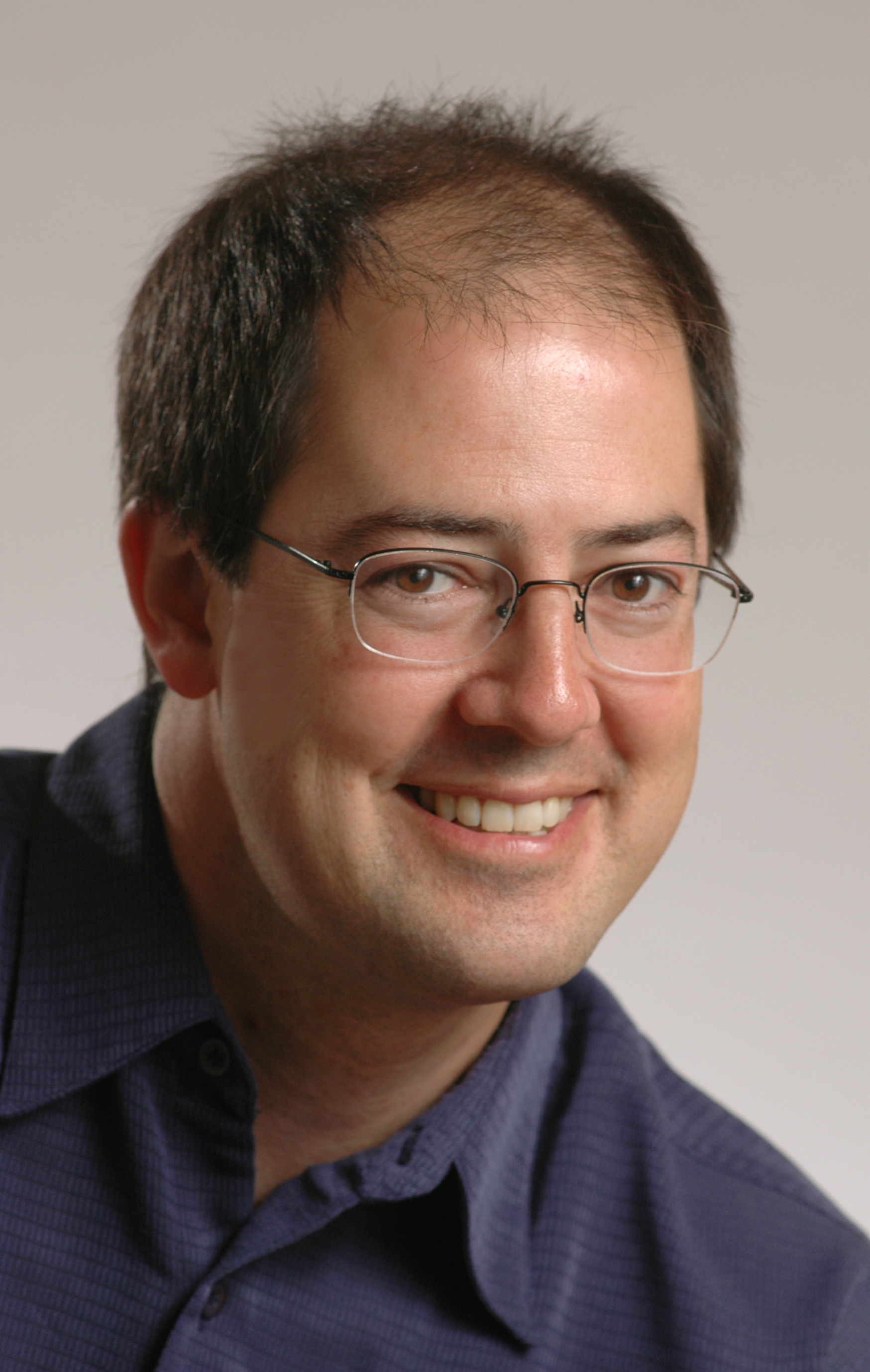
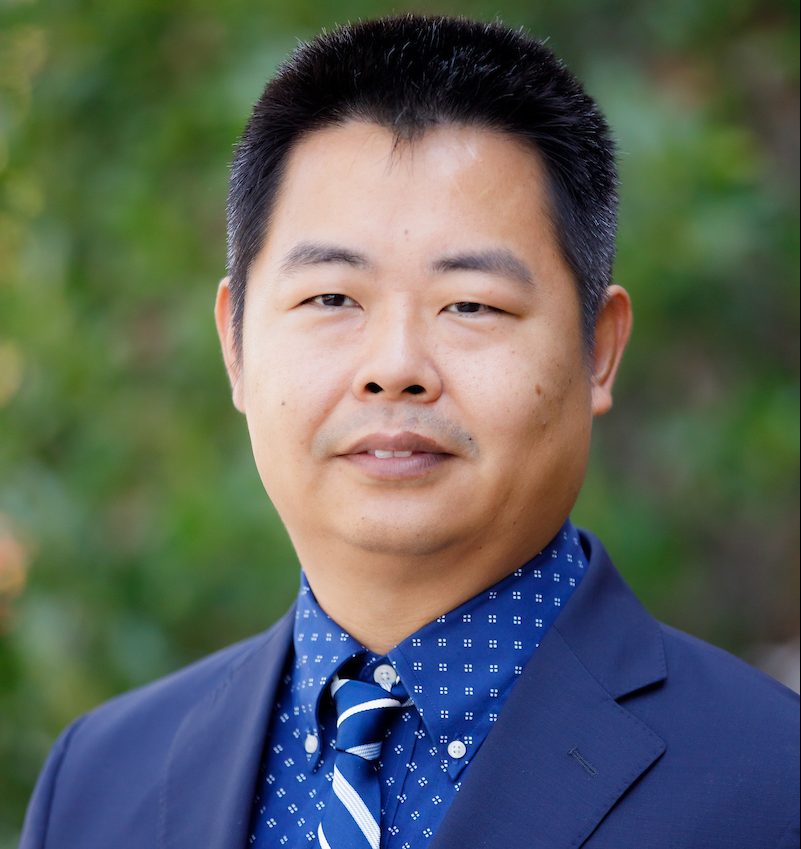
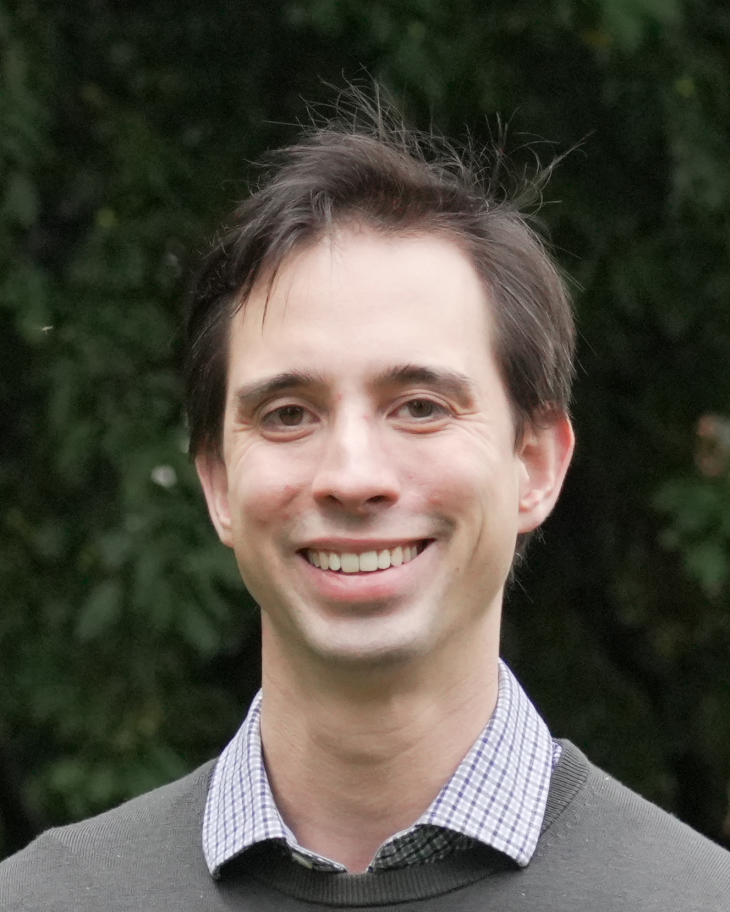
Adam Hollowell is an Adjunct Assistant Professor in the Program in Education at Duke University, where he also serves as Senior Research Associate at the Samuel DuBois Cook Center on Social Equity and Director of the Inequality Studies Minor. His teaching spans ethics, inequality studies, and history across Duke’s Kenan Institute for Ethics, Sanford School of Public Policy, and Department of History. Hollowell holds a Ph.D. from the University of Edinburgh (2009). His research focuses on inequality, higher education, public policy, and ethics, with notable work on pandemic impacts, telemedicine in education, and reproductive health access during crises. In Inequality Studies , Hollowell emphasizes understanding policies to drive social change, as highlighted in recent media coverage. His publications explore topics like student behavior shifts during the pandemic, telemedicine adoption in universities, and James Baldwin’s ethical challenges. He is a finalist for the Judith Deckers Prize (2024). Professionally, Hollowell leads projects such as Bass Connections on college contraception access and Story+ initiatives. His work bridges academia and public engagement, addressing systemic inequities through interdisciplinary approaches.
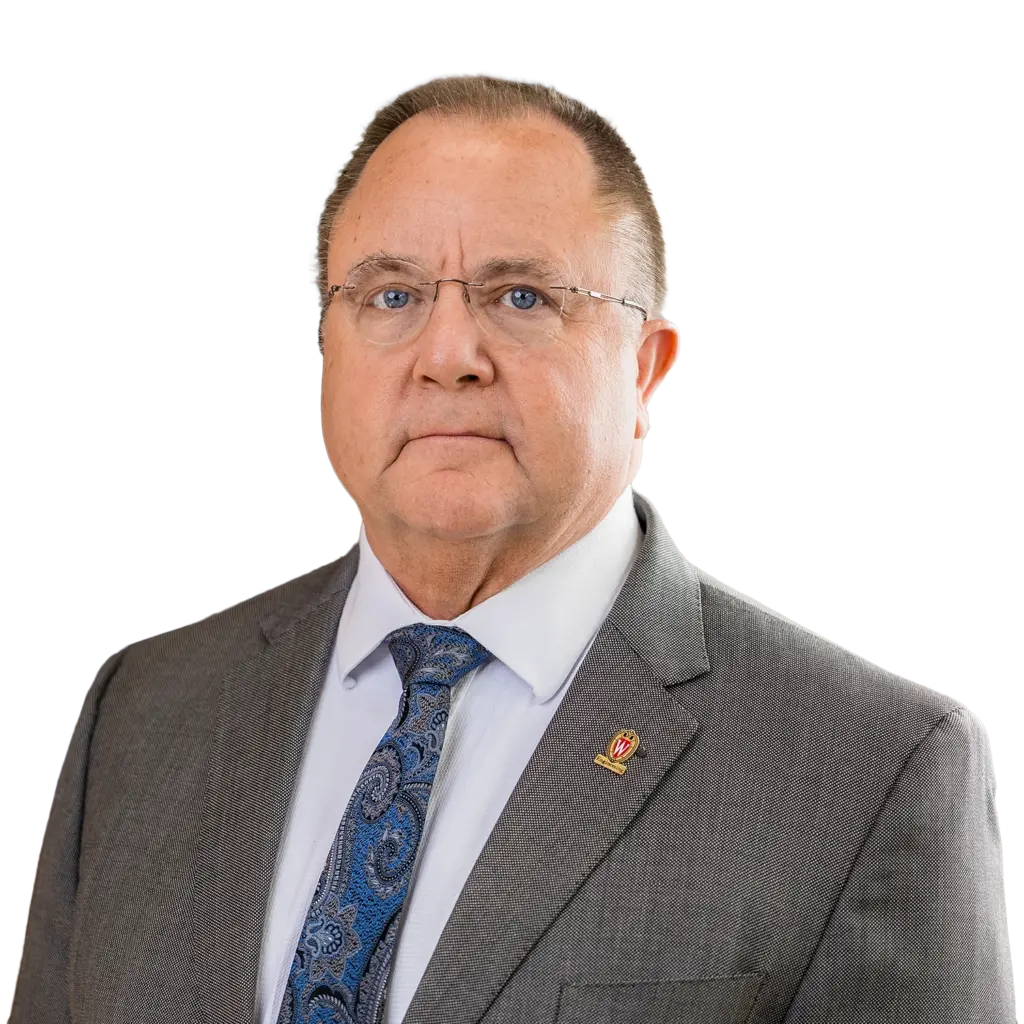
David Noyce is a Professor and Executive Director of the Traffic Operations and Safety (TOPS) Laboratory at the University of Wisconsin-Madison's Department of Civil & Environmental Engineering. He also serves as Associate Director of the Safety Research Using Simulation (SaferSIM) Center, a University Transportation Center. His work focuses on transportation safety, traffic operations, and automated/connected vehicle systems. Key roles include leading over $35M in research since 2003 through the TOPS Lab and advancing technologies like V2V/V2I communication, winter maintenance strategies, and work zone safety. Education: PhD (Texas A&M, 1999), MS (Civil Engineering, UW-Madison, 1995), MBA (UW-Whitewater, 1994), BS (UW-Madison, 1984). Research interests span traffic control devices, driver behavior analysis, crash reconstruction, and multi-modal transportation systems. He pioneered the national implementation of flashing yellow arrow signals and developed the Wisconsin Connected and Automated Transportation Consortium. Current projects include C-V2X localization frameworks, automated vehicle safety testing, and winter maintenance efficiency. Recognized with 20+ awards, including ITE and ASCE Fellowships and the Dr. Arthur F. Hawnn Professorship. His labs offer full-scale driving simulators and field-testing capabilities for real-world validation of innovations.
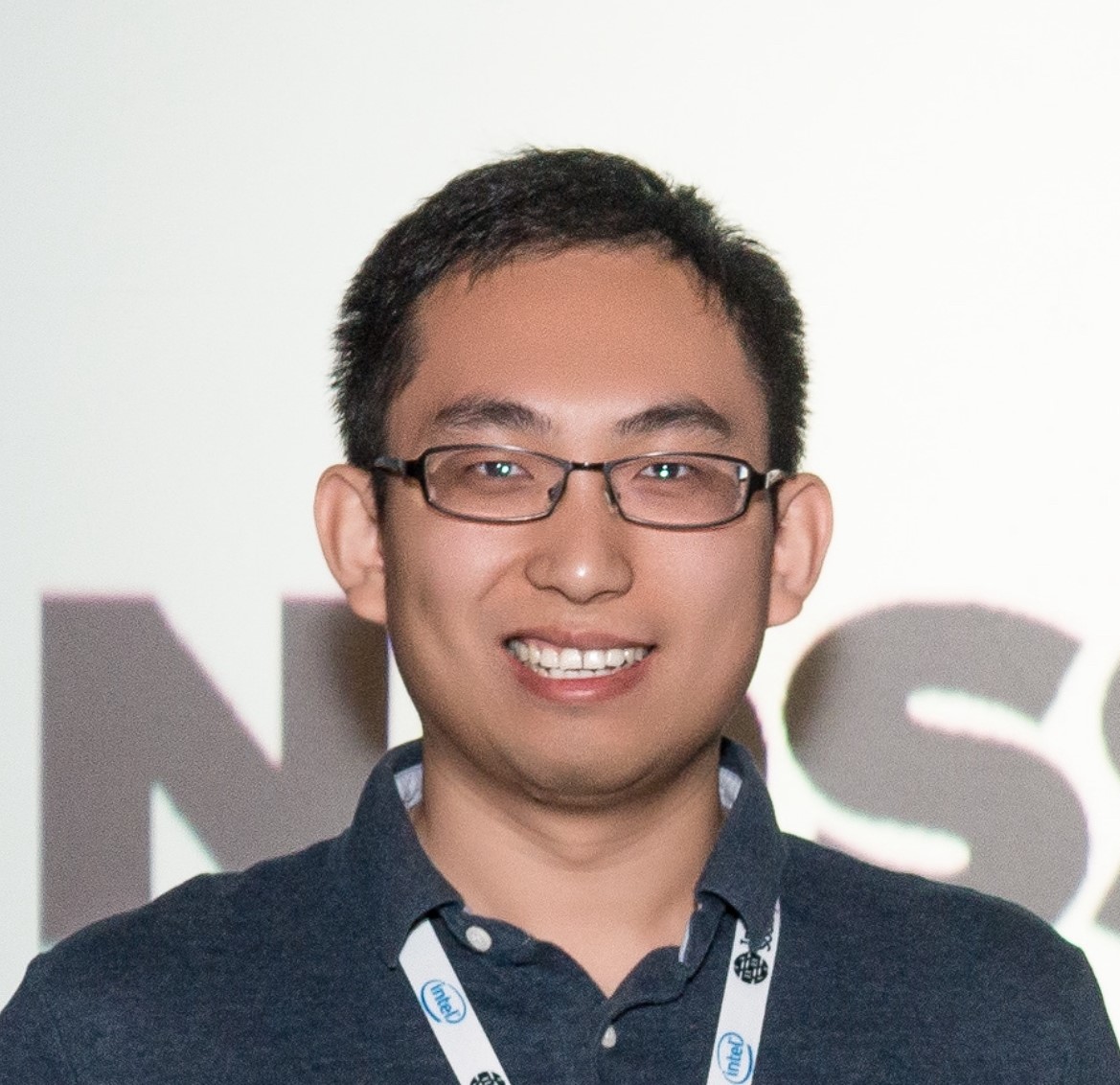
Shoudong Huang is a Professor at the School of Mechanical and Mechatronic Engineering , University of Technology Sydney, and Deputy Director of the UTS Robotics Institute. His research focuses on mobile robot navigation , SLAM , nonlinear state estimation , and surgical robotics . He has published over 200 papers and is recognized as one of the 100 Most Influential Scholars in Robotics (Aminer, 2018). PhD in Automatic Control, Northeastern University (China) Postdoctoral Research Fellow, University of Hong Kong (1998-2000) Research Fellow, Australian National University (2001-2003) Full-time academic roles at UTS since 2004 His work addresses challenges in robot localization across extreme environments (underwater, underground mining, surgical settings) and develops globally optimal SLAM algorithms with guaranteed performance. He has secured over $4 million AUD in external funding, including ARC Discovery grants and industry partnerships. Recent publications emphasize cross-modal calibration (camera-LiDAR), interval analysis for bounded noise , and template-based deformable surface reconstruction . These span applications in autonomous driving, surgical navigation, and UAV guidance. Chancellor’s Medal for Research Excellence (2020) Supervisor of the Year (2023) Best Paper Award (2016 ICARCV) Huang serves as Associate Editor for IEEE Transactions on Robotics and International Journal of Robotics Research , and has held leadership roles in top robotics conferences like IROS and RSS. His collaborations span MIT, USC, Zhejiang University, and industry partners including PMSW Research Pty Ltd and Multiplex Constructions Pty Ltd.
Prof. Laura Leal-Taixé is a Professor at the Technical University of Munich (TUM) in the Department of Informatics, leading the Dynamic Vision and Learning group. She holds the Rudolf Mößbauer Tenure Track Assistant Professorship, promoted to W3 Associate Professorship in 2022. Her research focuses on computer vision and machine learning, particularly video analysis, multi-object tracking, and autonomous driving applications. Education: B.Sc./M.Sc. in Telecommunications Engineering (Technical University of Catalonia, UPC) Ph.D. in Information Processing (Leibniz University of Hannover, Germany) Postdoctoral Research at ETH Zürich (Switzerland) and TUM Research Interests: Laura’s work addresses challenges in video analysis, including motion analysis, semantic segmentation, and integrating social dynamics into urban traffic modeling. Her project socialMaps , funded by the Sofja Kovalevskaja Award, explores decoupling vehicle and pedestrian traffic using dynamic maps. Her research combines optimization techniques, deep learning, and sensor data for real-world applications like autonomous systems. Recent Trends: Her publications highlight advancements in multi-object tracking, 3D LiDAR segmentation, and trajectory forecasting, emphasizing neural networks and geometric approaches. Collaborations with industry and academia underscore her work’s practical impact. Awards: 2017 Sofja Kovalevskaja Award (€1.65M, Humboldt Foundation) 2017 DAAD Australia-German Joint Research Grant Travel grants from Women in CV, CVPR Doctoral Consortium, and Vodafone Foundation Labs & Projects: Leads the Dynamic Vision and Learning group at TUM, focusing on vision-based AI for autonomous systems and environmental monitoring. Active in developing datasets like DynamicEarthNet for semantic change analysis.
Qi Alfred Chen is an Assistant Professor in the Department of Computer Science at the University of California, Irvine (UCI), within the Donald Bren School of Information and Computer Sciences. He also holds affiliations with the Department of Electrical Engineering and Computer Science (EECS), the Institute of Transportation Studies at UC Irvine (ITS-Irvine), the Center for Embedded and Cyber-physical Systems (CECS), the Institute for Software Research (ISR), and the UC Irvine Cybersecurity Policy & Research Institute (CPRI). His research focuses on network and systems security, with particular emphasis on autonomous vehicle and IoT security. Dr. Chen received his Ph.D. from the University of Michigan in 2018. His educational background has prepared him for his current research in security of critical computer systems. His work bridges theoretical security principles with practical implementations in real-world systems. Chen's research interests center on network and systems security , with a major focus on smart systems and IoT security , particularly in transportation and autonomous vehicle systems . His work addresses security challenges through systematic problem analysis and mitigation, discovering and mitigating security problems in next-generation transportation systems, smartphone OSes, network protocols, DNS, GUI systems, and access control systems. His research has high impact in both academic and industry contexts, with over 10 top-tier conference papers, a DHS US-CERT alert, multiple CVEs, and coverage in major news media like Fortune and BBC News. His publication record shows a clear evolution from foundational work on network protocols and smartphone security toward increasingly sophisticated security analyses of autonomous vehicle systems and AI-powered transportation technologies. The research trajectory demonstrates growing technical sophistication and real-world impact, with recent work focusing on physical-world adversarial attacks against autonomous driving perception systems, LiDAR spoofing, and security of multi-sensor fusion in autonomous vehicles. NSF CAREER Award (2022) on securing the AI stack in emerging autonomous and connected CPSs Chancellor's Award for Excellence in Undergraduate Research Mentorship, UC Irvine (2021) 5th place nation-wide at National CCDC competition (2021, as faculty advisor) 1st place (Gold Medal) at CCDC Western Regional competition (2021) ProQuest Distinguished Dissertation Award, University of Michigan (2019) Dr. Chen has mentored numerous successful students, including PhD candidates and undergraduates who have gone on to positions at major tech companies like Meta, Uber, Amazon, and Intel. His research group has secured significant funding, including an NSF CAREER award, and has made substantial contributions to the field through high-impact publications and vulnerability disclosures. He is also the co-founder of the ISOC VehicleSec Symposium and has organized the AutoDriving CTF contest at DEF CON. Chen leads the AV & IoAT Security Research Group at UCI, focusing on security challenges in autonomous vehicles and the broader Internet of Autonomous Things. His team has developed numerous attack demonstrations and security analyses that have received significant media attention and influenced industry practices. The group maintains an active YouTube channel showcasing their security research.
Michele Zorzi is a Professor of Telecommunications at the School of Engineering, University of Padova, Italy, where he has held a faculty position since 2003. He leads the SIGNET (Signal processing and Networking) Research Group, focusing on cutting-edge wireless networking challenges including mmWave communications and underwater networks. His extensive publication record exceeds 600 papers in top-tier journals and conferences, reflecting significant contributions to the field through both theoretical and experimental work. He received his Laurea Degree (1990) and Ph.D. (1994) in Electrical Engineering from the University of Padova. Prior academic appointments include Politecnico di Milano (1993-1996), University of California San Diego (1995-1998), and University of Ferrara (1998-2003), where he progressed from Associate Professor to full Professor. His educational trajectory demonstrates deep roots in Italian academia with international exposure. Professor Zorzi's research spans wireless communications and networking, with current emphases on mmWave networking for vehicular systems, underwater acoustic/optical communications, non-terrestrial networks, and AI-driven networking solutions. His group conducts experimental validations including at-sea trials for underwater systems and testbeds for vehicular networks. Key projects include PRATA for predictive QoS in autonomous driving and IoT-based environmental monitoring of the Venice Lagoon, demonstrating practical applications of theoretical work. Analysis of his 2022-2025 publications reveals strong trends in applying artificial intelligence to networking challenges across diverse environments. There is significant emphasis on vehicular networks (predictive QoS, teleoperated driving), underwater systems (acoustic/optical communications, AUV swarms), and satellite networks (Starlink integration, NTN security). Experimental validation in real-world scenarios like the Venice Lagoon monitoring project and underwater sea trials characterizes his applied research approach. His scientific accolades include: IEEE Fellow (2007) IEEE Communications Society Best Tutorial Paper Award (2008, 2019) Stephen O. Rice Best Paper Award (2018) Multiple best paper awards at IEEE conferences (2005-2020) As principal investigator for numerous European and US research projects plus 20+ industry-funded initiatives, Professor Zorzi has mentored over 35 PhD students and post-docs. Graduates now hold prominent positions at institutions including Stanford, UCSD, CTTC, and Huawei. His SIGNET group maintains active international collaborations and contributes to open-source networking tools via GitHub, demonstrating commitment to community engagement. The SIGNET Research Group, housed within the Department of Information Engineering, operates specialized experimental facilities for mmWave and underwater communications. Current initiatives include AI-based predictive QoS frameworks for vehicular networks, underwater optical communication systems using ultraviolet light, and large-scale IoT deployments for environmental monitoring. The group's GitHub presence indicates strong open-science practices, while recent sea trials confirm hands-on experimental capabilities beyond theoretical work.
Megan S. Ryerson holds the UPS Chair of Transportation and serves as Associate Chair of City and Regional Planning at the University of Pennsylvania's Stuart Weitzman School of Design. Previously, she was Associate Dean for Research (2018–2023), demonstrating sustained leadership in academic administration while maintaining an active research profile focused on transportation systems integration. Her educational credentials include: Ph.D. in Civil and Environmental Engineering, University of California, Berkeley (2010) B.Sc. in Systems Engineering, University of Pennsylvania (2003) Ryerson's research pioneers the integration of intercity transportation into urban planning frameworks, with foundational work in aviation infrastructure planning , airline demand forecasting , and transportation resilience . She investigates airport competition dynamics across megaregions, airline disaster recovery protocols, and fuel-efficient flight planning methodologies. Her scholarship actively bridges civil engineering and urban planning disciplines to design transportation systems that are inherently safe , efficient , and resilient against disruptions. Analysis of her 15 most recent publications reveals a pronounced shift toward transportation equity since 2022, particularly examining driver education accessibility ('driver training deserts') and bikeshare infrastructure allocation. This equity focus coexists with continued aviation research, while pandemic-era studies on transportation behavior (2020–2023) demonstrate methodological adaptability through quasi-experimental designs and real-world crisis response analysis. Her scientific recognition includes: UPS Chair of Transportation (prestigious endowed professorship) Dr. Ryerson has significantly expanded urban planning pedagogy by incorporating megaregional transportation systems into core curricula. Her leadership as former Associate Dean for Research reflects active engagement with funding agencies and research administration, though specific grant details aren't documented in source materials. Current work emphasizes translating research into equitable policy frameworks, particularly for vulnerable transportation populations.
Kristofer Pister is a Professor in the Department of Electrical Engineering and Computer Sciences at the University of California, Berkeley. He co-directs the Berkeley Sensor and Actuator Center (BSAC) and the Ubiquitous Swarm Lab. His career spans groundbreaking innovations in Micro/Nano Electro Mechanical Systems (MEMS), Control Systems, and Low-Power Circuits, with a focus on Smart Dust and synthetic insects. Education: Ph.D. and M.S. in EECS from UC Berkeley (1992, 1989); B.A. in Applied Physics from UC San Diego (1986). His research areas include MEMS , Control Systems , Robotics , and Integrated Circuits , with recent work on self-powered micro-sensors, crystal-free radios, and interplanetary swarm networks. Key awards include the ISA Albert F. Sperry Founder Award (2009) , Alexander Schwarzkopf Prize (2006) , and the NSF CAREER Award (1996) . He has authored numerous influential publications in wireless sensor networks and microrobotics. His lab, Ubiquitous Swarm Lab , explores distributed robotics and swarm intelligence. Pister emphasizes open collaboration in research, ethical conduct in academia, and efficient resource utilization for graduate students.
Dr. Jiaqi Gong serves as Associate Professor in Computer Science and Adjunct Associate Professor in Mechanical Engineering at The University of Alabama's College of Engineering, while directing the Alabama Center for the Advancement of Artificial Intelligence. His academic foundation includes: B.S. in Engineering, China University of Geoscience (2004) Ph.D. in Engineering, Huazhong University of Science and Technology (2010) Dr. Gong's research pioneers human-AI convergence through cyber-physical systems and smart health technologies, developing mobile/wearable platforms to enhance human perceptual, cognitive, and physical capabilities. His work spans artificial intelligence, machine learning, computer vision, and IoT with applications in healthcare, environmental monitoring, and education. The Sensor-Accelerated Intelligent Learning (SAIL) laboratory he founded drives innovation in behavior change interventions, human movement modeling, and educational data mining. Recent publications reveal strong interdisciplinary trends: healthcare AI dominates with medication adherence prediction and surgical classification systems, while environmental applications feature flood-risk communication and drought analysis. His work increasingly integrates generative AI and LLMs across domains, demonstrating methodological innovation in federated learning, knowledge graphs, and explainable storytelling frameworks. Notable recognitions include: Best Student Paper Award, IEEE/ACM Connected Health Conference (2022) Best Student Paper Award, Body Sensor Networks Conference (2019) Data Challenge Win, IEEE Biomedical Health Informatics (2018) Best Paper Award, Body Area Networks Conference (2014) Best Demonstration Award, IEEE Wireless Health Conference (2014) Dr. Gong leads significant funded projects including a $2M CDC/NIOSH grant for first responder safety and $3M NSF funding for hydrologic research. As SAIL laboratory director, he mentors students in developing clinically deployed technologies for multiple sclerosis, dementia, and mental health. Future work focuses on scaling AI applications in chronic disease management and climate resilience through the Alabama AI Center. The SAIL laboratory (founded 2017) operates as a multidisciplinary hub developing wearable/mobile systems for health applications, with active collaborations across medical clinics and engineering departments for real-world deployment of behavior change interventions and movement analysis tools.
Dylan Campbell is a Lecturer in Computing at the Australian National University (ANU), affiliated with the ANU College of Systems & Society. His research focuses on computer vision, optimization, and robotics, particularly in 3D vision and deep learning applications. He has held prior roles as a Research Fellow at the University of Oxford’s Visual Geometry Group and ANU’s Australian Centre for Robotic Vision. Campbell holds a PhD from ANU (2018) and a BE in Mechatronic Engineering from UNSW (2012). Research interests include geometric sensor alignment, neural radiance fields, and differentiable optimization layers. He actively supervises students (7 PhD/DPhil, 3 MEng, 9 honours) and teaches advanced courses in computer vision and robotics. Notable awards include the Marr Prize Honourable Mention (2017) and the IEEE Australia Council Postgraduate Student Paper Competition (2018). He has organized workshops at ECCV and CVPR, served as a reviewer for top conferences like CVPR/ICCV/ECCV, and contributed to datasets like SEED4D and RefRef. His work emphasizes efficient training of neural networks and leveraging symmetries in data for long-range connections.
Frede Blaabjerg is a Professor at Aalborg University (AAU Energy) , affiliated with the Faculty of Engineering and Science . Since 1998, he has pioneered power electronics research in applications such as wind turbines , photovoltaic (PV) systems , reliability engineering , and Power-2-X technologies. Education : PhD in Electrical Engineering (1995, Aalborg University) Honorary Degrees : Honoris Causa at University Politehnica Timisoara (2017) and Tallinn Technical University (2018) His research focuses on power electronics control , system optimization , and reliability for renewable energy and electric mobility . Recent work includes grid-forming converters , virtual synchronous generators , and smart EV charging systems. Key publication trends span 15+ years , with over 3,733 peer-reviewed articles and 900+ journal papers in power electronics , renewables , and energy storage . Notable book series: Control of Power Electronic Converters and Systems (4 volumes, Elsevier). Scientific Awards : 46 IEEE Prize Paper Awards 2020 IEEE Edison Medal 2019 Global Energy Prize 2014 IEEE William E. Newell Power Electronics Award Leadership Roles : Editor-in-Chief, IEEE Transactions on Power Electronics (2006–2012) Chairman, Danish Council for Research and Innovation Policy (2020–) President, IEEE Power Electronics Society (2019–2020)
Dimitra Psychogiou is a Full Professor of Microwave Engineering at University College Cork and Principal Investigator at Tyndall National Institute's CONNECT Centre in Cork, Ireland. She leads the Advanced RF Technology Group, driving innovation in reconfigurable RF systems for next-generation wireless networks. Her academic credentials include: Dipl.-Eng. in Electrical and Computer Engineering, University of Patras (2008) Ph.D. in Electrical Engineering, ETH Zurich (2013) Prof. Psychogiou's research pioneers reconfigurable microwave filters , non-reciprocal RF components , and additive manufacturing for antenna systems . Her work bridges theoretical microwave engineering with practical implementations in 5G/6G front-ends, emphasizing sustainability through hyperflexible filtering architectures that reduce hardware complexity and energy consumption. Key innovations include acoustic-wave resonator filters and 3D-printed RF components enabling unprecedented miniaturization. Analysis of her 2022-2025 publications reveals a strategic shift toward multifunctional RF integration , where filtering coexists with isolation, amplification, and switching in single modules. This trend addresses critical industry needs for compact, software-defined radio front-ends in satellite communications and IoT networks, with increasing emphasis on reflectionless topologies and spatiotemporal modulation techniques. Her scientific recognition includes: 2023 MTT-S Outstanding Young Engineer Award 2021 Roberto Sorrentino Prize 2021 SFI Research Professorship 2020 NSF CAREER Award 2020 URSI Young Scientist Award UC Boulder Junior Faculty Research Award Prof. Psychogiou actively shapes her field through leadership roles as Chair of IEEE MTT-13 Committee and Secretary of USNC-URSI Commission D, while serving as Associate Editor for IEEE MWCL and IJMWT. Her group collaborates extensively with semiconductor foundries and wireless infrastructure companies to transition lab innovations to commercial applications. The Advanced RF Technology Group operates state-of-the-art facilities for GaAs MMIC prototyping, 3D-printed RF component fabrication, and full-wave electromagnetic characterization, supporting Ireland's strategic position in European telecommunications research.
Prof. Dr. Markus Zimmermann leads the Chair of Product Development and Lightweight Design at the Technical University of Munich (TUM). With a background in mechanical engineering from TU Berlin and the University of Michigan, and a doctorate from MIT on solid-state singularities, he bridges academic rigor with industrial application. His career spans 12 years at BMW focusing on vehicle development before transitioning to academia. Specializes in solution space engineering for robust design Expert in additive manufacturing and systems engineering Develops methodologies for managing design complexity and uncertainty His research focuses on multidisciplinary design optimization and lightweight structures , particularly in robotics and automotive systems . His team applies digital twin frameworks and attribute dependency graphs to enhance design processes. Recent publications emphasize topology optimization in robotic systems and thermal management for medical X-ray sources. Key trends in his 2024-2025 publications include: Topological optimization for additive manufacturing and robotics Application of solution spaces to manage design uncertainty Development of compact X-ray systems for medical therapy Integration of digital twin technologies in industrial contexts
Prof. Dr. Sebastian Steinhorst is an Associate Professor (W3-level with tenure) at the Technical University of Munich (TUM) within the Embedded Systems and Internet of Things group at the TUM School of Computation, Information and Technology . His research focuses on advancing the security, predictability, reliability, and interoperability of smart connected and autonomous systems, particularly for applications in Internet of Things (IoT) , Industry 4.0 , and automotive systems . PhD in Computer Science (2011) from Goethe University Frankfurt Postdoctoral roles at TUMCREATE Singapore (2011-2016) and Aarhus University (2016) Joined TUM in 2016 as Rudolf Moessbauer Tenure Track Professor His research areas include decentralized embedded systems, hardware/software co-design, modeling and verification of cyber-physical systems, security protocols for automotive networks, and time-sensitive networking (TSN) for industrial applications. Recent work explores blockchain-based data sovereignty, zero-knowledge proofs for vehicle authentication, and resilient architectures for autonomous systems. Key scientific contributions include the 2019 ACM TODAES Best Paper Award and pioneering work on CyberSecDome , LeapChain , and Simutack frameworks. He serves on editorial boards and conference committees, including co-organizing the Autonomous Systems Design initiative at DATE. His teaching portfolio spans lectures on System Design for IoT , Software Architecture for Distributed Systems , and IoT Security across multiple semesters. He also leads advanced seminars on embedded systems and IoT.
Anna Chalachanova is an Associate Professor in the Department of Health at VID University College, Norway. Her academic work centers on disability research, inclusive methodologies, and citizenship studies, with a primary focus on people with intellectual disabilities across Norway, Slovakia, and Great Britain. Her research spans inclusive research practices, citizenship frameworks for people with intellectual disabilities, higher education accessibility, sexual citizenship, religious inclusion, and protective care. She investigates how intellectual disabilities intersect with everyday citizenship experiences, voting rights, educational participation, and personal assistance services through participatory and co-creative methodologies that prioritize disabled voices. Analysis of her 15 most recent publications (2019-2025) reveals consistent thematic focus on citizenship and inclusion, with methodological emphasis on participatory research. Key trends include comparative studies between Norway and Slovakia, sexual citizenship barriers within personal assistance systems, and higher education experiences for intellectually disabled students. Her work demonstrates strong commitment to amplifying marginalized perspectives through narrative and co-created research approaches. Chalachanova actively contributes to multiple research initiatives including the ongoing PATHWAYS project (Faculty of Social Sciences) examining vulnerable institutional pathways for youth, and "To allow in" focused on barrier reduction for people with intellectual disabilities. Completed projects include "Higher education for people with intellectual disabilities" and "My vote counts too!" which evaluated voting participation mechanisms. These projects involve collaborations across Norwegian institutions, Slovakia, and Great Britain. Based in VID University College's Department of Health, she operates within interdisciplinary teams addressing disability inclusion through international partnerships. Her work connects Norwegian higher education contexts with Slovakian comparative frameworks, driving initiatives that transform citizenship practices and educational access for people with intellectual disabilities through evidence-based interventions.