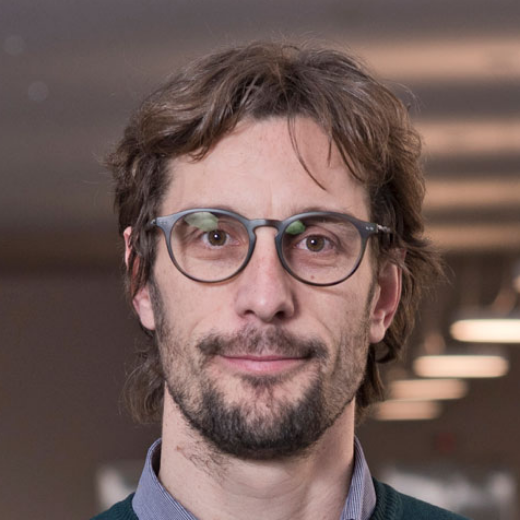
Lorena REBECCHI is a Full Professor in the Department of Life Sciences at the University of Modena and Reggio Emilia. Her research focuses on tardigrade biology, particularly their survival mechanisms under extreme conditions such as desiccation, temperature extremes, and radiation. She explores phylogenetic relationships, symbiotic microbiota, and evolutionary adaptations of these organisms. REBECCHI's work integrates morphological, molecular, and physiological approaches, contributing to understanding anhydrobiosis, stress responses, and tardigrade ecology. Key research areas include tardigrade phylogeny (e.g., resolving their position within Panarthropoda), environmental adaptations (e.g., thermal tolerance and acid resistance), and astrobiology applications (e.g., space flight experiments). She has described multiple new species and revised taxonomic classifications within Tardigrada. REBECCHI collaborates internationally, evidenced by conferences like the 2024 IADCI meeting hosted at her institution. Publications emphasize comparative transcriptomics, symbiont evolution, and the structural basis of tardigrade feeding mechanisms. Her lab's work on Antarctic tardigrades highlights climate change impacts and genetic diversity. REBECCHI's research has practical applications in biotechnology (e.g., space food systems) and environmental monitoring.
Dr. Cesare Andrea Papazzoni serves as Associate Professor at the Department of Chemical and Geological Sciences, University of Modena and Reggio Emilia. His expertise spans vertebrate paleontology , biostratigraphy , and paleoenvironmental reconstructions with a focus on foraminifera and carbonate systems . Teaching responsibilities include courses on Paleontology and Evolution of Vertebrates (Master's in Science Teaching and Communication) and Applied Biostratigraphy (Geosciences program), where students engage in fossil identification, gamma-ray stratigraphy, and paleoclimatic analysis. Research interests center on climate change impacts on marine calcifiers during Paleogene thermal events (EECO, MECO). His work examines resilient coral reef ecosystems , nummulitid foraminifera , and shallow-water carbonate factories through integrated biostratigraphic, isotopic, and sedimentological methods. Recent studies include iron ooid genesis in Eocene basins and taxonomic revisions of historical fossil collections. Publications (2021–2025) reveal expertise in benthic community dynamics during MECO , taphonomic analysis of vertebrate fossils , and biostratigraphic correlation between SBZ and CN zones . Collaborative work spans ichthyosaur morphology , coral diversification patterns , and microfacies analysis of Paleogene successions. Current projects integrate multidisciplinary approaches to sedimentary systems affected by tectonic-climatic coupling.
Jost-Diedrich Graf Von Hardenberg is a Full Professor in the Department of Environmental, Land and Infrastructure Engineering (DIATI) at the Polytechnic University of Turin. He serves as the Energy and Climate Change Area Coordinator and is a Scientific Advisor of the HPC-AI Advisory Council. His research focuses on climate science and geophysical fluid dynamics, with significant contributions to understanding climate change impacts and Earth system modeling. Professor Von Hardenberg's research interests span multiple areas of climate science, including climate dynamics, geophysical fluid mechanics, hydrological cycle analysis, numerical climate modeling, and precipitation downscaling. His work particularly emphasizes climate tipping points and extremes, Rayleigh-Bénard convection in geophysical contexts, high-resolution Earth-system climate modeling, and stochastic approaches to precipitation downscaling. His research integrates theoretical, computational, and observational approaches to address fundamental questions about climate system behavior and change. His recent publications demonstrate a strong focus on Atlantic Meridional Overturning Circulation (AMOC) dynamics, climate extremes in Alpine regions, urban climate effects, and interdisciplinary applications of climate science to ecological and conservation challenges. His work bridges fundamental climate dynamics with practical applications for climate adaptation and environmental management. Among his notable recognitions are the Research in Paris award from the Maire de Paris (2009) and Fellowships at the London School of Economics and Political Science (2001-2002, 2004-2006). He has participated in numerous research networks including the European Geosciences Union section 'Nonlinear Processes in Geophysics' (2004-2012), the EC-Earth Consortium (2012-present), and COST Action ES0805 TERRABITES 'The terrestrial biosphere in the earth system' (2010-2014). Professor Von Hardenberg actively supervises PhD students including Marianna Albanese, Maria Clara Corda, Sara Filippini, and Jacopo Grassi, among others. He leads multiple significant research projects such as ROTurb (Resolving Ocean Macroscale Turbulence), LocClima (Impact of LOCal conditions on Italian microCLIMAtes), CRAWL (Carbon Release in A Warming cLimate), and CliMOC (Climate Impacts of the Atlantic Meridional Overturning Circulation), with funding from EU, national programs, and commercial contracts. He is a member of the Interdepartmental Center SmartData@PoliTO - Big Data and Data Science Laboratory, where he contributes expertise in climate data analysis and modeling. His collaborative work extends to multiple institutions through non-commercial agreements with the National Research Council and various international research consortia focused on climate system understanding.
Luigi Cafiero is a PhD candidate in Civil and Environmental Engineering at the Polytechnic University of Turin (Politecnico di Torino), currently in his 38th cycle (2022-2025). Affiliated with the Department of Environmental, Land and Infrastructure Engineering (DIATI) and serving as an external lecturer at the Interuniversity Department of Regional and Urban Studies and Planning (DIST), his doctoral research focuses on non-stationary flood frequency analysis under climate change conditions, specifically developing operational procedures for space-time estimation of flood quantiles. His academic background includes: Bachelor of Science in Mechanical Engineering, Università degli studi di Genova, 2019 Master of Science in Environmental Engineering (Climate Change specialization), 2022, with thesis on Idai cyclone characterization in Beira, Mozambique, developed within the interdisciplinary lab "After the Storm. Designing post-cyclone strategies for the city of Beira, Mozambique" Research interests span Hydrology and Water Engineering , with concentrated expertise in non-stationary flood frequency analysis, climate change impacts on hydrological extremes, and hydrometeorological risk assessment. His work integrates advanced statistical methods with practical flood risk management applications, particularly addressing precipitation extremes in changing climates. Analysis of his 12 publications (2022-2025) reveals a consistent focus on climate-driven flood frequency modeling, featuring quantile-mapping techniques for precipitation-flood relationships, regional flood modeling in the Po River basin, and case studies of extreme events like the Idai cyclone. His research bridges theoretical hydrology with actionable flood risk adaptation strategies. Scientific Awards: None listed in available information. Advising and Grants: As a current PhD candidate, no formal advisees are documented. No grant information is provided in the source materials. Labs and Teams: Previously engaged with the "After the Storm" interdisciplinary lab for Mozambique cyclone recovery strategies. Currently collaborates with Alberto Viglione (PhD supervisor), Miriam Bertola, Paola Mazzoglio, Francesco Laio, and Günter Blöschl on flood frequency research at Politecnico di Torino.
Andrea Salonia is Associate Professor of Urology at Vita-Salute San Raffaele University , with a clinical role in the Urology Unit of IRCCS San Raffaele Hospital in Milan. He serves as Director of the URI-Urological Research Institute within the Division of Experimental Oncology at the same institution. Medical Degree: University of Milan Specialization in Urology: University of Trieste Specialization in Endocrinology: Vita-Salute San Raffaele University His research focuses on: Experimental clinical and surgical treatment of bladder and prostate cancer Functional urology in multiple sclerosis patients Male/female sexual dysfunctions Testicular cancer outcomes Male infertility and health demographics Steroid endocrinology in prostate cancer Penile anomalies and surgical rehabilitation Key research trends in 2024 publications include: Infertility-male health correlations Adiposity-fertility interactions Testicular cancer reproductive outcomes Advanced imaging for urological conditions Centralized care for rare genetic syndromes Teaching Activities (2025): Residency rotations in Surgery Courses on Endocrine/Kidney diseases Surgical patient management Outpatient clinic training Sociocultural challenges in healthcare He coordinates doctoral programs in Molecular Medicine (2020-2024) and engages in public outreach initiatives like Book City events.
Mara Ferreri is a Fixed-term Assistant Professor at the Interuniversity Department of Territorial Sciences, Planning and Policies (DIST) at Politecnico di Torino, where she teaches Global Urban Geographies. She is also affiliated with multiple prestigious institutions including the Royal Geographical Society with the Institute of British Geographers (2022-present) and the London School of Economics, Department of Geography and the Environment (2022-present). Her academic career spans multiple European institutions, with previous appointments at Northumbria University (2019-2022), Universitat Autònoma de Barcelona (2016-2019), Durham University, and the London School of Economics. Ferreri's research focuses on housing precarity, temporary and platform urbanism, and struggles for housing alternatives. She employs qualitative methods to investigate the precarization of urban space and living, collective resistance, and self-organization. Her interdisciplinary work bridges urban and cultural geography, spatial planning, visual culture, and housing studies. She is particularly known for her monograph The Permanence of Temporary Urbanism: Normalising Precarity in Austerity London (Amsterdam University Press, 2021), which examines the normalization of precarious living conditions in London. Her recent publications reveal a consistent focus on urban commons, housing movements, platform economies, and the politics of care in urban contexts. Ferreri's work increasingly examines the intersections between digital platforms and housing precarity, feminist approaches to housing commons, and transnational solidarity in housing struggles. Her research demonstrates a methodological commitment to collaborative and militant research approaches that prioritize community knowledge and activism. Queen Mary PhD Studentship (2009) Urban Geography Research Group Event Fund (2012) Antipode Foundation Scholar-Activist Project Award (2012) Arts and Humanities Research Council - Creativeworks London (2014) Marie Curie Fellowship (2016) Antipode International Workshop Award (2019) British Academy Virtual Sandpit Follow-on Funding (2021) Accademia Nazionale dei Lincei and British Academy Knowledge Frontiers Symposium (2022) Ferreri supervises PhD students Matteo Beltramo and Tommaso Cosentino in the Urban and Regional Development program. She leads the ERC-funded EnactDECOM project (2025-2030) on decommodified housing in Southern Europe. As an active member of the European Network for Housing Research (2020-present), she serves on editorial boards for PLATFORMS & SOCIETY (2024-present), HOUSING AND SOCIETY SERIES (2023-present), and RADICAL HOUSING JOURNAL (2019-present), demonstrating her significant contribution to shaping housing research discourse.
Paolo Buono is Associate Professor at the Department of Computer Science, University of Bari Aldo Moro, Italy. He holds a PhD in Computer Science with specialization in Visual Data Analysis. His research focuses on Information Visualization, Visual Analytics, Human-Computer Interaction, and Mobile Applications. Co-founder and CEO of LARE (2010), a university spinoff providing real-time surgical support through audio-video telestration Member (since 2002) and computer science coordinator at METEA Research Center for environmental protection Visiting scientist at AVIZ (France), University of Maryland (USA), and Fraunhofer IPSI (Germany) His work spans multiple application domains including: Cultural Heritage through interactive exploration systems Healthcare with smart therapeutic devices Environmental Monitoring via CET system IoT-based Smart Interactive Experiences He has contributed to: Dynamic hypergraph visualization techniques End-User Development frameworks (EUDroid) Usability evaluation methodologies Mobile health applications As project leader, he has coordinated: EU-funded VisMaster Coordination Action (2008-2010) Italian Ministry-funded LOGIN project (2014-2015) Apulia Region environmental projects His professional engagements include: Co-chair roles at INTERACT, AVI, IS-EUD conferences Program committee participation in VIS series and HCI conferences Member of ACM, IEEE, and SIGCHI Italy
Fulvio Rinaudo is a Full Professor in the Department of Architecture and Design (DAD) at Politecnico di Torino, Italy, specializing in geomatics and cultural heritage documentation. With decades of experience in the field, he leads research in Geographic Information Systems (GIS), Historical Building Information Modeling (HBIM), photogrammetry, and the documentation of cultural heritage through advanced metric surveying techniques. His research interests span across multiple domains of cultural heritage preservation, including: Georeferenced databases (GIS) for cultural heritage management HBIM applications for architectural documentation and conservation Automatic digital photogrammetry for objects and contexts of varying scales Metric survey techniques for documenting historical buildings and urban contexts Digital documentation methodologies for cultural heritage preservation Rinaudo's recent scholarly output demonstrates a clear focus on advancing technological approaches to cultural heritage documentation, particularly through HBIM systems, environmental risk assessment for heritage sites, and innovative surveying methodologies. His work increasingly integrates emerging technologies like SLAM systems, 360° imaging, and cloud-based platforms to create more efficient and accurate documentation workflows. A significant portion of his recent research addresses the challenges of documenting and preserving heritage in Central Asia, particularly through the ERAMCA project focused on environmental risk assessment. Among his notable recognitions is the Best Poster Award at the CIPA Symposium awarded by ICOMOS CIPA-HD in France (2013). His leadership in the field is further evidenced by his current role as President of CIPA Heritage Documentation (2024-2027) and previous position as Secretary of ICOMOS Italy (2020-2022). Professor Rinaudo actively supervises PhD students across multiple institutions including Politecnico di Torino and Sapienza University of Rome. He has secured significant research funding through competitive grants including the ERAMCA project (Environmental Risk Assessment and Mitigation on Cultural Heritage assets in Central Asia), the RURITAGE project, and the GAMHER project (Geomatics data Acquisition and Management for landscape and built Heritage in an European Perspective). He serves on editorial boards for journals including VIRTUAL ARCHAEOLOGY REVIEW and APPLIED GEOMATICS, and participates in major international conferences as a scientific committee member for CIPA and ISPRS events. His external teaching engagements include positions at Katholieke Universiteit Leuven (Belgium) and Turin Polytechnic University in Tashkent.
Alpár R. Mészáros is a Full Professor at Durham University's Department of Mathematical Sciences. His research focuses on optimal transport, partial differential equations, and mean field games. He has organized conferences such as the 2025 Durham Symposium on Mean Field Games and contributed to events like the LMS Invited Lecture Series in 2023. Mészáros holds a PhD in Mathematics and has authored numerous papers on topics including displacement monotonicity, master equations, and cross-diffusion systems. His work bridges theoretical mathematics with applications in control theory and stochastic processes. Education: PhD thesis on A variational approach to second order mean field games with density constraints (2015), MSc thesis on BV Estimates in Optimal Transportation (2015). Research interests span optimal transport theory, nonlinear PDEs, and their interplay with game theory and probability. Key contributions include analysis of mean field games master equations, convergence rates for particle systems, and well-posedness results for Hamilton-Jacobi-Bellman equations. His publications reflect a focus on monotonicity conditions, conservation laws, and stabilization in dynamic systems. Collaborations include work with leading researchers like Wilfrid Gangbo, Filippo Santambrogio, and Charles Mou. He actively contributes to the academic community through organizing workshops and advancing theoretical frameworks in applied mathematics.
Professor Maria Paola Canevini holds the position of Full Professor of Child Neuropsychiatry and directs the Developmental Neurology - Regional Epilepsy Center at ASST Santi Paolo e Carlo in Milan. Her academic work focuses on epilepsy, neurodevelopmental disorders, and genetic studies in neurological conditions. She graduated in Medicine and Surgery from the University of Milan and specialized in Neurology, with over 300 scientific publications to her name. Her research spans epilepsy therapy optimization (e.g., brivaracetam, cannabidiol), neurogenetic syndromes (Rett syndrome, Tuberous Sclerosis Complex), and sleep neuroscience in neurologic populations. She leads projects on inclusion of people with disabilities and adolescent mental health , addressing transitions to adulthood for patients with ADHD or epilepsy. Collaborative efforts include the BRIVAFIRST epilepsy drug study and CRISIS AFAR pandemic impact analysis. Her work integrates machine learning (e.g., predicting perinatal depression) and innovative wearable technologies for chronic disease monitoring. She has contributed to multinational studies on epilepsy genetics and participates in EU-funded sustainability initiatives (MUSA project).
Romeo Brunetti is an Associate Professor of Mathematical Analysis at the Department of Mathematics, University of Trento. His academic career includes roles such as 'Rientro dei Cervelli' fellow (2006–2010) and research positions at the University of Naples and the DFG (Germany). He specializes in foundational aspects of classical and quantum field theories, with a focus on quantum gravity, algebraic structures in QFT, and relativistic systems. Education: Bachelor’s Degree in Physics, University of Rome 'La Sapienza' (supervised by Prof. Marzio Cassandro and Prof. G. Parisi). PhD in Physics, University of Naples 'Federico II' (supervised by Prof. G. Marmo and Prof. R. Longo). Research Interests: His work explores perturbative quantum gravity, Bose-Einstein condensation in relativistic QFT, quantum spacetime coordinates, nonlinear dynamics in field theories, and classical relativistic scalar fields. He emphasizes rigorous mathematical approaches to quantum field theories in curved spacetimes. Publications: His articles span topics like renormalization in algebraic QFT, quantum gravity models, and time observables in quantum mechanics. The most recent studies address thermodynamic aspects of fermions and covariant approaches to effective quantum gravity. Awards: Featured Review in Mathematical Reviews (MR1736329). Conferences & Committees: Co-organized major events including 'Recent Mathematical Developments in Quantum Field Theory' (Oberwolfach, 2016) and 'Advances in Mathematics and Theoretical Physics' (Accademia dei Lincei, 2017). Active in promoting interdisciplinary dialogue between mathematics and physics. Labs/Teams: Collaborates extensively with international groups on algebraic QFT and quantum gravity, though no dedicated lab is explicitly mentioned in the text.
Damiano Zanotelli serves as Professor at the Free University of Bozen-Bolzano's Faculty of Agricultural, Environmental and Food Sciences, where he conducts pioneering research on climate change adaptation in mountain agriculture. His work bridges fundamental plant science with practical solutions for sustainable food production in Alpine regions, with particular emphasis on water management and fruit tree resilience. His research portfolio centers on: Physiological responses of apple and grapevines to heatwaves and drought stress Evapotranspiration dynamics and precision irrigation systems in mountain orchards Carbon sequestration mechanisms in vineyard and orchard ecosystems Soil-plant-atmosphere interactions under climate extremes Sustainable management of mountain crop ecosystems Analysis of his 15 most recent publications (2023-2025) reveals a dominant focus on climate stressors, with 80% addressing water relations during heat events. His methodology combines isotopic tracing, multi-sensor monitoring, and computational modeling to develop practical irrigation strategies. A distinctive trend is the integration of physiological measurements (sap flow, chlorophyll fluorescence) with ecosystem-level carbon flux analysis, particularly in Italian Alpine vineyards and apple orchards. No scientific awards were documented in the available materials. Professor Zanotelli teaches six courses across bachelor's, master's, and doctoral programs including Sustainable Management of the Mountain Environment and Statistical Methods for Agricultural Research. He leads an active research group focused on water management systems for apple cultivation, as highlighted in university news regarding efficient irrigation solutions for South Tyrolean apple production. His team employs field experiments, sensor networks, and modeling approaches to optimize water use while maintaining productivity under climate change.
Matteo Piga is an Associate Professor in the Department of Medical Sciences and Public Health at the University of Cagliari, Italy. His academic and clinical work is centered on rheumatology, with a focus on systemic autoimmune diseases such as systemic lupus erythematosus (SLE) and Behçet’s syndrome. His research interests include: Immunogenetics and genetic susceptibility in autoimmune disorders Epidemiology and long-term outcomes in rheumatic diseases Assessment of disease activity and irreversible organ damage Development of clinical indices like the Behçet’s syndrome Overall Damage Index (BODI) Rheumatology education and training programs His recent publications highlight a strong emphasis on real-world clinical studies, biomarker discovery, and international collaborations. Trends in his research show a progression from genetic underpinnings of disease to practical clinical tools for monitoring and managing chronic rheumatic conditions. His work frequently appears in leading rheumatology and immunology journals, reflecting consistent scholarly impact. He actively contributes to multicenter research projects and is involved in thesis supervision and medical education, particularly in the Degree in Medicine and Surgery program. His work integrates clinical practice with academic inquiry, aiming to improve patient outcomes through evidence-based approaches.
Silvia Ruggiero is a Researcher in the Department of Engineering at the University of Sannio, Italy, specializing in building energy efficiency and thermal performance with a focus on Mediterranean climate conditions. She teaches courses including Air-Conditioning Systems for Civil Buildings and Bioclimatic Architecture for the Civil Engineering program, with office hours held on Thursdays from 13:00 to 15:00 in the Building ex INPS. Dr. Ruggiero's research interests center on building energy efficiency, HVAC systems, thermal performance of buildings, cool roofs, building retrofit technologies, and nearly zero energy buildings specifically adapted to Mediterranean climate conditions. Her work combines experimental approaches with numerical modeling to evaluate energy-saving technologies including ventilated facades, smart glass systems, cool roof materials, and PV system integration. She has conducted extensive field monitoring campaigns in real buildings to validate theoretical models and assess the performance of innovative building technologies under actual operating conditions. Her publication record demonstrates a consistent focus on practical building energy solutions for the Mediterranean region, with particular attention to the seasonal variations and extreme weather events that characterize this climate zone. Recent work has addressed the effectiveness of cool roof materials during heating seasons, the performance of ventilated facades with different grill configurations, and the integration of smart glass technologies for building automation. Dr. Ruggiero collaborates extensively with researchers including Rosa Francesca De Masi, Giuseppe Peter Vanoli, and other colleagues at the University of Sannio, frequently publishing in high-impact journals such as Energy and Buildings, Applied Energy, and Energy Reports. Her research often involves experimental validation of building technologies through monitoring campaigns in test facilities at the University of Sannio.
Professor Alberto Spalice is a full Professor of Pediatrics at Sapienza University of Rome, affiliated with the Department of Maternal-Infantile and Urological Sciences within the Faculty of Medicine and Surgery. With over three decades of experience in pediatric neurology, he serves as Director of the Pediatric Neurology Unit at Policlinico Umberto I Hospital and leads the Presidio Lissencefalie (Lissencephaly Center) at Sapienza University. His clinical practice encompasses comprehensive neurological consultations, EEG monitoring, and specialized care for rare neurological conditions including Neurofibromatosis and PANDAS syndrome. Dr. Spalice completed his medical degree in 1991 at Sapienza University of Rome with a thesis on 'Headache and Epilepsy,' followed by a PhD in Pediatric Sciences in 1996 focusing on 'Neuronal Migration Disorders: Clinical and Neuroradiological Correlations.' He specialized in Pediatrics with a Neurology focus in 2000 and completed a Master's in Pediatric Neurology and Neurophysiology in 2004. His research interests span pediatric epilepsy, neurogenetics, autoimmune neuropsychiatric disorders (particularly PANDAS), neuronal migration disorders, and neuroimaging techniques including diffusion tensor imaging. His extensive publication record includes 278 publications with 120 international journal articles, demonstrating consistent scholarly output across neurology, genetics, and pediatrics. His recent work focuses on PANS/PANDAS immunological mechanisms, genetic epileptic encephalopathies (particularly STXBP1 and CDKL5-related disorders), oxidative stress in neurological conditions, and innovative therapeutic approaches for drug-resistant epilepsies. His research bridges basic science with clinical applications, often incorporating advanced neuroimaging and genetic analysis techniques. Professor Spalice holds significant editorial responsibilities as Lead Guest Editor for Neurology Research International and Current Pediatric Review, and serves as Associate Editor for Molecular & Cellular Epilepsy and American Journal of Pediatrics. He is a sought-after reviewer for prestigious journals including The Lancet, New England Journal of Medicine, and Journal of Pediatrics. His leadership extends to national and international societies including the Italian Society of Pediatrics (SIP), Italian Society of Pediatric Neurology (SINP), and International Child Neurology Association (ICNA), where he previously served as SINP Treasurer from 2011-2014. In addition to his research, Professor Spalice maintains an active clinical practice with approximately 800 patient consultations and 1,300 outpatient neurological visits annually. He oversees EEG monitoring for over 2,000 procedures yearly and provides specialized consultations for multiple hospital departments. His teaching responsibilities include directing neurophysiology courses for pediatric residents, teaching pediatric neurology to nursing students, and lecturing on child neurology for the Tor Vergata University's Child Neurology Master's program. He also supervises medical theses and participates in national and international conference organization, particularly for PANDAS-related events.