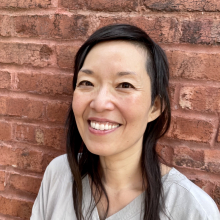
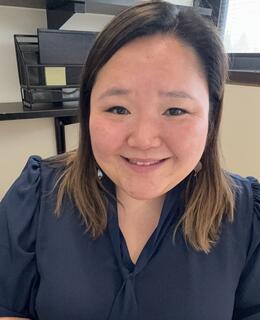
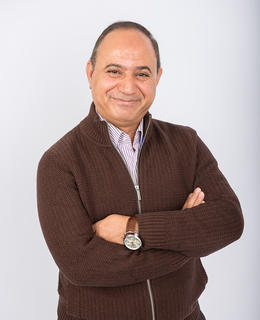
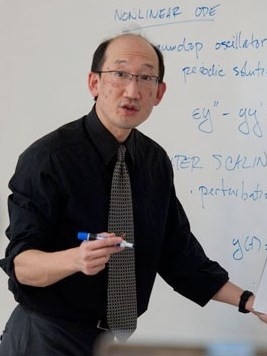
Professor Yuriko Furuhata is William Dawson Scholar of Cinema and Media History at McGill University. Her interdisciplinary research examines Japanese media, environmental art, and transpacific cultural exchanges through historical and theoretical frameworks. Research examines: Geopolitics of environmental media technologies Avant-garde film and image politics Settler colonial histories in scientific visualization Atmospheric control and computing history Her award-winning scholarship rethinks media infrastructures through environmental and decolonial perspectives.
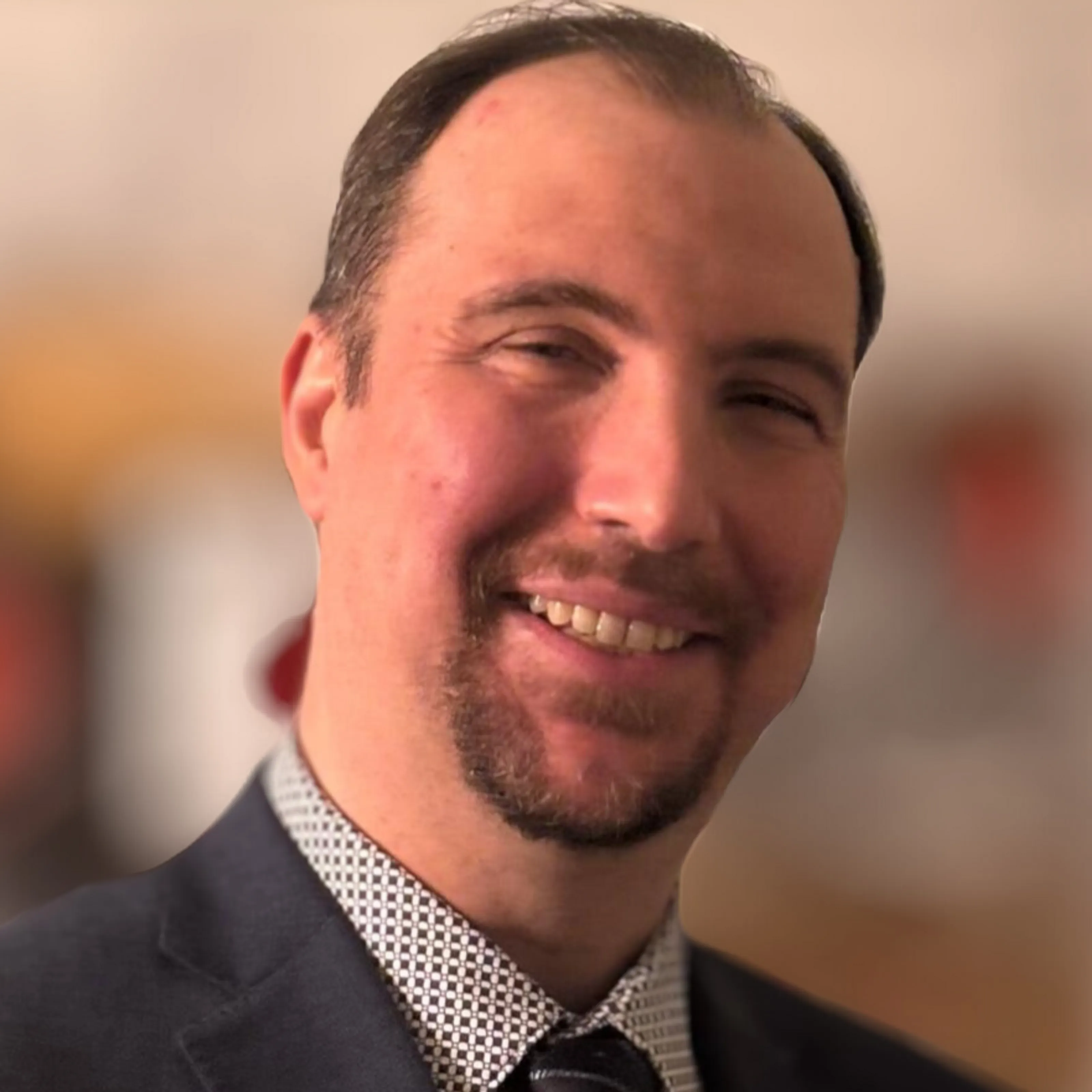
Dr. Burak Kantarci is a Full Professor at the School of Electrical Engineering and Computer Science, Faculty of Engineering, University of Ottawa. He holds a University Research Chair in AI-Enabled Secure Networking for Smart Critical Infrastructures and a courtesy faculty appointment at Clarkson University. His research focuses on IoT, AI-based security, vehicular networks, and edge computing. Education and Career: Previously an Assistant Professor at Clarkson University (before joining University of Ottawa) and a Research Fellow at University of Ottawa (2009–2014). He is a Professional Engineer (P.Eng) in Ontario. Research Interests: Includes continuous authentication, communication models for big data, crowdsensing, and vehicular sensing. He leads the NEXTCON-SCVI Labs and has published over 200 peer-reviewed works. Articles Trends: Recent work emphasizes AI-driven security solutions, autonomous systems safety, and 5G/6G networking challenges. Topics include adversarial detection, UAV optimization, and edge computing efficiency. Awards: Distinguished Lecturer (IEEE Communications & Systems Societies), ACM Distinguished Speaker, Senior Member (ACM/IEEE). Grants & Advising: Principal Investigator on NSERC/CFI/NSF-funded projects. Advises on grants focused on smart infrastructure and secure networking. Labs/Teams: Founder of NEXTCON-SCVI Labs, focusing on communications, computing networks, and smart vehicles innovation.
Paul Stothard is a Professor at the University of Alberta, affiliated with the Faculty of Agricultural, Life and Environmental Sciences and the Department of Agriculture, Food & Nutrition Science. He leads the Stothard Research Group, which focuses on bioinformatics-driven genomics and genetics research. His academic work integrates software development with applied animal genetics, contributing to breeding strategies for cattle and pigs, as well as environmental and microbial genomic projects. Dr. Stothard holds a PhD in molecular biology and genetics from the University of Alberta. His research interests include identifying genetic bases for animal traits, cataloging genome variations in livestock, developing diagnostic tools for pathogens in feedlot cattle, and creating user-friendly bioinformatics resources like Proksee and the CGView Comparison Tool. His group’s findings have been applied in DNA tests for cattle breeding and SNP chips for bison conservation. He is currently involved in the Bison Integrated Genomics (BIG) Project and the Resilient Dairy Genome Project, funded by Genome Canada and collaborating with institutions like the University of Guelph. His software contributions include Proksee (a bacterial genome analysis server) and CGView, widely used in microbial genomics research. Teaching includes courses such as AFNS 508 (Applied Bioinformatics) and AN SC 485 (Animal Genetics and Breeding). He advises students like Natalie Diether, who received the 2023 ALES Graduate Student PhD Thesis Award. His research also addresses antimicrobial resistance, feed efficiency in dairy cows, and the genetic underpinnings of livestock resilience to disease and environmental stress.
Professor Katherine Binhammer is a faculty member in the Department of English & Film Studies at the University of Alberta, Faculty of Arts. She holds a PhD from York University, along with MA and BA degrees. Her research focuses on eighteenth-century literature, feminist and sexuality studies, narrative theory, and critical finance studies. She authored Downward Mobility: The Form of Capital in the Sentimental Novel (2020) and The Seduction Narrative in Britain, 1747-1800 (2009). She currently serves as Literary Director of The Orlando Project, a digital humanities initiative producing a feminist literary history of women’s writing in the British Isles. Her teaching emphasizes collaborative critical thinking and includes courses on eighteenth-century British literature, women’s literary history, narrative theory, and gender/sexuality studies. Recent courses include ENGL 150 (Introduction to English Studies), ENGL 343 (Eighteenth-Century Literature), and ENGL 465 (Gender and Sexualities). She is also involved in directed reading programs (ENGL 555). Binhammer’s publications span monographs, peer-reviewed articles, and editorial work in venues like Narrative , GLQ , and Studies in the Novel . Her work interrogates intersections of gender, sexuality, economic structures, and narrative form in historical and contemporary contexts. She collaborates on digital humanities projects that reimagine literary historiography through feminist frameworks.
Patti Pente is a Professor in the Faculty of Education at the University of Alberta, specializing in Elementary Education. Her work focuses on art education, pre-service teacher identity formation, feminist scholarship, post-structural theory, and critical theories of community and subjectivity. She teaches courses like EDEL 302: Curriculum and Pedagogy in Elementary School Art, emphasizing hands-on media experiences and inclusive educational practices. Her research explores intersections between art, education, and technology, particularly through posthumanist lenses. Recent publications address AI ethics in K-12 education, digital fabrication in arts research, and socio-political dimensions of art-making. She holds a PhD, MA, and BFA from the University of Western Ontario (1980–1984). Pente’s work in progress includes studies on studio processes, curriculum theories, and socio-political roles of artists/educators. Her courses and scholarship consistently prioritize critical inquiry, ethical engagement, and innovative pedagogical approaches in arts education.
Brenda Reyes Ayala is an Assistant Professor in the School of Library and Information Studies at the University of Alberta’s Faculty of Education. Her research focuses on web archiving, digital preservation, and information quality, with a particular emphasis on technical and human dimensions of preserving digital heritage. Her work addresses challenges such as archivability metrics, content drift detection, and visual correspondence analysis in web archives. She also explores socio-technical aspects like internet access barriers (e.g., in Cuba) and user misconceptions about web archives. Key themes in her publications include automated quality assurance processes, metadata management, and the application of machine learning to evaluate archival and translation quality. Her research bridges technical innovations with human-centered perspectives to ensure web archives remain accessible and meaningful for scholars and communities. Her contributions include advancing methodologies for detecting quality issues in archived websites through visual and textual analysis, as well as assessing the loss of regional digital heritage in Western Canada.
Usman Alim is an Associate Professor in the Department of Computer Science at the University of Calgary, and Director of the Data Science Program. He holds a dual Bachelor's in Mathematics and Physics from the University of Rochester (2001), an M.Sc. in Computer Science from Rochester Institute of Technology (2007), and a Ph.D. in Computer Science from Simon Fraser University (2012). His research focuses on global illumination, physically-based modeling, and signal processing applications in computer graphics and visualization. He is particularly noted for innovations in volume visualization, VR interfaces, and haptic systems. Key research areas include: Interactive visualization systems for multivariate data Uncertainty visualization in geological and medical datasets Efficient rendering techniques for large-scale datasets Low-code frameworks for data workflow automation Notable achievements include winning the 2019 IEEE SciVis Contest's Best Report Cover and multiple awards in Compute Canada's Visualize This contest. His work bridges theoretical foundations with practical applications in fields like environmental science, healthcare, and urban analytics. Current initiatives include advancing haptic interaction design, developing cloud-deployable medical imaging pipelines, and exploring AI-driven solutions for oil sands analysis. He teaches graduate courses like DATA 601 (Data Visualization) and special topics in computer science, contributing to both academic research and applied data science education.
Helen He is an Assistant Professor in the Department of Computer Science at the University of Calgary's Faculty of Science. Her research focuses on human-centered technologies to address societal challenges through inclusive design and social computing principles. She leads the C3 Lab, which explores overcoming cultural barriers in collaboration, redesigning social media to combat loneliness, and empowering communities with open data visualization. Dr. He holds a Ph.D. in Informatics from the University of Zurich (2017), an M.Sc. in Computer Science from the University of Calgary (2010), and a B.Sc. in Computer Science from the same institution (2007). Her research interests span Social Computing , Inclusive Design , and Human-Computer Interaction , with a focus on equity, diversity, and inclusion (EDI). The C3 Lab's work integrates computer science, psychology, media art, and cultural anthropology to create technologies that foster collaboration and community. Dr. He teaches CPSC 601.xx: Special Topics in Computer Science (Inclusive Design) and actively contributes to multidisciplinary research in technology and social good.
Leanne Wu is an Associate Professor (Teaching) in the Department of Computer Science at the University of Calgary. She holds a PhD (2020), MSc (2010), and BSc (2003) from the same institution. Her work bridges technical computer science with pedagogical innovation and societal impact. Research focuses on three pillars: 1) Data Privacy (with emphasis on contextual integrity and interdisciplinary definitions), 2) Computer Science Education (designing curricula to enhance metacognition, project-based learning, and academic integrity), and 3) Data Science applications supporting experiential learning. Notable projects include a Teaching & Learning Grant-funded study on academic integrity attitudes in CS, and a nuclear energy news analysis capstone with Jason Donev. Publications span 20 years, reflecting early work in database performance (2002-2009) to recent innovations in education technology (2019+) and nuclear science communication (2024). Recent articles emphasize ethical AI use and learning analytics. Awards: Anita Borg Scholarship (2012), Grace Hopper Faculty Scholarship (2021) Advising includes supervising Hannah Ku's privacy & aging tech project and capstone collaborations. She does not currently supervise thesis-based graduate students. Labs/Teams: Active in university strategic initiatives around Energy Innovation and Human Dynamics. Collaborates on interdisciplinary projects linking CS education with nuclear science and humanities.
Dr. Ann Gregory is an Assistant Professor and Tier 2 Canada Research Chair in Viromics and One Health at the University of Calgary's Department of Biological Sciences. She earned her Ph.D. from Ohio State University (2018) and completed an EMBO postdoctoral fellowship at KU Leuven. Her research examines viral communities across ecosystems with focus on human virome interactions. Current projects include AI-driven viral discovery, phage therapy development, and mapping virus-host interactions using metagenomics. She previously worked as computational biologist at Aera Therapeutics. Honors: NSERC Tier 2 Canada Research Chair in Viromics and One Health
Dr. Naser El-Sheimy is a Professor at the University of Calgary's Schulich School of Engineering, Department of Geomatics Engineering, and holds the Tier I Canada Research Chair in Geomatics Multi-Sensor Systems. He is a Fellow of the Canadian Academy of Engineering (CAE) and the US Institute of Navigation (ION). His research focuses on multi-sensor systems, GNSS/INS integration, mobile mapping, and autonomous vehicle navigation. He has published over 500 papers and supervised 100+ students. Education: B.S. (Ain Shams University, 1984), M.S. (Ain Shams University, 1990), Ph.D. (University of Calgary, 1996). Entrepreneurial ventures: Founded Micro Engineering Group and Profound Positioning Inc., instrumental in TECTERRA's establishment. Research expertise includes inertial navigation algorithms, MEMS sensors, and applications in transportation and GIS. Awards include the ASTech Leadership Award and Killam Professorship. His work has advanced navigation technologies for self-driving cars and unmanned systems. Editorial roles: Editor-in-chief of Geomatics Journal, associate editor of ION Navigation Journal, among others. Leadership: Former ISPRS Commission I President (2008-2012).
Nathan Crowder is a part-time Professor in the Department of Psychology and Neuroscience at Dalhousie University, Faculty of Science. His research focuses on neural mechanisms underlying visual perception, integrating techniques like optogenetics, electrophysiology, and behavioral analysis. Education: PhD (University of Alberta), BSc-Honours (University of Alberta), and studies at Australian National University and Emory University. Research interests include how visual information is processed and used for perceptual decisions. Techniques in use: optogenetics, behavioral tasks, electrophysiology, and computational modeling. Awards include the 2010 Dalhousie Undergraduate Neuroscience Society Professor of the Year. Teaching responsibilities include Perceptual Processes , Cellular Neuroscience (course coordinator), and Methods in Sensation and Perception .
Dr. Corey Smith is an Assistant Professor at Dalhousie University, holding dual affiliations with the School of Biomedical Engineering and the Department of Ophthalmology & Visual Sciences. He is the QEII Foundation Scholar in Retina Research. His primary research focuses on advancing ophthalmic imaging techniques, particularly optical coherence tomography angiography (OCT-A), to improve diagnostics and monitoring of retinal diseases like glaucoma. Dr. Smith emphasizes interdisciplinary collaboration and balancing experimental methods with clinical relevance. Research interests include medical imaging innovation, image analysis methodologies, and animal models of ophthalmic diseases. His work combines experimental imaging, clinical data analysis, and histology correlations to refine retinal disease understanding. Recent studies explore OCT-A for detecting early glaucoma changes, drug effects on retinal perfusion, and longitudinal imaging variability. Key awards include the QEII Foundation Scholarship. Dr. Smith advises graduate students in biomedical engineering and medical sciences, fostering a diverse research team. He collaborates with patient partners to ensure research aligns with clinical needs. His lab is part of the QEII Health Sciences Centre in Halifax, Nova Scotia.
David Muraki is a Professor in the Department of Mathematics at Simon Fraser University (SFU), affiliated with the Faculty of Science. His research focuses on applied mathematics, particularly geophysical fluid dynamics, nonlinear partial differential equations (PDEs), and atmospheric/oceanic flows. He investigates phenomena like weather dynamics, gravity waves, and topographic effects, often collaborating with institutions like the National Center for Atmospheric Research (NCAR) and the University of Washington. Muraki holds a Ph.D. in Applied Mathematics from Northwestern University (1990). His research emphasizes idealized models to explain physical systems, using asymptotic methods and numerical simulations. Key areas include pressure-cell asymmetry in weather systems, atmospheric turbulence, and tropopause dynamics. He teaches courses like Asymptotic Analysis and Fluid Dynamics, and has advised numerous graduate students in applied mathematics and fluid dynamics. Recent work includes studies on holepunch cloud expansion via gravity waves and geometric solutions to historical algebraic problems. His findings bridge theoretical mathematics with real-world applications in meteorology and oceanography.
Elif Sezen Yagmur-Kilimci is Adjunct Professor at Simon Fraser University and Senior Lecturer at Istanbul Technical University, where she teaches architectural design, computational methods, and visualization techniques. She holds a PhD in Architecture from Georgia Institute of Technology, and MS/BArch from Middle East Technical University. Research Focus: Design cognition in architectural environments Computational design methodologies Spatial reasoning for virtual and physical spaces Building Information Modeling applications Her work develops representations enhancing spatial experiences in large-scale environments.