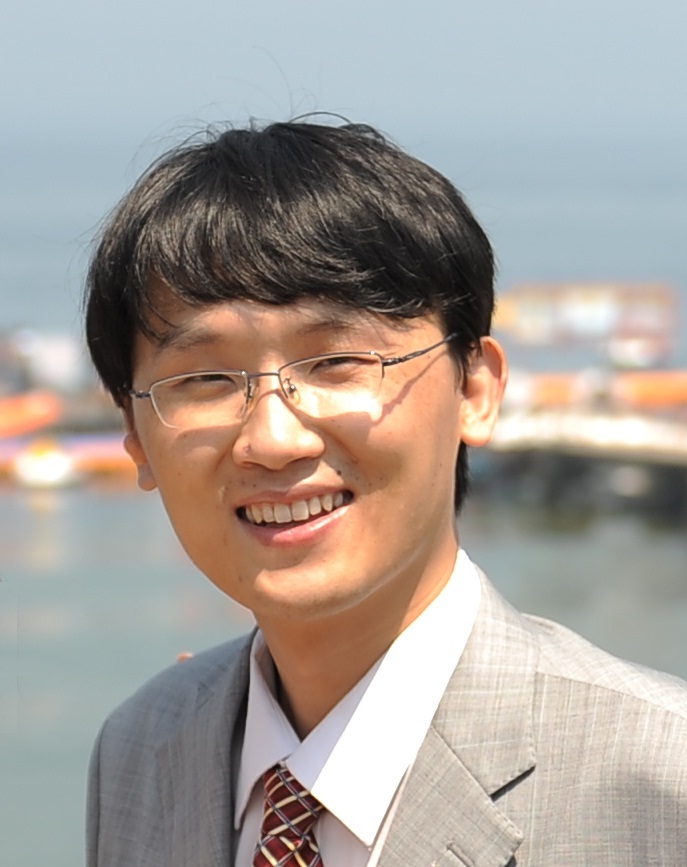
Jun Zhu is a Professor affiliated with the Department of Chemistry in the College of Chemistry and Chemical Engineering at Xiamen University, China. He holds a BS (2000) from Xiamen University and a PhD (2007) from the Hong Kong University of Science and Technology, followed by postdoctoral research at Uppsala University (2008-2010) and a research associate role at Hong Kong University (2007-2008). Education: BS (2000), Xiamen University PhD (2007), The Hong Kong University of Science and Technology His research focuses on Physical Organic Chemistry, particularly the theoretical investigation of chemical bonding, molecular structure, and reaction mechanisms in organometallic systems using quantum calculations. He collaborates closely with leading experimental groups to validate his computational predictions. Recent research trends highlight his work on aromaticity in organometallic complexes (e.g., osmapyridinium), adaptive aromaticity in excited states, and singlet fission mechanisms. These studies span quantum chemistry, chemical bonding theory, and cross-conjugated systems with transition metal effects.
Li-Ming CHE is currently an Assistant Professor at the College of Chemistry and Chemical Engineering, Xiamen University, China. His academic journey includes a Doctor of Engineering from China Agricultural University (2005-2010) and a Bachelor of Engineering from the same institution (2001-2005). He also gained international experience as a co-fostered doctoral student at Monash University, Australia, from March 2008 to March 2009. Education Doctor of Engineering, China Agricultural University (2005-2010) Co-fostered doctoral student, Monash University, Australia (2008-2009) Bachelor of Engineering, China Agricultural University (2001-2005) Current Position Assistant Professor, Xiamen University (2010-present) His primary research interests focus on the Theory of Drying and Technical Teaching . Analysis of his recent publications reveals expertise in droplet drying dynamics, spray dryer design, food fouling mechanisms, polymerization reactor modeling, and biopolymer phase behavior. Key subfields include nutrient encapsulation, biofilm-resistant materials, hydrocolloid rheology, and industrial drying process optimization. Contact: lmc@xmu.edu.cn | Tel: +86 592-2182205
Yu-Mei Lin is an Associate Professor at Xiamen University's School of Chemistry and Chemical Engineering, specializing in metal cluster chemistry and catalytic reaction design. Her research bridges synthetic chemistry, materials science, and catalysis. Education: Ph.D. in Chemistry, Xiamen University (2005-2010) Postdoctoral Research & Humboldt Scholar, University of Marburg, Germany (2010-2012) B.S., Quanzhou Teachers College (2001-2005) Research Focus: Dr. Lin's work centers on designing novel metal clusters and developing catalytic methodologies. Her group explores photoredox systems, metallaaromatic compounds, and nanocluster assemblies for applications in energy conversion, sensing, and green synthesis. Recent advances include visible-light-triggered C-H functionalization and π-aromaticity-driven structural transformations. Publication Trends: Her recent articles (2019-2024) demonstrate strong emphasis on photoredox catalysis, organometallic synthesis, and nanocluster design, with frequent collaborations in multidisciplinary teams. Works frequently appear in high-impact journals like JACS , Angewandte Chemie , and Nature Communications . Awards: Humboldt Research Fellowship (2011-2012)
Shigang Sun serves as a Professor in the Department of Chemistry at Xiamen University's College of Chemistry and Chemical Engineering, where he has maintained an active research program since his 1991 appointment. His work bridges fundamental electrochemical science with practical energy applications, contributing significantly to China's materials research landscape. His academic foundation includes: BS (1982) from Xiamen University PhD (1986) from Université Pierre et Marie Curie (Paris VI) Post-doctoral research (1987) at Laboratoire d’Electrochimie Interfaciale du CNRS, France Professor Sun's research centers on electrocatalysis, electrochemical surface science, and energy conversion/storage systems . He pioneers in situ characterization techniques to study catalyst-electrolyte interfaces while developing nanomaterials with atomic-level precision. His group specializes in high-index faceted metal nanocrystals that exhibit exceptional activity for fuel cell reactions and CO 2 conversion. Current efforts focus on platinum-group-metal-free catalysts and silicon anode stabilization for next-generation batteries, addressing critical durability challenges in electrochemical devices. Analysis of his 2013-2018 publications reveals three dominant research thrusts: (1) facet-engineered Pt/Pd/Rh nanocatalysts for oxygen reduction and alcohol oxidation, (2) non-precious metal ORR catalysts (Fe/N/C systems), and (3) advanced electrode architectures for lithium-ion batteries. His work consistently demonstrates how atomic-scale surface modifications enhance catalytic activity by 3-10x while improving poison resistance—particularly evident in H 2 S/CO-tolerant hydrogen oxidation catalysts. The interdisciplinary nature of his research connects surface electrochemistry, nanomaterials synthesis, and device engineering. No scientific awards were documented in the source material. While specific student names and grant details weren't provided, Professor Sun's extensive publication record in high-impact journals (Science, JACS, Angewandte) indicates sustained research funding and active mentorship of graduate students. His group likely operates within Xiamen University's electrochemistry infrastructure, which includes the Journal of Electrochemistry editorial office hosted by the department. Current projects appear focused on scalable synthesis of high-performance catalysts and battery materials with industrial applicability.
Fuchun SUN is a Full-time Professor at Tsinghua University's Department of Computer Science and Technology, where he has been affiliated since 1998. He holds a Bachelor's (1986) and Master's (1989) in Automation from the Institute of Naval Aeronautical Engineering, and a Ph.D. in Computer Science & Technology from Tsinghua University (1997). Prof. SUN serves as Deputy Director of the State Key Laboratory of Intelligent Technology and Systems and holds editorial positions in IEEE Transactions on Neural Networks and Soft Computing. Research Focus: His work spans Intelligent Control, Robotics, Networked Control Systems, and Artificial Cognitive Systems. He pioneers neuro-fuzzy modeling, adaptive control of nonlinear systems, and Markov jump system filtering, with applications in spacecraft, mobile robots, and flexible manipulators. Research projects include National 863 High-Tech Programs and National Basic Research (973) Programs on hyperspace vehicle control and multi-satellite networking. Publications Trend: His 15 most recent articles (2002–2010) demonstrate consistent focus on neuro-fuzzy adaptive control, robotics, Markov jump systems, and H-infinity filtering. Over 80% involve experimental validation of theoretical frameworks for robotic manipulators and nonlinear systems. Awards: National Natural Science Funds for Distinguished Young Scholars (2006) New Century Talents Award, Ministry of Education (2004) National Science and Technology Progress Award, Second Class (2002) 18th Choon-Gang Academic Award, Korea (2003) Science and Technology Progress Award, Beijing (Second Class, 2004) National Distinguished Doctoral Dissertation (2000) Academic Leadership: Supervised 15 Ph.D. and 20 Master's students. Secured 10+ national grants including NSFC Distinguished Young Scholars funding. Developed experimental platforms: two flexible-link robot test-beds and a space teleoperation system for on-orbit servicing.
Jun Zhu is a Professor in the Computer Science Department at Tsinghua University and serves as Co-Director of the Tsinghua Artificial Intelligence Lab (TSAIL) and Director of the Tsinghua-Bosch Joint Center for Machine Learning. His research focuses on probabilistic machine learning, adversarial robustness, Bayesian methods, deep learning, and reinforcement learning. His recent work includes open-sourcing the Vidu video generator (2024), DPM-Solver for diffusion models (2024), and Tianshou deep RL library, with publications in top venues like ICLR and IEEE CoG. He has received prestigious awards including IEEE Fellow, AAAI Fellow, and MIT TR35 China recognition. Notable Awards: IEEE Fellow AAAI Fellow MIT TR35 China Pioneer (2017) NSFC Excellent Young Scholar (2013) Leadership: Co-Director, TSAIL Group Director, Tsinghua-Bosch Joint Center for ML Associate Editor-in-Chief, IEEE TPAMI
Wei Chen is a Professor at the State Key Laboratory of CAD&CG, College of Computer Science, Zhejiang University, Hangzhou, China. His academic journey began and ended at Zhejiang University, where he earned both his Bachelor's (1996) and Ph.D. (2002) in Computer Science, followed by a visiting Ph.D. position at the Fraunhofer Institute in Germany (2000-2002) and a visiting scholar role at Purdue University (2006-2008). Research Focus: Visualization, Visual Analytics, Biomedical Image Computing, Big Data Analytics. Academic Leadership: Served on editorial boards of journals like IEEE Transactions on Visualization and Computer Graphics, Journal of Visual Informatics, and as Chair of IEEE Pacific Visualization Symposium. Impact: Over 110 IEEE/ACM Transactions and CCF-A papers, four Chinese textbooks on visualization, and two monographs on big data technology. His recent publications (2023-2024) span domains like visual analytics for health insurance fraud detection, quantum circuit visualization, federated learning visualization, urban mobility modeling, and AI-enhanced cultural heritage preservation. A thematic trend shows integration of deep learning, large language models, and human-in-the-loop systems with visual interfaces. Scientific Awards include the Zhejiang Province Natural Science First Prize (2021, 2017), CCF Technology Invention First Prize (2020), Wu Wenjun Artificial Intelligence Science and Technology Progress First Prize (2023), and multiple Best Paper/Poster recognitions at IEEE VIS and Pacific Visualization conferences. He actively mentors graduate students and leads the Visual Analytics Group , contributing to national and international standards in visualization research. His editorial and organizational roles in top conferences further solidify his influence in shaping the field.
Itamar Willner is a distinguished Israeli chemist and Professor at the Hebrew University of Jerusalem who holds significant affiliations with the East China University of Science and Technology. He was appointed as an Honorary Professor in 2007, co-established the Ministry of Education's Joint Laboratory for International Cooperation in Structurally Controlled Molecular Engineering in 2017 as international director, and was appointed an "Internationally Renowned Master Visiting Professor" in 2022. He is a Foreign Academician of the Chinese Academy of Sciences (elected 2021), member of the Israel Academy of Sciences and Humanities (2002), European Academy of Sciences and Arts (2004), and German National Academy of Sciences (2009). Professor Willner's research spans supramolecular chemistry, nanomaterials, and biomaterials, with specific focus on DNA chemical biology and optoelectronic biosensing. His pioneering work includes the construction of bio/nanofunctional self-assembly systems such as DNA molecular machines and logic gates, development of bio-nanocatalytic methods, and the innovative concept of "nucleic acid aptamers" that enhances enzyme-mimicking catalysis. His recent development of "DNA dynamic networks" provides a powerful platform for studying non-equilibrium biomolecular assembly, while his work on artificial photosynthesis systems explores novel energy dissipation mechanisms. His extensive publication record includes over 850 SCI-indexed papers in journals like Nature and Science, with more than 89,000 citations and an H-index of 142. His research has led to significant applications in molecular-supramolecular electronics, intelligent responsive materials, controllable functional interfaces, and optoelectronic/bioelectronic assembly systems, driving innovations in photo/electrochemical probes, drug delivery systems, and molecular machines. His scientific achievements have been recognized with numerous prestigious awards: Israel Prize in Chemistry Rothschild Prize EMET Award (awarded by the Prime Minister of Israel) Israel Chemical Society Gold Medal Professor Willner has served on the editorial boards of nearly 20 major academic journals including JACS, ACIE, Nano Letters, ACS Nano, Small, and ChemPhysChem. His collaborative work with Chinese scholars through the Ministry of Education's Joint Laboratory has established a significant hub for basic research, talent development, and international collaboration in precision chemistry and molecular engineering, bringing together top scientists from China and abroad.
Chen Jia is a Lecturer at Tongji University's School of Art and Media. He holds a Master's degree in French horn from Mainz Conservatory of Music and Mannheim State Conservatory of Music, studying under renowned professors such as Xiaoming Han and Hermann Baumann. He has served as principal horn in multiple orchestras and co-founded the Tongji University Music Boat Woodwind Quintet. Education: Master's in French Horn (Mainz Conservatory, Mannheim State Conservatory) Professional Affiliations: Member of Mannheim Blech ensemble, Principal Horn for multiple orchestras His research interests include music education and orchestral performance, though his recent publications focus on computational fluid dynamics, electrohydrodynamics, and microfluidics. Key topics include lattice Boltzmann modeling, viscoelastic fluid dynamics, and electrohydrodynamic flow control. Scientific contributions span interdisciplinary domains, with work on physics-informed neural networks for microfluidic systems and polymer 3D printing challenges. Collaborative projects involve international ensembles and computational simulations.
Cai Tao serves as an Associate Professor at Tongji University's School of Art and Media since 2002, specializing in visual communication and interaction design. His academic foundation includes a Master's degree with international training at Berlin's Weissensee University and the University of Westminster. Education: 2002: Graduated from School of Design, Jiangnan University 2003: Studied at Weissensee University, Berlin, Germany 2008: Studied at University of Westminster, UK Research Focus: Professor Cai's work centers on visual communication systems , human-computer interaction behavior , and creative industry frameworks . His methodology integrates behavioral law research with practical applications in advertising design and computer graphics, evidenced by major projects like the Shanghai World Expo commemorative materials. Current investigations explore cognitive patterns in interface design through experimental creative video production. Professional Practice: He leads high-impact design initiatives including Tongji University's centennial stamp series, Shanghai World Expo venue stamp albums, and Jing'an District's新能源exhibition hall. Teaching encompasses Visual Communication Design Theory, Advertising Project Development, and Creative Video Production within the university's media curriculum.
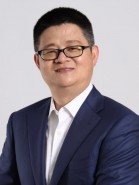
Wang Can is a Professor and Doctoral Supervisor at Zhejiang University's School of Computer Science and Technology, with research focusing on artificial intelligence, data mining, and large-scale graph intelligence algorithms. His work bridges theoretical innovation and practical applications in critical domains. His research interests span Artificial Intelligence , Data Mining , Machine Learning , and Large-Scale Graph Intelligence Algorithms , with significant contributions to intelligent barrier-free technology, financial risk systems, and big data analytics. His methodologies emphasize scalable algorithm design for real-world industrial applications. Notable scientific awards include: Best Paper Award at AAAI 2012 (landmark achievement for Chinese scholars) Best Paper Award at WSDM 2025 Triple First Prizes in Zhejiang Science and Technology Awards (2011, 2018, 2019) National and Provincial Teaching Achievement Awards (2014) As an educator, he led Zhejiang University's ACM International Collegiate Programming Contest team to World Finals victories in 2009 (Stockholm silver) and 2011 (Orlando gold), establishing 21 consecutive years of World Finals qualifications through 2024. He served as Zhejiang Provincial Special Representative for the China Computer Federation (2021-2022), organizing algorithm competitions nationwide. His research leadership includes over 20 projects: National Natural Science Foundation general/joint projects, Zhejiang Provincial Key Projects, National Science and Technology Support Program sub-projects, and international corporate collaborations. He holds more than 20 authorized invention patents.
Yang Fukang is a Lecturer at the School of Public Affairs , Zhejiang University , PRC. He holds a B.Sc in Computer Science from FuDan University (1986) and has been affiliated with Zhejiang University's School of Public Affairs since September 1998. Education : B.Sc in Computer Science, FuDan University (1986) Research Interests focus on library science, information resource management, and sustainable development strategies for public information systems. His work addresses challenges in information integration, digital governance, and combating "information anemia" on governmental platforms. Publications include studies on library sustainability, information integration trends, and the evolution of public service models. Key themes span from resource management to policy analysis in information systems.
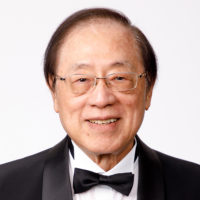
Andrew Chi-Chih Yao is a distinguished Professor and Dean at Tsinghua University, leading the College of AI and the Institute for Interdisciplinary Information Sciences. He holds dual roles as Professor at Tsinghua's Center for Advanced Study and Distinguished Professor-At-Large at The Chinese University of Hong Kong. His academic journey includes professorships at MIT, Stanford, UC Berkeley, and Princeton University (1986–2004). Education: Ph.D. in Physics (Harvard, 1972) and Ph.D. in Computer Science (University of Illinois, 1975). Research focuses on Algorithms, Cryptography, Quantum Computing, and Artificial Intelligence. He pioneered foundational work in communication complexity, secure computation protocols, and quantum circuit theory. His contributions to computational theory include Yao’s minimax principle and the millionaires’ problem framework for privacy-preserving computation. Recent publications address AI safety, quantum replication, and secure systems for global challenges like DNA synthesis and emissions trading. His 2024 work on AI risk management underscores ongoing engagement with cutting-edge tech ethics. Awards: Kyoto Prize (2021), Turing Award (2000), Pólya Prize (1987), and over 20 honorary doctorates. Grants/Advisory Roles: Key contributor to interdisciplinary initiatives at Tsinghua, including AI and blockchain research. Advised projects on secure computing and cryptographic protocols. Labs/Teams: Leads teams in quantum computing, AI ethics, and secure multiparty computation at Tsinghua.
Associate Professor DENG Honglin at Tongji University's School of Economics and Management specializes in algorithmic governance and its societal implications. His research focuses on balancing technological innovation with effective regulatory frameworks, particularly addressing challenges in transparency, ethical AI, and public policy. Recent work highlights the need for adaptive legal systems, industry self-regulation, and public engagement to mitigate risks posed by algorithmic decision-making in finance, healthcare, and social media. He recently published a seminal article in Jiefang Daily and Shangguan News , analyzing governance challenges such as regulatory lag, platform responsibility conflicts, and public trust deficits. His policy recommendations include progressive regulation, algorithmic transparency mandates, and multi-stakeholder collaboration. Key research themes emphasize cross-disciplinary solutions combining technical, legal, and social dimensions. While no specific grants or student advisement records are detailed in the text, his work underscores critical issues at the intersection of technology and society.
YUE MEI is an Associate Professor at Dalian University of Technology's School of Mechanics and Aeronautics. He holds a doctoral degree in Mechanical Engineering from Texas A&M University and has postdoctoral experience at Swansea University (UK) and Saint-Etienne Mines (France). His research focuses on computational mechanics, biomedical applications, and CAE software development, particularly addressing national needs in industrial software autonomy. He leads major national projects including National Key R&D Programs and National Natural Science Foundation grants. Awards include the Liaoning Provincial Talent Aggregation Plan and Dalian High-level Talents designation. His work spans mechanical inversion methods, multi-physics finite element analysis, and structural nondestructive testing. Education: PhD in Mechanical Engineering, Texas A&M University (2013-2017) MSc in Solid Mechanics, South China University of Technology (2010-2013) BSc in Engineering Mechanics, China University of Petroleum (2006-2010) Research Interests: Integrating computational mechanics with biomedical and advanced materials fields. Key areas include: Mechanical inversion techniques for medical/industrial applications Multiphysics finite element methods (fluid-structure, electromagnetics) Development of autonomous CAE software tools Grants & Projects: Leads 7+ ongoing projects including 'Jointly Driven Cross-Scale Mechanical Analysis' (Liaoning Provincial) and 'General CAE Implicit Solver Engine' (National Key R&D). Recent papers focus on topology optimization in biomechanics, soft tissue characterization, and energy harvesting.