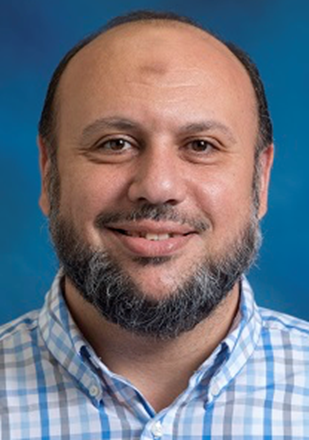
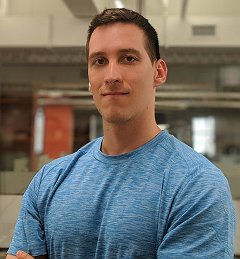
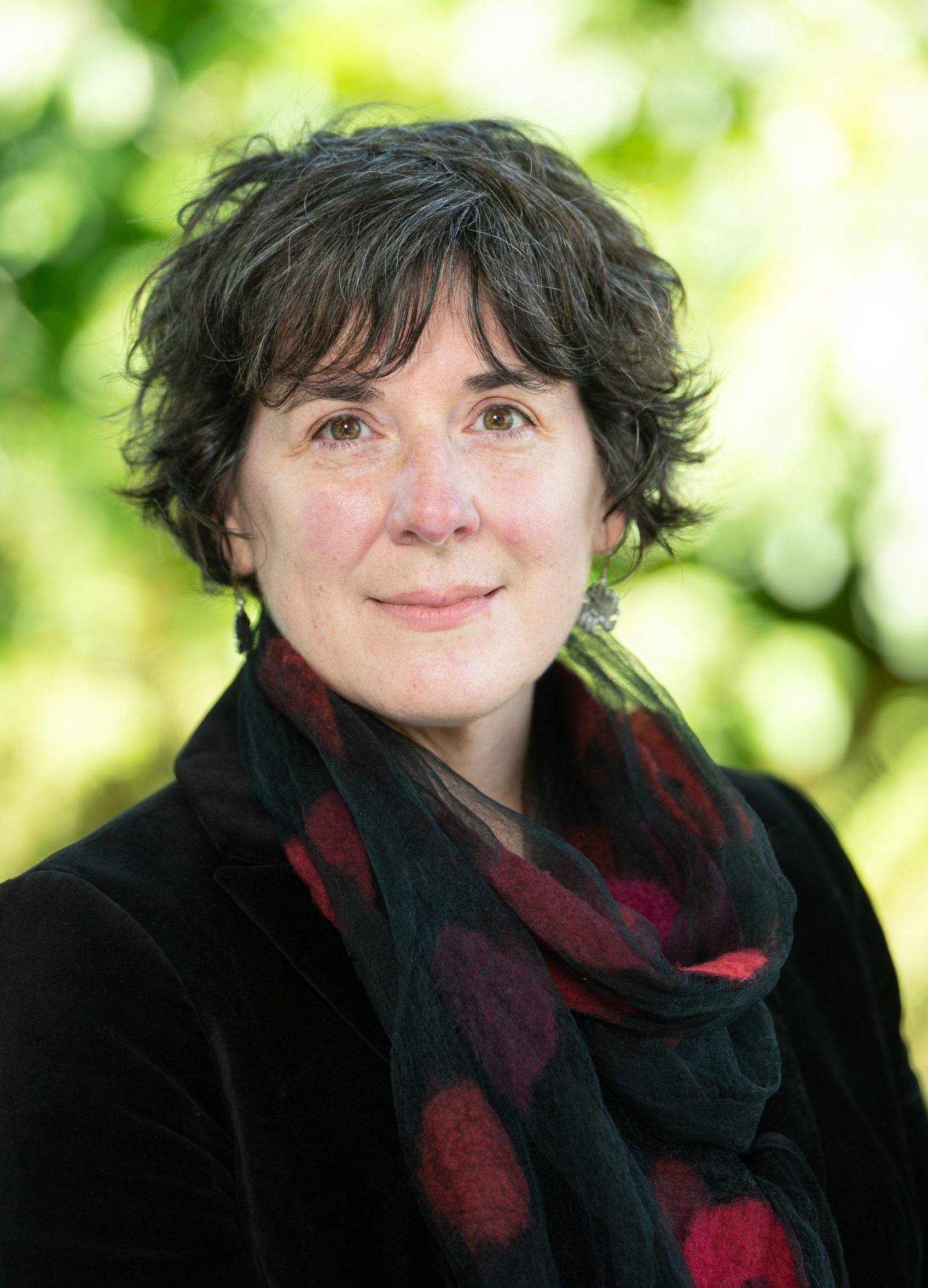
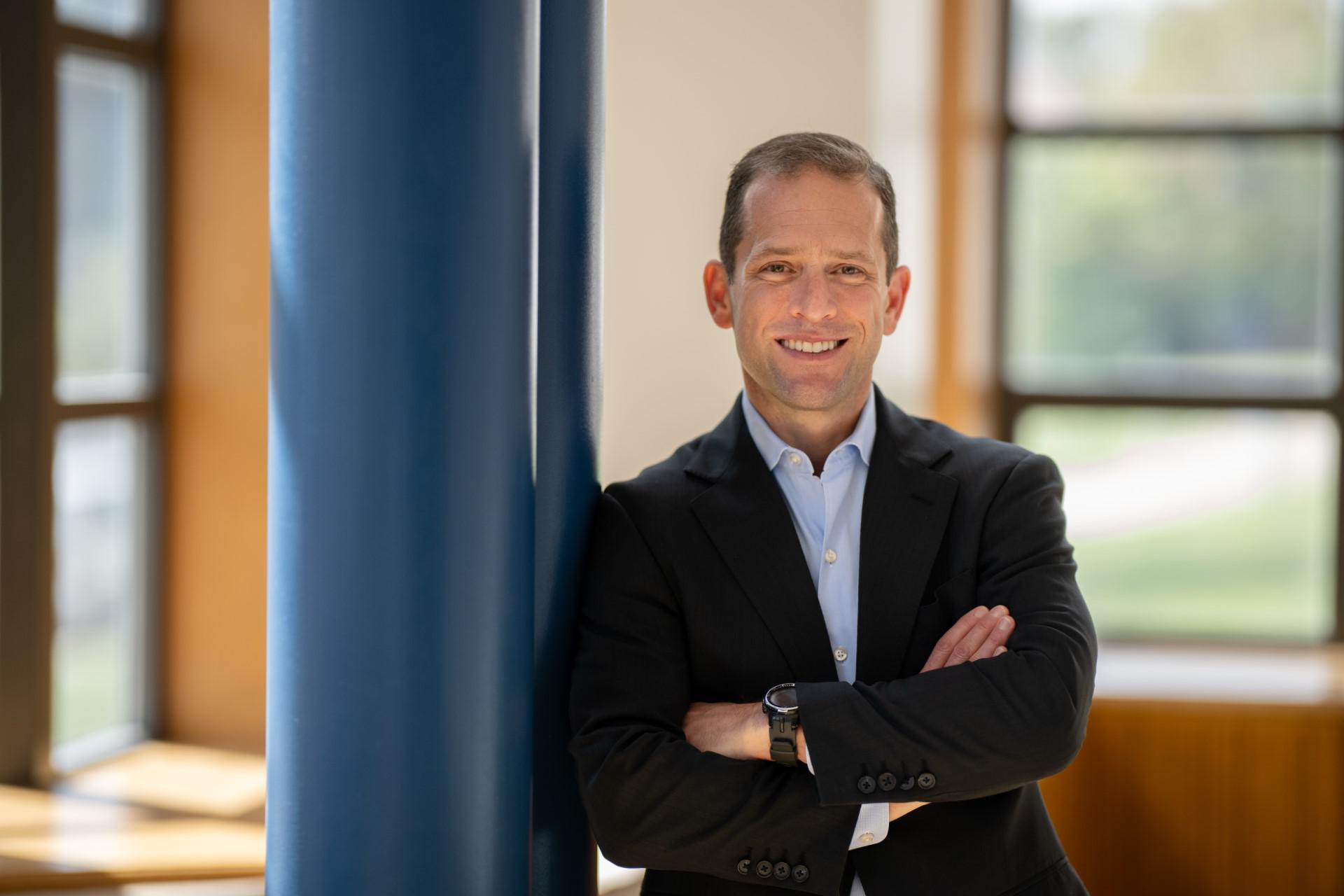
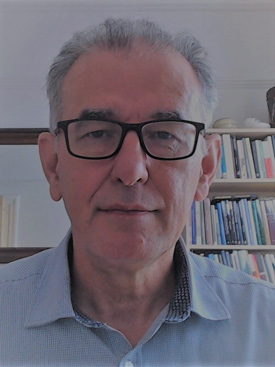
Aravind Machiry is an Assistant Professor at Purdue University's Electrical and Computer Engineering Department and a founding member of the Purdue Systems and Software Security (PurS3) Lab . His research focuses on system security, particularly vulnerability detection, prevention, and secure system development using static/dynamic program analysis, fuzzing, type systems, and machine learning. Designing practical solutions for software and embedded system security Recipient of NSF CAREER and Amazon Research awards Active participant in SPLASH 2025 as OOPSLA Review Committee member His recent work includes automated vulnerability detection in embedded software, spatial memory safety enhancements, and security analysis of GitHub workflows. He has received recognition for his research through multiple distinguished paper awards and industry funding. Selected scientific awards include NSF CAREER Award (2024) Amazon Research Award (2022) Test of Time Award at FSE 2023 for DynoDroid Distinguished Paper Award at OOPSLA 2022 for 3c Qualcomm Innovation Fellowship (2025) His research team has developed frameworks like ARGUS for taint analysis of CI/CD workflows and FuzzUEr for UEFI interface fuzzing, discovering hundreds of critical vulnerabilities in open-source projects and thousands of command injection flaws in GitHub repositories.
Emma Dauterman serves as an Assistant Professor in the Department of Computer Science within Stanford University's School of Engineering. Her current teaching responsibilities include foundational and advanced courses in computer security and privacy systems. Her research focuses on computer and network security with emphasis on privacy-preserving architectures and secure system design . Key domains include cryptographic protocols, vulnerability mitigation, and privacy-enhancing technologies for modern computing environments. This work bridges theoretical security models with practical implementation challenges in networked systems. While no recent publications are listed in the available data, her course offerings indicate active research in privacy systems and advanced security frameworks. Teaching responsibilities demonstrate expertise across core security principles and cutting-edge research applications. As a faculty advisor for CS 499/499P Advanced Reading and Research, she mentors graduate students in independent security research projects. No major grants or external funding sources are specified in the current profile. No laboratory affiliations or research teams are explicitly mentioned, though her course specialization suggests involvement in Stanford's security research ecosystem.
Sherif Khattab is a Teaching Assistant Professor in the Department of Computer Science at the University of Pittsburgh's School of Computing and Information. With a Ph.D. in Computer Science from the University of Pittsburgh (2008), he brings extensive expertise in cybersecurity systems with applications across cloud computing, Internet of Things, electronic voting, and Big Data security. His research focuses on the systems aspects of cybersecurity, maintaining an h-index of 16 (Google Scholar) and 10 (Scopus) with over 60 publications. Khattab has successfully supervised more than 15 graduate students throughout his academic career. Prior to his position at Pitt, he served as an Associate Professor at Cairo University's Department of Computer Science, Faculty of Computers and Information. Professor Khattab teaches numerous undergraduate and graduate courses, with particular emphasis on hands-on ethical hacking and security education. His current teaching portfolio includes Algorithms and Data Structures (CS 0445) and Network Security (CS 1653), with extensive experience teaching operating systems, formal methods, and computer networks across multiple semesters. His research publications reveal consistent focus on practical security solutions for emerging technologies, with recent work addressing IoT security frameworks, blockchain-based voting systems, and cloud security challenges. The publication trend shows increasing emphasis on practical implementation aspects alongside theoretical security models. With industry experience from internships at Google Inc., Ericsson Data Networks, and Bosch Research, Khattab bridges academic research with real-world security challenges. His educational background includes a Bachelor's in Computer Engineering from Cairo University (1998) and both M.Sc. and Ph.D. in Computer Science from the University of Pittsburgh (2004 and 2008).
Novi Quadrianto is a Professor of Machine Learning at the School of Engineering and Informatics, University of Sussex, where he joined as a Lecturer in February 2014. He is currently a Principal Investigator on three active EU grants: BayesianGDPR (ERC), TANGO (EU Horizon RIA), and Act.AI (ERC Proof of Concept). He also holds an Adjunct Professor position in Data Science at Monash University, Indonesia, and serves as Strategic Lab co-Leader of the BCAM Severo Ochoa Strategic Lab on Trustworthy Machine Learning in Bilbao, Spain. His educational background includes a PhD in Machine Learning from the Australian National University (2012) and a BEng in Electrical and Electronics Engineering from Nanyang Technological University, Singapore. During his PhD, he conducted research at multiple international institutions including HIIT-Finland, Yahoo! Research-US, University of Alberta-Canada, Fraunhofer IAIS-Germany, and IST Austria. From 2012-2014, he was a Newton International Fellow of the Royal Society at the University of Cambridge. Professor Quadrianto directs the Predictive Analytics Lab (PAL) since 2017, which focuses on "Responsible AI" research developing AI models that embed fairness, accountability, transparency, and trustworthiness. His research spans algorithmic fairness, federated learning, and computer vision, with applications in sustainable development, healthcare, and finance. His work has been funded by prestigious organizations including the European Research Council, EPSRC, and HM Treasury. His publications reveal a strong focus on addressing challenges in AI fairness, robustness, and privacy, particularly in dynamic environments and heterogeneous data settings. Recent work explores performative prediction, diversity-driven learning, and efficient vision transformer inference, demonstrating his leadership in cutting-edge machine learning research. European Research Council ERC Proof of Concept Grant (2023) Guarantor Researcher for BCAM Severo Ochoa Excellence Accreditation (2023) European Lab for Learning and Intelligent Systems (ELLIS) Scholar/Fellow (2020) European Research Council ERC Starting Grant (2019) Newton International Fellowship (2012) Microsoft Research Asia Fellowship (2009) Professor Quadrianto currently supervises six PhD students and five postdoctoral researchers. He has served as Action Editor for Transactions on Machine Learning Research since 2022 and as Associate Editor for IEEE Transactions on Pattern Analysis and Machine Intelligence since 2016. He has also been an Area Chair for major conferences including NeurIPS, ICML, and AAAI. His PAL laboratory hosts a team of 15 members focused on inter-disciplinary AI research with domain experts across various sectors. The PAL Lab operates three innovation strands: AI for Sustainable Development (supporting UN SDGs), AI for Healthcare (transforming health outcomes), and AI for Finance (personalized loan decision-making). The lab also leads initiatives in Diversity & Inclusion in AI and offers Pro-Bono Office Hours to organizations seeking guidance on machine learning aspects.
Sebastian Angel is affiliated with the University of Pennsylvania and Microsoft Research . His research spans Distributed Systems , Security , Privacy , and Proofs . Contributions: Personal Website Recent work includes: 2025 SPLASH: Structural temporal logic for mechanized program verification (keywords: Computer Science, Formal Verification; subfields: Temporal Logic, Program Verification). 2023 POPL: Executing Microservice Applications on Serverless, Correctly (keywords: Distributed Systems, Security; subfields: Serverless Computing, Microservices).
Dr. Sander Leemans is a Professor at RWTH Aachen University leading the Business Process Management Foundations and Engineering research group. His work focuses on advancing process mining theory and practice with emphasis on stochastic modeling and conformance verification. Leemans' research centers on process mining, business process management, and stochastic process modeling. He investigates conformance checking techniques for probabilistic models, process discovery algorithms, and the integration of exogenous data into process analysis. His work bridges theoretical foundations with practical applications in healthcare, robotic process automation, and inter-organizational systems. Recent publications reveal a concentrated research trajectory in stochastic conformance checking, where Leemans develops methods for matching observed traces to stochastic process models using alignment techniques, entropy metrics, and partial-order reasoning. He also pioneers object-centric process mining frameworks and explores silent transitions in labeled Petri nets, significantly enhancing the precision and applicability of process mining in real-world scenarios. The Business Process Management Foundations and Engineering group under Leemans' leadership drives innovation in process mining through rigorous theoretical development and open-source tooling, maintaining RWTH Aachen's position at the forefront of business process intelligence research.
Heather O'Brien is a Professor at the School of Information , University of British Columbia, specializing in user engagement with digital technologies , information retrieval , and knowledge exchange . Her work bridges human-computer interaction and health informatics through projects like the User Engagement Scale (UES) and the PolarUs app for bipolar disorder management. Education: MLIS and PhD from Dalhousie University Research: Focuses on engagement theory, digital health, and university-community knowledge exchange Her STOREE project (SSHRC-funded) develops frameworks for open scholarship and community-centered metadata practices. She co-developed the internationally adopted UES tool for measuring technology engagement, translated into French, German, Italian, and Portuguese . Scientific Awards: 2022 ASIS&T Research in Information Science Award 2018 ASIS&T SIG USE Best Paper Award Professor O'Brien mentors graduate students in information behavior and digital health while leading interdisciplinary collaborations with institutions like CREST.BD and BC Centre on Substance Use .
Maria Virvou serves as Professor and Chair of the Department of Informatics at the University of Piraeus, where she also directs the Graduate Program in Informatics and leads the Research Laboratory 'Software Technology'. She holds significant institutional leadership roles including membership in the University Senate and has chaired the Department of Informatics for multiple terms. As Editor-in-Chief of Springer book series 'Learning and Analytics in Intelligent Systems' and 'Artificial Intelligence-Enhanced Software and Systems Engineering', she maintains substantial academic influence across international scholarly platforms. Dr. Virvou earned her PhD in Computer Science and Artificial Intelligence from the University of Sussex with a scholarship from the State Scholarships Foundation, a Master of Science in Computer Science from University College London, and her undergraduate degree from the Department of Mathematics at the National and Kapodistrian University of Athens. Her educational background in both mathematics and computer science has provided a strong foundation for her interdisciplinary research approach. Professor Virvou's research spans Software Technology, Artificial Intelligence, Educational Software and Games, User Modeling, and Human-Computer Interaction. She has pioneered work in personalized interactive software systems, applying fuzzy logic and machine learning techniques to create adaptive educational environments. Her recent work demonstrates a strategic expansion into AI applications for healthcare, with significant contributions to medical diagnostics using large language models and multimodal AI systems. She has also made notable advances in smart tourism applications through personalization techniques. With over 400 publications to her name, Professor Virvou's scholarly output shows a clear progression from foundational work in user modeling toward increasingly sophisticated AI applications across multiple domains. Her publication trends reveal a strategic focus on explainable AI, multimodal systems, and practical implementations that bridge theoretical advances with real-world applications, particularly in healthcare and education sectors. Ranked #1 worldwide in 'User Modelling' publications (147,450 total publications) according to Scopus Ranked #1 worldwide in 'Educational Software' publications according to both Scopus and Microsoft Academic Search Recognized among the top 2% of most influential Artificial Intelligence scientists worldwide by Stanford University General Co-Chair at the 14th IISA Conference 2023 Invited Keynote Speaker at the 35th IEEE International Conference on Software Engineering Education and Training (CSEE&T 2023) As Director of the Research Laboratory 'Software Technology', Professor Virvou has built a robust research team focused on AI applications across multiple domains. She co-founded and co-chairs the IEEE Intelligent Information Systems and Applications international conference series, creating a significant platform for scholarly exchange. Her leadership extends to editorial roles with major academic publishers and active participation in international research collaborations that have secured substantial funding for innovative projects in AI and software engineering.
Dr. Wenhong Chen is a Professor of Media Studies and Sociology at the University of Texas at Austin's College of Liberal Arts. She holds the Distinguished Scholar title at the Robert Strauss Center for International Security and Law and serves as Vice Chair of the Global Communication & Social Change Division at the International Communication Association. PhD in Sociology, University of Toronto SSHRC Postdoctoral Fellow, Duke University Her research examines digital media technologies in entrepreneurial/organizational contexts, focusing on digital inequalities, privacy, social capital, and US-China AI policy dynamics. Funded by institutions like Pew Internet, Ford Foundation, and Woodrow Wilson Center, her work bridges communication, sociology, and technology policy. Key article trends include: network power in China's media industry, digital inequality frameworks, privacy implications of health apps, transnationalism in digital governance, and the evolving role of social capital in technology adoption. President’s Associates Teaching Excellence Award (2023) Barry Sherman Teaching Award (2022) Provost’s Teaching Fellow (2021-2024) Dr. Chen has secured grants from Pew Internet, Ford Foundation, and the Social Sciences and Humanities Research Council of Canada. She previously co-founded UT Austin's Center for Entertainment and Media Industries (2018-2023) and leads a current project analyzing US-China AI policy impacts on tech entrepreneurship.
Jacob N. Shapiro is a professor of politics and international affairs at Princeton University and a nonresident scholar in the Carnegie Technology and International Affairs Program. His work focuses on conflict, security, and the information environment. Shapiro co-founded and directs the Empirical Studies of Conflict Project, a multi-university consortium studying politically motivated violence. He also leads Princeton’s Accelerator initiative, building global research infrastructure to understand modern conflict and disinformation. His peer-reviewed articles and research papers explore influence operations, digital security, and the efficacy of countermeasures against disinformation. These works emphasize empirical methods and interdisciplinary collaboration. Scientific Awards: 2016 Karl Deutsch Award (International Studies Association) Shapiro has advised government agencies, NGOs, and technology companies on transparency, disinformation, and security. He earned a Ph.D. and M.A. from Stanford University and a B.A. from the University of Michigan, and served in the U.S. Navy.
Emma Spiro is an Associate Professor at the University of Washington Information School, with adjunct appointments in the Department of Sociology and Human Centered Design & Engineering. She co-founded the Center for an Informed Public (CIP) and directs the Social Media Lab (SoMeLab) and Data Science and Analytics Lab (DataLab). Her research focuses on online communication, misinformation dynamics, and network structures in both digital and physical contexts. Dr. Spiro’s work explores social networks and computational social science, analyzing how misinformation spreads during crises and elections. Her research has been funded by the National Science Foundation and Army Research Office, and published in top journals like PNAS, Social Networks, and Information, Communication & Society. She holds a Ph.D. in Sociology from UC Irvine and dual B.A.s in Applied Mathematics and Science, Technology & Society from Pomona College. As a Data Science Fellow at UW’s eScience Institute, she bridges technical and social science methodologies to study information integrity. Her affiliations include the UW Center for Statistics & the Social Sciences (CSSS) and the Center for Studies in Demography & Ecology (CSDE). She actively collaborates across disciplines to address strategic misinformation through labs, institutes, and multi-institutional initiatives like the Disinformation Summer Institute.
Holger Dette is a Professor and Chair Holder of Stochastics (specializing in Statistics) at the Faculty of Mathematics, Ruhr University Bochum. He leads the prominent Group Dette within the Institute of Statistics, overseeing a team of researchers, doctoral students, and administrative staff including Birgit Tormöhlen as team assistant. His research group is deeply integrated within the university's mathematical ecosystem, collaborating with other research groups across algebra, analysis, numerics, and topology. Dette's research spans mathematical statistics with strong applications in real-world problems. His primary interests include optimal experimental design, time series analysis, functional data, change point problems, nonparametric regression, biostatistics, special functions, goodness-of-fit tests, and random matrices . His work bridges theoretical statistics with practical applications, particularly evident in his collaborations with pharmaceutical giants Novartis and Bayer AG in biostatistics, as well as Quasol, a spin-off company from his statistics institute. His recent publications (2024-2025) reveal a research program increasingly focused on high-dimensional and functional data analysis, privacy-preserving statistics, and novel methodological approaches to longstanding statistical problems. Dette's work shows strong interdisciplinary connections, particularly with biomechanics (analyzing joint angles during fatigue phases) and data science (addressing challenges in the era of big data). His research group is actively involved in multiple DFG-funded projects including the newly established 'Small Data' collaborative research center (Sonderforschungsbereich 1597) and the Spatio-temporal Statistics for the Transition of Energy and Transport (Transregio 391). Dette has received significant recognition including the prestigious Humboldt Research Award . His paper 'With Great Power Come Great Side Channels: Statistical Timing Side-Channel Analyses with Bounded Type-1 Errors' achieved second place at the CSAW'24 Applied Research Competition MENA. His research group has also secured multiple significant funding awards from the German Research Foundation (DFG). As an advisor, Dette supervises numerous doctoral and master's students including Pascal Quanz, Marius Kroll, and Carina Graw. His group offers statistical consulting services for scientists and students across bachelor's, master's, and doctoral phases. The group maintains strong industrial partnerships, particularly in biostatistics applications, demonstrating Dette's commitment to translating theoretical statistics into practical solutions for real-world challenges.
Lucas Introna is a Distinguished Professor of Organisation, Technology, and Ethics at Lancaster University's Management School. He holds a BCom, BA (Hons), MBA, and PhD. His research focuses on the ethical and social implications of technology, particularly information systems, informed by phenomenology and process philosophy. He has served as Associate Dean for Research (2010-2016) and Head of the Organisation, Work and Technology Department (2007-2010). **Research Interests:** Sociomateriality and performativity Ethical implications of IT (privacy, surveillance) Political studies of technology design Plagiarism and cultural values Virtuality and embodiment **Recent Work Trends:** His publications explore algorithmic governance, digital ethics, and the interplay between technology and social structures. Notable themes include blockchain trust dynamics, refugee precarity, and the ethical dimensions of facial recognition systems. **Awards:** IFIP Outstanding Service Award **Grants & Roles:** Co-founder of the Centre for the Study of Technology and Organisation Member of multiple ethics committees and editorial boards Visited professor at University of Amsterdam **Labs/Groups:** Affiliated with the Centre for Technological Futures and the Society Management and Society group.
Douglas Stebila is an Associate Professor in the Department of Combinatorics and Optimization at the University of Waterloo, Faculty of Mathematics. His research focuses on cryptographic protocols, with an emphasis on post-quantum cryptography, TLS protocol security, and key exchange mechanisms. He has contributed to the design and analysis of cryptographic systems resilient to quantum computing threats, including work on hybrid key exchange methods and post-quantum TLS implementations. Stebila is involved in standards projects such as the Open Quantum Safe initiative, aiming to transition existing infrastructure to quantum-resistant algorithms. His recent work addresses security models for cryptographic protocols, including formal verification of key establishment schemes and analysis of real-world protocols like Signal and TLS. His research spans theoretical cryptography, applied protocol analysis, and implementation security. Key contributions include studies on obfuscated key exchange, verifiable decapsulation of post-quantum KEMs, and optimization of TLS handshake efficiency (e.g., TurboTLS). He also explores challenges in cryptographic protocol design, such as preventing double authentication and ensuring resistance against side-channel attacks. His work frequently bridges academic research with practical applications, emphasizing the transition of cryptographic innovations into real-world systems. Stebila collaborates with industry and academic partners on projects like the Open Quantum Safe initiative, which develops libraries for post-quantum cryptography integration. His publications often address security analyses of emerging protocols and their vulnerability to both classical and quantum adversaries. He has co-authored conference proceedings for major venues like CRYPTO and SAC, and contributed to standards documentation for protocols such as TLS and SSH.
Sanmi Koyejo is an Assistant Professor of Computer Science at Stanford University and holds an adjunct position as Associate Professor at the University of Illinois at Urbana-Champaign. He leads the Stanford Trustworthy AI Research (STAIR) group, focusing on fairness, robustness, and healthcare applications in machine learning. His work bridges theoretical foundations with practical systems, emphasizing ethical AI and clinical informatics. Affiliations: SAIL, HAI, CRFM, AIMI, AI Safety, and the Machine Learning Group. Research Interests: His expertise spans trustworthy AI, federated learning, and neuroimaging. He actively addresses challenges in algorithmic fairness, particularly in healthcare, where he collaborates with institutions like OSF Healthcare on projects like federated learning for clinical data. Key Contributions: Co-developed frameworks for unlearning in large language models, evaluated AI systems' societal impacts, and advanced benchmarks for medical applications. His work has been featured in venues like NeurIPS, ICML, and AAAI. Awards: NSF CAREER Award, Alfred P. Sloan Fellowship, and Terman Faculty Fellowship. Grants & Teams: Leads NSF-funded projects on domain adaptation and fairness in breast cancer risk scoring. Collaborates with interdisciplinary teams on NIH's MIDRC and NSF's AIFARMS initiative for agricultural sustainability. Labs/Teams: STAIR lab drives interdisciplinary research in ethical AI, with emphasis on real-world deployment and policy implications.