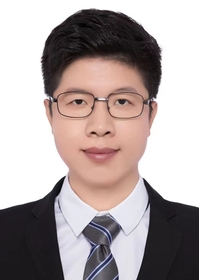
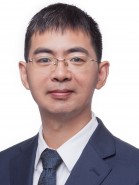
Dr. Guo Liang is an Associate Professor in the Department of Mechanical and Energy Engineering at the Southern University of Science and Technology (SUSTech) . His academic journey includes a B.S. in Mechanical Engineering from Tsinghua University (2009), a Ph.D. in Mechanical Engineering from Purdue University (2014), and postdoctoral research in Chemistry at University of California, Berkeley (2014-2017). He joined SUSTech as a full-time faculty in 2018. Research Interests include: Nanoscale Energy Conversion and Transfer Laser-Matter Interaction Femtosecond Time-Resolved Spectroscopy Laser Micro/Nanofabrication Publications span 50+ SCI-indexed papers in journals like Nature Physics , Science Advances , Advanced Materials , and Nano Letters . Key topics include ultrafast energy transfer , coherent phonon dynamics , and laser-based manufacturing . Honors & Awards : 2025 Second Prize in SUSTech Graduate Teaching Achievement Award 2024 Excellent Communist Party Member at SUSTech 2023 First Prize in SUSTech Young Teachers Teaching Competition 2019 Shenzhen Industrial Development and Innovation Talent Award Multiple SUSTech/Residential College Advisor Awards 2018 Shenzhen Overseas High-Caliber Personnel Ross Fellowship at Purdue University (2009-2010) Grants include: 2 National Natural Science Foundation of China projects, 2 Guangdong Outstanding Youth Projects, 2 Shenzhen Basic Research grants, and participation in national-level initiatives like the Transformative Technologies Key Special Project . Laboratory houses a femtosecond spectroscopy system , laser processing equipment , and material synthesis facilities (glovebox, tube furnace, etc.).
Dr. Guo Qiongyu is an Associate Professor and doctoral supervisor at the Department of Biomedical Engineering, Southern University of Science and Technology, Shenzhen, China. She previously served as Assistant Professor at the same institution (2017-2024) and held research positions at Lehigh University (2016-2017) and Johns Hopkins University (2009-2016). Her academic journey includes a Ph.D. in Macromolecular Science and Engineering from Case Western Reserve University (2010) and a B.S. in Polymer Science and Engineering from University of Science and Technology of China (2004). Her research focuses on shape memory biomaterials for translational medicine , particularly in Implantable artificial cornea construction Transcatheter arterial chemoembolization Degradable vascular scaffolds Cell regulation mechanisms . She has pioneered novel platforms for temperature-responsive drug delivery and nanoscale shape control , addressing clinical challenges in oncology and tissue regeneration. Her recent work explores micron-scale shape memory particles , photothermal embolization , and collagen-cyclodextrin implants . Key trends include Smart biomaterials for vascular targeting Microfluidic synthesis of anisotropic microembolics Deep learning-based tumor model analysis . Scientific Awards Shenzhen Overseas High-Level Talent 'Peacock Plan' Class B (2010-present) American Arthritis Foundation Postdoctoral Fellowship (2010-2013) She has secured substantial research funding for biomedical material development and maintains active collaborations in organ-specific vasculature modeling and flexible bioelectronics . Her Advanced Biomedical Functional Materials Lab trains students in solving global clinical challenges through material innovation.
Changjian Li is an Associate Professor in the Department of Materials Science and Engineering at Southern University of Science and Technology (SUSTech), Shenzhen, China. He joined SUSTech in February 2021 as an Assistant Professor and was promoted to Associate Professor in 2022 after prior research fellowships at the National University of Singapore (NUS). His academic background includes a Ph.D. in Integrative Science and Engineering (2015), B.Eng. in Materials Science & Engineering (2011), and B.S. in Physics (2011), all from NUS. His research focuses on three interconnected themes: (1) nanoscale ferroelectricity/ferromagnetism properties, (2) memory/memristive devices using ferroic materials, and (3) in-situ atomic-scale STEM-EELS characterization of non-volatile memory mechanisms. This work addresses fundamental challenges in post-Moore's Law computing through neuromorphic hardware approaches. Recent publications (2022-2024) demonstrate increasing specialization in nickelate superconductors, strain-engineered ferroelectric membranes, and van der Waals ferroelectrics, with strong emphasis on atomic-scale defect analysis and device physics. His work consistently bridges fundamental materials characterization with practical device applications. Dr. Li has received significant recognition including: NSFC Excellent Young Scientists Fund Program (Overseas) 2021 Shenzhen Peacock Project (Class B) 2021 Lee Kuan Yew Postdoctoral Fellowship 2016 Chinese Government Award for Outstanding Self-Financed Students Abroad 2015 He actively mentors students on advanced projects such as 2D ferroelectric metal-organic frameworks for ultralow-power transistors (published in Advanced Functional Materials 2024) and has secured competitive grants including the NSFC Excellent Young Scientists Fund. His group operates advanced facilities including double Cs-corrected TEM, environmental TEM, pulsed laser deposition systems, and PPMS for comprehensive materials analysis. Leading the Functional Oxide Thin Film Research Group at SUSTech, Dr. Li directs experimental efforts in in-situ STEM characterization and thin-film growth for next-generation neuromorphic computing devices, currently recruiting postdocs for specialized roles in aberration-corrected microscopy and ferroelectric heterostructure development.
Xiaolong Liu serves as Assistant Professor at Southern University of Science and Technology's School of Microelectronics. His academic journey includes a Ph.D. from Hong Kong University of Science and Technology (2019), M.E. from Tsinghua University (2014), and B.E. from Beijing University of Aeronautics and Astronautics (2010). Prior to his current position, he worked as Staff Engineer at eTopus Technology in Silicon Valley (2019-2021) and completed a postdoc at HKUST. Ph.D. in Electronic and Computer Engineering, Hong Kong University of Science and Technology (2019) M.E. in Microelectronics, Tsinghua University (2014) B.E. in Electronic Engineering, Beijing University of Aeronautics and Astronautics (2010) Dr. Liu's research spans cutting-edge RF/mm-Wave/THz integrated circuit design, focusing on high-performance signal generators , ultra-wideband transceivers , and low-power frequency synthesis . His work addresses critical challenges in 5G/6G communications, terahertz spectroscopy, and high-speed wireline interfaces through innovative CMOS architectures. Technical emphases include varactor-less VCOs, harmonic enhancement techniques, and magnetic tuning mechanisms for millimeter-wave systems. His publication portfolio demonstrates consistent leadership in IEEE flagship journals/conferences (JSSC, TMTT, ISSCC, VLSI), with recent work advancing Class-F oscillators, sub-sampling PLLs, and sub-THz synthesizers. Notable trends include migration toward sub-THz frequencies (2023-2025) , multi-core oscillator architectures , and elimination of harmonic tuning for simplified design. IEEE VLSI Paper Technical Highlights (2019) IEEE CICC Invited Talk (2019) IEEE TVLSI 2023 Best Reviewer Award Top 4 Most Downloaded Paper in TCAS-II (July 2022) Dr. Liu actively mentors students through SUSTech's graduate programs, with advisees consistently earning university-level thesis awards and conference recognitions. His lab maintains strong industry ties through silicon validation and collaborates on cutting-edge tapeouts in 7nm/16nm nodes. Current projects focus on cryo-CMOS interfaces for quantum computing and ultra-wideband transceivers for 6G applications. His research group operates within SUSTech's state-of-the-art microelectronics facility, specializing in mm-Wave/THz characterization and high-speed SerDes validation. The team maintains partnerships with semiconductor foundries for advanced-node prototyping and collaborates with industry leaders on real-world implementation challenges.
Dr. Zhi Luo is an Associate Professor at the Department of Biomedical Engineering, College of Engineering, Southern University of Science and Technology (SUSTech) in Shenzhen, China. Born in China in 1991, he received his Bachelor's degree from Tsinghua University in 2013 and his PhD with distinction from École Polytechnique Fédérale de Lausanne (EPFL) in Switzerland in 2018 under the supervision of Professor Francesco Stellacci. After completing postdoctoral research at ETH Zurich under Professor Jean-Christophe Leroux, he joined SUSTech in 2021 as a full-time faculty member and was selected as a National High-Level Talent (Young Talent). Dr. Luo's educational journey began with a Bachelor's in Chemical Engineering from Tsinghua University (2009-2013), followed by a PhD in Materials Science from EPFL, Switzerland (2013-2018). His doctoral research focused on the physical chemistry and synchrotron characterization of complex nanomaterial interfaces, earning him the EPFL Thesis Distinction Award in 2018. Dr. Luo heads the Laboratory of Bioinspired Medicine and Materials, where his research integrates surface sciences, supramolecular chemistry, 3D printing, and material characterization to develop innovative pharmaceutical solutions, with a particular emphasis on oral drug delivery. His interdisciplinary approach identifies fundamental scientific questions from complex medical phenomena and applies advanced characterization techniques to develop novel drug delivery systems. His research in oral drug delivery has progressed to human trials, demonstrating significant clinical translation potential. Analysis of Dr. Luo's publication record reveals a strong focus on nanomaterial interfaces, drug delivery systems, and advanced characterization techniques. His work spans pharmaceutical sciences, materials science, and biomedical engineering, with notable contributions in gold nanoparticle characterization, 3D printing of medical devices, and novel drug delivery mechanisms. A significant portion of his research involves collaboration with multinational pharmaceutical companies, highlighting the translational nature of his work. IPW Young Scientist Lecture Award, ETHZ (2020) ETH Fellow (2019) EPFL Thesis Distinction Award (2018) Chinese government award for outstanding self-financed student study abroad (2018) Highlight research of the year, Heinz Maier-Leibnitz Zentrum (2016) June Tsao-Yu Scholarship (2012) Dr. Luo maintains long-term collaborations with multiple multinational pharmaceutical companies and has established a robust research program focused on translating fundamental discoveries into clinical applications. His laboratory provides comprehensive training in scientific research, instrument platform development, laboratory management, and grant writing, supporting students and researchers in pursuing advanced degrees and professional development opportunities. The Laboratory of Bioinspired Medicine and Materials features a highly interdisciplinary environment with expertise spanning materials physics and chemistry, pharmaceutical sciences, synchrotron radiation, and neutron scattering characterization. The lab actively recruits PhD students, postdoctoral fellows, and research assistants across multiple disciplines including materials chemistry, drug delivery, biology/medicine, and engineering, with a focus on addressing unmet clinical needs through innovative pharmaceutical solutions.
Dr. Yao Lu is an Associate Researcher and doctoral supervisor at the Institute for Quantum Science and Engineering, Southern University of Science and Technology (SUSTech). He specializes in quantum computing and simulation using trapped ion systems, with a focus on experimental realization and scaling of quantum platforms. His work has contributed to China's first small-scale programmable ion quantum computing system. PhD in Physics (2020), Tsinghua University Bachelor in Physics (2014), Peking University His research explores: Compact trapped ion quantum computing platforms Quantum error mitigation and fidelity optimization Many-body quantum simulations in noisy environments Modular quantum computation via ion-electron coupling His publications in Nature , Nature Physics , and Nature Communications demonstrate expertise in trapped ion quantum gate design, non-equilibrium thermodynamics, and phonon manipulation. Current projects include robust quantum control of multi-ion qubits (NSFC Young Scientists Fund) and fast ion qubit shuttling (Shenzhen Science and Technology Program). He leads the trapped ion quantum computing laboratory at Futian International Quantum Research Institute (Room 102) and actively recruits researchers for quantum science initiatives.
Yao-Wang Li is a Research Assistant Professor in the Department of Biology at the School of Life Sciences, Southern University of Science and Technology, specializing in cryo-electron microscopy (Cryo-EM) methodology development and structural biology. He holds a PhD from Leiden University and completed postdoctoral training at Tsinghua University and Leiden University, where he pioneered high-resolution structural determination of Parkinson's-related amyloid fibers in China. His educational background includes: PhD in Structural Biology, Leiden University (2011-2017) Master of Science, China Agricultural University (2008-2011) Bachelor of Science, Jiangxi Agricultural University (2004-2008) Dr. Li's research centers on advanced Cryo-EM techniques , with primary focus on electron diffraction, single particle analysis, and cryo-electron tomography (Cryo-ET) for resolving biological macromolecular structures. His work bridges structural biology and neurodegenerative disease mechanisms, particularly in visualizing α-synuclein fibrils implicated in Parkinson's disease. He emphasizes the principle that "seeing is believing" to investigate life mechanisms at near-atomic resolution. Analysis of his publications (2011-2020) reveals three dominant research trajectories: (1) structural determination of neurodegenerative disease-related amyloid fibrils using Cryo-EM, (2) methodological innovations in electron diffraction for protein nanocrystals, and (3) computational image processing advancements for 3D reconstruction. His work consistently targets high-impact structural biology questions with implications for disease mechanism understanding. His scientific recognition includes: National Natural Science Funds of China (2018) China Postdoctoral Science Foundation Grant (2017) Advanced Innovation Fellow at Tsinghua University (2017) Multiple academic scholarships and thesis awards Dr. Li has secured competitive research funding including national grants and institutional fellowships. His position involves mentoring graduate students in structural biology techniques, though specific advisees aren't listed. He was the first researcher in China to solve amyloid fiber structures in Parkinson's disease at near-atomic resolution, establishing critical cryo-EM capabilities for neurodegenerative disease research. His laboratory at Southern University of Science and Technology focuses on developing integrated Cryo-EM approaches—including electron diffraction, single particle analysis, and cryo-ET—to resolve biological structures from subcellular to molecular levels, with particular emphasis on neurodegenerative disease mechanisms and therapeutic target identification.
LUO Bin is an Assistant Professor in the Department of Ocean Science and Engineering at Southern University of Science and Technology (SUSTech), where he has been affiliated since 2022. He holds a Ph.D. in Geophysics from Texas A&M University (2018) and a B.S. in Geophysics from the University of Science and Technology of China (2013). Prior to his current position, he served as a Postdoctoral Scholar at Stanford University (2021-2022) and a Postdoctoral Fellow at Colorado School of Mines (2019-2021). Research Focus: Dr. Luo's research centers on earthquake physics and seismology, with specialized expertise in elastic wave propagation modeling, dynamic rupture simulation, and seismic cycle analysis. He pioneers applications of fiber-optic distributed acoustic sensing (DAS) technology for seismic monitoring in diverse environments including urban areas, submarine settings, and hydrocarbon reservoirs. His work integrates computational methods with field data analysis to advance understanding of seismic hazards and subsurface characterization. Publication Trends: His recent articles (2018-2022) demonstrate a strong focus on distributed acoustic sensing applications in microseismic monitoring, guided wave analysis, and seismic inversion techniques. Computational modeling of earthquake dynamics and fault mechanics constitutes another major thematic cluster, featuring advanced finite-element simulations of complex fault systems. Honors and Awards: 2022: Honorable Mention for Best Paper (Geophysics Journal) 2022: Top 25 Presenter at SEG Annual Meeting (IMAGE Conference) 2021: Honorable Mention for Best Paper (The Leading Edge) 2013: Departmental Fellowship (Texas A&M University) Professional Activities: Serves as peer reviewer for leading geophysics journals including Geophysics , Geophysical Research Letters , and Journal of Geophysical Research , contributing to scholarly quality control in seismology and exploration geophysics.
Xiaoyi Wang is a Research Professor at the Department of Electronic Science & Technology, Tongji University, Shanghai. B.S. in Electronic Science and Technology from University of Electronic Science and Technology of China (UESTC), Chengdu (2011) M.S. in Communication and Information System from Fudan University, Shanghai (2014) Ph.D. in Electrical Engineering from Polytechnique Montréal, Canada (2020) His research focuses on theoretical, computational, and applied electromagnetics , with a particular emphasis on metamaterials and metasurfaces , aiming to advance electromagnetic wave manipulation and device design. Scientific Awards: Student Paper Competition Award of AP-S (2019) URSI Young Scientist Award (2020)
Dr. Hu Qi is a Lecturer in the School of Automation and Intelligent Manufacturing at Southern University of Science and Technology (SUSTech), with expertise in acoustics and biomedical applications. He holds a Ph.D. in Building Environment and Energy Engineering from The Hong Kong Polytechnic University and has accumulated interdisciplinary experience in Industrial Design, Mechanical Engineering, and Acoustical Signal Processing. Education: Ph.D. (2019), M.Sc. (2012), BEng (2010). Research Interests: Active Noise Control, Acoustic Tweezers, Environmental Noise Control, Acoustic Radiation Forces, and Sound Quality Analysis. Recent Publications: Span acoustics and materials science, including 3D Acoustic Tweezers and multiscale fracture modeling. Work Experience: Post-doc research at Shenzhen Institute of Advanced Technology (2020–2022); research assistant roles at Hong Kong Polytechnic University.
He Kong is an Associate Professor at Southern University of Science and Technology (SUSTech), affiliated with the School of Automation and Intelligent Manufacturing, where he also serves as Deputy Director of the SUSTech Institute of Robotics. Previously, he was an Assistant Professor in the Department of Mechanical and Energy Engineering at SUSTech from January to May 2022. Prior to joining SUSTech, he was a Research Fellow at the Australian Centre for Field Robotics, University of Sydney (2016-2021), and at Cranfield University's Advanced Vehicle Engineering Centre (2015-2016). He received his Ph.D. in Electrical Engineering from the University of Newcastle, Australia (2014), M.E. in Control Science and Engineering from Harbin Institute of Technology (2010), and B.E. in Electrical Engineering and Automation from China University of Mining and Technology (2004). His research focuses on robotic intelligent perception and decision making, robot audition, optimal filtering and estimation, and advanced control methods. Specifically, he works on active multi-mode perception, parameter calibration of robot audition systems, optimal filtering under unknown inputs, and fully actuated system approaches. His work has significant applications in precision agriculture, environmental monitoring, and robotic inspection of hazardous industries such as chemical and mining operations. His recent publications reveal a strong emphasis on multi-modal perception systems, particularly combining visual and auditory sensing for robotic applications. His research shows a progression from theoretical control methods toward practical implementations in field robotics, with increasing focus on real-world applications in agriculture and hazardous environments. Finalist for Youth Author Prize, IFAC Workshop on Robot Control (2019) Fifth China Robotics Academic Annual Conference Best Poster Award (2024) 14th International Conference on Indoor Positioning and Indoor Navigation Best Paper Award (2024) The Equity Scholarship, Council of International Students Australia (2011) Outstanding Postgraduate Students Award, Harbin Institute of Technology (2010) Professor Kong actively supervises numerous PhD and Master's students and has established a productive research group focused on active intelligent systems. His laboratory is equipped with advanced facilities including over 30 motion capture systems, Unitree humanoid robots, robot dogs, wheeled mobile robots, and custom-developed platforms like Cubli and acoustic perception systems. He serves on editorial boards for several prestigious journals including IEEE Robotics and Automation Letters and IEEE Sensors Letters, and has been an Associate Editor for major robotics conferences such as IEEE ICRA and IEEE/RSJ IROS.
Derong Liu is a Chair Professor at Southern University of Science and Technology (SUSTech) in Shenzhen, China, holding dual appointments as Full Professor of Electrical and Computer Engineering and Computer Science at the University of Illinois at Chicago. He is a distinguished scholar with multiple prestigious recognitions including Member of Academia Europaea, Fellow of IEEE, Fellow of International Neural Network Society, and Fellow of International Association for Pattern Recognition. His academic journey spans multiple institutions across China and the United States, with significant contributions to control theory and artificial intelligence. Ph.D. in Electrical Engineering from University of Notre Dame (1994) M.Sc. in Automatic Control Theory from Chinese Academy of Sciences (1987) B.Sc. in Mechanical Engineering from East China Institute of Technology (1982) Liu's research focuses on Adaptive Dynamic Programming and Reinforcement Learning, Intelligent Control and Information Processing, Modeling and Control of Complex Industrial Processes, Neural Networks and Computational Intelligence, and Smart Grid technologies. His work bridges theoretical foundations with practical applications in industrial control systems, particularly in automotive engine control and energy management. He has pioneered significant methodologies in neural network design and adaptive control systems that have become foundational in the field. His publication record demonstrates a consistent trajectory of high-impact research, with recent articles focusing on event-triggered control systems, neural architecture search, fault tolerant control, and multi-agent game theory applications. The research spans both theoretical advances in control algorithms and practical implementations in complex industrial systems, showing a clear evolution from foundational neural network research to sophisticated adaptive control frameworks. Member, Academia Europaea (2021) IEEE Computational Intelligence Society Neural Network Pioneer Award (2022) Dennis Gabor Award from International Neural Network Society (2018) Highly Cited Researcher by Clarivate (2017-present) Editor-in-Chief of Artificial Intelligence Review (2014-present) Liu has mentored numerous students and researchers throughout his career, serving as Editor-in-Chief for major journals and leading significant research initiatives. His work has been supported by multiple grants from the National Science Foundation of the United States and the National Natural Science Foundation of China. His research group continues to push boundaries in adaptive control systems and neural network applications. Currently, Liu leads a research group at SUSTech focusing on intelligent control systems, with active projects in adaptive dynamic programming, reinforcement learning applications, and smart grid technologies. His laboratory serves as a hub for interdisciplinary research connecting theoretical control frameworks with practical industrial implementations.
Dr. Wang Zhenkun is an Assistant Professor at the School of System Design and Intelligent Manufacturing, Southern University of Science and Technology (SUSTech), with a joint appointment in the Department of Computer Science and Engineering. He earned his PhD in Circuits and Systems from Xidian University in 2016 and held postdoctoral and research fellow positions at Nanyang Technological University (NTU), City University of Hong Kong, and its Shenzhen Research Institute. Research Interests: Multiobjective optimization, artificial intelligence-assisted design automation, supply chain management, deep learning, and UAV traffic scheduling. Grants & Recognition: Principal Investigator (PI) for a National Natural Science Foundation of China (NSFC) youth project and multiple grants; selected as a high-level C-category overseas talent in Shenzhen. Leadership Roles: Associate Editor of Swarm and Evolutionary Computation (JCR Q1); Chair of IEEE CIS Shenzhen Chapter Student Activities; Organizer of EMO 2021 Competition. Teaching: Courses include Fundamentals of Systems Engineering , Machine Learning System Design , and Intelligent Optimization Algorithms . Group Leadership: Founder of the Computational Intelligence and Advanced Manufacturing (CIAM) group, focusing on developing AI-driven optimization algorithms for logistics, manufacturing, and aerospace applications.
Dr. Ju Liu is an Assistant Professor at the Department of Mechanics and Aerospace Engineering, Southern University of Science and Technology (SUSTech), Shenzhen, China. Previously, he worked as a postdoctoral fellow at Stanford University from 2016 to 2020 and earned his Ph.D. and M.S. degrees in Computational Mechanics from the University of Texas at Austin (2014, 2011), and a B.S. in Computational Mathematics from Xi’an Jiaotong University (2008). Education: PhD, Computational Mechanics, University of Texas at Austin (2014) MS, Computational Mechanics, University of Texas at Austin (2011) BS, Computational Mathematics, Xi’an Jiaotong University (2008) Research Interests: Dr. Liu specializes in computational mechanics with a focus on fluid-structure interaction, biomechanics, and phase-field modeling. His work applies finite element methods and parallel computing to advance computational hemodynamics, enabling non-invasive diagnosis and treatment of cardiovascular diseases. Scientific Recognition: His research has received awards from multiple institutions, including the Elsevier Outstanding Reviewer Award and Duke University’s Robert J. Melosh Medal. He has also been invited to speak at Stanford’s fluid mechanics seminar.
Professor Cheng Leming is affiliated with the College of Energy Engineering at Zhejiang University, China . With a career spanning over three decades, he has held positions including Professor (2001–present) and Associate Professor (1999–2001). His research focuses on Thermal Science Engineering , particularly Circulating Fluidized Bed (CFB) Theory and Technology and Low Emission Gas Burner Theory . Education: Ph.D., 1996, Energy Engineering, Zhejiang University M.S., 1992, Energy Engineering, Zhejiang University B.S., 1987, Thermal Science and Engineering, Zhejiang University His work emphasizes combustion mechanisms , heat transfer modeling , desulfurization technology , and low-calorific gas utilization in CFB systems. Key projects include national R&D programs on CO2 control , supercritical CFB boilers , and Xinjiang Zhundong coal combustion . He has supervised Ph.D., M.S., and B.S. theses and collaborated on international projects in Canada, Japan, and Korea. Publications highlight CFB boiler thermal calculations , porous media combustion , and sorbent sulfur capture . He has contributed to standards committees and edited technical manuals, including Practical Scientific English Reading and Writing for Thermal Engineering and Circulating Fluidized Bed Boilers – Design and Operations .