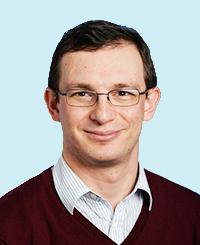
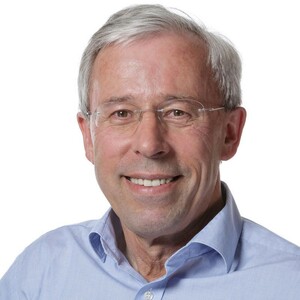
Onur Mutlu is a Professor of Computer Science at ETH Zurich, affiliated with the Department of Information Technology and Electrical Engineering. He also holds adjunct professorships at Carnegie Mellon University and Bilkent University. His research focuses on computer architecture, systems security, bioinformatics, and energy-efficient computing. He has pioneered work on memory-centric computing paradigms, RowHammer security vulnerabilities, and bio-inspired computing systems. He teaches courses such as Digital Design & Computer Architecture and supervises the SAFARI research group, which explores cutting-edge topics in memory systems, AI accelerators, and genomics. Recent activities include keynote talks at ISCA, HiPEAC, and IEEE conferences, emphasizing emerging hardware-software co-design principles. Key contributions include foundational work on memory reliability, cross-layer system design, and accelerating genomic data analysis. His research has been showcased in over 200 publications and industry collaborations with tech leaders like Intel, Huawei, and Micron.
Chris Bryan is an Assistant Professor in the School of Computing and Augmented Intelligence (SCAI) at Arizona State University (ASU), part of the Ira A. Fulton Schools of Engineering. He leads the Sonoran Visualization Laboratory (SVL @ ASU), focusing on data visualization, human-computer interaction, and advanced interfaces for data science. His research includes explainable AI, augmented/virtual reality, and privacy-preserving visualization techniques. Educations: Ph.D. Computer Science, University of California, Davis (2018) B.S. Computer Science, University of Arkansas (2008) Research Interests: Bryan’s work spans data visualization, human-computer interaction, explainable AI, and immersive visualization. He develops tools for collaborative analysis, privacy-aware systems, and visual analytics for complex data. Current projects involve VR/AR interfaces, bias reduction in NLP tasks, and educational visualization tools. Recent Achievements: Recipient of the 2024 and 2023 Top Five Percent Faculty Award at ASU’s Ira A. Fulton Schools of Engineering. NSF grants for privacy-preserving visualization (SaTC #2224066) and visualization education (IUSE #2216452). Multiple publications in top venues like IEEE VIS, CHI, and EuroVis, including work on differential privacy, mind wandering in visualization, and LLM prompt exploration. Advising & Grants: Advises Ph.D., MS, and undergraduate students on visualization and HCI research. Collaborates with institutions like Los Alamos National Laboratory, Phoenix Children’s Hospital, and Nankai University. Lab focuses on mentoring and preparing students for academic and industry roles in visualization and AI. Labs & Teams: Leads the SVL @ ASU, which uses advanced hardware (HTC Vive, HoloLens 2) and tools like D3.js, React, and LaTeX. The lab emphasizes interdisciplinary projects with domain experts in medicine, engineering, and security.
Peter Zoller is a Professor of theoretical physics at the University of Innsbruck and Scientific Director at IQOQI Innsbruck (Austrian Academy of Sciences). His research focuses on quantum optics, many-body quantum physics, and quantum information science, with a strong emphasis on quantum simulation of gauge theories and atomic systems. He has trained 34 PhD students and hosted 57 postdoctoral researchers, fostering collaborations between theory and experiment. His group, the Zoller Group, explores quantum phenomena such as lattice gauge theories, entanglement dynamics, and topological order using advanced quantum simulation techniques. Key research interests include atomic physics, quantum gases, and applications of quantum technologies to high-energy physics problems. Recent work addresses string breaking in quantum simulators, entanglement Hamiltonians, and scalable architectures for fermionic quantum processors. Collaborations span institutions like Harvard, MIT, and the University of Innsbruck’s experimental teams. His contributions bridge foundational physics with cutting-edge quantum technologies, aiming to solve problems inaccessible to classical methods.
Jose M. Carmena is the Chancellor's Professor of Electrical Engineering and Neuroscience at the University of California-Berkeley and Co-Director of the Center for Neural Engineering and Prostheses (CNEP). His research focuses on brain-machine interfaces (BMIs), neuroprosthetics, and sensorimotor learning mechanisms. Ph.D., Robotics, University of Edinburgh (2002) M.S., Artificial Intelligence, University of Edinburgh (1998) M.S., Electrical Engineering, University of Valencia (1997) B.S., Electrical Engineering, Polytechnic University of Valencia (1995) Dr. Carmena's work bridges neural engineering and systems neuroscience, investigating corticostriatal plasticity, wireless neural recording systems (e.g., neural dust), and closed-loop BMI adaptation. His publications reveal expertise in Neuroprosthetic Algorithms , Wireless Neural Interfaces , and Sensorimotor Learning with applications in chronic neuroprosthetic systems. McKnight Technological Innovations in Neuroscience Award (2017) IEEE Fellow (2017) NSF CAREER Award (2010) Sloan Research Fellow (2009) Hellman Fellow (2007) His advisees include Paul Botros, Archit Gupta, and Vivek Athalye. Dr. Carmena has published extensively in journals like Nature , Neuron , and Nature Neuroscience , developing technologies such as ultrasonic neural dust for cortical recording and adaptive control algorithms for prosthetics.
Stephen Brown is a Professor at the University of Toronto within the Department of Electrical and Computer Engineering under the Faculty of Applied Science and Engineering. He earned his B.A.Sc and M.A.Sc in Electrical Engineering from the University of Toronto and New Brunswick, respectively, and a Ph.D. in Electrical Engineering from the University of Toronto (1992). His career spans over two decades in academia and industry collaboration. Education : B.A.Sc, University of New Brunswick M.A.Sc, University of Toronto Ph.D, University of Toronto Professor Brown’s research focuses on field-programmable gate arrays (FPGAs) , CAD algorithms , and computer architecture , with applications in machine learning and high-level synthesis . He is a principal investigator in the LegUp project , an open-source high-level synthesis framework that bridges software and hardware design. His work also extends to optimizing FPGA interconnect delays, physical synthesis, and logic block architectures. Key trends in his publications include advancements in high-level synthesis tools, FPGA architecture evaluation, and timing-driven design methodologies. His contributions often intersect with design automation , resource sharing , and embedded systems . Scientific Awards : NSERC 1992 Doctoral Prize Hart Professorship for Innovation in Teaching (2017) Multiple teaching excellence awards Best Paper Award at ICCAD 1990 Best Paper Award nomination at Canadian Conference on VLSI (1989) As Director of the FPGA University Program at Intel Corporation, he leads industry-academia initiatives. His teaching portfolio includes courses like ECE253 (Digital Logic) and ECE1733F (Switching Theory).
Yoon Chae is an Assistant Professor in the Department of Computer Science and Engineering at the University of Texas at Arlington (UTA), joining the faculty in January 2025. His work bridges wireless networking and low-power IoT systems, with a focus on millimeter-wave technologies and backscatter communication. Education: PhD in Computer Science, George Mason University, 2024 MS in Computer Science, George Mason University, 2022 MS in Electrical and Computer Engineering, University of Minnesota - Twin Cities, 2012 BS in Electrical Engineering, Yonsei University, 2012 His research centers on enabling reliable and high-speed mmWave backscatter by leveraging the unique properties of millimeter waves, with applications in vehicular networks, IoT, and spectrum efficiency. He has pioneered techniques using commodity WiFi and FMCW radar for backscatter communication, significantly advancing the field of low-power wireless systems. The recent publications highlight a strong trend in utilizing commodity hardware (like WiFi and radar) for novel wireless sensing and communication. His work spans mmWave backscatter, vehicular networking using street view imagery, and interference management between ZigBee and WiFi. The research demonstrates innovation in spectrum reuse, low-power design, and integration of real-world data for network optimization. Scientific Awards: Best Paper Award, ACM MobiSys 2022 SIGMOBILE Research Highlight, 2023 Yoon Chae actively contributes to the academic community as a reviewer for top journals including IEEE Transactions on Mobile Computing, IEEE/ACM Transactions on Networking, and ACM Transactions on IoT, as well as conferences like INFOCOM, MobiCom, and SenSys. He serves on program committees and has held leadership roles such as Registration Co-chair for ICNP'25 and Artifact Evaluation Committee for MobiSys'25. He is currently building a research lab and seeking motivated Ph.D. students and research interns to join his team. He has been involved in collaborative projects with Prof. Parth Pathak (George Mason) and Prof. Song Min Kim (KAIST), and his work has been presented at major venues including NSDI, MobiCom, MobiSys, and SenSys. His lab focuses on experimental systems design, wireless sensing, and next-generation IoT networking.
Martin Wainwright is a Professor at the University of California at Berkeley with joint appointments in the Department of Statistics and the Department of Electrical Engineering and Computer Sciences (EECS). His research spans high-dimensional statistics , information theory , statistical machine learning , and optimization theory . He has made significant contributions to understanding computational and statistical trade-offs in high-dimensional settings, as well as developing advanced message-passing algorithms for graphical models. His educational background includes a Bachelor's degree in Mathematics from the University of Waterloo and a Ph.D. in EECS from MIT . His work has been recognized with prestigious awards such as the COPSS Presidents' Award (2014) , IEEE Joint Paper Award (2012) , and Sloan Research Fellowship (2005) . He has advised numerous prominent researchers, including Nihar Shah , John Duchi , and Yuchen Zhang . Publications by Wainwright reflect trends in machine learning , high-dimensional data analysis , and graphical model inference . Notable works include advancements in Markov Chain Monte Carlo algorithms , pairwise comparison models , and distributed computation methods . He has also contributed extensively to signal processing and LDPC codes . COPSS Presidents' Award (2014) IEEE Joint Paper Award (2012) Institute of Mathematical Statistics Fellow (2011) NSF CAREER Award (2006) Okawa Research Grant (2005) Sloan Research Fellow (2005)
Paul R. Genssler is a Dr.-Ing. researcher at the Chair of AI Processor Design (AI-Pro) within the Technical University of Munich (TUM), actively advancing hardware solutions for artificial intelligence under Prof. Hussam Amrouch. His work bridges computer engineering and emerging technologies, focusing on overcoming fundamental limitations in conventional computing architectures through brain-inspired paradigms. His research spans critical domains in next-generation computing: Hyperdimensional Computing for robust pattern recognition and bioinformatics applications Neuromorphic and In-Memory Computing architectures for energy efficiency Reliability engineering for emerging memory technologies (FeFET, etc.) Quantum computing support systems including cryogenic embedded electronics Machine learning-driven transistor aging prediction and mitigation Analysis of his 15 most recent publications (2023-2024) reveals a dominant trend toward hyperdimensional computing as a unifying framework for addressing reliability challenges in emerging technologies. His work consistently integrates in-memory computing techniques to bypass von Neumann bottlenecks while targeting real-world applications like genome matching and unsupervised learning. A significant portion focuses on error-resilient implementations for unreliable nanoscale devices, demonstrating exceptional cross-stack expertise from transistor physics to algorithm design. As a core member of TUM's AI Processor Design group affiliated with the Munich Institute of Robotics and Machine Intelligence (MIRMI), Genssler collaborates extensively on projects spanning cryogenic quantum control systems, FPGA-based AI resilience, and monolithic 3D integration. The team operates at the intersection of semiconductor physics, computer architecture, and machine learning, with strong industry connections evident through publications at DATE, ASP-DAC, and ICCAD.
Professor Emil Lupu is a Professor of Computer Systems at the Department of Computing , Imperial College London. He leads the Resilient Information Systems Security Group and serves as Co-Director of the National Research Institute in Trustworthy Inter-Connected Cyber-Physical Systems (RITICS) . As a Security Science Fellow at Imperial’s Institute for Security Science and Technology, his work bridges academic research with real-world security challenges. Education: PhD in Computing, Imperial College London (1994–1998) His research focuses on security and resilience of cyber-physical systems (CPS) , with emphasis on defending against data spoofing attacks , adversarial machine learning , and IoT vulnerabilities . He pioneered the Ponder policy systems for access control and the Self-Managed Cell framework for autonomic computing, and developed Bayesian Attack Graphs for scalable risk assessment in CPS. Recent publications highlight trends in adversarial robustness (2025–2022), including LIDAR spoofing defense for autonomous vehicles, LLM security , and attack graph analysis for IoT. His work explores the intersection of safety and security , applying model-checking to identify adversarial threats in train control, microgrids, and aviation systems. Scientific Awards: Security Science Fellowship, Imperial College London (2011–present) As co-founder of the PETRAS National Centre of Excellence in IoT Cybersecurity (2016–2021), he advanced security methodologies for interconnected systems. His collaborations with institutions like the Cyber Security Body of Knowledge (CyBoK) demonstrate his leadership in shaping cybersecurity research standards. Current projects include the RITICS Institute , focusing on trustworthy cyber-physical systems, and exploring generative AI for security poisoning with practical defenses against adversarial ML.
Mark C. Johnson is a Senior Lecturer at the Elmore Family School of Electrical and Computer Engineering at Purdue University, West Lafayette. He serves as Director of Instructional Laboratories and Associate Director for Design - Semiconductor Degree Program , overseeing laboratory infrastructure, CAD software administration, and curriculum development for courses like ECE337, ECE437, and ECE364. Education: Ph.D. in Electrical Engineering (1998), Purdue University M.S. in Electrical Engineering (1991), Wichita State University B.S. in Electrical Engineering (1983), Purdue University - Calumet His research focuses on electrical and computer engineering laboratory curriculum innovation , digital systems design , and CAD for VLSI . Over 15 recent publications highlight his work in SoC prototyping , low-power circuit design , and educational technology , spanning projects like FPGA filter optimization, dual-core processor experiments, and active learning strategies. Leadership Roles: Proceedings Chair (2003), MSE Program Chair (2005), MSE General Chair (2007), MSE Steering Committee Member, MSE & European Workshop on Microelectronics Education Chair, ECE Instructional Innovation Group (2004-2012) Secretary/Webmaster, ASEE Illinois/Indiana Section (2002-2011) He directs the ECE437 Computer Architecture Prototyping Lab and System on Chip Extension Technologies (SoCET) team , and co-advises the STARS semiconductor readiness program. Outside academia, he is an organist at Faith Presbyterian Church and composes keyboard music.
Nikos Hardavellas is a Professor of Computer Science and Electrical and Computer Engineering at Northwestern University, affiliated with the McCormick School of Engineering. He leads the Parallel Architecture Group at Northwestern (PARAG@N), focusing on energy-efficient parallel computing and quantum systems. His research spans quantum computing systems, fault-tolerant quantum error management, memory-centric architectures, and photonics-based interconnects. Education: Ph.D. Computer Science, Carnegie Mellon University (2009) M.S. Computer Science, Carnegie Mellon University (2006) M.S. Computer Science, University of Rochester (1997) B.S. Computer Science, University of Crete (1995) Research Interests: Quantum system software stack and error mitigation Memory-centric computing and programmable memory systems Energy-efficient architectures and dark silicon Photonics and optical interconnects Parallel systems and compiler-hardware co-design Key Contributions: Developed SupermarQ, a scalable quantum benchmark suite Pioneered optical cache hierarchies (Pho$) and energy-proportional photonic networks Advanced compiler-driven virtual memory systems (CARAT) and MPI autotuning (ACCLAiM) Awards & Honors: NSF CAREER Award (2015) Future CRA Leader (2024) Best Paper Awards at HPCA (2022) and ISLPED (2021 nomination) Test-of-Time Award at EDBT (2019) Grants & Service: Secured $4.8M in research funding from NSF, industry partners, and university initiatives Executive Committee member of Northwestern’s INQUIRE Institute for Quantum Research General Co-chair of IEEE/ACM MICRO 2022 Extensive service on departmental committees and thesis advisory boards Labs & Teams: Directs PARAG@N, collaborating on quantum computing, photonics, and energy-efficient architectures. Engages with industry partners like AMD, Intel, and Synopsys.
Prof. Andrew Zhang is a Professor at the School of Electrical and Data Engineering, University of Technology Sydney (UTS). He leads the UTS Radio Sensing and Pattern Analysis (RaSPA) Lab and serves as Technical Director of the UTS-TPG Network Sensing Lab. His research focuses on integrated sensing and communications (ISAC), wireless signal processing, and autonomous vehicular networks. He holds a PhD from the Australian National University and has over 15 years of industry experience, including roles at CSIRO and ZTE Corp. Education: B.S. (Xi’an Jiaotong University), M.Sc. (Nanjing University of Posts and Telecommunications), Ph.D. (Australian National University). Research Interests: ISAC, radio sensing, machine learning for communications, and 6G waveform design. Key projects include developing perceptive mobile networks and flood/storm sensing via ISAC. Publications: Over 290 papers, 5 patents, and notable works on ISAC frameworks, joint communication-sensing systems, and mmWave technologies. Recent trends emphasize ISAC, 6G waveforms, and IoT integration with federated learning. Awards: CSIRO Chairman’s Medal, Australian Engineering Innovation Award, and multiple best paper awards. Active in IEEE leadership roles, including Editor-in-Chief of ISAC-Focus. Grants: ~$8M in research funding. Advises on ISAC-ETI initiatives and collaborates with industry partners like TPG Telecom. Labs: RaSPA Lab (radio sensing analytics) and UTS-TPG Lab (ISAC industrial solutions).
Md Sakib Hasan is an Assistant Professor in the Department of Electrical and Computer Engineering at the University of Mississippi. He holds a Ph.D. in Electrical Engineering from the University of Tennessee-Knoxville (2017). His research focuses on hardware acceleration, neuromorphic computing, and memristor-based systems. Research interests span: AI hardware accelerators and energy-efficient computing Biomimetic systems and bio-inspired electronics Hardware security through chaotic systems and PUFs Recent publications demonstrate strong emphasis on: Neuromorphic architectures for computer vision and temporal processing Biomembrane-based computing systems Chaotic cryptography and secure hardware design
Stavros Nikolopoulos is a Professor in the Department of Computer Science & Engineering at the University of Ioannina, Greece. He serves as Director of the Algorithms Engineering Lab and holds a PhD in Computer Science (1991, University of Ioannina). His research focuses on Algorithmic Graph Theory, Parallel Algorithms, Malware Detection, and Software Watermarking. He has published extensively in top-tier journals and conferences, including Discrete Applied Mathematics and Theoretical Computer Science. Education: B.Sc. in Mathematics, University of Ioannina (1982) M.Sc. in Computer Science, University of Dundee (1985) Ph.D. in Computer Science, University of Ioannina (1991) Research Interests: Design and Analysis of Algorithms Graph Algorithms (e.g., permutation graphs, cographs) Malware Detection via System-call Group Analysis Graph-based Watermarking Systems Discrete Event Simulation Awards & Recognition: Best Student Paper Award (WEBIST'13) Best Paper Award (CompSysTech'13) Labs & Projects: Director, Algorithms Engineering Lab Principal Investigator in EU-funded projects (e.g., HRAKLITOS, PENED-05)
Dr. Jason D. Bakos is a Professor in the Department of Computer Science and Engineering at the University of South Carolina's Molinaroli College of Engineering and Computing. His research focuses on high-performance domain-specific architectures, including reconfigurable computing, embedded systems, and machine learning acceleration. He has held academic positions since 2005, progressing from Assistant to Associate Professor before becoming a full Professor in 2017. Education : Ph.D., Computer Science, University of Pittsburgh (2005) B.S., Computer Science, Youngstown State University (1999) Research Interests : Dr. Bakos specializes in computer architecture at multiple levels (circuit, micro-architectural, and system) with a focus on VLSI design, reconfigurable computing, high-performance computing, and applications in embedded systems. His recent work includes FPGA acceleration of machine learning algorithms, structural health monitoring systems, and real-time signal processing. Awards : 2018 Teaching Award in Computer Science and Engineering 2009 NSF CAREER Award Multiple design competition awards for innovative chip and circuit designs Grants & Funding : He leads and co-leads projects funded by NSF, Savannah River National Laboratory, and industry partners like Texas Instruments. Recent grants focus on edge computing for real-time machine learning, FPGA-based accelerators, and corrosion analysis of nuclear materials. Labs & Teams : His research group collaborates on projects involving embedded systems, FPGA design, and interdisciplinary applications in structural engineering and bioinformatics. He advises a dynamic team of graduate students and post-doctoral researchers.