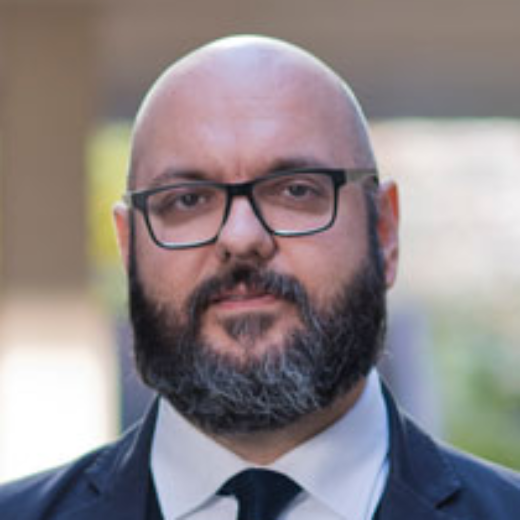
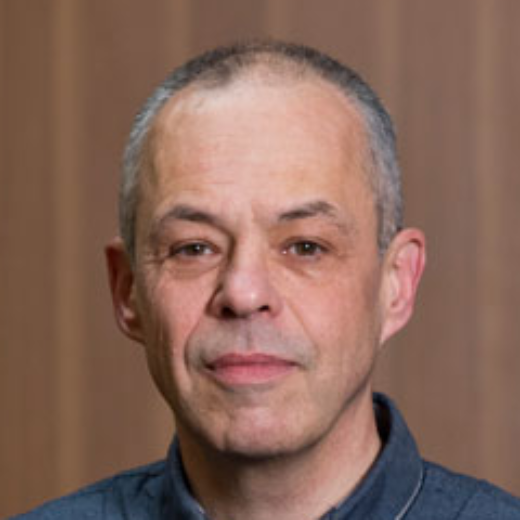
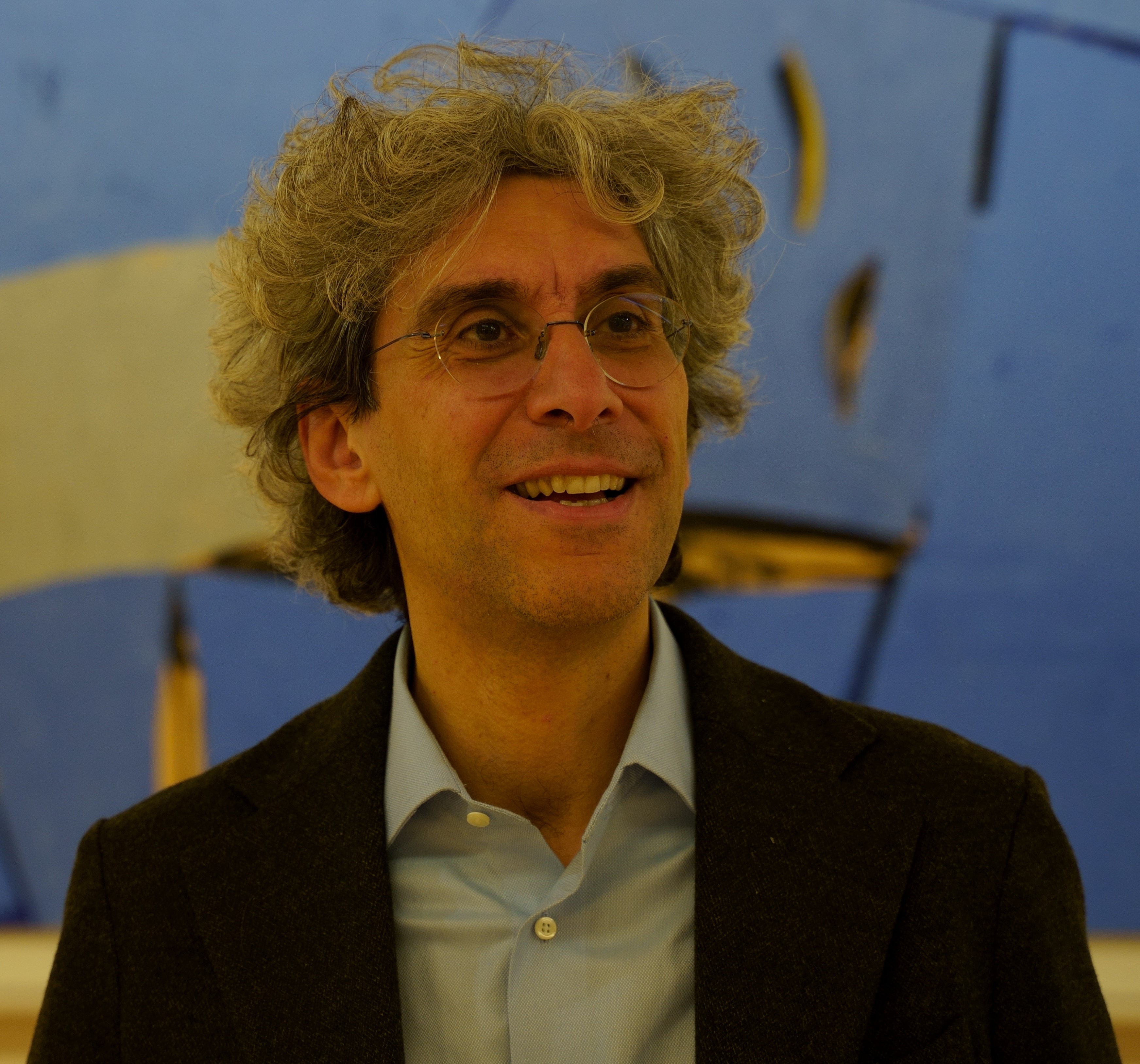
Alessandro Luigini is an Associate Professor at the Department of Educational Sciences, Faculty of Educational Sciences, Free University of Bozen-Bolzano. His academic roles include serving as Principal Investigator for projects such as VAR.HEE (2018-21) and TTC (2023-2025), and chairing international conferences like IMG2017 and EARTH2018. He founded EARTH_LAB, focusing on digital environments for education, art, and heritage. His research interests span graphic and visual sciences, digital heritage, and immersive serious games for education. He has authored over 130 publications and serves on editorial boards and committees, including the ICCD Administrative Committee and UID board. Education: PhD in Representation and Surveying of Architecture and the Environment from University 'G. d'Annunzio.' Grants: Principal Investigator for projects funded by competitive calls (VAR.HEE, B_DIGITAL, Digital_FEED, TTC). Labs/Teams: EARTH_LAB, leading interdisciplinary research in digital heritage education.
Martina Pastorino is a Researcher in the Department of Naval, Electrical, Electronic, and Telecommunications Engineering (DITEN) at the University of Genoa. Her work focuses on integrating machine learning with probabilistic graphical models for advanced remote sensing image analysis , particularly in multiresolution classification using satellite and UAV data. She teaches courses on Machine Learning for Pattern Recognition and Remote Sensing in master’s programs related to Internet and Multimedia Engineering and Energy Engineering . Research Interests : Remote Sensing, Machine Learning, Image Segmentation, Data Fusion, Hyperspectral Imaging, UAV Applications. Key Techniques : CNN-MRF Hybrids, CRFNet, Probabilistic Graphical Modeling, Multiresolution Analysis. Her recent publications explore applications in wildfire mapping , urban land-use analysis , and hyperspectral-panchromatic fusion , with a focus on improving semantic segmentation accuracy through hybrid deep learning frameworks. She is available for office hours on request via email at martina.pastorino@unige.it .
Michela Spagnuolo is a Research Director at the Italian National Research Council’s Institute of Applied Mathematics and Information Technology (CNR-IMATI-GE) since 2001. Her work bridges Computer Graphics , Geometry Processing , and Computational Topology , with applications in 3D Shape Analysis , Cultural Heritage , and Bioinformatics . Co-supervised 6 PhD theses (plus 2 ongoing) Associate Editor for journals like The Visual Computer and Computers&Graphics Chair of conferences including Shape Modeling International and EG Workshops on 3D Object Retrieval Research Interests : Focus on geometric and semantic modeling of 3D objects , computational topology for shape analysis , and structural/similarity evaluation . Her work enables advanced 3D search engines , semantic annotation , and medical imaging applications . Article Trends : Recent publications emphasize mesh quality indicators for Virtual Element Methods in engineering simulations and semantic-driven 3D model analysis for medical diagnostics and cultural heritage . Key subtopics include topological decomposition , data processing services , and multi-scale modeling . Scientific Awards : Fellow of the Eurographics Association (2014) Notable Contributions : Led projects like IQmulus (geospatial data analytics) and MultiScaleHuman (medical shape modeling). Pioneered CIDOC CRMdig for cultural heritage documentation and developed techniques for kernel computation in polyhedra .
Emanuele Taufer is a Full Professor of Statistics at the Department of Economics and Management of the University of Trento. His academic career includes roles as Vice Director of the Department of Computer Science and Business Studies and Faculty Delegate for International Relations. He holds a Ph.D. in Statistics from Cardiff University, an M.Sc. in Mathematical Statistics from George Washington University, and a Laurea in Economics from the University of Trento. His research focuses on statistical inference, stochastic processes, goodness-of-fit tests, and applications in ESG analysis. Notable contributions include work on exponentiality testing, graphical models, and financial dependence modeling. He has been recognized for his 2002 paper on mean residual life characterization at the SIS2002 conference. Recent research trends emphasize methodological advancements in ESG performance measurement, sparse network estimation for heavy-tailed data, and generalized precision matrices for financial risk modeling. His work spans theoretical statistics, applied econometrics, and interdisciplinary topics like environmental governance. Education: Ph.D. in Statistics, Cardiff University (UK) M.Sc. in Mathematical Statistics, George Washington University (USA) Laurea in Economics, University of Trento (Italy) Professional Roles: Full Professor of Statistics at University of Trento (2003–present) Associate Professor (2003–2003), Assistant Professor (1996–2002) Awards: 2002 SIS2002 Recognition for innovative statistical testing methodology Key Research Themes: Stochastic processes and estimation ESG methodology and financial reporting High-dimensional data analysis Goodness-of-fit tests and tail index estimation
Vincenzina Vitale serves as a Tenure-Track Assistant Professor of Statistics within the Department of Social and Economic Sciences at Sapienza University of Rome. Her academic profile centers on advanced statistical methodologies with applications spanning economics, public policy, and sustainability initiatives. She teaches core courses including Statistics and Data Science for Sustainability and Statistical Methods and Models for Economics and Public Policy, maintaining regular office hours on Tuesdays from 12:30 to 14:30 by email appointment. Her research program focuses on multivariate analysis, specializing in innovative fuzzy clustering techniques for complex data structures such as time series, spatial data, and mixed data types. She extensively employs probabilistic graphical models, particularly Bayesian networks, for data integration and modeling challenges. This work bridges theoretical statistics with practical applications in electoral analysis, financial volatility, sports analytics, and public health domains including COVID-19 pandemic response. Analysis of her 15 most recent publications reveals a dominant trend toward developing spatially-aware and robust fuzzy clustering algorithms. These methods increasingly incorporate regularization techniques, entropy principles, and copula models to handle interval-valued data, count data, and tail dependencies. Key application areas include regional competitiveness measurement (NUTS2/NUTS3 frameworks), electoral studies, sports performance analytics, and pandemic modeling, demonstrating consistent contributions to top-tier statistical journals. No scientific awards or fellowships were documented in the available materials. While her publication record indicates significant research productivity, specific details regarding graduate student advising, research grants, or collaborative projects were not explicitly mentioned in the provided texts. Similarly, information about laboratory facilities or dedicated research teams remains undocumented in the current sources.
Raffaele Argiento is a Full Professor of Statistics at the Department of Economics, University of Bergamo since September 2021. His academic career focuses on advanced statistical methodologies with applications across various domains including environmental science, public health, and data analysis. His research is prominently featured in high-impact statistical journals and conference proceedings. Argiento's research interests center around Bayesian statistical methods, particularly in functional data analysis, nonparametric Bayesian modeling, and clustering techniques. His work demonstrates expertise in developing innovative statistical approaches for complex data structures, including spatio-temporal data, categorical variables, and high-dimensional datasets. His research has significant applications in environmental monitoring (particularly air pollution analysis), public health (obesity rate modeling), and seismic monitoring through crowdsourced data. His methodological contributions include advancements in mixture models, partition models, and computational algorithms for statistical inference. His recent publication record shows a strong trend toward developing computationally efficient Bayesian methods for real-world applications. The research spans from theoretical developments in nonparametric Bayesian statistics to practical implementations for environmental monitoring, health data analysis, and functional data processing. His work demonstrates a consistent focus on bridging theoretical statistical advancements with practical applications across multiple scientific domains. Professor Argiento teaches several advanced statistical courses at the University of Bergamo, including Applied Statistical Modelling , Probability and Statistics , and Statistical Models for both undergraduate and graduate programs in Economics and Data Analysis. His teaching reflects his research expertise, emphasizing modern statistical methodologies and computational approaches.
Sebastiano Serpico is a Professor at the Department of Naval, Electrical, Electronic and Telecommunications Engineering (DITEN) of the University of Genoa, Italy, and serves as President of the university's Scuola Superiore IANUA graduate school. His research centers on remote sensing image analysis, specializing in machine learning and deep learning techniques for image classification, semantic segmentation, and change detection. He integrates convolutional neural networks with probabilistic graphical models (Markov Random Fields, Conditional Random Fields) to process multi-sensor and multi-resolution data from satellites and UAVs, with strong emphasis on environmental monitoring applications. Recent publications reveal a dominant focus on fusing hyperspectral, SAR, and optical data using deep learning architectures for natural disaster management and water-related risk assessment. His work demonstrates consistent innovation in multiresolution fusion frameworks and unsupervised feature extraction, particularly addressing challenges in heterogeneous data analysis for environmental risk programs like Italy's 'Return' initiative under the EU Next Generation framework.
Giulia Sammartano is a Fixed-term Tenure-Track Assistant Professor at the Department of Architecture and Design (DAD) of the Polytechnic University of Turin . She is a member of the FUTURE Urban Legacy Lab (FULL) and engages in interdisciplinary research at the intersection of geomatics, cultural heritage, and sustainable architecture. Scientific Branch: Geomatics (CEAR-04/A, Area 0008 - Civil Engineering and Architecture) ERC Skills: PE8_3 (Civil Engineering), PE6_8 (Computer Graphics), SH2_12 (GIS), PE2_15 (Metrology) SDG Contributions: Quality Education, Gender Equality, Cities & Communities, Climate Action Her research interests include 3D modeling , digital cultural heritage , UAV photogrammetry , and SLAM-based mapping . She specializes in applying advanced geomatic techniques for heritage documentation, with a focus on laser scanning , point cloud processing , and HBIM (Heritage Building Information Modeling). Recent publications highlight her work on the REVHEAL and HERITALISE projects, exploring topics like masonry vault simulations , autonomous robotic surveying , and ML/DL classification of LiDAR data . She serves as Guest Editor for journals such as Remote Sensing , Sensors , and Drones . Awards: Polytechnic University of Turin Publications Award (2016, 2018) Best Poster SIFET2017 (2017) Quality of Research Activity (2016) Scientific Memberships: ICOMOS Italia (2023-) CIPA Heritage Documentation (2023-) ISPRS (2020-)
Riccardo Renzulli is a Researcher at the Department of Computer Science, University of Turin, focusing on object-centric representation learning, medical image analysis, and AI-based computer vision applications. His research emphasizes capsule networks, deep learning models for hierarchical relationships, and applications in healthcare and aerial/satellite imagery. Education: MSc and BSc in Computer Science from University of Turin (2018 and 2015). Previous research with Prof. Valentina Gliozzi explored description logics and non-monotonic reasoning. Professional experience includes a 2022 post at Aalto University (supervised by Prof. Ville Kyrki and Francesco Verdoja) and roles at Addfor and Machine Learning Reply as a deep learning scientist. Research interests span concept learning, few-shot learning, interpretability, and medical imaging. Notable work includes visual localization systems for UAVs, AI-assisted diagnosis for COVID-19 via CXR analysis, and lung nodule segmentation using DeepHealth Toolkit. He contributed to the UniToChest dataset for cancerous nodule detection. His recent publications (2022-2025) address efficient neural architectures, medical imaging applications, and 3D scene modeling. Collaborations include EIDOSLAB, with research emphasizing scalable compression, entropy-based pruning, and ensemble methods for neural networks.
Werner Nutt is a Professor at the Free University of Bozen-Bolzano , Italy, affiliated with the Faculty of Computer Science since 2005. He previously held academic positions as a Reader at Heriot-Watt University (2000-2005), Visiting Professor at Hebrew University of Jerusalem, and Research Scientist at DFKI (1992-2000). Current Role: Professor, Free University of Bozen-Bolzano Past Roles: Reader (Heriot-Watt), Visiting Professor (Hebrew University), Research Scientist (DFKI) Research Interests focus on Data Management , Knowledge Representation , and Intelligent Information Extraction , with emphasis on modeling Construction Processes and ensuring Data Quality . His work bridges Semantic Web technologies with Business Process Management , notably through the COCkPiT project (2017-present) for construction process optimization. Key Contributions include foundational work on Query Completeness in databases, SPARQL Reasoning , and Semantic Diagnostics . He has published extensively in venues like ISWC , BPM , and CIKM , with an h-index of 35 on Google Scholar. His 154+ publications span topics from Probabilistic XML to Construction Process Modeling .
Patrizio Campisi is a Full Professor in the Section of Applied Electronics at the Department of Engineering, Roma TRE University, Rome, Italy. He leads cutting-edge research in digital signal and image processing with applications to secure multimedia communications and biometrics. He has held visiting positions at the University of Toronto, Beckman Institute (UIUC), and École Polytechnique de Nantes, and has been a Marie Curie Fellow (2010–2014). His educational background includes a Laurea (summa cum laude) in Electronic Engineering from Sapienza University of Rome and a Ph.D. in Electrical Engineering from Roma TRE University. His research focuses on secure biometric recognition (signature, keystroke, EEG, vein), digital watermarking, blind image deconvolution, HDR imaging, and privacy-preserving technologies. He has contributed significantly to template protection, multimodal biometrics, and forensic image analysis. His work bridges engineering, computer science, and security, with strong applications in mobile authentication, border control, and social media safety. The recent publications reflect a strong trend in biometrics, image forensics, and privacy-enhancing technologies, with a focus on real-world applications in mobile systems, healthcare, and law enforcement. Key themes include secure authentication, de-identification, and computational imaging. IEEE Second International Conference on Biometric Systems 2008 Best Student Paper Award IEEE Biometric Symposium 2007 Best Paper Award IEEE International Conference on Image Processing 2006 Best Student Paper Award Marie Curie Fellow (2010–2014) NATO-CNR Advanced Fellowship (2003) IEEE Senior Member Prof. Campisi has supervised numerous students and leads the BioMedia4n6 lab. He has secured major EU grants including H2020 projects AMBER, COSMOS, and ENCASE. His editorial leadership includes serving as Editor-in-Chief of IEEE Transactions on Information Forensics and Security (2018–2020) and Chair of the IEEE Information Forensics and Security Technical Committee (2017–2018). He is actively involved in research networks such as COST Actions on de-identification and biometrics-forensics integration, and has contributed to EU policy via the BEST Thematic Network on biometrics and fundamental rights. His lab, BioMedia4n6, focuses on biometrics, multimedia forensics, and privacy-aware systems.
Paolo Chiabert is a Tenured Associate Professor at the Department of Management and Production Engineering (DIGEP) of the Polytechnic of Turin . He is also a member of the CARS@PoliTO Center focusing on Automotive Research and Sustainable Mobility. His academic career spans multiple international engagements, including teaching roles at the Turin Polytechnic University in Tashkent (2013-2014). Research interests include: Enterprise Resource Planning (ERP) Industry 4.0 and 5.0 technologies Internet of Things (IoT) for smart production Lean Manufacturing methodologies Manufacturing Execution Systems (MES) Product Lifecycle Management (PLM) systems His research projects involve: CAPT'N'SEE (2021) - Additive Manufacturing for luxury industry HOME (2018-2021) - Hierarchical Open Manufacturing Europe FlexAGV (2017) - Flexible AGV systems DISLO-MAN (2016-2019) - Industry 4.0 shopfloor operations Scientific contributions focus on IoT integration , digital twin frameworks , and sustainable manufacturing , with recent works on: AI sustainability across product lifecycles One-of-a-kind production optimization IoT taxonomy for Industry 4.0 education Hybrid machine learning for aeroponic systems Knowledge reuse barriers in product development He supervises PhD students including: Temur Turgunboev - Remote multi-agent collaboration Niccolo' Giovenali - Irregular shape packing algorithms Luigi Panza - Technological innovations for sustainable manufacturing Mansur Asranov - IoT for Smart Production Ahmed Mekki Awouda - Industry 5.0 compliant IoT architectures Active in teaching at all levels, with recent courses in: Lean Manufacturing approaches Industry 4.0 production systems Production management fundamentals Graphical communication and mechanical manufacturing Industrial programming laboratory
Claudio Giovanni Demartini is a Full Professor of Computer Engineering at the Department of Control and Computer Engineering (DAUIN) at Polytechnic University of Turin . Holding the academic rank of Professor, he has been actively involved in teaching, research, and institutional governance since the 2000s. His affiliations include the GRAINS research group (Graphics and Intelligent Systems), NEXA Center on Internet and Society, and leadership roles in the Academic Senate and Department of Computer Engineering (2015-2019). PhD in Information and Systems Engineering (1987) Engineering Degree in Electronics (1980), Polytechnic University of Turin Research Interests span multiple domains of Computer Engineering and Information Systems , with specific focus on: IT Governance and Enterprise Architecture Digital Transformation in Education Blockchain and Distributed Ledger Technologies Wireless Sensor Networks and Cyber-Physical Systems Innovation Management in Industrial Contexts Human-Machine Interfaces and Virtual Reality Research Trends Analysis reveals consistent engagement with: Data-driven learning organizations (2023-2025) TSCH wireless protocol optimization (2019-2020) Social-technical aspects of IT governance AI applications in educational systems Blockchain for industrial and societal applications Immersive VR interfaces for system control Scientific Distinctions Fellow, IEEE (2007-) Senior Member, IEEE Member, Eta Kappa Nu Honor Association (2017-) Editorial Board, IEEE IT Professional Magazine Advising and Governance includes: Scientific Director for 15+ competitive research projects Leadership in European educational technology initiatives Advising on Italian national education reforms Board roles at Mario Boella Institute and INVALSI
Rosario Milazzo is a PhD candidate (2022-2025) in Computer and Systems Engineering at the Department of Control and Computer Engineering (DAUIN), Polytechnic University of Turin, concurrently serving as an external lecturer and teaching assistant for Innovation Management and ICT Product Development in Management Engineering. His research centers on developing robust deep neural networks resilient to transient faults like radiation-induced errors in satellite and automotive systems. He earned Bachelor's (2020) and Master's (2022) degrees in Computer Engineering from the same institution, joining the GRAINS research group as a scholarship holder before commencing his NODES-funded PhD under advisors Lia Morra, Sophie Fosson, and Luca Sterpone. Research focuses on Artificial Intelligence with specialization in Computer Vision and fault-tolerant deep learning for critical infrastructure. His work integrates self-supervised learning, quantization, and architectural innovations to maintain accuracy/efficiency under hardware-induced faults in space and mobility applications, addressing real-world reliability challenges. Publication analysis (2020-2025) reveals a progression from agricultural photogrammetry to cutting-edge fault-tolerant AI, with recent works emphasizing medical imaging (mammography), satellite systems, and weather-event mitigation through graph/transformer architectures and self-supervised techniques. Funded by NODES (North West Digital and Sustainable), Milazzo contributes to the GRAINS research group's mission without current advisees. His scholarship position since 2022 supports collaborative development of intelligent systems for high-stakes environments. As a GRAINS (GRAphics and INtelligent Systems) member, he operates within a specialized environment advancing graphics, computer vision, and robust AI deployment, directly enabling his investigations into neural network resilience for satellite and automotive domains.
Rinaldo Garziera is a Full Professor at the Department of Systems Engineering and Industrial Technologies (DISTI) within the Faculty of Engineering at the University of Parma, Italy. He has served the university since 1991 and currently holds the position of Department Director until 2027. His teaching portfolio includes Functional Mechanical Design for Mechanical Engineering Master's programs and Fundamentals of Mechanics for Management Engineering Bachelor's degrees across multiple academic cohorts from 2015/2016 to 2025/2026. His academic journey began with a competitive placement at Scuola Normale Superiore of Pisa (Physics) in 1980, followed by a Mechanical Engineering degree from Polytechnic of Milan in 1987. He completed PhD studies at Polytechnic of Milan's Institute of Mechanical Drives starting in 1989, joined University of Parma as University Researcher in 1991, and achieved Full Professorship in Mechanics Applied to Machines (SSD ING-IND/13) in 2001. Born: Como, May 1, 1962 Scuola Normale Superiore di Pisa: Class of Science (Physics), 1980 Polytechnic of Milan: Mechanical Engineering degree, July 19, 1987 Polytechnic of Milan: PhD candidate, Institute of Mechanical Drives (Nov 1989) Garziera's research centers on robotics kinematics, vibration analysis, and motion dynamics. He developed an original recursive equation for inverse kinematics of redundant robots and extended the Rayleigh-Ritz method for vibration analysis of continuous bodies with complicating effects. His work addresses practical engineering challenges including tape unwinding dynamics, cylindrical shell vibrations with fluid interactions, and motion law development for controlled drives. Current investigations focus on metamaterials for noise control and sustainable design methodologies. His 2024-2025 publications demonstrate interdisciplinary convergence across robotics, sustainable engineering, and computational mechanics. Key trends include dual-gantry motion optimization, NURBS-based path planning, sustainable CAE tool integration, advanced joint mechanics, and machine learning-driven acoustic metamaterials. These works bridge theoretical mechanics with industrial applications in energy systems and manufacturing. Scientific Awards No awards mentioned in source material Garziera serves as reference professor for Management Engineering programs and directs DISTI department operations. While student advising history isn't detailed, his decades-long teaching record across 10+ academic years indicates extensive mentorship. No specific grant information appears in the provided text. No dedicated laboratory or research team structures are described in the available documentation, though his departmental leadership role suggests oversight of DISTI's research infrastructure.