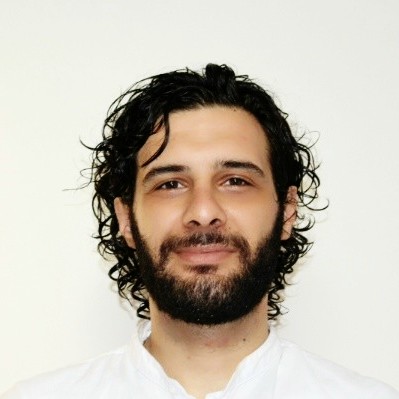
Luigi Riso is a Research Fellow in Econometrics at the Catholic University of the Sacred Heart in Milan, Italy. He holds a Ph.D. in Modeling and Data Science from the University of Turin, awarded in March 2021. His academic work is centered on statistical modeling with applications in economics and finance. His research interests include: Applied Statistics Econometrics Machine Learning Multivariate Statistics Dimensional Reduction Graphical Models During his doctoral studies, Luigi developed an algorithm for automated feature selection and a method for estimating drift in relationships between variables over time, both leveraging graphical models. His work bridges statistical theory and practical applications in economic and financial domains. There are currently no listed scientific awards. Luigi has not advised any named students in the provided information, and no grants or formal advising roles are mentioned. His research is theoretically grounded and algorithmically oriented, suggesting a strong quantitative and computational focus. No specific lab or research team is mentioned in the text, though his work appears aligned with data science and econometric modeling groups.
Christian Graugaard is a Professor of Sexology at Aalborg University, affiliated with the Faculty of Medicine and the Department of Clinical Medicine. He is a key member of the Center for Sexology Research and leads Project SEXUS, aiming to study Danish sexual behavior comprehensively. His work emphasizes the intersection of biological, psychological, and cultural factors in human sexuality, challenging simplistic gender-based stereotypes. Research interests include gender differences in sexual behavior, societal norms influencing sexual health, and the cultural dimensions of human sexuality. He actively participates in public discourse, as seen in his DR-podcast interview on 'Ramt af kærlighed,' where he discussed the complex interplay between biology and culture in shaping sexual identities. Though no specific awards or grants are detailed here, his publications span advanced technical domains like spatiotemporal data analysis, federated learning, and trajectory modeling, suggesting interdisciplinary research collaborations. His work on systems like OneDB and SWASH highlights contributions to distributed computing and data science, which may underpin his methodologies in large-scale sexual behavior studies. He currently holds no listed students or formal advisees in the provided texts, and his involvement in labs/teams is limited to the Center for Sexology Research and Project SEXUS.
Troels Bjerre Lund is an Associate Professor in the Computer Science Department at the IT University of Copenhagen. His research focuses on Algorithmic Game Theory , Equilibrium Computation , and Mechanism Design , with applications in artificial intelligence and poker game theory. He has served on program committees for major conferences including AAMAS, SAGT, IJCAI, AAAI, and EC. His work includes developing GT-Framework (gtf) for analyzing two-player zero-sum games and creating poker-playing AI systems like Tartanian and GS3. Education: PhD from Aarhus University (2008) Key Contributions: Polynomial-time algorithms for proper equilibrium computation, complexity analysis of game-theoretic concepts, and automated game abstraction techniques.
Guillermina Eslava serves as an External Lecturer in the Department of Applied Mathematics and Computer Science at the Technical University of Denmark (DTU), specializing in Statistics and Data Analysis. Her research bridges advanced statistical methodology with critical public health applications, particularly in Danish register-based studies. Her research interests feature prominently in: Discriminant Analysis : Pioneering tree-structured approaches for mixed data classification Graphical Models : Leveraging conditional independence structures for efficient modeling Multimorbidity Research : Analyzing co-occurring chronic conditions in Danish populations Health Statistics : Transforming register data into epidemiological insights Tree-structured Models : Building interpretable frameworks for complex healthcare data Data Analysis : Solving real-world challenges in health statistics Recent publications reveal a dual focus: methodological innovation in discriminant analysis (using tree structures and graphical models) and applied health research on multimorbidity patterns. Her work consistently integrates simulated and real-world data validation, with increasing emphasis on Danish healthcare register applications since 2023. No scientific awards were documented in available materials. While specific PhD advising isn't detailed, Eslava actively contributes to doctoral education through courses like 'Introduction to applied statistics and R for PhD students' at DTU. Conference presentations at national healthcare research events demonstrate her engagement in knowledge dissemination, though grant funding details remain unspecified.
Dr. Moritz Kinzel serves as an External Researcher in the Department of Cross-Cultural and Regional Studies at the University of Copenhagen's Faculty of Humanities. His research focuses on building archaeology and Neolithic architecture, with extensive fieldwork across the Middle East including significant projects at Göbekli Tepe (Turkey) and Shkarat Msaied (Jordan). PhD in Building Archaeology (Dr. Ing.), Technical University of Berlin (2011) M.Sc. in Heritage Conservation, Technical University of Berlin (2006) Diplom Ingenieur in Architecture, Beuth Hochschule für Technik (2001) Dr. Kinzel's primary research encompasses Building Archaeology, Neolithic Architecture, Heritage Conservation, and Digital Archaeology methodologies. His work integrates traditional architectural analysis with cutting-edge digital techniques including 3D scanning, photogrammetry, and AR/VR applications. He has developed innovative approaches to documenting ancient structures through his involvement with the ABACUS 2.0 photogrammetry system and has pioneered the use of graphic novels for archaeological outreach through the Prehistory Graphic Outreach Initiative. Analysis of his 15 most recent publications reveals consistent focus on Neolithic architectural practices, particularly at Göbekli Tepe and Shkarat Msaied sites. His work demonstrates strong interdisciplinary connections between architectural history, digital humanities, and heritage conservation, with increasing emphasis on digital documentation methods and public engagement strategies since 2019. Key thematic threads include architectural modification processes, monumentality studies, and the application of proteomics to ancient bone analysis. Dr. Kinzel actively contributes to major international projects including the HeAT (Heritage and Threat) initiative addressing heritage preservation in crisis situations across Syria, Northern Iraq, Poland, Romania, and Italy. His collaborative approach is evident through extensive international partnerships reflected in his research output spanning multiple countries and institutions. His outreach efforts include the Prehistory Graphic Outreach Initiative producing graphic novels based on Shkarat Msaied research, and the HeAT project developing practical manuals for heritage threat management. Dr. Kinzel maintains active participation in academic discourse through conference presentations, peer review activities, and media engagement to disseminate findings from his Middle Eastern archaeological projects.
Stig Møller Hansen serves as Senior Associate Professor within the Interactive Design Program at The Danish School of Media and Journalism (DMJX), where he operates at the nexus of graphic design and computational practice. His institutional role spans both the Interactive Design department and Research Department (Forskningsafdelingen), with teaching responsibilities covering "Interactive Information Graphics and Data Visualization," "Creative Coding," and "Computational Design" courses that transform designers into digital craftsmen through code-as-creative-medium pedagogy. Hansen's academic foundation includes a PhD in Computational Graphic Design from Aarhus University (awarded 2018), Master in IT from IT Vest, and BA in Graphic Communication from The Graphic Arts Institute of Denmark. This is complemented by professional experience as a practicing graphic designer, informing his applied research approach. His educational philosophy centers on project-based learning where students build custom creative tools through video worked examples and iterative experimentation. Research focuses intensely on design-programming intersections, particularly creative coding's role in generative design systems, data visualization, and AI's transformative impact on design practice. Hansen investigates how designers maintain agency in human-AI collaboration, develops frameworks for understanding role evolution in AI-augmented workflows, and creates pedagogical models for code literacy in design education. His work consistently bridges technical implementation with artistic expression, emphasizing code as expressive medium rather than mere tool. Recent publication analysis (2019-2024) reveals accelerating engagement with AI-design integration, shifting from foundational creative coding education toward critical examinations of human-AI power dynamics, ethical implications, and practical collaboration frameworks. This trajectory demonstrates increasing sophistication in addressing how designers can leverage AI while preserving creative control and professional identity. Hansen's research is supported by active grants including: 'AI som medskaber og mulighedsrum' (2024-2026): Exploring AI as creative co-creator 'Barriers to adopting programming in creative workflows' (2023-2025): Industry-focused study of code integration challenges 'Using code in Creative Processes' (2021): Development project on creative coding implementation 'Danske nyhedsmediers brug af interaktiv datavisualisering' (2020): Analysis of news media data visualization practices With 66 recorded academic activities including international conferences and workshops, Hansen maintains an active research profile while supervising student projects in generative art, educational technology development, and AI-assisted design systems within DMJX's research infrastructure.
Anne Mette Hartelius is an experienced Associate Professor at the Danish School of Media and Journalism (DMJX) specializing in Graphic Design. With a strong background spanning both academia and industry, she brings practical expertise to her teaching and research in visual communication and brand identity. Her educational background includes a BA in Graphic Design from the Danish School of Media and Journalism (2008) and a Cand. Polyt. in Visual Communication from the Technical University of Denmark (1992), complemented by Scrum Master Certification (2020). Hartelius's research focuses on the intersection of graphic design, emotional communication, and creative processes. Her work explores how visual elements convey meaning and emotion, with particular attention to brand identity development and the practical methodologies designers use to translate concepts into visual form. She has developed innovative approaches like the 'Fra Ord til Form-metoden' (From Words to Form method) for systematic logo development. Her publication record shows consistent output from 2014 through 2025, with increasing focus on book-length contributions in recent years. Her work spans journal articles, books, teaching materials, and conference presentations, demonstrating her commitment to both academic scholarship and practical design education. Nominering til prisen for 'Årets bedste bog 2022' (2023) Multiple media features including 'DMJX-lektor har skabt et missing link mellem ord og billeder' (2023) Hartelius maintains active connections between academia and industry through her guest teaching at the University of Copenhagen and participation in design conferences. Her professional experience as Art Director at Danish Bank Group and various publishing houses informs her practical approach to design education, emphasizing real-world applications of design principles and methodologies.
Michael Charles Sachs serves as Associate Professor in the Department of Public Health, Section of Biostatistics at the University of Copenhagen's Faculty of Health and Medical Sciences. He holds a Doctorate in Biostatistics from the University of Washington (awarded August 15, 2011) and maintains an active research program with publications spanning 2022-2025. His primary research focuses on biomarker signatures for treatment selection , computational methods for deriving symbolic bounds on causal effects , and regression modeling of cumulative estimands with censored event history data . His general areas of interest include reproducible research, computational statistics, R programming, Bayesian nonparametric models, and survival analysis. Professor Sachs teaches the advanced course "Programming and Statistical Modeling in R" for PhD students and health researchers, covering programming principles, loops, functions, and efficient data manipulation. His recent publications demonstrate expertise in causal inference methodology, survival analysis techniques, and statistical software implementation, with multiple articles accepted for publication in 2025. His work spans theoretical methodology development and practical applications in medical research, particularly in gastroenterology and celiac disease prediction. His scholarly output shows consistent productivity with multiple first-author publications in high-impact biostatistics journals including Journal of Statistical Software, Journal of Computational and Graphical Statistics, and Biostatistics. He actively organizes academic activities, including a May 2025 workshop on statistical modeling in R.
Theo Juncker von Buchwald serves as a Guest Researcher in the Department of Chemistry at the University of Copenhagen, located at Universitetsparken 5 in Copenhagen Ø. His research focuses on advanced computational methods in quantum chemistry, particularly developing and implementing cluster perturbation theories for molecular excitation energies and ground-state properties. His primary research interests center on Computational and Theoretical Chemistry, specializing in electronic structure theory. He develops high-accuracy quantum chemical methods including coupled cluster theory, variational excitation-energy functions, and core-valence separation techniques. His work bridges theoretical chemistry with high-performance computing, implementing parallel algorithms for large-scale molecular systems. Analysis of his four recent publications reveals a consistent research trajectory in Cluster Perturbation Theory (CPT), with increasing computational sophistication. His work demonstrates expertise in both theoretical development (variational formulations, Lagrangian approaches) and practical implementation (parallelization, GPU acceleration). Key trends include targeting CCSD/CCSDT accuracy with reduced computational cost, developing diagnostics for model reliability, and extending CPT to core-excited states for X-ray spectroscopy applications. Research Collaborations and Infrastructure: Collaborates extensively with Kurt V. Mikkelsen, Poul Jørgensen, and Jeppe Olsen Utilizes Frontier supercomputer at Oak Ridge National Laboratory Employs hybrid MPI/OpenMP parallelization with GPU acceleration Receives funding from Danish Council for Independent Research (Grants DFF-0136-00081B, DFF-10.46540/3103-00261B)