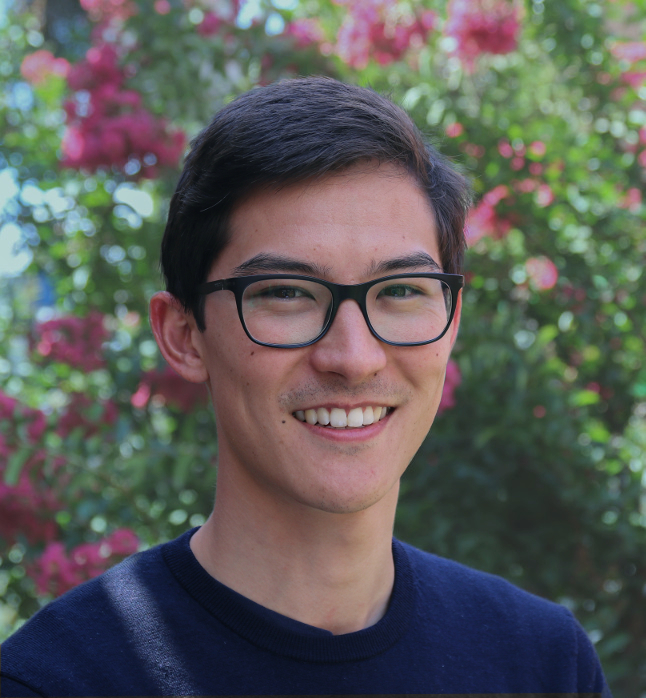
Milan Miric is an Associate Professor in the Department of Data Sciences and Operations at the University of Southern California's Marshall School of Business. He joined USC in 2016 after completing his PhD at Copenhagen Business School. His research focuses on digital strategy, artificial intelligence, platform ecosystems, and innovation dynamics, with particular attention to gender disparities in technology entrepreneurship and strategic implications of digital markets. His expertise spans areas like freemium business models, platform competition, and the impact of imitation on product demand. Miric has been frequently cited in media outlets such as the San Francisco Chronicle and Mashable for his insights on Federal Reserve policies, tech industry regulation, and tariff impacts on consumer electronics. Recent research trends in his articles emphasize platform-based ecosystems, M&A strategies in digital markets, and the gender gap in tech entrepreneurship. His work bridges theoretical frameworks with practical implications for startups, established firms, and policymakers. Miric teaches courses on big data strategies and has contributed to multiple industry reports and policy discussions. He is a recognized voice in understanding how digital tools and standardized technologies affect innovation and employee mobility across industries.
Liam Cross is a Lecturer in Psychology at the School of Psychology, University of Bath. His research focuses on social psychology, particularly how synchronized movement (e.g., dancing, drumming) fosters prosocial behavior, affiliation, and group cohesion. He also investigates autism, theory of mind, deception, media effects on prejudice, and the therapeutic potential of games. His research interests span Social Psychology, Prosocial Behavior, Synchronization, Theory of Mind, Autism, Nonverbal Communication, Media Effects, and Gamification . He explores how rhythmic coordination influences social bonding and identity, and how digital and tabletop games can support individuals with autism. His work integrates experimental, virtual reality, and qualitative methods to understand complex social dynamics. The recent articles highlight a strong trend in using technology—especially virtual reality and games—to study and enhance empathy, reduce prejudice, and improve social interaction. Key themes include the Proteus Effect, synchronized movement in VR, video games for refugee empathy, and board games for understanding autistic experiences . These works reflect interdisciplinary approaches bridging psychology, human-computer interaction, and social intervention. Liam Cross has no explicitly listed scientific awards in the provided text. While no direct mention of student advising or grants is made, his collaborative publications suggest active mentorship and research leadership. He is affiliated with the NeuroPlay Lab , indicating involvement in a dedicated research team focused on play, technology, and social cognition. His work contributes to UN Sustainable Development Goals related to well-being and reduced inequalities. He is actively involved in research and teaching in Social Psychology, Research Methods, and Statistics , and leads innovative projects using immersive technologies and games to address social challenges. The NeuroPlay Lab serves as a hub for experimental and applied research in prosocial technology and autism interventions.
Lea Hellmueller is Associate Dean of Research in the School of Communication & Creativity and Reader (Associate Professor) in the Journalism Department at City, University of London. She is also an Affiliated Researcher with the Violence & Society Centre. Previously, she served as Assistant Professor at the University of Houston and Texas Tech University, and was a visiting professor at the University of Zurich and visiting fellow at the Reuters Institute for the Study of Journalism, University of Oxford. Dr. Hellmueller holds a Ph.D. in Economics and Social Sciences from the University of Fribourg, Switzerland, with dissertation co-supervision from the University of Missouri-Columbia. She completed postdoctoral training at the University of Texas at Austin. Her research focuses on the role of media and journalism in a globalized world, particularly in areas such as global risk journalism, transnational reporting, journalistic role performance, media and social justice, and violence & media. Fluent in multiple languages, she brings a comparative and international perspective to her scholarship. Her recent publications explore transnational journalism, digital media discourse, journalistic cultures, credibility, and terrorism coverage. The articles reflect a strong trend toward computational and comparative analysis of global media practices, emphasizing power, identity, and the transformation of journalistic norms across borders. Faculty Research Award, AEJMC (2019) Honorary Mention, ICA Journalism Studies Division (2018) Outstanding Research Award, University of Houston (2018) First Place Teaching Contest, AEJMC (2016) Top Faculty Paper, AEJMC (2016) Top Paper Award, ICA (2016) Dr. Hellmueller has secured multiple competitive grants, including from the Swiss National Science Foundation (SNF) and Fulbright. She has supervised PhD students, currently mentoring Namrata Acharya. She serves on editorial boards of Journalism Practice and International Communication Gazette , and holds leadership roles in AEJMC and ICA. She is also the North America Regional Lead for the Global Risk Journalism Hub. She is active in collaborative research networks and has contributed to major reports, including with the Reuters Institute. Her work bridges academic research, policy, and global media practices.
Professor Marilyn A. Walker is a leading academic in Natural Language Processing and Dialogue Systems at the University of California Santa Cruz , with significant contributions to conversational agents, personality modeling, and narrative analysis. She has held visiting roles at Google Research and leadership positions at University of Sheffield and AT&T Labs. Education : Ph.D. in Computer and Information Science (University of Pennsylvania, 1993), M.A. in Linguistics (University of Pennsylvania, 1993), M.S. in Computer Science (Stanford, 1988), B.A. in Computer and Information Science (UC Santa Cruz, 1984). Research Interests include Natural Language Processing , Conversational Agents , Dialogue Systems , and Personality Modeling . Her work bridges machine learning with linguistic theory to enhance dialogue adaptivity and expressive language generation. Scientific Awards include ACL Fellow (2016) Best Paper Awards at SIGDIAL 2016 and 2014 Royal Society Wolfson Research Merit Award (2003-2009) Grants exceed $2.5M, including NSF awards for projects like Interactive Dialog Agents for Social Language Development (2017) and Processing Opinion Sharing Dialog in Social Media (2011). She has also received corporate funding from Amazon , Fujitsu , and Hitachi .
Sebastian Stich is a tenured faculty member at the CISPA Helmholtz Center for Information Security , where he leads research in Trustworthy Information Processing . He has been a tenure-track faculty since 2021 and was promoted to tenured professor in 2025. He is also a member of the European Lab for Learning and Intelligent Systems (ELLIS) . Education: PhD in Computer Science, ETH Zurich (2010–2014) MSc and BSc in Mathematics, ETH Zurich (2005–2010) Research Scientist, EPFL (2016–2021) Research at CORE/ICTEAM, UCLouvain (2014–2016) His research centers on optimization for machine learning , with a focus on federated, decentralized, and distributed learning . He investigates methods for communication efficiency , adaptive stochastic optimization , privacy-preserving training , and generalization theory . His work bridges theoretical guarantees with practical scalability. His recent publications (2023–2025) consistently address gradient compression , error feedback , local updates , and decentralized consensus , demonstrating a strong trend toward making distributed learning more efficient, robust, and scalable—especially under heterogeneous data and limited bandwidth. Scientific Awards: ERC Consolidator Grant 2024 (CollectiveMinds) Google Research Scholar Award (2023) Meta Privacy-Enhancing Technologies Research Award (2022) Sebastian Stich actively advises PhD students and postdocs, including Anton Rodomanov , Xiaowen Jiang , and Yuan Gao . He has secured competitive grants such as the ERC CollectiveMinds project, supporting collaborative research on scalable federated learning. He teaches advanced courses at Saarland University and serves as an area chair for NeurIPS, ICML, and ICLR. He leads a research group at CISPA focused on trustworthy and efficient machine learning systems , contributing to both foundational theory and real-world applications in privacy and security.
Claire Vernade is a Group Leader at the University of Tübingen within the Cluster of Excellence Machine Learning for Science. She holds an Emmy Noether award (2022) and an ERC Starting Grant (2024) for her projects FoLiReL and ConSequentIAL , focusing on theoretical reinforcement learning and non-stationary environments. Education: PhD from Telecom ParisTech (2017) Post-doctoral researcher at University of Magdeburg (2018) Her research bridges sequential decision making, bandit problems, and reinforcement learning theory. Recent work explores lifelong learning, distributional RL, and game-theoretic approaches to PCA, emphasizing mathematical rigor and algorithmic innovation. Recent publications highlight trends in non-stationary RL , continual learning , and bandit algorithms with complex feedback structures. Key subfields include meta-learning, adaptive control, and theoretical guarantees in dynamic programming. Scientific Awards: Emmy Noether Award (2022) ERC Starting Grant (2024) Outstanding Paper Award & Oral Presentation, ICLR (2021) She mentors PhD and master's students in theoretical machine learning, with current advisees including Nicolas Nguyen, Onno Eberhard, and Ziyad Sheebaelhamd. Her lab actively recruits candidates in bandit algorithms and RL theory through the IMPRS-IS and ELLIS doctoral programs. Claire co-leads diversity initiatives like Tübingen Women in Machine Learning and Women in Learning Theory, advocating for inclusivity in AI research. She has organized workshops at ICML and EWRL, and contributed to union activism in the tech industry.
Professor Tim Rogers is affiliated with the University of Bath as a faculty member in the Department of Mathematical Sciences . He is actively involved in research spanning complex systems, network theory, and stochastic processes. PhD in Random Matrix Theory from King's College London (2010) His research focuses on emergent behavior in random systems , including: Collective Behavior : Crowd dynamics, lane formation, and noise-enhanced synchronization Epidemics & Networks : Spread prediction, node risk assessment, and misinformation impacts Ecology & Evolution : Trait emergence, species boundaries, and demographic noise effects Random Matrix Theory : Spectral analysis and applications to complex systems Publication trends reflect interdisciplinary work bridging Physics, Biology, and Mathematics , with a focus on network structures , stochastic modeling , and emergence phenomena . Scientific awards include: 2015 : Editor's Choice for Europhys. Lett. 109, 28005 2016 : Highlight of Journal of Physics A 2017 : Editor's Suggestion for Phys. Rev. E 92, 032708 He has supervised numerous PhD students and postdocs on projects related to stochastic dynamics , network modeling , and mathematical biology , with ongoing grants from agencies like EPSRC and The Leverhulme Trust .
Jason Nelson is a Professor of Digital Culture in the Department of Linguistic, Literary and Aesthetic Studies at the University of Bergen, Norway. He is a creator of digital poems and fictions, builder of surrealist and politically focused art games and digital creatures. His work is exhibited widely in galleries and journals around the globe at FILE, ACM, LEA, ISEA, SIGGRAPH, ELO and numerous other venues. Nelson serves on organizational boards including the Australia Council Literature Board and the Electronic Literature Organization. Nelson's research focuses on the intersection of digital technology, creative writing, and artistic expression. He explores how AI and machine learning can be harnessed for creative purposes, developing new forms of digital literature and interactive art. His work often involves building expansive visual worlds through collaborative AI processes, creating interactive digital poetry, and developing novel approaches to digital narrative. Nelson's research spans digital humanities, electronic literature, AI-generated art, and interactive media, with particular emphasis on how these technologies transform creative processes and experiences. Over the past decade, Nelson's work has increasingly focused on the creative potential of AI technologies, especially in the areas of text-to-image generation and multimodal authorship. His projects often blend game engines with poetic expression, creating immersive experiences that challenge traditional boundaries between human and machine creativity. Recent works explore themes of multispecies futures, time perception, and the transformation of physical spaces through augmented reality. Nelson has received numerous scientific awards and fellowships including: Fulbright Fellowship at the University of Bergen Moore Fellowship at the National University of Ireland Winner of the Digital Writing Prize, Queensland Literary Awards (15,000 AUD) Winner of the Woollahra Library Digital Poetry Prize (5,000 AUD) Runner-Up Prize at the Videomedeja digital art exhibition Finalist for the Turn-on Literature Prize Finalist for the Queensland Literary Awards, Digital Writing Category Multiple finalist nominations for the New Media Writing Prize Nelson actively participates in academic advising and has secured significant research funding, including a 125,000 AUD grant from the Australia Council of the Arts, Literature Board for his project "Cube Cryptext and Nomencluster," which was recognized as the world's largest interactive art-game. His work "Nine Billion Branches" received multiple awards including the Digital Writing Prize from the Queensland Literary Awards. He has also received a 75,000 NOK grant for the "Flood Mosaic Artwork" project featured in the Floodlines Exhibition at the State Library of Queensland. Nelson is affiliated with the Center for Digital Narrative at the University of Bergen, where he collaborates with researchers like Scott Robert Rettberg and Alinta Krauth. Together they form EphemerLab, exploring new creative processes that move beyond simple "ask and generate" AI methods. Their work involves stitching together hundreds of individual image fragments and components into cohesive visual and narrative concepts, pushing the boundaries of what's possible with current AI technologies.
Edwin Romeijn holds the Jill Stewart Archer Family Chair and Professor position in the H. Milton Stewart School of Industrial and Systems Engineering at Georgia Institute of Technology. He served as School Chair from 2015-2024, overseeing the nation's top-ranked industrial engineering program. Previously, he held faculty positions at the University of Michigan, University of Florida, and Erasmus University Rotterdam, and served as Program Director at the National Science Foundation. Education: Ph.D. in Operations Research (1992), Erasmus University Rotterdam M.S. in Econometrics (1988), Erasmus University Rotterdam Romeijn's research centers on optimization theory and applications , with dual focus areas in radiation therapy treatment planning and supply chain management . His radiation therapy work develops algorithms for cancer treatment planning and clinic scheduling, while his supply chain research addresses integrated optimization of production, inventory, and transportation under demand flexibility, resource constraints, perishability, and uncertainty. His methodologies bridge theoretical operations research with real-world healthcare and logistics systems. His publication portfolio demonstrates consistent contributions to optimization methods across diverse application domains, with recent work spanning healthcare systems, renewable energy, sports analytics, and unconventional logistics. The research exhibits strong methodological continuity in stochastic programming, network optimization, and decision-making under uncertainty. Scientific Awards: Fellow of IISE and INFORMS (2017) Richard C. Wilson Faculty Scholar (2012-2013) Multiple best paper awards in industrial engineering conferences Pierskalla Best Paper Award (2003) Young Investigator’s Award at ICCR (2004) Romeijn has advised numerous graduate students and secured significant research funding through NSF and other agencies. His leadership extends to program direction at NSF and chairing Georgia Tech's Industrial and Systems Engineering school. He maintains active collaborations with healthcare institutions and manufacturing enterprises, translating theoretical advances into practical solutions for radiation oncology and supply chain resilience.
Jonathan Gratch is a Research Professor at the University of Southern California (USC) with joint appointments in Computer Science , Psychology , and Media Arts and Practice . He serves as Director for Virtual Human Research at USC's Institute for Creative Technologies and leads the USC Affective Computing Group . His work focuses on computational models of human cognitive and social processes, particularly emotions, and their applications to virtual environments. Education: Ph.D. in Computer Science from the University of Illinois at Urbana-Champaign (1995) Gratch's research spans Affective Computing , Cognitive Modeling , and Human-Computer Interaction , with a focus on creating emotionally intelligent virtual agents. His projects include the development of computational emotion models (e.g., EMA) and virtual human systems for training, healthcare, and social interaction studies. Key applications include the Mission Rehearsal Exercise and Stability and Support Operations prototypes. Recent publications (2023) highlight his exploration of LLM-based emotion modeling , social influence dynamics in human-agent interactions, and ethical implications of AI assistants . Earlier work (2014-2015) established foundational frameworks for automated negotiation and rapport-building virtual agents . His methodological contributions include parasocial consensus sampling and appraisal theory-based emotion architectures. Scientific honors include Fellowships from AAAI, AAAC, and the Cognitive Science Society, the SIGART Autonomous Agents Award , and Senior Membership in IEEE . As founding Editor-in-Chief of IEEE Transactions on Affective Computing , he has significantly shaped the field's academic discourse. Gratch's virtual humans leverage immersive audio-visual environments (8'x30' screens, 10.2-channel audio) to study socio-emotional dynamics. His team's work demonstrates that anthropomorphism in machines can enhance interaction but may produce unintended consequences, informing design principles for effective human-machine collaboration.
Jessica Hullman is the Ginni Rometty Professor of Computer Science at Northwestern University's McCormick School of Engineering and a Faculty Fellow at the Institute for Policy Research. Her research develops theoretical frameworks and interfaces for human-AI collaboration, focusing on uncertainty quantification, statistical modeling, and decision-making in domains like scientific research and AI-assisted analysis. Education: PhD in Information (Visualization), University of Michigan (2013) MS in Information Analysis, University of Michigan (2008) BA in Comparative Studies, Ohio State University (2003) Tableau Postdoctoral Fellowship, UC Berkeley (2015) Research Focus: Hullman's work bridges formal models of rational inference (e.g., Bayesian decision theory) with real-world applications. Key areas include: human-AI complementarity in decision-making, visualization of uncertainty, statistical reform, and LLM applications in behavioral science. Her research consistently addresses the alignment of data-driven interfaces with human cognitive capabilities. Publication Trends: Recent work demonstrates a strong emphasis on human-AI collaboration frameworks, decision-theoretic evaluation of visualizations, and methodological rigor in machine learning and social science. Key themes include uncertainty quantification (conformal prediction, privacy tradeoffs), behavioral experiments in AI-assisted tasks, and critical analyses of scientific practices. Awards & Honors: Microsoft Faculty Fellow (2019) Google Faculty Award NSF CAREER, Medium, and Small Awards Multiple best paper/honorable mention awards at top HCI/visualization venues (CHI, VIS) Funding & Labs: Principal Investigator for NSF-funded projects including HCC: Medium on visualization tools. Previously affiliated with University of Washington's Interactive Data Lab and DataLab. Current research includes NSF-supported work on improving data visualization for reasoning about analytical assumptions.
Jeffrey K. Mullins is an Assistant Professor in the Department of Information Systems at the Sam M. Walton College of Business, University of Arkansas. His research explores the intersection of emotion, cognition, and ethics in information systems, with a focus on how digital technologies blur boundaries between work and play through gamification and metaverse development. Ph.D. in Information Systems, University of Arkansas Director of Ph.D. Program, Walton College Research interests span: Emotion and cognition in digital environments Ethics of biometric and gamification technologies Metaverse development and Web3 transitions Work-life convergence in IS-enabled contexts His publications in MIS Quarterly , Journal of Business Ethics , and Journal of the Association for Information Systems reflect these themes. Recent work examines AI biometrics policy and immersive learning applications. 2024 Walton College Executive MBA Teacher of the Year 2020 ACM SIGMIS Doctoral Dissertation Award 2016 Outstanding Lecturer Award With over a decade of IT experience at a Fortune 100 firm, he teaches graduate courses in IT management and multivariate analysis while maintaining certifications like ERPsim Level 2 Training.
Travis L. Nicholson is an Assistant Professor of Physics at Duke University with a secondary appointment in Electrical and Computer Engineering and membership in the Duke Quantum Center. His research pioneers quantum science experiments with ultracold neutral atoms, particularly Group III elements. Education: M.S. in Physics, University of Colorado, Boulder (2011) Ph.D. in Physics, University of Colorado, Boulder (2015) Dr. Nicholson's work focuses on cooling atoms near absolute zero, optical trapping, and quantum state manipulation. His team achieved the first laser cooling of Group III atoms (indium), enabling novel quantum many-body states, quantum computing architectures, and atomic clocks with unprecedented accuracy. He also develops quantum sensors and explores theoretical proposals for novel lasers. Analysis of his 15 most recent publications (2022-2010) reveals three dominant themes: advancing optical lattice clock precision to 10 -18 levels, pioneering quantum simulation with triel atoms, and developing superradiant lasers for quantum metrology. His Group III atom research has established new quantum control paradigms. Scientific Awards: 2022 NUS Physics Breakthrough Prize for realizing the first indium magneto-optical trap Dr. Nicholson actively mentors graduate students including PhD candidates Connor Bowerman and Jinchao (recently defended), and Master's graduate Desiree Lim (now at PASQAL). His research is supported by Duke Quantum Center collaborations and industry partnerships, notably as scientific advisor to PlanQC, a leading neutral atom quantum computing company. Nicholson Labs operates within the Duke Quantum Center's Chesterfield Building, focusing on quantum computing, simulation, and metrology. The group recently relocated from NUS and maintains an active culture including university events like Duke basketball games, with ongoing recruitment for new research members.
Matthew K. Tam is an Associate Professor at the School of Mathematics and Statistics, The University of Melbourne, specializing in Operations Research. He is also an investigator at the Melbourne Centre for Data Science and an associate investigator in the ARC Training Centre OPTIMA. PhD in Mathematics (2016) from University of Newcastle under Jonathan Borwein Postdoctoral research at University of Göttingen with RTG-2088 and Alexander von Humboldt Foundation Junior Professor at University of Göttingen (2017-2020) His research focuses on continuous optimization, monotone operator theory, and variational analysis, with applications in wavelet construction and inverse problems. Key trends include distributed algorithms, resolvent splitting, and convergence analysis for feasibility problems. Discovery Early Career Researcher Award (DECRA) Alexander von Humboldt Fellowship He collaborates with institutions like ANZIAM, Springer, and IEEE, with publications spanning mathematical optimization, harmonic analysis, and computational mathematics. His work emphasizes algorithmic design for complex data systems and real-world applications in imaging and industrial modeling.
Maria Rita D’Orsogna is a Professor of Mathematics at California State University, Northridge (CSUN) and holds an Adjunct Associate Professor appointment in the Department of Computational Medicine at UCLA. She earned her PhD in Theoretical Physics from UCLA in 2003 and has since bridged mathematical modeling with interdisciplinary research in biology, social dynamics, and criminology. Her work utilizes statistical mechanics and applied mathematics to study collective behavior, viral dynamics, and societal challenges. Her research spans Biological swarming and self-organization Crime pattern modeling and policy analysis Drug addiction relapse dynamics Environmental activism against offshore oil drilling Recent publications focus on Medical decision-making optimization Age-specific overdose mortality forecasting Radicalization and social network dynamics Criminal career empirical studies Hematopoiesis modeling . She has secured funding from the NSF and Army Research Office. Teaching experience includes differential equations, multivariable calculus, and mathematical biology at CSUN and UCLA. She has mentored students through RIPS, IPAM, and PUMP programs. As Associate Director of UCLA’s Institute for Pure and Applied Mathematics (2018–2021), she promoted interdisciplinary research. Her environmental advocacy in Italy led to national policy changes banning coastal oil drilling, earning her recognition as the "Erin Brockovich of Italy".