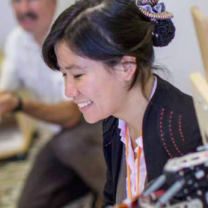
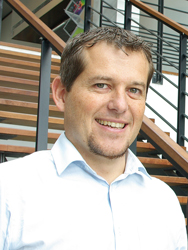
Joanna C. S. Santos is an Assistant Professor at the University of Notre Dame's Department of Computer Science and Engineering. She leads the Security and Software Engineering research lab (S²E) and focuses on Software Engineering, Security, and Program Analysis. Her work bridges empirical studies with practical tool development. PhD in Computing and Information Sciences (Rochester Institute of Technology) M.Sc. in Software Engineering (Rochester Institute of Technology) B.Sc. in Computer Engineering (Federal University of Sergipe) Her research spans Software Security (vulnerability detection, ReDoS), Code Generation (LLM evaluation, benchmarking), and Program Analysis (taint tracking, call graphs). Recent articles show a strong focus on LLM-generated code quality and quantum computing applications. Scientific Awards : 2023 - Distinguished Reviewer (ESEC/FSE) 2020 - Research Pitch Winner (JOBS @MICRO) 2017 - Best Paper (ICSA) 2014 - CAPES Scholarship 2013 - ERBASE 3rd Place She actively contributes to conference committees (OOPSLA, ICSE, SCAM) and collaborates across institutions. Her lab S²E drives research in secure software development and empirical cybersecurity validation.
Sidonie Christophe is a Senior Researcher (Directrice de Recherche, DR1) at UMR LASTIG, a joint research unit of Université Gustave Eiffel, IGN-ENSG, and EIVP. She serves as co-director of the LASTIG laboratory and leads research in geovisualization, map design, and interactive spatial data exploration. She also holds a part-time advisory role (60%) at the French Ministry of Higher Education and Research in the domain of digital technology, environment, climate, and sustainable urban development. PhD in Geographic Information Sciences Senior Researcher, DR1, MTECT Co-Director, LASTIG Laboratory (since 2021) Former Team Leader, GEOVIS (Geovisualization, Interaction, and Immersion) Advisor, Environment and Urban Climate, French Ministry of Higher Education & Research Her research centers on innovative methods for 2D/3D and nD geospatial data visualization, with a focus on enabling spatio-temporal understanding through visual and non-visual spatial thinking. Her work integrates principles from geographic information science, human-computer interaction, and computer graphics. Key areas include urban climate visualization, tactile and augmented reality for accessibility, expressive cartographic rendering, and cognitive aspects of map design. She investigates how aesthetic and semiotic choices impact map comprehension and utility. The 15 most recent publications reflect a strong trend in interactive and accessible geovisualization, particularly for urban and environmental applications. Topics include neural map style transfer, 3D urban climate analysis, tactile maps for the visually impaired, augmented reality in geography, and visual analytics for crisis and climate data. There is a consistent emphasis on user-centered design, interdisciplinary integration, and the development of tools for decision-making under uncertainty. Scientific Recognition and Service: Invited speaker at major conferences (IEEEVIS, AGILE, ICC, CPGIS) Co-organizer of international workshops (e.g., GeoVIS, ISPRS AR/VR sessions) Leader of national research projects (ANR ORACLES, ANR ACTIVmap, ANR ECOCIM) Recipient of international mobility grants (AMICI I-SITE FUTURE) Contributor to national glossaries and research strategy (e.g., French photogrammetry glossary) Advising and Grants: Sidonie Christophe actively supervises PhD students and postdoctoral researchers, including Markie Jiang, Maria-Jesus Lobo, and Alexandre Mielniczek. She leads or participates in multiple funded research projects such as ANR ORACLES (marine flooding visualization), ANR ACTIVmap (tactile 3D maps), and ANR ECOCIM (eco-design of city information models). Her advisory role at the MESR involves shaping national research strategy in digital and environmental sciences. Labs and Research Teams: She is a core member of the GEOVIS team (Geovisualization, Interaction, and Immersion) at LASTIG and previously served as its leader. As co-director of LASTIG, she plays a central role in the leadership and strategic direction of the entire laboratory, which comprises over 100 researchers across four teams: ACTE, GEOVIS, MEIG, and STRUDEL.
Sylvain Faisan is a permanent Assistant Professor at ICube - MIV (University of Strasbourg, France). His research focuses on image processing, statistical modeling, and geometry, with applications in medical imaging and neuroscience. He works on advanced methodologies integrating machine learning and mathematical frameworks. Key Research Areas: Polarimetric image processing, retinal image registration, 3D statistical model comparison, topology-preserving image deformation, and fMRI brain mapping Technical Expertise: Bayesian inference, non-local means filtering, reversible jump MCMC algorithms, causal modeling, and constrained optimization His publications demonstrate interdisciplinary applications in optics, biomedical imaging, and computational anatomy. He contributes to developing algorithms that maintain physical admissibility and topological integrity in complex imaging problems.
Umang Mathur is an Assistant Professor at the National University of Singapore's School of Computing, where he leads the FOCS Lab and is affiliated with PLSE@NUS. His research focuses on Formal Methods , Concurrency , and Decidability in Programming Languages and Software Engineering . PhD in Computer Science from the University of Illinois at Urbana-Champaign (advisor: Prof. Mahesh Viswanathan) Former Research Scientist at Facebook Inc. and Research Fellow at the Simons Institute Recipient of Google PhD Fellowship, 2024 CPP Distinguished Paper Award, 2023 ACM SIGPLAN Award, and ASPLOS 2022 Best Paper Award His recent work explores algorithmic techniques for detecting concurrency bugs , decidable program verification , and synthesis , with a focus on weak memory models, predictive monitoring, and automata-theoretic approaches. Articles span topics like causal concurrency, tree clock data structures, and probabilistic counting algorithms, reflecting interdisciplinary intersections of logic and systems research. Scientific Awards Google PhD Fellowship 2024 CPP Distinguished Paper 2023 ACM SIGPLAN Distinguished Paper 2022 ASPLOS Best Paper 2018 ESEC/FSE Distinguished Paper He advises PhD students in Formal Methods and supervises teams in the FOCS Lab. Teaching includes advanced modules on Automata Theory, Logic, and Verification at NUS.
Andrea Simonetto is a Research Professor at the Applied Mathematics Unit (UMA) , ENSTA Paris, Institut Polytechnique de Paris. His work spans optimization, control theory, and learning algorithms for large-scale and streaming data , with applications in smart grids, intelligent transportation, personalized health, and quantum computing. Current research focuses on online algorithms for time-varying optimization , personalized optimization for cyber-physical systems , and variational quantum algorithms . Past contributions include theoretical and algorithmic advances in convex/non-convex optimization, distributed optimization (robotic networks, smart grids), and signal processing for sparse reconstructions and parallel computing in particle filtering. Key application domains include renewable energy integration , quantum state preparation , and human-in-the-loop control systems . His research is published in journals like ACM Transactions on Quantum Computing , IEEE Control Systems Letters , and Automatica .
Frédéric Tran Minh is a Lecturer at Esisar – Grenoble INP-UGA and a PhD student affiliated with the CTSYS team at LCIS laboratory. His career spans academic teaching, software development, and research in formal verification for education. PhD in progress on proof assistants for teaching mathematics Former software engineer in computer-assisted surgery (8 years) Member of the APPAM ANR project Develops the Yalep proof assistant environment Research focus: Integration of Lean theorem prover and mechanized proofs into undergraduate mathematics pedagogy, emphasizing interactive learning and web-based accessibility. Teaching areas: Algebra, Analysis, C Programming, and automata theory, with innovative use of proof assistants in curricula.
Weiqiang Wen is an assistant professor at Telecom Paris , affiliated with the Cybersecurity and Cryptography (C²) team within the Information Processing and Communication Laboratory (LTCI) . His academic journey includes a PhD from ENS Lyon under Damien Stehlé (2019), postdoctoral work at IRISA (2019-2021), and a research engineer role at TII (2021). Research Interests: Weiqiang Wen specializes in post-quantum cryptography and lattice-based cryptography . His work explores the hardness of lattice problems and their implications for cryptographic security , particularly in quantum-resistant systems. He has contributed to advancements in Module-NTRU , LWE , and cryptanalysis . Publications: Wen’s research spans lattice reduction algorithms (e.g., BKZ, uSVP), cryptographic constructions (e.g., threshold ring signatures, NIZK), and quantum verification protocols. His work bridges theoretical lattice problems with practical cryptographic implementations, focusing on security reductions , zero-knowledge proofs , and key exposure attacks .
Overview ASSILA Ahlem is a Researcher-Lecturer at CESI, specializing in Human-Machine Interaction (HMI), Augmented Reality (AR), and Virtual Reality (VR). She holds a PhD in Computer Science from Université de Valenciennes (2016) and a postdoctoral position at Institut Image ARTS ET METIERS PARISTECH (2017). Her research focuses on usability evaluation, digital twin technology, and BIM-integrated XR systems. She has supervised multiple engineering and master’s projects, including AR application development for network management. Research Contributions Developed frameworks for integrating subjective/objective usability metrics using ISO standards Proposed maturity models for BIM-based AR/VR systems Explored digital twin applications in manufacturing and construction industries Education & Responsibilities Teaches computer science at all engineering levels (L1-M2) at CESI Reims, including algorithmics, HMI design, and project-based learning. Served as pilot for engineering program cycles (2017–2020). Active in organizing international conferences (e.g., HCI 2020, Flexible Automation 2018) and peer review for journals like IJISE and IEEE VR. Awards & Recognition No specific awards listed, but recognized for contributions to HCI and industry-relevant research. Advising & Grants Supervised over 10 student projects including PFEs and internships. Actively participates in jury panels for engineering thesis defenses and academic promotions across multiple institutions. Labs & Collaborations Member of the CESI Chair for Industry and Services of Tomorrow, focusing on technology integration in construction and manufacturing sectors.
Sao Mai Nguyen is an Enseignante-Chercheuse (Lecturer-Researcher) at ENSTA Paris, affiliated with the Unité d'Informatique et d'Ingénierie des Systèmes (U2IS). Her research bridges robotics, artificial intelligence, and cognitive science, focusing on cognitive developmental robotics, intrinsic motivation in learning, and human-robot interaction. She explores how robots can adapt to social and physical environments, particularly in physical rehabilitation and smart home applications. Research Interests: Nguyen’s work integrates machine learning, robotic embodiment, child psychology, and neuroscience. Key areas include human-robot interaction, assistive robotics for chronic low back pain rehabilitation, activity recognition in smart homes using IoT sensors, and intrinsic motivation-driven learning frameworks. Recent Contributions: Her 2024 HDR thesis on reinforcement and imitation learning for sequential tasks underscores her expertise in strategic learning systems. Recent publications address bio-inspired robotics models, hierarchical reinforcement learning, and benchmark environments like 'Open the Chests' for activity recognition. Collaborations include projects like the R-COOL randomized trial for robot-coached physical exercises. Labs & Teams: She contributes to the U2IS lab, advancing interdisciplinary research in AI and robotics. Her work spans experimental platforms for sensorimotor learning and healthcare robotics applications.
Raphaël Troncy is an Assistant Professor at EURECOM's Data Science Department, specializing in Semantic Web technologies, Knowledge Graphs, and Natural Language Understanding. He teaches courses like 'Human-computer interaction for the Web' and 'Semantic Web technologies.' His research focuses on semantic data integration, knowledge graph applications, and recommender systems. Notable projects include DOREMUS (musical work graph), entity2rec (knowledge graph-based recommendations), and 3cixty (city exploration knowledge bases). He actively contributes to semantic web challenges and conferences, winning multiple awards including the 2018 Best Poster Award at ESWC and 2015 First Prize in the Semantic Web Challenge. Troncy's work spans cultural heritage digitization (e.g., Odeuropa olfactory data modeling), cybersecurity anomaly detection (NORIA-O ontology), and interdisciplinary projects like SILKNOW's silk textile knowledge graph. He leads development of tools like DAGOBAH for semantic table interpretation and KG Explorer for knowledge graph exploration. Education: Not explicitly stated in text Labs/Teams: Active in EURECOM's Data Science group, collaborating on projects involving knowledge graphs, AI, and semantic technologies
Vinkle Srivastav is a Research Scientist (Chargé de recherche R&D) at the CAMMA group, a collaborative research team between IHU Strasbourg and the University of Strasbourg, where he focuses on advancing surgical data science through novel computer vision and machine learning approaches. His work bridges the gap between clinical practice and artificial intelligence, developing methods for surgical video analysis, 3D medical imaging, and surgical workflow understanding. Education PhD in Computer Science (2018-2021) from University of Strasbourg, France. Thesis: "Unsupervised Domain Adaptation Approaches for Person Localization in the Operating Rooms." Master of Science in Computer Science (2014-2017) from Indian Institute of Technology, Delhi, India. Thesis: "Computerized evaluation of neurosurgery skills using image processing and computer vision techniques." Bachelor of Technology in Electronics and Communication (2007-2011) from Punjab Technical University, Jalandhar, India. Research Interests Vinkle's research spans surgical data science, with particular focus on multi-modal learning approaches for surgical computer vision. His work addresses fundamental challenges in medical AI including domain adaptation, self-supervised learning, and privacy preservation in clinical environments. He develops methods for 3D medical image analysis, multi-view human pose estimation in operating rooms, and surgical activity recognition. His recent work emphasizes multi-modal pretraining frameworks that leverage both visual and textual information to improve surgical workflow understanding. He also investigates scientific simulation techniques, particularly for therapeutic ultrasound applications, where physics-aware deep learning models can accelerate computational processes while maintaining accuracy. Publication Trends Vinkle's recent publications demonstrate a strong trajectory toward multi-modal surgical AI systems that integrate vision, language, and physics-based modeling. His work increasingly focuses on few-shot and zero-shot adaptation techniques to address the data scarcity problem in surgical AI. The publications reveal a progression from basic pose estimation to holistic surgical scene understanding, incorporating team communication analysis and surgical safety protocols. Scientific Awards IPCAI 2024 Best paper award (co-author) IPCAI 2019 Runner-up award in the bench-to-bedside category (co-author) Joint winner for the best paper award in the machine learning for CAI track, IPCAI 2025 Advising and Grants Vinkle actively mentors multiple PhD students and research interns at various levels, supervising thesis work on topics including large-scale multi-modality learning, holistic surgical scene analysis, and self-supervised video representation learning. He serves as Co-PI on two ITI-HealthTech projects: one focused on multi-modality learning for 3D medical imaging (2023), and another on physics-aware deep-learning approaches for therapeutic ultrasound simulation (2024). Laboratories and Teams Vinkle is a key member of the CAMMA research group at IHU Strasbourg, a collaborative team focused on computer-assisted medical modeling and analytics. He co-organizes the Surgical Data Science Summer School, an interdisciplinary program that brings together clinicians and computer scientists to develop AI-driven solutions with clinical impact. His work involves close collaboration with surgical teams at University Hospitals of Strasbourg and international partners including Johns Hopkins University and Technical University of Munich.
Ludovic Saint-Bauzel is a lecturer at Sorbonne University and head of the IRIS team at the Institute of Intelligent Systems and Robotics (ISIR). His work focuses on improving physical human-robot interaction for individuals with autonomy loss through disability or aging. Specializes in computational models of disabilities Develops user intent detection through sensor fusion Active in IFRH and Fedrha federations IEEE and True Life Lab member Research interests His research centers on Human-robot physical interaction with applications in Elderly care , Smart-walker development, and Walking exoskeleton systems. Key methodologies include: Sensor fusion (depth cameras, force sensors, IMUs) Adaptive robot control systems Pathological movement modeling Motor intent prediction algorithms Article trends show consistent focus on haptic communication (6/15), assistive robotics (9/15), and sensorimotor interaction (11/15) across 2013-2022 publications. Laboratory involvement : Leads the IRIS team at ISIR, part of Fedrha (Federation for Research on Disability and Autonomy) with 50+ research teams.
Ana Bumber is a Doctor of English Studies currently serving as an ATER (temporary teaching and research associate) at Université Paul Sabatier Toulouse 3, assigned to IUT A. She is affiliated with the Department of Chemical Engineering Process Engineering, though her academic work is firmly rooted in English literature and language pedagogy. Her dual research focus bridges the humanities and technology, particularly in AI applications for language education and the literary artistry of Vladimir Nabokov. Her research interests include Artificial Intelligence in Language Teaching , generative AI tools , automatically generated subtitles , and intermediality in Vladimir Nabokov’s work . She explores how AI influences second language acquisition and investigates Nabokov’s intricate use of visual and sensory elements in literature. Her work often intersects digital pedagogy with modernist literary analysis. The recent trends in her publications show a strong emphasis on AI in education , particularly tools like HeyGEN for influencing L2 motivation, and the evaluation of AI-generated captions in ESP contexts. Simultaneously, she continues to publish on Nabokov’s aesthetic empiricism, train imagery, nature writing, and portraiture, reflecting a sustained scholarly engagement with modernist intermediality. Scientific Affiliations and Service: Member, French Vladimir Nabokov Society (SFVN) – also on the board (CA) Member, International Vladimir Nabokov Society (IVNS) Member, European Association for Computer Assisted Language Learning (EUROCALL) Member, Modern Language Association (MLA) Member, Society for Modernist Studies (SEM) Organizing member, Pedagogical Exchange Days (Lairdil) Webmaster team member for academic website Ana Bumber is actively involved in academic mentoring and pedagogical innovation, though no formal advisees are listed. She has organized pedagogical events and contributed to curriculum development through active learning strategies such as 'Job Dating' and peer feedback workshops. She has not received any explicitly mentioned grants or scientific awards in the provided text. Her work is supported through institutional affiliations and collaborative research networks, particularly in Nabokov studies and AI-enhanced language teaching. She participates in interdisciplinary seminars such as the EFELIA-ANITI cycle on AI and Humanities, indicating a strong commitment to bridging technological and humanistic scholarship.
Role & Affiliation: Jean-Christophe BACH is an Associate Professor at IMT Atlantique's Computer Science department since 2015. He leads the PASS research group (IRISA) and focuses on software security, model-driven engineering, and cybersecurity applications. Previously, he held roles as a teaching assistant (ATER) at University of Lille (2014–2015) and completed his PhD on model transformations at Inria/LORIA under Pierre-Étienne Moreau and Marc Pantel (defended 2014). Research Interests: His work centers on improving software trustworthiness through 'security by design' principles. Key areas include model federation, formal methods for software verification, transformation traceability, and cybersecurity in industrial systems. He actively contributes to frameworks like Openflexo and PAMELA, emphasizing practical tooling for secure systems engineering. Teaching & Education: Teaches advanced topics such as object-oriented design, functional programming (OCaml), concurrency modeling, and cybersecurity. Supervises student projects on Openflexo, game development, and network security (IPv6/Tor). Courses include INF301, INF447, and others. Labs & Collaborations: Engaged with IRISA and Lab-STICC research centers. Collaborates on projects like the European Space Agency's SSE4Space framework for secure space missions and the Quarteft project (aerospace software). Active in open-source initiatives and scientific mediation for K-12 programming education.
Brigitte Pientka is a Full Professor in the School of Computer Science at McGill University, where she leads the Computation and Logic group. She received her PhD from Carnegie Mellon University in 2003, and previously studied at the University of Edinburgh and Technical University of Darmstadt. Her educational background includes: PhD from Carnegie Mellon University (2003) Studies at the University of Edinburgh Studies at Technical University of Darmstadt Dr. Pientka's research focuses on developing theoretical and practical foundations for building and reasoning about reliable, safe software systems. She combines theoretical research on logical foundations of computer science in programming languages and verification with system building. Her work spans logics (classical and non-classical), type theory, theorem proving, logic and functional programming, and logical frameworks. She has made significant contributions to the field of contextual types and mechanized metatheory. Her recent publications demonstrate a strong trend toward modal type theory, contextual types, and session types, with applications to functional programming, verification, and meta-programming. She has made significant contributions to the Beluga system, which explores how to combine functional programming with dependently-typed, higher-order data specified in the logical framework LF. Her work often bridges theoretical foundations with practical implementations for mechanized reasoning. Dr. Pientka has received several notable awards: Humboldt Fellowship Test of Time Award @ PPDP'18 for 'Programming with proofs and explicit contexts' Best student paper award at ICLP'03 She is actively involved in mentoring and academic service, having served as PC Chair for ICFP'24, CPP'23 and CPP'24, and as General Chair for POPL'20. She is an Executive Editor of Logical Methods in Computer Science and serves on the editorial boards of the Journal of Functional Programming and ACM Transactions of Computational Logic. She leads the Computation and Logic group at McGill University, which focuses on developing theoretical and practical foundations for reliable software systems through research in logical frameworks, type theory, and programming language design.