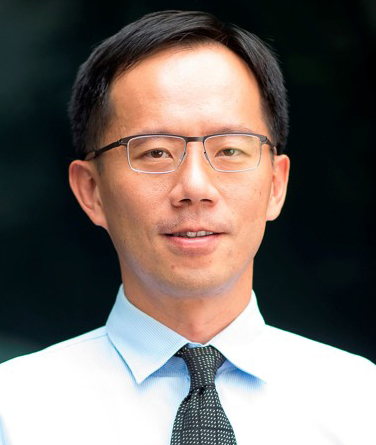
CHENG Shih-Fen is an Associate Professor of Computer Science at Singapore Management University (SMU) and a Principal Research Scientist at Amazon. He holds a PhD in Industrial and Operations Engineering from the University of Michigan and a BSE in Mechanical Engineering from National Taiwan University. His research focuses on modeling and optimization of complex systems in urban computing, decision-making, and transportation, with notable contributions to taxi fleet management, ride-hailing systems, and sustainable logistics. Research interests include Artificial Intelligence , Decision Optimization , Machine Learning , and Urban Sustainability . Notable achievements include prestigious awards from CIKM, AAMAS, and INFORMS. He has advised students such as Qian Shao and Pang Jin Tan, who received SMU Presidential Doctoral Fellowships. Key contributions include the Driver Guidance System (DGS) for taxis and patented taxi demand prediction models. Publications span top venues like IJCAI, AAAI, and Transportation Science. He is a Senior Editor of Electronic Commerce Research and Applications and actively contributes to professional communities like INFORMS and AAAI.
Lynne Grewe serves as a Professor in the Department of Computer Science at California State University, East Bay, where she maintains active research and teaching responsibilities with current office hours and contact information. Her work bridges theoretical computer science with real-world applications across healthcare, education, and emergency response domains. Her research portfolio centers on three interconnected thrusts: Medical Technology : Development of computer vision systems for stroke detection through facial pattern analysis (StrokeChange), infrared-based disease monitoring, and assistive navigation tools for the visually impaired (Seeing Eye Drone) Educational Innovation : Creation of multimodal systems like ULearn that detect student frustration using deep learning, alongside community college partnerships to broaden participation in computing Sensor Fusion Applications : Integration of multi-modal data for disaster response, infrastructure monitoring, and mobile health platforms using advanced machine learning techniques Publication analysis reveals consistent evolution toward real-time, deployable systems—particularly mobile health applications and educational tools—while maintaining foundational work in sensor fusion. Her 2020-2024 output shows increasing emphasis on healthcare applications (40% of recent work) and educational technology (25%), often combining computer vision with mobile platforms. Grewe demonstrates significant commitment to educational equity through the Faculty in Residence program, collaborating with community colleges to prepare underrepresented students for computing careers. Her Google partnership and focus on practical applications indicate strong industry engagement, though specific grant details aren't documented in source materials. Current projects suggest ongoing expansion into in-situ health monitoring and AI-driven educational support systems.
Pedro Orvalho is a Research Associate in the Department of Computer Science at the University of Oxford, working with Professor Marta Kwiatkowska on the FUN2MODEL ERC project. His research bridges theoretical computer science with practical applications in software engineering and programming education. His educational background includes: PhD in Computer Science and Engineering (2025) from Instituto Superior Técnico, Universidade de Lisboa MSc in Information Systems and Computer Engineering (2019) from Instituto Superior Técnico BSc in Information Systems and Computer Engineering (2017) from Instituto Superior Técnico Orvalho's research spans Artificial Intelligence, Automated Reasoning, Formal Methods, and Program Repair, with significant contributions to programming education tools. His work integrates formal methods with machine learning techniques to develop novel approaches for program verification and repair, particularly focused on introductory programming assignments. His scientific achievements have been recognized with prestigious awards: Vencer o Adamastor (VoA) - 3rd Edition (2025) ELISE Mobility Grant (2024) COST Travel Grant (2022) Excellence in Teaching IST Awards (2021 and 2024) ACM SIGSOFT Distinguished Paper Award (ESEC/FSE 2021) FCT PhD Scholarship (2020-2024) With five years of teaching experience at Instituto Superior Técnico, Orvalho has developed educational tools like GitSEED and MENTOR that bridge his research with practical classroom applications. His research has been supported by multiple grants including the ERC FUN2MODEL project and FCT PhD Scholarship, demonstrating both academic and practical impact. He maintains active collaborations with researchers from Czech Technical University in Prague, Carnegie Mellon University, and industry partners like OutSystems, contributing to an international research network focused on software reliability and educational technology.
Anne McLaughlin is a Professor in the Department of Psychology at North Carolina State University, affiliated with the College of Humanities and Social Sciences. She directs the LACElab (Learning, Aging, and Cognitive Ergonomics), focusing on human factors, cognitive aging, and technology usability. She holds a Ph.D. in Engineering Psychology from Georgia Tech (2007) and has been at NC State since 2007. Her education includes a B.A. in Psychology and English Literature from Trinity University (1998), an M.S. in Engineering Psychology from Georgia Tech (2003), and her Ph.D. from the same institution (2007). Her research integrates cognitive science principles with real-world applications, emphasizing aging populations and technology design. Key research interests include cognitive aid design, augmented/virtual reality applications, human-robot interaction, and medical device usability. Recent work explores diminished reality techniques for attention management, trust dynamics in autonomous systems, and veterinary patient safety culture. Her articles highlight trends in human-centered technology development, particularly addressing individual differences in attention control, automation trust, and healthcare system optimization. She advocates for inclusive design principles to enhance older adults' engagement with technology and improve medical screening accessibility. McLaughlin’s work bridges academic research and practical implementation, with collaborations in healthcare, robotics, and educational technology. Her lab’s focus on aging-related challenges underscores her commitment to improving quality of life through human-centered solutions.
Asta Halkjær From is a postdoctoral researcher in the Department of Computer Science at the University of Copenhagen, affiliated with the Software, Data, People & Society (SDPS) section under Dmitriy Traytel. She previously completed her PhD at DTU Compute from 2020 to 2023, focusing on formalized deduction methods in computational logic. She holds a Master’s and Bachelor’s degree from DTU in Computer Science and Software Technology, respectively, with a specialization in Artificial Intelligence and Algorithms. Her research lies at the intersection of formal logic and computer science, particularly in automated reasoning, proof assistants (Isabelle/HOL and Lean), and mechanized metatheory. She has contributed extensively to synthetic completeness proofs, tableau systems, and verified theorem provers. Her work emphasizes formal verification of logical systems, including epistemic logic, hybrid logic, and first-order logic, with a focus on soundness and completeness. The recent publications highlight a consistent trend: the mechanization of logical foundations in proof assistants. Her work bridges theoretical logic with practical verification tools, enabling reliable automation in theorem proving. She has developed and verified provers, explored axiomatic systems, and advanced the methodology of synthetic completeness, often leveraging Isabelle/HOL’s framework. Distinguished Paper Award, CPP 2023 DTU Young Researcher Award DTU Travel Grant (Executive Board Recognition) Otto Mønsted Fonden Travel Grant She has supervised BSc and MSc theses, special courses, and research projects at DTU, and currently teaches Software Development for Digital Health . She has served on program committees for CPP, ITP, and Dalí workshops and has reviewed for journals including Journal of Automated Reasoning and Journal of Logic and Computation . She has also participated in international research visits, including at VU Amsterdam. She is actively involved in building tools for formal reasoning and maintains a personal website with resources, including an Isabelle snippets generator and bibliography tools. Her work continues to advance the foundations of formal logic through mechanized proofs and practical automation.
David B. Larson is Professor of Radiology (Pediatric Radiology) at Stanford University School of Medicine and Director of the Stanford Radiology AI Development and Evaluation (AIDE) Lab. He is also Associate Chief Quality Officer for Improvement at Stanford Health Care and co-founder of the American College of Radiology's Learning Network. MD and MBA from Yale University (2002) Pediatric internship and radiology residency/fellowship at University of Colorado Health Sciences Center (2003-2008) Board-certified in Pediatric Radiology and Diagnostic Radiology His research focuses on sociotechnical healthcare systems , radiology quality improvement , and AI implementation . Key projects include optimizing CT radiation dose, developing EMM frameworks for AI monitoring, and establishing ACR accreditation standards for radiology AI. Recent publications analyze diagnostic certainty frameworks , clinical history completeness , and radiation dose harmonization . His work emphasizes interdisciplinary collaboration through programs like the Radiology Improvement Summit and the Stanford Medicine Center for Improvement. He actively mentors postdoctoral researchers and leads initiatives in pediatric imaging , clinical decision support systems , and medical AI ethics . Current teaching includes graduate medical education courses in radiology and AI applications.
Danica M Ommen is an Associate Professor at Iowa State University, specializing in forensic statistics and computational methodologies. Her research bridges machine learning, handwriting analysis, and source identification frameworks. Education: Ph.D. in Computational Science and Statistics (2017), M.S. in Mathematics (2014), B.S. in Mathematics (2012), all from South Dakota State University. Affiliations: Chair of the OSAC Statistics Task Group; Vice-Chair of the ASA Advisory Committee on Forensic Science. Her work focuses on statistical modeling for forensic evidence , particularly in handwriting identification, aluminum powder analysis, and digital device forensics. Recent publications explore interpretable deep learning, synthetic data anchoring, and ensemble methods for likelihood ratios. The 15 most recent articles (2023–2025) span forensic machine learning, handwriting kinematics, multi-camera smartphone identification, and Bayesian frameworks. Keywords include Forensic Science , Machine Learning , and Computational Statistics , with subfields like Score-Based Likelihood Ratios and Smartphone Forensics .
Dr. Francisco Queiroz is a Lecturer in Digital Innovation Design at the School of Design, University of Leeds. He holds a PhD in Design from the Pontifical Catholic University of Rio de Janeiro, Brazil, and has academic qualifications in Digital Games Design (MA) and Advertising (BA). His research focuses on scientific software usability, immersive technologies, and gamification applied to citizen science and civic engagement. Key research interests include: Scientific software user experience (UX) Color psychology in digital environments Design for cognitive performance enhancement VR applications in education and design Gameful interfaces for scientific practice Recent work explores color's impact on cognitive tasks in virtual reality, digital material design for education, and bridging gaps between academia and industry through game-based methodologies. His editorial role with the Information Design Journal (2020–2022) reflects his commitment to advancing design communication standards. Teaching focuses on creative campaign development and digital innovation in advertising, integrating emerging technologies like AR/VR into design pedagogy.
Shannon Cromwell serves as an Extension Professor with Utah State University Extension in Sanpete County, specializing in youth development and family studies. Her work spans multiple areas including 4-H youth programs, relationship education, nutrition education, and STEM engagement for families. She is actively involved in community outreach programs that connect schools, families, and communities through evidence-based educational initiatives. Extension Professor, Sanpete County, Utah State University (2011-present) Specializes in Home and Community programs with focus on youth development Coordinates 4-H programs and family relationship education initiatives Dr. Cromwell holds an MA in Human Development and Family Studies from the University of Missouri (2010) with a focus on Family Studies, and a BS in Family Studies and Human Services from Kansas State University (2000). She has also completed numerous professional certifications including Youth Mental Health First Aid (2019), Infant & Child CPR and First Aid (2018), and Master Food Preserver Certification (2011). Her research interests center on youth development through 4-H programs, strengthening interpersonal relationships, and integrating STEM education into family engagement activities. She has developed numerous curricula focused on social-emotional learning, healthy living, and family relationship education. Her work emphasizes practical applications that address community needs, particularly in rural settings, with a focus on improving protective factors among youth and strengthening family bonds through educational interventions. Analysis of her recent publications reveals a strong emphasis on social-emotional learning in afterschool settings, innovative approaches to family engagement in STEM education, and creative methods for strengthening family relationships. Her work consistently bridges research and practice, developing accessible educational materials that address contemporary challenges in youth development and family education. The Hidden Gems series represents a significant contribution to family education, offering practical activities that promote communication and bonding. Excellence in Afterschool Programming, Western Region Winner (2024) Faculty of the Year, Utah Association of Extension 4-H Youth Development Professionals (2023) Mid-Career Service Award (2022, 2023) Jim Kahler Excellence in Science, Technology, Engineering, and Mathematics (2021) Communications Award for Live Well Utah Blog (2016) Dr. Cromwell has received consistent recognition for her innovative programming and community impact, particularly in the areas of youth development and family education. Her work with the Hidden Gems curriculum and STEM family engagement initiatives has been particularly noted for its creativity and effectiveness. She has secured funding for various extension programs focused on youth development, relationship education, and nutrition education, with a strong emphasis on reaching rural communities through accessible, evidence-based approaches. She coordinates the Sanpete County 4-H programs and has developed several notable initiatives including the Hidden Gems Adventure Guides series, Family STEM Nights, and the Food Sense Nutrition Education Program. Her work often involves collaboration with local schools, community organizations, and other extension professionals to create comprehensive programs that address multiple aspects of youth and family well-being.
Max Willsey is an Assistant Professor in the Department of Electrical Engineering and Computer Sciences at the University of California, Berkeley, since 2024. He specializes in program optimization, leveraging techniques from programming languages, databases, and systems to develop robust and accessible compiler frameworks. His research focuses on equality saturation, E-Graphs, and the integration of Datalog with compiler optimizations. He has contributed to advancements in unifying algorithmic approaches, enabling faster and more extensible program analysis. Teaching: CS 164 (Programming Languages and Compilers, Spring 2025), CS 265 (Compiler Optimization, Fall 2024), and CS 294-260 (Declarative Program Analysis and Optimization, Spring 2024). Research Highlights: Development of the egg and egglog projects, co-organizing the EGRAPHS workshop, and leading the EGRAPHS Community for e-graphs researchers. His recent articles highlight trends in unifying traditional hash joins with worst-case optimal joins, applying equality saturation to diverse domains like Datalog and tensor graph optimization, and advancing E-Graphs for program synthesis and formal verification. Scientific Awards: SIGMOD Record Research Highlight, 2024 MIT PL Review Selection, 2024 Distinguished Paper, OOPSLA 2021 and POPL 2021 NSF Graduate Research Fellowship Honorable Mention, 2018 Qualcomm Innovation Fellow, 2019 Service: Committee Member, PLDI 2025, POPL 2025, ASPLOS 2025 Co-organizer, EGRAPHS 2024 and 2023 workshops Interviewer, UC Berkeley Graduate Admissions Committee, 2024
Cezary Gajewski serves as an Associate Professor in the Department of Design Studies at the University of Alberta and coordinates the Art & Design Fundamentals program, with his office located in the Fine Arts Building (3-81). His academic credentials include: MFA in Sculpture from the University of Alberta (1998) MDes in Industrial Design from the University of Alberta (2003) PhD in Fine Arts, Applied Arts and Industrial Design from the Eugeniusz Geppert Academy of Fine Arts in Wrocław (2016) Gajewski's research integrates technological and traditional design methodologies with human-centered principles, focusing on 3D form, user experience, and seamless hardware-software interaction in systems like virtual reality environments. His work emphasizes the designer's role from conceptual sketch to physical prototype, translating complex user needs into intuitive, innovative products. Recent industry collaborations include the ViCCi I/II digital way-finding systems, N-Zone network gaming for Alberta's tech sector, and the Canola Bioproducts interactive exhibit for the Science Alberta Foundation. He teaches industrial design methodologies, product design, and Computer Aided Industrial Design (CAID), leveraging cutting-edge tools to bridge theoretical frameworks with practical application in design education.
James R. Wilcox is an Assistant Professor of Computer Science at the University of Washington , where he teaches courses like Introduction to Programming , Foundations of Computing , and Operating Systems . His research focuses on programming languages , formal methods , and distributed systems verification . PhD, University of Washington BS, Williams College (2013) Wilcox's research bridges software engineering and formal verification , with applications to distributed systems, concurrent programming, and tools like mypyvy for verification. He has published extensively in top venues such as POPL , PLDI , and CAV , emphasizing compositional techniques and proof assistants like Coq. He has received two Distinguished Paper Awards (PLDI 2015, PLDI 2020) and contributes to frameworks like Verdi for verifying distributed systems. Outside academia, he is a baritone in Seattle's choral ensembles and an avid long-distance cyclist.
Dr. Bing Li is an Assistant Professor in the Department of Automotive Engineering at Clemson University, where he directs the AutoAI Lab. His research focuses on Spatial Intelligence for safer/assistive mobility and robots in dynamic environments, covering areas such as 3D vision, SLAM, deep learning, and human-centered AI. His work bridges fundamental AI research with practical applications in transportation and accessibility, particularly developing technologies to aid individuals with visual impairments. Dr. Li actively mentors students across academic levels and leads educational initiatives including summer programs for teenage drivers learning intelligent vehicle operation. Recent publications demonstrate a strong focus on 3D scene understanding, multi-sensor fusion, and assistive navigation systems. These works leverage cutting-edge deep learning approaches to solve complex perception challenges in autonomous systems and accessibility technologies.
Judith Ellen Fan is a Courtesy Assistant Professor at Stanford University, holding primary appointment in the Department of Psychology and courtesy appointments in the Graduate School of Education and the Department of Computer Science. She directs the Cognitive Tools Lab, focusing on how humans use physical representations to learn, communicate, and solve problems through interdisciplinary approaches combining cognitive science, computational neuroscience, and AI. Her research interests span cognitive tool development, data visualization literacy, educational technology, and developmental psychology. Key areas include understanding how drawing and sketching shape memory and conceptual representation, evaluating machine comprehension of visual and physical concepts, and designing human-centered AI systems. Recent work emphasizes benchmarking human and machine abilities in physical dynamics understanding (Physion++), evaluating data visualization literacy (CHART-6), and analyzing large-scale drawing datasets (THINGS-drawings). These projects bridge cognitive science with AI to advance both fields through shared benchmarking frameworks. Judith has received funding for projects on cognitive tool development and human-AI collaboration. Her lab collaborates across disciplines, emphasizing empirical studies with human participants and algorithmic benchmarking. Notable datasets include the 1,854-concept THINGS-drawings collection and Physion++ physical prediction benchmarks.
Siena Sofia Magdalena Anstis is a Doctoral Research Fellow at the University of Oslo’s Faculty of Law and the Norwegian Centre for Human Rights. She specializes in international law, human rights law, migration, and law and technology, with a focus on transnational repression and government surveillance of civil society. Anstis holds advanced degrees including an LL.M. from the University of Cambridge, a BA/LLB from McGill University, and a BA in Journalism and Anthropology from Concordia University. Her research critically examines the legal frameworks governing transnational repression, cyber espionage, and the obligations of states to protect human rights defenders. She has contributed to prominent journals such as the International & Comparative Law Quarterly , Temple Law Review , and Computer Law & Security Review . Anstis also engages in teaching, offering courses like HUMR4504 (Human Rights in Practice) and HUMR5140 (Human Rights in International and National Law). Her work bridges academic research with practical advocacy, including collaborations with organizations like the Citizen Lab and Global Information Society Watch. She has authored reports on digital transnational repression in Canada and the challenges faced by environmental human rights defenders in Southeast Asia. Anstis’ interdisciplinary approach integrates legal analysis with technological, political, and sociological perspectives to address contemporary global challenges.