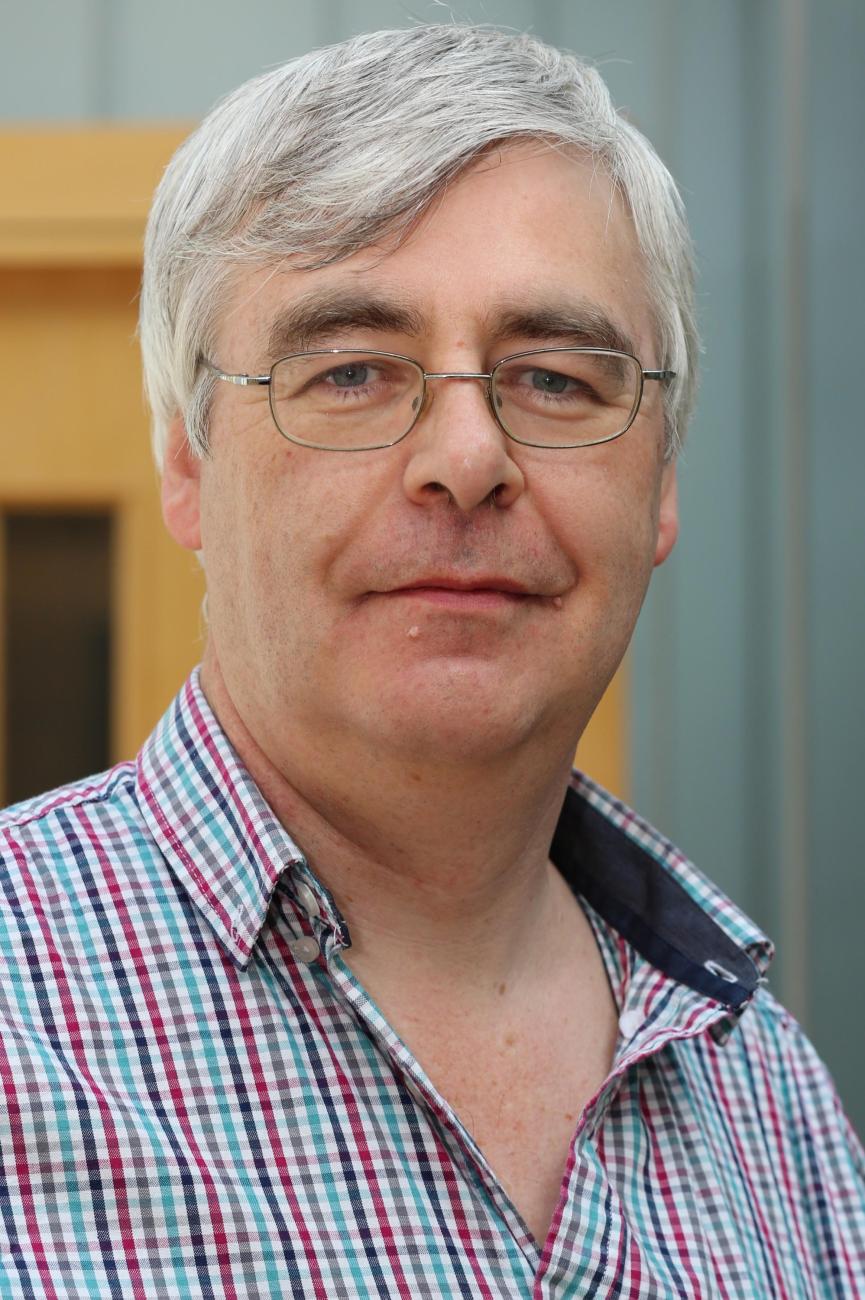
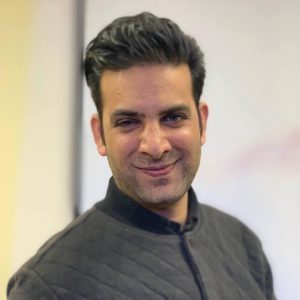
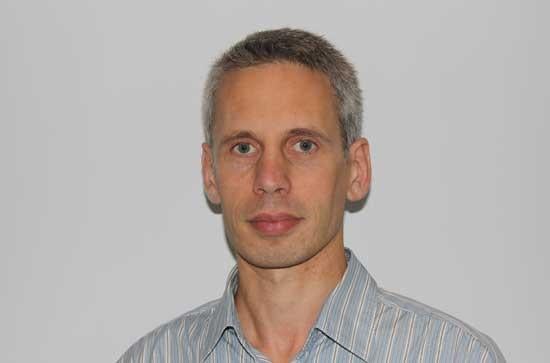
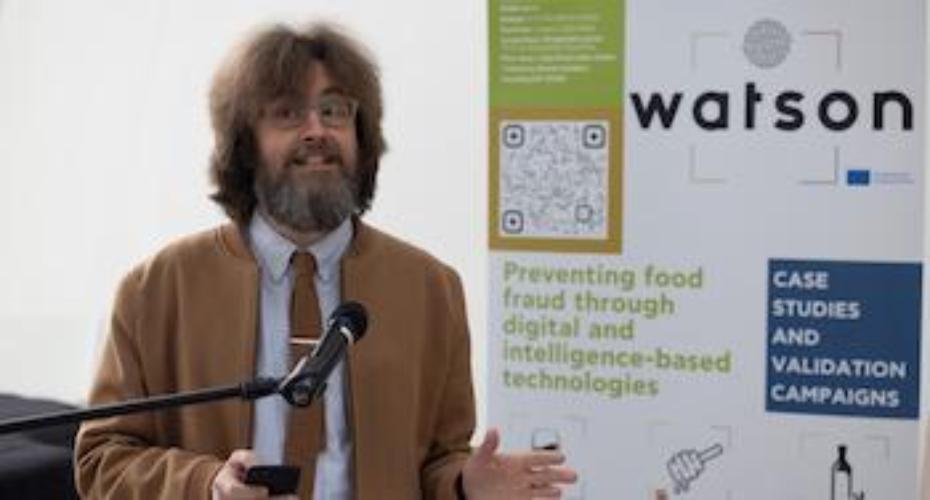
Dr. Jennifer Foster is an Associate Professor and Associate Dean for Teaching and Learning in the Faculty of Engineering and Computing at Dublin City University. She specializes in Natural Language Processing (NLP) and AI, with a focus on language parsing, sentiment analysis, and Irish language technology. She leads projects funded by Science Foundation Ireland (SFI) and other agencies, supervising 11 PhD students to completion and currently mentoring four more. Her research spans NLP applications including grammar checking, question answering, and neural language model evaluation. She teaches NLP courses for Data Science and Computing programs, as well as introductory Python programming. Foster has authored over 100 peer-reviewed publications and serves on conference program committees, including the Association for Computational Linguistics executive board (2016-2019). Recent work includes developing gaBERT, an Irish language model, and exploring machine-generated story coherence. Her contributions to resources like the Irish Universal Dependencies Treebank and the GenERRate error-generation tool highlight her commitment to advancing NLP for under-resourced languages.
Professor Cathal Gurrin is the Head of the ADAPT Research Centre and a Full Professor in the School of Computing at Dublin City University. His research focuses on lifelog retrieval and video retrieval systems, with recent work on multimodal understanding and interactive retrieval interfaces. He has led the development of several retrieval systems showcased at the Video Browser Showdown and Lifelog Search Challenge. Recent publications demonstrate strong focus on multimodal datasets (CASTLE), EEG-based behavior analysis (DERCo), and next-generation video retrieval interfaces (VideoEase, VEAGLE).
Dr. David Sinclair is an Associate Professor and Year Head in the School of Computing at Dublin City University, affiliated with the Dependable Systems, Software Engineering, and Security research groups. His research spans formal methods, distributed systems, real-time systems, and AI applications in strategic games. Teaching responsibilities include foundational and advanced courses: CSC1018 Logic CSC1048 Computability & Complexity CSC1098 Compiler Construction CSC1141 Concurrent Programming CSC1049 Third Year Project supervision His publications demonstrate strong focus on real-time systems, motion prediction, and immersive technologies, with recent work exploring AI-driven virtual environments and light field processing. Research consistently addresses computational efficiency and formal verification challenges.
Dr. Noel Murphy is an Associate Professor and Head of the School of Electronic Engineering at Dublin City University (DCU). He has held various leadership roles, including Associate Dean for Education in the Faculty of Engineering and Computing (2005-2007), Head of School (2007-2012, 2015-2018, and returning in 2021). He has been teaching at DCU since 1986 and has contributed extensively to academic governance, including roles on Academic Council and Governing Authority committees. Dr. Murphy holds a BA (Mod) in Theoretical Physics from Trinity College Dublin (TCD), a PhD from DCU (2003) on Information Theory models for Biological and Artificial Vision, and a part-time MA in Pure Mathematics from Maynooth University (2015). His research focuses on: Biological and Artificial Vision: Including Information Theoretic models and the work of Stephen Grossberg. Secure Data Analytics: Particularly leveraging SGX-enabled applications for data ownership control. Algebraic Number Theory: Exploring elliptic curves and Apéry's Constant. IoT and Edge Computing: Focusing on secure processing for IoT applications. Human Sensory Augmentation and Multimedia Information Retrieval. In addition to his teaching and leadership roles, Dr. Murphy has supervised numerous PhD and Master's students to completion. He has secured funding as Principal Investigator or co-Investigator on national and EU-funded research projects. He is affiliated with DCU's Entwine Research Centre. Outside academia, Dr. Murphy is Honorary Secretary of the Irish Light Aviation Society, holds a Private Pilot’s License, and is involved in aircraft restoration projects, including a 1940 Piper J5 and a Vans RV-8.
Michael Hinchey is a Professor at the University of Limerick, serving in the Department of Computer Science & Information Systems and as a core member of Lero – the Research Ireland Centre for Software. His research focuses on software engineering, autonomic computing, and evolving critical systems with a recent emphasis on ethics in computing and hyperspectral imaging applications. He has contributed extensively to interdisciplinary research, including system specification methodologies, formal methods, and modularization strategies. His work intersects technical innovation with societal impact, addressing challenges in critical infrastructure systems and AI ethics. Over 309 research outputs since 1993 reflect his prolific contributions to both academic and applied domains. As an editorial contributor and IEEE leader, Hinchey bridges research, education, and industry through collaborative initiatives. His role in Lero underscores his commitment to advancing software engineering practices and fostering cross-disciplinary innovation.
Dr. Vimal Kumar Kumar serves as a Research Fellow at the University of Limerick's Department of Computer Science and Information Systems, affiliated with Lero – the Irish Software Research Centre. His academic career includes prior faculty positions as Assistant Professor at Jaypee University of Information Technology (2009-2022) and Lecturer at SRM Institute of Science and Technology (2007-2009), followed by a Postdoctoral Researcher role at University College Dublin (2022-2023). His educational background includes: PhD in A Novel sense based Hindi to Tamil machine translation system from Jaypee Institute of Information Technology (2019) Masters from Anna University Chennai (2005-2007) Bachelor from PSG College of Technology (2000-2004) Dr. Kumar's research centers on Natural Language Processing with specialized focus on machine translation for Indian languages (Hindi, Tamil), text summarization, and sentiment analysis. He extends this work into computer vision applications for medical imaging and activity recognition, plus deep learning implementations for IoT-based agricultural monitoring. His methodology frequently addresses challenges in low-resource language processing and develops optimized neural network architectures for mobile deployment. Analysis of his publication trends reveals consistent interdisciplinary innovation, particularly in healthcare applications (retinal disease detection), agricultural technology (crop yield prediction), and social media analytics. His work demonstrates strong emphasis on practical AI solutions for resource-constrained environments and underrepresented linguistic communities, often leveraging generative models and contextual embeddings. Dr. Kumar actively contributes to Lero's research initiatives, aligning his technical work with UN Sustainable Development Goals through software solutions addressing global challenges in health, food security, and digital inclusion.
Dr. Ruth Melia is an Associate Professor in Clinical Psychology at the University of Limerick, holding concurrent roles in the Department of Psychology, Data-Driven Computer Engineering Research Centre, and Health Research Institute. She also serves as Clinical Lead and Senior Clinical Psychologist with the HSE Mid West. Her expertise spans digital mental health, suicide prevention, and mobile health (mHealth) interventions. Dr. Melia holds advanced degrees from Trinity College Dublin (Masters in Applied Psychology, Doctorate in Clinical Psychology) and Maynooth University (undergraduate degree), alongside a Masters in Healthcare Management and Leadership. Her research focuses on leveraging technology to enhance mental health outcomes, including AI-driven suicide prevention strategies and mobile app-based interventions. She leads the SafePlan Research Project, funded by the National Office for Suicide Prevention, and has contributed to national policy through roles on the Sharing the Vision Digital Mental Health Specialist Group and as Chair of Jigsaw’s Quality and Safety Committee. Dr. Melia’s work aligns with UN Sustainable Development Goals addressing mental health and well-being (SDG 3). Her recent studies include analyzing crisis text messaging data during the pandemic, evaluating mobile safety planning apps for youth, and investigating suicide risk factors among military personnel. She is a two-time Fulbright Scholar (2016–2017 at Stanford University’s Suicide Prevention Research Lab and 2022–2023 via the HRB HealthImpact Award). Professional roles include editorial work for Clinical Psychology Today and clinical supervision across primary care, CAMHS, and disability services.
Abdul Wahid is a post-doctoral researcher at the e-Governance Unit of the Insight Centre for Data Analytics, University of Galway. His work bridges Machine Learning , Computer Vision , and Smart Manufacturing , with a focus on creating semantic ontologies for virtual worlds (metaverse). Previously, he contributed to digital twin technology at Huawei Research Ireland and specialized in Deep Learning at Chonbuk National University’s Software Engineering Lab. Current: Research Associate, Insight Centre for Data Analytics, University of Galway Former: Research Development Intern, Huawei Research Ireland Former: Associate Researcher, Chonbuk National University His research explores predictive modeling for real-world process simulation and Internet of Things (IoT) integration in urban environments via the ENABLE project .
Mark Southern is a Researcher affiliated with the School of Engineering and the Dairy Processing Technology Centre (DPTC) at the University of Limerick. He holds a PhD in Virtual Enterprise from Nottingham Trent University, focusing on mobile ICT technologies for collaborative engineering. His expertise spans SME manufacturing, process optimization, medical devices, and smart manufacturing systems. Southern has contributed to advancing knowledge in defect detection via deep learning, process innovation frameworks, and operational excellence in pharmaceuticals. His research interests include Manufacturing Engineering and Process Optimization Automation and Knowledge Management Smart Manufacturing Systems Medical Device Design Recent work emphasizes deep learning applications in remanufacturing, human-in-loop systems, and incremental learning for defect detection. Southern’s publications reflect a focus on bridging technology adoption gaps in SMEs and optimizing manufacturing processes through innovation. His involvement with the DPTC highlights engagement in dairy processing technology advancements. While no formal awards are listed, his peer-reviewed contributions demonstrate impactful research in industrial engineering and smart manufacturing trends.
Dr. Ubaid Illahi is an Assistant Lecturer in the Department of Civil Engineering & Construction at Atlantic Technological University (ATU) Sligo, Ireland. His research focuses on sustainable transportation systems, particularly electric vehicles (EVs), renewable energy integration, and decarbonization strategies. He holds a PhD and MTech in Transportation Engineering and Planning, and a BTech in Civil Engineering. Previously, he served as a Postdoctoral Research Fellow at Trinity College Dublin (Trinity’s TRACT project on emission reduction through EVs and shared mobility hubs) and as a Post-Doctoral Research Associate at the Indian Institute of Science (IISc Bangalore), focusing on gender-inclusive mobility policies. He has received awards including the Best Paper Award for gender-inclusive mobility research (2022) and research fellowships from the Indian Ministry of Education (2017-2021). Dr. Illahi teaches undergraduate modules like Transportation Engineering and Surveying, and postgraduate modules such as Transportation Planning and Traffic Control. His research interests span low-emission mobility systems, sustainable freight logistics, and policy-driven behavioral strategies for decarbonization. Recent articles highlight EV adoption challenges, shared mobility decarbonization, and infrastructure demand analysis. He actively supervises PhD students exploring sustainable transport innovations and contributes to initiatives like the Mobilities Research Group (MRG) at ATU.
Dr. Edgar Galván is an Associate Professor in the Department of Computer Science at Maynooth University, Faculty of Science & Engineering. He holds a PhD in Computer Science from the University of Essex and has held senior research roles at institutions like University College Dublin and Trinity College Dublin. His research focuses on Evolutionary Algorithms, Genetic Programming, and their applications in optimization, games, and circular economy challenges. Education : PhD in Computer Science, University of Essex MSc (Hons) in Artificial Intelligence (Research), University of Veracruz BSc (Hons) in Computer Science, University of Veracruz Research Interests : Dr. Galván pioneers work in semantic-based Genetic Programming, neutrality and locality in evolutionary algorithms, and applications in combinatorial optimization and energy systems. He also explores AI-driven solutions for the circular economy, including material reuse and policy design. Grants & Projects : REBUILD (€449,879): Reimagining buildings as material banks for the circular economy (2024–2027) VISION (€149,874): Circular business models to reduce virgin material use in construction (2023–2026) Stochastic Bio-inspired Evolutionary Algorithms (€267,000): Dynamic optimization problems (2014–2017) Awards : Top 1% of researchers in Genetic Programming (UCL, 2020) Elected member of Mexico’s National Research System (2015) Marie Curie Fellowship (Irish Research Council, 2014) Professional Activities : Chair of ACM Genetic and Evolutionary Computation Conference committees, Programme Committee member for IEEE Congress on Evolutionary Computation, and Scientific Adviser for research councils in Ireland, France, and Mexico.
Rudi Villing is an Associate Professor and Programme Director for Robotics & Intelligent Devices at Maynooth University's Department of Electronic Engineering, Faculty of Science & Engineering. He is actively affiliated with the Hamilton Institute and the Assisting Living and Learning (ALL) Institute at Maynooth University. Dr. Villing holds a first class honours B.Eng. in Electronic Engineering from Dublin City University and a PhD in Engineering from NUI Maynooth. Prior to his academic career, he spent 10 years working in the telecommunications software industry, specializing in Telecommunications Management Networks and software systems architecture. His primary research focuses on autonomous mobile robotics , systems for health and wellbeing , and applications of real-time intelligent systems . With expertise spanning system design, real-time embedded software, machine learning, autonomous behavior, signal processing, communications, and psychoperception, his work bridges theoretical research with practical applications. His recent publications demonstrate strong activity in robot vision, assistive robotics for elderly care, and computational healthcare applications, particularly in Parkinson's disease rehabilitation through the BeatHealth project. Dr. Villing's scientific contributions have been supported by funding from: Science Foundation Ireland Enterprise Ireland Irish Research Council European Commission As Programme Director, he plays a key leadership role in robotics education while maintaining an active research program. His work consistently translates theoretical concepts into practical implementations, particularly evident in his research on gait rehabilitation systems and quality control applications in food engineering. His recent publications show increasing interdisciplinary work at the intersection of robotics, healthcare, and food science. Dr. Villing is deeply involved with the Hamilton Institute and the ALL Institute, contributing to interdisciplinary research initiatives focused on intelligent systems with real-world impact. His laboratory work emphasizes practical robotics applications that address tangible human needs, especially in healthcare contexts where technology can improve quality of life for vulnerable populations.
Muhammad Yahya is a researcher at Nanjing University of Aeronautics and Astronautics with affiliations to institutions like Universiti Malaysia Terengganu and Norwegian University of Life Sciences. His work bridges optical network-on-chip (ONoC) and cybersecurity domains. H-index: 21 Total citations: 1,400+ Research Interests: Focus on photonic interconnects for manycore processors, heuristic optimization algorithms for crosstalk reduction, and security vulnerabilities in optical networks. Key projects include: Designing non-blocking optical switches with reduced power consumption Developing DPA-resistant cryptographic architectures for lightweight ciphers Creating heuristic fusion mapping algorithms combining PSO and SA Publication Trends: Recent articles (2018-2023) demonstrate expertise in optical router design , fault analysis of encryption protocols, and machine learning applications to network optimization. Technical Contributions: Invented the PSO_SA algorithm for crosstalk optimization, HoneyComb ROS reconfigurable switches, and two-domain MATLAB frameworks for computational mathematics.
Dr. Dimitrios Argyropoulos is an Assistant Professor at University College Dublin's School of Biosystems and Food Engineering, leading the Digital AgTech Lab. He holds a PhD in Agricultural Engineering from the University of Hohenheim, Germany. His roles include Programme Director of the MSc in Digital Technology for Sustainable Agriculture and Principal Investigator in EU-funded projects like WATSON (€11M Horizon Europe initiative addressing food authenticity and traceability). Education: BSc in Biosystems Engineering (Agricultural Machinery & Irrigation) from Greece, MSc in Environmental Protection & Agricultural Food Production from Germany’s University of Hohenheim, followed by a PhD in Agricultural Engineering. Postdoctoral research at Hohenheim focused on renewable energy systems and post-harvest technology. Research interests center on sustainable agri-food systems, digitization (IoT, AI, hyperspectral imaging), and precision agriculture. Key projects include Farmtopia (democratizing digital farming for small farms), Mushnomics (AI for mushroom growth monitoring), and SpectroFood (hyperspectral tech for food quality). Over 100 peer-reviewed articles span machine learning in agriculture, robotic harvesting systems, and gamification in farming education. Professional activities include roles as Associate Editor for Smart Agricultural Technology and Computers and Electronics in Agriculture , and leadership in EU projects like SMARTCHAIN and GOOD. He co-ordinates IEEE AgriFood Electronics conferences and chairs sessions on precision agriculture.
Kapal Dev is an Assistant Professor at the Department of Computer Science, Munster Technological University (MTU), Ireland, where he has been serving since 2021. He also holds the position of Funded Investigator at CONNECT, Trinity College Dublin, one of Europe's top research centers funded by Science Foundation Ireland. Previously, he was a Postdoctoral Research Fellow with the CONNECT Centre at Trinity College Dublin and worked as a 5G Junior Consultant and Engineer at Altran Italia S.p.A. in Milan, Italy. Dr. Dev's research focuses on Wireless Networks, Security and Privacy, Agentic AI, and Industry 5.0 applications. His work centers on designing effective and efficient communication network protocols for 5G and 6G networks, with emphasis on computational complexity reduction and energy efficiency improvements. His research also addresses data and model privacy preservation, which is increasingly critical with the proliferation of AI services. His recent publications demonstrate strong trends in next-generation wireless networks, particularly 6G systems, UAV communications, federated learning, quantum networking, and AI security applications. His work bridges theoretical innovation with practical implementations for industry 4.0/5.0 applications. Dr. Dev has received numerous prestigious awards including the IEEE ComSoc EMEA Outstanding Young Researcher 2022, The Tom Brazil Excellence in Research Award 2023, and membership in the Global Young Academy (GYA) 2024 (top 45 researchers worldwide). He has also been recognized with the Best workshop Paper award at IEEE WCNC 2024 and the IEEE CTSoc CCN TC Outstanding Service Award 2024. IEEE ComSoc EMEA Outstanding Young Researcher 2022 The Tom Brazil Excellence in Research Award 2023 Global Young Academy (GYA) 2024 membership Best workshop Paper award at IEEE WCNC 2024 IEEE CTSoc CCN TC Outstanding Service Award 2024 2022 Irish Research Council Research Ally Prize Dr. Dev has supervised more than 25 master's and PhD students and secured over €1.5 million in research funding as Principal Investigator for Horizon Europe MSCA Staff exchange, Erasmus+ International Credit Mobility, and Capacity Building for Higher Education projects. He actively contributes to standardization efforts as a working group member of P1954 and serves as founding chair of the IEEE ComSoc special interest group on Industrial Communication Networks. His editorial service spans numerous high-impact journals including IEEE Transactions on Communications and Nature Scientific Reports.