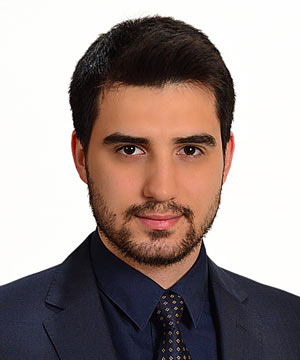
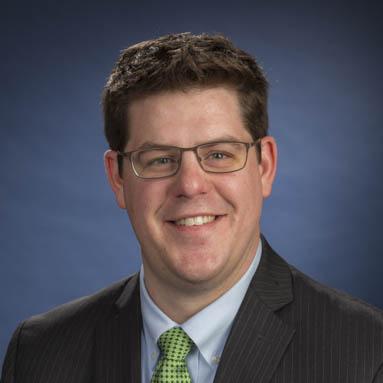
Semih Doğu is an Assistant Professor at the Department of Electronics and Communication Engineering , Faculty of Electrical and Electronics Engineering , Istanbul Technical University . His research focuses on Electromagnetic Theory , Microwave Imaging , Inverse Scattering Problems , and Antenna Design . Doctorate: Istanbul Technical University (2023) Master's: Istanbul Technical University (2017) Bachelor's: Yıldız Technical University (2015) His research interests emphasize microwave-based diagnostics, including: Microwave imaging for breast cancer detection Antenna optimization for medical and security applications Inverse problem solving in electromagnetic systems Through-the-wall imaging for surveillance Semih Doğu's recent publications demonstrate his expertise in: Neural networks for temperature monitoring in hyperthermia Ku/Ka-band antenna designs for satellite systems Microwave salinity sensing Algorithm development for improved imaging accuracy He contributes to the ITU Electromagnetics Research Group , participating in projects like: Microwave Brain and Breast Imaging Device Development Compressed Sensing for Energy-Efficient Communication Microwave Tissue Analysis
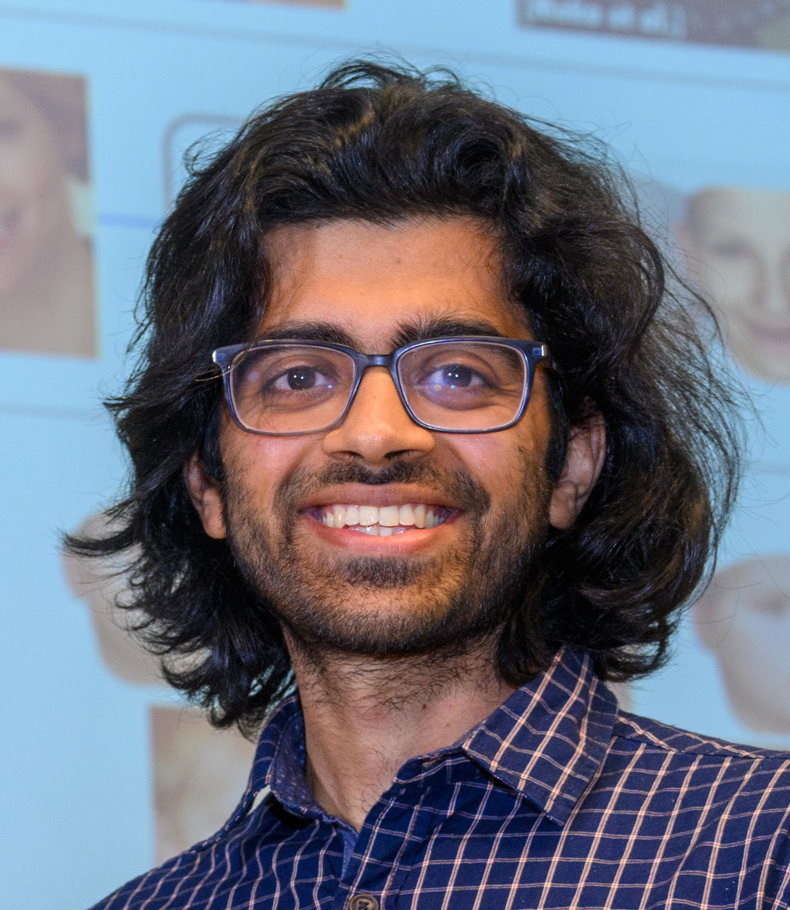
Ayush Tewari is an Assistant Professor at the University of Cambridge. Previously, he was a postdoctoral researcher at MIT CSAIL under Bill Freeman, Josh Tenenbaum, and Vincent Sitzmann, and completed his Ph.D. at the Max Planck Institute for Informatics under Christian Theobalt. His research focuses on visual perception, developing methods to infer 3D structured representations from images and videos, aiming to bridge the gap between human perceptual capabilities and machine learning systems. Key research interests include neural rendering, inverse rendering, 3D reconstruction, and generative models. Notable contributions include advancements in Neural Radiance Fields (NeRF), diffusion models for inverse problems, and human-centric perception studies. His work has been published in top venues such as SIGGRAPH, CVPR, ICCV, and NeurIPS. Recent research trends emphasize ambiguity-aware inverse rendering, stochastic inverse problem solving using diffusion models, and integrating forward models for 3D scene inference. His work on Diffusion with Forward Models (NeurIPS 2023) proposes a novel framework for solving inverse problems without direct supervision. Awards: Best Paper Honorable Mention at BMVC 2022 (VoRF: Volumetric Relightable Faces). Labs/Projects: Core contributor to the DFM (Diffusion with Forward Models) project, advancing 3D scene understanding via probabilistic methods.
Prof. Hans Westerhoff is an Honorary Professor at the University of Amsterdam’s Division of Evolution, Infection and Genomics. His research focuses on systems biology, metabolic pathways, and cellular metabolism, with contributions to understanding inflammation, microbial ecosystems, and drug metabolism. He has published over 80 articles and holds the ISSB Fellowship (2014). His work integrates computational models with experimental data to address complex biological networks and their applications in medicine and environmental science. Research interests include metabolic control analysis, systems pharmacology, and microbial bioremediation. Notable projects involve studying neuronal differentiation dynamics, arsenic contamination mechanisms, and metabolic reprogramming in cancer cells. Supervised 18 students, fostering interdisciplinary approaches to systems biology challenges. Awards & Recognition: Fellow of the International Society for Systems Biology (2014) Collaborations span diverse fields: from neurodegenerative disease modeling to environmental microbiology, emphasizing cross-disciplinary problem-solving.
Adrian Russell is a Professor of Geotechnical Engineering at the University of New South Wales (UNSW), specializing in soil mechanics, rock mechanics, and unsaturated soils. He holds a PhD in Civil Engineering (UNSW, 2005), a BE (Civil Engineering, UNSW, 1998), and a PGCert in Higher Education (University of Bristol, 2008). His research focuses on geotechnical engineering challenges in infrastructure systems, including tailings storages, foundations, and earthquake engineering. Russell collaborates extensively with industry partners such as Glencore and Wagstaff Piling to translate research into practical applications, such as soil-cement-fibre mix technologies and ore pass blockage prevention. He has led major grants, including a $1.5M project with Amira Global to prevent tailings dam failures, and holds an Australian Research Council Future Fellowship (2021–2024). Russell teaches advanced geotechnical courses like CVEN9521 and CVEN9513, emphasizing innovative problem-solving and practical applications. His research group includes 5 PhD students and 2 Research Associates, with former students now leading academic and industry roles globally. Russell invented a novel biaxial earthquake shaking table, granted patents, and advises on international guidelines for slope stability and tailings management. He frequently lectures at global conferences and serves on editorial boards such as Geotechnique and International Journal of Rock Mechanics and Mining Sciences . Key industry engagements include partnerships with mining companies to assess tailings liquefaction risks via cone penetration testing (CPT) and stability analyses. His work on unsaturated soil mechanics has been integrated into practical guidelines and training programs through the Australian Geomechanics Society. Russell also contributed to advancing understanding of particle mechanics, including fractal-based soil characterization and granular media behavior. His labs and facilities, such as the seismic shaking table, enable cutting-edge testing for infrastructure resilience under dynamic loads.
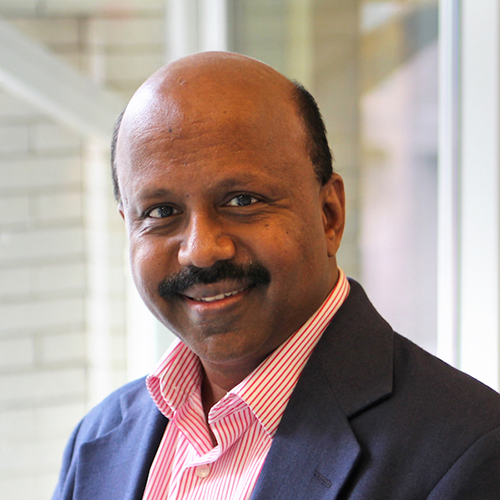
Dr. Raja Sooriamurthi is a Teaching Professor and Program Director of the Decision Analytics and Systems minor at the Information Systems Program of Carnegie Mellon University's Heinz College. His teaching and research focus on artificial intelligence, cognitive science, and educational pedagogy. Teaching Interests: Data science, database systems, big data, puzzle-based learning, system development lifecycle Research Interests: Case-based reasoning, knowledge management, distributed reasoning, machine learning, software development pedagogy Dr. Sooriamurthi leads curriculum innovation in information systems education, particularly through the IS2020 competency model . His work bridges AI applications with educational technologies, emphasizing authentic learning and generative AI tools for skill development. Key publication themes include: SQL instruction using AI-driven assessment Information systems curriculum design Puzzle-based learning for critical thinking Service-learning in leadership development Integration of NoSQL databases in education
Torbjörn Larsson is a Professor in the Department of Mathematics at Linköping University, affiliated with the Division of Applied Mathematics (TIMA). His work bridges theoretical and applied optimization with significant impact in healthcare, logistics, and finance. His research interests include Mathematical Optimization , Operations Research , Brachytherapy Treatment Planning , Vehicle Routing , and Portfolio Optimization . He develops advanced algorithms such as Lagrangian heuristics, metaheuristics, and feasible direction methods to solve complex decision problems. The recent publications indicate a strong focus on developing bounding techniques and heuristic frameworks for discrete and multi-objective optimization, with applications ranging from radiation therapy to transportation logistics. His work emphasizes both theoretical rigor and practical implementation. Scientific Contributions: Development of novel optimization methods for brachytherapy treatment planning Advancement of Lagrangian and metaheuristic frameworks Application of optimization in finance (portfolio selection) and scheduling He collaborates extensively on research projects involving mathematical modeling and algorithm design. While specific advising roles are not listed, his co-authorship with junior researchers suggests mentorship activity. He has contributed to projects on decision support systems for scheduling and large-scale optimization in finance. Laboratories and Research Groups: Applied Mathematics (TIMA), Department of Mathematics, Linköping University Research environment focused on optimization and its applications in medicine and logistics
Miao Li is a Senior Lecturer in Engineering at Charles Sturt University, affiliated with the School of Computing, Mathematics and Engineering. She is a member of the Imaging and Sensing Research Group and the Sustainability in Engineering Research Group (SERG) at the Gulbali Research Institute. Her academic journey includes a PhD in Civil Engineering from Griffith University and earlier degrees in geological and engineering geology from Chinese institutions. Doctor of Philosophy (Civil Engineering) Master of Science (Geological Engineering) Bachelor of Science (Engineering Geology) Dr Li's research spans computational mechanics, numerical modeling, wastewater treatment, and non-linear structural dynamics, with a strong focus on sustainable engineering solutions. Her work contributes to UN Sustainable Development Goals through innovations in geotechnical systems, energy storage, and low-carbon construction. She has published extensively in top journals, with recent work focusing on adaptive mesh refinement, rock damage modeling, and frost heave in soils. Her recent publications highlight a trend toward high-fidelity numerical simulations and experimental validation in geotechnical and structural systems, particularly under extreme or cyclic loading conditions. She applies computational fluid dynamics and finite element methods to solve complex engineering problems in energy, infrastructure, and environmental resilience. Executive Dean Teaching Award (2024) Fellow of Advance HE (2025) Dr Li is a registered thesis supervisor and actively mentors students through research projects and industry placements. She has secured research recognition through awards and grants, and her work is frequently covered in press and media, reflecting its real-world impact. She participates in major international conferences in ocean, offshore, and structural engineering, and contributes to editorial and academic organizing roles. She leads research initiatives within the Imaging and Sensing Research Group and SERG, focusing on smart sensing, sustainable materials, and computational modeling for resilient infrastructure.
Eric Mosher Young is an Associate Professor in the Department of Chemical Engineering at Worcester Polytechnic Institute (WPI), affiliated with Biomedical Engineering and Bioinformatics & Computational Biology. He holds the Leonard P. Kinnicutt Assistant Professorship and received the 2020 NSF CAREER Award. His education includes a B.S. in Chemical Engineering and Biological Engineering (summa cum laude) from the University of Maine, a Ph.D. in Chemical Engineering from the University of Texas at Austin, and a postdoctoral fellowship in Biological Engineering at MIT. His research focuses on synthetic biology, metabolic engineering, and protein engineering, leveraging chemical engineering principles to reprogram microbial metabolism for biofuel, biomaterial, and biosensor applications. Key strengths include systems biology, genetic circuit design, and collaboration across academia and industry. He emphasizes interdisciplinary education, integrating technical proficiency with social impact analysis and entrepreneurship through WPI’s project-based learning model. Notable achievements include patents on yeast genome engineering, leadership in the Synthetic Biology Knowledge System project, and featured publications in Nature Communications and ACS Synthetic Biology . His work aligns with UN Sustainable Development Goals 3 (Health), 4 (Education), 7 (Energy), 8 (Economic Growth), 9 (Industry), and 11 (Sustainable Cities). Young’s lab at WPI’s Life Sciences & Bioengineering Center actively collaborates on projects like transparent cellulose materials and probiotic yeast development. He advises student projects via Digital WPI, emphasizing hands-on problem-solving in biotechnology.
Dr. David E. Lumley is the Cecil & Ida Green Endowed Chair in Geophysics and Professor of Earth Sciences & Physics at the University of Texas at Dallas (UTD), serving as Department Head since 2021. He holds a PhD from Stanford University (1995), MSc and BSc from the University of British Columbia (1989/1986). His research focuses on wavefield inversion methodologies for 4D time-lapse seismology, subsurface imaging, and applications to CO2 sequestration, induced seismicity, and planetary geodynamics. Lumley directs UTD's Seismic Imaging & Inversion Lab and previously led the Center for Energy Geoscience at University of Western Australia (2009-2017). Education: PhD in Geophysics, Stanford University (1995) MSc in Geophysics & Astronomy, UBC (1989) BSc (Hons) in Geophysics & Astronomy, UBC (1986) Research Interests: Pioneering 4D time-lapse seismology, seismic full-waveform inversion (FWI), ambient noise imaging, and applications to energy transition challenges. Current projects include monitoring Yellowstone's magmatic system, CO2 storage validation, and induced seismicity characterization. Combines HPC, AI, and geostatistical methods to solve inverse problems in exploration geophysics and environmental monitoring. Awards: SEG's J. Clarence Karcher Award (1996), 8 Best Paper Awards, Distinguished Lecturer for AAPG/SEG/SPE, and SEG Endowed Scholarships. Named SEG's first 'Pioneer of Geophysics' in 2005. Grants: Over $135M in competitive funding from NSF, DOE, DOD, and international agencies. Active in industry partnerships through ventures like 4th Wave Imaging (acquired by Fugro, 2007). Labs/Teams: Leads Seismic Imaging & Inversion Lab at UTD, collaborating with global networks in Australia, Europe, and industry consortia. Co-developer of seismic inversion software tools used in energy and environmental sectors.
Shaohui Foong is an Associate Professor in the Engineering Product Development (EPD) pillar at Singapore University of Technology and Design (SUTD). He previously served as a Visiting Assistant Professor at MIT's Department of Mechanical Engineering (2011). His research focuses on innovative robotics and UAV systems, medical technology, and design-centric pedagogy. Core projects include magnetic localization for medical devices, nature-inspired aerial robotics (e.g., THOR hybrid UAV), and competitive engineering design activities like Designettes. Research interests span biomimetic flight systems, autonomous navigation, and interdisciplinary educational frameworks. Notable innovations include the Transformable HOvering Rotorcraft (THOR), which merges fixed-wing and rotor-wing capabilities, and magnetic localization for nasogastric tube tracking. His work emphasizes practical applications in healthcare, infrastructure inspection, and environmental monitoring. Teaching emphasizes ethical engineering practice and hands-on design. He actively mentors students across PhD, master’s, and undergraduate levels, offering research opportunities in robotics, control systems, and medical technology. Collaborative projects with industry and academic partners are encouraged, with a focus on sustainability and technological innovation. Current research trends reflect a blend of bio-inspired design, advanced control algorithms, and cross-disciplinary problem-solving. Recent publications highlight advancements in monocopter dynamics, hybrid UAV architectures, and sensor integration for medical and industrial applications.
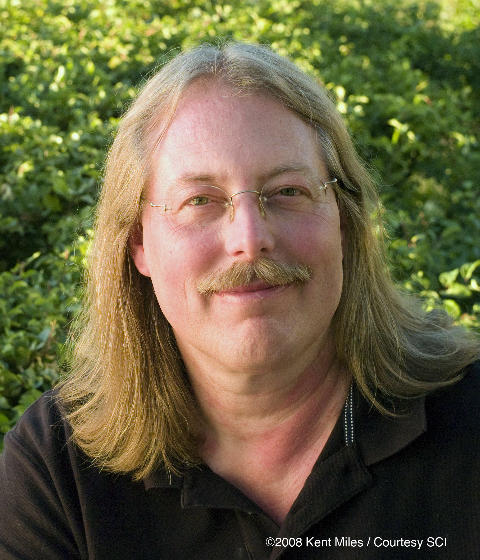
Christopher R. Johnson is a Distinguished Professor of Computer Science and Founding Director of the Scientific Computing and Imaging (SCI) Institute at the University of Utah. He holds additional appointments as Research Professor of Bioengineering and Adjunct Professor of Physics. His research focuses on scientific computing, visualization, and biomedical applications, with notable contributions to software tools like SCIRun, ShapeWorks, and FluoRender. He has led the SCI Institute since its founding in 1992, growing it to over 200 members. Johnson has pioneered advancements in cardiac electrophysiology modeling, medical imaging, and high-performance computing. Johnson’s academic journey includes a B.S., M.S., and Ph.D. in Computer Science, though specific institutions are not mentioned. His editorial roles include co-editing The Visualization Handbook and serving on multiple journal boards. He has advised numerous students, including Brian Zenger, Jake Bergquist, and Lindsay Rupp, who have received prestigious awards like the NSF Graduate Research Fellowship. His awards span decades and disciplines, including the NSF Presidential Faculty Fellow Award, IEEE Visualization Career Award, and Utah Cyber Pioneer Award. He is a Fellow of AIMBE, AAAS, SIAM, and IEEE. Johnson’s work emphasizes translating computational methods into clinical tools, such as deep brain stimulation for Parkinson’s and atrial fibrillation treatment. Johnson’s lab, the SCI Institute, collaborates widely with industry and academia, developing open-source software for biomedical computing. Key projects include SCIRun (a biomedical problem-solving environment) and ShapeWorks (statistical shape modeling). He has been instrumental in securing over $6 million in NIH grants for the Center for Integrative Biomedical Computing (CIBC).
Muhamad Risqi U. Saputra (Risqi) is Associate Professor in Data Science at Monash University, Indonesia. He is actively involved in research, teaching, and interdisciplinary projects focusing on machine learning, computer vision, cyber-physical systems, and smart cities. His work contributes to UN Sustainable Development Goals, particularly in education, sustainable cities, and climate action. Education: DPhil/PhD in Computer Science, University of Oxford MEng in Information Technology, Universitas Gadjah Mada BEng in Electrical Engineering and Information Technology, Universitas Gadjah Mada Risqi's research focuses on applying deep learning and computer vision to real-world challenges such as navigation, environmental monitoring, and disaster management. His work integrates satellite imagery, IoT, and AI to solve problems in urban resilience and sustainable development. He is particularly interested in interdisciplinary applications in health, assistive technology, and smart cities. His recent publications highlight a strong trend in using deep learning for environmental monitoring—especially flood and mining footprint detection via satellite data. The integration of cross-attention networks, semantic segmentation, and multispectral imagery demonstrates technical innovation with societal impact. His work also extends into policy and social implications of AI, as seen in studies on energy transition and big data discourse in politics. Scientific Awards: Indonesia ICT Awards (INAICTA) International ICT Innovative Services Contest (InnoServe), Taiwan Asia Pacific ICT Alliance Awards (APICTA), Brunei Darussalam Risqi is a Chief Investigator on multiple active research projects such as Open Nutrition , Citarum Action Research Program , and MUST: Enabling Multi-species Transitions . These projects involve interdisciplinary collaboration across environmental science, public policy, and data science. He also contributes to public discourse through media engagement, including commentary on the misuse of 'big data' in politics. He teaches core units in data science, algorithms, and research methods at Monash University. He is currently accepting PhD students and leads research that bridges technical innovation with societal benefit, particularly in Southeast Asia’s urban and environmental contexts.
Ingve Simonsen is a Professor in the Department of Physics at the Norwegian University of Science and Technology (NTNU), specializing in surface physics and light scattering phenomena. His research focuses on the theoretical and experimental characterization of randomly rough surfaces, electromagnetic wave interactions, and nanoscale optical phenomena. Affiliated with NTNU's Faculty of Natural Sciences, he maintains an active research program with extensive collaborations across international institutions. His research interests center on surface physics and light scattering , particularly the inversion of scattering data for surface characterization, plasmonics in nanostructures, and statistical properties of rough surfaces. His work bridges theoretical modeling with experimental validation, applying techniques like Mueller matrix ellipsometry and reduced Rayleigh equations to solve complex problems in optical metrology and nanomaterial characterization. Analysis of his recent publications reveals strong emphasis on multi-scale surface topography , polarized light interactions with disordered systems, and nanophotonic applications . His research demonstrates consistent innovation in developing computational frameworks for surface characterization and exploring novel optical phenomena in two-dimensional materials. Professor Simonsen actively mentors students and researchers, evidenced by frequent co-authorship with junior researchers on complex projects. His collaborative approach spans disciplines including condensed matter physics, materials science, and biomedical optics, as seen in his work on graphene-based virus detection sensors.
Michael D. Byrne is a Professor in both the Department of Psychological Sciences and the Department of Computer Science at Rice University. His interdisciplinary work bridges cognitive psychology, human-computer interaction, and computational modeling. Ph.D. in Experimental Psychology, Georgia Institute of Technology, 1996 M.S. in Computer Science, Georgia Institute of Technology, 1995 M.S. in Experimental Psychology, Georgia Institute of Technology, 1993 B.S. in Engineering (Magna Cum Laude), University of Michigan, 1991 B.A. in Psychology (High Distinction), University of Michigan, 1991 Byrne's research focuses on human factors and human-computer interaction, with particular emphasis on cognitive modeling, visual attention, decision-making, and human performance modeling. His work applies computational cognitive architectures like ACT-R to understand human behavior in complex interactive systems. He has made significant contributions to understanding procedural errors, visual search behavior, and usability of complex systems including voting technologies. His interdisciplinary approach combines rigorous experimental methods with sophisticated computational modeling techniques to predict and explain human performance. His recent publications reveal a strong focus on human error prevention, particularly in routine procedural tasks and voting systems. The research demonstrates consistent application of cognitive modeling approaches to practical human-computer interaction problems, with particular attention to visual attention mechanisms, error patterns, and usability assessment. His work spans theoretical cognitive science and applied human factors research, often addressing real-world challenges in system design and evaluation. Kavli Fellow, National Academy of Science, Fall 2009 Outstanding Associate for 2001-2002, Mary Gibbs Jones residential college, Rice University Distinguished Faculty Associate for multiple years at Rice University NIMH Postdoctoral Fellow National Science Foundation Graduate Fellow Georgia Institute of Technology President's Fellow Byrne has successfully secured substantial external funding from NASA, NSF, NIST, and ONR for research on human performance modeling, cognitive architecture, and human-computer interaction. His grants portfolio demonstrates strong interdisciplinary collaboration across computer science, psychology, and engineering domains. He has advised numerous graduate students and mentored undergraduate researchers in his lab. Beyond research, Byrne has served prominently on editorial boards for major journals including Human Factors, Cognitive Science, and Journal of Experimental Psychology: Applied. Byrne directs the Computer-Human Interaction Laboratory (CHIL) at Rice University, where his team conducts cutting-edge research on human performance modeling, cognitive architectures, and human-computer interaction. His lab has been particularly active in applying computational cognitive models to practical problems in system design, voting technology, and aviation human factors. The laboratory environment fosters interdisciplinary collaboration between psychology, computer science, and engineering students and researchers.
Pedro Orvalho is a Research Associate in the Department of Computer Science at the University of Oxford, working with Professor Marta Kwiatkowska on the FUN2MODEL ERC project. His research bridges theoretical computer science with practical applications in software engineering and programming education. His educational background includes: PhD in Computer Science and Engineering (2025) from Instituto Superior Técnico, Universidade de Lisboa MSc in Information Systems and Computer Engineering (2019) from Instituto Superior Técnico BSc in Information Systems and Computer Engineering (2017) from Instituto Superior Técnico Orvalho's research spans Artificial Intelligence, Automated Reasoning, Formal Methods, and Program Repair, with significant contributions to programming education tools. His work integrates formal methods with machine learning techniques to develop novel approaches for program verification and repair, particularly focused on introductory programming assignments. His scientific achievements have been recognized with prestigious awards: Vencer o Adamastor (VoA) - 3rd Edition (2025) ELISE Mobility Grant (2024) COST Travel Grant (2022) Excellence in Teaching IST Awards (2021 and 2024) ACM SIGSOFT Distinguished Paper Award (ESEC/FSE 2021) FCT PhD Scholarship (2020-2024) With five years of teaching experience at Instituto Superior Técnico, Orvalho has developed educational tools like GitSEED and MENTOR that bridge his research with practical classroom applications. His research has been supported by multiple grants including the ERC FUN2MODEL project and FCT PhD Scholarship, demonstrating both academic and practical impact. He maintains active collaborations with researchers from Czech Technical University in Prague, Carnegie Mellon University, and industry partners like OutSystems, contributing to an international research network focused on software reliability and educational technology.