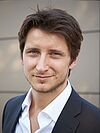
Dr. Jan Bartsch is a Lecturer at the Institute of Mathematics , University of Würzburg, specializing in optimal control theory, kinetic models, and numerical methods. His work spans stochastic differential equations, Monte Carlo frameworks, and applications to physics and computational mathematics. Education : PhD in Mathematics (2021-2024, University of Würzburg), Master’s in Mathematics (2016-2018), Bachelor’s in Computational Mathematics (2013-2016). Research interests : Focus on optimal control of partial differential equations, stabilization of kinetic models, and computational methods for stochastic systems. Publications : Recent works include adjoint-based control of jump-diffusion processes, nonlinear operator reconstruction, and Monte Carlo frameworks for plasma control. Collaborations : Works with Stefan Volkwein (University of Konstanz) and Alfio Borzi (University of Würzburg). Skills : Proficient in C/C++, Python, MATLAB, and ParaView for computational tasks.
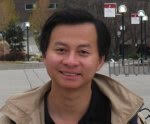
Loc Nguyen is an Associate Professor of Mathematics at the University of North Carolina Charlotte (UNC Charlotte), Department of Mathematics and Statistics. His research focuses on Inverse Problems, Partial Differential Equations (PDEs), and their applications in areas such as medical imaging, geophysics, and engineering. He has held postdoctoral positions at the Ecole Normale Supérieure Paris (2011–2013) and the Ecole Polytechnique Fédérale de Lausanne (2013–2015) before joining UNC Charlotte in 2015. Education: B.Sc in Mathematics, Vietnam National University at Ho Chi Minh City (1997–2001) M.Sc in Mathematics, University of Utah (2006–2008) Ph.D in Mathematics, University of Utah (2008–2011) His research interests include developing numerical methods for solving inverse problems, particularly using Carleman estimates and convexification techniques. Applications span detecting hidden objects (e.g., tumors, oil reserves, landmines) and advancing computational methods for PDEs. He co-organizes the Computational and Applied Mathematics Seminar at UNC Charlotte and has authored/co-authored numerous journal articles and a book on inverse problems. Key grants include a National Science Foundation grant (2022–2025) for phased and phaseless inverse scattering studies and Army Research Office funding (2018–2021) for imaging algorithms. His work has been supported by internal grants at UNC Charlotte and external funding from the NSF and Department of Defense. Advising includes PhD students (e.g., Qitong Li, Thuy Le) and undergraduate researchers. He has served on university committees, including the Honors College and Faculty Research Grant panels, and contributed to textbook selection for calculus courses. He has presented at major conferences like SIAM, AMS Sectional Meetings, and international workshops in Vietnam and Europe, showcasing advancements in inverse scattering, numerical analysis, and hybrid imaging techniques.
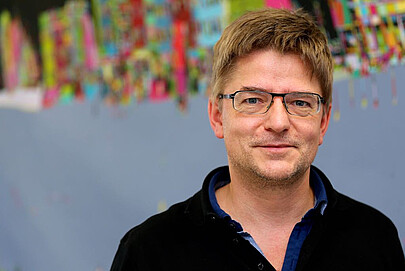
Sebastian Otte is a Professor at the Institute for Robotics and Cognitive Systems at the University of Lübeck, where he leads the Adaptive AI research group. Prior to this, he was a postdoctoral researcher and substitute professor at the University of Tübingen, contributing significantly to the Cognitive Modeling and Distributed Intelligence groups. University of Lübeck, Professor (since 2023) University of Tübingen, Postdoc and Substitute Professor (2016–2023) Centrum Wiskunde & Informatica (CWI), Humboldt Fellow (2022–2023) His research focuses on recurrent and spiking neural networks, bio-inspired computing, efficient learning, and adaptive AI systems. He explores how neural models can perform online learning, handle multiple time scales, and solve complex cognitive tasks such as binding, prediction, and motor control. His work bridges machine learning with cognitive science and robotics. The recent publications show a strong trend toward physics-informed neural networks, finite volume methods for PDE modeling, and explainable AI via counterfactual reasoning. His work integrates deep learning with scientific computing, emphasizing robust, interpretable, and efficient models for real-world applications. Scientific awards include: Best Paper Award at ICANN 2019 Humboldt Research Fellowship Editor's Highlight in Water Resources Research He has supervised over 70 bachelor’s and master’s theses and actively mentors students in areas such as spiking neural networks, reservoir computing, and robotics. His teaching includes core computer science and advanced neural network courses. He has been involved in research projects with industry partners like Daimler AG and Mercedes-Benz AG. Otte leads the Adaptive AI research group, which focuses on developing next-generation AI systems that learn efficiently, adapt dynamically, and model complex cognitive and physical processes using biologically inspired architectures.
apl. Prof. Dr.-Ing. Claus Brenner is an Adjunct Professor at the Institute of Cartography and Geoinformatics within the Faculty of Civil Engineering and Geodetic Science at Leibniz University Hannover. His research focuses on LiDAR mapping, point cloud processing, and robust estimation, with applications in autonomous systems, urban mapping, and disaster risk assessment. He leads the Graduiertenkolleg 2159 research group on integrity and collaboration in dynamic sensor networks. Key research areas include 3D reconstruction, SLAM (Simultaneous Localization and Mapping), semantic segmentation of mobile mapping data, and cooperative perception systems. His work integrates advanced machine learning techniques with geospatial data analysis, addressing challenges in sensor fusion, uncertainty modeling, and real-time localization. Recent publications span topics like voxel-based point cloud localization for smart spaces, flood risk mapping using LiDAR, and adversarial shape completion. Brenner has contributed to benchmark datasets such as LuCoop and LUMPI, advancing research in cooperative perception and urban navigation. His methods emphasize robustness and scalability, often leveraging generative models and statistical frameworks for urban environment analysis. Notable projects include the development of high-definition mapping using LiDAR, trajectory-based road network reconstruction, and semantic annotation from user trajectories. His work bridges theoretical advancements in computer vision with practical applications in autonomous systems and smart infrastructure.
Professor Ivan Andonovic is a senior academic in the Department of Electronic and Electrical Engineering at the University of Strathclyde, Faculty of Engineering. He is a key member of the Centre for Dynamic Intelligent Communications (CIDCOM) and serves on the board of CENSIS, the Innovation Centre for Sensor and Imaging Systems. He has co-founded two technology companies: Kamelian Ltd. and Silent Herdsman Ltd., the latter focusing on animal health through wireless sensor platforms. His research interests include broadband networks, optical communications, photonic switching, wireless sensor networks, and precision livestock farming. These are supported by extensive project leadership and co-investigator roles in major UK-funded initiatives such as FLORA-SAGE, Digital Dairy Chain, and DEFGRID. His work bridges academic innovation with industrial application, contributing to UN Sustainable Development Goals in sustainable agriculture and industry. The recent publications highlight a strong trend in sensor-based systems applied across diverse domains: from animal tracking and agricultural monitoring to infant development and autism research. These works integrate computer vision, machine learning, and embedded sensor networks, reflecting a multidisciplinary approach grounded in electrical engineering and applied informatics. Finalist, Herald Higher Education Awards - Outstanding Business Engagement in Universities (2022) Innovate UK KTP Engineering Excellence Award (2021) Strathclyde Team Medal for Innovation in Autism (2018) Member, Optical Society of America (2001) Prof. Andonovic has secured over £10 million in research funding and has been a co-investigator on numerous projects involving industry collaboration and knowledge transfer. He has held a Royal Society Industrial Fellowship and has served as Technical Programme Co-Chair for IEEE ICC07 and Topical Editor for IEEE Transactions on Communications. He mentors junior researchers and collaborates widely across engineering, biomedical sciences, and agriculture. He is actively involved in innovation ecosystems through Silent Herdsman Ltd. and CENSIS, and leads research teams focusing on sensor integration, data analytics, and intelligent communication systems. His lab work emphasizes real-world deployment of wireless sensor networks in both healthcare and agri-tech domains.
Tony F. Chan is currently President and Professor of Mathematics and Computer Science and Engineering at the Hong Kong University of Science and Technology (HKUST). He holds the title of Professor Emeritus in the Department of Mathematics at the University of California, Los Angeles (UCLA), where he previously served as Professor with joint appointments in Computer Science and Bioengineering. He was Dean of the Division of Physical Sciences at UCLA (2001–2006) and Assistant Director at the National Science Foundation (NSF) for Mathematics and Physical Sciences (2006–2009). President, HKUST Professor, Mathematics & Computer Science and Engineering, HKUST Professor Emeritus, Mathematics, UCLA Assistant Director, NSF (2006–2009) Dean, Division of Physical Sciences, UCLA (2001–2006) His research interests are centered around mathematical image processing, computer vision, computational brain mapping, and numerical algorithms. He has made seminal contributions to variational methods, total variation regularization, level set methods, and multiscale computational techniques. His work bridges pure mathematics with applications in biomedical imaging, VLSI design, and scientific computing. His recent publications focus on image segmentation, inpainting, brain surface mapping, and nonlocal filtering. These works demonstrate a strong trend toward geometric and variational models for image analysis, with increasing emphasis on medical and biological applications such as neuron tracking and cortical mapping. One of the most cited mathematicians (ISI Highly Cited) Chan has mentored over 25 PhD students and 15 postdoctoral fellows, contributing significantly to the training of next-generation researchers in applied mathematics and computational science. He has led major research initiatives including the Institute for Pure & Applied Mathematics (IPAM) and has been involved in numerous professional services at national and international levels. His work has been supported by major funding agencies including the NSF. He leads the Image Processing Group at UCLA and has been instrumental in advancing interdisciplinary research at the intersection of mathematics, engineering, and neuroscience.
Juliane Mueller serves as Group Manager of the Artificial Intelligence, Learning, and Intelligent Systems (ALIS) group within the Computational Science Center at the National Renewable Energy Laboratory (NREL), leading optimization and machine learning initiatives since 2022. Previously, she held research scientist positions at Lawrence Berkeley National Laboratory (2014-2022) and conducted postdoctoral work at Cornell University. She holds a Master's in Applied Mathematics from Freiberg University of Mining and Technology and a Ph.D. in Applied Mathematics from Tampere University of Technology. Her research pioneers derivative-free optimization algorithms for black-box problems, specializing in surrogate modeling (Gaussian processes, radial basis functions), active learning, and machine learning applications. Current work focuses on tuning deep learning architectures for robust predictions in renewable energy systems, environmental science, and quantum computing, with emphasis on accelerating scientific discovery through computational innovation. Analysis of her 2025 publications reveals a dominant trend toward AI-driven solutions for energy challenges, particularly in inverse design problems, explainable AI for renewable systems, and computational resource optimization. These works consistently integrate machine learning with domain-specific physics to enhance model fidelity while addressing scalability constraints. Luis W. Alvarez Postdoctoral Fellowship (Lawrence Berkeley National Laboratory) As ALIS group leader, Mueller directs a multidisciplinary team developing optimization frameworks that enable cross-cutting scientific acceleration at NREL, with particular focus on creating reliable predictive models for Department of Energy mission-critical applications in biofuel engineering and photonic material design.
Daniel Höller is a researcher in the Foundations of Artificial Intelligence (FAI) Group at the Department of Computer Science, Saarland University, Germany. He joined the group in January 2020, having previously worked at the Institute of Artificial Intelligence at Ulm University from November 2013 to December 2019. He holds an M.Sc. in Computer Science from Bonn-Rhein-Sieg University, where he studied from 2007 to 2013. Ph.D., Computer Science, Ulm University M.Sc., Computer Science, Bonn-Rhein-Sieg University (2013) Daniel Höller's research lies at the intersection of theoretical and practical aspects of AI planning. His primary focus is on Hierarchical Task Network (HTN) planning, where he has made significant contributions to expressivity analysis, solver development, and the use of classical planning heuristics to guide HTN search. He also works on lifted planning, plan repair, plan recognition, and the integration of planning with deep reinforcement learning. His work often involves formal analysis, heuristic development, and the creation of practical planning systems. He is particularly interested in how planning can be made more efficient, reliable, and applicable to real-world problems, including human-aware applications. His recent publications demonstrate a consistent trend in advancing HTN planning through novel formalisms (e.g., HDDL), sophisticated solving techniques (e.g., progression search, SAT-based approaches), and the development of robust software frameworks (e.g., PANDA, TOAD, LiSAT). His work increasingly bridges planning with learning, exploring how learned models can inform planning and how planning can provide structure for learning. The subfields span formal methods, search algorithms, knowledge representation, and system building. ICAPS 2024 Best Dissertation Award for his thesis on hierarchical planning SoCS 2024 Best Student Paper Award (co-authored) Winner in 4 out of 6 tracks in the 2023 IPC HTN competition ICAPS 2018 Best Student Paper Award ICTAI 2018 Best Paper Award TCTS 2018 Best Paper Award Shortlisted for Best Paper at KI 2020 Daniel Höller has been actively involved in teaching and mentoring, having taught courses on Artificial Intelligence and AI Planning at Saarland University, and previously served as a teaching assistant for a wide range of AI and computer science courses at Ulm and Bonn-Rhein-Sieg Universities. He has received funding through his involvement in the Transregional Collaborative Research Center SFB/Transregio 62 at Ulm University. He has organized and contributed to numerous workshops and conferences, demonstrating strong service to the academic community. Daniel Höller is a core developer of the PANDA planning framework, the TOAD HTN solver, and the LiSAT system for lifted planning. These systems are state-of-the-art tools that implement his research on heuristic search, model transformation, and SAT-based compilation. His work is conducted within the FAI group at Saarland University, a leading research group in automated planning.
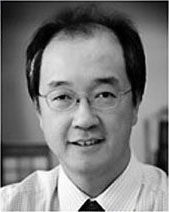
Naonori Ueda is a Research Professor and Deputy Director at RIKEN Center for Advanced Intelligence Project. He also serves as a Visiting Fellow at NTT Communication Science Laboratories, Research Supervisor for Mathematical Information Platform at Japan Science and Technology Agency (JST), and Visiting Professor at Kobe University's Graduate School of System Informatics. His distinguished career spans academia, government research institutions, and industry collaboration, with significant contributions to advancing artificial intelligence and machine learning applications across multiple scientific domains. Dr. Ueda's research interests focus on the intersection of machine learning, artificial intelligence, and physical sciences. He specializes in physics-informed deep learning approaches that integrate governing physical equations with neural network architectures. His work spans geophysical data analysis, remote sensing applications, computational seismology, and environmental monitoring systems. He has pioneered methods for crustal deformation modeling, earthquake prediction, tsunami inundation forecasting, and satellite imagery analysis using advanced machine learning techniques. His research demonstrates how AI can solve complex scientific problems by bridging the gap between data-driven approaches and physical domain knowledge. His publication record reveals a strong trend toward applying machine learning to solve real-world geophysical and environmental challenges. His recent work shows increasing sophistication in physics-informed neural networks that incorporate domain-specific knowledge into deep learning architectures. The publications span high-impact journals like Nature Communications, demonstrating the interdisciplinary significance of his work. His research consistently focuses on practical applications of AI for disaster prevention, environmental monitoring, and scientific discovery. Fellow of IEICE (Institute of Electronics Information and Communication Engineers) Member of Japan Prize field review committee Selection Committee Member for Brilliant Female Research Award (The Jun Ashida Award) Member of Kyoto Prize Selection Committee Dr. Ueda has secured substantial research funding through multiple government-sponsored projects including RIKEN Pioneering Project 'Prediction Science,' JST AIP Acceleration Research projects on weather prediction and drug discovery, and AMED-funded medical research initiatives. His leadership extends to serving as Sub-project Director for Japan's Moonshot R&D Project. He actively mentors researchers through his roles at RIKEN, NTT, and various academic institutions, fostering the next generation of AI scientists. As Deputy Director of RIKEN Center for Advanced Intelligence Project, Dr. Ueda leads one of Japan's premier AI research initiatives. He also serves on the Advisory Board of Kobe University's Mathematical and Data Science Center and Kyoto University's Graduate School of Informatics. His leadership extends to coordinating the AI Seminar at Osaka Industrial Association and supervising the Keihanna 'Edison Society' at the International Institute for Advanced Studies, demonstrating his commitment to bridging academic research with industrial applications.
Michaël Unser is a Full Professor at École Polytechnique Fédérale de Lausanne (EPFL) in the School of Engineering , leading the Biomedical Imaging Laboratory . He serves as Academic Director for Imaging at EPFL and contributes to cross-departmental teaching in Microengineering , Mathematics , and Life Sciences Engineering . His research spans Image Processing , Medical Imaging , Wavelets , and Spline-based Modeling , with a focus on multiresolution analysis and single-molecule localization microscopy . He has mentored over 30 PhD students and supervised numerous research projects. Recent publications highlight advancements in super-resolution microscopy , deep learning integration , and inverse problem solving for biomedical imaging. His work emphasizes mathematical rigor and open-source software development for accessible bioimaging tools. IEEE Technical Achievement Award (2008) IEEE EMBS Career Achievement Award (2020) Three ERC Advanced Grants (FUNSP, GlobalBioIm, FunLearn) As Academic Director for Imaging , he leads EPFL's cross-disciplinary imaging initiatives. His teaching includes Fundamentals of Image Analysis and Signals and Systems courses.
Damek Davis is a Visiting Associate Professor at the Wharton Department of Statistics and Data Science at the University of Pennsylvania and an Associate Professor of Operations Research at Cornell University (currently on leave). He held NSF Postdoctoral Fellowships and completed his PhD in Mathematics at UCLA under Wotao Yin and Stefano Soatto. His research bridges optimization , machine learning , statistics , and signal processing , with a focus on convergence guarantees for stochastic and nonsmooth optimization methods. He has developed accelerated gradient descent algorithms, characterized SGD behavior in nonconvex settings, and formalized avoidance of strict saddle points in proximal methods. Key publications include exponential accelerations of gradient-based techniques and first guarantees for SGD on weakly convex functions. His work has been recognized by the Sloan Research Fellowship INFORMS Optimization Society Young Researchers Prize NSF CAREER Award SIAM Activity Group on Optimization Best Paper Prize Davis actively advises Penn graduate students and serves as an associate editor at Mathematical Programming and Foundations of Computational Mathematics . He emphasizes clear technical writing and public communication, maintaining a blog and lecture notes on optimization theory.
Rasmus Kyng is an Assistant Professor at the Department of Computer Science, ETH Zurich, since Fall 2019. He focuses on developing fast algorithms for graph problems, convex optimization, and structured linear equations, with a specialization in fine-grained complexity theory and dynamic graph algorithms. Assistant Professor, Department of Computer Science, ETH Zurich (2019–present) Postdoc, Theory of Computation Group, Harvard (2018–2019) Research Fellow, Simons Institute, UC Berkeley (Fall 2017) His research explores the intersection of graph algorithms, optimization, and complexity, particularly through dynamic graph data structures, sparsification, and applications in machine learning. Recent work includes breakthroughs in almost-linear time algorithms for network flow problems. Key trends in his publications include: Advancements in dynamic graph algorithms and data structures Applications of convex optimization to graph theory Connections between matrix theory and algorithmic efficiency Derandomization techniques for algorithmic speed Expander graph-based oblivious routing Sparsification and low-congestion vertex sparsifiers Scientific recognition includes the FOCS Best Paper Award (2022), ICBS Frontiers of Science Award (2022), and the Machtey Award for Best Student Paper (2017). His group mentors PhD candidates and postdocs, including Ming Ding , Federico Soldà , Simon Meierhans , Aurelio Sulser , and Wuwei Yuan . Research is supported by Swiss National Science Foundation grants (project no. 200021 204787, starting grant no. TMSGI2 218022).
Prof. W.A. Mulder is a Professor in the Department of Applied Geophysics and Petrophysics at Delft University of Technology's Faculty of Civil Engineering and Geosciences. He maintains a concurrent external position at Shell Global Solutions B.V. since 1989. His primary affiliations involve advanced research in computational geophysics and seismic methodologies. Research Focus: Mulder specializes in developing numerical techniques for seismic wave analysis, with emphasis on: Full-waveform inversion for subsurface characterization Uncertainty quantification in geophysical models Finite element methods for wave propagation Elastic wave theory and scattering analysis High-performance computing applications in seismology His recent publications (2024-2025) demonstrate consistent focus on enhancing seismic inversion accuracy through novel computational approaches, particularly in target-oriented imaging and dimensionality reduction techniques. Awards: Velocity analysis with multiples - NMO modeling for layered velocity structures (2008) He has supervised 7 graduate students and contributes to academic discourse through conference presentations and editorial work for journals like Computational Geosciences .
Per Edström is a Professor at the Department of Engineering, Mathematics and Science Education (IMD) within Mid Sweden University . His research focuses on mathematical modeling of light scattering in paper and print , particularly addressing challenges in optical interactions and radiative transfer . Education: Doctoral thesis (2007) and Licentiate thesis (2004) on light scattering in paper, both from Mid Sweden University. Research Interests: Edström’s work spans radiative transfer theory , fluorescence modeling , and computational methods for simulating optical properties in turbid media. He has developed advanced models like DORT2002 to improve accuracy in paper industry applications , focusing on phenomena such as dot gain , goniochromism , and edge effects in halftone printing . Recent Publications: His studies (2013–2015) explore Monte Carlo simulations , particle dynamics , and high-speed nanofilm deposition , contributing to fields like optical measurement techniques and color prediction models . Labs and Teams: Affiliated with the FSCN (Fibre Science and Communication Network) at Mid Sweden University, he collaborates on projects involving microroughness analysis , inverse radiative transfer problems , and open-source simulation platforms .
Peter van Oostrum is a Privatdozent (Priv.Doz.Dr.) at the Institute of Colloid and Biointerface Science , Department of Biotechnology and Food Science, University of Natural Resources and Life Sciences Vienna (BOKU). His research integrates advanced optical techniques and biophysical modeling to study colloidal systems. Projects : Led key initiatives like AI-supported Holographic Environmental Water Monitoring (2025–2029) and Self-folding particle chains (2015–2020), funded by Austrian Science Fund, City of Vienna, and European Commission. Research Focus : Self-assembly of colloids, holographic microscopy, microfluidics, and force-modulated multivalent binding in bacterial systems. His work bridges nanotechnology, biophysics, and environmental monitoring. Publications : 32 peer-reviewed works, emphasizing colloidal interactions, inverse patchy particles, and holographic cytometry applications. Community Services : Active reviewer for journals like Physical Review Letters , Chemistry of Materials , and Soft Matter . Theses Supervised : Guided Bernhard Pichler’s diploma thesis on polymer-functionalized nanopores (2020).