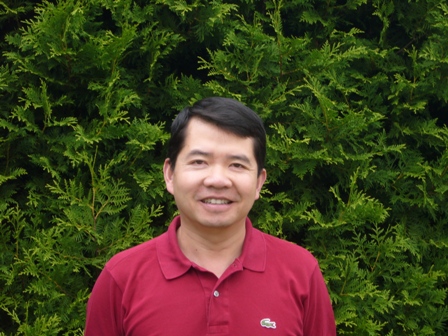
Cicek Cavdar is an Associate Professor at the School of Electrical Engineering and Computer Science (EECS) at KTH Royal Institute of Technology , Sweden. She leads the Intelligent Network Systems research group and specializes in Telecommunication Networks , with a focus on Beyond 5G/6G Mobile Networks , Energy Efficiency , and AI-Assisted Network Management . PhD in Computer Science (2009) from University of California, Davis and Istanbul Technical University Her research spans Cell-Free Massive MIMO , Reconfigurable Intelligent Surfaces (RIS) , UAV Communication Systems , and Green Network Technologies . She actively contributes to 6G Network Architecture and Non-Terrestrial Networks , including satellite and aerial systems. Recent publications highlight AI-driven network optimization for handover management, energy-aware resource allocation , and multi-agent reinforcement learning in complex communication environments. She teaches advanced courses in Communication Systems , Machine Learning , and Software Engineering at KTH.
Henrik Sandberg is a Professor at the Division of Decision and Control Systems , KTH Royal Institute of Technology , Stockholm, Sweden. He holds the title of Deputy Head of Division and is affiliated with the School of Electrical Engineering and Computer Science . Education: MSc in Engineering Physics (1999) PhD in Automatic Control (2004) from Lund University Postdoctoral position at Caltech (pre-2007) Research Interests: Focus on cyber-physical systems security , power systems , model reduction , and fundamental limitations of control systems . Key sub-areas include attack detection , networked control , privacy-preserving estimation , and resilient control architectures . Publications: Over 150 papers across IEEE Transactions and Automatica , covering topics like stealthy attacks , distributed control , LQG optimization , and thermodynamic costs in filtering . Recent work includes LWE-based encrypted control and Bayesian deception mechanisms . Scientific Awards: Best Student Paper Award Finalist at IEEE CASE 2014; Best Student-Paper Award at IEEE CDC 2004. Grants & Projects: Leads the DYNACON project (WASP Cybersec cluster) and collaborates on CERCES (critical infrastructure resilience). Serves as examiner for multiple advanced courses in cybersecurity and control systems. Contact: Email: hsan@kth.se Phone: +46 (0)8 790 7294 Room: A:607, Malvinas Väg 10, Stockholm
Jens Edlund is a Professor at KTH Royal Institute of Technology's Division of Speech, Music and Hearing. His research focuses on speech technology, dialogue systems, prosody, and evolutionary phonetics. He has contributed to foundational work on speech synthesis, conversational interaction, and multimodal corpora like the D64 corpus. Key projects include the MonAMI Reminder system and analysis of primate vocalizations to understand speech evolution. Edlund has collaborated extensively with global researchers, producing over 150 peer-reviewed works. His work integrates computational methods with linguistic and biological insights, emphasizing human-like dialogue systems and cross-species vocal analysis. Education: Ph.D. in Speech Technology (2011, KTH) Grants: Multiple EU and Swedish Research Council grants for speech technology and interdisciplinary studies Research labs include the KTH Speech, Music and Hearing Lab and collaborations with institutions like Max Planck Institute for Evolutionary Anthropology. Current work explores evolutionary origins of speech biomechanics and AI-driven speech synthesis evaluation.
Mariano Scazzariello is a Lecturer at KTH Royal Institute of Technology, Sweden, affiliated with the School of Electrical Engineering and Computer Science and the Department of Network and Systems Engineering. He teaches the course 'Network Systems with Edge or Cloud Datacenters (IK2227)'. His research focuses on advanced networking topics including machine learning in networks, high-speed packet processing, network emulation, and software-defined networking innovations. His work spans contributions to network emulation tools like Kathará and Megalos, stateful packet processing at terabit scales, and leveraging large language models (LLMs) for network configuration and vulnerability detection. Recent research emphasizes low-latency protocols (e.g., SRv6/DetNet integration) and GPU-centric networking on commodity hardware. Mariano’s publications (2020–2025) highlight expertise in network function virtualization, ASIC-based switching, and optimizing network configurations through AI-driven approaches. He has pioneered frameworks for evaluating routing protocols and virtualizing large network scenarios at scale.
Lina Bertling Tjernberg is a Professor at the Department of Electrical Engineering, KTH Royal Institute of Technology, and Deputy Head of the School of Electrical Engineering and Computer Science (EECS) with responsibility for research conditions and impact. She served as Director of KTH's Energy Platform during 2018-2024 and holds memberships in IVA (Swedish Royal Academy of Engineering Sciences) and the IEEE Power & Energy Society. Research Focus: Applying mathematics (statistics, optimization, life cycle assessment) to enhance reliability and predictive maintenance in electric power systems, with emphasis on future electricity grids integrating microgrids, battery storage, HVDC, nuclear/pumped/hydro/wind/solar power, hydrogen, and electrified transport. Collaborations: Engaged with Comillas Pontifical University (Madrid), Addis Ababa University, Norwegian University of Science and Technology (NTNU), and IEA Wind. Key Research Trends: Recent articles highlight advancements in microgrid control (2025), SMR nuclear energy integration (2025), AI-driven asset management (2024), hydrogen sector coupling (2024), and renewable forecasting techniques (2024). Awards: 2021 Power Woman of the Year 2022 Energy Power List (Sweden’s top 20 energy influencers) Leadership Roles: Swedish Electromobility Center (SEC) board Chair of Swedish Electrical Standards (SEK Svensk Elstandard) Member, IEEE PES ISGT Europe steering committee
Zhonghai Lu is a Professor of Electronic Systems Design (specializing in Dependable and Autonomous Systems) at KTH Royal Institute of Technology, part of the Department of Electrical Engineering in the School of Electrical Engineering and Computer Science (EECS). He serves as Program Director for KTH's Embedded Systems master's program and Director of Studies at the Division of Electronics and Embedded Systems. His research focuses on Network-on-Chip (NoC), computer architecture, embedded systems, and Prognostics and Health Management (PHM) of power electronics. He leads a research group exploring in-network processing and embedded intelligence, transforming passive networks into active computational frameworks. Lu holds a BSc from Beijing Normal University (1989), MSc and PhD from KTH (2002, 2007), and an MBA in Innovation and Growth from the University of Turku (2012). He has authored over 240 scientific papers, including journal articles and peer-reviewed conferences, with notable recognitions such as Best Paper Awards at NOCS’2015 and EU HiPEAC, and a Featured Paper in IEEE Transactions on Computers (2020). He serves as Associate Editor for ACM Transactions on Architecture and Code Optimization (TACO) and has chaired major conferences like HiPEAC’2017 and NOCS’2018. His research group’s recent work includes integrating AI into hardware acceleration, fault-tolerant neural networks, and RUL estimation for power electronics using recurrent neural networks. Lu has secured grants from the Swedish Research Council and Intel Corporation and developed courses like IL2230 (Hardware Architectures for Deep Learning) and IL2233 (Embedded Intelligence), pioneering embedded AI education at KTH. Education: BSc (Beijing Normal University), MSc/PhD (KTH), MBA (University of Turku) Awards: Best Paper Awards (NOCS, EU HiPEAC), Swedish Research Council Grants, Intel Research Gifts Labs/Teams: Research Group on In-Network Processing and Embedded Intelligence
Luca Peretti is an Associate Professor in Electric Machines and Drives at KTH Royal Institute of Technology, affiliated with the School of Electrical Engineering and Computer Science and the Department of Electrical Engineering, Division of Electric Power and Energy Systems. He works as a researcher in the EMD (Electric Machines and Drives) group and serves as Partner Director for KTH's strategic partnership with ABB. Education: M.Sc. in Electronic Engineering (2005) from University of Udine, Ph.D. from University of Padova (2008) Professional Experience: Postdoc at University of Padova (2009-2010), Principal Scientist at ABB Corporate Research (2010-2018), Associate Professor at KTH (2018-present) His research focuses on: Automatic parameter estimation in electric machines Multiphase drive systems Sensorless control algorithms Loss segregation in drive systems Condition monitoring of industrial and transportation applications Recent publications demonstrate expertise in variable phase-pole machines, harmonic plane decomposition, predictive control algorithms, and advanced modeling of permanent magnet motors. Key application areas include transportation electrification, wind energy systems, and industrial drive technologies. Scientific roles include: Associate Editor, IET Electric Power Applications Journal (2019-present) Theme Co-Leader, Swedish Electromobility Center (2020-present) Member, IEEE (2021-present) and IET (2006-present) He leads the strategic partnership with ABB and contributes to doctoral program committees at University of Padova.
Anna Delin is a Full Professor at KTH Royal Institute of Technology since 2011, leading research on magnetic and quantum phenomena in materials. She heads the WISE research school (wise-materials.org) and served as Deputy Head of the School of Engineering Sciences (SCI) from 2018–2022. Her expertise spans condensed matter physics, with a focus on nanomagnetism, skyrmions, spin-lattice couplings, and topological materials. Education: PhD in Condensed Matter Physics from Uppsala University (1998). Key awards include Naturvetarpriset (1998), Royal Swedish Academy of Sciences Research Fellowship (2007), Thuréus Prize (2018), and Edlundska Prize (2024). She has held visiting roles at ICTP, Los Alamos National Lab, and the Fritz Haber Institute. Research interests include magnetic skyrmions, magnonics, spintronics, and ultrafast demagnetization. Recent publications focus on spin-lattice dynamics, topological materials, and quantum analogs of classical magnetic models. Her work bridges theory and experiment, with contributions to tools like SpinView for computational magnetism analysis. Teaching includes roles as examiner for the Degree Project in Applied Physics and teacher for Sustainable Development in Engineering Physics. She actively participates in materials design initiatives and semantic data processing for big research data. Lab affiliations include her own research group at KTH and collaborations through WISE. Current projects explore skyrmion stabilization, magnon entanglement, and quantum spin systems, with implications for next-generation spintronic devices.
Pan Xu is a tenure-track assistant professor with joint appointments in the Department of Biostatistics & Bioinformatics, Department of Computer Science, and Department of Electrical & Computer Engineering at Duke University. Previously, Xu was a Postdoctoral Scholar Research Associate at Caltech's Department of Computing and Mathematical Science and earned a Ph.D. in Computer Science from UCLA. Xu's research focuses on developing computationally- and data-efficient machine learning algorithms with strong empirical performance and theoretical guarantees. Xu's research interests center around Machine Learning with broad applications in Artificial Intelligence, Data Science, Optimization, Reinforcement Learning, and High Dimensional Statistics. The research specifically targets real-world problems in Bioinformatics and Healthcare, with recent work emphasizing distributionally robust decision making, efficient exploration strategies, and multi-agent systems. Xu has developed novel algorithms that address the challenges of exploration in sequential decision making and robustness to distributional shifts between training and deployment environments. Xu's recent publications demonstrate a strong trend toward developing theoretically grounded yet practical algorithms for reinforcement learning and bandit problems, with particular emphasis on distributionally robust methods, efficient exploration techniques, and applications to healthcare. The work spans both theoretical analysis (providing minimax optimal regret bounds) and practical implementations (validated on benchmarks like Atari games and real healthcare datasets). Whitehead Scholar award from Duke University School of Medicine (2023) Best Paper Award at ACM FAccT 2023 for Queer In AI paper PIMCO Postdoctoral Fellowship in Data Science (2022) TMLR Featured Certification (2023) NSF award on approximate sampling based exploration (2023) Xu actively mentors multiple Ph.D. students across Duke's Biostatistics & Bioinformatics, Computer Science, and Electrical & Computer Engineering programs, with several alumni now pursuing doctoral studies at top institutions. The research group has secured competitive funding including an NSF award for approximate sampling based exploration for sequential decision making. Xu serves as an action editor for TMLR and as an area chair for major conferences including ICML, NeurIPS, AAAI, ICLR, and AISTATS. Xu leads a dynamic research group focused on sequential decision making, with projects spanning theoretical algorithm development, implementation of practical systems, and applications to healthcare and bioinformatics. The group maintains active collaborations across Duke's medical and engineering schools, with recent work applying machine learning to epidemic forecasting during the pandemic.
Janis Stirna is a Professor and Unit Head at the Department of Computer and Systems Sciences (DSV), Stockholm University. He leads the PRECIS research group, focusing on theories and tools for organizational and IT solution design. PhD in Computer and Systems Sciences (2001), Royal Institute of Technology, Sweden Associate Professor (2008), Jönköping University Research Interests include enterprise modeling, requirements engineering, organizational patterns, and knowledge management. His work spans methodologies like EKP, EKD, and 4EM, with notable coordination of the EU FP7 project CaaS (Capability as a Service). He co-edited key Springer publications on enterprise modeling and capability management. Teaching: Delivers Object-Oriented System Analysis with UML to DSV BSc students. Leadership: Chairs IFIP Working Group 8.1 and co-initiated the PoEM conference series.
Lars Eriksson is a researcher at the Department of Chemistry, Stockholm University, affiliated with the Faculty of Science. He is part of Gunnar Svensson's group, which focuses on solid-state inorganic chemistry, including the synthesis of energy-related compounds and their crystal structure analysis. Research interests span inorganic chemistry, solid-state chemistry, crystallography, energy applications, organic synthesis, catalysis, and chemical education. His work bridges experimental and computational approaches, with recent publications exploring molecular design for energy storage, asymmetric synthesis, triplet-to-singlet energy transfer, and pedagogical strategies in chemistry education. Trends in his research highlight applications in materials science, environmental chemistry, and educational methodologies. While no formal scientific awards are mentioned in the provided texts, his contributions include collaborative studies on catalysis, molecular structure, and student learning processes. He has no listed grants or students, but his publications emphasize tutor-student interactions and practical epistemology analysis. The research group he belongs to investigates fundamental properties of synthesized compounds, often with energy-related applications, and maintains strong ties to the broader chemistry community through peer-reviewed publications and educational studies.
Professor Isto Huvila is a leading scholar at Uppsala University's Department of ABM (Archives, Libraries, and Museums) within the Faculty of Humanities. His academic profile spans information science, digital humanities, and cultural heritage studies with a distinctive focus on documentation practices and information management across diverse contexts. His research interests encompass: Information and knowledge management Social and participatory information practices Documentation and paradata theory Digital humanities and archaeological information systems Health information and e-health services Open data and research data management Recent scholarly output reveals a strong trajectory toward understanding information practices across multiple domains. A significant portion of his work examines paradata in archaeological contexts through the CAPTURE project, investigating how documentation of data creation processes can enhance research transparency and data reuse. He also conducts extensive research on digital inclusion among older adults and immigrant populations regarding e-health services, analyzing both experiences and expectations of these user groups. Professor Huvila publishes in high-impact journals including Journal of Documentation, Information Research, Journal of the Association for Information Science and Technology, and Journal of Medical Internet Research. His interdisciplinary approach connects information science with archaeology, health informatics, and digital humanities, yielding practical insights for improving documentation standards, research data management, and e-health service design. His 2025 book 'Paradata: Documenting Data Creation, Curation and Use' represents a major contribution to the field, alongside influential review articles like 'Trends in information behavior research, 2016-2022' in the Annual Review of Information Science and Technology. His work bridges theoretical and practical concerns in information science, making substantive contributions to both academic knowledge and real-world applications in cultural heritage institutions and healthcare information systems.
Jennifer K. Ryan is a Professor and Division Head for Numerical Analysis, Optimization & Systems Theory at the Department of Mathematics, KTH Royal Institute of Technology, Stockholm. She is affiliated with the Digital Futures Faculty, a cross-disciplinary research center jointly established by KTH, Stockholm University, and RISE Research Institutes of Sweden. Her research focuses on developing numerical schemes for extracting enhanced accuracy from simulations, with applications in imaging, data analysis, and fluid dynamics. Ryan’s work emphasizes improving computational efficiency through theoretical insights and practical algorithms. Her academic roles include teaching courses like Numerical Methods for Differential Equations II and supervising student projects in numerical analysis. She has contributed to the SIAC MAGIC toolbox, a software package for accuracy-enhancing filtering techniques. Ryan’s research group actively explores discontinuous Galerkin methods, SIAC filtering, and multi-resolution analysis, addressing challenges in computational physics and engineering. Her publications span high-order numerical methods, mesh adaptivity, and applications in plasma physics and wave equations. Projects include error estimation for boundary integral methods and developing filters for noisy data. Ryan collaborates internationally, contributing to both theoretical advancements and practical implementations in computational science.
Lars Engstrand is a Professor in infection control at Karolinska Institutet, heading the Translational Microbiome Research and Pandemic Preparedness group within the Department of Microbiology, Tumor and Cell Biology. His research spans multiple disciplines with a focus on translational microbiome research and pandemic preparedness. Engstrand's research interests center on understanding the human microbiome's role in health and disease, particularly in women's reproductive health and gastroenterology. His group has established multiple large-scale clinical studies including SweMaMi (Swedish Maternal Microbiome project), BASIC (associations between microbiota and preterm birth), VaMiGyn (Vaginal Microbiota in Gynaecological health), and several others investigating the vaginal microbiome's relationship to pregnancy outcomes, HPV infection, and cervical cancer. His team also conducts significant research on gut microbiome in inflammatory bowel disease and colorectal conditions through projects like PopCol and KOLBIBAKT. Analysis of Engstrand's most recent publications reveals a strong focus on the relationship between microbiome composition and women's health outcomes. His research consistently examines how vaginal, gut, and oral microbiomes influence pregnancy complications, preterm birth, HPV infection, and mental health during pregnancy. The work often employs large cohort studies with comprehensive sampling strategies across multiple body sites and time points, providing robust data for understanding microbiome dynamics in health and disease. Engstrand leads the Microbiome Exploration and Development for Intervention (MEDI) initiative and the National Pandemic Center (NPC) at Karolinska Institutet. The NPC conducted large-scale sequencing during the COVID-19 pandemic and has amassed over 1.5 million samples. His research group includes multiple specialized teams focusing on culturomics, bioinformatics, labcore operations, women's health research, and pandemic preparedness.
Xiaoming Hu is a Professor at the Division of Numerical Analysis, Optimization and Systems Theory within the Department of Mathematics at KTH Royal Institute of Technology (Kungliga Tekniska Högskolan) in Stockholm, Sweden. Born in Chengdu, China, he received his B.S. degree from University of Science and Technology of China in 1983, followed by M.S. and Ph.D. degrees from Arizona State University in 1986 and 1989 respectively. After serving as a research assistant at the Institute of Automation, Chinese Academy of Sciences (1983-1984), he was a Gustafsson Postdoctoral Fellow at KTH (1989-1990) before becoming a faculty member. His educational background includes: B.S. in Engineering, University of Science and Technology of China, 1983 M.S. in Engineering, Arizona State University, 1986 Ph.D. in Engineering, Arizona State University, 1989 Xiaoming Hu's research primarily focuses on multi-agent systems, nonlinear feedback stabilization, nonlinear observer design, and sensing and active perception. His work bridges theoretical control theory with practical applications in robotics and autonomous systems. He has made significant contributions to geometric control theory, mathematical systems theory, and nonlinear systems analysis and control. His research often involves developing theoretical frameworks for distributed control, formation control, and cooperative behavior in multi-robot systems. Professor Hu's publication record shows a consistent research trajectory with numerous high-impact publications in top-tier journals like Automatica, IEEE Transactions on Automatic Control, and Systems & Control Letters. His research has evolved from fundamental control theory to more applied problems in robotics and multi-agent systems, while maintaining strong mathematical foundations. Recent work shows increasing focus on safety-critical control, inverse problems in estimation, and networked systems. His scientific contributions include: Development of theoretical frameworks for multi-agent coordination and formation control Advances in nonlinear observer design for robotic systems Contributions to geometric control theory and systems theory Research on distributed estimation and control algorithms Applications of control theory to robotics and autonomous systems Professor Hu teaches several advanced courses including Mathematical Systems Theory, Geometric Control Theory, and Nonlinear Systems: Analysis and Control. He has supervised numerous degree projects at both undergraduate and graduate levels in mathematics, optimization, systems theory, and scientific computing. His teaching reflects his research expertise, providing students with both theoretical foundations and practical applications of control theory.