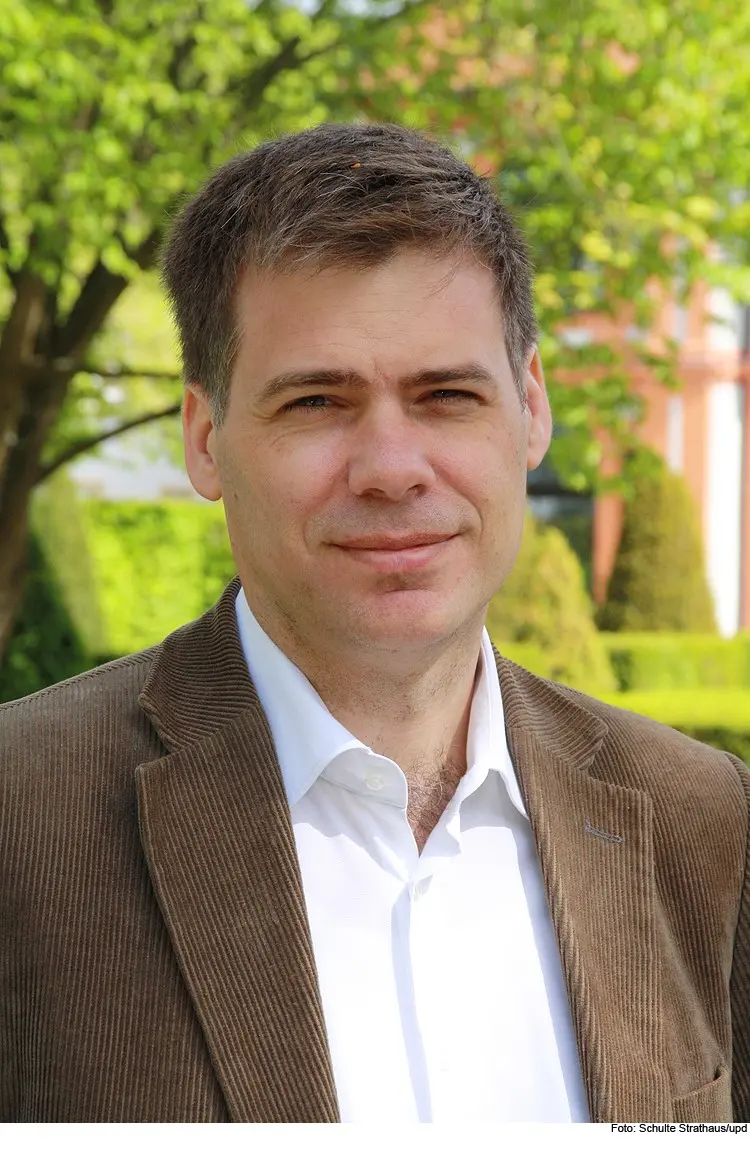
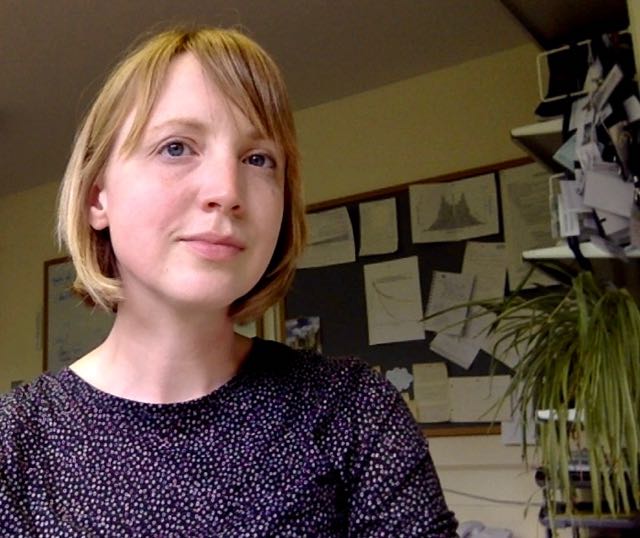
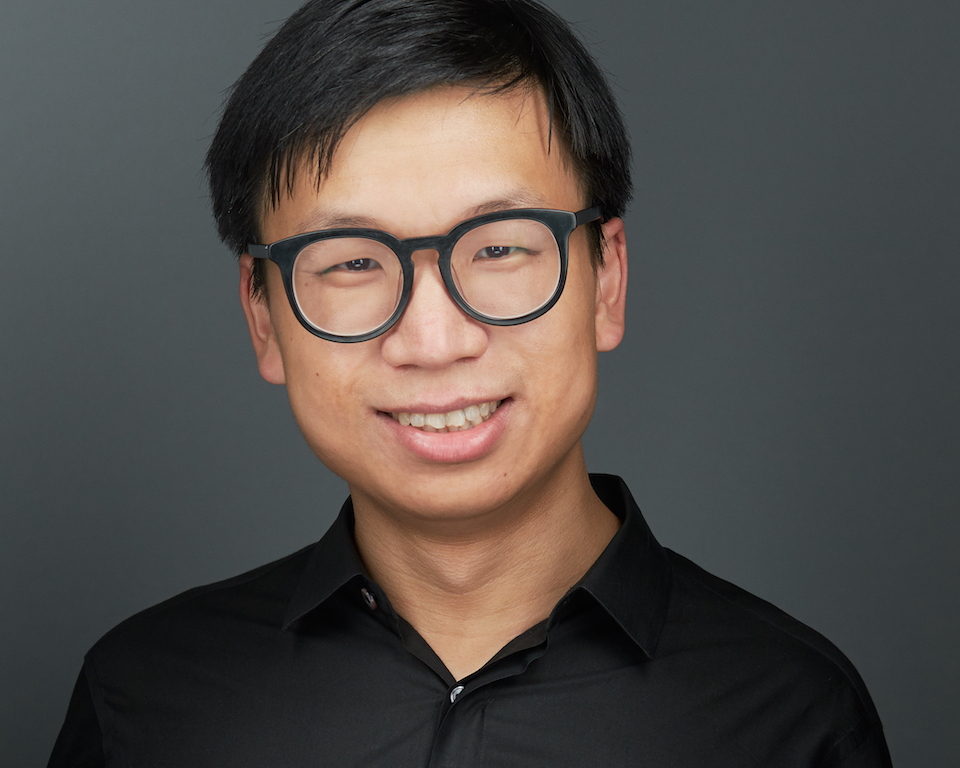
Dipl.-Ing. Dr. Bernhard Ungerer is a researcher at the Institute of Wood Technology and Renewable Resources , part of the Department of Biotechnology and Food Science at the University of Natural Resources and Life Sciences, Vienna (BOKU). His work focuses on advanced wood-based composites and sustainable material systems.
Saikat Chatterjee is a Professor in the Department of Information Science and Engineering at the School of Electrical Engineering and Computer Science, Royal Institute of Technology (KTH). He is also a Fellow of Digital Futures and maintains visiting researcher positions at Karolinska Institute, Karolinska Hospital (specializing in 'AI for Health Care'), and Oslo University Hospital in Norway. His primary research interests span Signal Processing and Machine Learning, with specific focus on signal modeling (sparsity, compressive sensing, dynamical systems), statistical signal processing, statistical machine learning, deep learning, speech/audio/image processing, medical data analytics, life science data analysis, perception for autonomous systems, distributed machine learning, and explainable AI (XAI). He particularly emphasizes explainable machine learning, having a strong background in signal processing and statistical machine learning, with growing passion for medical data analysis due to its societal importance. SSF - Swedish Foundation for Strategic Research Region Stockholm European Union Digital Futures Vinnova WASP Companies: Ericsson, Scania, Saab Professor Chatterjee is actively involved in teaching, serving as examiner and course responsible for various degree projects and courses including Machine Learning and Data Science, Pattern Recognition and Machine Learning, and Speech and Audio Processing. His research group has produced significant work across multiple domains, with notable publications in Bioinformatics and smart city applications, demonstrating the breadth of his research impact from healthcare to urban systems.
Thomas Rylander is an Assistant Professor in the Signal Processing research group at Chalmers University of Technology. His research focuses on electromagnetics, computational methods, and microwave engineering, with applications in antenna modeling, wireless power transfer, and electromagnetic compatibility. He has led projects such as Modeling of RF emissions from e-axis (MORFex) (2024–2028) and Säker induktiv energiöverföring för elfordon (2014–2017). His work integrates advanced numerical techniques like the Method of Moments (MoM) and Finite Element Method (FEM) to solve complex electromagnetic problems. Education: PhD in Electromagnetics (2001, Chalmers University) Research Keywords: Electromagnetics, Computational Electromagnetics, Microwave Engineering, Signal Processing, Wireless Power Transfer, Finite Element Method, Method of Moments Projects: MORFex (2024–2028, funded by Energimyndigheten), Virtual Electric Driveline (2018–2022, Vinnova), FFI SAWE (2014–2017, Energimyndigheten), Model-Based Reconstruction (2011–2014, VR) His recent publications emphasize efficient electromagnetic modeling techniques, including macro basis functions for wire antennas and compressed sensing for microwave imaging. Despite extensive collaboration with researchers like Matthys M. Botha and Johan Winges, no specific scientific awards or advisees are mentioned in the provided data.
Götz Pfander is a Professor of Mathematics at the Catholic University of Eichstätt-Ingolstadt , holding the Chair of Mathematics - Scientific Computing . He has held previous academic roles at Philipps-Universität Marburg (W2 Numerical Analysis), Jacobs University Bremen (Associate/Assistant Professor), and visiting positions at institutions including MIT, NYU Courant, and TU München. His leadership roles include Dean and Vice Dean of the Faculty of Mathematics and Geography (2019-2023) and Speaker of the Mathematical Institute of Machine Learning and Data Science (MIDS) since 2022. PhD in Mathematics (University of Maryland, 1999), advised by John J. Benedetto Master of Arts in Mathematics (University of Maryland, 1998) Studies in Mathematics and Psychology (Johannes Gutenberg University Mainz, Freie Universität Berlin) Pfander's research focuses on numerical harmonic analysis, operator sampling theory, and time-frequency analysis, with applications in digital communications and signal processing. His work bridges Gabor frames, wavelet transforms, and uncertainty principles to solve problems in OFDM channel modeling, sparse signal recovery, and quantum information theory. Notable contributions include: Sampling theory for pseudodifferential operators with bandlimited Kohn-Nirenberg symbols Uncertainty principles for joint time-frequency representations on finite Abelian groups Design of robust Gabor systems for wireless communication channels Wavelet-based periodicity detection for biomedical signals His recent publications (2022-2024) emphasize exponential bases for interval partitions, cube tiling constraints, and complex-valued neural network approximation. Scientific awards include the Max Kade Fellowship and John von Neumann Visiting Professor title. He serves as Editor in Chief of Sampling Theory, Signal Processing, and Data Analysis and chairs the International Conference on Sampling Theory and Applications .
Elisabetta Chicca is a Professor of Bio-Inspired Circuits and Systems at the University of Groningen's Faculty of Science and Engineering. Her work bridges neuromorphic engineering, spiking neural networks, and bio-inspired sensing. University: University of Groningen Department: Bio-Inspired Circuits and Systems Email: e.chicca@rug.nl Research Interests: Focus on developing CMOS models of cortical circuits for brain-inspired computation, combining spiking neural networks with memristive systems. Key areas include bio-inspired vision, olfaction, touch, and motor control to create agents that operate in real-world environments. Recent Article Trends: Explore neuromorphic processors with hybrid CMOS-memristor architectures, event-based vision for motion detection, tactile sensing in robotics, and benchmarking frameworks for neuromorphic algorithms. Scientific Contributions: She co-founded the Neuromorphic Computing and Engineering journal and serves on its Executive Editorial Board. Her team has received EU Horizon 2020, NWO, and DFG grants.
Dr. Nathan Goodman is a Professor in the School of Electrical and Computer Engineering at the University of Oklahoma, part of the Gallogly College of Engineering. He holds a Ph.D. in Electrical Engineering from the University of Kansas (2002). His research focuses on radar systems and signal processing, including cognitive radar, ground-moving target indication (GMTI), synthetic aperture radar (SAR), and compressive sensing applications in radar technology. Education : Ph.D., Electrical Engineering, University of Kansas (2002) M.S., Electrical Engineering, University of Kansas (1997) B.S., Electrical Engineering, University of Kansas (1995) Research Interests : Cognitive radar with adaptive waveform design GMTI and SAR imaging techniques Compressive sensing for radar signal processing Phased array radar systems and resource management Dr. Goodman’s recent publications explore topics like compressive sensing for time delay estimation, dynamic radar resource allocation, and phased array radar integration. His work emphasizes practical applications in weather monitoring and biomedical imaging. He has been recognized with the Madison A. and Lila Self Graduate Fellowship (1998). He advises at the Advanced Radar Research Center and leads the Radar Innovations Lab, focusing on cutting-edge radar technologies. His editorial roles include Associate Editor for IEEE Transactions on Aerospace & Electronic Systems and Finance Chair for the 2012 Sensor Array and Multichannel Signal Processing Workshop.
David McGloin is an Adjunct Professor at the University of Technology Sydney, School of Electrical and Data Engineering, where he also serves as Director of Research Programs. He joined UTS in January 2018 after previously holding positions at the University of Dundee, where he was Head of Physics and Associate Dean for Research. His educational background includes an undergraduate degree in Laser Physics and Optoelectronics and a PhD in Laser and Atomic Physics, both from the University of St Andrews. After his PhD, he worked at the UK Defence Science and Technology Laboratory before returning to St. Andrews for postdoctoral work. Professor McGloin's research spans several interconnected areas in optical physics and biophotonics. His work focuses on: Optical manipulation of microscopic particles, especially aerosols Biophotonics and biomedical imaging applications Cell mechanics and microfluidic analysis of cellular properties Advanced imaging techniques including super resolution microscopy and optical coherence tomography Applications in cancer diagnosis, particularly for prostate and bladder cancer His recent publications demonstrate a strong trend toward developing novel optical techniques with practical applications in biomedical engineering and aerosol science. Many of his recent papers focus on computational imaging approaches, 3D printed optical components, and the application of optical manipulation techniques to biological systems. Professor McGloin has received significant research funding from organizations including the Royal Society, Engineering and Physical Sciences Research Council, Medical Research Council, and Natural Environment Research Council. His most notable early career achievement was being awarded a Royal Society University Research Fellowship. He supervises HDR students and teaches graduate courses including Technology Research Preparation and Technology Research Methods at UTS. His laboratory work involves optical manipulation, biophotonics, and microfluidics research.
Gérard Bernhart is a Professor at IMT Mines Albi (National School of Mines of Albi-Carmaux), where he is a member of the Composite Materials and Structures group (MSC). He serves as Director of Corporate and Alumni Relations at the institution and maintains active research and teaching responsibilities in the field of composite materials and superplastic forming. His research interests focus on composite process engineering, including thermo-compression and inflation forming using specialized equipment like the EDyCO pilot and lamp forming systems. He investigates multifunctional composite materials with mechanical, shielding, thermal, and electromagnetic properties, working with innovative fibers like basalt and carbon nanotube mats. His work extends to polymerization kinetics of thermosetting composites, recycling of composite materials, welding of thermoplastic composites, and superplastic forming of metal sheets. Professor Bernhart teaches courses in continuous media mechanics, elasticity, RdM, and behavior and modeling of composite materials across various training programs. His research output includes 174 scientific contributions spanning two decades, with recent publications demonstrating continued activity in composite materials science and engineering. His work shows strong connections between theoretical modeling, experimental validation, and industrial applications, particularly in aerospace and advanced manufacturing sectors. He contributes significantly to the academic community as a member of the International Advisory Board of the ICSAM conference series (International Conference on Superplasticity of Advanced Materials) and the International Board of the EuroSPF conference series (European Conference on Superplasticity).
Dimitrios Charalampidis serves as Associate Dean of the College of Engineering and holds the Huntington Ingalls, Inc., Endowed Professorship in the Department of Electrical and Computer Engineering at the University of New Orleans, with contact details including phone 504-280-7415 and email dcharala@uno.edu. His academic credentials comprise: Ph.D. in Electrical Engineering, University of Central Florida (2001) M.S. in Electrical Engineering, University of Central Florida (1998) Diploma in Electrical Engineering and Computer Technology, University of Patras, Greece (1996) Research focuses on Image Processing , Signal Processing , and Pattern Recognition with specialization in texture analysis, medical imaging, remote sensing, and FPGA-based implementations. His work bridges theoretical algorithms with hardware-accelerated solutions for real-time applications in critical domains. Analysis of 15 recent publications (2023-2015) reveals consistent innovation in machine learning for energy systems (smart grid optimization), environmental monitoring (water-level sensors, storm tracking), and underwater imaging (fish detection). Key methodological trends include dimensionality reduction, efficient FPGA implementations, and hybrid neural network approaches. No specific scientific awards beyond his endowed professorship are documented in the source material. Administrative leadership as Associate Dean suggests significant institutional responsibilities, though graduate student mentorship details and research grants remain unspecified in available information. His research infrastructure operates within the Department of Electrical and Computer Engineering, emphasizing embedded systems development and signal processing laboratories for interdisciplinary applications.
Justin Haldar is a Professor in the Ming Hsieh Department of Electrical and Computer Engineering at the University of Southern California (USC), where he serves as Director of the Signal and Image Processing Institute and Co-Director of the Biomedical Imaging Group. He holds a joint appointment in the Department of Biomedical Engineering and maintains affiliations with the Dornsife Cognitive Neuroscience Imaging Center, Brain and Creativity Institute, and Dynamic Imaging Science Center. His research focuses on computational imaging and inverse problems, with particular emphasis on developing novel data acquisition and signal processing methods for magnetic resonance imaging (MRI). Haldar's work addresses critical limitations in MRI technology including long acquisition times, limited signal-to-noise ratio, and high costs, developing approaches that combine physical imaging process modeling, constrained signal models, theoretical frameworks, and fast computational algorithms. Haldar's publication record demonstrates consistent innovation in MRI technology, with research spanning from fundamental reconstruction algorithms to practical clinical applications. His work shows a clear progression from theoretical advances in spatiotemporal imaging to real-world implementations that accelerate MRI exams and enable previously impractical next-generation imaging techniques. The breadth of his research connects electrical engineering principles with biomedical applications, particularly in neuroscience and medical diagnostics. NSF CAREER Award recipient IEEE ISBI Best Paper Award winner IEEE EMBC First-Place Student Paper Award recipient Current Chair of IEEE Signal Processing Society's Technical Committee on Computational Imaging Deputy Editor-in-Chief for IEEE Transactions on Computational Imaging Associate Editor for IEEE Transactions on Medical Imaging Haldar maintains active mentorship and collaboration through his leadership of the Biomedical Imaging Group and Signal and Image Processing Institute. His editorial roles in major imaging journals demonstrate significant influence in the field. He has secured substantial research funding including NSF grants that support his innovative work in computational imaging. Haldar's laboratory focuses on developing next-generation MRI techniques that leverage the 'blessings of dimensionality' while mitigating associated challenges, with particular emphasis on jointly designing data acquisition and reconstruction methods to exploit inherent structure within high-dimensional data.
Ruud van Sloun is an Associate Professor in the Signal Processing Systems group within the Department of Electrical Engineering at Eindhoven University of Technology (TU/e). He specializes in advanced sensing and deep learning algorithms for medical imaging applications, particularly ultrasound and MRI. His work bridges signal processing, machine learning, and biomedical engineering. Affiliations: Eindhoven MedTech Innovation Center, EAISI Health, Biomedical Diagnostics Lab Education: MSc (2014) and PhD (2018) in Electrical Engineering (both cum laude) from TU/e. Joined TU/e as an Assistant Professor in 2018. Research focuses on deep learning for image formation, super-resolution microscopy, and adaptive signal processing. Key applications include ultrasound imaging, MRI, and automotive radar. His methods aim to improve imaging speed, resolution, and accessibility through intelligent signal processing systems. Notable awards: ERC Starting Grant (2018), NWO VIDI (2020), NWO RUBICON (2016), Google Faculty Research Award, and 2022 TU/e Young Researcher Award. His work involves collaborations with industrial labs and foreign research institutes. He leads projects on compressed sensing, real-time imaging, and medical diagnostics innovation.
Dr. Alison Fowler is a Research Fellow at the University of Reading's Department of Meteorology, affiliated with the National Centre for Earth Observation (NCEO) and the Data Assimilation Research Centre. She specializes in Data Assimilation with applications to Meteorology and Marine Ecology. Her research focuses on observation impact analysis, bias correction, and improving numerical weather prediction through advanced data assimilation techniques. Education: PhD in Meteorology from the University of Reading (2010). She has held roles including Associate Editor of Monthly Weather Review and has organized international data assimilation conferences. Awards include participation in NERC's Growing Future Leaders program and travel grants for research collaboration. Research Interests: Observation impact metrics, model bias correction, coupled atmosphere-ocean systems, and marine biogeochemistry. Awards: NERC Leadership Program, Royal Meteorological Society Travel Grant, AMS Poster Prize. Supervision: Currently mentoring PhD students on topics like explainable AI in convective forecasting and ensemble-based assimilation of satellite data. Past students have focused on satellite bias correction and model error analysis. Labs/Teams: Active in the Data Assimilation Research Centre and NCEO, contributing to international initiatives like pandemic forecasting using ensemble methods.
Jun-Yan Zhu is the Michael B. Donohue Assistant Professor of Computer Science and Robotics at Carnegie Mellon University's School of Computer Science. He holds affiliated faculty roles in the Computer Science Department and Machine Learning Department. His research focuses on generative models, computer vision, graphics, and computational photography. Education: Ph.D., UC Berkeley (2017), advised by Alexei A. Efros B.E., Tsinghua University (2012), advised by Zhuowen Tu, Shi-Min Hu, and Eric Chang Postdoc, MIT CSAIL (2017–2018), with William T. Freeman, Josh Tenenbaum, and Antonio Torralba Research Interests: Zhu's work explores the synergy between human creators and generative models. Key areas include: - Controllable Visual Synthesis : Developing algorithms for precise image/video editing and generation. - Model Customization : Enabling users to adapt models for new tasks/concepts with minimal input. - Data Attribution : Addressing ethical challenges in synthetic data usage. - 3D/Neural Rendering : Advancing techniques for 3D object synthesis and tactile integration. His lab, Generative Intelligence Lab , emphasizes human-AI collaboration and practical applications like NVIDIA Canvas and Adobe Firefly. Articles Trends: Recent work spans 3D object generation (LEGO designs), efficient diffusion models (SVDQuant), tactile-aware 3D synthesis, and ethical data attribution systems. His research balances technical innovation with user-centric design, often bridging theory and industry applications. Awards: ACM SIGGRAPH Outstanding Doctoral Dissertation (2017) CVPR Best Paper Finalist (2022), ICRA Best Paper (2024) NVIDIA GTC Best in Show (2019) for GauGAN Advising & Grants: Supervises 10+ PhD students across CMU Robotics (RI), Machine Learning (MLD), and Computer Science (CSD). Active in NSF grants and industry collaborations (Adobe, NVIDIA). His lab hosts the Generative Intelligence Lab , part of CMU Graphics Lab and Computer Vision Group.
Aditya Gupta is a Postdoctoral Research Fellow at the University of Agder's Department of Information and Communication Technology. His research focuses on Machine Learning, Deep Neural Networks, Smart Water Management, and IoT applications. He has held adjunct faculty positions at the College of Engineering Pune (2019-2021) and temporary faculty roles at National Institute of Technology Raipur (2018-2019). His work integrates AI with domains such as water resource optimization, video surveillance systems, and healthcare monitoring. Recent projects include AI-driven solutions for road quality analysis, fall detection, and aquatic health management. Key areas: Smart Water Systems, Video Compression, Autonomous Driving, Healthcare AI Publications span journals like Energies , IEEE Access , and Applied Sciences , with a focus on applying deep learning to real-world challenges such as water distribution optimization and fish health diagnostics. Collaborations include projects on IoT security and biomedical signal processing.
Syed Umer Abbas Shah is a Researcher at the Department of Micro and Nanosystems, KTH Royal Institute of Technology since May 2016. He holds a PhD in Microsystem Technology from KTH (2014), an MSc in Wireless Engineering from DTU (2007), and a BS in Engineering from GIK Institute (2003). His research focuses on millimeter-wave and terahertz micromachined components, including filters, phase shifters, waveguides, and antennas, emphasizing MEMS reconfigurability for tunability. He has received the IEEE MTT Graduate Fellowship Award (2014) and a best paper award at the 2010 Asia-Pacific Microwave Conference. His teaching includes courses such as 'Build your own Radar System' and 'Hands-On Microelectromechanical Systems Engineering.' Key research areas span MEMS-based high-frequency systems, with publications on sub-THz radar, waveguide components, and antenna design. His work addresses challenges in reconfigurable systems, beam steering, and high-frequency integration.